Author: Mario Stanton

  • The Hurtful Nature of Anti-black Stereotypes in Media and How They Are Hurled Against Me Online

    The Hurtful Nature of Anti-black Stereotypes in Media and How They Are Hurled Against Me Online

    I am a leftist. I am an unapologetic leftist. I am an unapologetic pan-African, pro-black leftist. I am an unapologetic pan-African, pro-black leftist who is critical of everyone, very outspoken, speaks up for marginalized groups, and is an atheist. Because of this, I have many detractors on my social media. As of today, I have nearly 42,500 followers on my Facebook page and over 3000 on my TikTok. My reach is relatively high. This translates to more people who don’t like me or my posts engaging in them. With that engagement comes some… *ahem*… “colorful” comments.

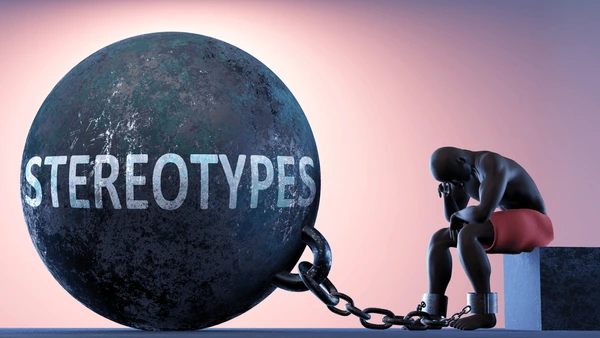
    Among those “colorful” comments are those made usually by angry conservative white men who attack me and my character based on anti-black family stereotypes. To them, I am perpetually unemployed due to laziness. I am chronically and happily dependent on government welfare programs to live. I am either a high school dropout, a GED recipient, a high school graduate who was in the lower rankings in his class, or a man who didn’t earn his spot in college but was just given the spot to fill a quota. I don’t believe in marriage, have several “baby mamas,” and don’t take care of my children. This doesn’t count the other stereotypes attached to black men that I get regularly. Just yesterday, a friend of mine called me. he was lamenting about the stereotypes that he has to endure in his comments section as a black man.

    Stereotypes About the Black Family
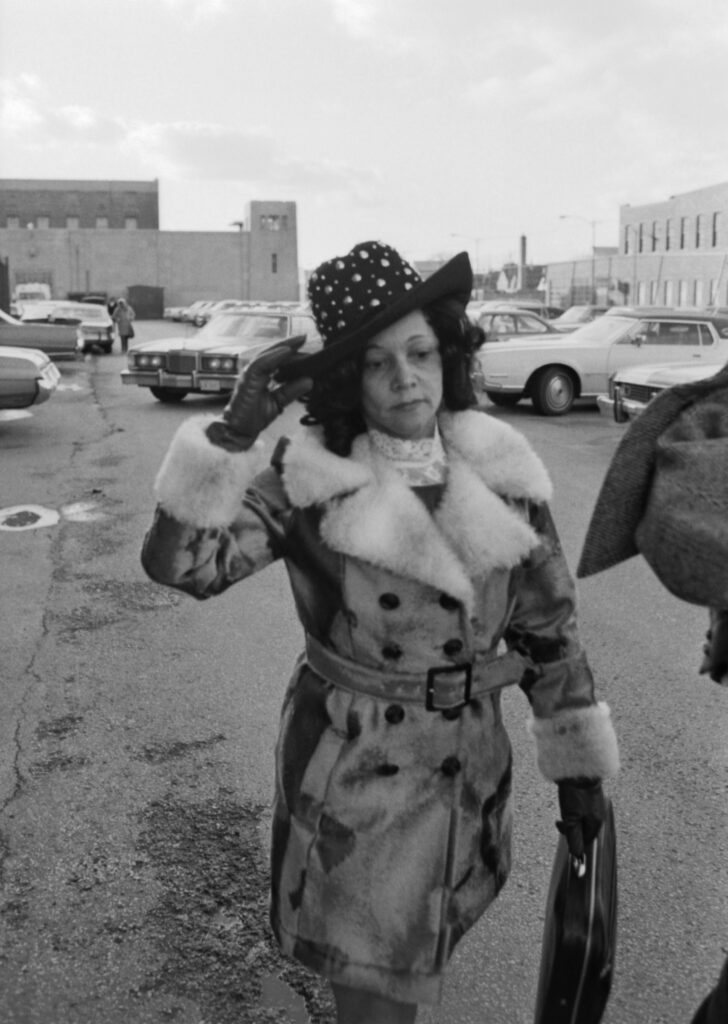
    Linda Taylor was a mixed-race woman con artist who became the mascot for “welfare queens” during the 1980s. Then President Ronald Reagan used her to forward the stereotype about black women using social welfare programs to live a lavish life.
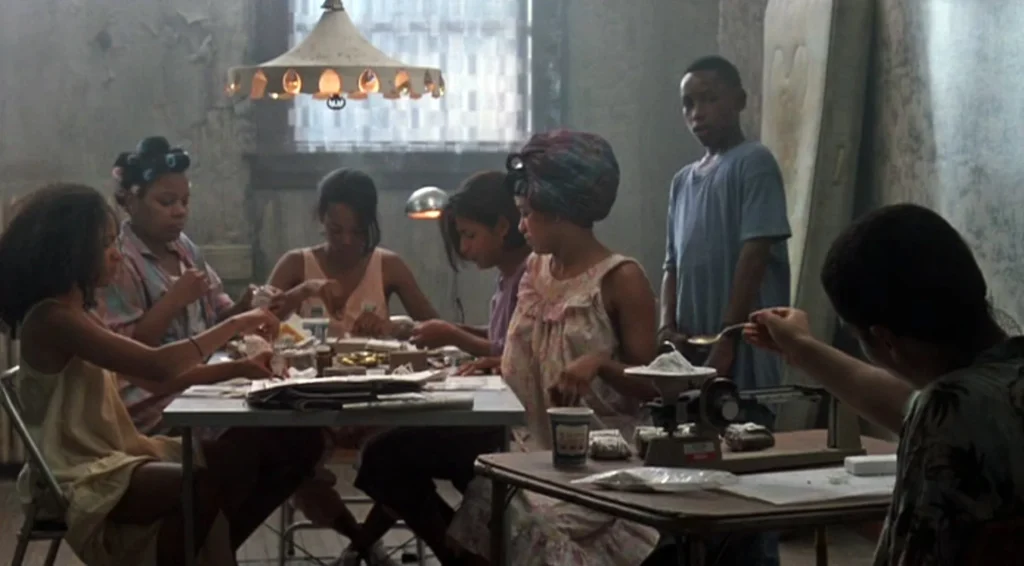
    Scene in the movie “Fresh” in which the very young protagonist, Fresh, is running a drug house.

    The media often portrays black families in a negative light. Sometimes news programs and movies paint black mothers as unreasonably belligerent “welfare queens” who are prone to violent outbursts, constantly emasculate the men in their lives instead of supporting them (a notion that is shared by many black men in so-called “red-pill content, also known as “the manosphere“), and have multiple “baby-daddies” from several failed relationships that they are culpable of due to bad attitudes or promiscuity. Other times, black mothers are physically large, undesired, asexual women who only live to be caretakers of the people around them, especially white families. Black children are often depicted as coming from impoverished and dysfunctional homes. In these portrayals, they are often involved in criminal activity because of this. Even in cases where black children are “humanized,” they are seen participating in illegal endeavors to assume the responsibility that their absentee fathers and their neglectful mothers couldn’t handle. Thus, they are aged out of their innocence, even in television programs and movies. Black fathers are shown as mostly broke and lazy absentee fathers who love to make babies but don’t take care of them. We are seen as unintelligent, criminal, substance-abusing monsters who beat our wives and children harshly and mercilessly.

    The Reality About Black Fathers

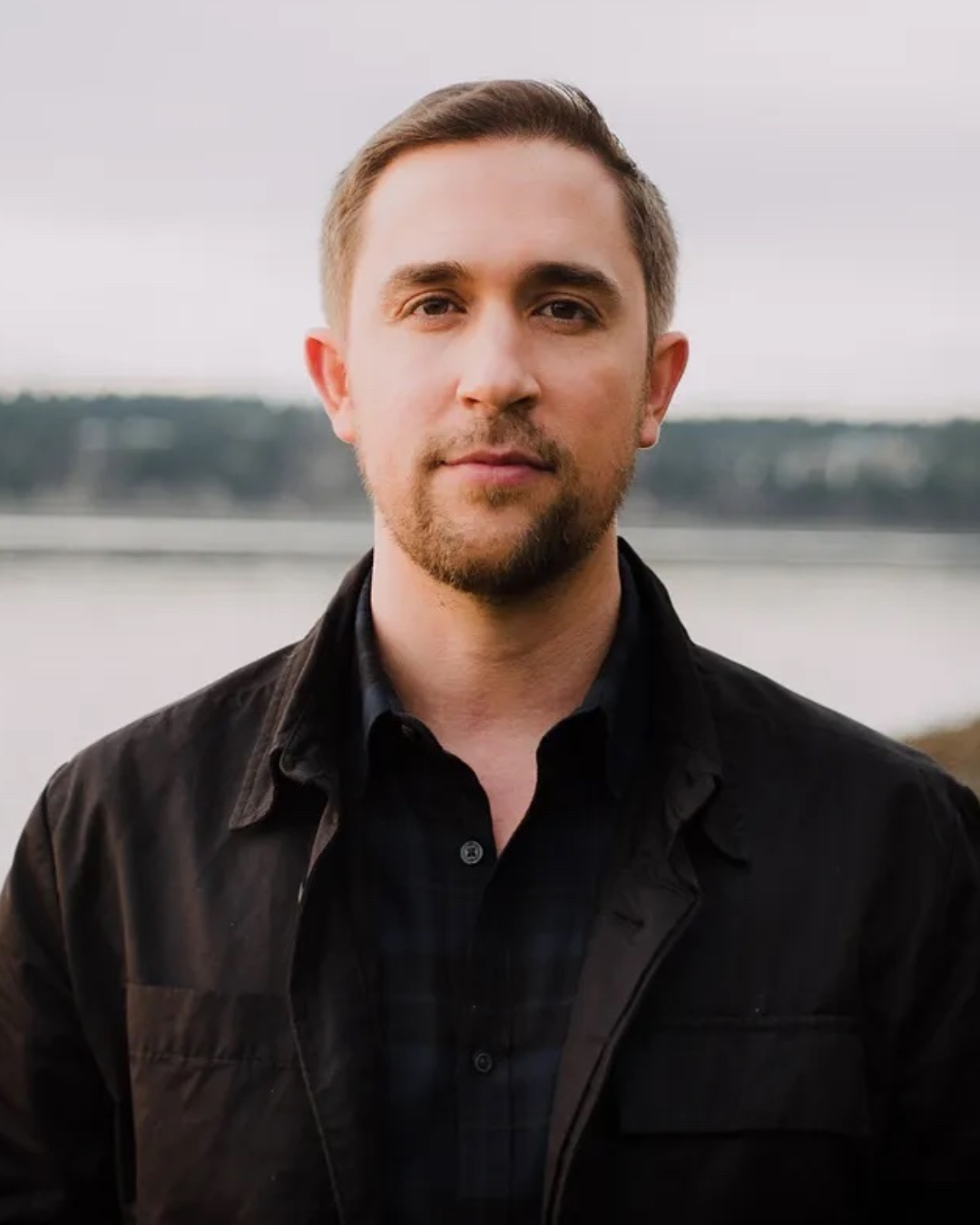
    Three generations of black males together.

    In reality, black fathers are the most active fathers with our children out of every other racial group, despite the conflations of black legitimacy with black male parental involvement by people like the late Charlie Kirk and others who used to paint negative stereotypes about black fathers. Most black men that I know personally are involved in the lives of their children. Many of them have at least partial custody of their children, even though they are not married to the child’s mother. In fact, many of the black men who engage in criminal behavior, like selling drugs, often cite caring for or providing for their children as a reason for it.

    In the song “Foe Life” by West Coast hip-hop artist Mack 10, he raps:

    “Cause a nigga gotta eat, fuck the world
    Let the bullets hurl and feed my baby girl”

    In the beginning of “Juicy”, rapper Notorious B.I.G. said,

    “Yeah, this album is dedicated to all the teachers that told me I’d never amount to nothin’, to all the people that lived above the buildings that I was hustlin’ in front of [and] called the police on me when I was just tryin’ to make some money to feed my daughter (it’s all good), and all the niggas in the struggle. You know what I’m sayin’? It’s all good, baby baby!”

    How Does This Relate to Me?

    However, I never been involved in the sale or distribution of illegal drugs. I’ve been working since I was 10 years old and had my first paycheck job at the age of 13. I came from a two-parent home in which my father was an entrepreneur. I married a woman at the age of 24, and we had three children together. Neither of us came into the marriage with children. We were married for 5 years before our first child was born. Our marriage ended after 22 years, and I became the primary parent to my three children, taking care of their daily needs. I was a paid paramedic /firefighter for years, was on the Dean’s List in college, and was an active PTO dad for all my children. I rarely drink or smoke marijuana.

    However, let those whose only contact with black folks is in the evening news tell it, and I am some embodiment of negative black stereotypes. These notions are not benign. They have real-life consequences. Such negative stereotypes have gotten me harassed by police when I was younger, and perhaps closed the door on opportunities for me.

    Local news stories and the utterances of famous talking heads in legacy media and online push these narratives. What is disturbing is that many people cannot see the racist undertones attached to the “harmless” facts and figures that are constantly thrown out to the public, yet rarely scrutinized.


  • Your Data Is Currency. Stop Giving It Away for Free.

    Your Data Is Currency. Stop Giving It Away for Free.

    I receive a few emails almost daily about failed login attempts to this very blog that wasn’t by me. After investigating the login attempts, I found that they all originated from a couple of countries in South Asia. I had my Netflix and Disney login stolen while traveling overseas. An unknown person withdrew money from my account for travel and a pizza party.

    I used to think that I had nothing to hide and that my information was secure behind devices and passwords. But I was ignorant and naive to the many dangers that exist on the internet and how many people are willing to not only steal your money and identity but also steal your creative property and your credit. Privacy is about limiting harm and not about hiding crimes or shameful acts.

    Identity theft remains the primary concern, in my opinion. In 2023 alone, around 1.1 million Americans had their identities stolen or misused. Once someone has your Social Security number, birthdate, or login credentials, they can open credit lines, drain accounts, or commit crimes in your name. Cleaning that up can take years. My mother was such a victim.

    Another major threat is data breaches. Corporations lose your information constantly. Equifax exposed the data of 148 million people due to successful hacking by the Chinese military. There is also phishing and social engineering. These come in the forms of fake emails, fake texts, and fake “support” calls. Phishing has become one of the most common cybercrimes, according to the FBI.

    Scammers can get your information through fake emails

    Recommendations:

    Here are some tips from the AARP on how to protect yourself. These include enabling multi-factor authentication, not oversharing on social media, and freezing your credit.

    Conclusion:

    Don’t be like me. I did many things wrong. My personal information was compromised because I didn’t take my online security seriously and didn’t understand the nature of the threat. I wrote this so that you can learn from me.

  • How Christopher Rufo Spearheaded the Backlash Against Critical Race Theory

    How Christopher Rufo Spearheaded the Backlash Against Critical Race Theory

    Ten years ago, Critical Race Theory was a relatively obscure academic course, typically offered at the university or graduate school level. Relatively few people, mostly those with majors and/or minors in sociology or African and African American Studies, or those seeking a law degree, were aware that this course even existed. Since around 2020, Critical Race Theory (CRT) has become one of, if not the most controversial, subjects in schooling, and the proverbial boogeyman of everything wrong with contemporary education in the United States. For those on the right side of the political spectrum, CRT has been blamed for many of the societal ills in today’s America.

    But what exactly is Critical Race Theory?

    CRT is an academic and legal framework created by law school professors, activists, and academics, including Derrick Bell, Alan Freeman, Kimberlé Crenshaw, Angela Harris, Charles Lawrence, Mari Matsuda, and Patricia Williams during the mid-1970s. These individuals observed that the advances of the Civil Rights Movement were stalling and even being rolled back. They realized that racism was getting more covert and subtler than it was during the 1950s and 1960s, the peak of the Civil Rights Movement. They concluded that new theories and legal strategies were necessary to identify and combat these more covert forms of racism.

    Critical Race Theory teaches that race is not a legitimate scientific taxonomical classification of human beings with varying physical differences. Instead, race is a somewhat arbitrary social construct in which the effects of the belief in the scientific validity of race are still very socially significant.

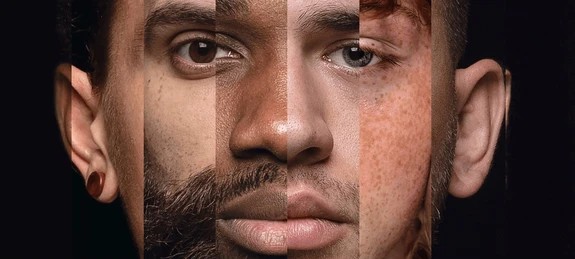
    Mosaic of different racial characteristics forming one male face.
    Fraternal twin sisters who have the same biological parents
    Black and White twins, Lucy (L) and Maria Aylmer (R). The girls are fraternal twins with the same biological parents, Donna Douglas (a black woman with a white parent) and Vince Aylmer (a white man). Often mistaken for friends, the girls often carry birth certificates to prove that they are sisters.

    It also teaches that racism is not merely the anomalous product of misled individuals. Rather, it is the embedded feature of a society built on racial separation, animosities, and rigid hierarchies. Racism is woven into laws, policies, and practices despite the claims and assertions of meritocracy and color-blindness. Racism is not always the intentional consequence of malevolent deeds of individuals due to ignorance, hatred, or irrationality. Instead, racism is more often a manifestation of the unintentional consequences of subconscious choices, even though these consequences can be predicted by those who are aware of the ambience of racism.

    Opponents of CRT argue that it is a racist ideology, rooted in Marxism, that demonizes white people for the actions of a relative few in the past. In their minds, CRT scapegoats white people for the socioeconomic and moral failure of many black people and other racial minorities. They conflate Diversity, Equity, and Inclusion (DEI) initiatives (such as DEI training) with Critical Race Theory courses. They claim that CRT is being taught to children in K-12 schools in non-English and Non-Social Studies courses.

    The Backlash…

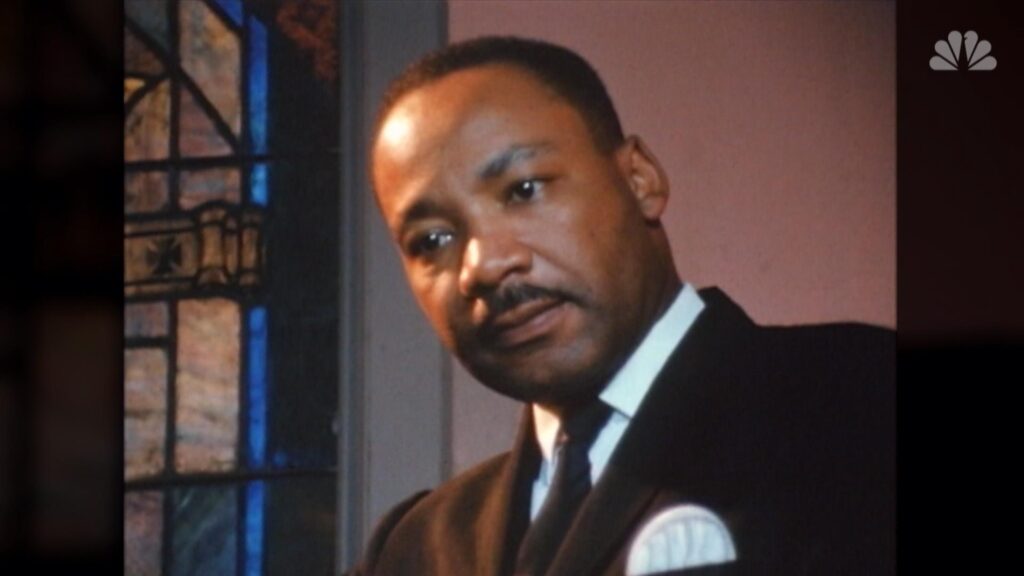
    Dr. Martin Luther King Jr during his May 8, 1967, NBC Interview

    Dr. Martin Luther King Jr stated in a May 8, 1967, NBC interview by Sandef Vanocour:


    “… And honesty impels me to admit that America has a broad racist element still alive. Racism is still existing in American society in many areas of America, North and South. And the other thing is that there has never been a single solid, determined commitment of large segments of white America on the whole question of racial equality. I think we have to see that vacillation has always existed. Ambivalence has always existed. And this, to me, is the so-called “white backlash.” It is merely a new name for an old phenomenon. I see the white backlash as a continuation of the same ambivalence and vacillation of white America on the whole question of racial justice that has existed since the founding of our nation.

    I think the other thing that we must see at this time is that many of the people who supported us in Selma, in Birmingham, were really outraged about the extremist behavior toward Negroes, but they were not at that moment, and they are not now committed to genuine equality for Negroes. It’s much easier to integrate a lunch counter than it is to guarantee an annual income, for instance, to get rid of poverty for Negroes and all poor people. It’s much easier to integrate a bus than it is to make genuine integration a reality, quality education a reality in our schools. It’s much easier to integrate even a public park than it is to get rid of slums. I think we are in a new era, a new phase of the struggle, where we have moved from a struggle for decency, which characterized our struggle for 10 or 12 years, to a struggle for genuine equality. And THIS is where we’re getting the resistance, because there was never any intention to go this far. People were reacting to Bull Connor [Commissioner of Public Safety in Birmingham, Alabama] and to Jim Clark [sheriff of Dallas County, Alabama] rather than acting in good faith for the realization of genuine equality.”

    Christopher Rufo seemed like a man looking for a cause. He found it in 2018 when he ran across anti-bias documents while running for a Seattle city council seat. He lost his race, but he gained a cause to advance his political career in other ways. He then started collecting curricula and slide shows for anti-racism seminars throughout Seattle, Washington. He interpreted the methods and bullet points from these workplace trainings as anti-white racist attacks.

    The anti-racism seminars pointed him to books by anti-racism authors. Going further down the proverbial rabbit hole, the anti-racism authors, such as Ibram X. Kendi and Robin DiAngelo, led him to CRT and the works of its founders.

    Rufo leaned heavily on CRT and its connections to more radical and leftist philosophical influences while ignoring influences of those more moderate or with more mainstream appeal, like Dr. Martin Luther King Jr., James Baldwin, and others. He was convinced that CRT was radical and Marxist and therefore a poison on this good and moral capitalistic society. Rufo found a new battle in the continuing culture war between the political left and the political right.

    Christopher Rufo launched a relentless propaganda campaign against CRT. Critical Race Theory became a catch phrase for every aspect of black-centered, anti-racist, and inclusive lessons within all school programs, including K-12.

    Rufo was proud of his work and how quickly news outlets and politicians on the right caught on to his messaging. Because of this, he wasn’t shy about bragging about his methods. He wrote in a correspondence with Angie Wang of the New Yorker:


    “We’ve needed new language for these issues. ‘Political correctness’ is a dated term and, more importantly, doesn’t apply anymore. It’s not that elites are enforcing a set of manners and cultural limits, they’re seeking to reengineer the foundation of human psychology and social institutions through the new politics of race, It’s much more invasive than mere ‘correctness,’ which is a mechanism of social control, but not the heart of what’s happening. The other frames are wrong, too: ‘cancel culture’ is a vacuous term and doesn’t translate into a political program; ‘woke’ is a good epithet, but it’s too broad, too terminal, too easily brushed aside. ‘Critical race theory’ is the perfect villain

    Its connotations are all negative to most middle-class Americans, including racial minorities, who see the world as ‘creative’ rather than ‘critical,’ ‘individual’ rather than ‘racial,’ ‘practical’ rather than ‘theoretical.’ Strung together, the phrase ‘critical race theory’ connotes hostile, academic, divisive, race-obsessed, poisonous, elitist, anti-American.” Most perfect of all critical race theory is not ‘an externally applied pejorative.’ Instead, it’s the label the critical race theorists chose themselves.” 

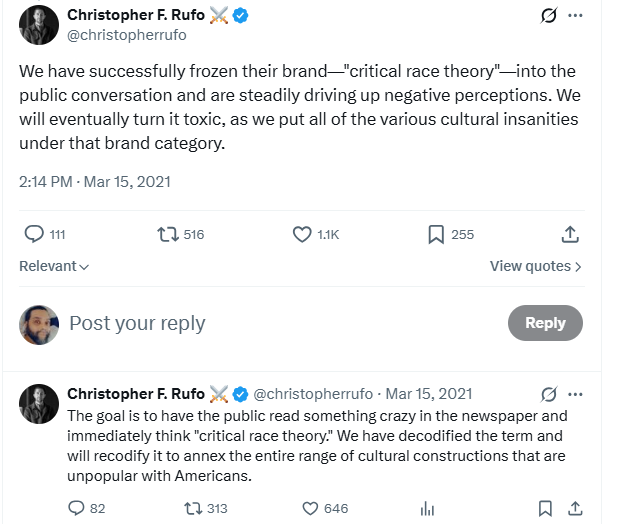
    On X, Rufo made this post bragging about his work:

    Rufo did a very good job with his propaganda, but he had given up the game on a public social media platform and to a writer in a media magazine. His ego is about as big as his goals, and he couldn’t help but take a bow and a victory lap. His work was done.

    What now?

    The issue with CRT was that it was a little bit too vague and too alien for most people. Rufo’s propaganda campaign worked, but not as well as he thought it would. CRT, as a sinister Marxist plot against white people and America, was replaced a couple of years ago by DEI. CRT is mainly about race. DEI can be about anything and everyone that doesn’t check all boxes for every privileged group in the various social hierarchical systems that exist in the United States. CRT is still looked at with suspicion by those on the political right, with school-aged children who may have gotten offended after a history lesson about chattel slavery in the United States. There were laws passed in many states to ban CRT in K-12 schools. However, there was no evidence that the course itself was being taught in K-12 schools. Rather, only certain ideas associated with CRT have made it to K-12 classrooms. Also, these bans are usually vague, with CRT being poorly defined.

    Christopher Rufo got many people on the right side of the political spectrum to hate and fear a university and law school course that they don’t really understand through a constant propaganda campaign. He recognized that the obscurity of the course was its weakness from a public relations perspective. He also understood that emancipatory movements and initiatives were almost always followed by irrational reactionary backlash. He made a relatively unknown course and made it public enemy #1 for a period of four or five years.

  • 24 Hour Media Diary #2

    24 Hour Media Diary #2

    From midnight January 30, 2026, to midnight January 31, 2026, this had been my media consumption for the day. I decided to start with the start of the calendar day to the end of the calendar day to cover a complete 24 hours.

    00:00-00:06
    I was thinking of playing a little bit of the Saints Row (2022) reboot on PlayStation 5, but I quickly got tired and bored. All I wanted to really do was wind down and go to sleep.

    00:06-09:22
    I allow YouTube to play various space and natural history documentaries while I sleep. My Attention Deficit Hyperactivity Disorder(ADHD) makes it so that it is hard for me to sleep in silence. Science documentaries sometimes act as my lullaby to get me to sleep. I was awakened from my sleep by a phone call.

    09:22-09:37
    Watched various political shows on YouTube. When I wake up, I like to get my daily dose of news and information. I didn’t really have much time today; I only watched one video from the Meidas Touch before getting ready to groom.

    09:37-10:39
    I allowed more videos to play from the I’ve Had It Podcast and the Vanguard while getting ready to leave.

    10:45-12:37
    I ran a few errands with my cousin and listened to my new playlist on Spotify. This playlist is filled with protest anthems and songs against the establishment.

    12:40-16:46
    I had been sick with COVID this week and didn’t feel too well. I decided to go back to sleep(take a nap)and be rested before running more errands. I once again allowed documentary videos on YouTube about natural history to play on my TV while I slept.

    16:57-19:48
    Ran a few more errands. I played a couple of videos from YouTube, but had to stop them a number of times to have conversations with my children and my cousin, who were with me. The videos that I was playing were political, and the conversations were about politics and social justice.

    17:06-17:27 (Overlap)
    Checked my Facebook feed, but I was not as active today on social media as I usually am. I didn’t really feel like doing too much on social media.

    20:00-21:32
    I lay down and watched reruns of Sealab 2021 on the Adult Swim app on my computer.

    21:32-23:23
    Watched more political content on YouTube about the Epstein file drop that happened earlier in the day. I decided to post on Facebook about the file drop. I also went on X to see what some of my favorite media figures were saying about it.

    23:23-23:40
    Received a phone call from my fiancé on WhatsApp. She lives in a foreign country, and we talked until the call dropped due to a bad connection.

    23:40-00:00
    Played more documentaries to go to sleep. I didn’t really like staying up late.

    This is not too atypical of a normal day for me, except for the fact that when I am at work, my day consists of more Spotify playlists than anything else. However, being sick made me very drowsy, so I slept most of the time.

    My personal data was still out there for the world. YouTube knows what I like to watch while sleeping and/or napping. I don’t have to look for documentaries to watch. YouTube recommends them for me. Facebook gathers information about me every time I make a post or comment. WhatsApp can see what my fiancé and I send to each other. Cookies store information about what I’ve been doing on my computer.

    YouTube knows that some of my interests are astronomy, paleontology, geology, politics, history, and other things. These are the things that I usually watch. Spotify knows that I am into nedrcore, neo-soul, and other genres. They will recommend certain artists to me. I am into a lot of left-wing political content and video essays. I don’t think there was much biometric data shared this day, if any, it did know some behavioral data from me.

    Nothing was revealed about me that I didn’t want revealed about me in any of my media consumption for the day. If I posted on Facebook, it was what I wanted to be associated with my profile/page. However, information about my habits, which are VERY easy to predict, could be used by the algorithm to sell me products/services or lead me to other channels and users on social media. For example, I get advertisements from immigration services/lawyers for the purpose of obtaining a fiancé’s visa for the United States for my fiancé.

    I try to be careful with my media use. I hide certain information about myself. I don’t post about my love life online. No one knows who I am dating and how serious it is. However, the algorithm knows because of my online activity on WhatsApp. I think as long as it is kept from my audience, I feel ok. But I do hate that my personal information is used to sell certain things to me.

  • Hello world!

    Hello world!

    Welcome to The Rio Report

    This blog began in two distinct ways. The first was musings and writings that I made over the time span of 18 years on social media that I had collected, edited, and made into various articles on this blog. The second was as a university assignment while I was studying Mass Communications and Media Studies at Arizona State University. But as I started organizing my thoughts on what direction my writings should take me, it quickly became clear that it could become something much more meaningful than a class project.

    The Rio Stanton Report is a space for commentary and analysis on politics, history, culture, and the narratives that shape how we understand the world around us.

    In an age where information moves faster than ever, and misinformation often moves even faster, it has become increasingly important to pause and examine the stories we tell ourselves about society. Many of those stories are built on half-truths, misleading statistics, or historical myths that are repeated so often they begin to sound like fact.

    Through this blog, I plan to explore those narratives and place them in a historical and social context.

    Some articles will focus on commonly repeated myths about American history. Others will examine political talking points, media narratives, and the ways power and influence shape public discourse. From time to time, I will also reflect on broader cultural issues and personal observations shaped by my experiences as a retired first responder, activist, student, and traveler.

    The goal is not simply to argue a point, but to encourage critical thinking and informed discussion.

    The Rio Stanton Report is still in its early stages, but the long-term vision is to develop it into a platform for thoughtful commentary and analysis—one that challenges assumptions, examines history honestly, and invites readers to look at familiar issues from new perspectives.

    Thank you for visiting, and welcome to the conversation.