Category: Short Commentaries

  • Why Do I Have to Explain Being an Atheist?

    Why Do I Have to Explain Being an Atheist?

    One of the most common reactions I receive when I tell people that I’m an atheist is, ironically, disbelief.

    The conversation usually follows a familiar pattern.

    “I’m an atheist.”

    “You’re an atheist?”

    Then comes the inevitable follow-up question: “Why?”

    Sometimes the question is genuine curiosity. But often it comes loaded with assumptions, usually the expectation that I must justify my lack of belief in the same way someone might explain a controversial political opinion.

    What has always struck me as strange is the underlying assumption behind the question itself.

    Why does disbelief require an explanation?

    In many societies, religious belief is treated as the default setting of human existence. Because of that assumption, people who do not believe are often expected to explain themselves in ways that believers rarely are.

    But belief and disbelief are both positions people arrive at through their own experiences, reasoning, and reflections.

    In my case, conversations about atheism often turn into debates that have very little to do with philosophy or metaphysics. Instead, they become exchanges between dogma and scientific arguments, with each side talking past the other.

    That kind of discussion rarely leads anywhere productive.

    Despite that, I usually answer the question anyway. Not because I believe I owe anyone an explanation, but because it can be an opportunity to address some of the misconceptions people have about atheists.

    Many people assume that atheists are hostile toward religion, immoral, or angry at the concept of God itself. In reality, most atheists simply do not find the evidence for religious claims convincing.

    For many of us, disbelief is not a rebellion, an excuse to “sin,” or a dramatic declaration of extreme contrarianism. It is simply the conclusion we arrived at after thinking about the questions that religion attempts to answer.

    Still, what often becomes clear in these conversations is that some people are not really interested in understanding atheism at all. Their goal is to proselytize, persuade, attempt to correct, or defend their own beliefs.

    And that is where the conversation usually stops being a conversation and starts being a series of unnecessary attacks.

    Because belief, like disbelief, is ultimately a personal conclusion that each individual must reach on their own.

    I chose my position a long time ago. I didn’t choose it through ignorance or malicious intent. I chose it because it made the most sense to me based on years of philosophical thought and research.
  • Poverty Looks the Same Everywhere

    Poverty Looks the Same Everywhere

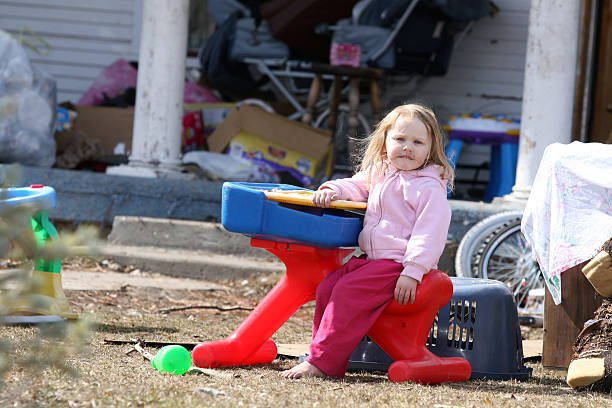
    One of the things that traveling around the United States has taught me is that poverty appears remarkably similar, regardless of where you encounter it.

    Despite the racial narratives that often dominate political conversations, the visible signs of poverty tend to repeat themselves in the same ways across the country.

    The same kinds of conditions that people associate with poor urban neighborhoods (many of which are predominantly Black or Latino) can also be found in economically depressed small towns that are overwhelmingly white.

    In both places, you see the same signs of economic struggle.

    You see old vehicles with long-expired temporary tags.
    You see houses in serious need of repair.
    You see groups of men standing around with little to do but pass the time drinking.
    You see drug use and the informal economies that grow around poverty, including prostitution.

    The physical environments may differ somewhat. Urban poverty often exists in densely populated neighborhoods surrounded by wealthier suburbs. Rural poverty tends to exist in isolated towns surrounded by farmland or land owned by more affluent property holders.

    But the underlying conditions are strikingly similar.

    Poverty produces the same kinds of social and economic realities regardless of the racial makeup of the people experiencing it.

    Traveling makes that clear in a way that political rhetoric often obscures.

    In political debates, poverty is frequently racialized. Certain communities are blamed for the conditions in which they live, while others are treated as victims of economic change or government neglect.

    But when you actually see these communities up close—when you drive through them, walk through them, and talk to the people who live there—the similarities become difficult to ignore.

    Poverty is not confined to one race or one region.

    It is a structural condition that appears wherever economic opportunity disappears, and communities are left behind.

    And the longer people ignore that reality, the easier it becomes for political narratives to divide communities that are, in many ways, experiencing the same struggles.

  • Being Nice Is Not the Same Thing as Being Good

    Being Nice Is Not the Same Thing as Being Good

    One of the strangest arguments that repeatedly appears in political discourse is the idea that harmful political movements should be judged more gently because the people involved in them can sometimes be “nice in person.”

    Yes, many people who hold destructive political views are perfectly capable of being polite, friendly, or even charming in everyday interactions.

    But that has very little to do with the consequences of the ideas they support.

    History provides countless examples of people who were socially pleasant while simultaneously supporting or participating in deeply immoral systems. The ability to be personable does not erase the harm caused by one’s beliefs or actions.

    Human beings are complex. Someone can be a friendly neighbor, a generous host, or an engaging conversationalist while still supporting policies, movements, or ideologies that cause real harm to other people.

    Personal charm has never been a reliable measure of moral character.

    Yet in modern political debates, some commentators, particularly within media circles, occasionally suggest that ideological hostility should soften if the person expressing those ideas happens to be courteous in private conversation or polite in a televised debate.

    That standard makes very little sense.

    Political ideas should be judged based on their substance and consequences, not the personal demeanor of the person expressing them.

    A polite presentation does not make a harmful idea less harmful. A friendly tone does not transform prejudice into principle.

    Being civil in conversation is a positive trait. But civility should not become a substitute for accountability.

    If a political movement promotes policies or rhetoric that harm vulnerable communities, that reality does not disappear simply because some of its supporters are personable in everyday interactions.

    The lesson here is simple.

    Do not confuse personal niceness with moral integrity.

    They are not the same thing.

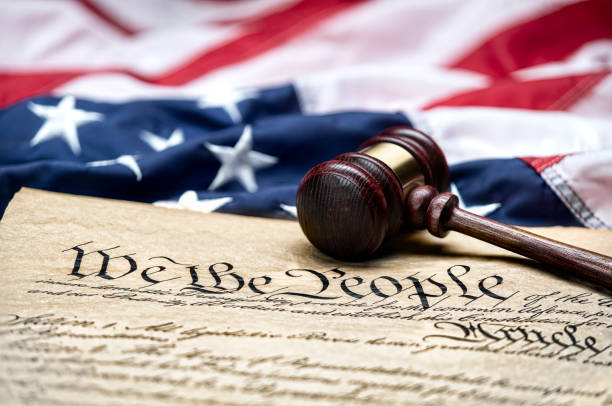
  • The Constitution Is Not That Long… Read It!

    The Constitution Is Not That Long… Read It!

    One of the most amusing aspects of modern political debates is how often people loudly proclaim their love for the United States Constitution while simultaneously demonstrating that they have never actually read it.

    I bought my own copy of the Constitution for my personal library back in 1999. When smartphones became common, one of the first things I downloaded was a Constitution app so I could reference the document whenever I needed it.

    The reason is simple: the Constitution is not a long document.

    In fact, it is surprisingly short.

    The original Constitution consists of seven articles. The longest of these, Article I, establishes the legislative branch and contains ten sections. The shortest, Article VII, is only a single sentence.

    Add the 27 amendments that have been ratified over the course of American history, and the entire document is still roughly the length of a long magazine article or a short story.

    Yes, the language reflects the legal style of the late eighteenth century. But it is not particularly difficult to understand, especially if you read an annotated edition that includes explanatory notes or writings such as the Federalist Papers.

    The problem is that many of the loudest self-described “constitutional patriots” have never taken the time to read it themselves.

    Instead, they treat the Constitution the same way many people treat religious texts: they claim to revere it, but rely entirely on other people to tell them what it says and what it means.

    And those interpretations rarely come from constitutional scholars, legal historians, or practicing constitutional lawyers. More often, they come from political commentators or activists whose understanding of the document is shaped more by ideology than by careful study.

    Blind allegiance to a document that one has never actually read is not patriotism. It is intellectual laziness.

    If Americans truly care about the Constitution, the first step should be obvious.

    Read it.