Category: Uncategorized

  • The Best Way to Evaluate a Conspiracy Theory Is to Ask One Question: Why?

    The Best Way to Evaluate a Conspiracy Theory Is to Ask One Question: Why?

    People often ask me why I don’t believe many of the conspiracy theories circulating online.

    My answer is simple:

    What’s the endgame?

    In other words, what is the actual objective?

    Throughout history, governments, corporations, intelligence agencies, and wealthy interests have absolutely conspired. Watergate happened. COINTELPRO happened. The Tuskegee Syphilis Study happened. The tobacco industry concealed evidence about smoking. Companies have colluded to fix prices. Governments have lied to justify wars.

    Real conspiracies exist.

    But they usually have understandable motivations.

    In my view, nearly every major government or corporate conspiracy can be traced back to one or more of three goals.

    First, preserving existing systems of power.

    Whether that involves racial hierarchy, patriarchy, religious dominance, authoritarianism, or protecting political institutions, those in power often act to preserve the systems that benefit them.

    Second, maximizing profits.

    This is probably the biggest motivation of them all.

    When you follow the money, countless scandals suddenly make sense. Companies cut corners because it’s cheaper. Industries lobby against regulation because it protects their profits. Politicians accept campaign money or bribes because it benefits them personally or politically.

    Greed doesn’t require a master plan.

    It only requires incentives.

    Third, protecting the status quo by silencing credible threats.

    History contains numerous examples of governments and institutions surveilling, discrediting, imprisoning, or otherwise neutralizing people they viewed as dangerous to their interests. The methods vary, but the underlying motivation is remarkably consistent: maintain existing power.

    Those three motivations explain far more than most people realize.

    They also provide a useful filter for evaluating extraordinary claims.

    Take, for example, the claim that unnamed elites are trying to “make the world gay.”

    My first question is always the same:

    Why?

    What is the practical objective?

    How would governments, corporations, or powerful institutions materially benefit from such a plan?

    Some argue it’s about reducing population growth. But if population reduction were actually the goal, declining birth rates in many developed countries are already being driven by rising housing costs, expensive childcare, economic uncertainty, delayed marriage, and changing social priorities. Those are observable economic and social trends that require no elaborate global conspiracy to explain.

    Once a theory can’t identify a coherent objective rooted in power, profit, or political advantage, it often shifts toward increasingly fantastical explanations involving supernatural forces, secret societies with limitless power, or shadowy groups pursuing evil simply for the sake of being evil.

    That’s usually where I stop taking it seriously.

    Real conspiracies are rarely that dramatic.

    They’re often surprisingly ordinary.

    They’re driven by money.

    They’re driven by politics.

    They’re driven by fear.

    They’re driven by self-interest.

    And they’re frequently far sloppier than people imagine.

    Consider the devastating earthquakes in Turkey. Investigations pointed to widespread failures in building standards and enforcement. Buildings that should have withstood the shaking collapsed because regulations were ignored or inadequately enforced, while corruption and cost-cutting reportedly played a role in some cases. That’s not evidence of a centuries-long master plan. It’s a reminder that corruption, weak oversight, and the pursuit of profit can produce catastrophic consequences.

    Or consider the 2022 infant formula crisis in the United States. The shortage exposed vulnerabilities created by a highly concentrated domestic market, recalls at a major manufacturing facility, and regulatory challenges. The result was a crisis that left parents scrambling to feed their babies. Again, the lesson wasn’t that an all-powerful cabal had engineered the shortage. It was that weak competition, regulatory failures, and economic incentives created a system that was far more fragile than it appeared.

    Those explanations may not be as exciting as internet conspiracy theories.

    But they’re supported by evidence.

    The truth is that reality is often more mundane—and more troubling—than fiction.

    Powerful institutions don’t need to be all-knowing masterminds to cause enormous harm.

    Sometimes greed is enough.

    Sometimes incompetence is enough.

    Sometimes protecting power is enough.

    Before accepting any conspiracy theory, ask one simple question:

    Who benefits?

    If you can’t identify a believable answer rooted in power, profit, or preserving the status quo, then skepticism isn’t just reasonable.

    It’s necessary.
  • Stop Trusting Republicans to Play Fair

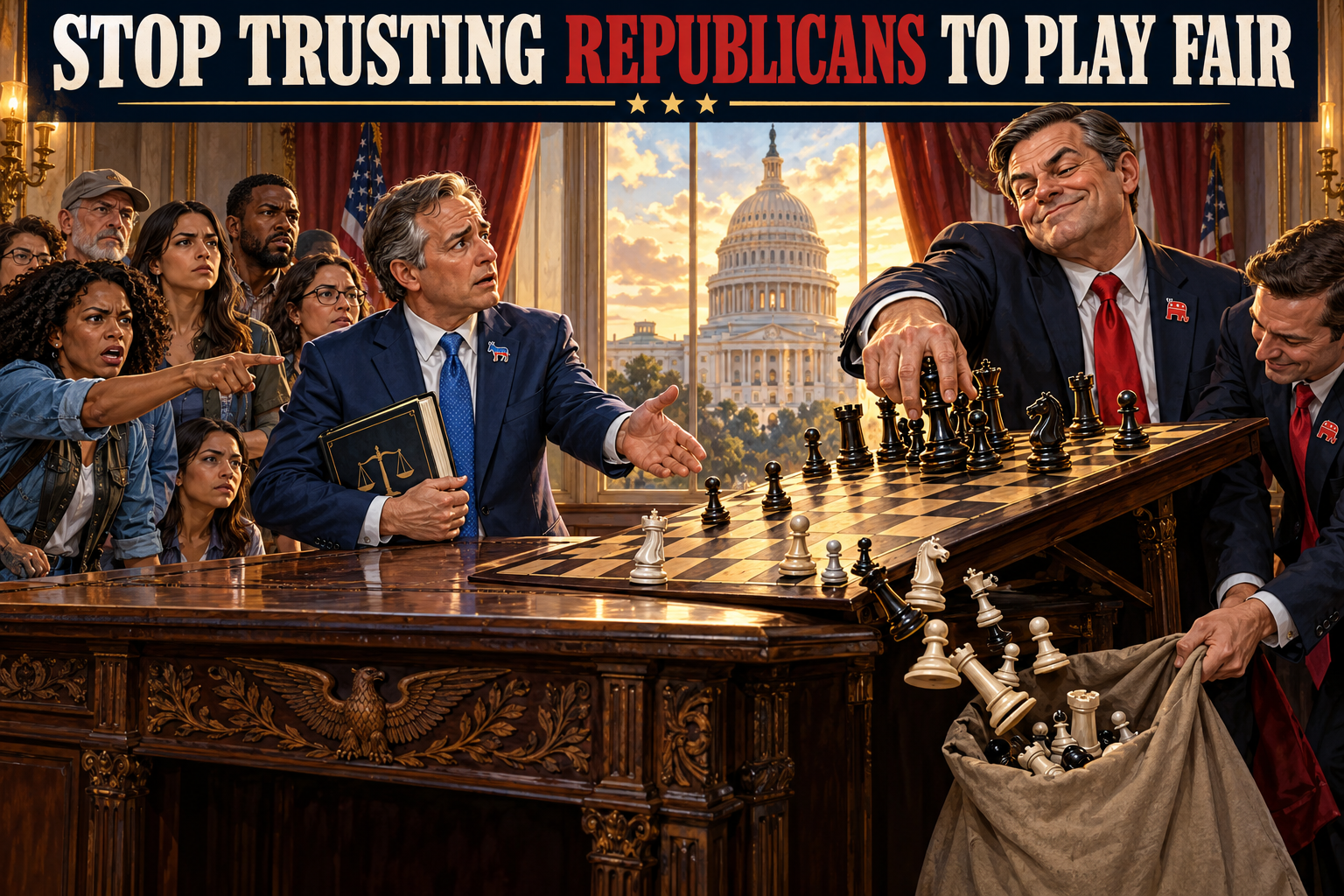
    Stop Trusting Republicans to Play Fair

    One thing that used to really piss me off about the Obama administration (and the Democratic Party as a whole) was the refusal to recognize just how far Republicans were willing to go to gain and keep power.

    Democratic leaders kept looking for reasonable partners. They kept talking about compromise, common ground, and reaching across the aisle. Meanwhile, Republicans kept showing them that their commitment to those things lasted only as long as it served their interests.

    At some point, believing them becomes a choice.

    There is no reasoning your way around people who negotiate in bad faith. There is no meaningful compromise when one side treats every concession as an opportunity to demand more. The Democratic Party needs to stand up and fight tooth and nail for the principles it claims to hold.

    But the lessons of the Obama years still don’t seem to have sunk in.

    We keep waiting for Republicans to come to their senses, embrace their better angels, or stand by their own words. Then, when they abandon those words, Democratic leaders act disappointed. They seem to think disappointment is going to shame Republicans into changing their behavior.

    How many times do we have to watch this?

    The fight over the Supreme Court in 2020 made this painfully clear. Some people genuinely counted on a handful of Republican senators to honor the standard their party had used to block Obama’s Supreme Court nominee. They expected consistency from people who had already demonstrated that the rules could change whenever power was at stake.

    After the Senate failed to convict Trump in his first impeachment trial, some still believed that those same Republican senators would suddenly put fairness ahead of political advantage.

    Why? What had they done to earn that faith?

    The Democratic leadership, the corporate media, and far too many liberals keep convincing themselves that this time Republicans will play fairly. This time, institutional norms will hold. This time, someone will discover a conscience.

    And when that doesn’t happen, we get another round of solemn speeches about how troubling it all is.

    I am tired of being told to admire the restraint of people who keep getting their asses handed to them.

    There is a familiar saying about doing the same thing over and over again and expecting different results. Whoever first said it, the point applies here. It is beyond frustrating to watch Democratic leaders repeat an approach that keeps failing, then have their defenders insist that the rest of us simply don’t understand the strategy.

    Apparently, they’re always playing three-dimensional chess. Apparently, every defeat is part of some brilliant plan that will reveal itself later.

    Meanwhile, the whole thing looks more like Wile E. Coyote chasing the damn Road Runner.

    And every time a liberal shows up to explain that my lack of faith is unwarranted, I want to ask: What, exactly, am I supposed to be impressed by?

    The speeches? The stern letters? The commitment to looking reasonable while the other side takes what it wants?

    I do not need another lecture about patience from someone who confuses having a strategy with defending whatever the leadership happens to do.

    Compromise requires people who will honor an agreement. When political leaders repeatedly abandon their own standards for an advantage, trusting them again should require evidence—not another appeal to their supposed decency.

    And compromise itself should not be treated as a virtue regardless of what gets surrendered. People’s rights, livelihoods, and futures are on the line. The goal cannot simply be to reach an agreement so everyone in Washington can congratulate themselves for being bipartisan.

    The goal should be to deliver something worth fighting for.

    Democratic leaders need to stop acting as though Republican approval is necessary to make their demands legitimate. Make the case. Use the power voters gave you. Organize. Give people a reason to show up, stay involved, and believe that their participation matters.

    If the party claims to stand for working people, civil rights, and democracy, then it needs to fight like those commitments mean something.

    Stop trusting Republicans to become the partners you wish they were. Make your demands, prepare for a real political fight, and rally the damn people behind you.

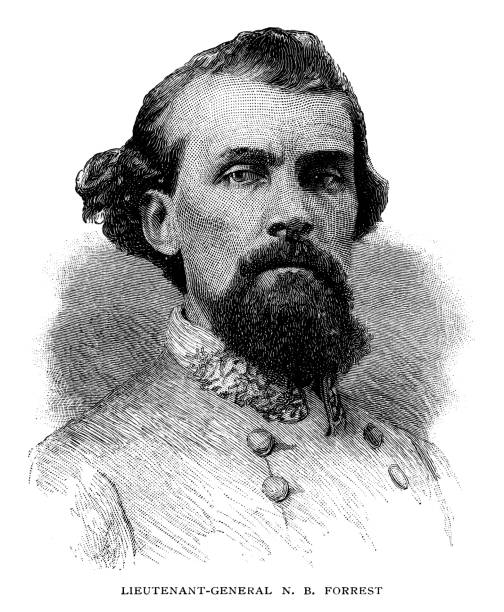
  • Nathan Bedford Forrest and the Possibility of Change

    Nathan Bedford Forrest and the Possibility of Change

    Nathan Bedford Forrest remains one of the most controversial figures of the American Civil War.

    To many white Southerners, he is remembered as a brilliant cavalry commander and military tactician who rose from poverty to become one of the most effective battlefield leaders of the Confederacy.

    To many others—especially Black Americans—he is remembered as something very different: a former slave trader, a Confederate general associated with the Fort Pillow massacre, and the first Grand Wizard of the Ku Klux Klan.

    Both of these perspectives capture parts of the historical record.

    Before the Civil War, Forrest built a fortune as a slave trader, cotton planter, and livestock dealer. During the war, he became famous for his aggressive cavalry tactics and battlefield success. After the war, he was deeply involved in the early Ku Klux Klan, an organization that used violence and intimidation against newly freed Black Americans and their allies during Reconstruction.

    That part of his legacy is undeniable.

    What is less commonly discussed, however, are the statements Forrest made later in his life. By the 1870s, he publicly distanced himself from the Ku Klux Klan and reportedly called for its disbandment. In 1875, he delivered a speech to a Black civic organization in Memphis in which he encouraged reconciliation and cooperation between Black and white Southerners.

    Historians continue to debate what these actions meant.

    Some believe Forrest experienced a genuine change of heart late in life. Others argue that his statements were politically motivated during a turbulent Reconstruction period.

    What is clear is that Forrest’s life illustrates the uncomfortable complexity of history.

    He was undeniably involved in some of the most brutal systems of racial oppression in American history. At the same time, his later statements suggest at least some recognition—whether moral, political, or pragmatic—that the future of the South required a different path.

    That complexity is often lost in modern debates.

    Some defenders of Confederate memory celebrate Forrest primarily as a military hero while ignoring the racism and violence that defined much of his career. Others reduce him entirely to the worst aspects of his life without acknowledging the possibility—however limited or contested—that his views evolved later on.

    History rarely fits into simple moral categories.

    Studying figures like Nathan Bedford Forrest should not be about glorification or absolution. It should be about understanding how people, institutions, and societies change—and sometimes fail to change—over time.

  • On Cynicism, Conspiracy Thinking, and Intellectual Humility

    On Cynicism, Conspiracy Thinking, and Intellectual Humility

    One thing that often surprises people in political conversations is that I try very hard to look at issues from multiple angles before forming a conclusion.

    That doesn’t mean I believe every perspective is equally correct, and it certainly doesn’t mean I agree with every ideology. But it does mean that I try to examine ideas carefully before deciding what I believe about them.

    Over the years, I have studied politics, economics, and philosophy, both in the classroom and through personal observation. I do not claim to be an expert. At best, I am a curious and reasonably informed layperson who tries to understand how complex systems actually work.

    I also recognize that many of my friends possess expertise in fields where I do not. Some work in industries or professions that require specialized knowledge. When they speak about their areas of expertise, I listen carefully and often defer to their judgment.

    The same applies to institutions and organizations. I have friends in groups that I sometimes criticize, but criticism does not require blind hostility. I try to evaluate institutions the same way I evaluate individuals, by paying attention to both their stated intentions and their actions.

    Perfection is not the standard I apply to people or organizations. Perfection does not exist.

    What matters to me is whether people and institutions are genuinely attempting to serve their communities or whether their actions consistently undermine them. Disagreement is inevitable, but ideally, those disagreements should revolve around how to improve the well-being of the people we represent.

    Another accusation I sometimes hear is that my approach to politics is naïve. Some believe that if you are not constantly assuming the worst possible motives from everyone around you, you must be ignoring reality.

    But that is not how I see the world.

    Yes, I can be cynical at times. Like most people who pay close attention to politics and history, I am aware of how frequently power is abused. But I try not to fall into the trap of believing that every institution is controlled by hidden puppet masters or that every political failure is the result of some elaborate conspiracy.

    More often than not, what we are witnessing is something much simpler: human beings making decisions. These are sometimes wise, sometimes selfish, and sometimes incredibly foolish.

    Institutions are not omniscient masterminds. They are collections of ordinary people, and ordinary people make mistakes. Anyone who has closely observed politics or large organizations knows how often incompetence, miscommunication, and short-term thinking shape outcomes just as much as malice.

    Because of this, I try to resist the temptation to jump to dramatic conclusions based on speculation, conjecture, or conspiracy theories.

    This approach sometimes frustrates people who prefer clear villains and simple explanations. But the truth is that most social and political issues are far more complicated than we often admit. Real life rarely divides neatly into heroes and villains.

    Intellectual humility is also important here.

    I have been wrong before, and I will be wrong again. No one who engages seriously with complex issues escapes that reality. The important thing is being willing to reconsider one’s assumptions when evidence suggests a different conclusion.

    At the same time, being cautious about speculation does not mean defending the status quo or ignoring real problems. It simply means trying to reach conclusions through careful reasoning rather than through fear, anger, or wishful thinking.

    In public debate, it is also possible to appreciate good arguments, even when they come from people with whom we strongly disagree. A well-made point remains a well-made point regardless of who makes it.

    Too often, modern political discourse treats disagreement as a personal betrayal rather than a normal part of intellectual life.

    But serious thinking requires the opposite approach: listening carefully, weighing evidence, and accepting that complex questions rarely have simple answers.

    That is the perspective I try to bring to my writing and discussions.

    Not certainty.

    Not ideological loyalty.

    Just an ongoing attempt to think carefully about the world we live in.

  • Hello world!

    Hello world!

    Welcome to The Rio Report

    This blog began in two distinct ways. The first was musings and writings that I made over the time span of 18 years on social media that I had collected, edited, and made into various articles on this blog. The second was as a university assignment while I was studying Mass Communications and Media Studies at Arizona State University. But as I started organizing my thoughts on what direction my writings should take me, it quickly became clear that it could become something much more meaningful than a class project.

    The Rio Stanton Report is a space for commentary and analysis on politics, history, culture, and the narratives that shape how we understand the world around us.

    In an age where information moves faster than ever, and misinformation often moves even faster, it has become increasingly important to pause and examine the stories we tell ourselves about society. Many of those stories are built on half-truths, misleading statistics, or historical myths that are repeated so often they begin to sound like fact.

    Through this blog, I plan to explore those narratives and place them in a historical and social context.

    Some articles will focus on commonly repeated myths about American history. Others will examine political talking points, media narratives, and the ways power and influence shape public discourse. From time to time, I will also reflect on broader cultural issues and personal observations shaped by my experiences as a retired first responder, activist, student, and traveler.

    The goal is not simply to argue a point, but to encourage critical thinking and informed discussion.

    The Rio Stanton Report is still in its early stages, but the long-term vision is to develop it into a platform for thoughtful commentary and analysis—one that challenges assumptions, examines history honestly, and invites readers to look at familiar issues from new perspectives.

    Thank you for visiting, and welcome to the conversation.