Many people who know me are aware that I am an atheist. But I wasn’t always one.
I was once very religious when I was younger, but over time, my beliefs changed. I won’t go into the entire story of my deconversion here. That would require far more time and space than this post allows.
Instead, I want to talk about something simpler: how expressions of faith sometimes come across to those of us who do not share those beliefs.
First, a little context.
I do not go out of my way to announce my atheism simply to provoke people or start arguments. In fact, I would generally prefer to be left alone about it. But I do sometimes wear clothing that reflects my support for secular organizations such as American Atheists, Black Nonbelievers, the Freedom From Religion Foundation, and others.
And if someone asks me directly where I stand, I will answer honestly.
For me, this is not about offending anyone. It is simply about expressing my worldview in the same way religious people often express theirs.
My goal has always been to challenge the myths people have about atheists. Many believers are taught that atheists are immoral, bitter, or hostile toward humanity. In reality, most of us simply do not believe in any gods (Christian, Islamic, Hindu, or otherwise).
But we still believe in empathy.
Any good I try to do in the world is not motivated by promises of eternal bliss (Heaven), fear of eternal punishment (Hell), or the expectation of cosmic rewards. It comes from the basic recognition that other human beings deserve compassion and dignity.
Recently, I had a small interaction that reminded me how easily misunderstandings can happen between believers and nonbelievers.
While trying to locate an event for my daughter’s school, I briefly spoke with a group of Christians in the area. The conversation was cordial and short. As I was leaving, one woman said, “I’ll pray that you find where you’re going… in Jesus’ name.”
I smiled and continued on my way. I didn’t respond or make an issue of it.
But it did make me pause and reflect.
Was she simply trying to be kind in the way her faith taught her to be? Possibly. I try not to assume bad intentions when I cannot know someone’s motivations.
At the same time, moments like that can sometimes feel uncomfortable for those of us who do not share those beliefs. Not because we are hostile to religion, but because it can feel as though a very specific religious worldview is being assumed as universal.
In a religiously diverse society, small differences in language can matter.
A phrase like “I hope you find where you’re going” is universally understood. Even “I’ll pray for you” can feel relatively broad, since many different traditions include some form of prayer or meditation.
But explicitly invoking a specific deity can sometimes feel like an assumption that everyone present shares that belief.
That assumption is not always intended. But it is often felt.
I want to be clear about something: I do not object to people having faith or expressing it. Religion helps many people navigate a difficult world, and if someone’s beliefs encourage kindness and compassion, I have no desire to take that away from them.
What I object to are a few common assumptions:
- That everyone is or should be Christian.
- That atheists reject religion because they are ignorant or immoral.
- That explicitly religious language is always welcome in every context.
The reality is that we all share this society.
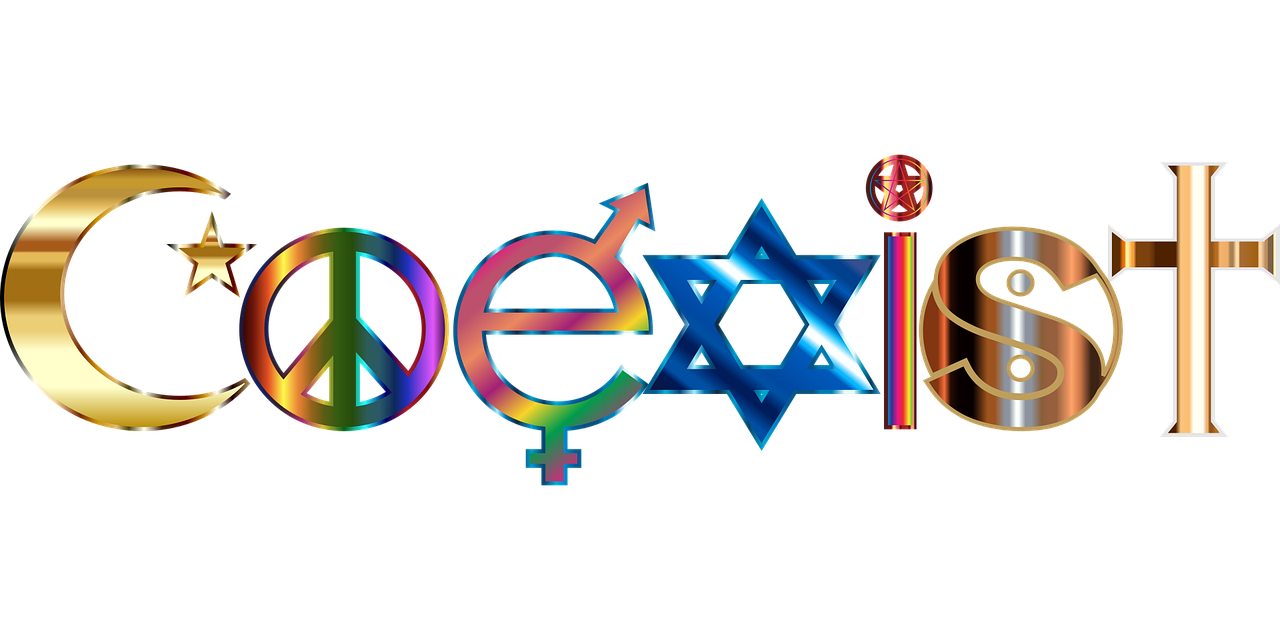
Christians, atheists, Muslims, Jews, Buddhists, pagans, and many others live side by side. Mutual respect requires recognizing that no single worldview represents everyone.
That does not mean people must hide their beliefs.
It simply means acknowledging that the world is bigger than any one tradition, and that the people we meet may not share our assumptions.
Living peacefully in a pluralistic society requires that kind of awareness from all of us.