Tag: atheism

  • Faith, Poverty, and the Problem of Suffering

    Faith, Poverty, and the Problem of Suffering

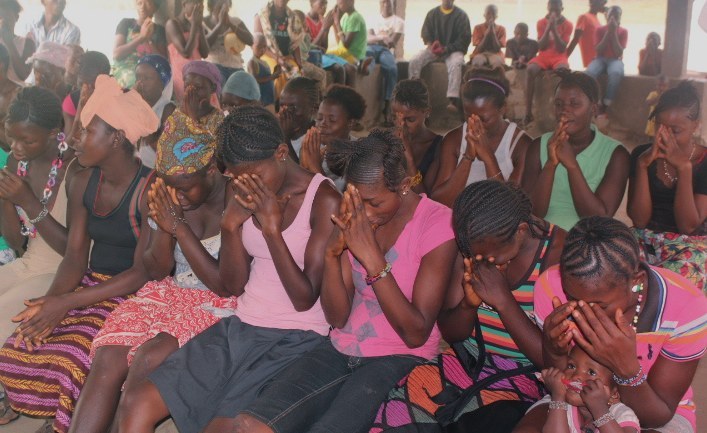
    One thing that has always puzzled me is how deeply religious many of the most desperate people in the world tend to be.

    In many parts of the Global South, countries dealing with poverty, political instability, civil wars, or ethnic violence, religion often plays an enormous role in everyday life. The same pattern appears in many impoverished communities in the United States as well, including historically marginalized Black communities.

    At first glance, that seems counterintuitive.

    You might expect that people living under the harshest conditions would be the most likely to question the existence of a loving and powerful deity. After all, if a God exists who is both omnipotent (all-powerful) and omnibenevolent (all-loving), why would so many of the people who pray to that God be trapped in poverty, violence, and instability?

    Philosophers have asked versions of that question for centuries.

    It is sometimes called the Problem of Evil: if God is all-powerful, all-knowing, and all-loving, why does suffering exist at such a massive scale?

    This question becomes especially difficult when we look at the distribution of suffering in the world. Many of the most devout populations live in places where resources are scarce, healthcare is limited, life expectancy is lower, and political systems are unstable. Meanwhile, many of the wealthiest and most secure societies on earth are becoming increasingly secular.

    That contrast raises uncomfortable questions.

    Why would a loving deity allow the most faithful believers to live under the harshest conditions? Why are so many people who pray daily still forced to struggle for necessities like food, clean water, medical care, and safety?

    Believers have offered many answers. Some argue that suffering is part of a divine plan. Others say it results from human free will, corruption, or the brokenness of the world. Some suggest that faith provides psychological strength that helps people endure hardship.

    But for skeptics and atheists like me, these explanations often feel unsatisfying.

    From a secular perspective, religion can sometimes appear less like a response to evidence and more like a coping mechanism. It becomes something that provides emotional comfort in situations where people have little control over their circumstances.

    Despite this, I understand the need for people to seek the hope of religion… at lest on a purely psychological level.

    Human beings have always created systems of meaning to help them survive hardship. Faith can offer community, hope, and psychological resilience in environments where those things are desperately needed. I get that.

    But still, the philosophical tension remains.

    If suffering is widespread, persistent, and often falls hardest on those who are already vulnerable, it raises difficult questions about the nature, or even the existence, of an ominbelevolent, ominscient, omipresent, and omnipotent supreme supernatural being.

    For many atheists, that tension is one of the reasons belief becomes difficult to maintain.

    Not because we dislike religion or want to antagonize believers… well, at least not me… most of the time, but because the world itself often appears incompatible with the idea of a benevolent and actively intervening deity, especially in many of the most religious countries.

  • Faith, Identity, and Belonging in the Divine Nine

    Faith, Identity, and Belonging in the Divine Nine

    For many years, I have wanted to become a member of one of the Divine Nine organizations. That interest goes all the way back to my senior year of high school, although circumstances prevented me from pursuing that path at the time.

    Even now, the idea still appeals to me.

    At the same time, I recognize something important: these organizations have long histories, traditions, and cultural norms. If I eventually seek membership, I cannot expect those institutions to change their identity simply to accommodate my personal beliefs.

    Respect has to go both ways. If they respect me enough to accept me as a member, I have to respect the organization enough to conform to their standards when representing the organization.

    This question came to mind recently after a member of Alpha Phi Alpha made headlines for wearing a pink suit and high heels during his graduation ceremony while wearing his fraternity sash. The member, who identifies as part of the LGBTQIA community, chose to celebrate his achievement in a way that expressed his personal identity.

    The reaction to that moment highlighted a tension that exists within many historically Black institutions.

    On paper, the Divine Nine organizations do not discriminate based on race, religion, or sexual orientation. In practice, however, many members, especially from older generations, hold traditional views about religion, sexuality, and gender expression.

    That tension is not unique to fraternities and sororities. It reflects broader debates happening throughout the Black community.

    For example, I am an atheist. I understand that every Divine Nine organization was founded within a Christian cultural context, and that prayers and religious language are often part of meetings and ceremonies. If I were to become a member someday, I would not expect those traditions to disappear simply because I do not share the same religious beliefs.

    All I would ask is the same courtesy in return: the ability to live according to my own philosophical beliefs while respecting the traditions of the organization.

    The situation becomes even more complicated when questions of sexual orientation and gender expression enter the picture. Unlike religious belief, which can remain private unless someone chooses to disclose it, gender expression is often visible.

    That visibility can place LGBTQ members in environments where parts of the membership may still be uncomfortable with their identity or self-expression.

    In the case of the Alpha Phi Alpha member who wore heels to his graduation, I believe it is important to remember the context. He was not attending a fraternity meeting or ritual event. He was celebrating his personal academic achievement, and he chose to do so in a manner that reflected his personality and personal identity.

    However, he wore the graduation stole of the organization during his graduation, and therefore was a reflection of the organization’s values and reputation.

    It is a complicated debate.

    Ultimately, moments like this raise a broader question for institutions like the Divine Nine and for the Black community as a whole: how do we balance tradition with evolving understandings of identity and inclusion?

    These organizations have historically played vital roles in leadership, scholarship, and community uplift. As society continues to change, those institutions will inevitably face conversations about how welcoming they are to members whose identities or beliefs fall outside traditional expectations.

    I hope those conversations lead toward greater understanding rather than deeper division.

    And while I am not yet a member of any Divine Nine organization, I still hope that if I ever do join one, it will be in a spirit of mutual respect: respect for the organization’s traditions and respect for the individuality of the people who choose to become part of it.

  • A Note to Christians About Atheists

    A Note to Christians About Atheists

    Many people who know me are aware that I am an atheist. But I wasn’t always one.

    I was once very religious when I was younger, but over time, my beliefs changed. I won’t go into the entire story of my deconversion here. That would require far more time and space than this post allows.

    Instead, I want to talk about something simpler: how expressions of faith sometimes come across to those of us who do not share those beliefs.

    First, a little context.

    I do not go out of my way to announce my atheism simply to provoke people or start arguments. In fact, I would generally prefer to be left alone about it. But I do sometimes wear clothing that reflects my support for secular organizations such as American Atheists, Black Nonbelievers, the Freedom From Religion Foundation, and others.

    And if someone asks me directly where I stand, I will answer honestly.

    For me, this is not about offending anyone. It is simply about expressing my worldview in the same way religious people often express theirs.

    My goal has always been to challenge the myths people have about atheists. Many believers are taught that atheists are immoral, bitter, or hostile toward humanity. In reality, most of us simply do not believe in any gods (Christian, Islamic, Hindu, or otherwise).

    But we still believe in empathy.

    Any good I try to do in the world is not motivated by promises of eternal bliss (Heaven), fear of eternal punishment (Hell), or the expectation of cosmic rewards. It comes from the basic recognition that other human beings deserve compassion and dignity.

    Recently, I had a small interaction that reminded me how easily misunderstandings can happen between believers and nonbelievers.

    While trying to locate an event for my daughter’s school, I briefly spoke with a group of Christians in the area. The conversation was cordial and short. As I was leaving, one woman said, “I’ll pray that you find where you’re going… in Jesus’ name.”

    I smiled and continued on my way. I didn’t respond or make an issue of it.

    But it did make me pause and reflect.

    Was she simply trying to be kind in the way her faith taught her to be? Possibly. I try not to assume bad intentions when I cannot know someone’s motivations.

    At the same time, moments like that can sometimes feel uncomfortable for those of us who do not share those beliefs. Not because we are hostile to religion, but because it can feel as though a very specific religious worldview is being assumed as universal.

    In a religiously diverse society, small differences in language can matter.

    A phrase like “I hope you find where you’re going” is universally understood. Even “I’ll pray for you” can feel relatively broad, since many different traditions include some form of prayer or meditation.

    But explicitly invoking a specific deity can sometimes feel like an assumption that everyone present shares that belief.

    That assumption is not always intended. But it is often felt.

    I want to be clear about something: I do not object to people having faith or expressing it. Religion helps many people navigate a difficult world, and if someone’s beliefs encourage kindness and compassion, I have no desire to take that away from them.

    What I object to are a few common assumptions:

    • That everyone is or should be Christian.
    • That atheists reject religion because they are ignorant or immoral.
    • That explicitly religious language is always welcome in every context.

    The reality is that we all share this society.

    Christians, atheists, Muslims, Jews, Buddhists, pagans, and many others live side by side. Mutual respect requires recognizing that no single worldview represents everyone.

    That does not mean people must hide their beliefs.

    It simply means acknowledging that the world is bigger than any one tradition, and that the people we meet may not share our assumptions.

    Living peacefully in a pluralistic society requires that kind of awareness from all of us.

  • What Went Wrong With the Atheist Movement

    What Went Wrong With the Atheist Movement

    One of the ongoing debates about the atheist movement of the 2000s and early 2010s is whether it “collapsed” because it became too politically progressive or “too woke.”

    I don’t think that explanation holds up.

    In my view, the real problem with the movement was something else entirely: it contained a significant number of reactionary voices, particularly white male commentators, who eventually stopped hiding their hostility toward women, marginalized communities, and racial minorities.

    For a while, those tensions remained mostly beneath the surface. But when controversies like Elevatorgate, Gamergate, and similar disputes erupted, they exposed cultural problems that had been developing inside the movement for years.

    Regardless of where one stood on the details of those specific incidents, they represented opportunities for reflection and self-examination.

    Unfortunately, many of us (including myself) responded defensively rather than thoughtfully.

    Instead of listening to people who felt alienated or marginalized within atheist spaces, the dominant reaction in many circles was to dismiss their concerns, mock them, or accuse them of trying to impose political correctness on what was supposed to be a rationalist community.

    In hindsight, that response made things worse.

    Atheism itself is simply a position on one question: whether gods exist. But movements built around atheism inevitably become social communities, and communities bring their own cultural dynamics.

    When those dynamics include arrogance, hostility, or a lack of empathy, people eventually notice.

    The uncomfortable truth is that many of us behaved like self-important gatekeepers who were quick to criticize religion but much slower to examine our own toxic attitudes and behavior.

    The movement’s credibility suffered as a result.

    Looking back, it’s clear that moments of conflict within the atheist community could have been growth opportunities. They could have encouraged more thoughtful conversations about inclusion, respect, and how a community built around skepticism should treat the people within it.

    Instead, too often, those conversations devolved into hostility and factionalism.

    If there is a lesson to take from that period, it is a simple one: skepticism should not only apply to religious beliefs.

    It should also apply to our own behavior.

  • A Personal Note on Atheism and Religious Freedom

    A Personal Note on Atheism and Religious Freedom

    My name is Mario Stanton. I am an atheist and the founder of the Black Atheists Facebook group. Over the years, the group received attention from several media outlets, including The Grio and The New York Times.

    I mention this not to boast, but to clarify something important: I am not affiliated with any religious organization.

    My atheism is the result of years of study, reflection, and personal experience. I do not believe in any gods, and I often find many religious doctrines philosophically and intellectually irrational.

    However, there is an important distinction between disagreement and hostility.

    While I do not share religious beliefs, I strongly support the right of people to believe and practice the religion of their choice. Freedom of conscience is one of the most important principles in a pluralistic society.

    Over the years, I have found myself defending religious communities, particularly Muslims, against unfair stereotypes and discrimination. That might surprise some people, considering that my atheism would make me unwelcome in certain religious contexts, particularly with many Muslims.

    But fairness requires consistency.

    Muslims, like every other group, are not a monolith. Some individuals are admirable, compassionate people. Others are not. The same is true of Christians, Jews, Hindus, pagans, atheists, and every other category of human being.

    No group has a monopoly on virtue or vice.

    Unfortunately, public discourse often treats entire religious communities as if they can be defined by the actions of their worst members. This is one of the key characteristics of bigotry.

    Muslims are sometimes generally reduced to extremists in the public imagination. However, Christians and Jews are immune from this, even though Christians are sometimes associated with white supremacy and other troubling beliefs, and Jews are associated with Kahanism and extreme Zionism.

    Religious extremism is religious extremism, no matter what religion it is tied to.

    The reality is much simpler: people are individuals. Some are kind, thoughtful, and ethical. Others are not.

    My position is straightforward. I will continue to disagree with religious beliefs that I find unconvincing, but I will also continue to defend the right of others to practice their faith freely. I will do this as long as those practices do not harm others or infringe on their rights.

    Disagreement is inevitable in a diverse society.

    But fairness should be non-negotiable.

  • A Note for New Readers

    A Note for New Readers

    Hello, everyone.

    For those who may not know me from my Facebook page or are unfamiliar with my writing, I want to briefly explain the kinds of topics I discuss and the perspective I bring to those conversations.

    In everyday life, I’m generally a relaxed and humorous person, but my writing tends to focus on serious issues, many of which people consider controversial. I often discuss topics that many people avoid in polite conversation: race, politics, religion, history, and social inequality. These conversations can generate strong reactions, and I understand that not everyone will agree with the positions I take.

    With that in mind, there are a few things readers should know about me.

    First, I consider myself pro-Black. My views are influenced by traditions of Black liberation thought, Pan-Africanism, and Afrocentric scholarship. That does not mean I am hostile toward other racial groups. However, I do believe that many of the modern racial hierarchies we see today have their roots in European colonial systems that imposed rigid racial classifications across much of the world. Because of that history, I have very little patience for openly anti-Black rhetoric, regardless of who expresses it.

    Second, I am an atheist. My atheism is not the result of ignorance or rebellion but the result of years of reading, research, and reflection. I respect the fact that religion is deeply personal for many people, and I generally avoid debating religion with many people out of courtesy. Religious beliefs are extrememly personal and I strongly believe that one’s spiritual walk is their own. I simply ask for the same respect in return. Expressions of faith are one thing; persistent attempts to proselytize to me, whether through private messages, unsoliticed phone calls, or “forced” debates, are another.

    Third, my politics are left-leaning, and I generally describe myself as a democratic socialist, and a leftist. While I try to understand perspectives across the political spectrum, I strongly disagree with many positions associated with contemporary conservative politics, particularly those that dismiss the struggles of low-wage workers or celebrate economic systems that leave large numbers of people behind.

    I believe conversations about these issues are necessary, even when they are uncomfortable. My goal is not to provoke hostility but to engage with difficult topics honestly and critically.

    If these subjects are not something you’re interested in seeing, I completely understand. I will post some lighter subject matter in the future. Everyone curates their online space differently.

    But if you are willing to engage thoughtfully, even when we disagree, then you are welcome here. Just try to be somewhat mature and respectful.

  • Why Do I Have to Explain Being an Atheist?

    Why Do I Have to Explain Being an Atheist?

    One of the most common reactions I receive when I tell people that I’m an atheist is, ironically, disbelief.

    The conversation usually follows a familiar pattern.

    “I’m an atheist.”

    “You’re an atheist?”

    Then comes the inevitable follow-up question: “Why?”

    Sometimes the question is genuine curiosity. But often it comes loaded with assumptions, usually the expectation that I must justify my lack of belief in the same way someone might explain a controversial political opinion.

    What has always struck me as strange is the underlying assumption behind the question itself.

    Why does disbelief require an explanation?

    In many societies, religious belief is treated as the default setting of human existence. Because of that assumption, people who do not believe are often expected to explain themselves in ways that believers rarely are.

    But belief and disbelief are both positions people arrive at through their own experiences, reasoning, and reflections.

    In my case, conversations about atheism often turn into debates that have very little to do with philosophy or metaphysics. Instead, they become exchanges between dogma and scientific arguments, with each side talking past the other.

    That kind of discussion rarely leads anywhere productive.

    Despite that, I usually answer the question anyway. Not because I believe I owe anyone an explanation, but because it can be an opportunity to address some of the misconceptions people have about atheists.

    Many people assume that atheists are hostile toward religion, immoral, or angry at the concept of God itself. In reality, most atheists simply do not find the evidence for religious claims convincing.

    For many of us, disbelief is not a rebellion, an excuse to “sin,” or a dramatic declaration of extreme contrarianism. It is simply the conclusion we arrived at after thinking about the questions that religion attempts to answer.

    Still, what often becomes clear in these conversations is that some people are not really interested in understanding atheism at all. Their goal is to proselytize, persuade, attempt to correct, or defend their own beliefs.

    And that is where the conversation usually stops being a conversation and starts being a series of unnecessary attacks.

    Because belief, like disbelief, is ultimately a personal conclusion that each individual must reach on their own.

    I chose my position a long time ago. I didn’t choose it through ignorance or malicious intent. I chose it because it made the most sense to me based on years of philosophical thought and research.

  • When I Disagreed With the New Atheists

    When I Disagreed With the New Atheists

    Years ago, I wrote about a debate that took place on Real Time with Bill Maher between Yasiin Bey (formerly Mos Def) on one side and Bill Maher and Christopher Hitchens on the other. The topic, unsurprisingly, was the September 11 attacks and the broader question of Islam.

    At the time, I was widely known among my peers as an atheist thinker and leader. I would jokingly refer to myself as “the atheist.” Because of that, many people expected me to side with Maher and Hitchens. Both men were major figures in the New Atheist movement, and their criticism of religion (especially Islam) was widely embraced within those circles.

    But I found myself agreeing with Yasiin Bey.

    The reason was simple: I have never trusted the United States government’s justifications for many of the wars and military actions it has undertaken since World War II. History provides too many examples of misleading narratives, exaggerated threats, or outright falsehoods used to justify military intervention.

    I was also uncomfortable with the way Muslims were being singled out as uniquely dangerous.

    Most Muslims are not violent extremists. In my own life, I have known many Muslims, and they are as diverse in their beliefs, practices, and interpretations of their religion as Christians or Jews are.

    As a Black American, I also could not ignore another historical reality: my community has experienced far more terrorism from people identifying as Christians than from Muslims. Groups like the Ku Klux Klan cloaked themselves in Christian imagery and language while carrying out campaigns of terror against Black Americans.

    That history makes it difficult for me to accept arguments that treat Islam as uniquely violent while giving Christianity or Judaism a pass for the actions of their worst adherents.

    Maher and Hitchens often insisted that extremist Muslim groups represented something intrinsic to Islam itself. Yet when confronted with violent or extremist groups within Christianity, such as the KKK or Christian Identity movements, they were much quicker to argue that those groups were distortions of the religion rather than expressions of it.

    That double standard always bothered me.

    If organizations like ISIS or Al-Qaeda are considered perversions of Islam (and I believe they are), then the same intellectual honesty should be applied when discussing extremist groups that claim Christian identity.

    At the time, my position drew criticism from some of my fellow atheists. Many people in the New Atheist movement treated Maher and Hitchens almost as intellectual heroes, and disagreeing with them was not always well received.

    But I have always believed that intellectual honesty matters more than tribal loyalty.

    I still respect both Maher and Hitchens for their role in normalizing atheism and encouraging people to question religious authority. Their contributions to secular thought are significant.

    But admiration does not require agreement.

    Even then, I could see that their criticism of religion, particularly Islam, sometimes crossed the line from critique into something that felt more like cultural hostility at best and bigotry at worst.

    Looking back now, I feel even more confident in the position I took at the time.

    Sometimes the most honest place to stand is not with your allies or your critics, but simply where the evidence and your own conscience lead you.