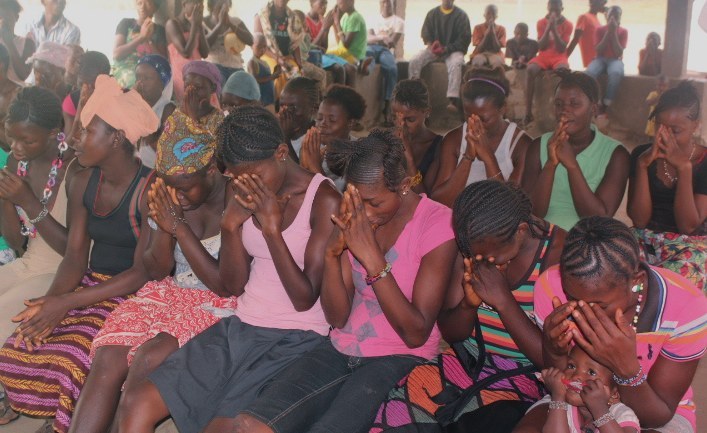
One thing that has always puzzled me is how deeply religious many of the most desperate people in the world tend to be.
In many parts of the Global South, countries dealing with poverty, political instability, civil wars, or ethnic violence, religion often plays an enormous role in everyday life. The same pattern appears in many impoverished communities in the United States as well, including historically marginalized Black communities.
At first glance, that seems counterintuitive.
You might expect that people living under the harshest conditions would be the most likely to question the existence of a loving and powerful deity. After all, if a God exists who is both omnipotent (all-powerful) and omnibenevolent (all-loving), why would so many of the people who pray to that God be trapped in poverty, violence, and instability?
Philosophers have asked versions of that question for centuries.
It is sometimes called the Problem of Evil: if God is all-powerful, all-knowing, and all-loving, why does suffering exist at such a massive scale?
This question becomes especially difficult when we look at the distribution of suffering in the world. Many of the most devout populations live in places where resources are scarce, healthcare is limited, life expectancy is lower, and political systems are unstable. Meanwhile, many of the wealthiest and most secure societies on earth are becoming increasingly secular.
That contrast raises uncomfortable questions.
Why would a loving deity allow the most faithful believers to live under the harshest conditions? Why are so many people who pray daily still forced to struggle for necessities like food, clean water, medical care, and safety?
Believers have offered many answers. Some argue that suffering is part of a divine plan. Others say it results from human free will, corruption, or the brokenness of the world. Some suggest that faith provides psychological strength that helps people endure hardship.
But for skeptics and atheists like me, these explanations often feel unsatisfying.
From a secular perspective, religion can sometimes appear less like a response to evidence and more like a coping mechanism. It becomes something that provides emotional comfort in situations where people have little control over their circumstances.
Despite this, I understand the need for people to seek the hope of religion… at lest on a purely psychological level.
Human beings have always created systems of meaning to help them survive hardship. Faith can offer community, hope, and psychological resilience in environments where those things are desperately needed. I get that.
But still, the philosophical tension remains.
If suffering is widespread, persistent, and often falls hardest on those who are already vulnerable, it raises difficult questions about the nature, or even the existence, of an ominbelevolent, ominscient, omipresent, and omnipotent supreme supernatural being.
For many atheists, that tension is one of the reasons belief becomes difficult to maintain.
Not because we dislike religion or want to antagonize believers… well, at least not me… most of the time, but because the world itself often appears incompatible with the idea of a benevolent and actively intervening deity, especially in many of the most religious countries.