Tag: Bill Maher

  • Limousine Liberalism and the Politics of Comfort

    Limousine Liberalism and the Politics of Comfort

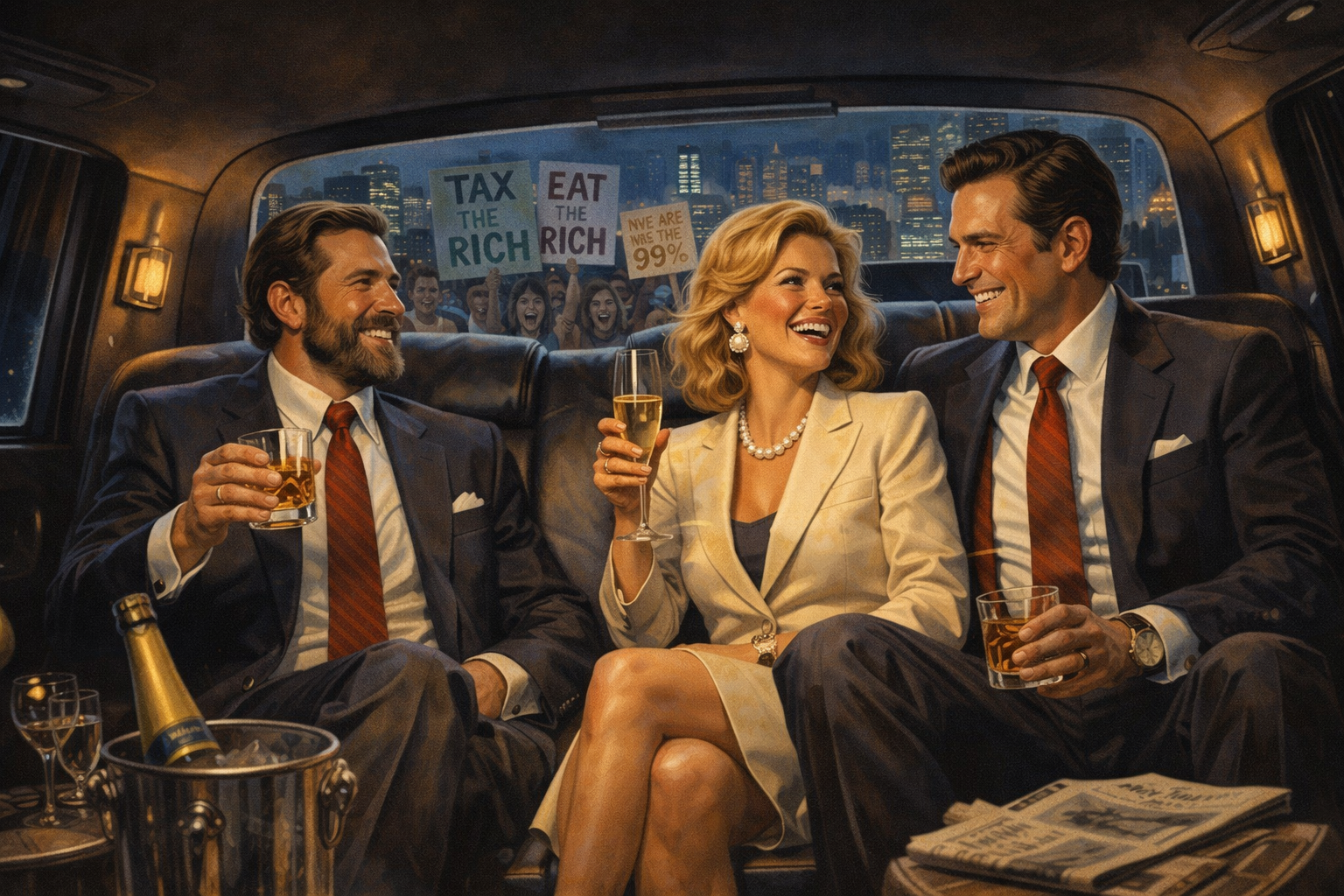
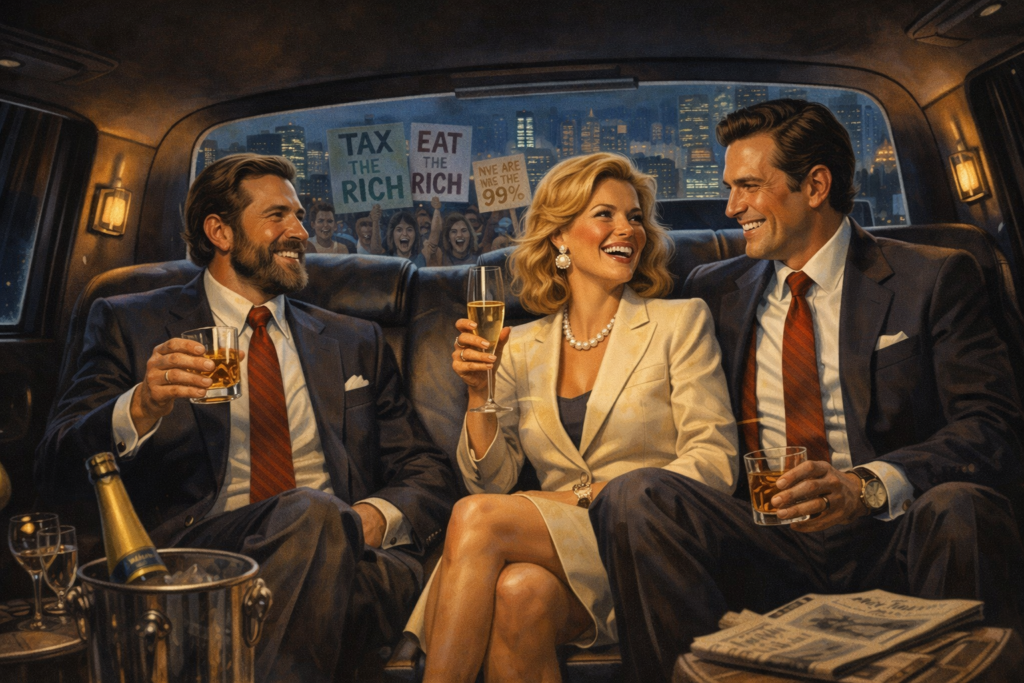
    If the phrase “limousine liberal” needed a modern example, many critics would point to Bill Maher.

    For decades, conservatives have used the term to describe a particular kind of liberal politics… one practiced by wealthy cultural elites who champion progressive social causes while remaining largely disconnected from the economic struggles of ordinary people.

    Whether that label is fair in every case is debatable. But the criticism highlights a real tension within American liberalism.

    The problem is not support for civil rights, LGBTQ equality, environmental protection, or other social issues, no matter how tepid and/or performative it may be. Those struggles are important and necessary. The problem arises when those causes are championed without addressing the economic structures that produce inequality in the first place.

    This tension was visible in a recent segment of Maher’s show in which he criticized younger Americans for being overly pessimistic and encouraged people to “cheer the fuck up.” In his view, dissatisfaction with the current political environment reflects an overly negative outlook among younger generations.

    But that interpretation overlooks the economic reality facing millions of Americans.

    Over the past several decades, the United States has undergone a dramatic economic transformation. Manufacturing jobs that once provided stable middle-class livelihoods have been replaced by lower-paying service work. Wages have stagnated while the cost of housing, healthcare, education, and childcare has steadily risen.

    Today, many Americans are financially fragile. Surveys regularly show that a large percentage of households would struggle to cover even a modest emergency expense. At the same time, economic growth and stock market gains are increasingly concentrated among a relatively small segment of the population.

    When commentators dismiss widespread economic frustration as simple negativity, it can come across as profoundly out of touch.

    For people living paycheck to paycheck, debates about stock market performance or macroeconomic indicators feel distant from their everyday reality. Economic insecurity is not simply a matter of attitude. It is a real material condition.

    This is where critiques of “limousine liberalism” gain traction.

    Symbolic gestures and self-righteous virtue signaling can coexist with an economic system that continues to produce inequality and insecurity. Without adequately examining the deeper structural issues of unsafe labor conditions, wage stagnation, sharply rising housing costs, decreased access to affordable healthcare, and the massive influence of corporate power, political rhetoric about social progress can begin to feel hollow.

    Many Americans are not asking for perfection. They are merely asking for a political system that seriously addresses the economic pressures shaping their lives.

    When those concerns are dismissed as whining or irrational pessimism, the gap between political elites and working people only widens.

    And that gap helps explain why so many voters remain deeply dissatisfied with the current political moment.

  • When I Disagreed With the New Atheists

    When I Disagreed With the New Atheists

    Years ago, I wrote about a debate that took place on Real Time with Bill Maher between Yasiin Bey (formerly Mos Def) on one side and Bill Maher and Christopher Hitchens on the other. The topic, unsurprisingly, was the September 11 attacks and the broader question of Islam.

    At the time, I was widely known among my peers as an atheist thinker and leader. I would jokingly refer to myself as “the atheist.” Because of that, many people expected me to side with Maher and Hitchens. Both men were major figures in the New Atheist movement, and their criticism of religion (especially Islam) was widely embraced within those circles.

    But I found myself agreeing with Yasiin Bey.

    The reason was simple: I have never trusted the United States government’s justifications for many of the wars and military actions it has undertaken since World War II. History provides too many examples of misleading narratives, exaggerated threats, or outright falsehoods used to justify military intervention.

    I was also uncomfortable with the way Muslims were being singled out as uniquely dangerous.

    Most Muslims are not violent extremists. In my own life, I have known many Muslims, and they are as diverse in their beliefs, practices, and interpretations of their religion as Christians or Jews are.

    As a Black American, I also could not ignore another historical reality: my community has experienced far more terrorism from people identifying as Christians than from Muslims. Groups like the Ku Klux Klan cloaked themselves in Christian imagery and language while carrying out campaigns of terror against Black Americans.

    That history makes it difficult for me to accept arguments that treat Islam as uniquely violent while giving Christianity or Judaism a pass for the actions of their worst adherents.

    Maher and Hitchens often insisted that extremist Muslim groups represented something intrinsic to Islam itself. Yet when confronted with violent or extremist groups within Christianity, such as the KKK or Christian Identity movements, they were much quicker to argue that those groups were distortions of the religion rather than expressions of it.

    That double standard always bothered me.

    If organizations like ISIS or Al-Qaeda are considered perversions of Islam (and I believe they are), then the same intellectual honesty should be applied when discussing extremist groups that claim Christian identity.

    At the time, my position drew criticism from some of my fellow atheists. Many people in the New Atheist movement treated Maher and Hitchens almost as intellectual heroes, and disagreeing with them was not always well received.

    But I have always believed that intellectual honesty matters more than tribal loyalty.

    I still respect both Maher and Hitchens for their role in normalizing atheism and encouraging people to question religious authority. Their contributions to secular thought are significant.

    But admiration does not require agreement.

    Even then, I could see that their criticism of religion, particularly Islam, sometimes crossed the line from critique into something that felt more like cultural hostility at best and bigotry at worst.

    Looking back now, I feel even more confident in the position I took at the time.

    Sometimes the most honest place to stand is not with your allies or your critics, but simply where the evidence and your own conscience lead you.