I have been a fan of Shaquille O’Neal for decades. I bought Shaqs (his shoes)back in the day. I have defended his hip-hop career against people who act like he was a garbage rapper. I even listen to his EDM music. I love seeing him continue to get endorsements and get paid, and I have praised his generosity and down-to-earth persona.
But being a fan does not require me to ignore behavior that disappoints me. And being generous does not make someone immune to criticism.
That is where too many conversations about Black celebrities fall apart. The moment someone criticizes a wealthy, famous Black person, people start counting donations, comparing bank accounts, and asking what the critic has done for the community. Apparently, whoever writes the biggest check gets the final word on Black people and our liberation.
I do not accept that.
My frustration with Shaq comes from the distance between the man I admire and some of the positions he takes publicly. I can appreciate his generosity and still question his politics. I can celebrate his success and still be disappointed when he lends his voice to narratives that undermine legitimate Black grievances.
Those things can exist at the same time.
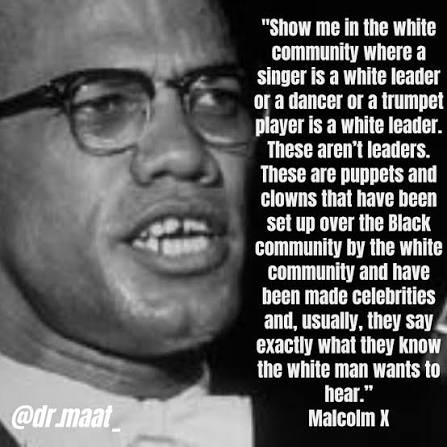
When I described Shaq as having “coon tendencies,” some conservative White people and non-Black Latinos responded by attacking my name, my skin color, and my Blackness. Others reached for a conveniently selected Malcolm X quote. Very few seemed interested in understanding the criticism itself.
And I think it is hilarious that people who claim to oppose identity politics suddenly become experts on who is Black enough when a Black person says something they do not like.
My criticism is about behavior: Black people reinforcing anti-Black narratives, seeking approval at our community’s expense, or treating proximity to White power as more important than Black self-determination. It is not a declaration that every Black person who disagrees with me is a sellout. It is also not a label I reserve for Republicans.
Democrats get criticized too. Over the years, I have criticized Barack Obama, Jay-Z, Hakeem Jeffries, Jim Clyburn, Kamala Harris, and others. There are plenty of Democrats I do not like or trust. A party affiliation does not purchase immunity from me any more than a donation does.
I see Republicans as more overtly hostile to Black interests, but that does not mean I am obligated to defend every Black Democrat. In a hypothetical election, I would gladly support a better White or other non-Black third-party candidate over two Black candidates whose politics fail my community. The question is whether that person’s values align with mine and whether their policies would bring tangible improvements to our lives.
Black skin alone does not establish a commitment to Black people.
That applies to people who terrorize our neighborhoods too. Killers, rapists, muggers, burglars, and robbers are destroying the same communities I want to see liberated. I should not have to attach a paragraph condemning them every time I criticize a celebrity or politician.
Law-abiding Black people do not enjoy losing loved ones. We do not enjoy discovering that somebody stole our catalytic converter and that we have to replace it with money we do not have. We do not enjoy being afraid in our own neighborhoods. The suggestion that we tolerate or celebrate these things is racist as fuck.
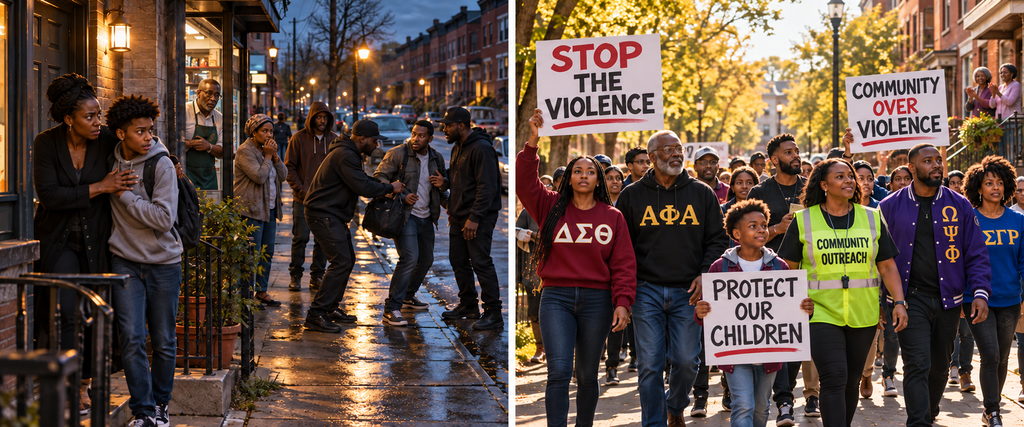
There is constant work happening in Black communities to prevent violence, support young people, and improve conditions. Much of it happens without cameras, national recognition, or a celebrity’s bank account. People who only drive through these neighborhoods on their way to work often know nothing about that work, yet feel qualified to lecture the people doing it.
This is why the “What have you done?” response annoys me so much. Someone’s unfamiliarity with my work does not mean that work does not exist. I do not owe a stranger my résumé so they can weigh it against a multimillion-dollar check.
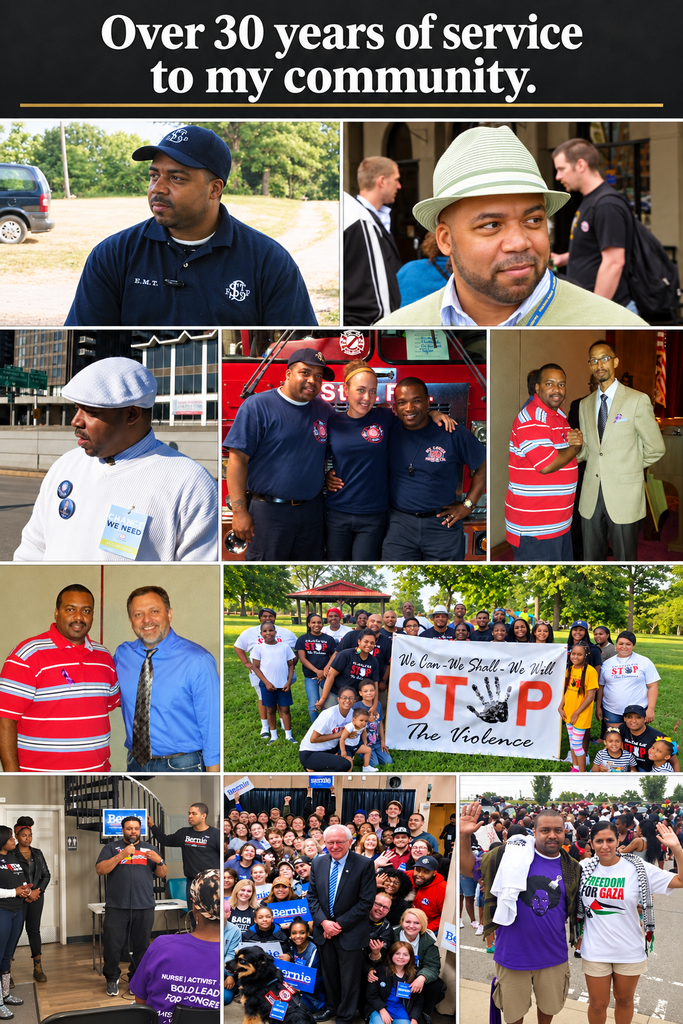
My work is my work. It is for the love of my community, not my personal glory.
With Shaq, one of the moments that really disappointed me was his appearance on Fox & Friends criticizing Colin Kaepernick’s national anthem protest. Shaq questioned the protest’s timing and method. I remember that appearance because of what the protest represented and where he chose to criticize it.[1]
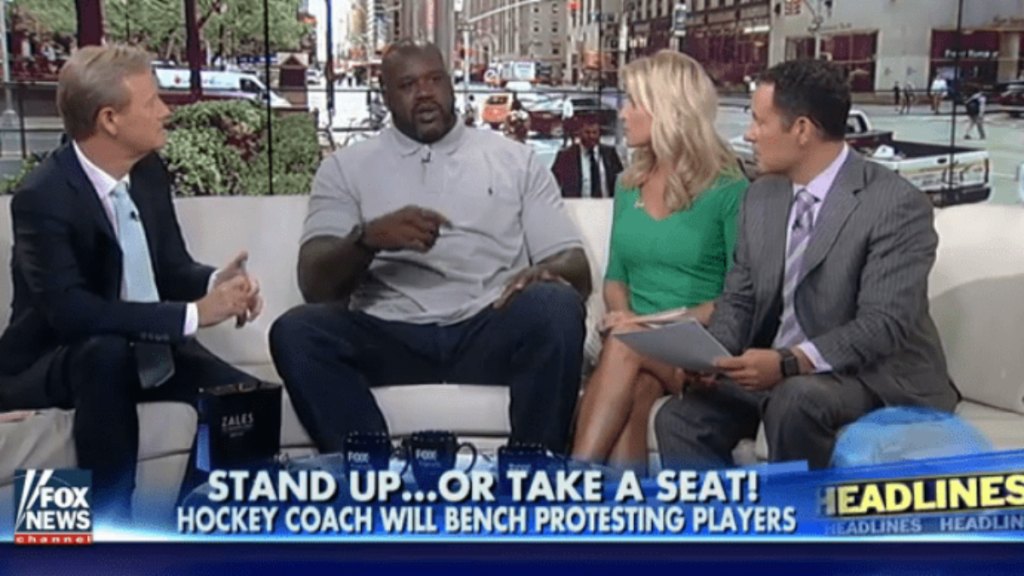
I understand that Shaq grew up in a military family. I understand that he may feel a particular reverence for the anthem. But Kaepernick was protesting injustice, and I saw that appearance as another opportunity for a hostile audience to dismiss Black concerns instead of confronting them.
To me, Fox & Friends has repeatedly helped turn legitimate Black criticism of this country into a debate over our behavior, our gratitude, and whether we are showing enough respect. That is a platform I would expect someone with Shaq’s influence to approach with care.
It left me feeling that protecting his public image and business relationships mattered more than standing ten toes down when Black people needed support. That is my criticism of his public choices. I cannot read his mind, and I am not claiming to know everything he does privately.
But I can respond to what he puts in front of the public.
And no, pointing to his philanthropy does not settle that conversation.
Money helps. Those of us who organize and fight these battles appreciate every cent we can get. A donation can feed people, keep a program open, or pay for something a struggling family desperately needs. I am not minimizing that.
What I reject is the assumption that generosity automatically proves a commitment to liberation, or that a wealthy donor has done more than everyone who has sacrificed years of time, effort, and personal resources.
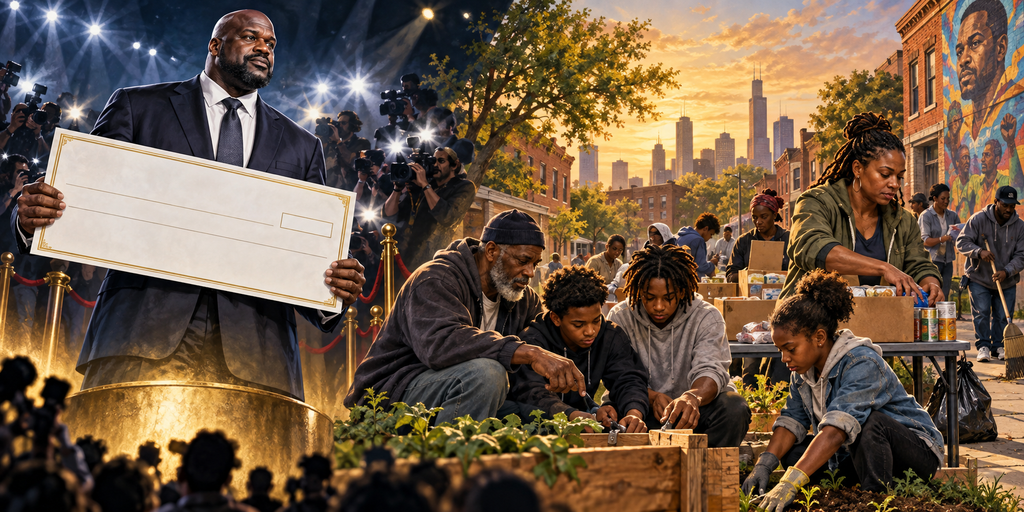
Philanthropy can come from compassion. It can also produce favorable publicity, protect a reputation, or serve business interests. Sometimes those motives overlap. The existence of a donation does not tell us everything about the donor’s politics or character.
History gives us plenty of reasons to keep that distinction in mind. In 1914, the Ludlow Massacre killed striking workers and family members in Colorado. Eleven children and two women died after fire swept through the tent colony. The conflict involved the Rockefeller-controlled Colorado Fuel and Iron Company, and the aftermath included efforts to repair John D. Rockefeller Jr.’s public reputation.[2]
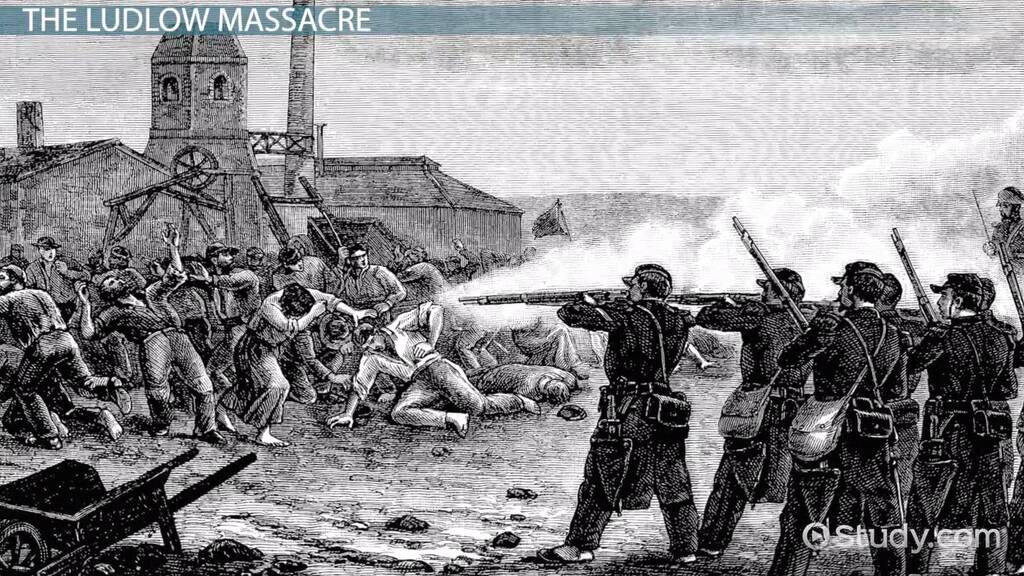
The lesson I take from that history is that a wealthy person’s public generosity should not make us forget the other ways their power affects people.
I am not equating Shaq with the people responsible for Ludlow. I am also not saying that his donations are a scheme to launder his image. I am explaining why “he gives money away” cannot be the end of every discussion about his public behavior.
I appreciate the money. I still have questions about the politics.
The same applies to other Black celebrities, including Stephen A. Smith and Bill Cosby. Too often, money and fame become shields against criticism. People act as though generosity erases every harmful statement, every bad decision, and every legitimate concern.
It does not.
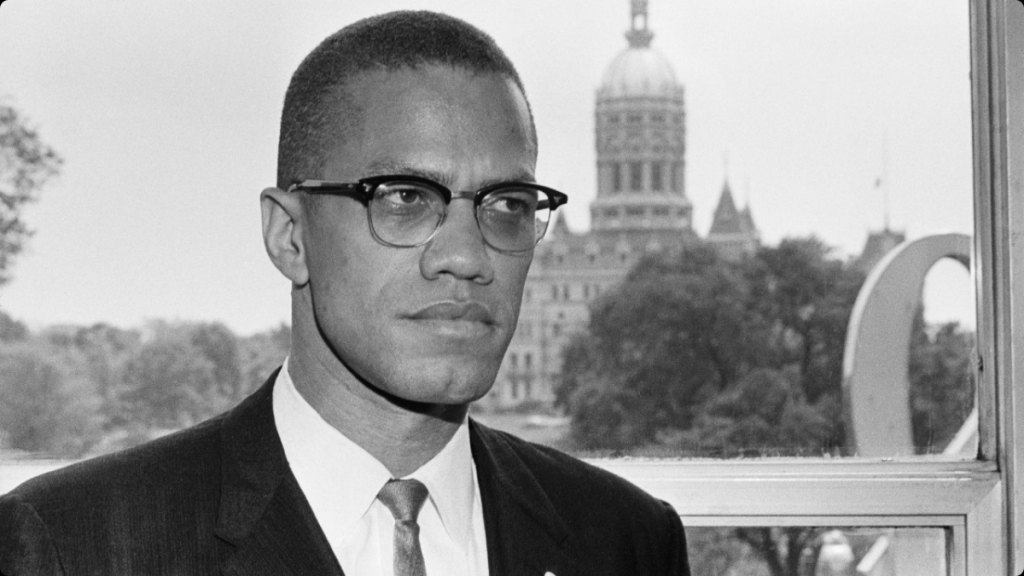
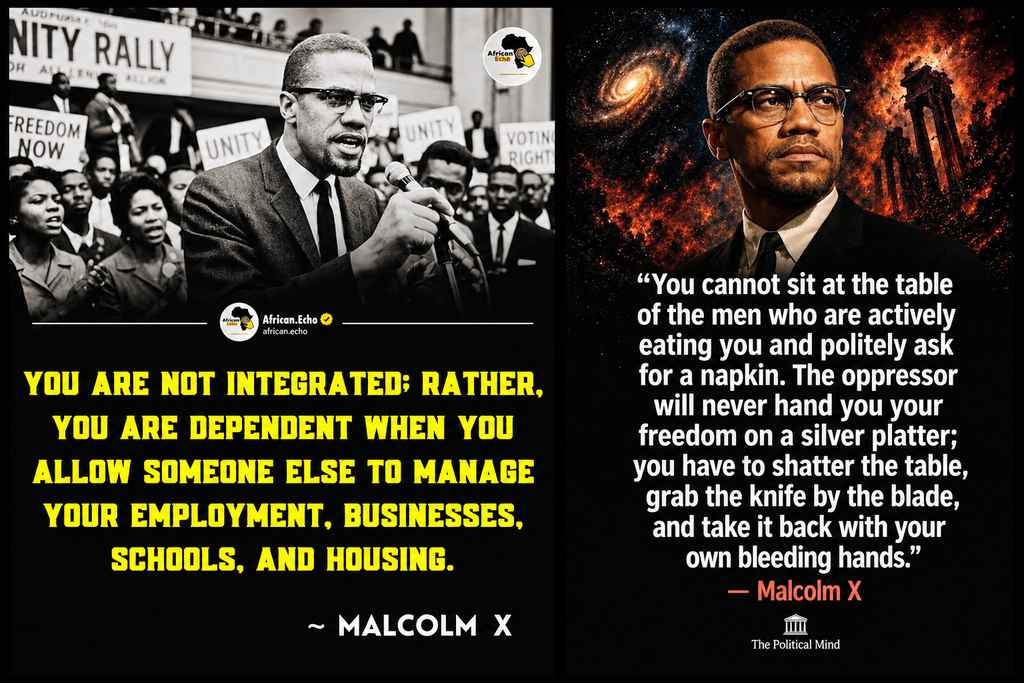
This confusion also shows up in the way White conservatives invoke Malcolm X. They love his criticism of White liberals and the Democratic Party, but somehow lose interest when his criticism turns toward White conservatives.
That takes some serious caucasity.
Malcolm’s criticism of liberals came out of his frustration with White political power, manipulation, and promises that did not produce freedom. In his 1963 speech “God’s Judgment of White America,” he compared White conservatives to wolves and White liberals to foxes. The fox’s apparent friendliness did not make it safe, and the wolf’s open hostility did not make it an ally.[3]
Quoting the part about the fox does not turn the wolf into a friend of Black people.
Malcolm’s positions developed over time, and his life deserves more attention than a meme or a clip stripped of context. But Black people thinking for ourselves and deciding our own course remained central to his politics. That is part of what I admire about him.
And I take that seriously when dealing with the White left, too.
I do not get my marching orders from White people. Period. Dot.
I have criticized White liberals, progressives, and leftists for racism, for treating Black struggles as opportunities to advance their own agendas, and for assuming they have the right to direct movements they did not build. Being on the left does not exempt anyone from that criticism.
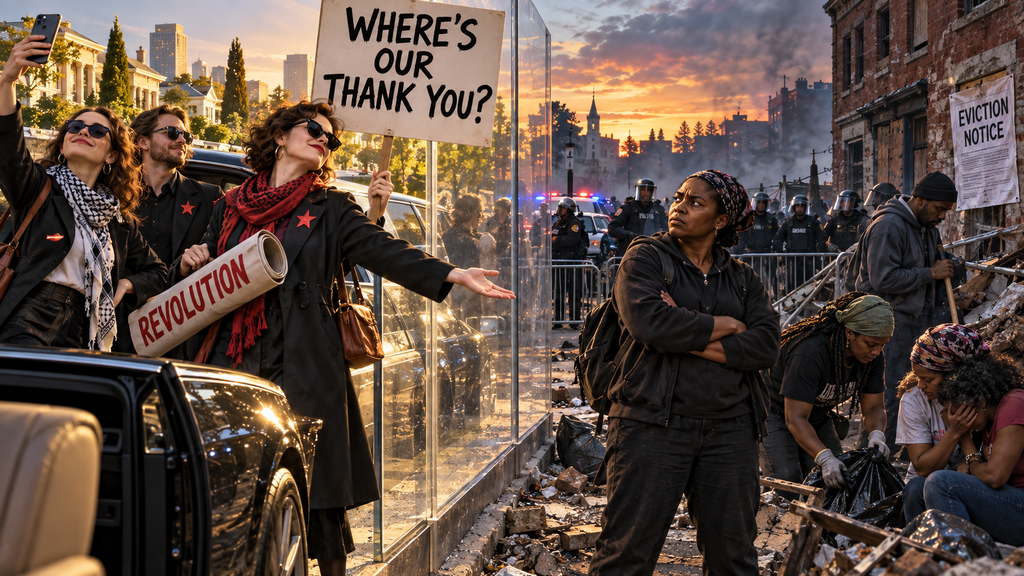
I experienced some of this firsthand in Ferguson in 2014. I remember members of the New Black Panther Party and White anarchists giving conflicting instructions through bullhorns. The Black organizers I heard were urging people to respect the curfew to avoid arrests and bloodshed. The anarchists were urging the crowd to ignore it and confront the police.
What stayed with me was the willingness of outsiders to encourage a confrontation whose consequences would fall on Black people and the surrounding community. From where I stood, one group was thinking about protecting the people in front of them. The other seemed much more interested in confrontation.
Black bodies are not disposable material for someone else’s revolution.
My account of that night does not explain every protest or every person involved. But it explains why I do not automatically trust someone just because they claim to share my politics. Solidarity requires listening, accountability, and respect for the people who have to live with the consequences.
I am a Black leftist because of my own values, experiences, and study. That position does not require permission from the White right or instructions from the White left.
It also does not require me to defend my Blackness every time someone dislikes what I say.
Yes, I am light-skinned. So were Malcolm X, Frederick Douglass, and plenty of other people whose commitment to Black people is difficult to dispute. What, exactly, is attacking my complexion supposed to prove?
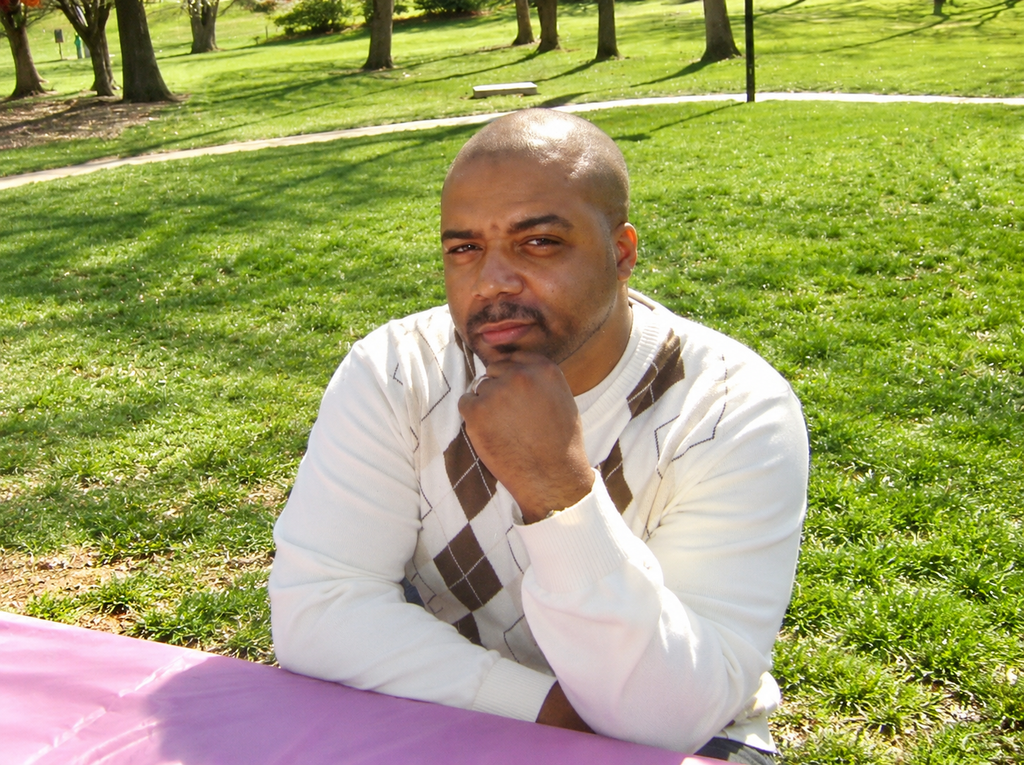
My skin color does not erase my ancestry, my experiences, or my identity. Neither does my name.
My name is Mario. There are plenty of Marios and DeMarios in the Black community. Does a Black man named William become English? Does a Black woman named Natasha become Russian? Was Kobe Bryant Japanese because of his first name?
I am Black. I am Black American. I am not Italian, and my olive complexion is not evidence that I am secretly Mediterranean. My family history includes African, European, and Indian ancestry. I do not need to turn my genealogy into an exhibit every time somebody wants to dodge my argument.
If the criticism is about my position, address my position. My complexion is not a rebuttal.
And disagreement with a celebrity does not automatically mean jealousy. I have had a good life. I am educated. I have not starved. I have great children. I do not need Shaq’s wealth or fame to appreciate my own life.
In fact, part of my affection for Shaq comes from something we have in common: we were both raised by stepfathers who loved us and treated us as their own.
My father was an entrepreneur, a leader, and a pillar in the community where I grew up. He provided a good life for our family, but he also helped people around us. I watched him help pay for funerals when families could not afford to bury their loved ones. I watched him feed hungry children. I watched him clean up our street and alley and make sure we took responsibility for the place where we lived.
I watched him help raise other people’s children. There are people in my community who still thank him for what he did.
I have tried to follow that example the best I can. When Shaq talks about his father, Phil, I recognize something in that relationship. Two children raised by Black men who taught us about responsibility, manhood, and service to the community. That matters to me. I feel the same way about my dad that he does about his, even though we are not the their biological children.
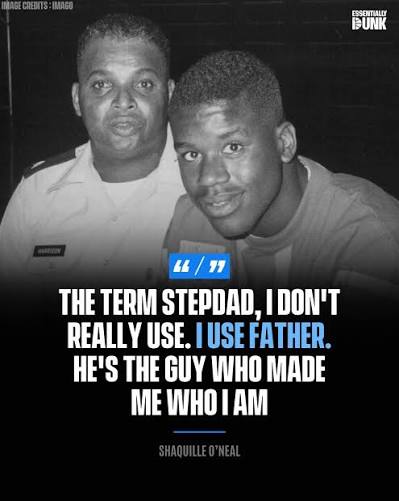
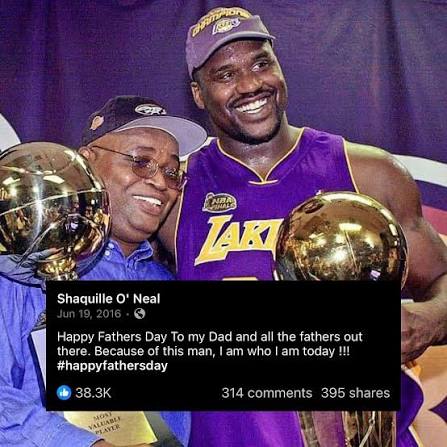
It is one reason my criticism comes with disappointment. There is affection behind it.
I am also not placing myself above the problem I am describing. I have to check my own thoughts, feelings, and assumptions all the time. White supremacy and the idea of Black inferiority are taught throughout this society. Being Black does not automatically protect us from absorbing them.
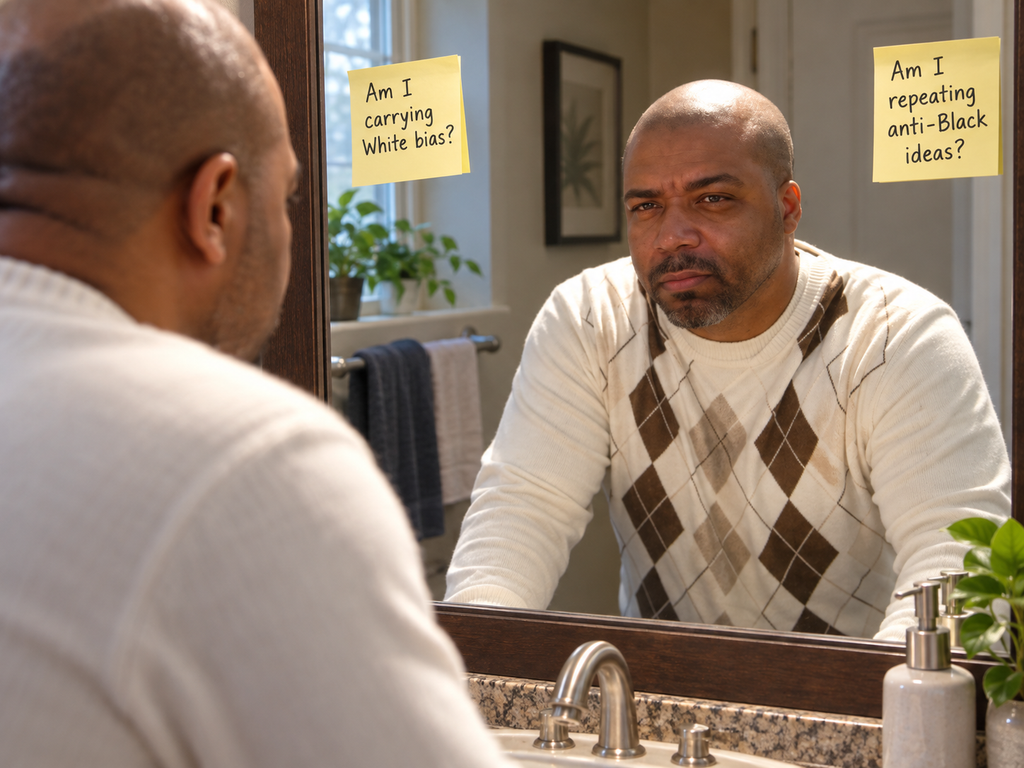
I do not believe any of us should assume we are finished unlearning those lessons. I certainly am not.
That is why I want us to be able to discuss anti-Black behavior without immediately turning the conversation into a defense of someone’s fame, bank account, or party affiliation. If I am reinforcing something harmful to our community, I need to examine it too.
Shaquille O’Neal is a celebrated athlete, entertainer, businessman, and philanthropist. Those accomplishments are real. They do not automatically make him a leader of Black people, or make his judgment on our political struggles more valuable than the judgment of people doing the work every day.
I want us to stop treating celebrity status as a qualification for community leadership. Selling products, winning championships, and becoming wealthy do not necessarily prepare someone to guide a people toward freedom.
I am unimpressed by Black obedience and respectability politics. Celebrating Black excellence or Black capitalism does little for me when the celebration ends with a few individuals becoming rich while the conditions facing the rest of our community remain intact.
What I respect is Black liberation and self-sufficiency. I want Black global advancement and autonomy. I want us to build the institutions, knowledge, resources, and collective power to stand on our own and make decisions about our own people.

That commitment runs through much of what I admire in Malcolm X and the broader history of Black self-determination. It is why I am an unapologetic Pan-Africanist and a proud Black American. It is why I study Malcolm, Dr. King, and the other giants whose shoulders I stand upon, even when their approaches differed and even if I disagree with each of them on minor details.
My loyalty is to my people and our liberation. No politician, party, celebrity, or donor gets to place themselves above that commitment.
I can love Shaq and still be disappointed in him. I can appreciate his generosity and still expect more from his public choices. I can criticize him without hating him, envying him, or denying the good he has done.
And I should not have to write a whole damn dissertation to explain that.