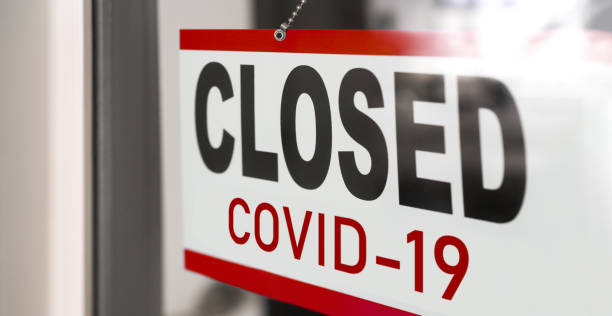
One argument that has circulated repeatedly since the beginning of the COVID-19 pandemic is the idea that governments and major industries somehow wanted lockdowns, mask mandates, and vaccine mandates.
But when you stop and look at the economic reality, that claim becomes very difficult to understand.
Entire sectors of the economy were devastated by the pandemic. Restaurants, tourism, hospitality, airlines, amusement parks, theaters, sports leagues, universities, entertainment industries, public transportation systems, and countless small businesses lost enormous amounts of revenue beginning in March 2020.
Many of these industries lost billions of dollars. Some may never fully recover.
If the goal of modern capitalism is economic growth (more consumption, more travel, more entertainment spending, more tourism, more investment), then deliberately shutting down large portions of the economy would make very little sense as a strategy.
Yet conspiracy narratives often assume that powerful actors wanted exactly that outcome.
This assumption ignores how economic systems actually function. Modern capitalism depends on expanding markets and constant activity. The pandemic disrupted supply chains, slowed production, closed venues, and drastically reduced consumer spending in many sectors.
In other words, the pandemic did not strengthen the economic system. It destabilized it.
At the same time, many of the people promoting conspiracy theories about public health measures express deep distrust of pharmaceutical companies while simultaneously promoting alternative drug treatments produced by the same pharmaceutical industry.
That contradiction often goes unnoticed.
Another common pattern during the pandemic has been the rejection of scientific expertise in favor of viral claims circulating through social media, talk shows, or online influencers. Medical studies are cited without being understood, preliminary data is interpreted incorrectly, and isolated findings are often exaggerated into sweeping conclusions.
Skepticism toward institutions can be healthy. Governments, corporations, and medical authorities should absolutely be questioned and held accountable.
But skepticism is not the same thing as assuming that every crisis is part of a hidden plot.
Public health policies during the pandemic have been controversial, imperfect, and sometimes poorly communicated. But the idea that entire economies would intentionally sabotage themselves in order to impose temporary public health measures requires a level of coordination and self-destruction that makes little practical sense.
The pandemic created real economic disruption, real political conflict, and real human tragedy.
Understanding those realities requires serious discussion—not conspiracy theories about why a society built on economic growth would willingly shut itself down.