Tag: crime & punishment

  • How Crime Statistics Are Used to Push Racist Narratives

    How Crime Statistics Are Used to Push Racist Narratives

    One of the most common talking points used in online debates about race and crime is the so-called “13/50” statistic. The claim is frequently repeated by people attempting to justify racist narratives about Black Americans and criminality.

    But statistics, when presented without context, can easily be used to mislead.

    The “13/50” argument relies on the selective interpretation of crime statistics, particularly FBI arrest data. It highlights the overrepresentation of Black Americans in certain categories of arrests, especially homicide and robbery, while ignoring the broader context of crime statistics and how those numbers are interpreted.

    For example, according to the U.S. Census Bureau, white Americans (white alone) make up roughly 60 percent of the U.S. population. When looking at FBI arrest data, however, white Americans account for large majorities in many categories of crime.

    Using the same FBI tables often cited in online debates, white Americans account for:

    • 82% of DUI arrests
    • 75% of sex offense arrests (excluding rape)
    • 74% of vehicle theft arrests
    • 72% of drug abuse violation arrests
    • 70% of rape arrests
    • 68% of burglary arrests
    • 67% of property crime arrests
    • 66% of arrests for offenses against family and children
    • 65% of simple assault arrests
    • 62% of aggravated assault arrests
    • 62% of arrests for possession of stolen property

    Overall, white Americans account for roughly 69 percent of all arrests, a number that exceeds their share of the population.

    None of this means that crime patterns should be ignored, or that certain communities do not face serious challenges related to violence and crime. Black Americans are indeed statistically overrepresented in some categories of arrests.

    But simply presenting one statistic without context does not explain why those patterns exist.

    Crime statistics are shaped by many factors, including poverty, neighborhood segregation, historical inequality, policing patterns, economic opportunity, and social conditions. Reducing complex social problems to a single racial statistic ignores these realities and turns data into a political weapon.

    This is why statistics must always be interpreted carefully.

    Numbers can illuminate reality, but they can also be manipulated to reinforce existing prejudices. Selective data presentation allows people to construct narratives that appear objective while still serving ideological agendas.

    The goal of examining these statistics is not to deny problems within any community, nor is it to portray any racial group as inherently criminal or morally inferior.

    Rather, the point is to demonstrate how easily statistics can be used to construct misleading narratives.

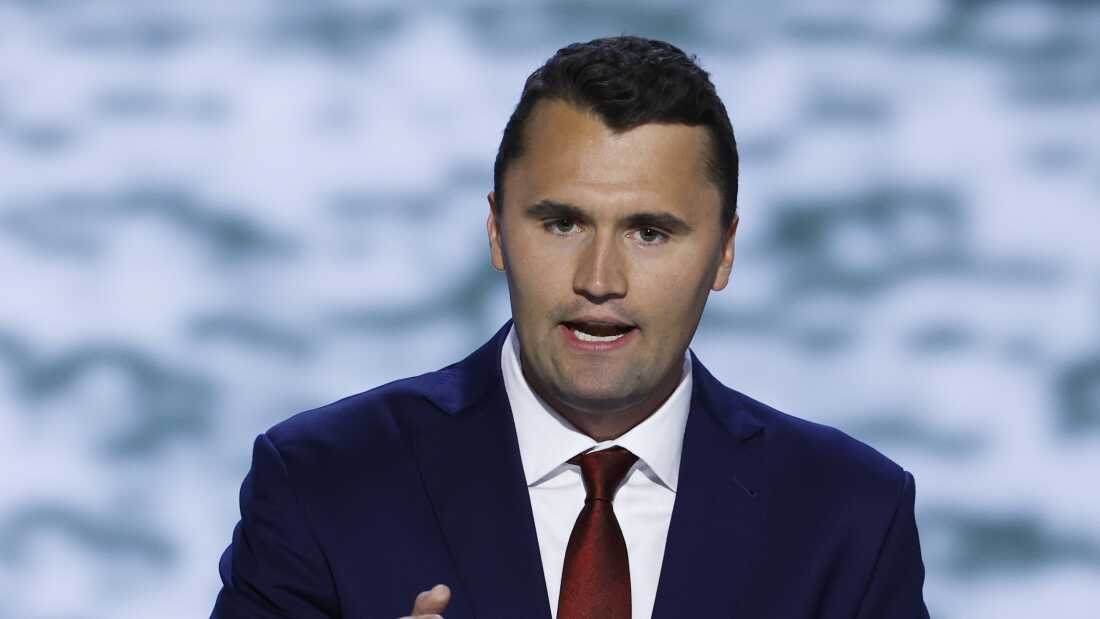
    When numbers are stripped of context and deployed as political talking points, they stop being tools of understanding and become instruments of propaganda. This is why Charlie Kirk wasn’t an objective truth teller. He was a racist but skillful manipulator of facts.

    Understanding crime, inequality, and social policy requires more than slogans and selective data. It requires an honest analysis of the underlying conditions that shape those numbers in the first place


  • The Epstein Files and the Rot of Power

    The Epstein Files and the Rot of Power

    What the scandal reveals about wealth, power, and accountability.

    The more I read about the latest Epstein file disclosures, the more disturbed and frankly ashamed I feel.

    I’m not talking about the rumor mill. Some of what people are circulating online comes from FBI tip lines or discredited claims. That isn’t what I’m referring to.

    What I’m talking about are the things that actually appear in the record: emails sent to or from Jeffrey Epstein and Ghislaine Maxwell, sworn testimony from victims given under penalty of perjury, and other evidence that investigators have said could support criminal cases, such as photographs, videos, and documentation of trafficking operations.

    Reading about these details is deeply disturbing.

    This isn’t about people having unconventional sex lives or engaging in consensual adult kink. Adults are free to live their lives however they choose. What the Epstein case reveals is something very different: the exploitation of young girls (some reportedly prepubescent or barely pubescent) by powerful people who treated them as disposable.

    These were vulnerable teenagers manipulated, trafficked, and abused by individuals with enormous wealth and influence. And for years, the systems that were supposed to protect them largely failed. It forces an uncomfortable question: what happens when immense wealth and power operate without meaningful accountability? The Epstein scandal suggests that the answer is often ugly.

    When people have the money, connections, and influence to shield themselves from consequences, the worst impulses can flourish. In that sense, Epstein was not a supernatural villain or some once-in-a-generation monster. He was something more troubling: a symptom of a system where wealth and power can insulate people from the laws and moral standards that govern everyone else.

    In many ways, Epstein functioned like a high-end pimp by providing powerful clients access to things they should never have been able to obtain. And our culture has sometimes romanticized that figure. For decades, entertainment media have portrayed pimps as rebellious anti-heroes rather than as people who often exploit vulnerable women and girls.

    The Epstein case strips away that mythology. It shows the brutal reality behind it.

    But the truth is that the problem isn’t limited to one man or one network. We’ve seen similar patterns in other high-profile abuse cases involving celebrities, entertainers, and powerful figures. Wealth, fame, and influence often create environments where victims struggle to be believed, and perpetrators expect to avoid consequences.

    That realization forces a level of personal reflection as well.

    Like many people, I can admit that in the past I sometimes dismissed or minimized allegations against powerful men whose work or status I admired. When people joked about or rationalized the abuse of young women by famous figures, it was often treated as scandalous gossip rather than as evidence of serious harm.

    Looking back, that culture of dismissal helped create the conditions where victims were ignored, and predators were protected.

    The Epstein files are horrifying not only because of what they reveal about specific crimes, but because they expose how systems of power operate. They show how wealth, status, and influence can warp justice itself.

    And that is why the response to this scandal matters.

    Justice should not depend on a person’s political ideology, social status, or connections. Anyone who participated in exploitation or trafficking (no matter how rich or powerful) should face real accountability.

    The victims deserved protection when these crimes were happening. The least society can do now is ensure that the truth is pursued seriously and that those responsible are held accountable.