Tag: Debate

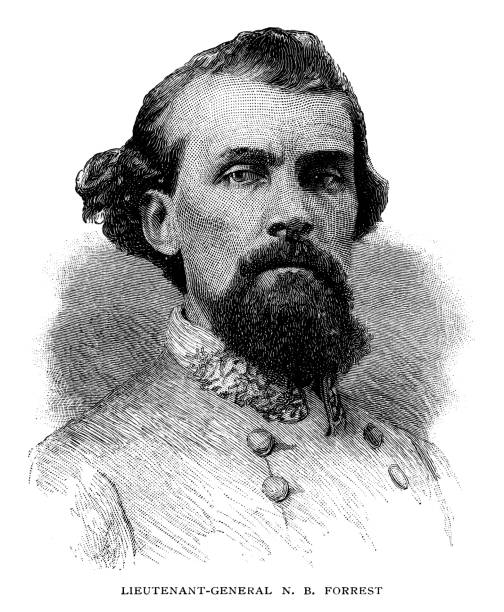
  • Nathan Bedford Forrest and the Possibility of Change

    Nathan Bedford Forrest and the Possibility of Change

    Nathan Bedford Forrest remains one of the most controversial figures of the American Civil War.

    To many white Southerners, he is remembered as a brilliant cavalry commander and military tactician who rose from poverty to become one of the most effective battlefield leaders of the Confederacy.

    To many others—especially Black Americans—he is remembered as something very different: a former slave trader, a Confederate general associated with the Fort Pillow massacre, and the first Grand Wizard of the Ku Klux Klan.

    Both of these perspectives capture parts of the historical record.

    Before the Civil War, Forrest built a fortune as a slave trader, cotton planter, and livestock dealer. During the war, he became famous for his aggressive cavalry tactics and battlefield success. After the war, he was deeply involved in the early Ku Klux Klan, an organization that used violence and intimidation against newly freed Black Americans and their allies during Reconstruction.

    That part of his legacy is undeniable.

    What is less commonly discussed, however, are the statements Forrest made later in his life. By the 1870s, he publicly distanced himself from the Ku Klux Klan and reportedly called for its disbandment. In 1875, he delivered a speech to a Black civic organization in Memphis in which he encouraged reconciliation and cooperation between Black and white Southerners.

    Historians continue to debate what these actions meant.

    Some believe Forrest experienced a genuine change of heart late in life. Others argue that his statements were politically motivated during a turbulent Reconstruction period.

    What is clear is that Forrest’s life illustrates the uncomfortable complexity of history.

    He was undeniably involved in some of the most brutal systems of racial oppression in American history. At the same time, his later statements suggest at least some recognition—whether moral, political, or pragmatic—that the future of the South required a different path.

    That complexity is often lost in modern debates.

    Some defenders of Confederate memory celebrate Forrest primarily as a military hero while ignoring the racism and violence that defined much of his career. Others reduce him entirely to the worst aspects of his life without acknowledging the possibility—however limited or contested—that his views evolved later on.

    History rarely fits into simple moral categories.

    Studying figures like Nathan Bedford Forrest should not be about glorification or absolution. It should be about understanding how people, institutions, and societies change—and sometimes fail to change—over time.
  • On Cynicism, Conspiracy Thinking, and Intellectual Humility

    On Cynicism, Conspiracy Thinking, and Intellectual Humility

    One thing that often surprises people in political conversations is that I try very hard to look at issues from multiple angles before forming a conclusion.

    That doesn’t mean I believe every perspective is equally correct, and it certainly doesn’t mean I agree with every ideology. But it does mean that I try to examine ideas carefully before deciding what I believe about them.

    Over the years, I have studied politics, economics, and philosophy, both in the classroom and through personal observation. I do not claim to be an expert. At best, I am a curious and reasonably informed layperson who tries to understand how complex systems actually work.

    I also recognize that many of my friends possess expertise in fields where I do not. Some work in industries or professions that require specialized knowledge. When they speak about their areas of expertise, I listen carefully and often defer to their judgment.

    The same applies to institutions and organizations. I have friends in groups that I sometimes criticize, but criticism does not require blind hostility. I try to evaluate institutions the same way I evaluate individuals, by paying attention to both their stated intentions and their actions.

    Perfection is not the standard I apply to people or organizations. Perfection does not exist.

    What matters to me is whether people and institutions are genuinely attempting to serve their communities or whether their actions consistently undermine them. Disagreement is inevitable, but ideally, those disagreements should revolve around how to improve the well-being of the people we represent.

    Another accusation I sometimes hear is that my approach to politics is naïve. Some believe that if you are not constantly assuming the worst possible motives from everyone around you, you must be ignoring reality.

    But that is not how I see the world.

    Yes, I can be cynical at times. Like most people who pay close attention to politics and history, I am aware of how frequently power is abused. But I try not to fall into the trap of believing that every institution is controlled by hidden puppet masters or that every political failure is the result of some elaborate conspiracy.

    More often than not, what we are witnessing is something much simpler: human beings making decisions. These are sometimes wise, sometimes selfish, and sometimes incredibly foolish.

    Institutions are not omniscient masterminds. They are collections of ordinary people, and ordinary people make mistakes. Anyone who has closely observed politics or large organizations knows how often incompetence, miscommunication, and short-term thinking shape outcomes just as much as malice.

    Because of this, I try to resist the temptation to jump to dramatic conclusions based on speculation, conjecture, or conspiracy theories.

    This approach sometimes frustrates people who prefer clear villains and simple explanations. But the truth is that most social and political issues are far more complicated than we often admit. Real life rarely divides neatly into heroes and villains.

    Intellectual humility is also important here.

    I have been wrong before, and I will be wrong again. No one who engages seriously with complex issues escapes that reality. The important thing is being willing to reconsider one’s assumptions when evidence suggests a different conclusion.

    At the same time, being cautious about speculation does not mean defending the status quo or ignoring real problems. It simply means trying to reach conclusions through careful reasoning rather than through fear, anger, or wishful thinking.

    In public debate, it is also possible to appreciate good arguments, even when they come from people with whom we strongly disagree. A well-made point remains a well-made point regardless of who makes it.

    Too often, modern political discourse treats disagreement as a personal betrayal rather than a normal part of intellectual life.

    But serious thinking requires the opposite approach: listening carefully, weighing evidence, and accepting that complex questions rarely have simple answers.

    That is the perspective I try to bring to my writing and discussions.

    Not certainty.

    Not ideological loyalty.

    Just an ongoing attempt to think carefully about the world we live in.