When most people hear the term “deepfake,” they immediately think of misinformation. This is immediately what I thought. I think of fake speeches, manipulated videos, and the erosion of trust in what we see online. And to be fair, that concern is still very real for me. Deepfakes have already been used to put words in people’s mouths and create events that never happened.
But what if we flipped that narrative?
What if deepfake technology could be used not to deceive, but to educate?
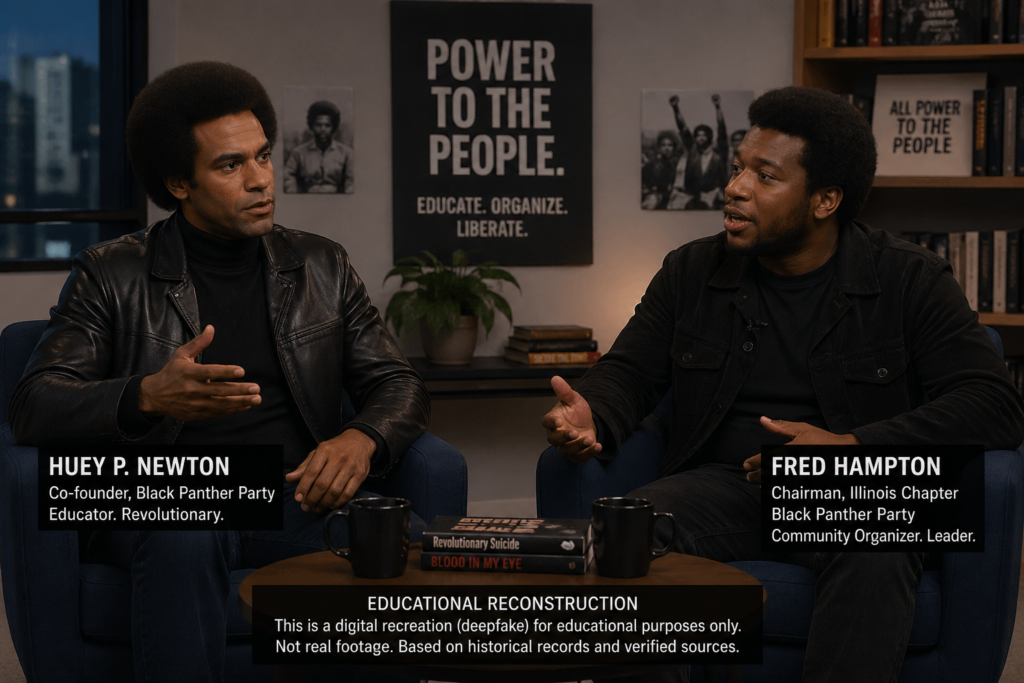
For this project, I propose a beneficial use of deepfakes: recreating historical figures like Huey P. Newton and Fred Hampton in a clearly labeled, transparent, educational format. The goal is not to trick viewers into believing they are watching real footage, but to bring history to life in a way that is accessible, engaging, and emotionally impactful, especially for younger audiences.
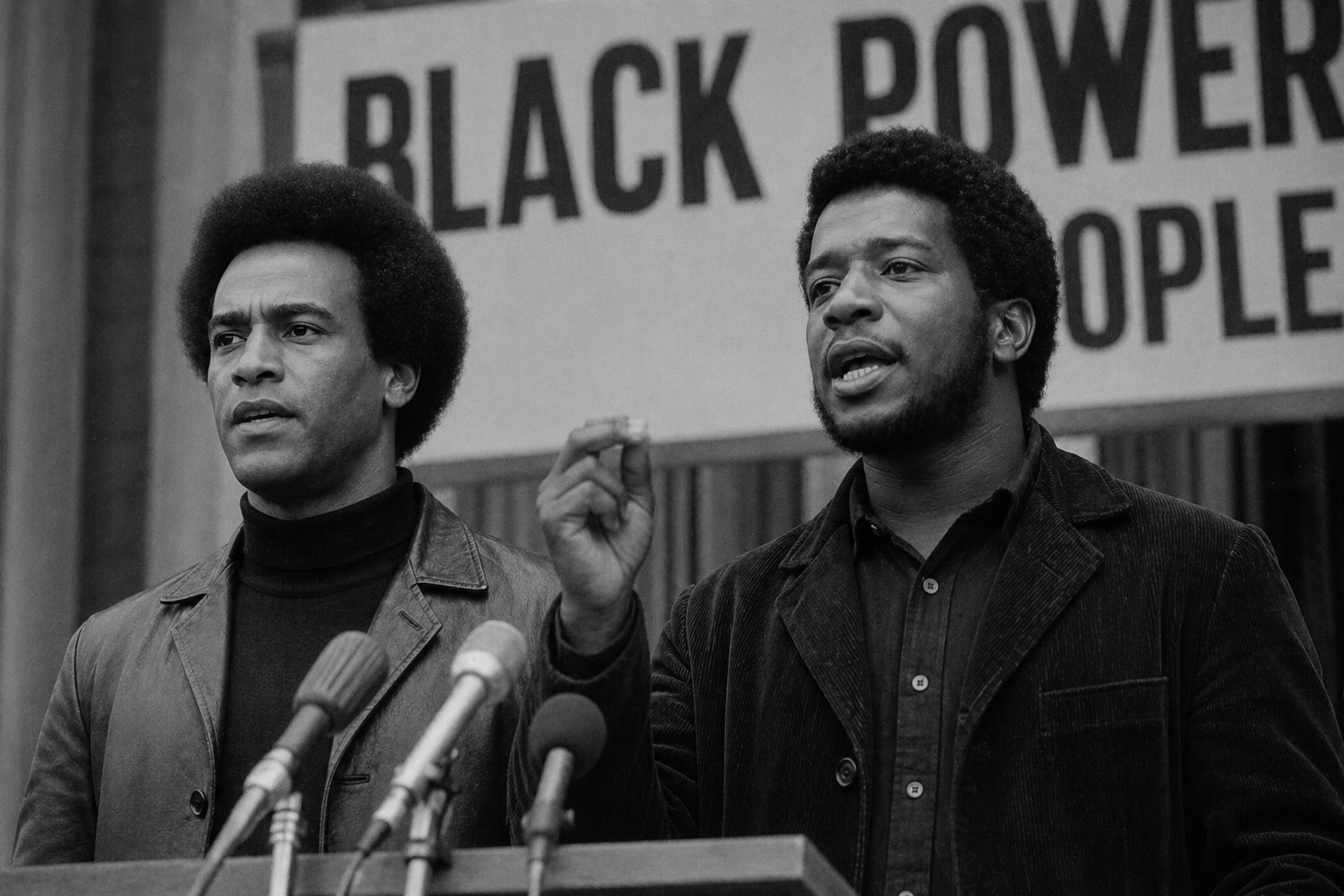
Huey P. Newton, co-founder of the Black Panther Party for Self Defense, and Fred Hampton, the charismatic chairman of the Illinois chapter, were central figures in the struggle for Black liberation in the late 1960s. Their words, ideas, and activism continue to resonate today.
They are two of my favorite heroes in the fight for Black Liberation and Black leftist thought and activism.
But for many people, they remain misunderstood and distant historical figures rather than living voices.
Using deepfake technology, we could recreate these figures delivering their actual speeches, drawn directly from verified historical texts and archives. For example, Newton’s writings on self-defense and community programs could be presented in a video format that allows viewers to “see” and “hear” him speak. Similarly, Hampton’s speeches on economic unity and coalition-building can be reconstructed to highlight his vision vividly and compellingly.
Importantly, this project would be built on transparency. Every video would include clear disclaimers stating that it is a digitally recreated performance based on historical records. The script would be sourced from credible materials such as the National Archives and educational foundations, ensuring accuracy and respect for the historical record.
This approach could be especially powerful in classrooms and digital media spaces, where attention spans are short and traditional text-based learning can struggle to connect. Seeing Newton and Hampton speak, even in a recreated form, could spark curiosity, empathy, and deeper engagement with history.
If done responsibly, deepfakes don’t have to be a threat. They can be a bridge, connecting past and present, and helping important voices continue to be heard.