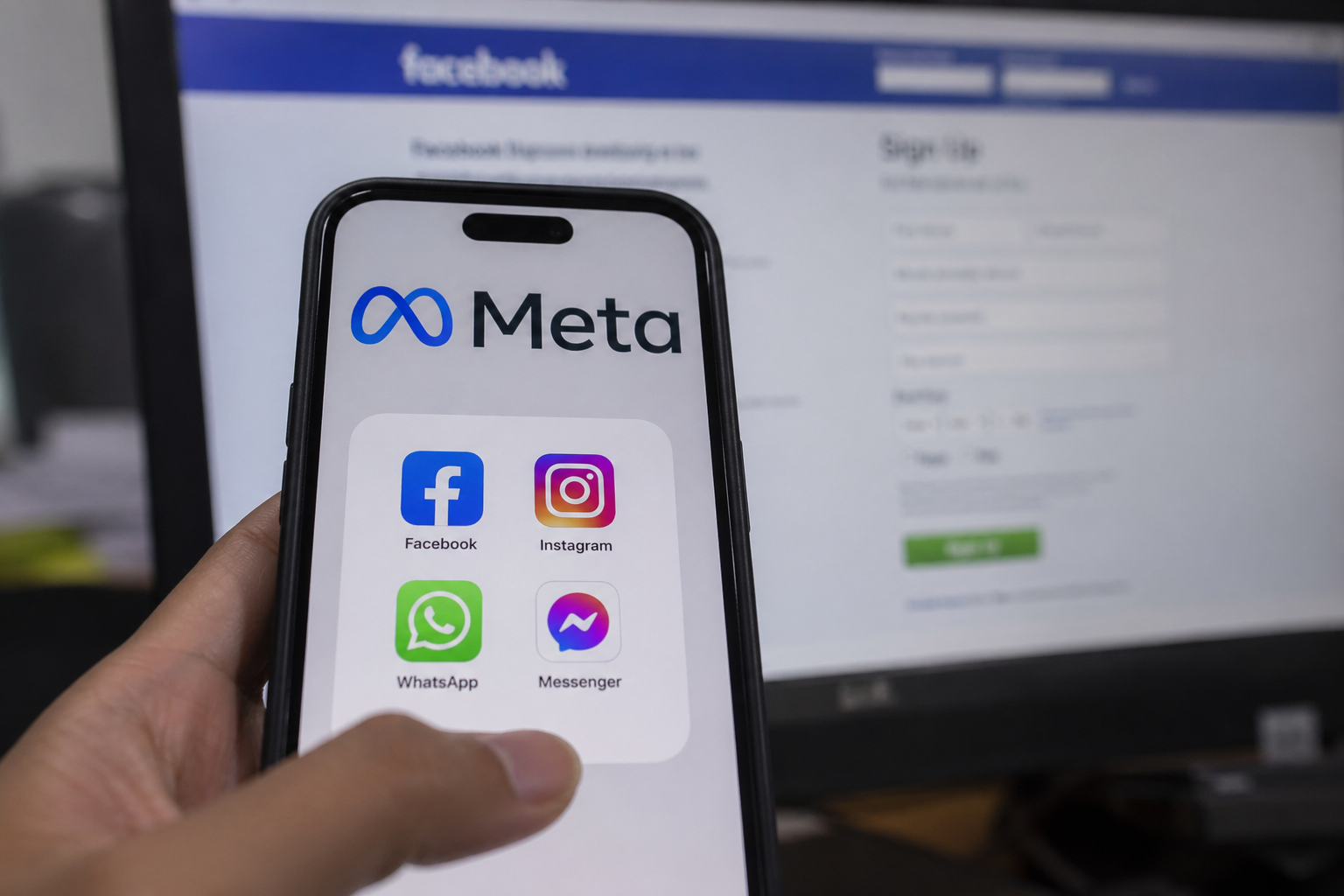
In early 2025, social media platforms didn’t merely tweak their policies. They revealed something deeper about who actually controls the modern “public square.” Meta’s decision to eliminate independent fact-checkers in favor of “community notes,” framed as a return to free expression, corresponded with a broader political shift tied to the transition of power in Washington (the start of Trump’s second term in office). At the same time, users reported being automatically connected to new presidential accounts during the transition, highlighting the minute control individuals may actually have over their own digital environments.
These developments encourage us to contemplate the ownership of social media and how it is administered and regulated.
The benefits of centralized platforms such as Facebook, Instagram, and X are obvious. They allow for massive, instantaneous communication across geographic and social boundaries. These platforms function as digital “town squares” where people can exchange ideas quickly and at scale. Movements like Black Lives Matter, #MeToo, and even global protest movements have relied on these centralized networks to organize, mobilize, and amplify voices that might otherwise be marginalized.
But the drawbacks are just as significant and arguably more dangerous. These platforms are not public spaces in the traditional sense. They are privately owned, profit-driven environments. This makes the “public square” analogy misleading because these platforms are designed to maximize engagement and revenue. They are not necessarily environments of democratic deliberation.
That means outrage, misinformation, and polarization are not bugs. Instead, they are features of a media space in which these consequences lead to engagement and engagement leads to profits.
We’ve already seen the consequences. The Free Speech Project highlights how Facebook’s failure to control hate speech contributed to violence against the Rohingya in Myanmar. In the U.S., misinformation and extremist content have spread rapidly across platforms, influencing elections, public health decisions, and even acts of violence. At the same time, platforms have been accused of censorship, whether through banning users or limiting content tied to political conflicts.
So we’re stuck in a paradox. Too much moderation can be interpreted as censorship, but too little moderation can lead to societal harm.
This brings us to the question of whether we should depend on the goodwill of platform owners. The events of 2025 suggest we shouldn’t. Meta’s policy changes appear, at least in part, to be influenced by political pressure and shifting relationships with those in power. When billionaires and corporations control the infrastructure of public discourse, their incentives, whether political, financial, or personal, inevitably shape what we see and say.
Government intervention, however, is not a simple solution. The Supreme Court has heard arguments on whether social media companies are more like publishers with editorial rights or common carriers that must host all speech. Too much regulation risks violating the First Amendment and giving the state excessive control over speech. Too little regulation leaves private companies with unchecked power.
So what should society actually do?
First, we need to move away from the idea of a single, centralized “public square.” A more realistic and democratic approach can be a plurality of spaces, or “counterpublics,” where different communities can engage on their own terms. Decentralized platforms, such as Mastodon or other federated networks, offer one possible path forward by distributing power rather than concentrating it.
Second, structural reforms are necessary. This should include antitrust laws and policies to break up monopolistic control, provide stronger transparency requirements for algorithms, and allow users to move their data and communities across platforms. “Portability” shifts some of the power back to users rather than locking them into corporate ecosystems.
Third, platforms themselves need accountability mechanisms that go beyond PR-driven “community standards.” Community notes might sound democratic, but they can also be manipulated or ignored. Without enforceable standards, they risk becoming a substitute for responsibility rather than a solution.
On a personal level, I’ve started thinking more critically about where and how I engage online. I still use major platforms because, realistically, that’s where the audience is. But I’m increasingly aware that I’m operating in someone else’s space, under someone else’s rules.
That’s changed how I approach content, conversations, and even what I choose to amplify. I can feel myself changing with every online interaction from a courteous and nuanced person to a more radical and confrontational person. I’m also paying more attention to alternative platforms and independent media spaces that aren’t driven purely by algorithmic engagement.
At the end of the day, the biggest myth we need to let go of is that social media is a neutral public square. It never was. It’s a privately owned system that shapes public discourse in ways most users barely understand.
The real question isn’t just who owns the digital public square. Rather, it’s whether we’re willing to keep pretending it belongs to all of us.