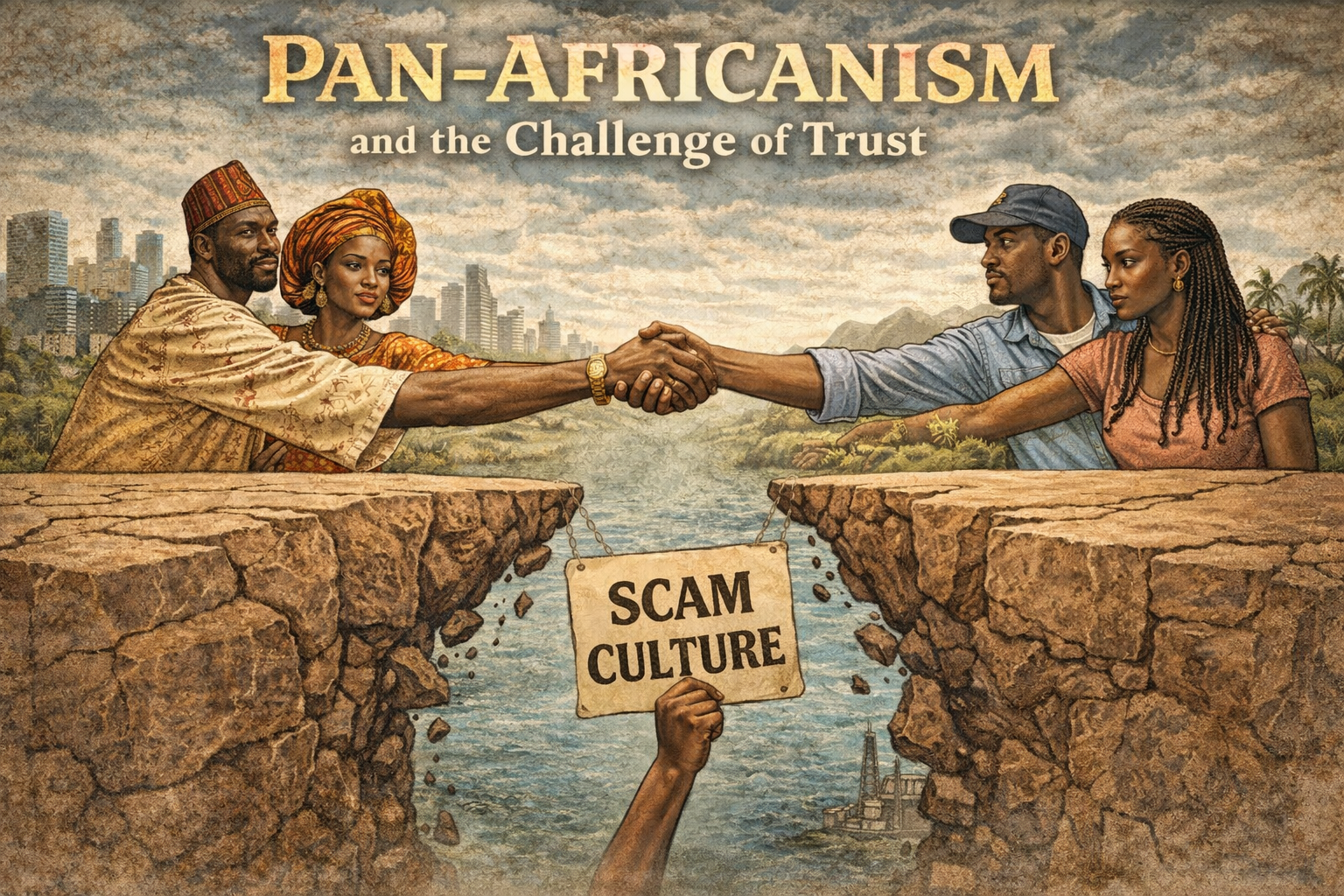
It gives me no pleasure to write this, but I need to be honest with myself… and with everyone who has followed my thoughts on Africa, Pan-Africanism, and repatriation.
For the past several years, I have seriously considered repatriating to Africa, especially Ghana. I’m not trying to do this as some fantasy vacation or “spiritual journey,” but as a real-life project. I saw myself, and still see myself, as part of something bigger. I saw myself as contributing, building, and helping blaze a trail for other people in the African diaspora who wanted to reconnect materially, politically, and culturally with the continent.
And to be clear: I never went into this thinking Africa would be paradise.
I already understood that many things Americans take for granted, such as reliable utilities, stable infrastructure, predictable bureaucracy, clean drinking water, consistent internet, traffic laws, and public systems that mostly function, are not guaranteed in many African countries. I also already knew that corruption, bribery, and dysfunction are real parts of daily life in many places.
But there is one issue that I have tried to rationalize for too long. That issue is scam culture.
More and more Black American expats and Diasporans are citing it as one of the main reasons they leave Africa and return to the United States. And honestly, I can no longer dismiss that as whining, cultural ignorance, or anti-African cynicism.
When people constantly raise prices, exploit your unfamiliarity, or see you first and foremost as a walking wallet, it destroys trust. And without trust, there can be no real unity.
Yes, poverty is real. Yes, exploitation by the global North has devastated much of Africa. Yes, many people are surviving however they can. I understand all of that.
But theft is still theft.
And if the relationship between Africans on the continent and people in the diaspora is going to mean anything, it cannot be built on symbolic slogans while one side is constantly being hustled by the other.
That does not mean I have abandoned Pan-Africanism.
Far from it.
I still believe deeply that unity among African peoples and the diaspora is essential to Black liberation. I still believe that a strong Africa (economically, militarily, scientifically, and industrially) is necessary if Black people anywhere are going to be taken seriously in a world that often sees us as little more than labor, entertainment, or obstacles to resource extraction.
However, belief in unity cannot mean dishonesty.
If we are serious about building a future together, we must be willing to say hard things out loud. We cannot build solidarity while normalizing exploitation among ourselves. We cannot discuss nation-building while preying on each other for crumbs.
I still believe in African settlement. I still believe in African people.
I still believe the diaspora has something valuable to offer the continent, and that Africa has much to teach us in return.
But if we are ever going to build real bridges between us, those bridges will have to be built on more than romance, symbolism, and rhetoric.
They will have to be built on trust.