Tag: false narratives

  • The Real Reason Birth Rates Are Falling in the West

    The Real Reason Birth Rates Are Falling in the West

    Many political commentators, particularly in certain corners of the internet, claim that declining birth rates in Western countries are caused by cultural forces such as feminism, LGBTQ visibility, secularism, or multiculturalism.

    But the data tells a much simpler story.

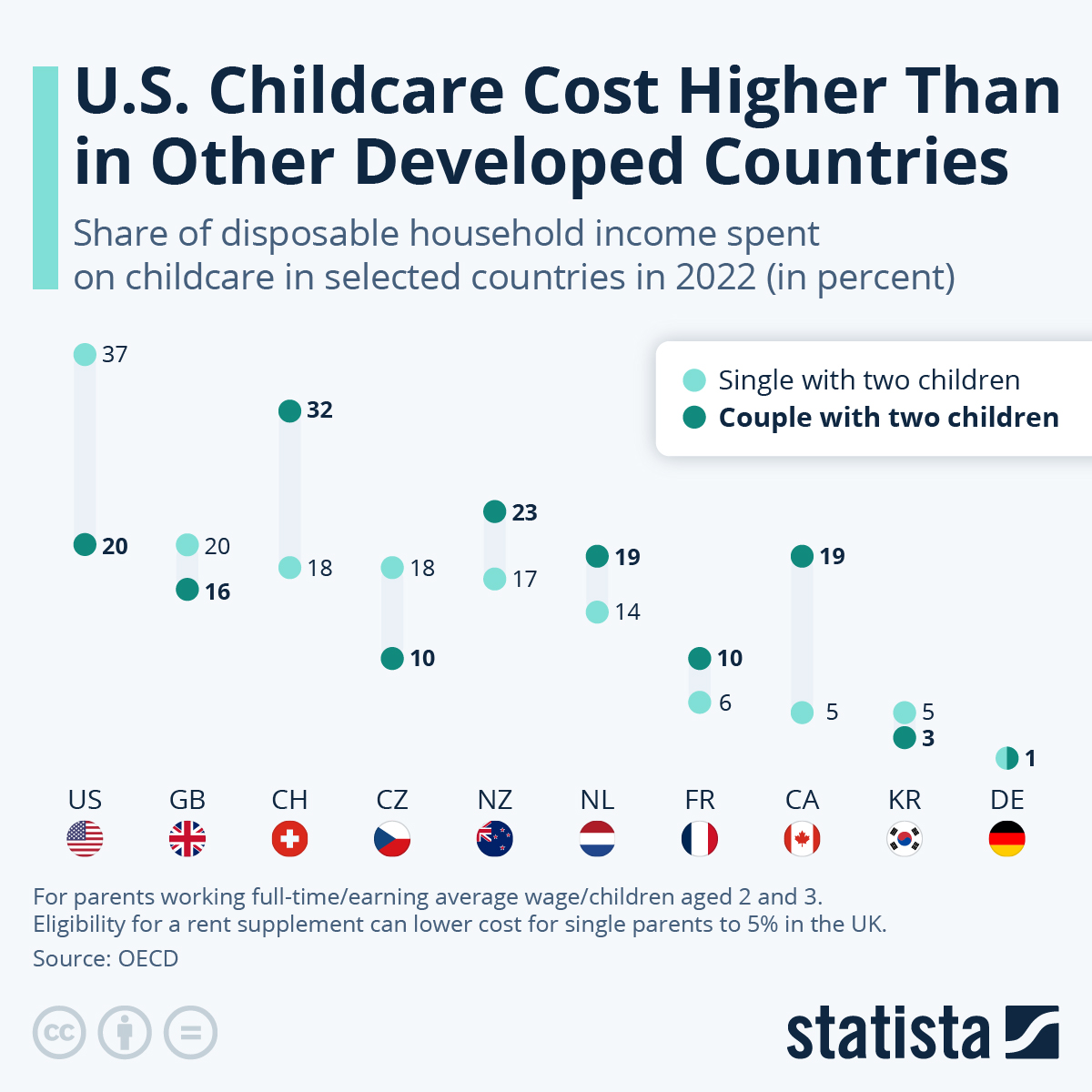
    Birth rates tend to decline in societies where the cost of living rises faster than wages and where raising children becomes financially burdensome. This pattern has been observed across numerous developed countries regardless of political ideology or cultural identity.

    The modern cost of raising children is enormous.

    Childcare alone can cost more than rent or a mortgage in many American cities. Necessities for early childhood, such as diapers, formula, baby supplies, healthcare, and education, add thousands of dollars in additional expenses each year. Even the cost of childbirth itself in the United States can reach tens of thousands of dollars, depending on insurance coverage.

    Beyond early childhood, families face additional financial pressures, including school activities, transportation, clothing, healthcare, housing, and eventually the cost of higher education.

    For many households, the financial calculation becomes unavoidable.

    Having children is no longer simply a social expectation—it is a long-term economic commitment that can reshape a family’s entire financial future.

    There is also the question of uncertainty.

    Parents today worry about issues that earlier generations rarely considered: school shootings, economic instability, climate change, political polarization, and the general unpredictability of the modern world. Whether those fears are fully justified or not, they still influence how people think about bringing children into that world.

    Historically, family structures looked very different.

    In the early twentieth century, large families were common not because people were more “family-oriented,” but because economic and social conditions were different. Housing was cheaper, extended families often lived together, and childcare responsibilities were shared across multiple generations.

    Children were also seen as economic contributors to the household rather than long-term financial obligations.

    Today, the expectations are very different. Families are expected to provide private bedrooms, extensive educational opportunities, extracurricular activities, and a high standard of living for each child. At the same time, extended family support systems have weakened, and childcare has become a market commodity rather than a shared community responsibility.

    The result is predictable.

    Many couples decide that having fewer children, or no children at all, is the most financially responsible decision they can make.

    If governments and societies genuinely want to increase birth rates, the solution is unlikely to come from cultural panic or political rhetoric.

    It will come from addressing the economic realities that make raising children increasingly difficult: housing costs, childcare affordability, healthcare expenses, and long-term financial security.

    When people feel economically stable and confident about the future, they are far more likely to start families.

    History suggests that prosperity and security—not cultural fear—are the conditions under which birth rates tend to rise.

  • What Critics Get Wrong About DEI

    What Critics Get Wrong About DEI

    If critics of diversity, equity, and inclusion programs truly want to understand what they are criticizing, they should start by understanding what those programs actually do.

    Much of the political rhetoric surrounding DEI rests on a simple assumption: that these initiatives exist primarily to hire underqualified minorities over more qualified white applicants.

    But that assumption misunderstands the purpose of many DEI programs.

    In many workplaces, DEI initiatives are not hiring programs at all. They are training programs focused on workplace conduct, like how employees interact with one another, how discrimination complaints are handled, and how organizations avoid hostile work environments.

    In other words, they are about behavior inside the workplace, not simply about who gets hired.

    This distinction is often lost in political debates.

    Critics frequently frame DEI as a system that lowers standards or promotes unqualified candidates. Yet those claims are rarely supported with concrete evidence. Instead, the arguments often rely on anecdotes, rumors, or viral stories that later turn out to be false or exaggerated.

    The “litter box in schools” rumor is a good example of how quickly misinformation can spread when it reinforces existing political narratives. The story circulated widely online despite having no factual basis.

    The same pattern often appears in debates about DEI.

    Whenever a person from a marginalized group enters a field traditionally dominated by white men, whether as a pilot, executive, professor, or public official, critics sometimes assume that the person must have been hired to satisfy a quota rather than because of their qualifications.

    That assumption says less about hiring practices than it does about the expectations behind it.

    It reflects a long-standing cultural narrative suggesting that success among minorities must be explained by special treatment rather than merit.

    Yet there are many examples throughout American history that challenge that assumption. The Tuskegee Airmen, for example, demonstrated extraordinary skill and discipline during World War II despite facing discrimination and skepticism about their abilities.

    The same dynamic continues today.

    A recent viral video showed a Black woman completing her first liftoff during pilot training. Professional pilots reviewing the footage described the maneuver as textbook and appropriate for the conditions. Yet some online commentators quickly turned the moment into an argument about DEI and supposed lowered standards.

    This response illustrates how quickly discussions about diversity can become framed through suspicion rather than evidence.

    At the same time, conversations about merit often ignore another powerful force in hiring: nepotism.

    Family connections, social networks, and institutional favoritism have long shaped access to jobs and opportunities across many industries. These advantages disproportionately benefit those already connected to existing power structures.

    Yet these dynamics rarely receive the same level of scrutiny as diversity initiatives.

    The result is a debate that focuses intensely on hypothetical examples of unqualified minority hires while overlooking longstanding systems that have quietly shaped opportunity for generations.

    If we are going to have an honest discussion about merit and fairness, then the conversation needs to address all of the ways opportunity is distributed, not just the ones that fit a particular political narrative.

    The goal is not to flood various industries with underqualified people who check off certain boxes in a checklist of representation from marginalized communities. That is not how DEI works.

    Rather, the goal should be to build institutions where ability, preparation, and performance actually matter more than assumptions about who belongs in a particular role, and everyone has an equal opportunity to get and to promote in various careers without doing so in a hostile work environment.