
A line from the film Leave the World Behind has recently sparked outrage among conservative commentators:
“I’m sorry, but if the world falls apart, trust should not be given easily to anyone… especially white people.”
The quote, spoken by the character Ruth Washington (played by Myha’la Herrold), has been interpreted by critics as an example of “anti-white racism” and “woke propaganda.”
But the reaction misses the larger historical context behind the sentiment.
The scene itself depicts a tense, pre-apocalyptic situation. A Black family returns to their own home, even though white vacationers are renting it through Airbnb. The white family, especially the matriarch, is immediately distrustful of them. Although the house belongs to the Black family, the white characters initially assume they must be staff or impostors.
Even when the owner of the house offers to refund half of their money and has the key to a locked drawer, the white matriarch still views them as dangerously and criminally suspicious.
Anyone familiar with American racial dynamics knows that situations like this are not purely fictional.
But the deeper issue raised by the quote is not about a single awkward interaction. It raises a broader question:
What historical reasons do Black Americans have to extend unconditional trust toward white institutions or white society as a whole?
The history of the United States complicates that question.
After the Civil War and the passage of the 13th, 14th, and 15th Amendments, the promise of freedom for Black Americans was quickly undermined by a series of legal and social systems designed to recreate racial hierarchy. Black Codes, vagrancy laws, convict leasing, peonage, and sharecropping placed many formerly enslaved people back into conditions that closely resembled slavery.
When Black political power briefly emerged in parts of the South during Reconstruction, it was violently suppressed through campaigns of racial terrorism carried out by groups like the Ku Klux Klan and the Red Shirts.
The pattern did not stop there.
From housing discrimination to segregated schools, from redlining to unequal policing, institutions throughout American history have repeatedly produced outcomes that harmed Black communities. Even today, debates continue over disparities in healthcare, environmental exposure, policing, and incarceration.
The writer James Baldwin addressed this exact problem during a debate on The Dick Cavett Show in 1969. Baldwin explained that distrust was not based on abstract hostility toward white people but on lived evidence produced by American institutions.
He said:
“I don’t know what most white people in this country feel. But I can only [conclude] what they feel from the state of their institutions.”
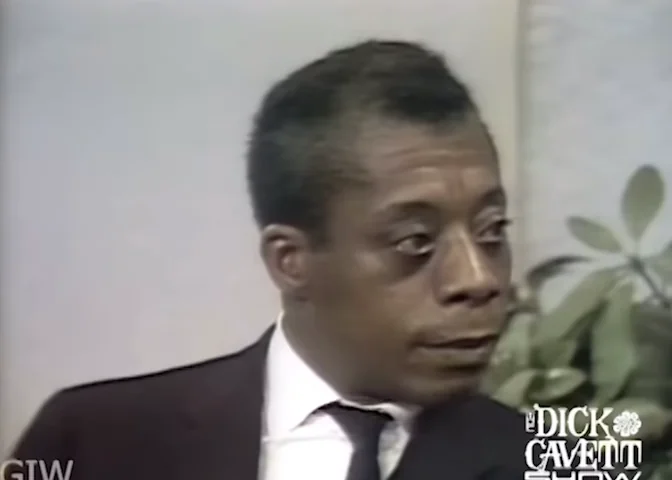
Baldwin’s point was simple but powerful. His point was that people judge a society not by its ideals, but by its outcomes.
If institutions repeatedly disadvantage a group of people, it is unrealistic to expect that group to respond with automatic trust.
This helps explain many of the cultural dynamics that outsiders often misunderstand. Black Americans frequently “gatekeep” aspects of their culture, remain skeptical of institutions, and react strongly to racial issues that others see as trivial.
Those reactions are not random or irrational. They emerge from decades and centuries of historical experience.
None of this means that every individual white person is malicious or untrustworthy. But collective histories shape collective perceptions.
If trust is going to grow between communities, it cannot be demanded through outrage over a line in a movie. It has to be earned through meaningful changes in the institutions and behaviors that produced the distrust in the first place.
History matters.
And until that history is confronted honestly, lines like the one in Leave the World Behind will continue to resonate with many viewers, even as others find them uncomfortable.