Tag: Joe Biden

  • Why Tangible Benefits Matter in Politics

    Why Tangible Benefits Matter in Politics

    The often-overlooked reality of American politics is that policy messaging often matters less to voters than tangible benefits they can see and feel in their everyday lives. This is something that the professional pundit class, political consultants, and many political analysts often miss.

    During the COVID-19 pandemic, stimulus checks were sent to millions of Americans. Although the checks were authorized through legislation passed by Congress, many people associate them directly with Donald Trump because his administration ensured his name appeared on them.

    Symbolism matters in politics.

    For many struggling households, those payments were not abstract policy decisions. They were rent money, grocery money, or the difference between making it through the month and falling further behind.

    This illustrates a broader lesson that many political strategists understand but that some policymakers still underestimate: voters tend to reward leaders who appear to deliver direct, tangible benefits.

    In contrast, the Democratic Party has often struggled to communicate its policy achievements in ways that feel immediate and visible to ordinary voters.

    The Biden administration did authorize $1,400 stimulus payments and temporarily expanded the Child Tax Credit, which significantly reduced child poverty while it was in place. Yet those policies were not framed with the same kind of direct political branding that many voters remember from the previous administration.

    Even more importantly, the expanded Child Tax Credit was allowed to expire after only one year, despite its measurable impact.

    For many voters, particularly those in economically struggling communities, this reinforces the perception that political leaders make promises but rarely sustain meaningful material improvements.

    That perception fuels cynicism and political apathy.

    When people feel that no political party consistently delivers real change, they often become disengaged or focus only on immediate personal survival rather than broader political issues. Concerns about systemic racism, economic inequality, or long-term policy debates can feel distant compared to the daily struggle of paying bills or putting food on the table.

    This dynamic also shapes how people interpret political messaging. When leaders speak about justice, reform, or social change without delivering visible economic improvements, the message can ring hollow to those who are struggling the most.

    None of these excuses the dangers posed by demagogic politics or authoritarian rhetoric. But it does highlight an important political truth: tangible benefits often carry more weight with voters than symbolic gestures and ideological arguments.

    If political leaders want lasting support from working-class communities, they cannot rely solely on rhetoric about values or identity. They must deliver policies that materially improve people’s lives and make sure those improvements are visible and sustained.

    Otherwise, frustration and disillusionment will continue to shape the political landscape.
  • Biden Didn’t Have “Open Borders.” The Numbers Prove It.

    Biden Didn’t Have “Open Borders.” The Numbers Prove It.

    One of the most common claims made by conservative commentators is that Joe Biden created an “open border” policy. The problem is that the actual numbers tell a very different story.

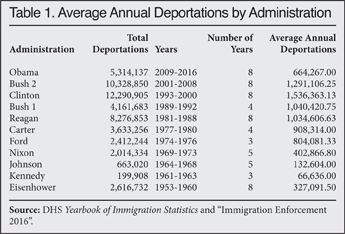
    According to data compiled by the Migration Policy Institute, the deportation numbers between Trump’s first term in office and Biden’s term in office are nearly identical (around 1.5 million people. In fact, deportations under Presidents Barack Obama and Bill Clinton were significantly higher than under Trump. Conservatives love to cite those comparisons, but rarely provide the context that would actually explain what those numbers mean.

    Rather than rehash arguments I’ve made many times before about who gets deported and why, it’s worth addressing the larger myth that keeps circulating: the idea that Biden somehow allowed unlimited immigration into the United States.

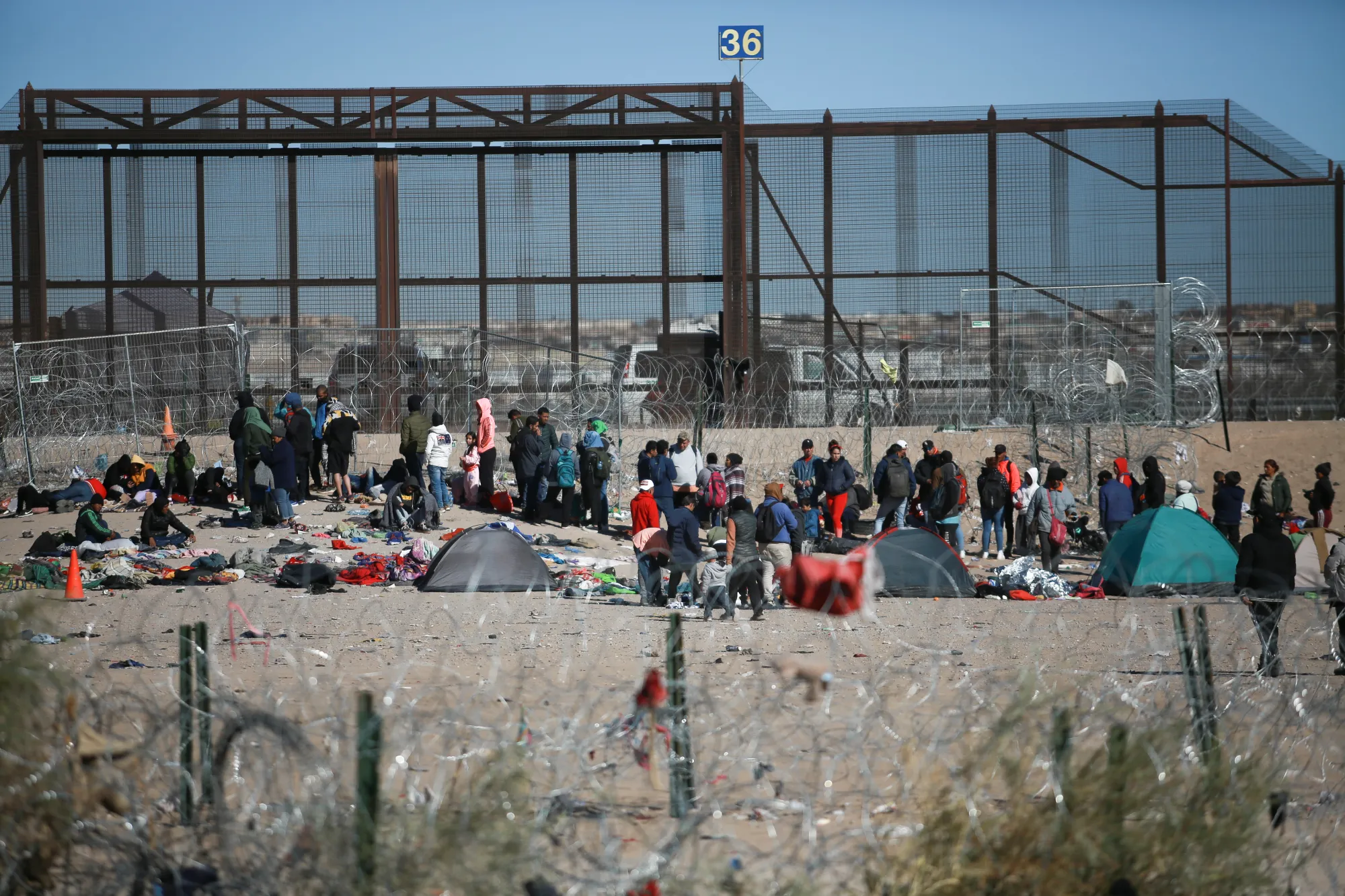
    For the first two years of Biden’s presidency, the country was still operating under pandemic-era restrictions that limited cross-border movement. These policies were largely a continuation of the restrictions implemented during the Trump administration. During that time, many asylum seekers from Central American countries such as El Salvador and Honduras waited at the border for years or were detained while their cases were processed.

    Allowing asylum seekers to enter the country after those restrictions eased was not an “open border” policy. It was the United States complying with its own asylum laws.

    Those laws exist for a reason. After the United States turned away thousands of Jewish refugees fleeing Nazi persecution in the 1930s—many of whom were sent back to Europe and ultimately died in the Holocaust—the country adopted legal frameworks intended to ensure that people fleeing persecution would at least have their claims heard before being turned away.

    Jewish refugees aboard the MS St. Louis in 1939. They were waiting in Havana, Cuba, just to be turned away by the United States and sent back to Nazi-occupied Europe, where many of them would be killed.

    In other words, Biden didn’t create open borders. He followed existing law.

    If Americans truly want fewer people migrating to the United States, we also need to confront a more uncomfortable truth: U.S. foreign policy has often contributed to the instability that drives migration in the first place. For decades, the United States has interfered in the politics and economies of countries across Latin America, Africa, and parts of Asia—sometimes installing authoritarian leaders or imposing sanctions and economic pressures that destabilize entire regions.

    When people leave their homes out of desperation, they are not doing it for fun. They are responding to conditions that often have deep historical and geopolitical roots.

    If we want fewer migrants at the border, addressing those root causes would be a far more honest place to start than repeating the politically convenient myth of “open borders.”