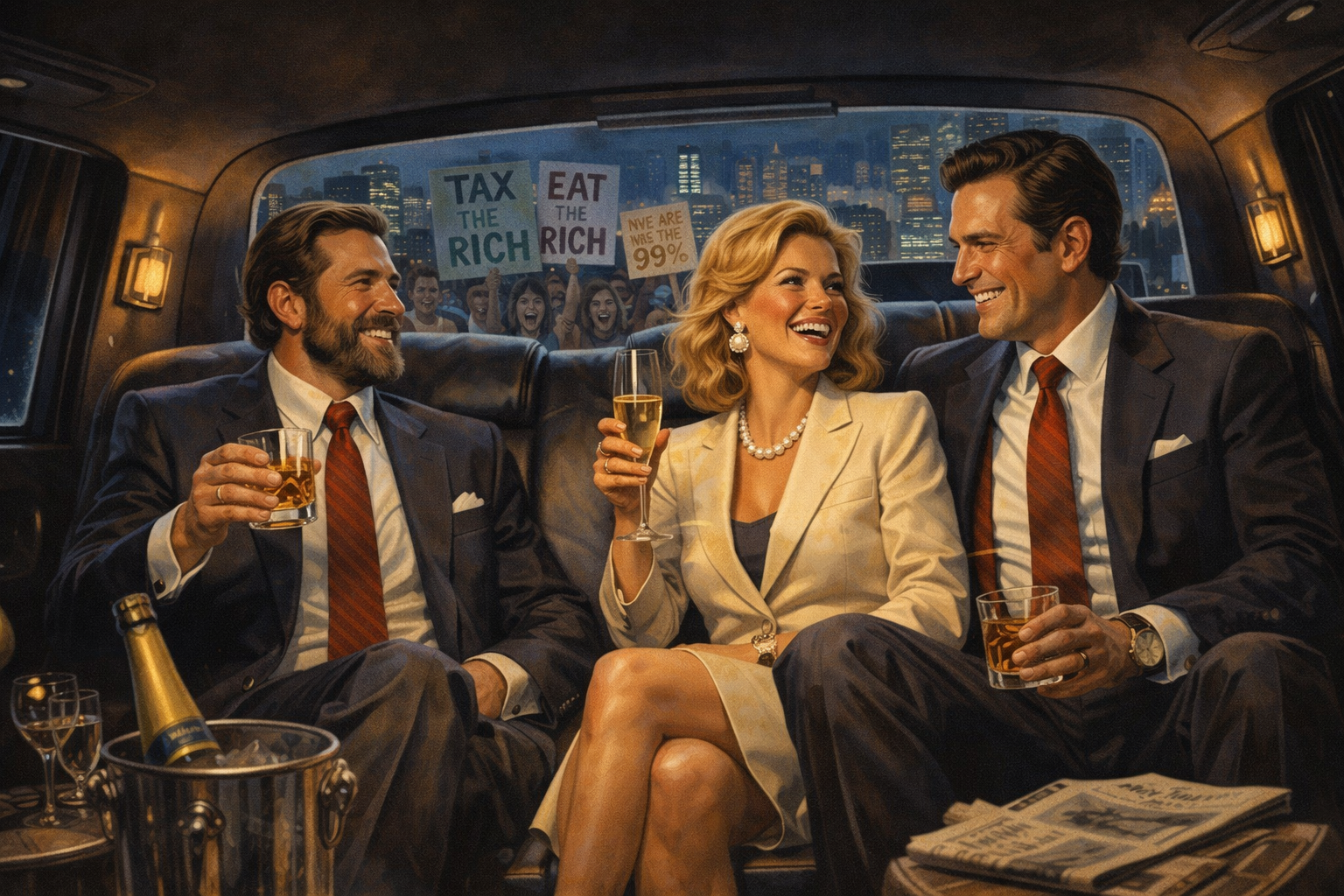
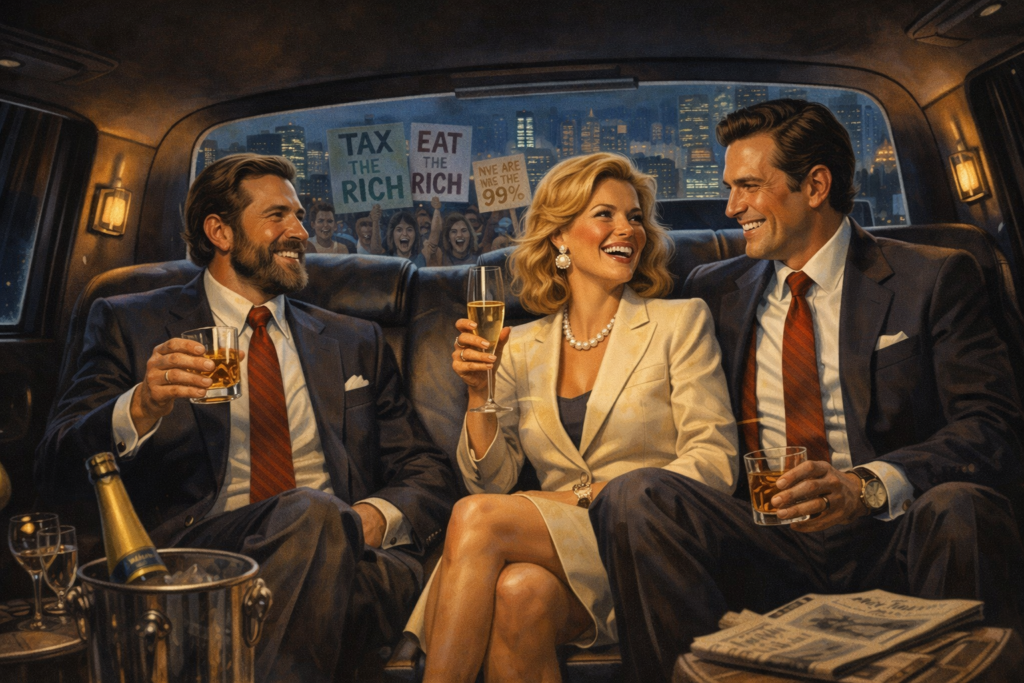
If the phrase “limousine liberal” needed a modern example, many critics would point to Bill Maher.
For decades, conservatives have used the term to describe a particular kind of liberal politics… one practiced by wealthy cultural elites who champion progressive social causes while remaining largely disconnected from the economic struggles of ordinary people.
Whether that label is fair in every case is debatable. But the criticism highlights a real tension within American liberalism.
The problem is not support for civil rights, LGBTQ equality, environmental protection, or other social issues, no matter how tepid and/or performative it may be. Those struggles are important and necessary. The problem arises when those causes are championed without addressing the economic structures that produce inequality in the first place.
This tension was visible in a recent segment of Maher’s show in which he criticized younger Americans for being overly pessimistic and encouraged people to “cheer the fuck up.” In his view, dissatisfaction with the current political environment reflects an overly negative outlook among younger generations.
But that interpretation overlooks the economic reality facing millions of Americans.
Over the past several decades, the United States has undergone a dramatic economic transformation. Manufacturing jobs that once provided stable middle-class livelihoods have been replaced by lower-paying service work. Wages have stagnated while the cost of housing, healthcare, education, and childcare has steadily risen.
Today, many Americans are financially fragile. Surveys regularly show that a large percentage of households would struggle to cover even a modest emergency expense. At the same time, economic growth and stock market gains are increasingly concentrated among a relatively small segment of the population.
When commentators dismiss widespread economic frustration as simple negativity, it can come across as profoundly out of touch.
For people living paycheck to paycheck, debates about stock market performance or macroeconomic indicators feel distant from their everyday reality. Economic insecurity is not simply a matter of attitude. It is a real material condition.
This is where critiques of “limousine liberalism” gain traction.
Symbolic gestures and self-righteous virtue signaling can coexist with an economic system that continues to produce inequality and insecurity. Without adequately examining the deeper structural issues of unsafe labor conditions, wage stagnation, sharply rising housing costs, decreased access to affordable healthcare, and the massive influence of corporate power, political rhetoric about social progress can begin to feel hollow.
Many Americans are not asking for perfection. They are merely asking for a political system that seriously addresses the economic pressures shaping their lives.
When those concerns are dismissed as whining or irrational pessimism, the gap between political elites and working people only widens.
And that gap helps explain why so many voters remain deeply dissatisfied with the current political moment.