Tag: media

  • Casual Political Onlookers, Full-Time Experts

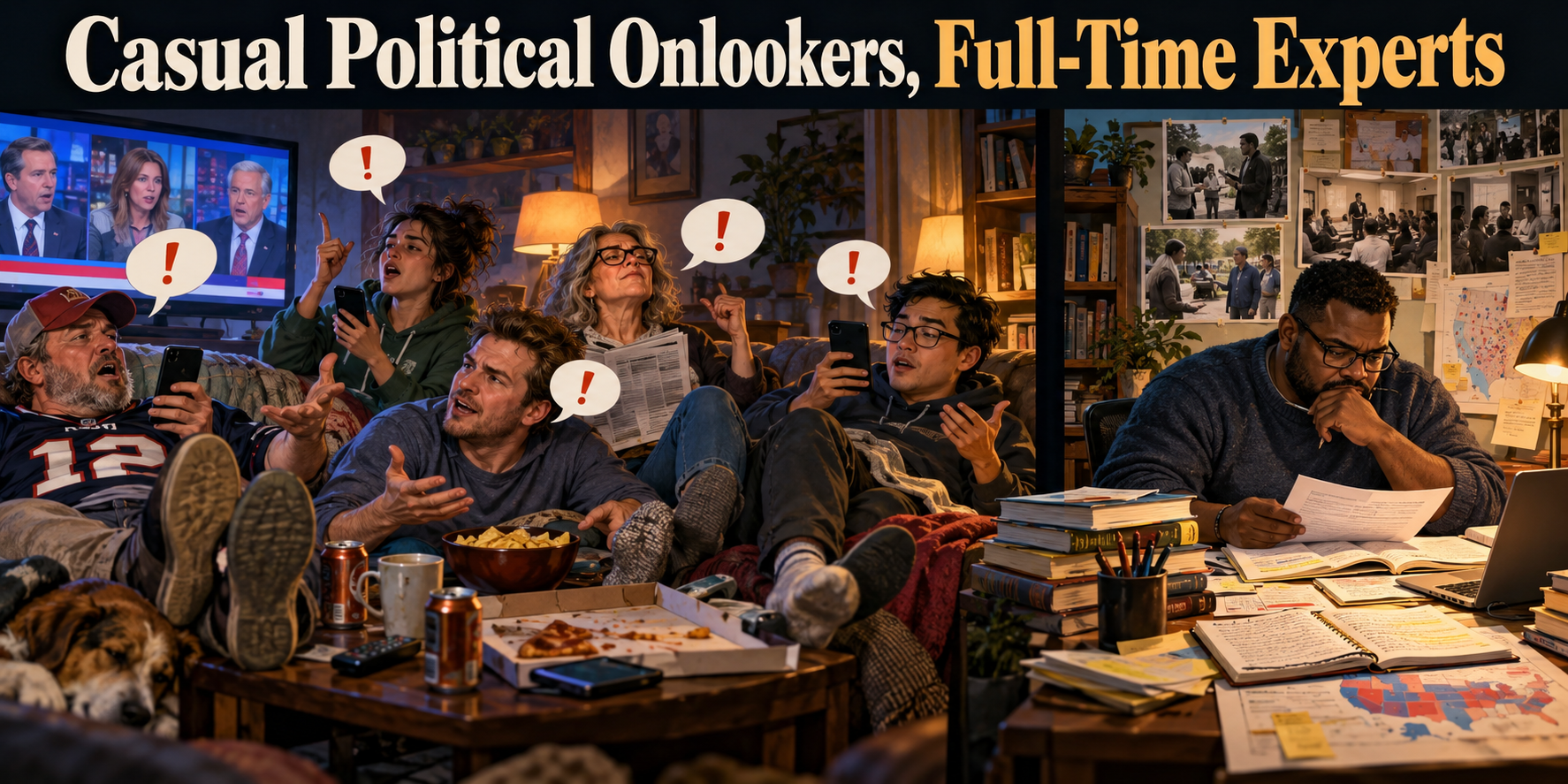
    Casual Political Onlookers, Full-Time Experts

    One thing I’ve learned over the years is that most people are casual political onlookers who pretend to be experts. They pay attention around election time, pick up a few talking points, and suddenly think they understand the electorate better than anyone else.

    People like me geek out over politics the way other people geek out over sports, Dungeons & Dragons, and high-fantasy book series. I haven’t been a casual onlooker for many years. I eat, sleep, drink, shit, and breathe politics. Since I was a child, I’ve felt that staying informed was part of my civic duty. That means paying attention to who is running, why they are running, and what they actually stand for.

    I shouldn’t be special in this way. For a long time, I assumed that plenty of people approached politics the same way I did. A peace rally and demonstration I attended in 2003 helped shake me out of that assumption.

    Since then, I’ve watched people repeat bullshit talking points from the major cable news networks over and over again until they mistake repetition for knowledge. They believe what they’ve been fed, then treat anyone who questions it as politically naïve.

    Meanwhile, too many of these supposed experts have no real feel for working-class and middle-class America. They don’t understand how squeezed people feel, how angry they are, or how tired they’ve become of being told to accept less while the people at the top keep getting more.

    The certainty that Bernie Sanders is “unelectable” reminds me of the same certainty I heard about Barack Obama before he started winning primaries. People swore up and down that America wasn’t ready for a Black president. They treated that assumption as a fact.

    I disagreed.

    When I was tapped to work with Obama’s campaign in the summer of 2007, I committed to it. That wasn’t because I thought Obama was a messiah or because I belonged to some political cult. Dennis Kucinich was my first choice, based on principles. But I also understood that Kucinich had a snowball’s chance in hell of winning, while Obama had the political talent to pull it off.

    I could distinguish between the candidate whose positions I preferred and the candidate whose ability to win I believed people were underestimating. Apparently, that distinction is difficult for people who assume that supporting a campaign means worshipping the candidate.

    What frustrates me is how often political conventional wisdom gets passed off as expertise. People inside the same circles repeat the same assumptions, reinforce one another, and then act shocked when voters do something they didn’t expect.

    At some point, we have to ask whether these people understand the electorate or just understand each other.

    Too many political commentators, party insiders, and casual observers are living in a bubble. They underestimate the anger of American workers while overestimating the authority of the people who tell them what is politically possible.

    We saw that in 2016. I hoped that election would force the media, the Democratic Party, and the people who followed their predictions to examine what they had missed.

    Instead, too many went right back to the same assumptions and the same dismissive bullshit.

    Working people are telling us how angry they are. They are telling us how squeezed they feel. If our response is to lecture them about what they should accept, we shouldn’t be surprised when they stop listening to us.

    Pay attention. The people repeating conventional wisdom the loudest are not automatically the people who understand what is happening.
  • The Myth of “Woke” Entertainment

    The Myth of “Woke” Entertainment

    One of the more exhausting cultural debates today revolves around the idea that movies, television shows, and video games have suddenly become “woke.”

    The accusation is usually framed as if diversity in entertainment is something new. That it is an artificial political imposition that has recently invaded popular culture.

    But that claim ignores decades of history.

    Hollywood and the entertainment industry have been practicing what could easily be called “forced diversity” for a long time. The difference is that, historically, the diversity often involved inserting white characters into stories that were originally centered around other cultures.

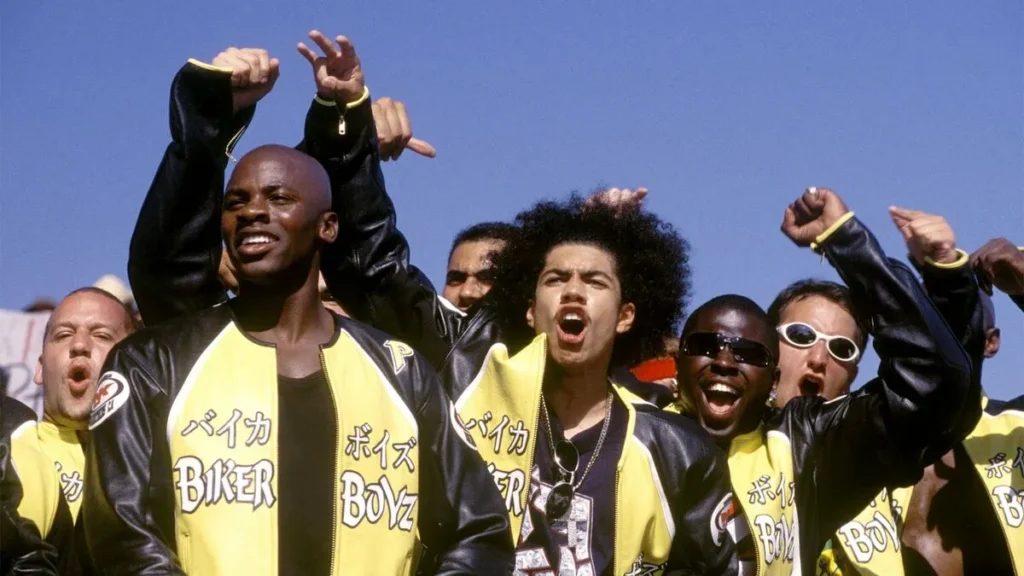
    Consider the 2003 film Biker Boyz. The movie was marketed as a story about predominantly Black motorcycle clubs. Yet by the time studio executives and producers finished reshaping the film, the central motorcycle crew looked far more like a corporate marketing brochure than a portrayal of the subculture it was supposed to represent.

    Kid and his motorcycle gang are cheering on their brother in the movie Biker Boyz

    This wasn’t unusual.

    Films like American Me (1992), Blood In, Blood Out (1993), Colors (1988), and even the breakdancing movies Breakin’ (1984) and Breakin’ 2: Electric Boogaloo (1984) frequently inserted characters designed to make the stories more accessible to mainstream audiences.

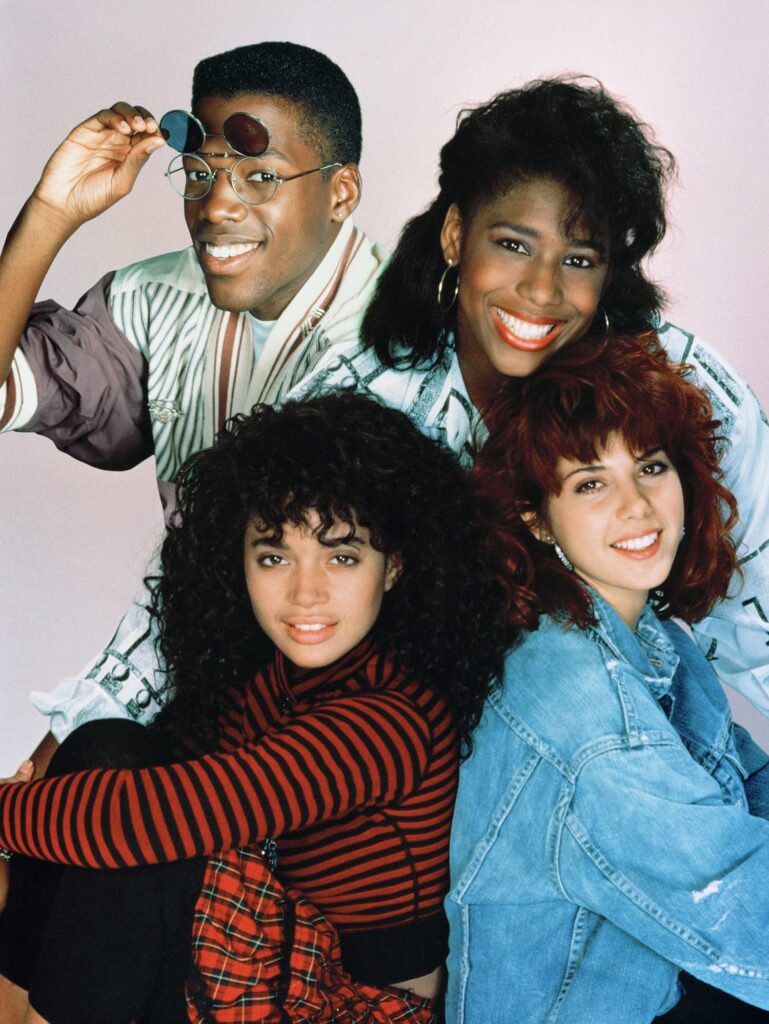
    Television followed the same pattern. The sitcom A Different World was originally conceived as a story about a white student attending a historically Black college. Only later, after becoming a spinoff of The Cosby Show, did it shift toward focusing on Black students and Black campus life.

    A Different World was originally supposed to be about Marisa Tomei’s character, Maggie Lauten (bottom right), going to an HBCU before it was decided that it was going to be a spinoff of The Cosby Show.

    In other words, the entertainment industry has long modified stories to appeal to broader audiences. Diversity in casting and storytelling is not a new phenomenon.

    This is not necessarily a bad thing. In fact, seeing more diversity, even in predominantly Black and Latino places and cultures, is good for society, in my humble opinion.

    So what actually changed?

    The major difference today is not the presence of diversity. The difference is who is being centered.

    For decades, popular entertainment overwhelmingly focused on white male protagonists. Stories that did not originally feature them were often altered to include them.

    Today, audiences are increasingly encountering films, television shows, and video games where women, racial minorities, LGBTQ characters, and other groups are present as main characters rather than background figures.

    For some viewers, this shift feels like displacement.

    But representation in storytelling reflects the societies that produce those stories. Modern societies are diverse, and entertainment inevitably reflects that reality.

    None of this means that every casting decision or creative choice is above criticism. There are legitimate artistic discussions about authenticity, historical context, and storytelling choices.

    For example, fantasy worlds inspired by specific historical cultures may raise reasonable questions about how representation is handled within those settings. Those discussions can be worthwhile when they focus on artistic and historical coherence rather than ideological outrage.

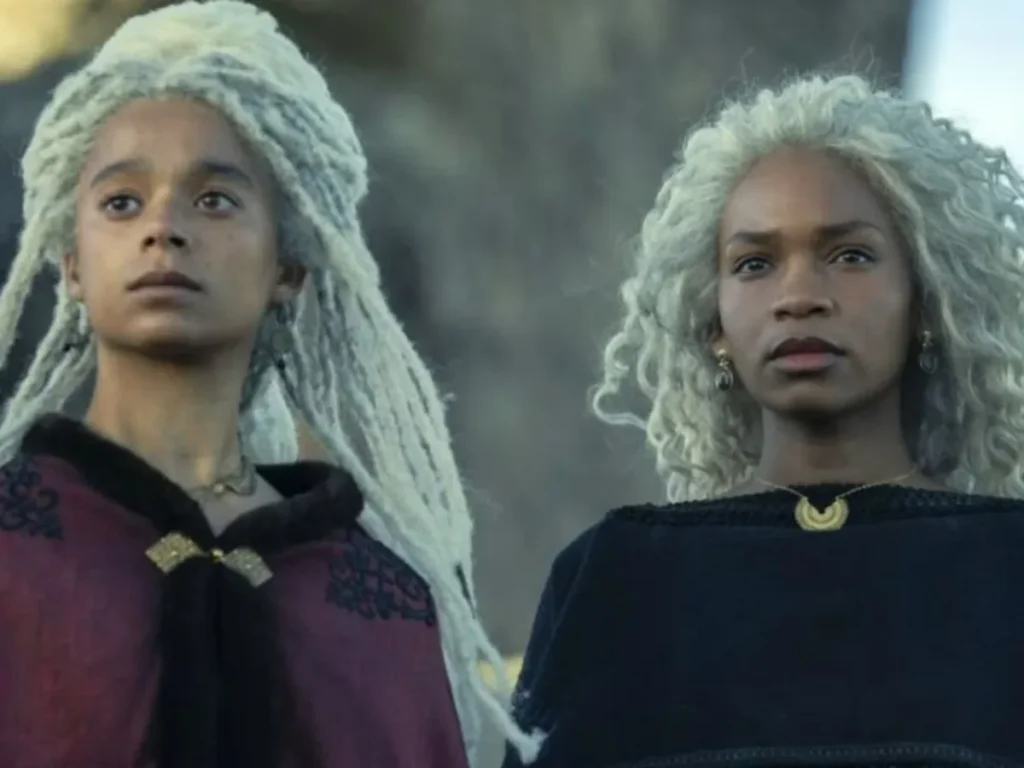
    There are legitimate artistic criticisms of Black Valyrians in HBO’s House of the Dragon. However, it must also be noted that these characters are from a fictional world in a fictional universe.

    But most of the current backlash has little to do with artistic and/or historical integrity.

    Instead, it reflects discomfort with the simple reality that entertainment no longer assumes that one particular demographic must always be the default center of every story.

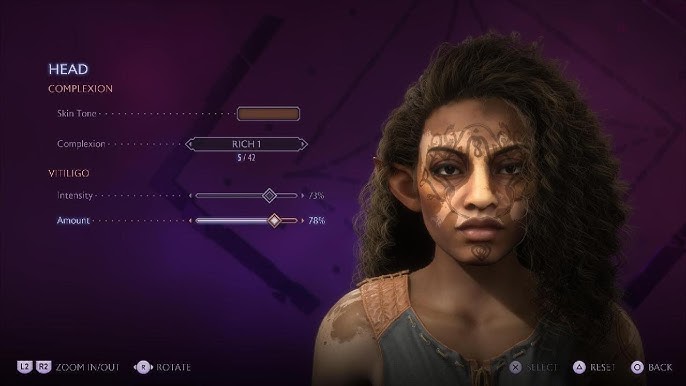
    The sky is not falling because a video game allows players to customize their character’s identity and pronouns. A science fiction series featuring a Black protagonist does not signal the collapse of civilization. A female action hero does not erase decades of male-led action films.

    What has changed is not storytelling itself.

    What has changed is that more people are finally allowed to see themselves in the story.

  • The Hurtful Nature of Anti-black Stereotypes in Media and How They Are Hurled Against Me Online

    The Hurtful Nature of Anti-black Stereotypes in Media and How They Are Hurled Against Me Online

    I am a leftist. I am an unapologetic leftist. I am an unapologetic pan-African, pro-black leftist. I am an unapologetic pan-African, pro-black leftist who is critical of everyone, very outspoken, speaks up for marginalized groups, and is an atheist. Because of this, I have many detractors on my social media. As of today, I have nearly 42,500 followers on my Facebook page and over 3000 on my TikTok. My reach is relatively high. This translates to more people who don’t like me or my posts engaging in them. With that engagement comes some… *ahem*… “colorful” comments.

    Among those “colorful” comments are those made usually by angry conservative white men who attack me and my character based on anti-black family stereotypes. To them, I am perpetually unemployed due to laziness. I am chronically and happily dependent on government welfare programs to live. I am either a high school dropout, a GED recipient, a high school graduate who was in the lower rankings in his class, or a man who didn’t earn his spot in college but was just given the spot to fill a quota. I don’t believe in marriage, have several “baby mamas,” and don’t take care of my children. This doesn’t count the other stereotypes attached to black men that I get regularly. Just yesterday, a friend of mine called me. he was lamenting about the stereotypes that he has to endure in his comments section as a black man.

    Stereotypes About the Black Family

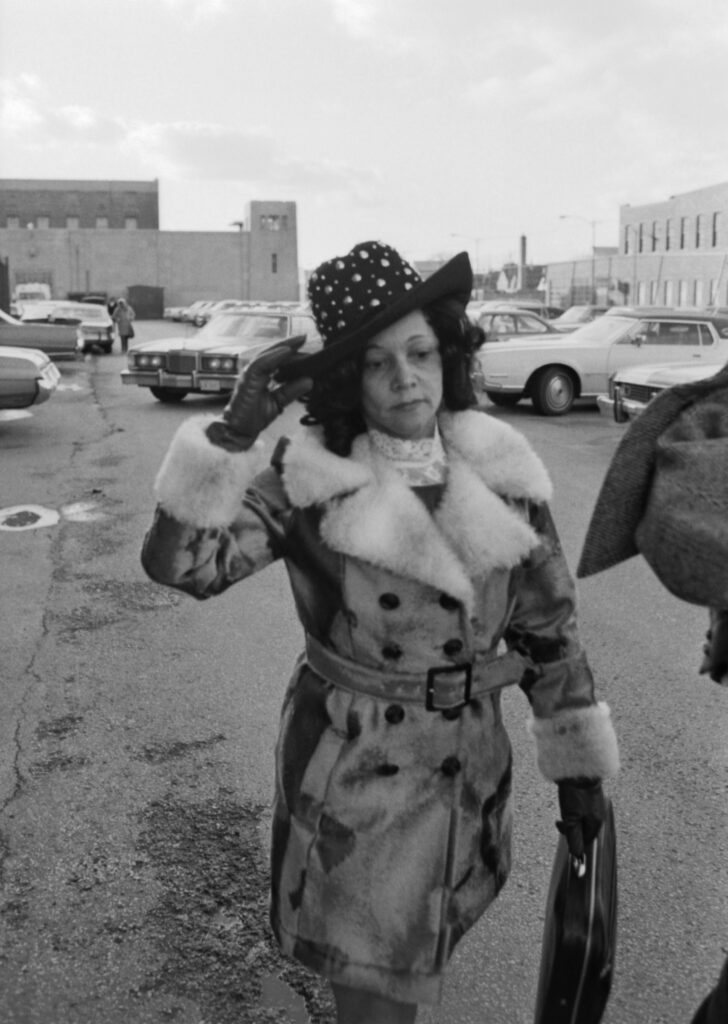
    Linda Taylor was a mixed-race woman con artist who became the mascot for “welfare queens” during the 1980s. Then President Ronald Reagan used her to forward the stereotype about black women using social welfare programs to live a lavish life.
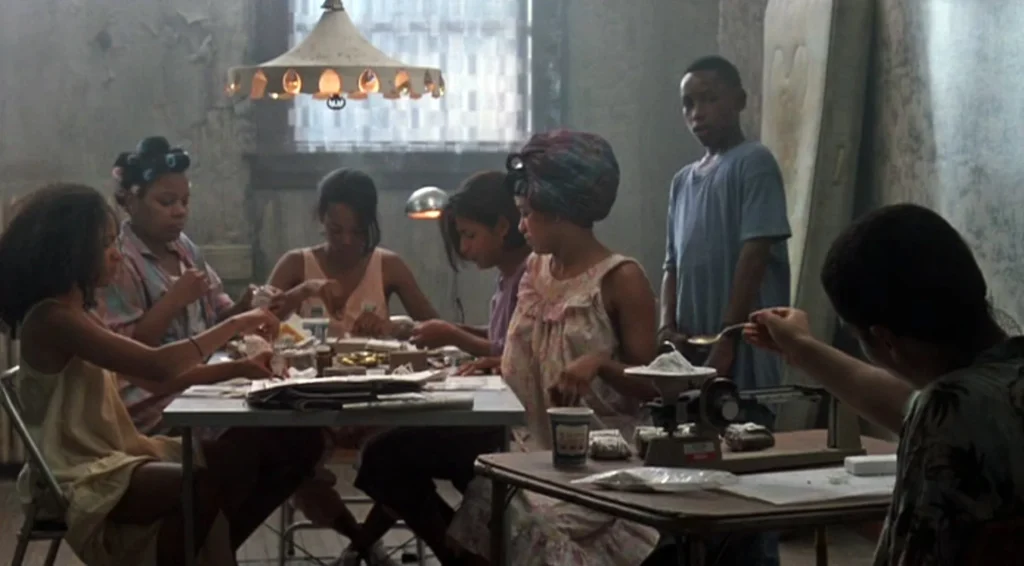
    Scene in the movie “Fresh” in which the very young protagonist, Fresh, is running a drug house.

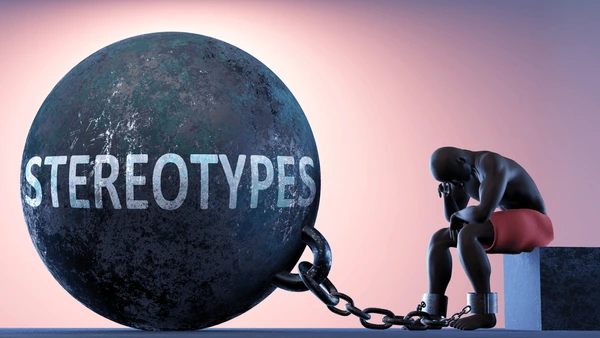
    The media often portrays black families in a negative light. Sometimes news programs and movies paint black mothers as unreasonably belligerent “welfare queens” who are prone to violent outbursts, constantly emasculate the men in their lives instead of supporting them (a notion that is shared by many black men in so-called “red-pill content, also known as “the manosphere“), and have multiple “baby-daddies” from several failed relationships that they are culpable of due to bad attitudes or promiscuity. Other times, black mothers are physically large, undesired, asexual women who only live to be caretakers of the people around them, especially white families. Black children are often depicted as coming from impoverished and dysfunctional homes. In these portrayals, they are often involved in criminal activity because of this. Even in cases where black children are “humanized,” they are seen participating in illegal endeavors to assume the responsibility that their absentee fathers and their neglectful mothers couldn’t handle. Thus, they are aged out of their innocence, even in television programs and movies. Black fathers are shown as mostly broke and lazy absentee fathers who love to make babies but don’t take care of them. We are seen as unintelligent, criminal, substance-abusing monsters who beat our wives and children harshly and mercilessly.

    The Reality About Black Fathers

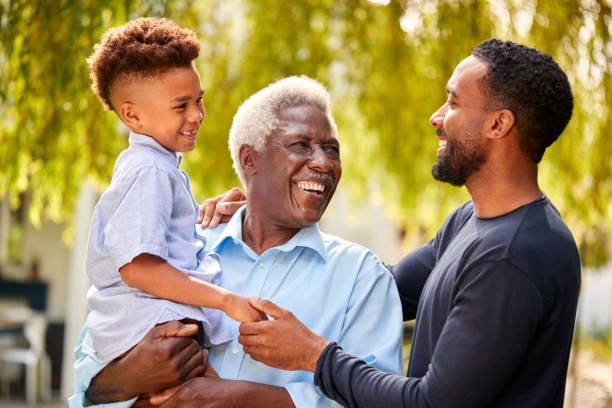
    Three generations of black males together.

    In reality, black fathers are the most active fathers with our children out of every other racial group, despite the conflations of black legitimacy with black male parental involvement by people like the late Charlie Kirk and others who used to paint negative stereotypes about black fathers. Most black men that I know personally are involved in the lives of their children. Many of them have at least partial custody of their children, even though they are not married to the child’s mother. In fact, many of the black men who engage in criminal behavior, like selling drugs, often cite caring for or providing for their children as a reason for it.

    In the song “Foe Life” by West Coast hip-hop artist Mack 10, he raps:

    “Cause a nigga gotta eat, fuck the world
    Let the bullets hurl and feed my baby girl”

    In the beginning of “Juicy”, rapper Notorious B.I.G. said,

    “Yeah, this album is dedicated to all the teachers that told me I’d never amount to nothin’, to all the people that lived above the buildings that I was hustlin’ in front of [and] called the police on me when I was just tryin’ to make some money to feed my daughter (it’s all good), and all the niggas in the struggle. You know what I’m sayin’? It’s all good, baby baby!”

    How Does This Relate to Me?

    However, I never been involved in the sale or distribution of illegal drugs. I’ve been working since I was 10 years old and had my first paycheck job at the age of 13. I came from a two-parent home in which my father was an entrepreneur. I married a woman at the age of 24, and we had three children together. Neither of us came into the marriage with children. We were married for 5 years before our first child was born. Our marriage ended after 22 years, and I became the primary parent to my three children, taking care of their daily needs. I was a paid paramedic /firefighter for years, was on the Dean’s List in college, and was an active PTO dad for all my children. I rarely drink or smoke marijuana.

    However, let those whose only contact with black folks is in the evening news tell it, and I am some embodiment of negative black stereotypes. These notions are not benign. They have real-life consequences. Such negative stereotypes have gotten me harassed by police when I was younger, and perhaps closed the door on opportunities for me.

    Local news stories and the utterances of famous talking heads in legacy media and online push these narratives. What is disturbing is that many people cannot see the racist undertones attached to the “harmless” facts and figures that are constantly thrown out to the public, yet rarely scrutinized.

  • 24 Hour Media Diary #2

    24 Hour Media Diary #2

    From midnight January 30, 2026, to midnight January 31, 2026, this had been my media consumption for the day. I decided to start with the start of the calendar day to the end of the calendar day to cover a complete 24 hours.

    00:00-00:06
    I was thinking of playing a little bit of the Saints Row (2022) reboot on PlayStation 5, but I quickly got tired and bored. All I wanted to really do was wind down and go to sleep.

    00:06-09:22
    I allow YouTube to play various space and natural history documentaries while I sleep. My Attention Deficit Hyperactivity Disorder(ADHD) makes it so that it is hard for me to sleep in silence. Science documentaries sometimes act as my lullaby to get me to sleep. I was awakened from my sleep by a phone call.

    09:22-09:37
    Watched various political shows on YouTube. When I wake up, I like to get my daily dose of news and information. I didn’t really have much time today; I only watched one video from the Meidas Touch before getting ready to groom.

    09:37-10:39
    I allowed more videos to play from the I’ve Had It Podcast and the Vanguard while getting ready to leave.

    10:45-12:37
    I ran a few errands with my cousin and listened to my new playlist on Spotify. This playlist is filled with protest anthems and songs against the establishment.

    12:40-16:46
    I had been sick with COVID this week and didn’t feel too well. I decided to go back to sleep(take a nap)and be rested before running more errands. I once again allowed documentary videos on YouTube about natural history to play on my TV while I slept.

    16:57-19:48
    Ran a few more errands. I played a couple of videos from YouTube, but had to stop them a number of times to have conversations with my children and my cousin, who were with me. The videos that I was playing were political, and the conversations were about politics and social justice.

    17:06-17:27 (Overlap)
    Checked my Facebook feed, but I was not as active today on social media as I usually am. I didn’t really feel like doing too much on social media.

    20:00-21:32
    I lay down and watched reruns of Sealab 2021 on the Adult Swim app on my computer.

    21:32-23:23
    Watched more political content on YouTube about the Epstein file drop that happened earlier in the day. I decided to post on Facebook about the file drop. I also went on X to see what some of my favorite media figures were saying about it.

    23:23-23:40
    Received a phone call from my fiancé on WhatsApp. She lives in a foreign country, and we talked until the call dropped due to a bad connection.

    23:40-00:00
    Played more documentaries to go to sleep. I didn’t really like staying up late.

    This is not too atypical of a normal day for me, except for the fact that when I am at work, my day consists of more Spotify playlists than anything else. However, being sick made me very drowsy, so I slept most of the time.

    My personal data was still out there for the world. YouTube knows what I like to watch while sleeping and/or napping. I don’t have to look for documentaries to watch. YouTube recommends them for me. Facebook gathers information about me every time I make a post or comment. WhatsApp can see what my fiancé and I send to each other. Cookies store information about what I’ve been doing on my computer.

    YouTube knows that some of my interests are astronomy, paleontology, geology, politics, history, and other things. These are the things that I usually watch. Spotify knows that I am into nedrcore, neo-soul, and other genres. They will recommend certain artists to me. I am into a lot of left-wing political content and video essays. I don’t think there was much biometric data shared this day, if any, it did know some behavioral data from me.

    Nothing was revealed about me that I didn’t want revealed about me in any of my media consumption for the day. If I posted on Facebook, it was what I wanted to be associated with my profile/page. However, information about my habits, which are VERY easy to predict, could be used by the algorithm to sell me products/services or lead me to other channels and users on social media. For example, I get advertisements from immigration services/lawyers for the purpose of obtaining a fiancé’s visa for the United States for my fiancé.

    I try to be careful with my media use. I hide certain information about myself. I don’t post about my love life online. No one knows who I am dating and how serious it is. However, the algorithm knows because of my online activity on WhatsApp. I think as long as it is kept from my audience, I feel ok. But I do hate that my personal information is used to sell certain things to me.