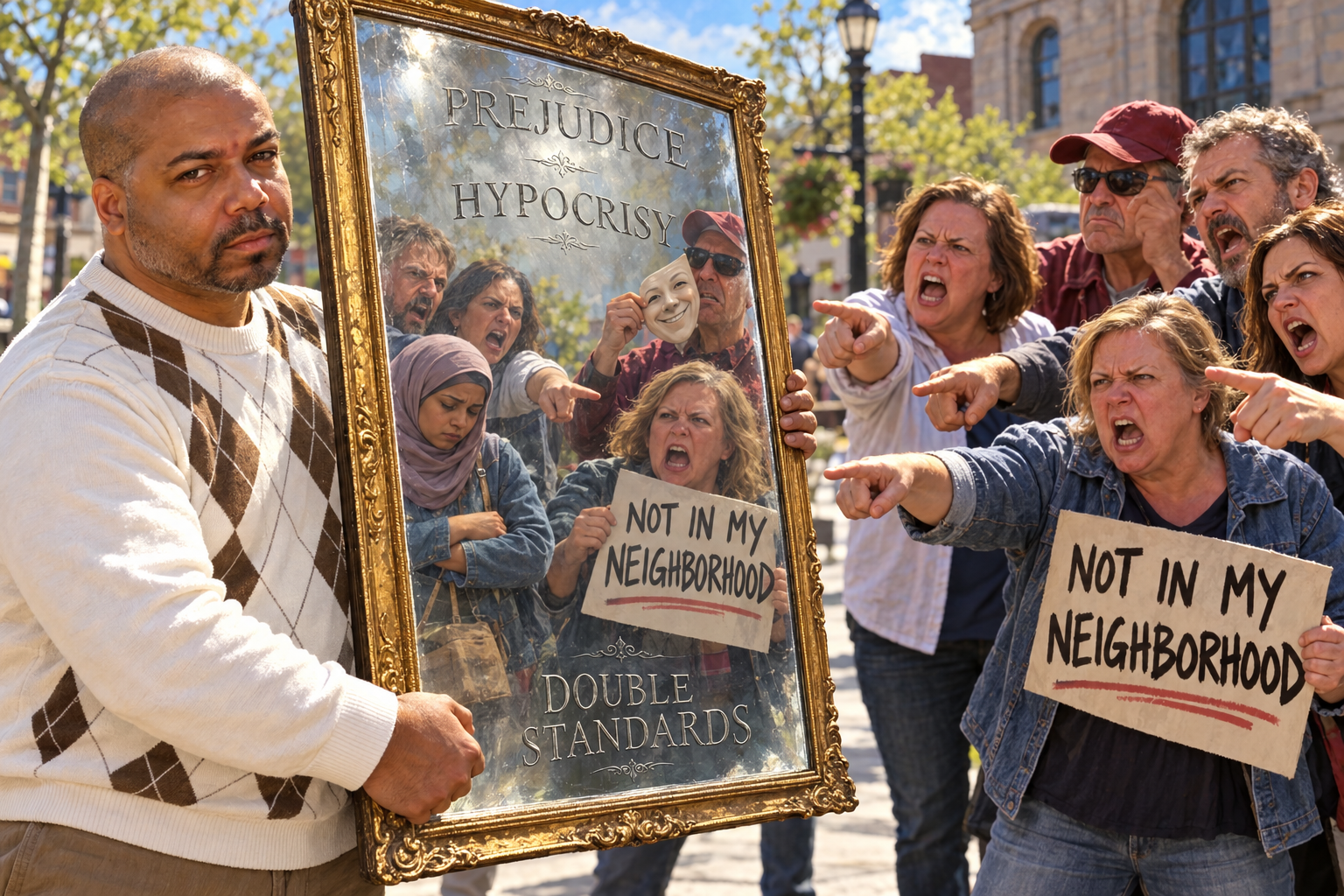
One of my missions in life is to hold a proverbial mirror up to society.
Sometimes people don’t like what I post because they don’t like what they see reflected in it. They recognize an attitude, an assumption, or a behavior they would rather not examine. Suddenly, the problem is the person holding the mirror. The problem is me.
Does that mean I am always right? No.
Does it mean I am perfect? Absolutely not.
I get criticized in my own posts. I also routinely call myself out on my own shit. That part sometimes gets missed by people who are too offended to notice that the criticism includes me.
I live in this society too. I have absorbed its prejudices, made mistakes, and had to confront things about myself that I did not like. And I am still doing that work.
But admitting that a problem exists is the first step toward doing something about it. We cannot fix what we refuse to acknowledge.
And I want something better. For myself. For my children. For the people whose lives are shaped by conditions they did not create and cannot simply wish away.
I want that “more perfect union” we keep talking about. I also want a better world beyond it.
You do not have to like the way I make my points. I know I can be blunt, sarcastic, angry, and confrontational. Sometimes I turn people’s own venom back toward them so they can hear how ugly it sounds when they are on the receiving end.
That approach can land. It can also miss. I am responsible for that. I am responsible for the “strays” caught by individuals and groups who didn’t do anything to me.
But I am tired of watching people show more concern about the tone of a response than the cruelty that provoked it.
They can demean marginalized people all day. The moment someone responds with anger, suddenly we need a discussion about civility.
Where was that concern before somebody answered back?
When I defend Black people, some accuse me of racism. But loving my people and refusing to let them become everybody’s punching bag does not establish hatred of anyone else.
Neither does questioning criticism that has been selectively aimed at us.
A criticism can contain a legitimate concern and still be used to advance a racist agenda. If someone cares about a problem only when it gives them a reason to demean Black people, I am going to question their motives.
That is especially true when they show no interest in solutions.
I also want to be precise about power. There is a difference between an individual’s prejudice and the power of institutions to turn racial prejudice into unequal treatment, exclusion, and deprivation.
That distinction is important. It does not mean my words are incapable of causing harm or that being Black makes everything I say acceptable. It means we should stop pretending that every expression of anger carries the same history, authority, or consequences.
I am responsible for my words. I am also entitled to challenge the systems and narratives that harm my people.
And I am not advocating physical harm against anyone. My goal is to eradicate racism, not give it another direction to travel.
That requires understanding racism beyond its most theatrical forms.
It is not limited to robes and hoods, shouted slurs, or segregated lunch counters. It also includes beliefs about whose intelligence, character, culture, and humanity deserve respect. It includes policies and institutional practices that maintain racial advantages and disadvantages.
A person does not have to announce that they hate Black people to support arrangements that keep Black people disadvantaged.
And a policy does not become harmless simply because the people defending it avoid racist language.
That is why I keep pointing these things out. Recognition should lead to examination. Examination should lead to action.
Take the constant fixation on violence in Black communities.
Black people living in those communities have every reason to care. We lose loved ones. We fear for our children. We want safe streets, and we want the people harming our neighbors held accountable.
But if someone claims to care about that violence, I expect them to care about the conditions surrounding it too.
Trauma. Poverty. Limited opportunities. Inadequate schools. Discrimination. Access to healthcare and mental-health support. The pressures that teach some young men to treat domination, retaliation, and performative toughness as the only ways to establish respect.
These conditions do not excuse a person who hurts someone else. They do matter if we intend to prevent the next person from doing it.
Calling the problem “Black culture” does not explain why it happens. Blaming DNA is racist nonsense. Reducing everything to bad parenting lets the rest of society wash its hands of conditions that families are struggling within.
Parents have responsibilities. Individuals have responsibilities. Institutions and governments have responsibilities too.
I am tired of arguments that recognize only the first two.
We should also examine struggling White communities affected by lost industries, declining opportunity, and neglect. Their suffering deserves attention, and comparing experiences could help us understand what people need.
Instead, some commentators use poor Black neighborhoods as a punching bag while offering very little to poor White people beyond somebody to resent.
How does that help either community?
If you care about people being safe, healthy, and able to build a life, then help address the conditions standing in their way. Stop using one group’s pain to distract another group from its own.
And stop acting as though racism disappeared when the Civil Rights Act passed.
A change in law can be a major victory without erasing the beliefs, habits, and power arrangements that made the law necessary. Those things do not vanish because open discrimination becomes less socially acceptable.
Nor did Barack Obama create racial division by acknowledging the realities facing Black people. Naming a problem is not the same as causing it.
The anger directed at those acknowledgments tells us something about what people expect Black public figures to leave unsaid.
That is part of what I want the mirror to show.
I want us to examine the difference between opposing racism in principle and resisting every uncomfortable conversation about how it operates. Between saying we care about a community and using its problems to humiliate it. Between demanding accountability from individuals and refusing accountability for institutions.
I am willing to have that examination include me.
But I am not going to stop holding up the mirror simply because the reflection pisses somebody off.