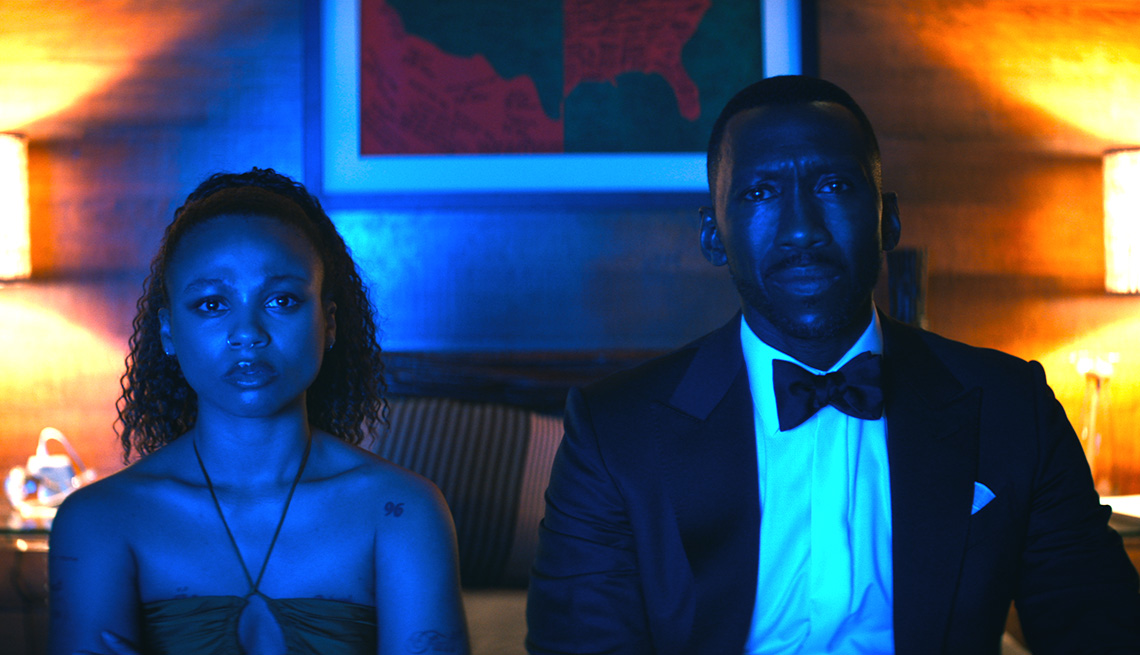
A line from the film Leave the World Behind has recently sparked outrage among conservative commentators:
“I’m sorry, but if the world falls apart, trust should not be given easily to anyone… especially white people.”
The quote, spoken by the character Ruth Washington (played by Myha’la Herrold), has been interpreted by critics as an example of “anti-white racism” and “woke propaganda.”
But the reaction misses the larger historical context behind the sentiment.
The scene itself depicts a tense, pre-apocalyptic situation. A Black family returns to their own home, even though white vacationers are renting it through Airbnb. The white family, especially the matriarch, is immediately distrustful of them. Although the house belongs to the Black family, the white characters initially assume they must be staff or impostors.
Even when the owner of the house offers to refund half of their money and has the key to a locked drawer, the white matriarch still views them as dangerously and criminally suspicious.
Anyone familiar with American racial dynamics knows that situations like this are not purely fictional.
But the deeper issue raised by the quote is not about a single awkward interaction. It raises a broader question:
What historical reasons do Black Americans have to extend unconditional trust toward white institutions or white society as a whole?
The history of the United States complicates that question.
After the Civil War and the passage of the 13th, 14th, and 15th Amendments, the promise of freedom for Black Americans was quickly undermined by a series of legal and social systems designed to recreate racial hierarchy. Black Codes, vagrancy laws, convict leasing, peonage, and sharecropping placed many formerly enslaved people back into conditions that closely resembled slavery.
When Black political power briefly emerged in parts of the South during Reconstruction, it was violently suppressed through campaigns of racial terrorism carried out by groups like the Ku Klux Klan and the Red Shirts.
The pattern did not stop there.
From housing discrimination to segregated schools, from redlining to unequal policing, institutions throughout American history have repeatedly produced outcomes that harmed Black communities. Even today, debates continue over disparities in healthcare, environmental exposure, policing, and incarceration.
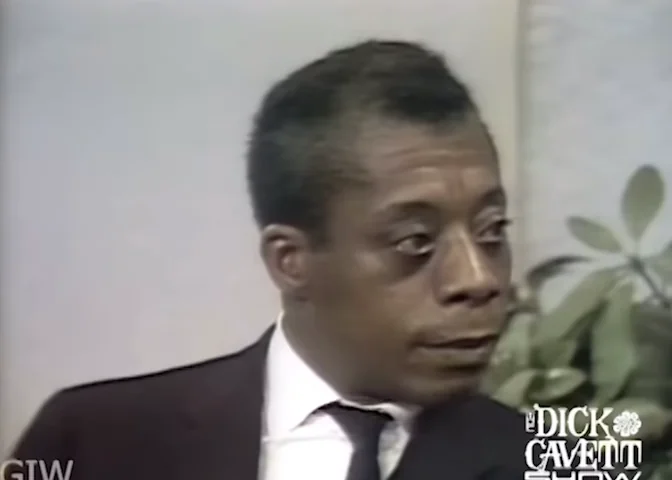
The writer James Baldwin addressed this exact problem during a debate on The Dick Cavett Show in 1969. Baldwin explained that distrust was not based on abstract hostility toward white people but on lived evidence produced by American institutions.
He said:
“I don’t know what most white people in this country feel. But I can only [conclude] what they feel from the state of their institutions.”
Baldwin’s point was simple but powerful. His point was that people judge a society not by its ideals, but by its outcomes.
If institutions repeatedly disadvantage a group of people, it is unrealistic to expect that group to respond with automatic trust.
This helps explain many of the cultural dynamics that outsiders often misunderstand. Black Americans frequently “gatekeep” aspects of their culture, remain skeptical of institutions, and react strongly to racial issues that others see as trivial.
Those reactions are not random or irrational. They emerge from decades and centuries of historical experience.
None of this means that every individual white person is malicious or untrustworthy. But collective histories shape collective perceptions.
If trust is going to grow between communities, it cannot be demanded through outrage over a line in a movie. It has to be earned through meaningful changes in the institutions and behaviors that produced the distrust in the first place.
History matters.
And until that history is confronted honestly, lines like the one in Leave the World Behind will continue to resonate with many viewers, even as others find them uncomfortable.
In 2000, Spike Lee was already a household name and a well-respected writer and director. He had already directed 12 movies by this time. These were She’s Gotta Have It (1986), School Daze (1988), Do the Right Thing (1989), Mo’ Better Blues (1990), Jungle Fever (1991), Malcolm X (1992), Crooklyn (1994), Clockers(1995), Girl 6 (1996), Get on the Bus (1996), He Got Game (1998), and Summer of Sam (1999). Although the relative box office success of his movies from the late-1980s through the mid-1990s was already waning from Crooklyn onward during this time, his movies were still critically acclaimed, and his artsy filming and unapologetic and unafraid attitude on tackling subject matters that many other writers and directors were afraid to tackle, gave the studios and Hollywood as a whole, artistic legitimacy.
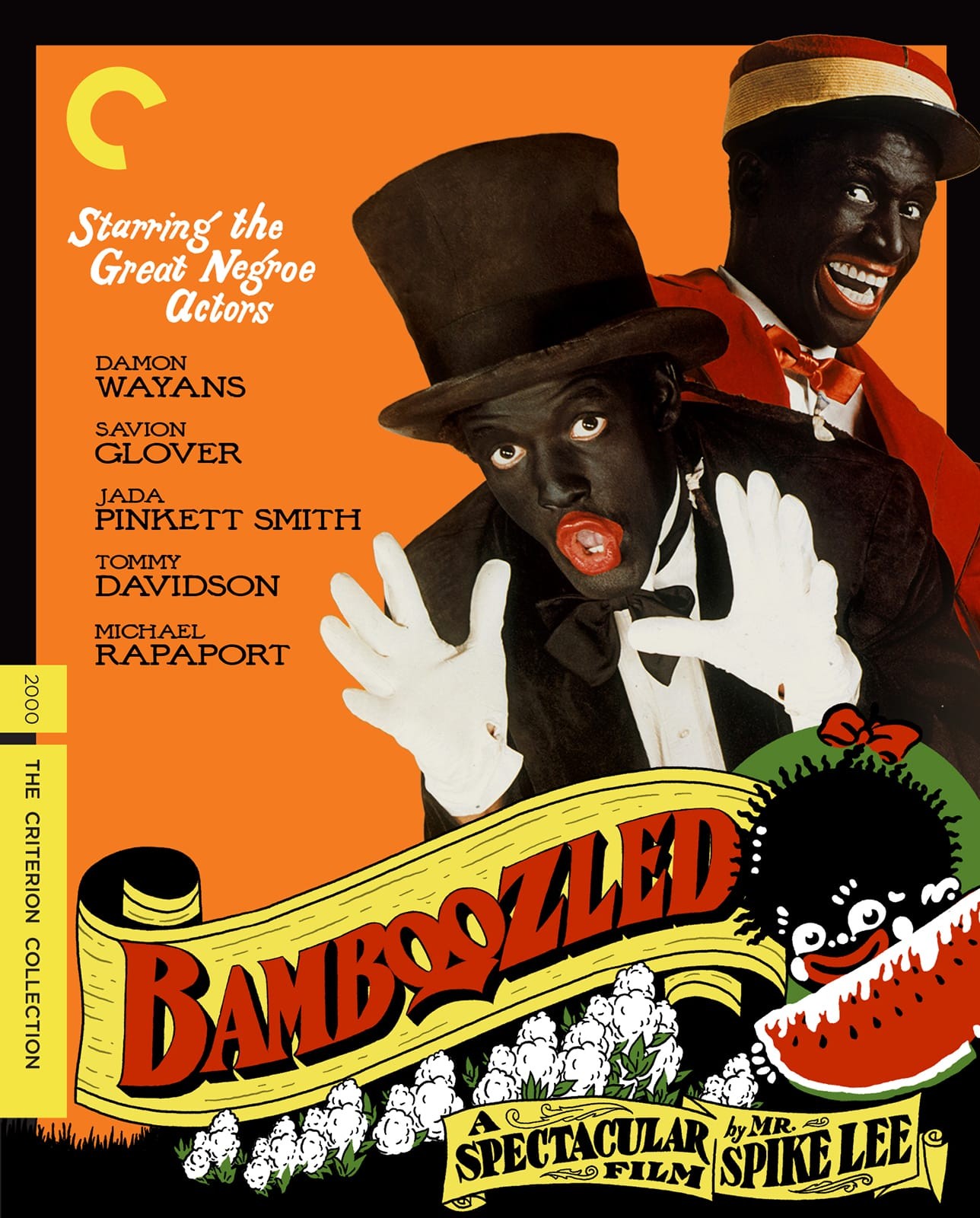
Spike Lee’s 13th movie, Bamboozled, a satirical comedy movie about the embedded racism of the entertainment media (particularly in television) along with society, did poorly at the box office and confused and even angered many people who initially watched it. Some critics, when it was released in 2000, thought that it was too shockingly heavy-headed. Roger Ebert thought that the use of blackface was too over-the-top and made the movie and its jokes more shocking than they were funny. I think that it was because of the initial shock of the use of blackface and the imitation of minstrel shows of a past in entertainment and media that is still very hurtful to black people and an embarrassment for whites, most audiences elected not to watch the movie at all.
A funny thing happens with time, though. The movies that few people wanted to watch in theaters develop a cult following later. These movies are lauded and appreciated by those who understand and appreciate the messages, the humor, and the artistic decisions that made these movies the bane of audiences and critics when they were initially released. This is what happened with movies like John Carpenter’s The Thing (1982). I will admit that although I barely knew anything about the movie before and during its theatrical release, I would often pass it by when trying to rent movies at Blockbuster. The cover art with the old school minstrel caricatures made the movie repulsive to me initially. It wasn’t until years later, seeing it on a streaming service, that I watched the movie after buzz about it on the internet, particularly on social media. I suspect that many people watched the movie via streaming services like Netflix. After giving the movie a chance, I could see the message of Spike Lee’s reimagining of old school, in-your-face minstrel shows, and parallel that with the more contemporary stereotypical media depictions and capitalizing on them.
A Brief History of Minstrel Shows
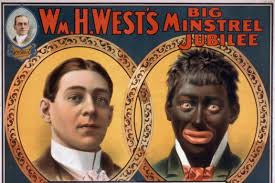
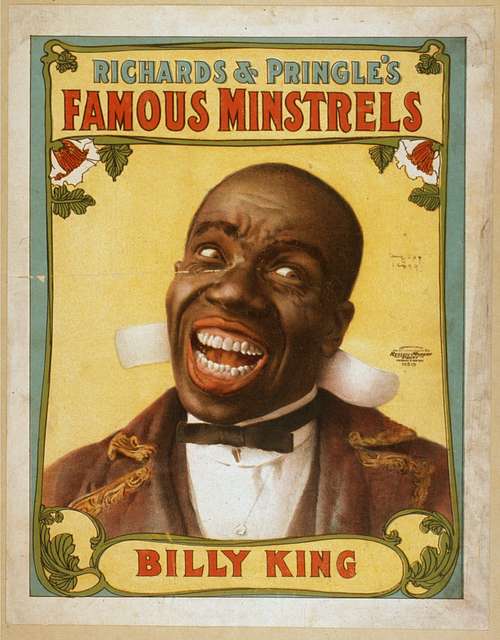
Example of blackface in minstrel shows.Even black performers participated in minstrel shows. Sometimes, it was the only work that they can find as performers.
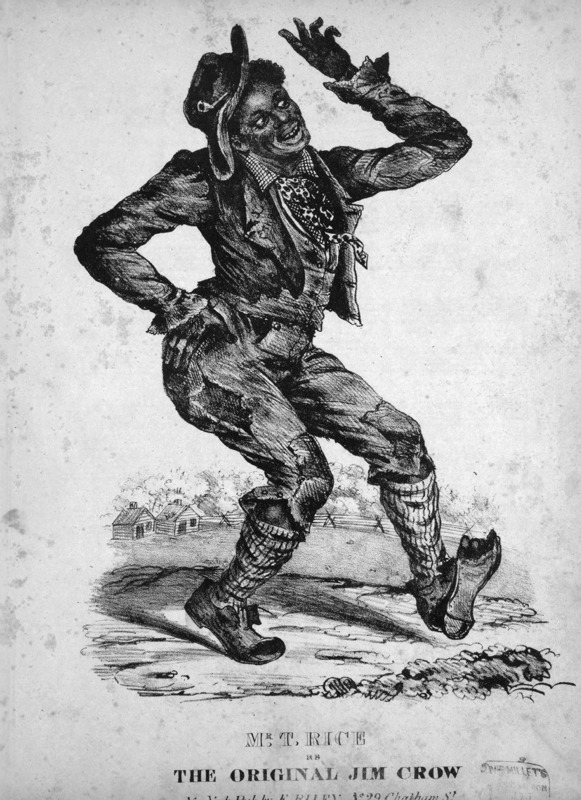
The minstrel show tradition officially began with the song and dance performance of Thomas Dartmouth “Daddy” Rice, who performed as a stereotypical character, Jim Crow, in 1828 as part of a variety show. The song “Jump Jim Crow” would become a national sensation, especially in the Northern United States, where minstrelsy would become more popular than in the Southern United States. Thomas Rice would perform the character in blackface. Jim Crow was a character that Rice created who was a black, physically disabled stablehand who walked with a limp and would do a shuffling, hopping dance.
Poster for Jim Crow
The character became very popular and spawned many more white people in blackface performing stereotypes of dim-witted, lazy, and content slaves. Increasingly, more variety shows included blackface performances. By the 1840s, shows started to be entirely in blackface. For the next five decades, minstrel shows would be the most popular form of entertainment in the United States. The Jim Crow character’s name would later be used to categorize laws that were meant to keep black people in subservient positions, as second-class citizens, and as victims of an American form of apartheid after slavery ended in 1965.
The “Disappearance” of the Minstrel Show
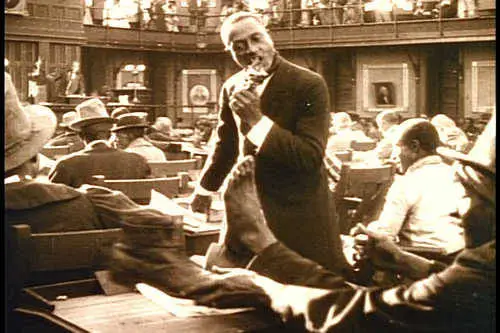
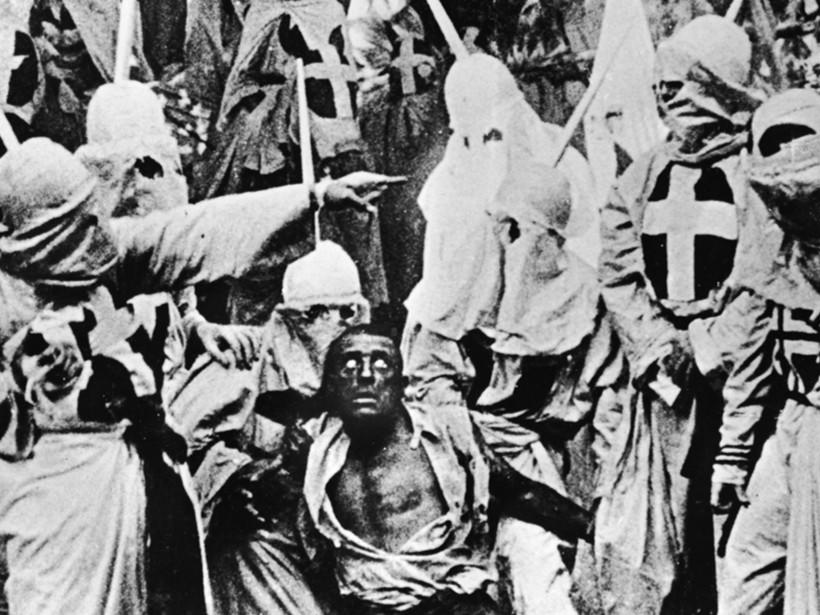
It can be argued that minstrelsy didn’t completely go away after the mid-20th Century when it seemed to disappear (around 1960). Stage shows weren’t as popular as they used to be as movies and television became popular media in which people mostly got their entertainment. In the beginning of the 20th Century and even with the new media, aspects of the minstrel show remained. D. W. Griffith’s The Birth of a Nation (1915) employed many of the tropes used in the minstrel shows on the stage. It had white actors in blackface and actual black people performing stereotypical roles. Its popularity and message resurrected a Ku Klux Klan (KKK) that was dead over 40 years before this and would make it one of the most popular political organizations of the 1920s and 1930s, with members of both major political parties having membership and being influenced by the terroristic organization.
The Birth of a Nation (1915) showed the majority black state governmental bodies as disorganized, undignified, and corrupt, and the black people in them as uncivilized.A white man in blackface, who acted as one of the antagonists in The Birth of a Nation (1915), is seen being “brought to justice” (about to be lynched) by the Klansmen who were the “heroes” of this movie.
However, a new stereotype would arise that would be more dangerous than that of the childlike buffoonish “coons” and/or “sambos” of earlier minstrelsy. Starting in literature, the “black brute” trope would appear. This trope painted black men as animalistic predators who stalked white women to rape. Whereas the “sambo” stereotype was used to justify the perpetual enslavement of black people, the “black brute” stereotype was used to justify the systemic murder and second-class citizenship of black people. It is no accident that these stereotypes became popular during the time period in the United States in which anti-black lynchings were the most active (1880s – 1920s). This stereotype would not go away. Instead, it will later dominate other negative stereotypes of black men.
The classic coon, mammy, and pickaninny tropes employed by minstrel shows would be seen in early movies and shorts. The Three Stooges would use them in scenes with black domestic or service workers. The black characters in the Our Gang (The Little Rascals) series were modeled after the pickaninnies of minstrel shows. Early cartoon characters like Mickey Mouse, Bugs Bunny and Felix the Cat were modeled after minstrel shows and would even sing minstrel songs in the shorts. Imitation of Life (1934) was full of the “mammy” character, Delilah Johnson, saying the most cringe-worthy anti-black things while pledging her undying loyalty to the white character, Beatrice Pullman. The biggest black stars of the early 20th Century, after movies had sound, were William (Willie) “Sleep ‘n’ Eat” Best and Lincoln Theodore Monroe Andrew “Stepin’ Fetchit” Perry.
More dignified and human black characters in mainstream Hollywood would come in the late 1940s. But minstrel characters would persist. In 1951, The Amos ‘n’ Andy Show premiered. The show was a live-action television sitcom based on the minstrel radio show by the same name. The show was a television hit and lasted all the way until 1960. This is the official end of the minstrel show.
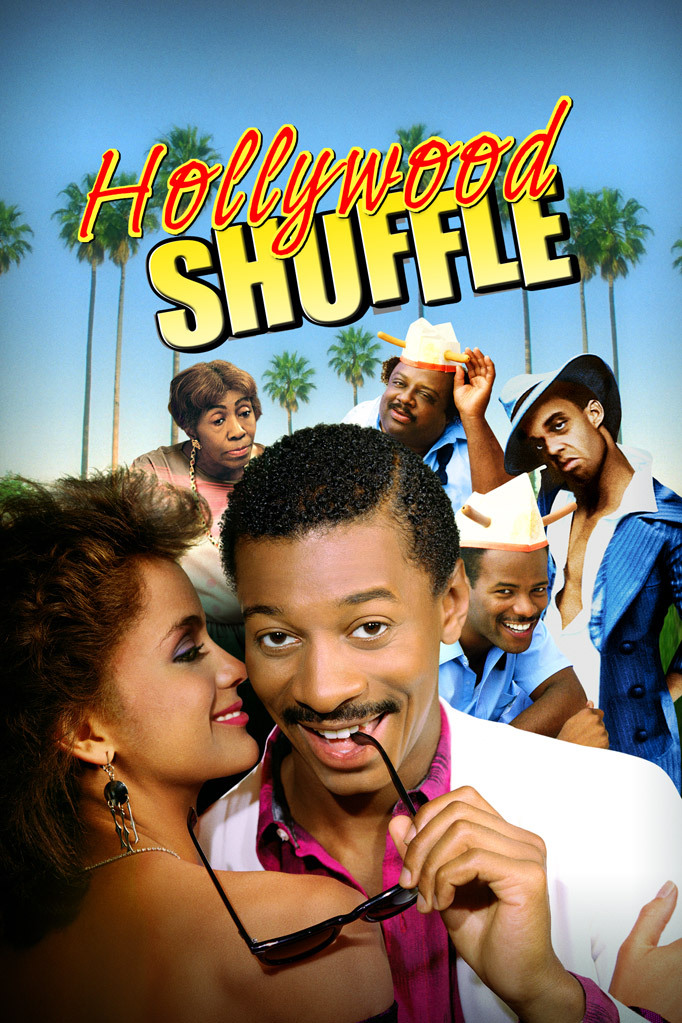
However, many of the most harmful aspects of the minstrel show would survive to this day through 1970s blaxploitation films, the popularity of James “JJ” Evans Jr. in the show Good Times, gangsta rap music and videos, many Tyler Perry movies, and various other popular forms of American entertainment. In fact, it is the persistence of these tropes and stereotypes in popular media, especially movies, that spawned Robert Townsend’s first movie, Hollywood Shuffle (1987). Hollywood Shuffle is a spiritual prequel to Bamboozled in many ways.
Movie poster for Hollywood Shuffle (1987)
A reimagined alternative to a current social condition
In Bamboozled, Spike Lee imagines a television network in which minstrelsy wasn’t just hidden and denied but accepted and made into a hit television show. It was the product of irresponsible capitalism that cares more about profits and the illusion of diversity than any sense of responsibility towards the community. The black caricatures are packaged and presented to mixed audiences as ironic or edgy humor while corporate executives monetize disturbingly grotesque racial spectacle, and black writers, directors, actors, producers, and crew are financially and professionally trapped in a system that greatly rewards self-exploitation. In this imagining, media is a direct descendant of the minstrel tradition and never broke from it. Society is not in a post-racist era; we are just in a more polished one.
Escaping this unfortunate reality requires systemic changes. The problems in Bamboozled are not due to changes in technology, nor will they be fixed with technology. Instead, what must be done is that the power structure must change. Modern art is profit-driven and controlled by capitalistic corporations. Capitalism rewards spectacle over dignity. This is what you experience when watching daytime talk shows featuring lie detectors and paternity tests or when listening to Sexy Redd songs. The ratings, box office receipts, album sales, and other metrics justify any moral compromise by the corporation. And most of the executives who control the distribution of art are white, so they have no sense of responsibility towards the black community, especially the poor and working-class black community.
In the movie, CNS television network is run by white people who have final say in the content that they put on air. The audiences love Mantan: The New Millennium Minstrel Show and CNS makes sure to protect itself from any charges of racism by making sure that that everyone from the cast to the crew is black. There is a scene in the movie in which Myrna Goldfarb the PR Consultant in CNS, a white woman, gives the “Mantan Manifesto” to shield the company from any scrutiny, criticism or charges of racism. It is as follows:
“Gainfully employ African Americans in front of and behind the camera.”
“Let the audience decide.”
“Who are these would-be ‘cultural police’?”
“Who determines what is Black? We are not saying anything about the entire African American community.”
“This is simply satire.”
“If they don’t like it, ‘F-‘em!’ ”
“And lastly, always smile, wear kente cloth, reference Dr. King, and remember, this show was created by a non-threatening Black male.”
The cynical way in which heavy and much-needed conversations about racist portrayals, racism, and responsibility, while hiding behind the positive public relations of black employment and opportunity, makes this manifesto even more insidious.
Spike Lee suggests that the things to do to escape this condition are to have changes in media ownership and governance. . This is not explicitly articulated; rather, it is conveyed implicitly. The issue was that everyone over Pierre Delacroix (whose real name is Peerless Dothan and the main protagonist of the movie) is white and feels no connection or responsibility towards the black audience that they are trying to capture and build on. They didn’t care if the show helped or harmed the community. The only thing they cared about was the ratings. However, simply putting black faces in seats of power in a company will not lead to any fundamental and/or significant changes if the overall economic model rewards racial exploitation. So, a big part of reform is to go with a model that doesn’t. Also, there would have to be reform when it comes to cultural gatekeeping.
The Legacy of Minstrelsy Lives On
Bamboozled is more appreciated today than it was when it was first released over a quarter of a century ago. The film is seen today as less absurd and more prophetic in the same vein as Network (1976). In 2023, the movie was selected for preservation in the Library of Congress National Film Registry. Although the film used the over-the-top idea of a modern-day minstrel show fashioned in the same manner as minstrel shows of the past, the message of the movie resonates more now than it did when it was initially released.
Online, content is measured by engagement metrics that reward outrage and caricature, and viral culture spreads and monetizes stereotypes. Black “trauma porn” is still very popular, and black pain and spectacle still generate profit. Today, many black content creators upload videos of themselves engaging in “coonery [and] buffoonery” (to quote Spike Lee himself) for clicks. Many of them are either being anti-black contrarians or engaging in hyper-performative racialized personas for algorithmic gain, mostly for the popularity and approval of non-black audiences. Both online and on television, corporate brands use black culture for capitalistic endeavors while avoiding structural change. Diversity is treated more like a public relations project and less like a way to redistribute power and ownership in the media.
The Hodge Twins started off on YouTube as fitness influencers. After a while, they were doing comedic critiques on videos, sometimes being edgy and offensive while doing it. They slowly morphed into anti-black conservative panderers to maintain an audience online.
Bamboozled‘s extreme minstrel imagery is greatly exaggerated. But to me, that is the point. In reality, the minstrelsy is much more subtle and thus, deniable. Putting those images in one’s face makes one confront the ugly truths about the treatment of black people and culture in media. We no longer see people in literal blackface (at least most of the time) performing exaggerated and dehumanizing stereotypes. But we do see a constant parade of harmful “marketable stereotypes” which, in my opinion, aren’t too much better. Bamboozled is actually less of a reimagined condition and more of an amplified mirror held up to society, including black people themselves.
Conclusion
Spike Lee’s Bamboozled shows us that racial exploitation is not a glitch in a capitalistic society built on racism. Instead, it is the feature. What was thought of as grotesquely absurd satire is now being appreciated and studied. There are video essays about this movie by young content creators online. In true Spike Lee fashion, no one in this movie is immune from criticism. Even the somewhat “conscious” but hypocritical Mau Mau, who are miseducated “hoteps” (pro-black people who are usually socially conservative while embracing pseudo-intellectualism) that constantly indulge themselves in alcohol and marijuana while having trouble making an articulate statement, catch strays in this movie, y’know what I mean? The modern media ecosystem proves that this movie wasn’t a fantasy. Rather, it was a diagnosis of our society in the form of dark satirical comedy.