For years, progressives have been told that our ideas are “too radical” for American voters.
Apparently, wanting things like:
- police accountability when unarmed citizens are killed
- wages that working people can actually live on
- tuition-free public college
- universal healthcare
- serious action on climate change
- investment in social services instead of endless militarization
- stronger labor protections and workers’ rights
…is supposed to be political extremism.
But here’s the strange part: when these ideas are polled individually, they often receive majority support among the American public, including significant support from voters who identify as independents or even Republicans.
So if the policies themselves are popular, why do political strategists keep insisting that progressive politics is the problem?
Too often, Democratic leadership responds to electoral setbacks by blaming the left. We observed this after the 2016 election and again after the disappointing election cycles that failed to produce a victory for the Democrats in 2024.
However, that explanation overlooks a more fundamental issue with their messaging to voters.
For decades, Democratic campaigns have frequently tried to position themselves in the political center, appealing to moderate Republican voters and emphasizing bipartisanship. The problem is that this strategy often yields campaigns based on vague platitudes rather than specific, tangible promises.
“Reaching across the aisle” may sound noble in theory, but it rarely inspires voters who are struggling with stagnant wages, rising healthcare costs, student debt, and unaffordable childcare.
Concrete policies do inspire people.
Free public college would dramatically expand opportunities for working-class families. Universal healthcare would provide security to millions of Americans dealing with rising medical costs. A workers’ bill of rights guaranteeing living wages, overtime protections, paid leave, and fair labor standards would materially improve the lives of millions.
These are not fringe ideas. Versions of them already exist throughout much of the developed world.
Yet in American political discourse, these proposals are frequently labeled “socialist” or “radical.”
The reality is that progressive politicians who campaign clearly on economic issues often generate enthusiasm among voters who feel ignored by traditional party messaging.
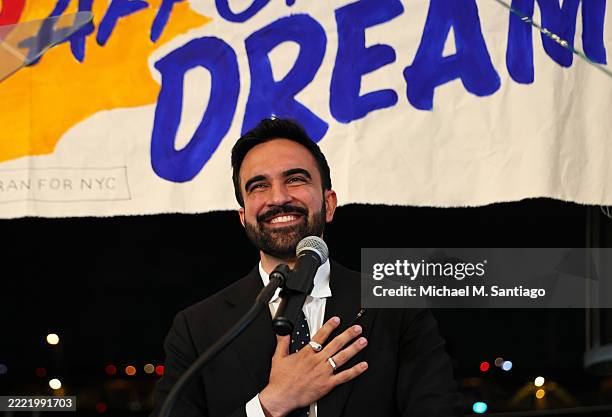
Figures such as Zorhan Mamdani, Alexandria Ocasio-Cortez, Katie Porter, Ro Khanna, Rashida Tlaib, Ayanna Pressley, and Barbara Lee, among others, have built strong political followings by speaking directly about economic inequality, corporate power, and the needs of working people.
Whether one agrees with every progressive policy or not, it is difficult to deny that these campaigns often generate energy and engagement among voters who might otherwise stay home.
The lesson here is not that progressives are the enemy of the Democratic Party. In many cases, they are the ones providing the clearest economic (and even social) message.
Political movements succeed when they offer people tangible improvements in their lives. Voters are far more likely to mobilize around real material change than around abstract promises of moderation and compromise.
If the goal is to build a stronger and more equitable society, the debate should not be about whether progress is “too radical.”
It should be about whether our political system is willing to deliver it.