Tag: power

  • The Political Tightrope of Black Power

    The Political Tightrope of Black Power

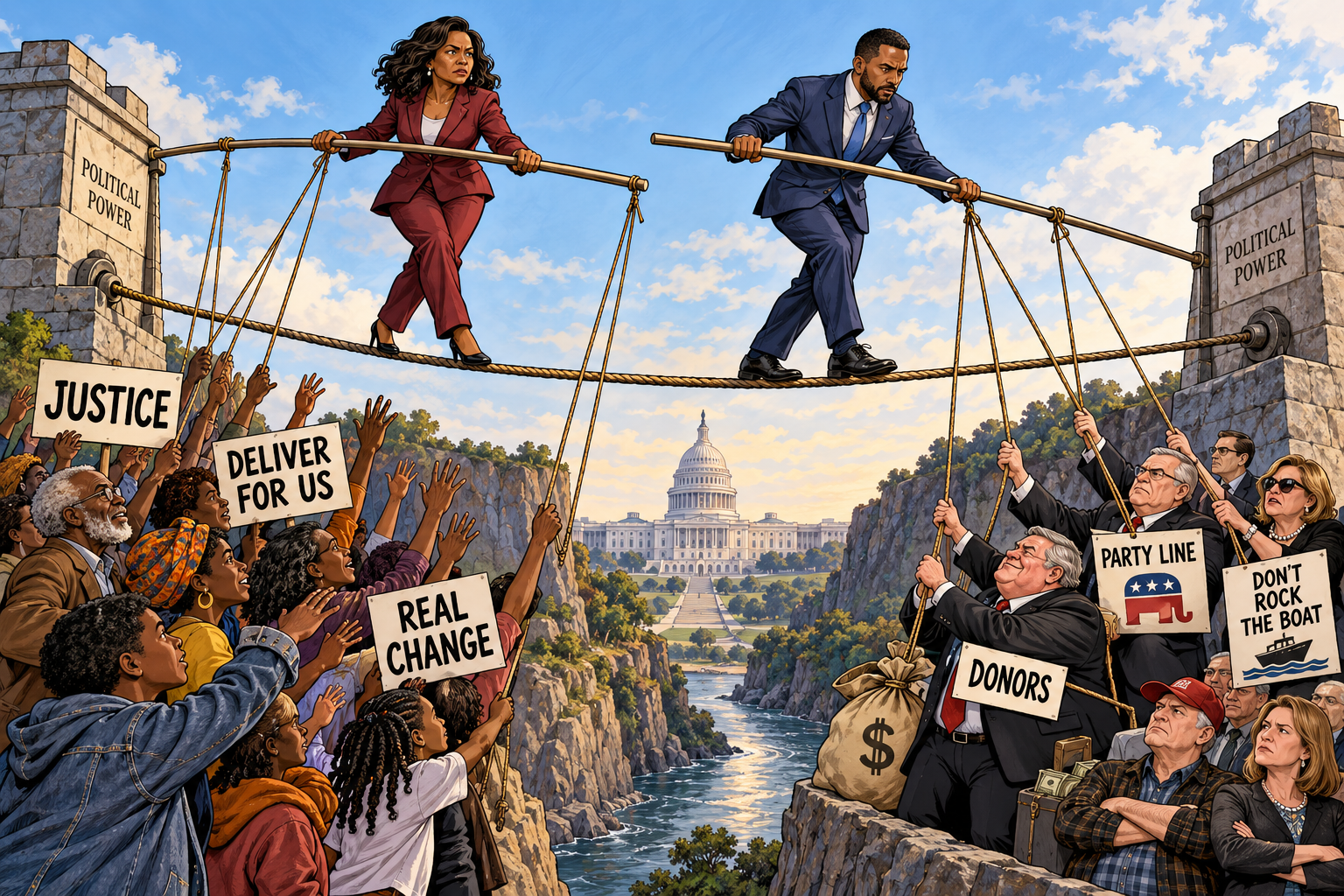
    I think many people (Black, White, and those who identify as neither) fail to understand or appreciate the political tightrope Black people in positions of power have to walk.

    I include myself in that criticism. Some of the things I have criticized Barack Obama for, or watched Kamala Harris get criticized for, deserve another look when we consider the power structure they were operating within.

    Holding office does not mean controlling every lever of power. A “Black face in a high place” does not suddenly erase the influence of wealthy donors, corporate interests, entrenched institutions, or voters who become uncomfortable when Black leadership starts challenging arrangements they benefit from.

    Winning a position within a power structure is not the same as gaining the power to remake it.

    Many Black people and other minorities want leaders like Obama, Harris, Wes Moore, and Jasmine Crockett to speak and act with the radical commitment we associate with Malcolm X, Kathleen Cleaver, Assata Shakur, or Winnie Mandela.

    I understand that desire. I want leaders who will stand up for us too.

    But we have to consider what we are asking of people whose authority depends on operating within institutions that can limit, punish, or remove them. An elected official trying to maintain a governing coalition faces different pressures from an organizer whose purpose is to confront that government.

    That does not make radical leadership impossible. It does make it costly. And we should be honest about who bears those costs and whether we have built enough collective power to support them.

    We cannot demand that someone confront the whole damn structure while assuming their title gives them everything they need to survive the confrontation.

    Some White people also expect Black officials to become the moral voice against every injustice. Apparently, being Black is supposed to make someone courageous, politically flawless, and willing to risk their career whenever the rest of us need a champion.

    But these people are human. They have strengths, weaknesses, ambitions, fears, and limitations like everyone else.

    Their positions also depend, in part, on voters who may praise the idea of justice while rejecting the policies required to achieve it. Some want the reassurance of a Black leader without the discomfort of having that leader challenge them.

    They want representation they can celebrate and leadership they do not have to adjust to.

    That is a hell of a tightrope.

    This does not excuse everything Black politicians say, do, or fail to do. Some choices deserve criticism. Some compromises are unnecessary. Some silences are calculated, and some leaders protect their own careers at the expense of the people who helped put them there.

    We should be able to say that.

    Believe me, I’ve been criticizing many Black politicians for these things, including Obama, Harris, and others on the national stage.

    But we should also distinguish between a failure of commitment and a limitation of power. Before declaring that someone has betrayed us, we ought to ask what they could actually do, what stood in their way, and whether they used the power they did have, not the power we imagined they had.

    Those questions make our criticism stronger.

    They also help explain why the political freedom available to someone like Trump can look so different from the freedom available to someone like Obama.

    In my view, Trump benefits from a level of permission that Black leaders are rarely granted. His belligerence gets celebrated as strength. His disregard for convention gets sold as independence. His supporters can treat conduct they would condemn in a Black politician as proof that he is fighting for them.

    Meanwhile, Black officials are expected to demonstrate restraint, reassure skeptical voters, build consensus, and prove, again and again, that they deserve to be where they are.

    A policy can have public support, and a Black leader can still face hostility for being the person advancing it. The argument may be presented as a disagreement over policy, but race and power can shape whose authority people are willing to accept.

    I have watched that happen too many times to pretend it is incidental.

    There are White voters who will tolerate extraordinary conduct from a White leader while treating a Black leader’s challenge to the status quo as a threat. That tells me their attachment to White power can outweigh the principles they claim to defend.

    And no, that does not describe every White voter. But it describes a political force Black leaders have to account for, whether the rest of us acknowledge it or not.

    My point is that accountability requires us to understand the conditions under which people govern. I am not abandoning my criticism of Obama, Harris, or anyone else. I am asking whether all of that criticism has been fair, informed, and directed at the people who actually held the power to make a different outcome possible.

    We need Black leaders willing to push. We also need organized communities capable of backing them when they do.

    We cannot keep treating a Black person’s election as the transfer of power to Black people as a whole. Until we build the power to make our demands harder to ignore, our representatives will keep walking that tightrope, and we will keep arguing about whether they should have fallen off it for us.
  • Party Unity—Until the Left Wins

    Party Unity—Until the Left Wins

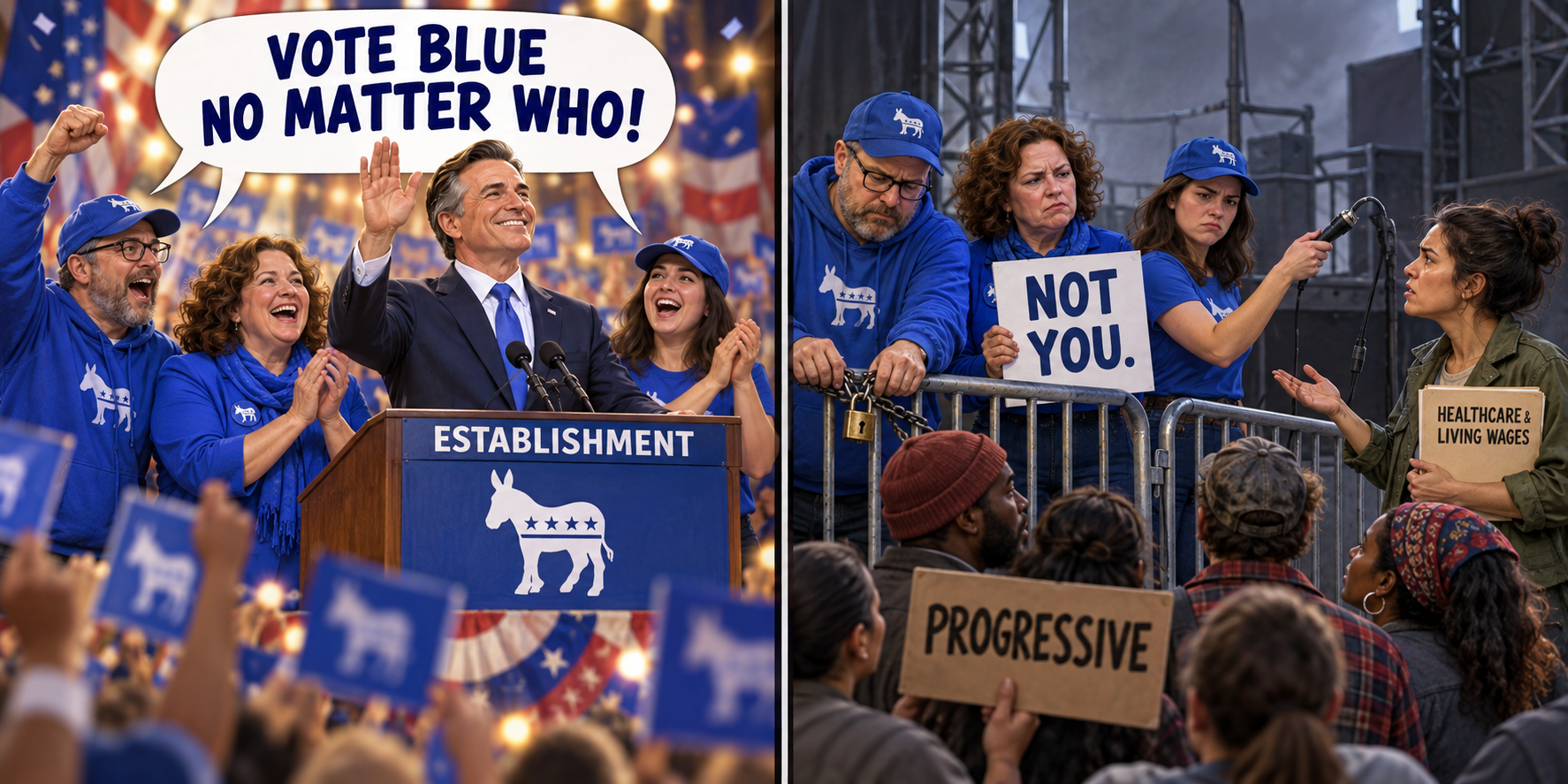
    Whenever Democratic loyalists start lecturing the left about “party unity” and “Blue No Matter Who,” I want to ask a simple question:

    Does that rule apply when your preferred candidate loses too?

    Because I have been paying attention for a long time, and the demand for unity seems to get a lot louder when progressives are expected to fall in line. When the left challenges a favored incumbent, wins a primary, or questions the party’s direction, suddenly there are exceptions.

    Then we hear about electability, ideological purity, troublesome supporters, and how the party cannot afford to be associated with those people.

    Apparently, the big tent has a very selective admissions policy.

    I remember 2008. Some disappointed Hillary Clinton supporters organized under the PUMA banner (“Party Unity My Ass”) and refused to support Barack Obama. Clinton herself urged supporters to back him, but the holdouts were serious determined, and angry. Some openly considered voting for John McCain.

    I also remember Clinton invoking her support among “working, hard-working Americans, white Americans” while arguing that Obama’s support was weakening. I found that appeal offensive then, and time has not improved that feeling.

    My political memory did not begin with Bernie Sanders, and it did not end when his presidential campaigns did.

    That is why I get tired of hearing the left discussed as though we invented bitterness, divisive primaries, or resistance to a nominee. The party has a long history of internal conflict. But certain people’s resistance gets treated as understandable disappointment, while ours becomes a character defect.

    And the same attitude is still with us.

    Angie Nixon is a Florida state Representative who won the Democratic Party primary to be the party’s 2026 United States Senate candidate for the state of Florida.

    Look at Angie Nixon. She won Florida’s Democratic Senate primary in August, defeating Alex Vindman despite his financial advantage. Whatever someone thinks of her politics, Democratic primary voters chose her.

    Nixon subsequently clashed with Florida Democratic chair Nikki Fried over socialism and whether she was receiving sufficient party support.

    Reporting this month also described Vindman directing resources toward other Democrats and the state party rather than Nixon herself, while Senate Majority PAC was steering clear of her race.

    Now, Florida is a difficult race. Parties have limited resources, and nobody is obligated to pretend every election is equally winnable.

    But that explanation deserves scrutiny when “support the nominee” has been preached to the left as a moral obligation.

    If progressives are expected to swallow their objections, volunteer, donate, and turn out for candidates they did not want, then they have every right to ask what support looks like when their candidate wins.

    You cannot spend years demanding loyalty and then act confused when people expect reciprocity.

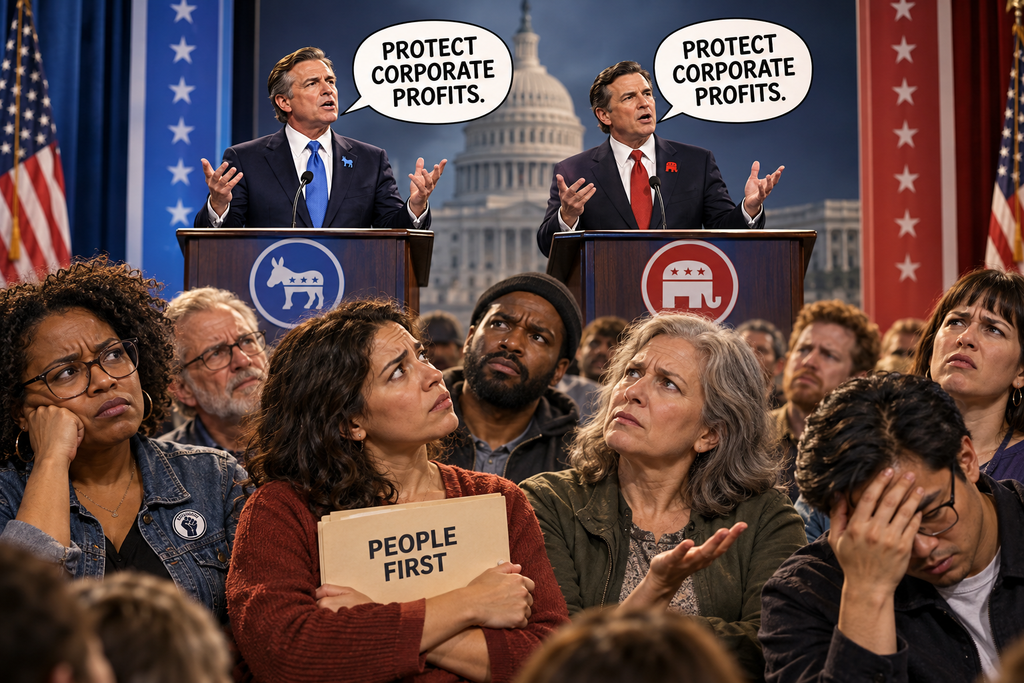
    An AI-generated image of voters, disappointed and confused, who find that both the Republican and Democratic candidates sound alike.
    To many of us further left of the political spectrum, Democrats and Republicans sound eerily similar.

    Here in St. Louis, the fight involving Cori Bush makes the role of money impossible to ignore. Wesley Bell defeated her again in the August 2026 primary. AIPAC-backed efforts and other outside spending supported Bell, with spending on his behalf substantially exceeding spending for Bush.

    Bush was not entitled to her seat. Voters could criticize her, challenge her, and choose someone else. That is how elections work.

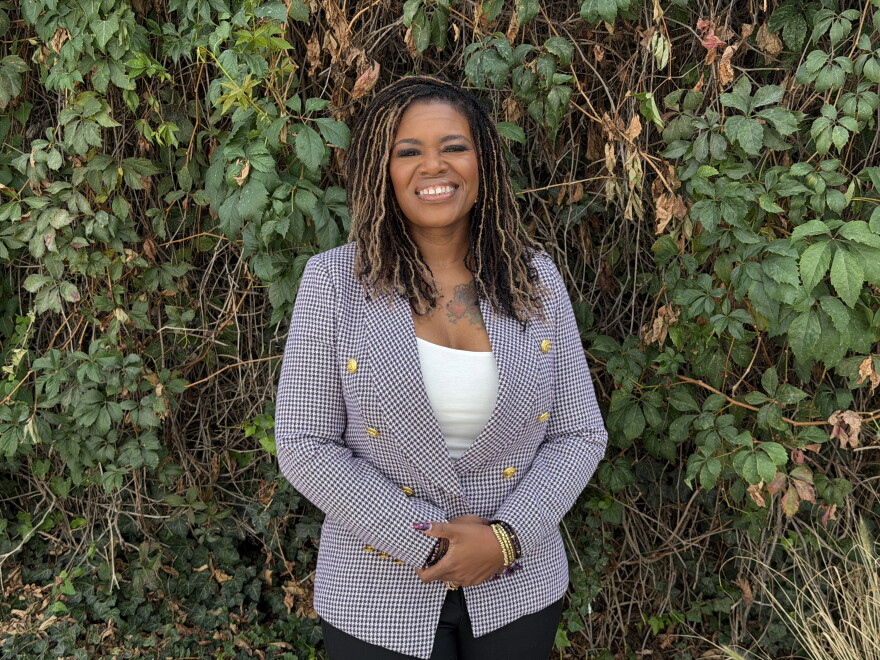
    An image of former United States Representative, Cori Bush, of Missouri's 1st US Congressional District..
    Cori Bush was the U.S. Representative for Missouri’s FirstCongressional District. She served one term before being defeated by Wesley Bell. Bush was not defended by the same Democratic Party that stated that it would defend incumbents and frowned upon primary opponents.

    But I am also entitled to question the priorities behind pouring money into defeating a progressive in a heavily Democratic district. I am entitled to ask why a Black organizer’s politics become something to neutralize rather than something the party has to engage.

    Calling that spending “democracy” does not put its sources, motives, or effects beyond criticism.

    Then there is Hasan Piker, who has become another target in this fight. In April, Democratic Representative Josh Gottheimer joined Republican Representative Mike Lawler in introducing a resolution condemning alleged antisemitic rhetoric from Piker and other online personalities. Gottheimer renewed his push for a vote in August.

    An image of Hasan Piker
    Progressive commentator Hasan Piker has become the new boogeyman in mainstream media. His commentary, often taken out of context, had been weaponized against progressive and leftist candidates who he is associated with.

    I do not have to agree with every damn thing Hasan says to question why Democratic politicians are devoting energy to this.

    He is a commentator. He can be criticized. His statements should be examined, including statements people find offensive or harmful. Having an audience does not make him immune to accountability.

    But neither should a controversial commentator become an excuse to discredit everyone on the left who has appeared with him, watched him, or supported a candidate he supports.

    Criticize the statement. Make the argument. Stop treating association as a substitute for discussing policy.

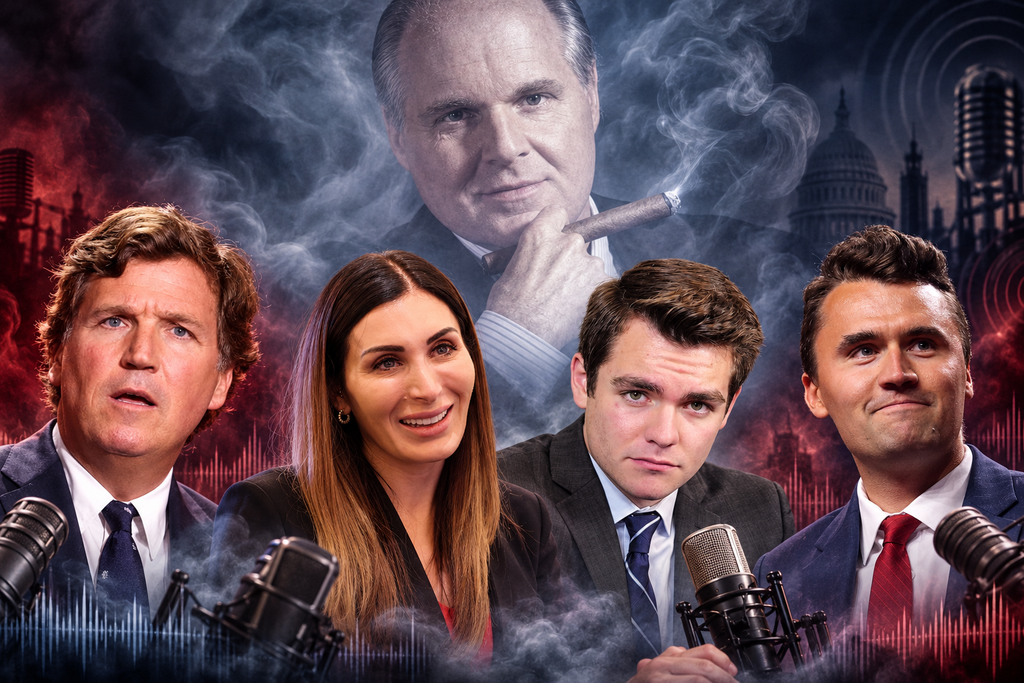
    An AI-generated image of Tucker Carlson, Laura Loomer, Nick Fuentes, and Charlie Kirk being the spiritual successors of Lush Limbaugh.
    For as controversial as many in the mainstream media find Hasan Piker on the left side of the political spectrum, there are many more people on the right side of the political spectrum who are not weaponized against political candidates on the right.

    This is where my original frustration still stands: identity-based bigotry is real, but the existence of bigotry does not mean every political disagreement is driven by it.

    Sexism against women politicians is real. I have said that repeatedly, including when defending Hillary Clinton against attacks that male politicians would not have faced.

    Antisemitism is real. Racism is real. All deserve serious attention.

    But criticism of a woman’s policies is not automatically sexism. Criticism of a Jewish politician is not automatically antisemitism. Criticism of a Black politician is not automatically racism.

    An AI-generated image of political strategists shielding a black female Democratic candidate who support wars, cuts to social programs, and corporate tax breaks.
    Democrats often defend bad candidates with bad policies against criticisms and for losing elections by charging critics and voters with bigotry. Although their charges aren’t totally baseless, they are often exaggerated and made into the primary reason why campaigns were lost, and their candidates or politicians face legitimate criticism.

    And criticism of a government’s actions is not automatically hatred of the people associated with that government.

    Context is important here. There needs to be a careful and sober examination of the evidence. What was actually said matters more than the political spin.

    These questions require more work than deciding that an accusation ends the conversation. Using genuine struggles against bigotry as political shields makes it harder to address both the bigotry and the policy disagreement honestly.

    I do not want the left exempted from that standard. I want the standard applied consistently.

    Progressive candidates should answer for their records. Their supporters should answer for what they actually say and do. But establishment candidates should face the same scrutiny over their donors, policies, alliances, and treatment of the people whose votes they expect.

    Too often, the left’s demands are described as dangerous or unrealistic before they are even seriously discussed.

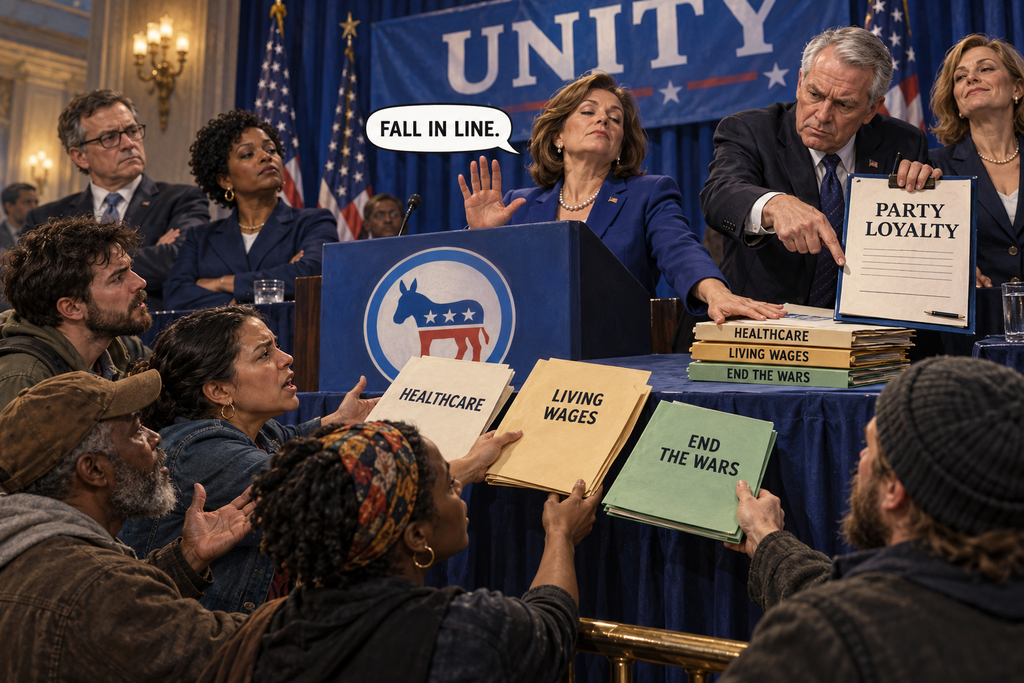
    An AI-generated image of Democratic Party leadership telling leftist and progressive voters to "fall in line."
    Progressive and leftist voters are told to “fall in line.” These voters are often scoffed at and then blamed for electoral losses.

    Universal healthcare. Affordable housing. Stronger labor rights. Public investment. An end to policies that treat human suffering as an acceptable cost of somebody else’s profit.

    Those are political demands. People can argue against them. But dismissing the people making them as naïve, toxic, disloyal, or unelectable is a convenient way to avoid the argument.

    And I think some of that hostility comes from the interests those demands threaten. A party comfortable with its donors and existing arrangements is going to feel pressure when its own voters start demanding changes that those donors do not want.

    That is my interpretation of the pattern. It is also why I refuse to accept every attack on the left as neutral advice about winning elections.

    Winning for what? Delivering what? And accountable to whom?

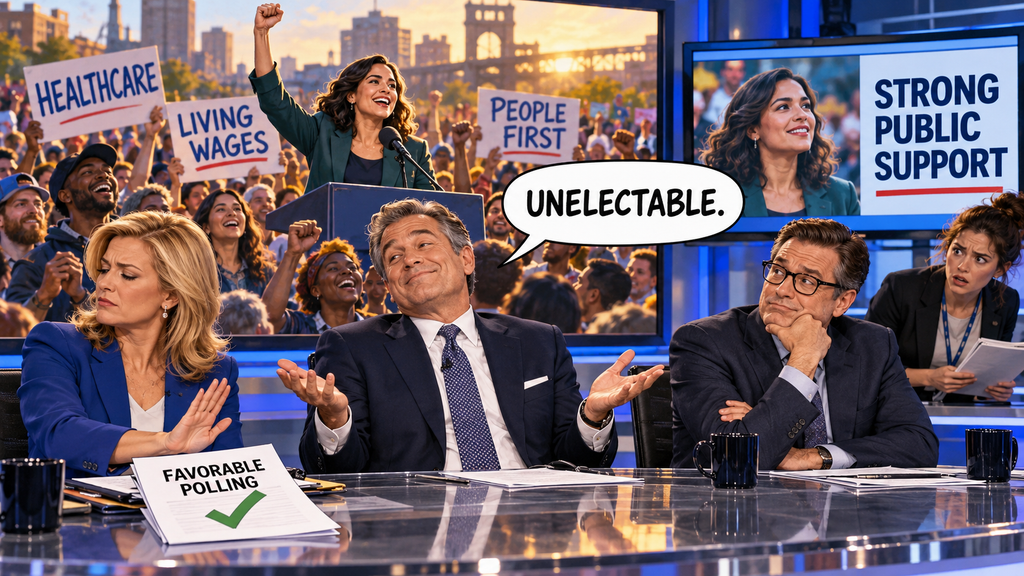
    An AI-generated image of media fisures smugly dismissing a popular progressive candiate as unelectable.
    The media and party leaders often dismiss progressive and leftist candidates as unelectable.

    I understand the danger Republicans pose. I do not need that explained to me every time I criticize Democrats.

    What I need is for Democratic leaders and loyalists to understand that opposing Republicans does not require me to surrender my judgment. It does not require silence about the party’s failures, and it certainly does not require pretending that its treatment of the left is fair.

    If you want unity, give people a meaningful role in shaping the agenda. Respect their victories. Engage their demands. Show them that their participation matters beyond election-day turnout.

    Stop treating the left as a workforce you can insult between elections and summon when you need votes.

    Party unity cannot mean that we do the work, accept the blame, and shut the hell up.

  • Stop Trusting Republicans to Play Fair

    Stop Trusting Republicans to Play Fair

    One thing that used to really piss me off about the Obama administration (and the Democratic Party as a whole) was the refusal to recognize just how far Republicans were willing to go to gain and keep power.

    Democratic leaders kept looking for reasonable partners. They kept talking about compromise, common ground, and reaching across the aisle. Meanwhile, Republicans kept showing them that their commitment to those things lasted only as long as it served their interests.

    At some point, believing them becomes a choice.

    There is no reasoning your way around people who negotiate in bad faith. There is no meaningful compromise when one side treats every concession as an opportunity to demand more. The Democratic Party needs to stand up and fight tooth and nail for the principles it claims to hold.

    But the lessons of the Obama years still don’t seem to have sunk in.

    We keep waiting for Republicans to come to their senses, embrace their better angels, or stand by their own words. Then, when they abandon those words, Democratic leaders act disappointed. They seem to think disappointment is going to shame Republicans into changing their behavior.

    How many times do we have to watch this?

    The fight over the Supreme Court in 2020 made this painfully clear. Some people genuinely counted on a handful of Republican senators to honor the standard their party had used to block Obama’s Supreme Court nominee. They expected consistency from people who had already demonstrated that the rules could change whenever power was at stake.

    After the Senate failed to convict Trump in his first impeachment trial, some still believed that those same Republican senators would suddenly put fairness ahead of political advantage.

    Why? What had they done to earn that faith?

    The Democratic leadership, the corporate media, and far too many liberals keep convincing themselves that this time Republicans will play fairly. This time, institutional norms will hold. This time, someone will discover a conscience.

    And when that doesn’t happen, we get another round of solemn speeches about how troubling it all is.

    I am tired of being told to admire the restraint of people who keep getting their asses handed to them.

    There is a familiar saying about doing the same thing over and over again and expecting different results. Whoever first said it, the point applies here. It is beyond frustrating to watch Democratic leaders repeat an approach that keeps failing, then have their defenders insist that the rest of us simply don’t understand the strategy.

    Apparently, they’re always playing three-dimensional chess. Apparently, every defeat is part of some brilliant plan that will reveal itself later.

    Meanwhile, the whole thing looks more like Wile E. Coyote chasing the damn Road Runner.

    And every time a liberal shows up to explain that my lack of faith is unwarranted, I want to ask: What, exactly, am I supposed to be impressed by?

    The speeches? The stern letters? The commitment to looking reasonable while the other side takes what it wants?

    I do not need another lecture about patience from someone who confuses having a strategy with defending whatever the leadership happens to do.

    Compromise requires people who will honor an agreement. When political leaders repeatedly abandon their own standards for an advantage, trusting them again should require evidence—not another appeal to their supposed decency.

    And compromise itself should not be treated as a virtue regardless of what gets surrendered. People’s rights, livelihoods, and futures are on the line. The goal cannot simply be to reach an agreement so everyone in Washington can congratulate themselves for being bipartisan.

    The goal should be to deliver something worth fighting for.

    Democratic leaders need to stop acting as though Republican approval is necessary to make their demands legitimate. Make the case. Use the power voters gave you. Organize. Give people a reason to show up, stay involved, and believe that their participation matters.

    If the party claims to stand for working people, civil rights, and democracy, then it needs to fight like those commitments mean something.

    Stop trusting Republicans to become the partners you wish they were. Make your demands, prepare for a real political fight, and rally the damn people behind you.

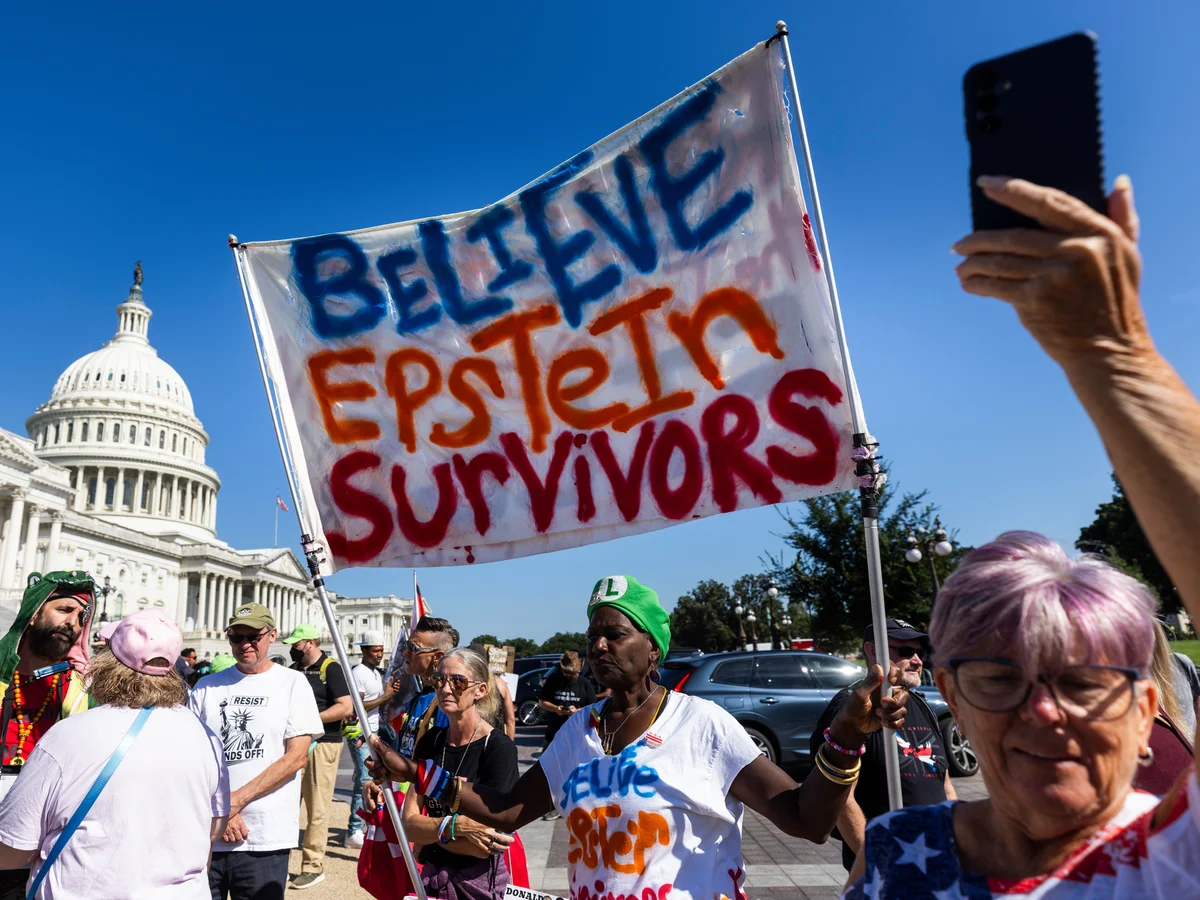
  • The Epstein Scandal Is Bigger Than Politics

    The Epstein Scandal Is Bigger Than Politics

    I have been extremely critical of Donald Trump and the MAGA movement regarding the Epstein case. However, it is important to say something that often gets lost in the political shouting.

    This case is bigger than Trump.

    It is bigger than Jeffrey Epstein himself.
    It is bigger than Bill Clinton, Prince Andrew, or any other powerful individual who may have been connected to Epstein’s network.

    And it is bigger than partisan politics.

    At its core, the Epstein scandal exposes something much deeper: what happens when money, power, and privilege collide with the worst impulses of human behavior, particularly male behavior.

    For decades, we have seen the same pattern repeat itself across politics, entertainment, religion, business, and other powerful institutions. Men with wealth and influence abuse their power to exploit women and girls, while the systems around them protect their reputations.

    Victims are often dismissed, discredited, or accused of ulterior motives. Meanwhile, the perpetrators continue to operate with little consequence.

    The Epstein case revealed a horrifying scale of abuse. Hundreds of young girls were trafficked and exploited. Some estimates suggest the number of victims could exceed a thousand.

    And yet the reaction from many people has been to reduce the scandal to a political weapon.

    Supporters of one political figure point to the involvement of another. Loyalists circle the wagons around people they admire. Victims become secondary to political narratives.

    This reaction is part of the problem.

    Sexual exploitation thrives in environments where powerful people are protected by wealth, influence, and social loyalty. When society treats abuse allegations as partisan ammunition rather than moral failures, accountability becomes almost impossible.

    The disturbing reality is that this problem extends far beyond Epstein’s circle.

    Reports in recent years have exposed online communities where thousands of men openly discuss drugging, assaulting, and exploiting women. Studies consistently show that sexual violence is far more common than many people want to admit. According to organizations such as the Rape, Abuse & Incest National Network (RAINN), roughly one in six women will experience sexual assault during their lifetime.

    These crimes are rarely committed by strangers hiding in dark alleys.

    They are often committed by men known to the victim, such as friends, coworkers, acquaintances, partners, and authority figures.

    This forces an uncomfortable conversation about male behavior more broadly.

    If men are serious about ending sexual violence, the responsibility cannot be placed solely on law enforcement or individual criminals. Men must also examine the attitudes and behaviors that enable these crimes to continue.

    That includes learning to accept rejection, understanding the meaning of consent, and rejecting the idea that status, wealth, or influence entitle anyone to another person’s body.

    This is not about hating men or rejecting masculinity. This is not about pandering to women for dates or sex. It is about recognizing that power without accountability creates environments where abuse flourishes. This is about accountability and responsibility.

    Many of the women harmed by Epstein’s network are now adults living with lifelong trauma. Justice for them should never be reduced to a political talking point.

    If this scandal means anything, it should be a reminder that accountability must apply to everyone. Holding criminals accountable should be the goal, no matter how wealthy, powerful, or politically connected they may be.

    And for men in particular, it should also be a reminder that respect, consent, and responsibility must define how we treat women.

    Anything less allows the cycle to continue.

  • The Epstein Files and the Rot of Power

    The Epstein Files and the Rot of Power

    What the scandal reveals about wealth, power, and accountability.

    The more I read about the latest Epstein file disclosures, the more disturbed and frankly ashamed I feel.

    I’m not talking about the rumor mill. Some of what people are circulating online comes from FBI tip lines or discredited claims. That isn’t what I’m referring to.

    What I’m talking about are the things that actually appear in the record: emails sent to or from Jeffrey Epstein and Ghislaine Maxwell, sworn testimony from victims given under penalty of perjury, and other evidence that investigators have said could support criminal cases, such as photographs, videos, and documentation of trafficking operations.

    Reading about these details is deeply disturbing.

    This isn’t about people having unconventional sex lives or engaging in consensual adult kink. Adults are free to live their lives however they choose. What the Epstein case reveals is something very different: the exploitation of young girls (some reportedly prepubescent or barely pubescent) by powerful people who treated them as disposable.

    These were vulnerable teenagers manipulated, trafficked, and abused by individuals with enormous wealth and influence. And for years, the systems that were supposed to protect them largely failed. It forces an uncomfortable question: what happens when immense wealth and power operate without meaningful accountability? The Epstein scandal suggests that the answer is often ugly.

    When people have the money, connections, and influence to shield themselves from consequences, the worst impulses can flourish. In that sense, Epstein was not a supernatural villain or some once-in-a-generation monster. He was something more troubling: a symptom of a system where wealth and power can insulate people from the laws and moral standards that govern everyone else.

    In many ways, Epstein functioned like a high-end pimp by providing powerful clients access to things they should never have been able to obtain. And our culture has sometimes romanticized that figure. For decades, entertainment media have portrayed pimps as rebellious anti-heroes rather than as people who often exploit vulnerable women and girls.

    The Epstein case strips away that mythology. It shows the brutal reality behind it.

    But the truth is that the problem isn’t limited to one man or one network. We’ve seen similar patterns in other high-profile abuse cases involving celebrities, entertainers, and powerful figures. Wealth, fame, and influence often create environments where victims struggle to be believed, and perpetrators expect to avoid consequences.

    That realization forces a level of personal reflection as well.

    Like many people, I can admit that in the past I sometimes dismissed or minimized allegations against powerful men whose work or status I admired. When people joked about or rationalized the abuse of young women by famous figures, it was often treated as scandalous gossip rather than as evidence of serious harm.

    Looking back, that culture of dismissal helped create the conditions where victims were ignored, and predators were protected.

    The Epstein files are horrifying not only because of what they reveal about specific crimes, but because they expose how systems of power operate. They show how wealth, status, and influence can warp justice itself.

    And that is why the response to this scandal matters.

    Justice should not depend on a person’s political ideology, social status, or connections. Anyone who participated in exploitation or trafficking (no matter how rich or powerful) should face real accountability.

    The victims deserved protection when these crimes were happening. The least society can do now is ensure that the truth is pursued seriously and that those responsible are held accountable.