One of the most frustrating parts of talking about racism in America is how often people act as if it is either exaggerated, isolated, or long behind us. Every time I say that most white Americans have, at minimum, participated in or benefited from racist systems and behavior, there is always a predictable backlash. The conversation shifts from the reality of racism to defensive utterances, including people charging me with racism, exaggerated claims of Black culpability in slavery, sloppy attempts to “both-sides” racism, and arguing that racism was a past reality that black people need to get over.
But history (and the present) tell a very different story, and I’m not pulling that conclusion out of thin air.
I’m looking at history,voting patterns, where people choose to live, how they react when Black people move into their neighborhoods, what they tolerate politically, and what I have personally watched happen over and over again in this country.
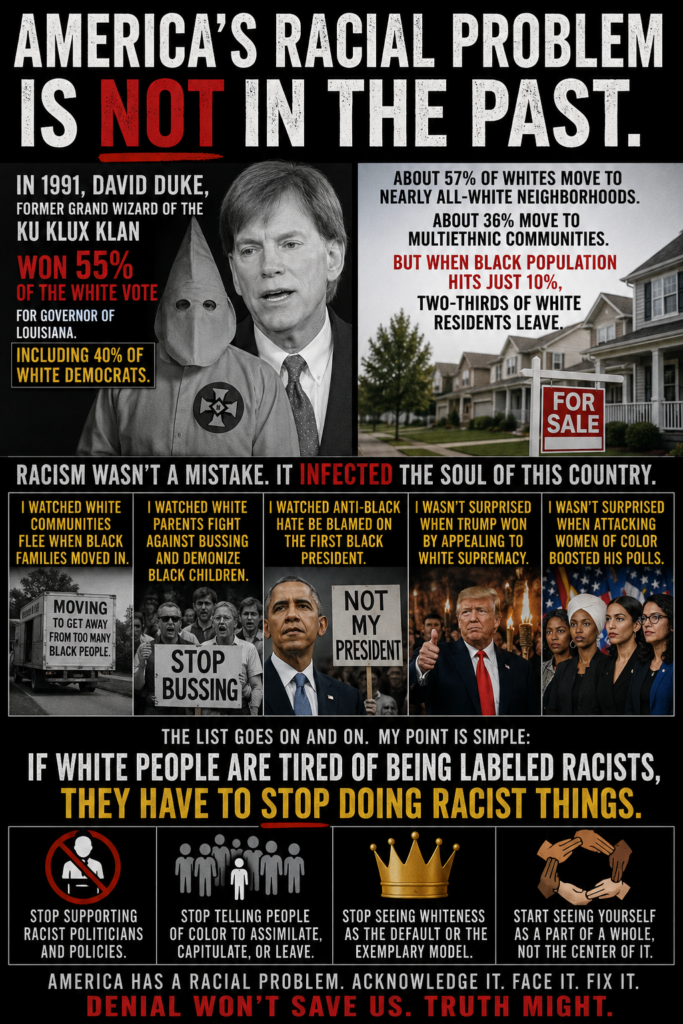
In 1991, David Duke, a former Grand Wizard of the Ku Klux Klan, won 55% of the white vote when he ran for governor of Louisiana. Let that sink in. A man whose public identity was openly tied to white supremacy won a majority of white voters, including 40% of white Democrats. That was not the distant 1800s. That was the early 1990s.
And this pattern is not an isolated one. Since the passage of the Civil Rights Act of 1964 and the Voting Rights Act of 1965, Democratic presidential candidates have consistently struggled to win the white vote. Even in 1976, when Jimmy Carter performed unusually well among white voters, Gerald Ford still won them overall. That should force us to ask uncomfortable questions about what racial backlash has looked like in American politics for the last half-century.
These are not random or meaningless occurances. And it is not just “economic anxiety.” This is racism built into the bloodstream of American politics and manifest through voting decisions and patterns.
The same dynamic has shaped where people live, where they send their children to school, and how they define “good” neighborhoods and “bad” neighborhoods. White flight did not happen by accident. It was not simply about “better schools” or “quality of life.”
For decades, study after study (and plain old lived reality) has shown that white people love to talk about diversity until Black people actually start moving in next door. White families will say they want “good communities” and “nice neighborhoods,” but once a place becomes “too Black” (usually with a Black population at or above 10%), all of a sudden the moving trucks come out and the “For Sale” signs start multiplying like weeds.
In community after community, once Black families moved in, white families moved out. I have seen it with my own eyes. Entire white communities expanded further and further outward, into what had once been farmland, not because they were escaping crime or collapse, but because too many Black people had moved nearby.
And it did not matter if those Black families were educated, professional, stable, or middle class. Their Blackness alone was enough for those white families to flee further into the suburbs.
We want to act like racism was just Bull Connor, George Wallace, fire hoses, and white robes. We want to tell ourselves that racism was a regrettable chapter that “we overcame,” and now the only real racists are a few cartoonishly evil people at the margins.
That is a lie.
Racism in America was never just about the loudest extremists. It has always depended on ordinary white people making racist choices in ordinary ways: where they live, who they vote for, what schools they support, what fears they indulge, what policies they excuse, and what kind of treatment of Black people they are willing to rationalize.
I saw white parents rage against school bussing while talking about Black children as if they were grave threats. I saw anti-Black hostility dressed up as “concern” and “standards.” I saw white resentment toward Barack Obama, a man raised largely by white family members, treated as if he were some dangerous racial radical simply for existing in the White House while Black.
So no, I was not surprised when Donald Trump rose to power by openly winking at white grievance and white nationalism. I was not surprised when racist attacks on women of color energized parts of his base. I have seen this movie before.
A lot of white Americans want to be absolved without being examined.
They want credit for not wearing a hood while still supporting racist politicians, racist policies, racist housing patterns, racist school systems, and racist cultural assumptions.
That’s not how this works.
America’s racial problem has never been confined to a handful of extremists in white robes. That is the lie people tell themselves so they do not have to examine the everyday racism embedded in housing, education, politics, media, and social life. Racism in America has never just been about “bad people.” It has been about a society that trained millions of ordinary people to see whiteness as the norm, the standard, and the default.
And that is the real issue.
If white Americans are tired of being associated with racism, then the answer is not to get offended when people point it out. The answer is to stop supporting racist policies, racist politicians, racist assumptions, and racist social arrangements. Stop demanding that people of color quietly assimilate into a system built to marginalize them. Stop treating whiteness as the universal model of what is “normal,” “civilized,” or “American.”
Because America’s racial problem is not ancient history. It is not dead. And pretending otherwise is part of the problem.
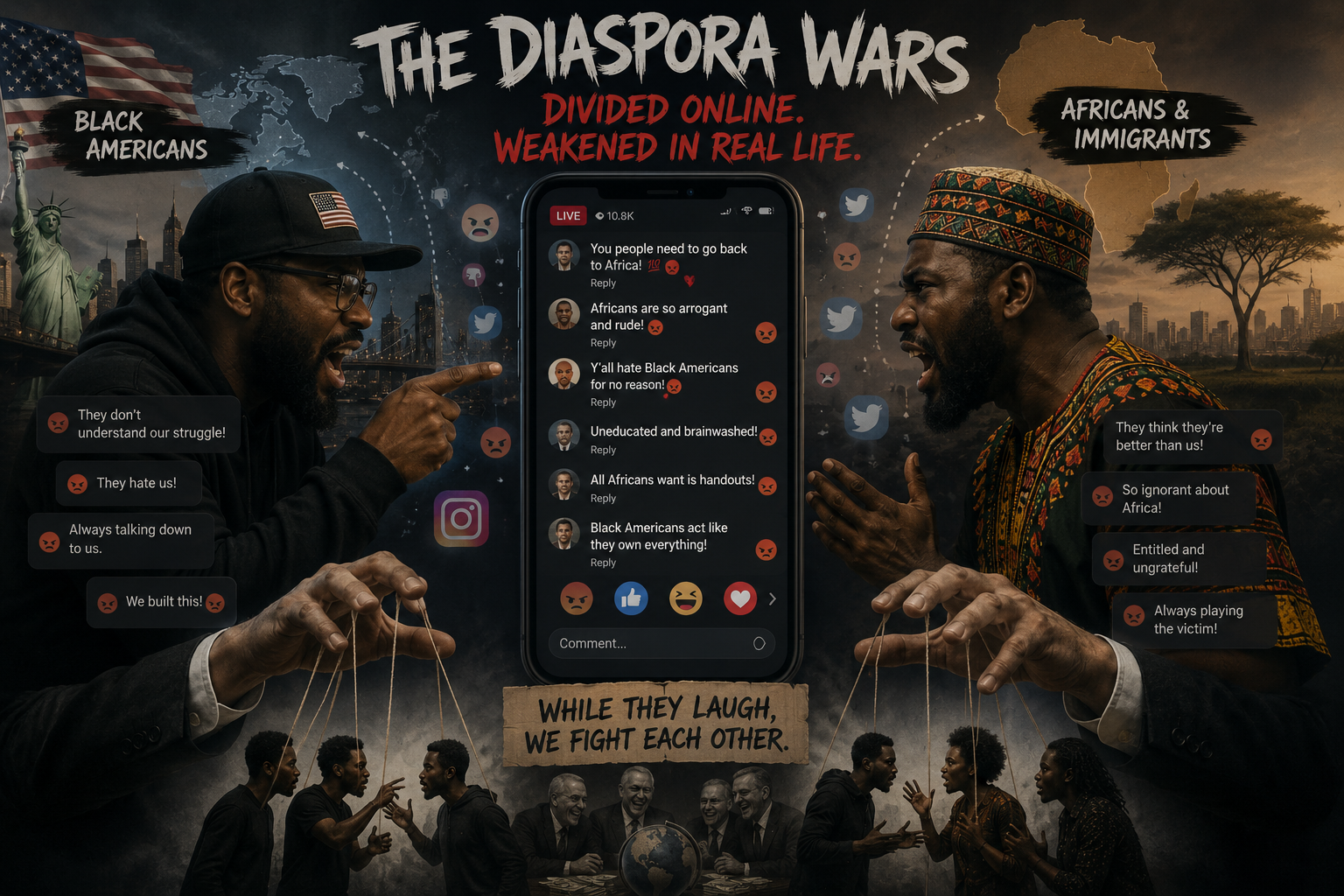
I hate the so-called “Diaspora wars.” I really do.
The more I watch these online battles between Black Americans, Africans, Afro-Caribbeans, and other members of the African diaspora, the more convinced I become that they serve almost no productive purpose. At best, they are fueled by grifters within our own communities who care more about clicks, engagement, and money than they do about Black liberation or Black self-reliance. At worst, they function as a psychological operation that keeps Black people divided while distracting us from the systems that continue to harm all of us.
The tragedy is that these conflicts are built on the words and actions of a relatively small number of people. Social media algorithms take the most outrageous opinions from a handful of Black Americans and immigrants, amplify them to millions, and convince us that these fringe voices represent entire communities. Existing mistrust, jealousy, and stereotypes (many of which were created and reinforced by white supremacist systems) do the rest.
The supposed barrage of negative comments and feelings haven’t been my experience. I’ve spent time in the Dominican Republic, and I found most people to be warm and welcoming. I’ve traveled throughout Africa without experiencing the hostility that social media would have you expect. I’ve visited the Caribbean, and while many people understandably assume Americans have endless amounts of money, my interactions have overwhelmingly been positive. More importantly, I don’t stay isolated in luxury resorts. I spend time among everyday people.
Even here in the United States, many of my friends are immigrants. They respect me, and many have expressed that they want to be accepted by Black Americans just as much as Black Americans want to be accepted by them.
That’s a reality you don’t often see reflected online.
Unfortunately, every Black community has people who have internalized anti-Black beliefs. Coons exist in every nationality and every ethnicity. That shouldn’t surprise anyone. After centuries of slavery, colonialism, segregation, imperialism, and the constant message that Black people are somehow inferior, many of us have absorbed those ideas in one form or another. When you’ve been taught for generations that your people contributed nothing to civilization except labor or criminality, some people eventually begin to believe it.
Internalized oppression doesn’t stop at national borders.
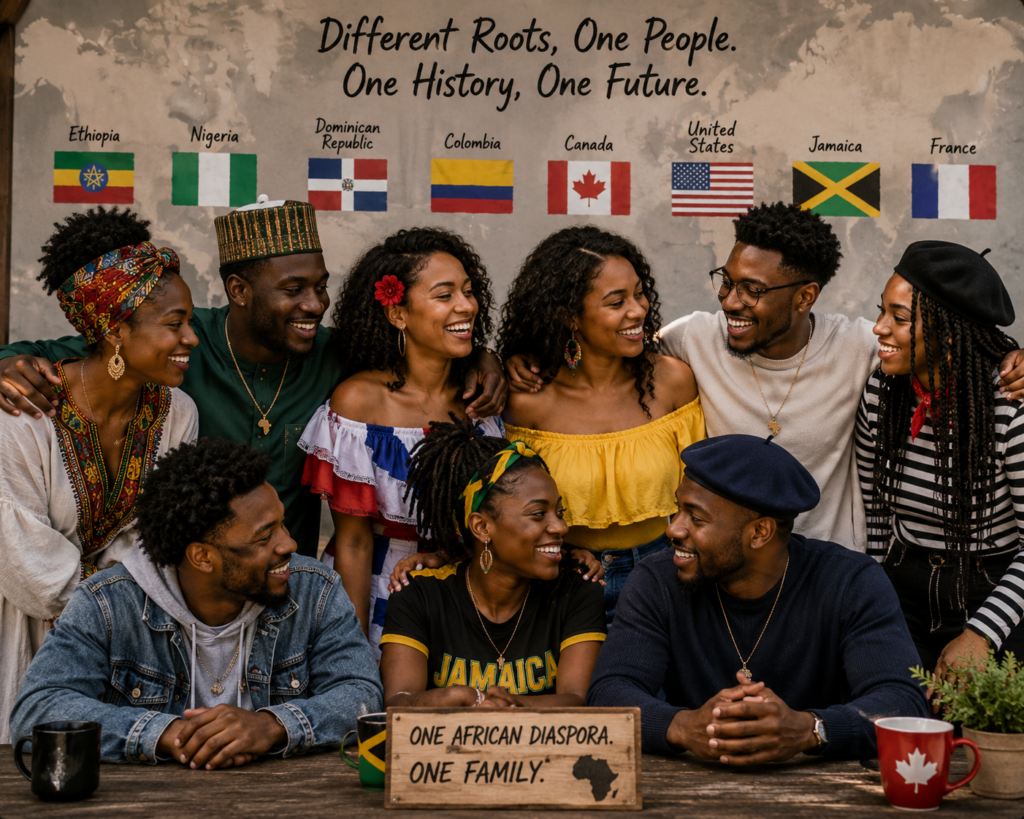
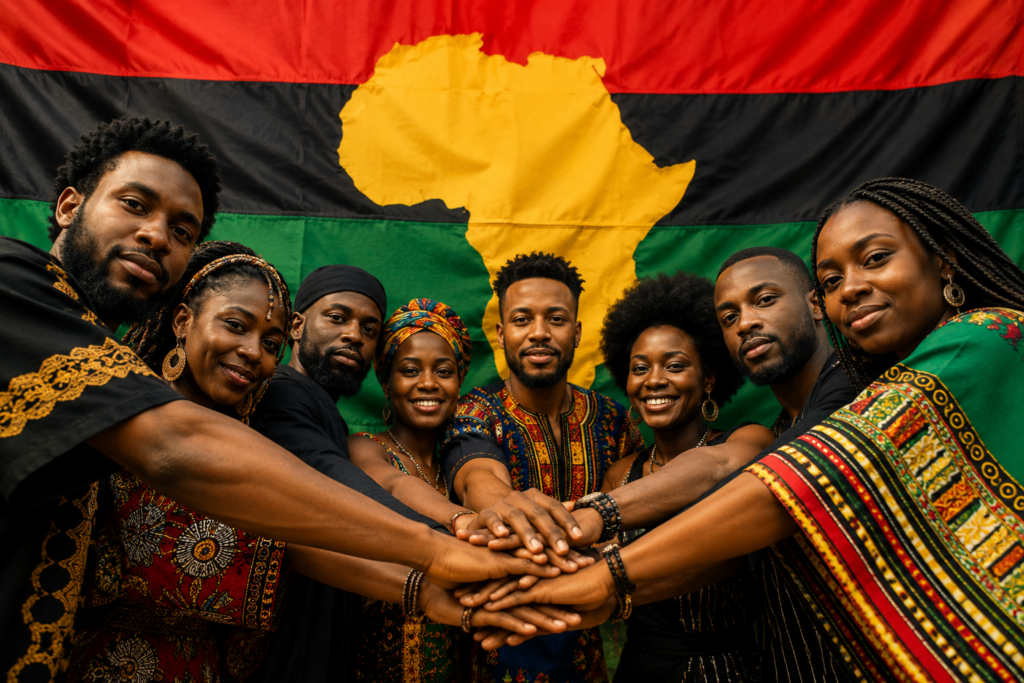
If we are serious about Black liberation, I believe the only path forward is Pan-Africanism.
That doesn’t mean pretending our experiences are identical. Black Americans have a unique history rooted in slavery, Jim Crow, and the ongoing struggle for civil rights. Africans have their own histories shaped by colonialism, independence movements, and modern political challenges. Afro-Caribbeans, Afro-Latinos, and other members of the diaspora have their own distinct experiences as well.
Recognizing those differences shouldn’t prevent us from recognizing our shared humanity and our shared struggle.
We are connected not only through ancestry but through centuries of resistance against systems built on white supremacy and the ideology of Black inferiority. Those systems have always benefited when Black people distrust one another more than they distrust the institutions that marginalize all of us.
We shouldn’t allow a handful of loud voices on social media to define our relationships.
Ignore the people whose entire online presence depends on attacking other Black people. Be skeptical of pseudo-intellectuals who use selective history to create division rather than understanding. And let’s stop demonizing foreign-born Black people over hypothetical reparations that have neither been promised nor seriously pursued by either major political party.
I wholeheartedly support the idea and the pursuit of reparations. They can help address historical injustices and repair some of the damage caused by centuries of oppression. But no amount of money can guarantee genuine Black liberation if we remain divided and lack a shared vision for our future.
Liberation requires more than compensation.
It requires education, unity, and a unwavering love and trust of our people as a collective.
One lesson I think we should seriously consider comes from communities that invest heavily in teaching their children history, identity, culture, and collective responsibility outside of traditional public education. One such community are Jewish people. Academic subjects are important, but so is learning who you are, where you come from, and what obligations you have to your community.
We need Afrocentric educational spaces that strengthen our understanding of African civilizations, the global African diaspora, and the interconnected histories of Black people everywhere. Those spaces should include Black Americans, Africans, Afro-Caribbeans, Afro-Latinos, and every other branch of the African family.
The encouraging news is that this work is already happening.
I’ve seen Africans sharing the history of Black Americans with wider audiences. I’ve seen members of the diaspora eager to learn from one another, exchange culture, build businesses together, and strengthen Black institutions. There are far more people interested in unity than social media would have us believe.
Those people deserve more attention than the influencers profiting from division.
Our goal should never be isolation or xenophobia. Black Americans should not view other Black people as competitors or outsiders simply because they were born elsewhere. Likewise, members of the diaspora should recognize the unique history and contributions of Black Americans without relying on stereotypes.
History gives us a better example.
The Civil Rights Movement did not exist in isolation. Black American leaders built relationships with African independence movements, Caribbean intellectuals, and freedom struggles across the globe. Ideas, strategies, and inspiration flowed in both directions because they understood something that many people online seem to have forgotten:
Our liberation has always been connected.
Instead of fighting one another over social media narratives, we should be building institutions, exchanging knowledge, strengthening our communities, and creating the kind of global Black solidarity that those who came before us envisioned.
The diaspora wars may generate clicks but pan-African unity can generate freedom.
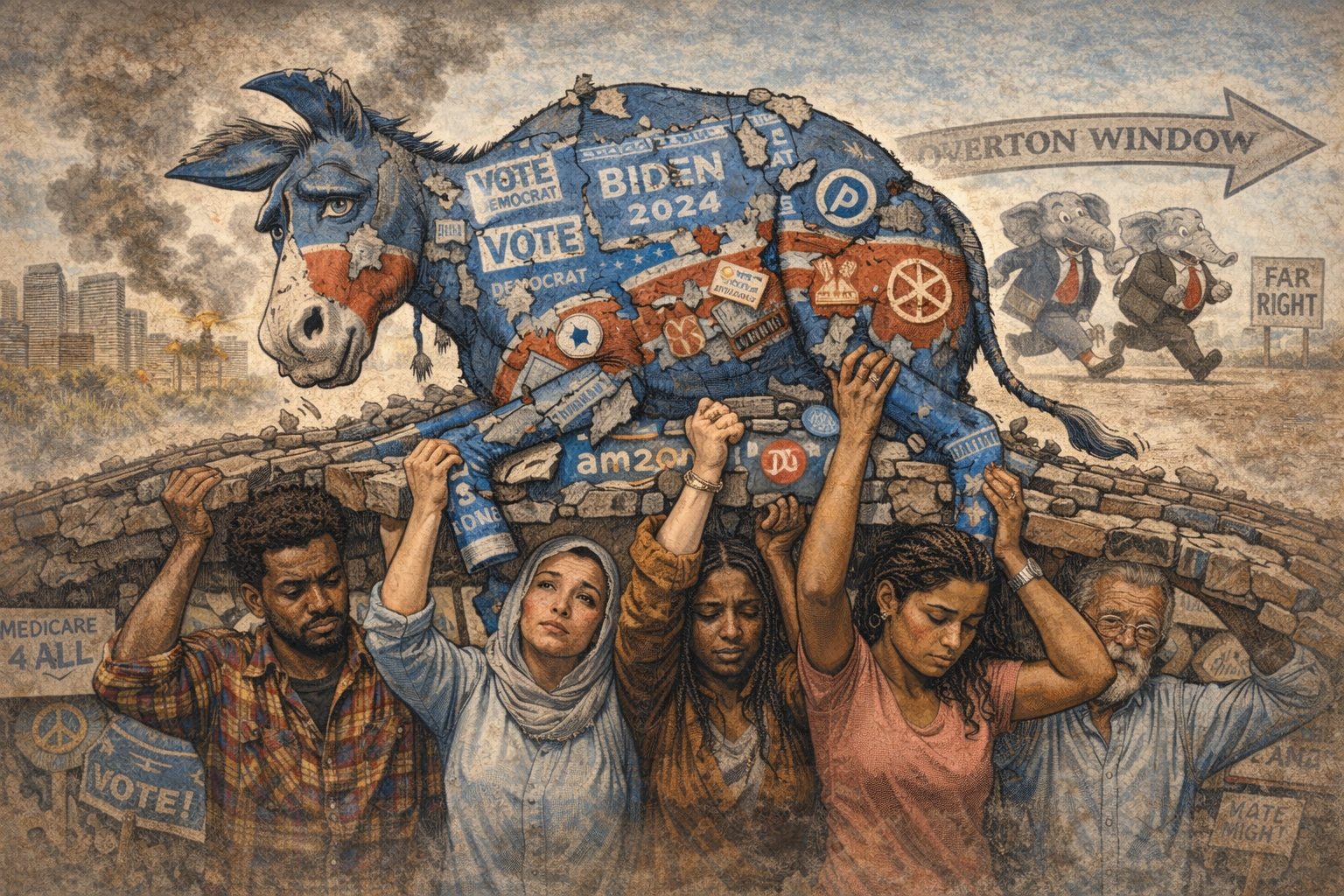
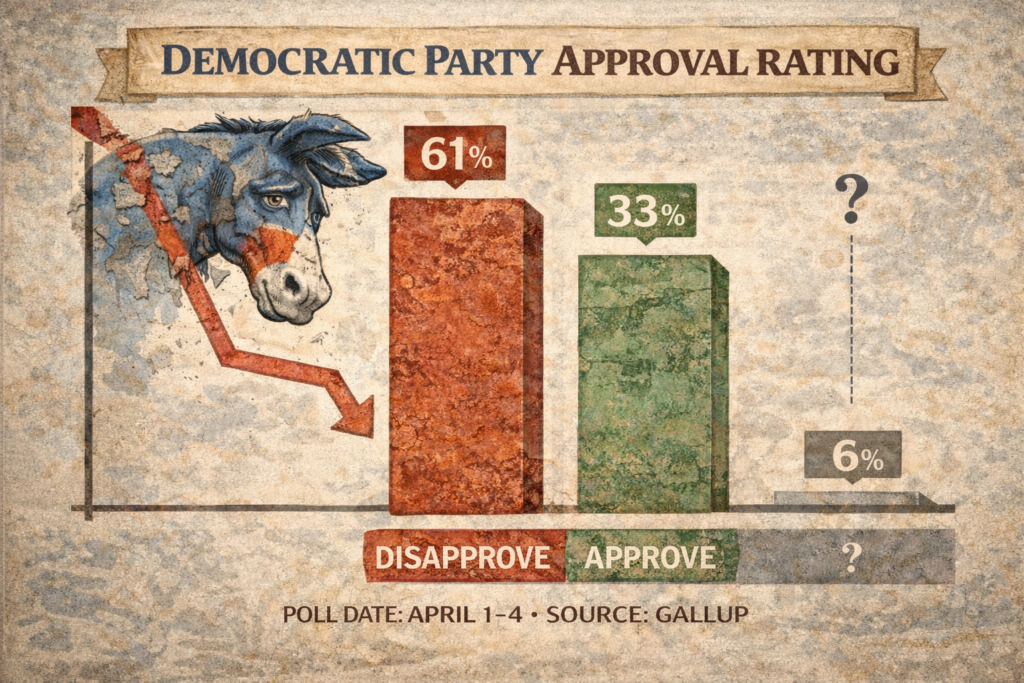
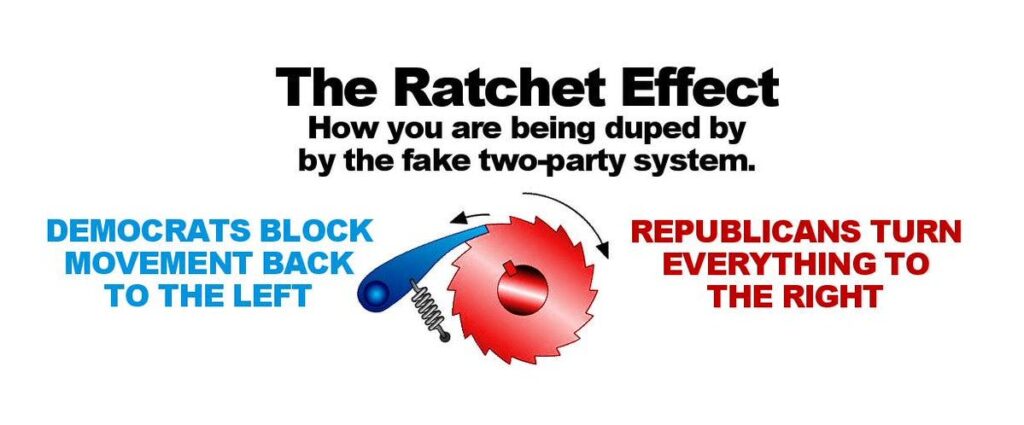
The Democratic Party is currently under water in the polls. Their approval rating is lower than that of an unhinged and failing Republican President.
One of the biggest lies in American politics right now is the conservative claim that the Democratic Party’s low approval ratings are proof that progressive or left-wing ideas are unpopular.
That is not what is happening.
The Democratic Party’s low approval is not a sweeping public endorsement of conservatism, nor is it some grand rejection of ideas like police reform, clean energy, immigrant dignity, labor rights, racial justice, or social equality. If anything, many of those ideas remain more popular than the politicians and institutions claiming to represent them.
What people are rejecting is how Democrats campaign, govern, and legislate.
That distinction matters.
Many Democratic Voters Do Not Actually Like the Democratic Party
One of the most misunderstood things about American politics is that a huge portion of people who vote Democrat are not loyal Democrats.
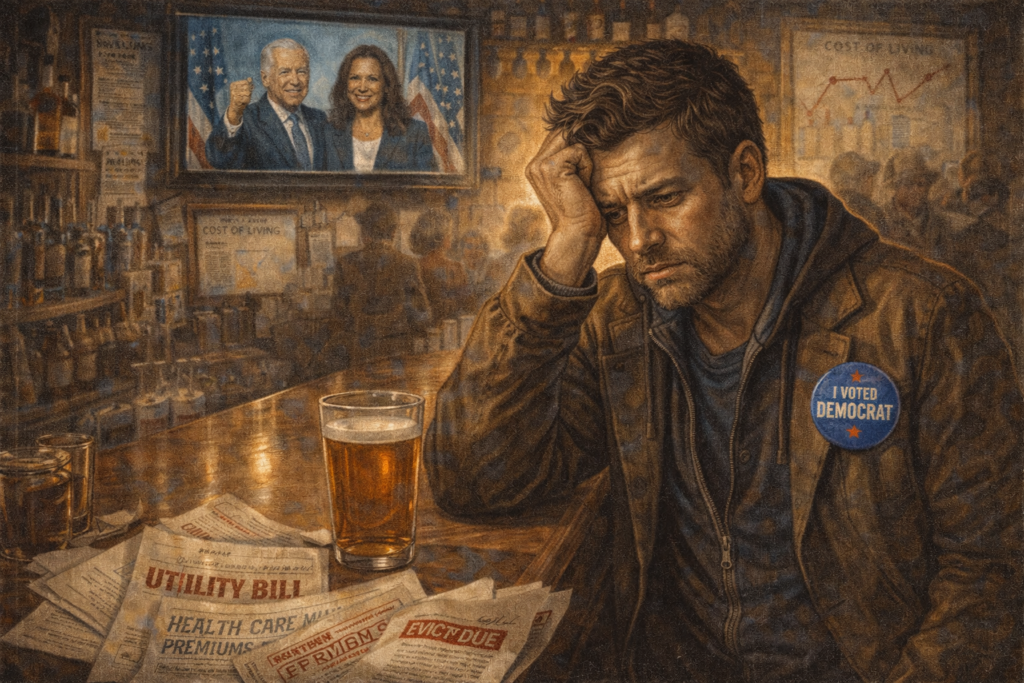
Many progressives, leftists, disillusioned liberals, and politically alienated voters do not support the Democratic Party because they believe in it. They support it because there is no other viable alternative under the current two-party system.
That is not enthusiasm. That is containment.
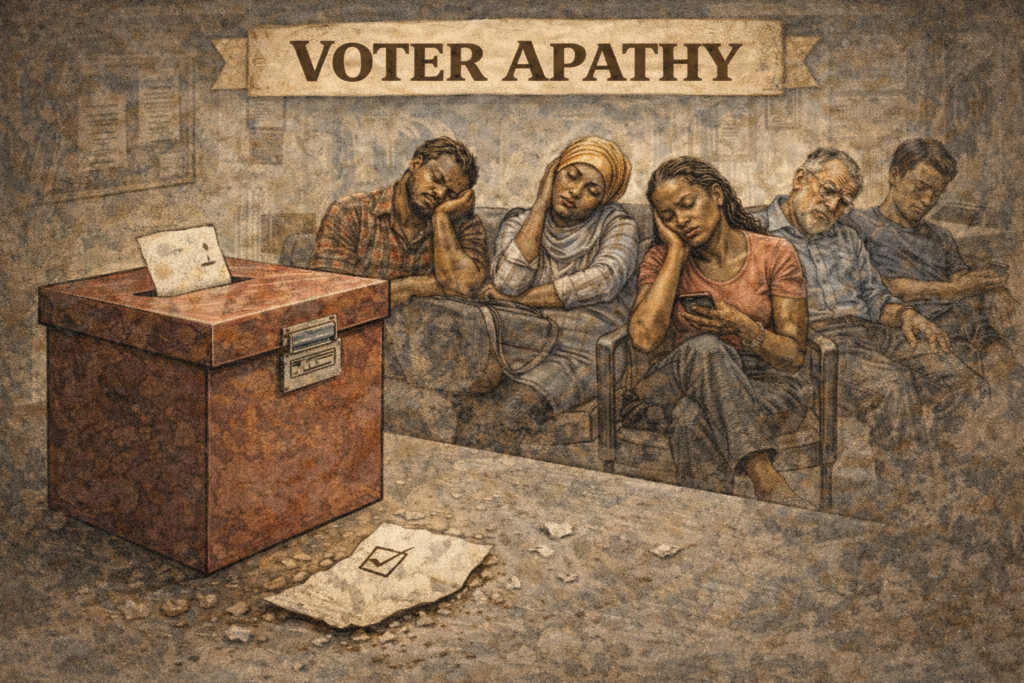
Failure to articulate, fight, and deliever real changes leads to voter apathy.
Many Democratic voters are not politically “at home.” They are politically homeless.
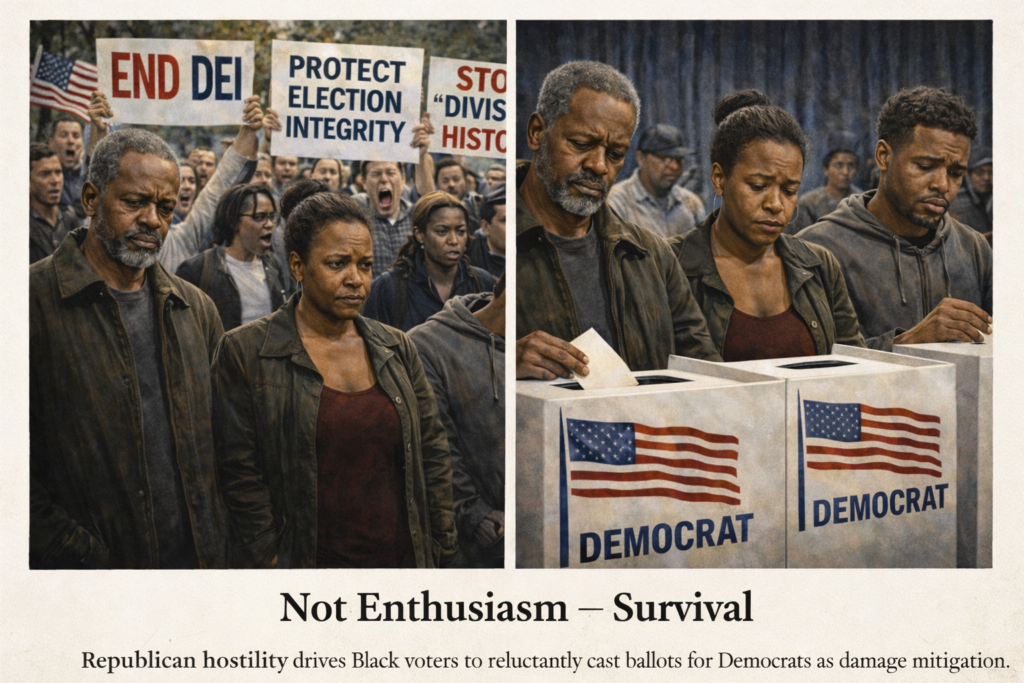
They vote Democrat not because they think the party is transformational, but because the Republican Party has become openly hostile to democracy, labor, immigrants, women, LGBTQ people, Black communities, Muslims, and virtually anyone outside its reactionary coalition.
That means Democratic votes are often votes of defense, not belief.
Democrats Are Not “Too Woke.” They Are Not Woke Enough.
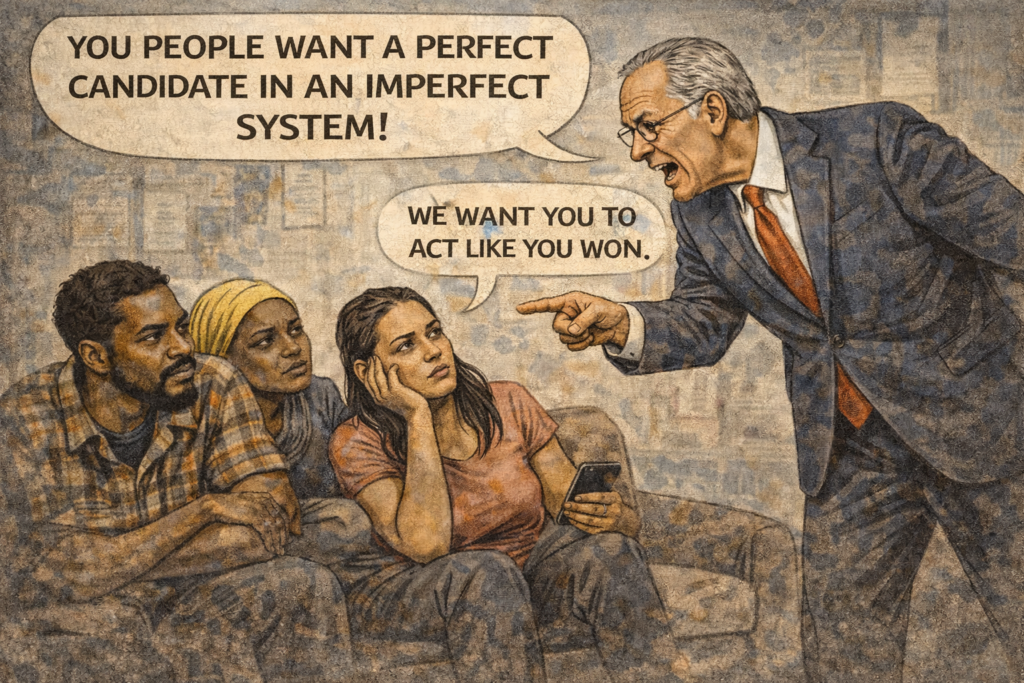
Democrats charging progressives and leftists with seeking perfection is the latest in gaslighting excuses for their failure to champion and deliver for their most vulnerable constituents.
One of the more absurd claims pushed by conservatives (and sometimes even accepted by Democrats themselves)is that the party has become too “woke.”
But that depends entirely on what one means by “woke.”
Being “woke” is being aware, conscious, and alert. It is being ready to face systems of oppression with adequate knoiwledge to navigate through them without being a victim. Black poeople know that our freedom constantly hangs by a thread and enemies are everywhere.
In its original Black political meaning, being woke meant being conscious of danger, power, injustice, and the need to protect one’s people and community. It was never just about representation, branding, or inclusion language.
And that is exactly where Democrats fail.
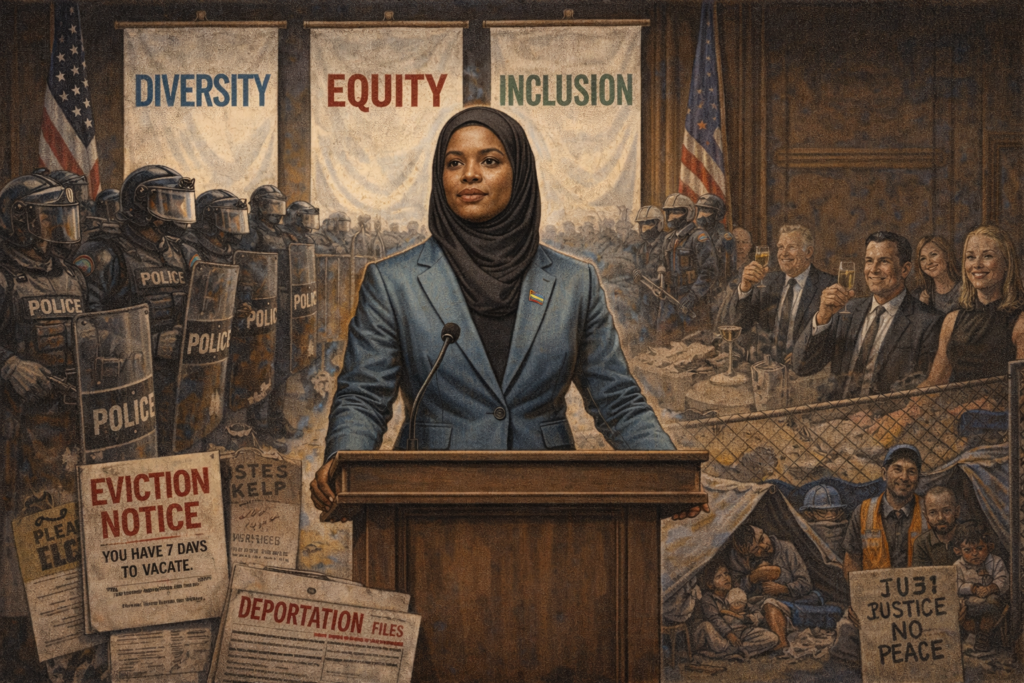
They are often fluent in the language of diversity, equity, and inclusion while being utterly unwilling to confront the structures that actually produce inequality.
They do not threaten the system. At best, they try to make the status quo look kinder, more polished, and more diverse.
But a more diverse ruling class is not the same thing as justice. It truly doesn’t matter if the foot on our necks belong to a woman, minority, or a member of some other marginalized group, the oppression is still there.
In fact, the tokenism that puts a member of a marginalized community in charge makes the problem worse.
Diversity in positions of power does nothing for marginalized communities as long as the mechanisms of their oppression are still operating and supported by those in power.
The Core Problem: Democrats Campaign Left and Govern Center-Right
This is where much of the anger comes from.
Democrats routinely campaign on bold, popular ideas, such as healthcare reform, abortion protections, criminal justice reform, labor rights, student debt relief, climate action, immigration reform, etc., only to retreat, dilute, abandon, or proceduralize those promises once in office.
There is no joy in Democratic Party victories if the end result is that the people’s basic standard of living either doesn’t improve or worsen.
And when they fail, they almost always have an excuse ready:
Senate procedure
“Moderate” Democrats
institutional norms
electability concerns
donor pressure
political timing
fear of backlash
At some point, people stop hearing these as obstacles and start hearing them as the pre-scripted permission slips for inaction they often are.
This is one of the main reasons the Democratic Party feels hollow to so many of the very people it depends on.
Democrats Alienate Their Own Coalition
Democrats often actively resist moving to the left. In fact, their solutions to electorial win and losses is to move further to the right.
The Democratic Party survives through a broad coalition, but it often governs as though that coalition is a burden.
Black voters, women, Arab and Muslim communities, immigrants, labor-oriented voters, poor and working-class people, LGBTQ communities, and younger progressives are all expected to show up every election cycle. But when it is time to govern, many of those same groups are sidelined, ignored, triangulated against, or used symbolically rather than materially.
Black voters have long experienced this in the form of tokenism, local “benign” neglect, selective outrage, and empty rhetoric about justice that rarely translates into structural change.
Benign neglect of communities only breeds resentment by many within those communities. If the Democrats want to keep their coalition of diverse voters, they have to fight harder for each and every one of them.
Muslim and Arab communities have seen it through surveillance, Islamophobia, selective empathy, and the treatment of dissenting lawmakers as liabilities.
Women have seen it through decades of strategic delay and complacency around abortion rights, only to watch those rights collapse under a reactionary judiciary.
Immigrants and Latinos have seen it through cruelty repackaged as pragmatism.
And progressives have seen it through endless lectures about realism from people who somehow always find the political courage to disappoint the left but never that same courage to seriously confront the right.
The Gaza Crisis Exposed Democratic Hypocrisy
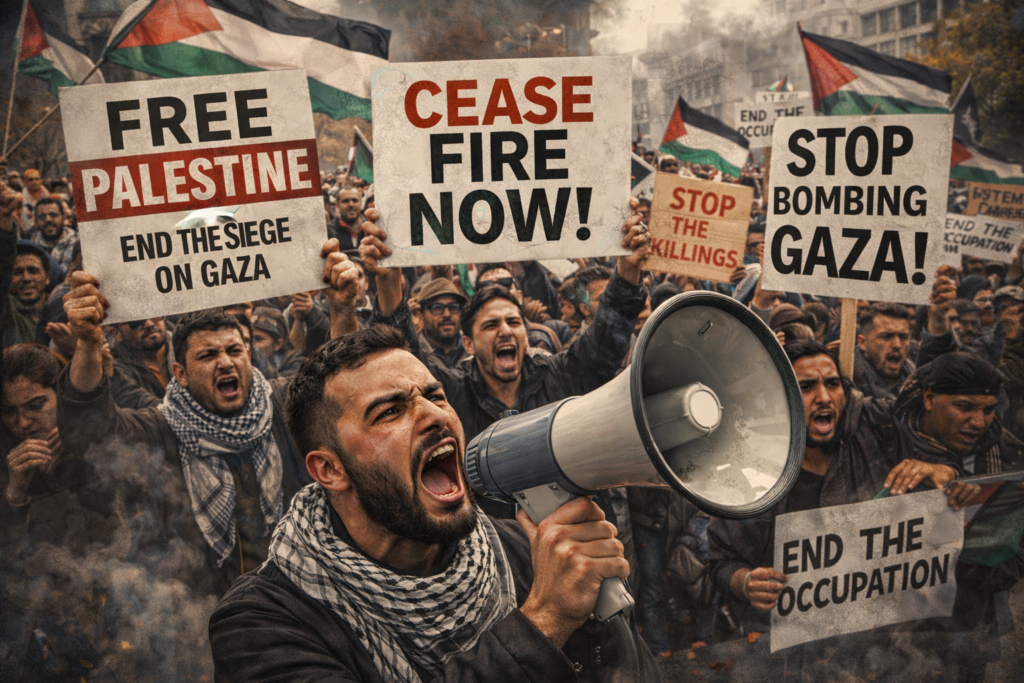
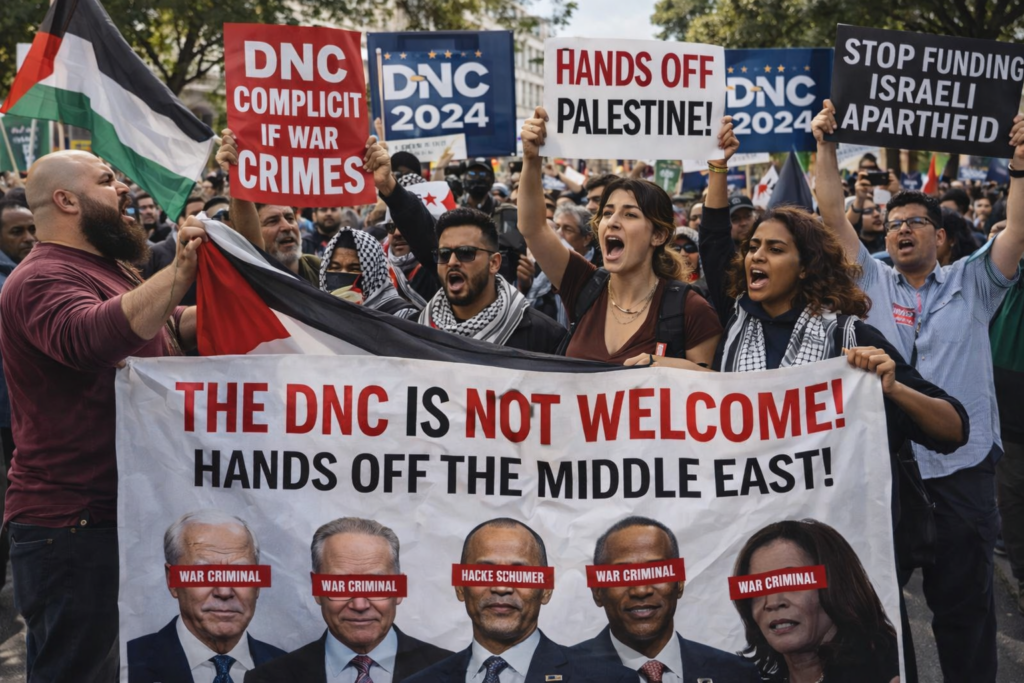
There were calls by many of the political left in 2024 for Democrats to stop supporting the genocide in Gaza and support a ceasefire, These calls were mostly ignored and scoffed at by the Democratic Party leadership.
If there was one issue that crystallized this contradiction for many younger voters, leftists, Muslims, Arab Americans, and anti-imperialists, it was Gaza.
For many people, the Democratic Party’s response to the destruction and mass death in Gaza was not merely disappointing but it was also morally disqualifying.
Many potential Democratic voters could not vote for Democratic candidates alligned with Israel and its lobby in good conscious.
Pro-Palestinian protestors started to express their disappointment with the Democratic Party and vowed to vote against the Democratic Party during the general election.
Instead of responding with honesty, moral clarity, and equal concern for Palestinian humanity, much of the party defaulted to the same old framework: criminalize dissent, sanitize atrocity, and demand loyalty from people expected to ignore what they could plainly see with their own eyes.
That mattered and it sidelined many voters and activists who could have carried the Democrats to victory.
Why?
Because once a party asks people to suspend not just strategy, but conscience, it should not be surprised when those people begin to emotionally detach from it.
Republicans Have an Ideological Core. Democrats Often Seem to Have None.
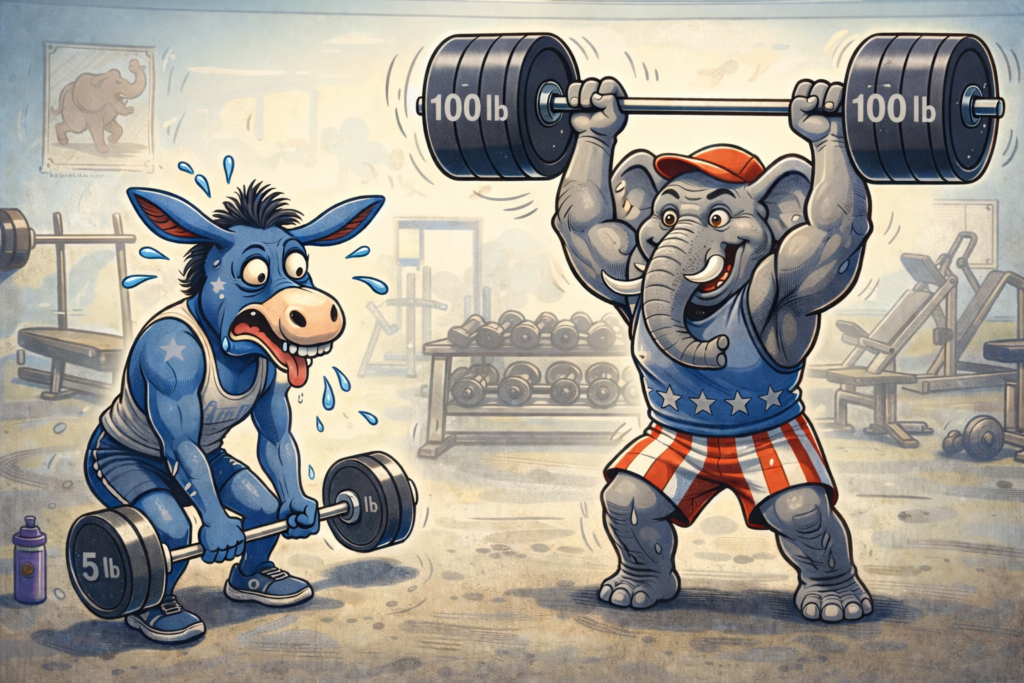
Democrats struggle to use their power to help the people who elected them. They seem afraid to embrace popular left-wing positions. The Republicans, in contrast, use their power to push their agenda no matter how unpopular it my be. The Democrats appear weak while the Republican seem strong.
Part of the frustration here is comparative.
Republicans, however destructive, reactionary, and dangerous their project may be, often appear more ideologically committed than Democrats. They are willing to fight for what they believe in, even when those beliefs are cruel, anti-democratic, and deeply unpopular.
Democrats, by contrast, often appear to be a party whose primary belief is managing decline politely.
They want stability and not transformation. Procedure and not confrontation. Brand management and not political struggle.
That makes them seem weak, not simply because they lose, but because even when they win, they often act as if they do not know how to wield the power that they have.
This Is Not an Argument for Republicans
Let me be crystal clear about this post lest my words are taken out of context by conservatives using my words to make bad faith arguments: none of this is an endorsement of the Republican Party.
The current Republican Party is more overtly hostile to Black people and other marginalized communities than the Democratic Party is. That is reality.
One of the main reasons why Black voters overwhelmingly vote Democrat is not due to satisfaction or loyalty. Instead, it is because the Republican Party had been openly hostile toward the Black Community for decades. Racist dog-whistle politics may fool some but, Black people can indentify it easily.
Most Black voters, myself included, vote Democrat not because we are enchanted by the party, but because under the present system, it is often the only viable barrier against a more openly reactionary political project.
That is not love.That is only risk management. This is something many Black Republicans, who talk about loyalty to plantations seem to forget.
And Black history gives us every reason to take that risk seriously.
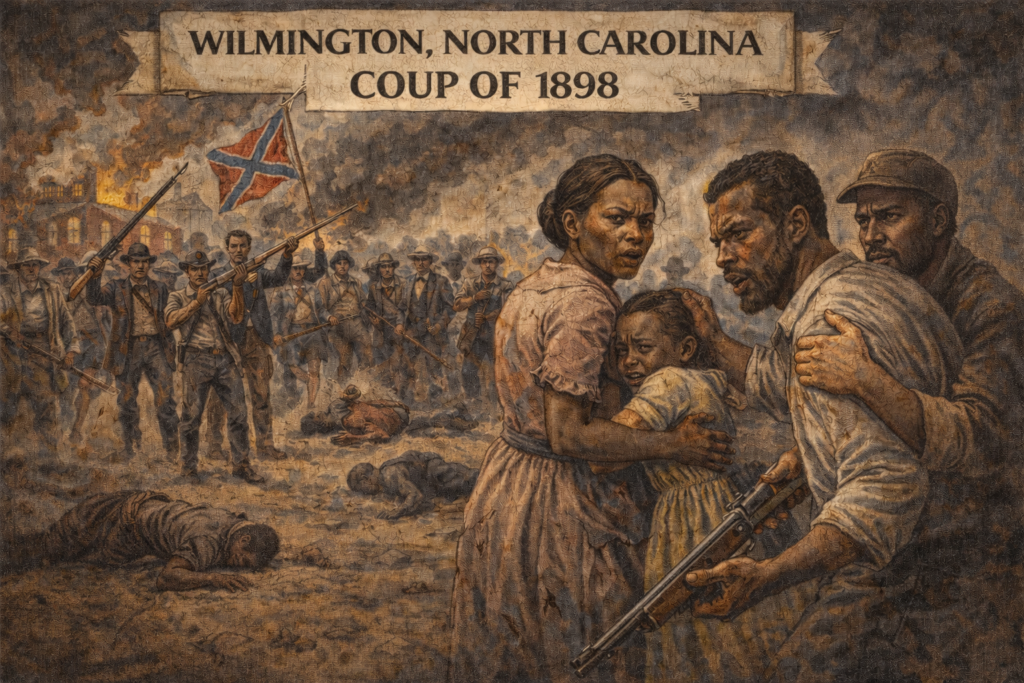
After the electoral victories of many Black people in Wilmington, North Carolina in 1898, an angry White Mob conducted a violent coup of the town in which Black residents were killed or driven away. This was one of the last holdovers of a succesful diverse government after the end of the Recontruction Era 20 years earlier.
The gains won through struggle can be reversed. They can be rolled back. They can be destroyed. Reconstruction taught us that. Wilmington taught us that. The 20th century taught us that. And the present is teaching it again.
The Real Crisis Is Political Homelessness
The deeper issue here is not simply that Democrats are unpopular.
It is that millions of people feel politically stranded.
They are too conscious to be satisfied with Democratic symbolism. too threatened to gamble on Republican barbarism, and too trapped in a two-party duopoly to build immediate alternatives with real electoral power.
That is a recipe for alienation. The largest voting bloc during the 2024 presidential election was eligible voters who chose the proverbial couch over casting any vote and any election.
Constant disappoinment leads to political disengagement.
And unless that changes, Democrats will continue to suffer from a contradiction that conservatives fundamentally do not understand.
This is that people may still vote for Democrats while deeply resenting them.
That is not political strength. Instead, that is political exhaustion.
And unless Democrats become something more than “the only adults in the room,” that exhaustion will continue to define American politics.
It gives me no pleasure to write this, but I need to be honest with myself… and with everyone who has followed my thoughts on Africa, Pan-Africanism, and repatriation.
For the past several years, I have seriously considered repatriating to Africa, especially Ghana. I’m not trying to do this as some fantasy vacation or “spiritual journey,” but as a real-life project. I saw myself, and still see myself, as part of something bigger. I saw myself as contributing, building, and helping blaze a trail for other people in the African diaspora who wanted to reconnect materially, politically, and culturally with the continent.
And to be clear: I never went into this thinking Africa would be paradise.
I already understood that many things Americans take for granted, such as reliable utilities, stable infrastructure, predictable bureaucracy, clean drinking water, consistent internet, traffic laws, and public systems that mostly function, are not guaranteed in many African countries. I also already knew that corruption, bribery, and dysfunction are real parts of daily life in many places.
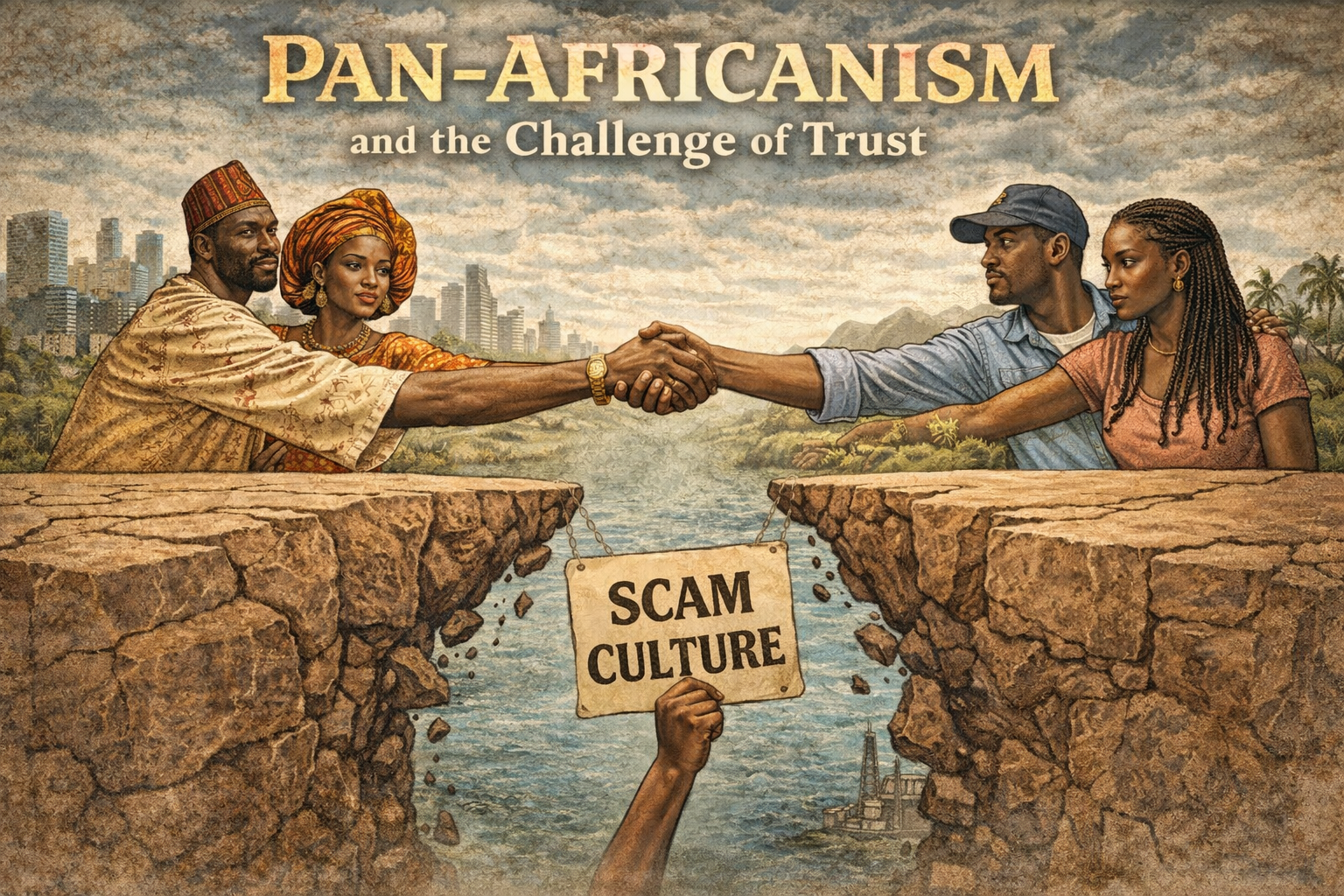
But there is one issue that I have tried to rationalize for too long. That issue is scam culture.
More and more Black American expats and Diasporans are citing it as one of the main reasons they leave Africa and return to the United States. And honestly, I can no longer dismiss that as whining, cultural ignorance, or anti-African cynicism.
When people constantly raise prices, exploit your unfamiliarity, or see you first and foremost as a walking wallet, it destroys trust. And without trust, there can be no real unity.
Yes, poverty is real. Yes, exploitation by the global North has devastated much of Africa. Yes, many people are surviving however they can. I understand all of that.
But theft is still theft.
And if the relationship between Africans on the continent and people in the diaspora is going to mean anything, it cannot be built on symbolic slogans while one side is constantly being hustled by the other.
That does not mean I have abandoned Pan-Africanism.
Far from it.
I still believe deeply that unity among African peoples and the diaspora is essential to Black liberation. I still believe that a strong Africa (economically, militarily, scientifically, and industrially) is necessary if Black people anywhere are going to be taken seriously in a world that often sees us as little more than labor, entertainment, or obstacles to resource extraction.
However, belief in unity cannot mean dishonesty.
If we are serious about building a future together, we must be willing to say hard things out loud. We cannot build solidarity while normalizing exploitation among ourselves. We cannot discuss nation-building while preying on each other for crumbs.
I still believe in African settlement. I still believe in African people.
I still believe the diaspora has something valuable to offer the continent, and that Africa has much to teach us in return.
But if we are ever going to build real bridges between us, those bridges will have to be built on more than romance, symbolism, and rhetoric.
I have a hard time participating in jingoism, even when it is meant to honor people I respect, sometimes even members of my own family.
Memorial Day is the day Americans set aside to remember the men and women who made the ultimate sacrifice while serving in the United States armed forces. It also happens to be the unofficial start of summer, a day of barbecues, pools, and gatherings with friends and family.
But every year, as the speeches and social media posts roll in, I find myself increasingly uncomfortable with the rhetoric surrounding the holiday. Much of it feels less like remembrance and more like pseudo-patriotic flag-waving.
Let’s be honest about something.
The United States has not fought a war primarily over the freedom of its own citizens since either the War of 1812 or the Civil War, depending on how one chooses to frame it. Nearly every major conflict since then has been tied to geopolitical strategy, alliances, or the protection of American economic and imperial interests abroad.
From the Cold War through the late twentieth century, many U.S. military interventions were justified under the Truman Doctrine, a policy aimed at stopping the spread of communism. But communism was never an immediate threat to the civil liberties of most Americans. What it threatened was the global political and economic order dominated by the United States and its Western allies.
And while American leaders were promoting narratives about defending freedom abroad, millions of Black Americans were still fighting for the most basic civil rights at home.
Black soldiers served in every American war. They fought and died under the banner of freedom while living in a country that often denied them full citizenship, equal protection under the law, and even basic dignity.
In many cases, they returned home from battle only to be treated as second-class citizens. Their sacrifices were praised in speeches, but their humanity was still questioned in everyday life.
In that sense, the people who fought most directly for my freedom were not generals or politicians. They were activists, organizers, and everyday citizens who challenged systems of racial injustice. Many of these heroes were harassed, imprisoned, exiled, or assassinated for their efforts.
They fought not on foreign battlefields but in American streets, courtrooms, churches, and communities.
That history makes it difficult for me to fully embrace the triumphant, chest-pounding patriotism that often dominates the Memorial Day holiday.
This doesn’t mean I don’t respect the individuals who served. Many of them acted out of genuine belief, duty, or economic necessity. Some of them were family members. Their sacrifices were real.
But respect for those individuals doesn’t require me to accept the mythology that surrounds American military power and American motivation.
So while others participate in the patriotic pageantry and blast Toby Keith songs about American might, I’ll probably spend the day doing something much quieter.
I’ll remember the complicated history behind the holiday.
Then I’ll enjoy the food, spend time with family, and maybe take a dip in the pool.
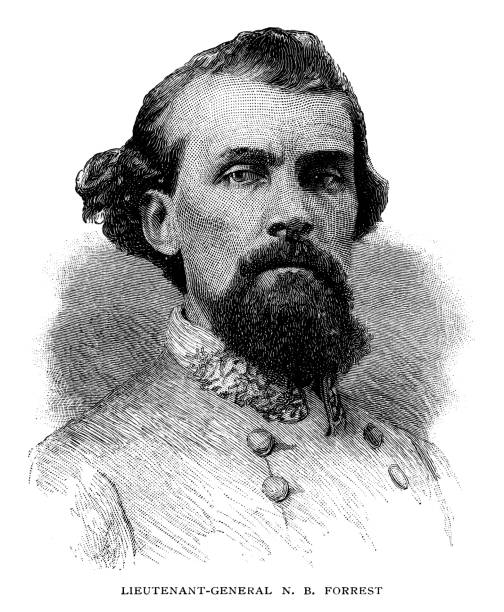
Nathan Bedford Forrest remains one of the most controversial figures of the American Civil War.
To many white Southerners, he is remembered as a brilliant cavalry commander and military tactician who rose from poverty to become one of the most effective battlefield leaders of the Confederacy.
To many others—especially Black Americans—he is remembered as something very different: a former slave trader, a Confederate general associated with the Fort Pillow massacre, and the first Grand Wizard of the Ku Klux Klan.
Both of these perspectives capture parts of the historical record.
Before the Civil War, Forrest built a fortune as a slave trader, cotton planter, and livestock dealer. During the war, he became famous for his aggressive cavalry tactics and battlefield success. After the war, he was deeply involved in the early Ku Klux Klan, an organization that used violence and intimidation against newly freed Black Americans and their allies during Reconstruction.
That part of his legacy is undeniable.
What is less commonly discussed, however, are the statements Forrest made later in his life. By the 1870s, he publicly distanced himself from the Ku Klux Klan and reportedly called for its disbandment. In 1875, he delivered a speech to a Black civic organization in Memphis in which he encouraged reconciliation and cooperation between Black and white Southerners.
Historians continue to debate what these actions meant.
Some believe Forrest experienced a genuine change of heart late in life. Others argue that his statements were politically motivated during a turbulent Reconstruction period.
What is clear is that Forrest’s life illustrates the uncomfortable complexity of history.
He was undeniably involved in some of the most brutal systems of racial oppression in American history. At the same time, his later statements suggest at least some recognition—whether moral, political, or pragmatic—that the future of the South required a different path.
That complexity is often lost in modern debates.
Some defenders of Confederate memory celebrate Forrest primarily as a military hero while ignoring the racism and violence that defined much of his career. Others reduce him entirely to the worst aspects of his life without acknowledging the possibility—however limited or contested—that his views evolved later on.
History rarely fits into simple moral categories.
Studying figures like Nathan Bedford Forrest should not be about glorification or absolution. It should be about understanding how people, institutions, and societies change—and sometimes fail to change—over time.
One of the most persistent myths in American history is the idea that legalized segregation and anti-Black racism were primarily Southern problems.
According to this narrative, the South was the land of slavery, Jim Crow, and overt racial hostility, while the North, especially the so-called “liberal North,” was supposedly a place where racial equality flourished, and people lived together in relative harmony.
For decades, this is essentially how American history was taught.
But the reality is far more complicated.
Anti-Black racism was not confined to the South. It existed throughout the United States, including in Northern cities that often presented themselves as progressive and tolerant. While Southern states openly enforced segregation through Jim Crow laws, Northern states frequently relied on other mechanisms to achieve many of the same results.
One of the most powerful tools used to maintain racial segregation in Northern and Western cities was the racial covenant.
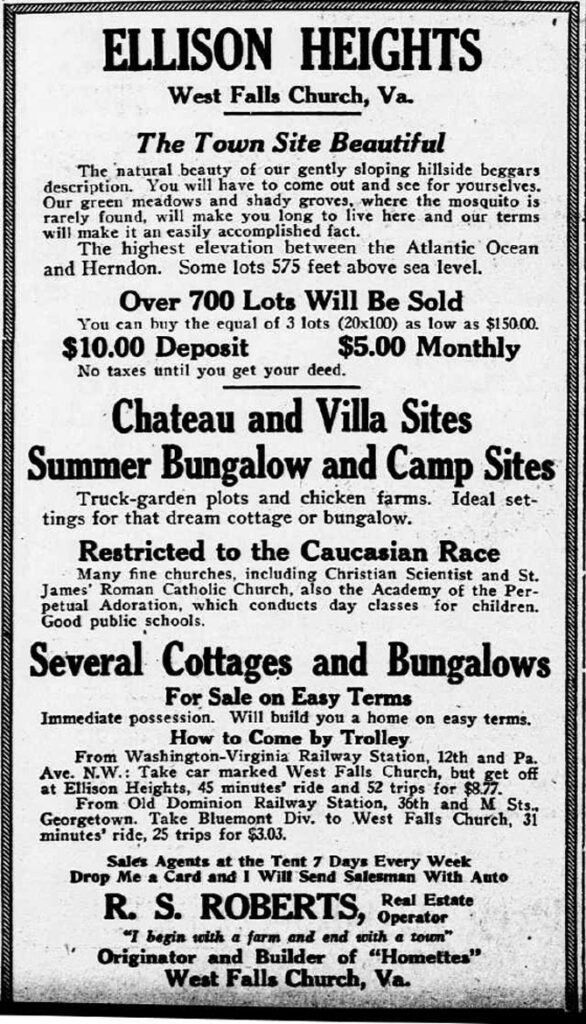
Racial covenants were clauses written into property deeds by real estate developers, neighborhood associations, and homeowners. These clauses prohibited the sale or rental of property to certain groups, most commonly Black Americans, but also often including Asian Americans, Jews, and other minorities.
Example of a racial covenant. Note the words “Restricted to the Caucasian Race”
These restrictions were widespread across the country. Entire neighborhoods were built with the explicit condition that homes could not be sold to non-white residents.
The consequences were enormous.
By restricting where Black families could live, racial covenants effectively barred them from access to wealthier neighborhoods, better public schools, and the property values that allowed many white families to accumulate generational wealth through home ownership.
Racial covenants were only one piece of a larger system of discrimination often referred to as racial steering or social steering. Through practices by real estate agents, banks, and government institutions, different racial groups were deliberately directed or confined to specific areas of cities and metropolitan regions.
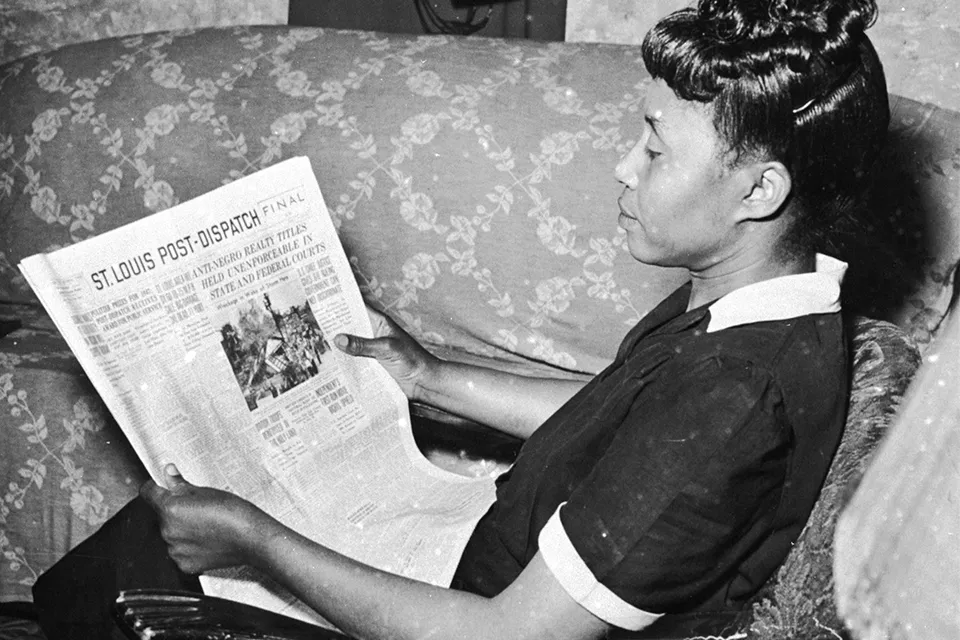
Although the Supreme Court ruled racially restrictive covenants unenforceable in Shelley v. Kraemer (1948) and the Fair Housing Act of 1968 outlawed many forms of housing discrimination, the patterns created by decades of segregation did not disappear overnight.
Ethel Shelley reads a May 4, 1948, St. Louis Post-Dispatch story about the Supreme Court decision outlawing racial covenants. (Courtesy St. Louis Post-Dispatch)
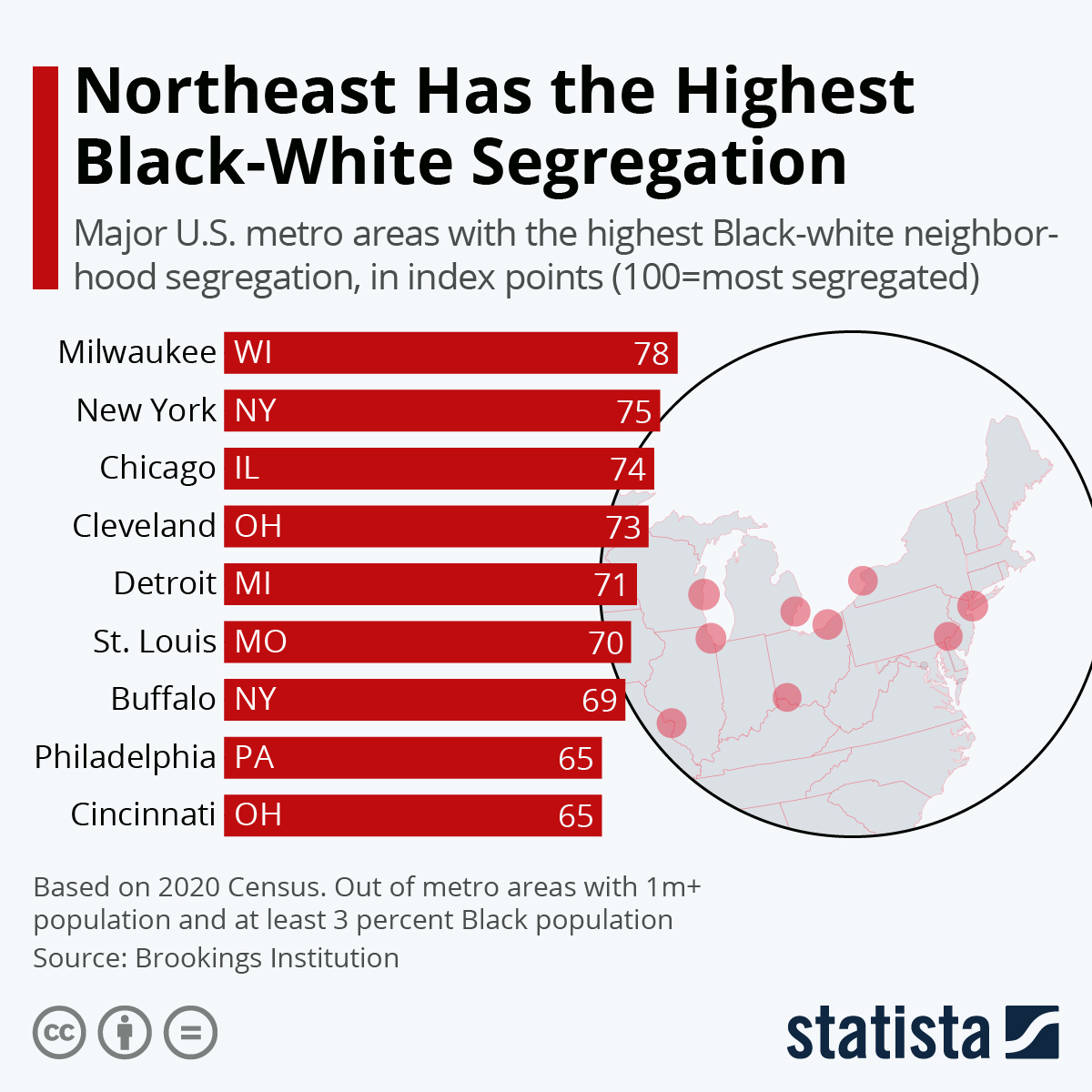
Even today, many American cities remain deeply segregated along racial lines. Schools often reflect the same residential patterns, meaning that educational opportunities can still be shaped by where families are able… or allowed… to live.
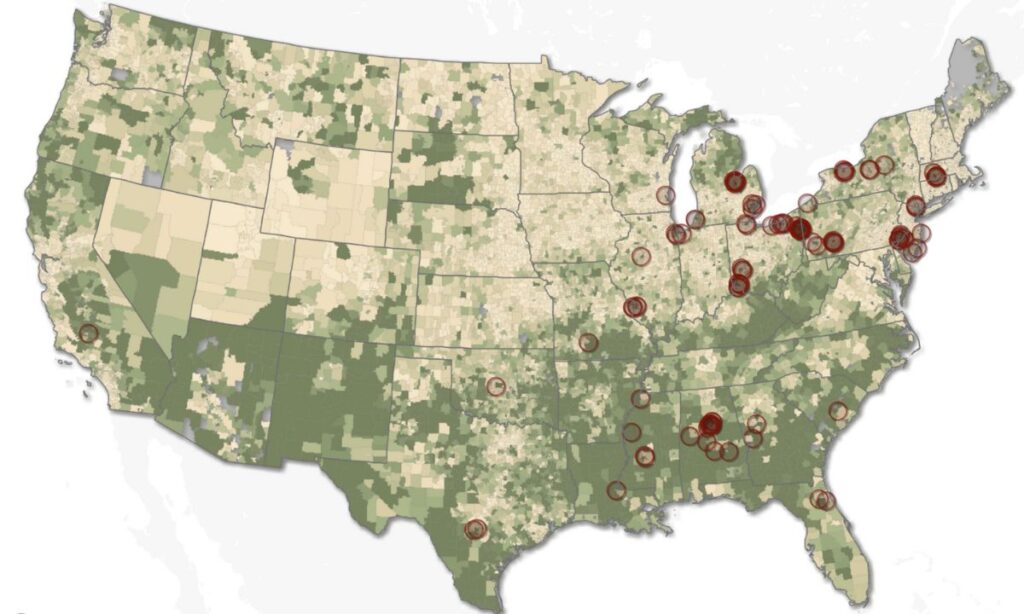
Click on the link attached to the word “schools” in the paragraph above for more information on this map.
Understanding this history challenges the comfortable narrative that racism was solely a Southern problem. The structures that created racial inequality in the United States were national in scope, and their effects continue to shape American society today.
The myth of Northern innocence obscures that reality.
A line from the film Leave the World Behind has recently sparked outrage among conservative commentators:
“I’m sorry, but if the world falls apart, trust should not be given easily to anyone… especially white people.”
The quote, spoken by the character Ruth Washington (played by Myha’la Herrold), has been interpreted by critics as an example of “anti-white racism” and “woke propaganda.”
But the reaction misses the larger historical context behind the sentiment.
The scene itself depicts a tense, pre-apocalyptic situation. A Black family returns to their own home, even though white vacationers are renting it through Airbnb. The white family, especially the matriarch, is immediately distrustful of them. Although the house belongs to the Black family, the white characters initially assume they must be staff or impostors.
Even when the owner of the house offers to refund half of their money and has the key to a locked drawer, the white matriarch still views them as dangerously and criminally suspicious.
Anyone familiar with American racial dynamics knows that situations like this are not purely fictional.
But the deeper issue raised by the quote is not about a single awkward interaction. It raises a broader question:
What historical reasons do Black Americans have to extend unconditional trust toward white institutions or white society as a whole?
The history of the United States complicates that question.
After the Civil War and the passage of the 13th, 14th, and 15th Amendments, the promise of freedom for Black Americans was quickly undermined by a series of legal and social systems designed to recreate racial hierarchy. Black Codes, vagrancy laws, convict leasing, peonage, and sharecropping placed many formerly enslaved people back into conditions that closely resembled slavery.
When Black political power briefly emerged in parts of the South during Reconstruction, it was violently suppressed through campaigns of racial terrorism carried out by groups like the Ku Klux Klan and the Red Shirts.
The pattern did not stop there.
From housing discrimination to segregated schools, from redlining to unequal policing, institutions throughout American history have repeatedly produced outcomes that harmed Black communities. Even today, debates continue over disparities in healthcare, environmental exposure, policing, and incarceration.
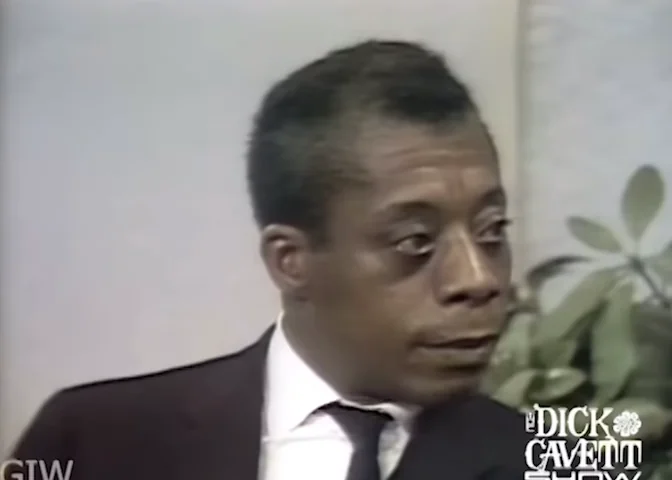
The writer James Baldwin addressed this exact problem during a debate on The Dick Cavett Show in 1969. Baldwin explained that distrust was not based on abstract hostility toward white people but on lived evidence produced by American institutions.
He said:
“I don’t know what most white people in this country feel. But I can only [conclude] what they feel from the state of their institutions.”
Baldwin’s point was simple but powerful. His point was that people judge a society not by its ideals, but by its outcomes.
If institutions repeatedly disadvantage a group of people, it is unrealistic to expect that group to respond with automatic trust.
This helps explain many of the cultural dynamics that outsiders often misunderstand. Black Americans frequently “gatekeep” aspects of their culture, remain skeptical of institutions, and react strongly to racial issues that others see as trivial.
Those reactions are not random or irrational. They emerge from decades and centuries of historical experience.
None of this means that every individual white person is malicious or untrustworthy. But collective histories shape collective perceptions.
If trust is going to grow between communities, it cannot be demanded through outrage over a line in a movie. It has to be earned through meaningful changes in the institutions and behaviors that produced the distrust in the first place.
History matters.
And until that history is confronted honestly, lines like the one in Leave the World Behind will continue to resonate with many viewers, even as others find them uncomfortable.
For those who may not know me from my Facebook page or are unfamiliar with my writing, I want to briefly explain the kinds of topics I discuss and the perspective I bring to those conversations.
In everyday life, I’m generally a relaxed and humorous person, but my writing tends to focus on serious issues, many of which people consider controversial. I often discuss topics that many people avoid in polite conversation: race, politics, religion, history, and social inequality. These conversations can generate strong reactions, and I understand that not everyone will agree with the positions I take.
With that in mind, there are a few things readers should know about me.
First, I consider myself pro-Black. My views are influenced by traditions of Black liberation thought, Pan-Africanism, and Afrocentric scholarship. That does not mean I am hostile toward other racial groups. However, I do believe that many of the modern racial hierarchies we see today have their roots in European colonial systems that imposed rigid racial classifications across much of the world. Because of that history, I have very little patience for openly anti-Black rhetoric, regardless of who expresses it.
Second, I am an atheist. My atheism is not the result of ignorance or rebellion but the result of years of reading, research, and reflection. I respect the fact that religion is deeply personal for many people, and I generally avoid debating religion with many people out of courtesy. Religious beliefs are extrememly personal and I strongly believe that one’s spiritual walk is their own. I simply ask for the same respect in return. Expressions of faith are one thing; persistent attempts to proselytize to me, whether through private messages, unsoliticed phone calls, or “forced” debates, are another.
Third, my politics areleft-leaning, and I generally describe myself as a democratic socialist, and a leftist. While I try to understand perspectives across the political spectrum, I strongly disagree with many positions associated with contemporary conservative politics, particularly those that dismiss the struggles of low-wage workers or celebrate economic systems that leave large numbers of people behind.
I believe conversations about these issues are necessary, even when they are uncomfortable. My goal is not to provoke hostility but to engage with difficult topics honestly and critically.
If these subjects are not something you’re interested in seeing, I completely understand. I will post some lighter subject matter in the future. Everyone curates their online space differently.
But if you are willing to engage thoughtfully, even when we disagree, then you are welcome here. Just try to be somewhat mature and respectful.
Here is a simple analogy that helps illustrate how crime statistics are often misunderstood.
Black Americans make up roughly 70% of professional American football players in the NFL.
Does that mean every Black person is good at football? Of course not.
Does it mean that most Black people are good enough to play professional football? Not even close.
The reality is that less than one percent of high school and college football players ever make it to the professional level. Even within the population that is most heavily represented in the sport, only a tiny fraction actually reach the NFL.
The same type of misunderstanding often appears in conversations about crime statistics.
The United States currently has about 48 million Black residents. According to FBI data, roughly 2 million Black Americans are arrested for crimes in a given year. Even if we assume every arrest involved a guilty individual (which is clearly not the case) and that these arrests aren’t repeat arrests of many of the same people, that would still represent only about 4% of the Black population.
The numbers become even smaller when we look at incarceration.
According to the Bureau of Justice Statistics, less than half of one percent of Black Americans are currently in prison.
That means more than 99% of Black Americans are not incarcerated.
In other words, the overwhelming majority of Black people in the United States are law-abiding citizens.
Yet public discussions about crime often create the impression that criminal behavior defines the community as a whole. That perception is driven less by statistical reality and more by media coverage, political rhetoric, and social stereotypes.
Crime exists in every society and within every demographic group. But when statistics are removed from their full population context, they can easily be used to reinforce distorted narratives.
Understanding numbers requires more than simply repeating percentages. It requires examining what those numbers actually represent relative to the size of the population being discussed.
When viewed in that broader context, the stereotype of widespread criminality collapses under the weight of the data.
Most people, regardless of race, are simply trying to live their lives, support their families, and stay out of trouble.
The statistics, when properly understood, reflect that reality.