Many political commentators, particularly in certain corners of the internet, claim that declining birth rates in Western countries are caused by cultural forces such as feminism, LGBTQ visibility, secularism, or multiculturalism.
But the data tells a much simpler story.
Birth rates tend to decline in societies where the cost of living rises faster than wages and where raising children becomes financially burdensome. This pattern has been observed across numerous developed countries regardless of political ideology or cultural identity.
The modern cost of raising children is enormous.
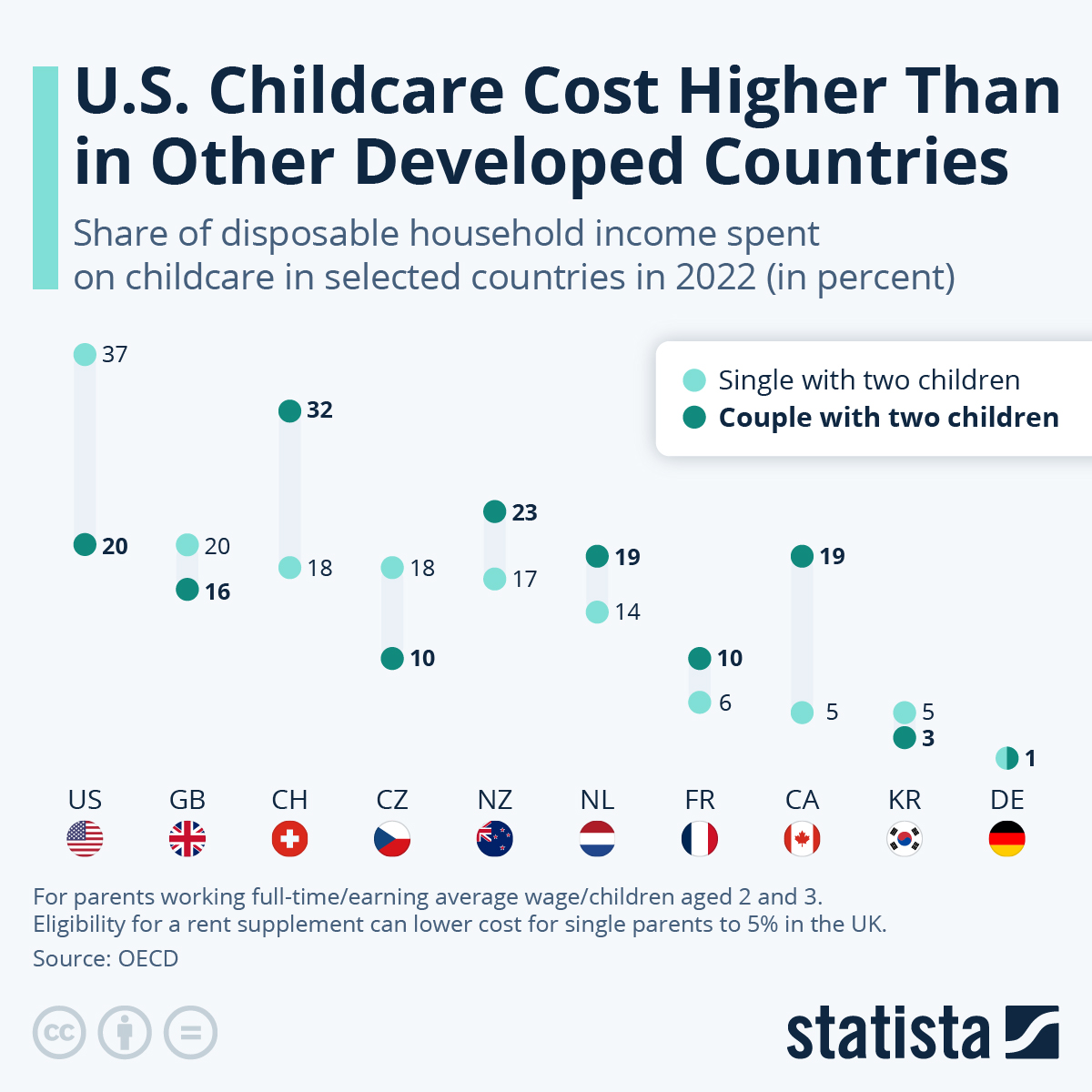
Childcare alone can cost more than rent or a mortgage in many American cities. Necessities for early childhood, such as diapers, formula, baby supplies, healthcare, and education, add thousands of dollars in additional expenses each year. Even the cost of childbirth itself in the United States can reach tens of thousands of dollars, depending on insurance coverage.
Beyond early childhood, families face additional financial pressures, including school activities, transportation, clothing, healthcare, housing, and eventually the cost of higher education.
For many households, the financial calculation becomes unavoidable.
Having children is no longer simply a social expectation—it is a long-term economic commitment that can reshape a family’s entire financial future.
There is also the question of uncertainty.
Parents today worry about issues that earlier generations rarely considered: school shootings, economic instability, climate change, political polarization, and the general unpredictability of the modern world. Whether those fears are fully justified or not, they still influence how people think about bringing children into that world.
Historically, family structures looked very different.
In the early twentieth century, large families were common not because people were more “family-oriented,” but because economic and social conditions were different. Housing was cheaper, extended families often lived together, and childcare responsibilities were shared across multiple generations.
Children were also seen as economic contributors to the household rather than long-term financial obligations.
Today, the expectations are very different. Families are expected to provide private bedrooms, extensive educational opportunities, extracurricular activities, and a high standard of living for each child. At the same time, extended family support systems have weakened, and childcare has become a market commodity rather than a shared community responsibility.
The result is predictable.
Many couples decide that having fewer children, or no children at all, is the most financially responsible decision they can make.
If governments and societies genuinely want to increase birth rates, the solution is unlikely to come from cultural panic or political rhetoric.
It will come from addressing the economic realities that make raising children increasingly difficult: housing costs, childcare affordability, healthcare expenses, and long-term financial security.
When people feel economically stable and confident about the future, they are far more likely to start families.
History suggests that prosperity and security—not cultural fear—are the conditions under which birth rates tend to rise.