Tag: reparations

  • Political Courage and the Question of What Is “Realistic”

    Political Courage and the Question of What Is “Realistic”

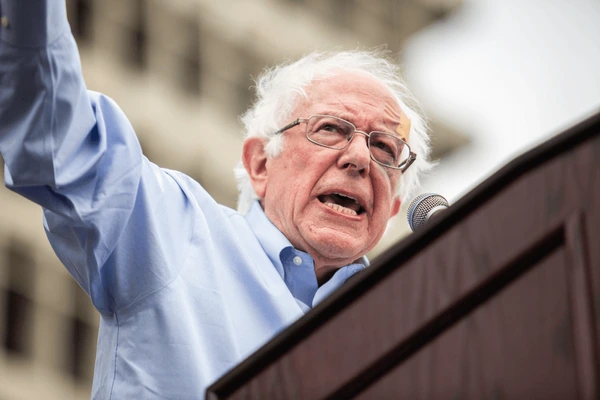
    One of the more puzzling arguments I have seen on social media comes from people (ADOS and FBA) who dismiss policies like universal healthcare, tuition-free public college, or a living wage as unrealistic “pie-in-the-sky” ideas, while simultaneously insisting that reparations for slavery and Jim Crow should be a major policy priority.

    This contradiction became especially visible during the 2020 Democratic primary when people attacked Bernie Sanders’ supporters online. I posted a Bernie “Infinity Gauntlet” meme referencing several progressive policy goals, and the response from some critics was predictable: comments about how those policies were impossible, along with sarcastic questions like “Where is the reparations stone?”

    But that criticism raises a serious question.

    If policies that benefit tens of millions of Americans—things like universal healthcare or free public college—are supposedly too politically difficult to achieve, what does that say about the political chances of reparations?

    A $15 minimum wage benefits workers across racial lines. Universal healthcare benefits everyone who needs medical care. Free public college benefits families nationwide.

    Reparations, by definition, address a specific historical injustice and would primarily benefit the descendants of enslaved people. That makes it politically even more challenging within the current American political system.

    This is not an argument against reparations. I support the idea of reparative policies for the legacy of slavery and Jim Crow.

    The point is about political honesty.

    If a politician tells voters that universal healthcare or a Green New Deal is unrealistic while simultaneously promising to pursue reparations, it is reasonable to question whether that promise is sincere or simply a form of political pandering.

    Real political change rarely begins with cautious, incremental thinking. It begins with bold proposals that shift the boundaries of what people believe is possible.

    Abolitionists were once told that ending slavery was unrealistic. Civil rights leaders were told that full legal equality was politically impossible. Major social reforms, from labor rights to voting rights, often began as ideas that the political establishment dismissed as radical.

    Not every bold proposal becomes law immediately. In fact, many fail in the short term.

    However, political movements often start by pushing ideas that expand the horizon of what people are willing to imagine.

    That is why the debate about “realistic” politics matters.

    If political leaders only pursue policies that the existing power structure already accepts, meaningful change rarely happens. Progress usually comes from those willing to challenge the limits of what the political establishment considers possible.

    If universal healthcare, free-college tuition, and other progressive campaign promises and goals are unrealistic, then so is the possibility of America paying the debt that it owes Black Americans.

    Whether one supports Bernie Sanders or not, that broader principle remains true.

    Political courage has always been the starting point for major social change.
  • Diaspora Divisions and the Cost of Infighting

    Diaspora Divisions and the Cost of Infighting

    One of the trends I have become increasingly frustrated with in recent years is the rise of diaspora conflicts among people of African descent, particularly the rhetoric coming from the Foundational Black American (FBA) movement and the American Descendants of Slavery (ADOS) movement.

    My criticism is not about recognizing the unique historical experience of Black Americans whose ancestors endured slavery and segregation in the United States. That history is real and deserves to be studied and acknowledged.

    Nor is my disagreement with these groups over the fight for reparations and the hypothetical distribution of any amount of personal funds that is a direct result of said fight.

    The problem arises when that recognition turns into hostility toward other Black communities, such as Africans, Caribbeans, Afro-Latinos, and others within the broader African diaspora (the sixth region of Africa).

    Movements that frame liberation as a zero-sum competition between groups of Black people misunderstand the history of Black struggle.

    Black liberation movements have always been global.

    Pan-African thinkers, such as Marcus Garvey, W.E.B. Du Bois, Kwame Nkrumah, Malcolm X, Kwame Ture, and many others, understood that the struggle against racism and colonialism was not confined to a single country. Activists, intellectuals, and artists from across the African diaspora have participated in and led movements for civil rights, cultural expression, and political freedom.

    This global exchange of ideas and customs had always shaped Black American culture.

    Music, political ideas, literature, and social movements have flowed back and forth between the United States, Europe, Canada, the Caribbean, Africa, and Latin America. That cross-pollination helped create many of the cultural forms and political traditions that people celebrate today.

    For that reason, turning these relationships into ideological battlegrounds does not strengthen Black communities. Instead, it weakens them.

    Diaspora conflicts often distract from the structural issues that affect people of African descent globally: economic inequality, systemic discrimination, political marginalization, and the long historical legacy of colonialism and racial hierarchy.

    Even debates about policies such as reparations often become framed in ways that pit Black communities against one another. Yet those discussions are largely hypothetical at the moment, given that meaningful reparations programs in the United States remain politically distant.

    Arguing among ourselves over potential future policies does little to advance the broader goals of empowerment, economic development, and collective liberation.

    If the goal is Black power, Black wealth, and meaningful progress, then building solidarity across the African diaspora is far more productive than deepening internal divisions.

    That does not mean ignoring real disagreements or historical differences.

    But it does mean recognizing that the struggles of people of African descent have always been interconnected, and that fragmentation ultimately benefits those who would prefer those struggles to remain divided.