Tag: sexism

  • Hit Dogs Holler: Growth Requires Listening

    Hit Dogs Holler: Growth Requires Listening

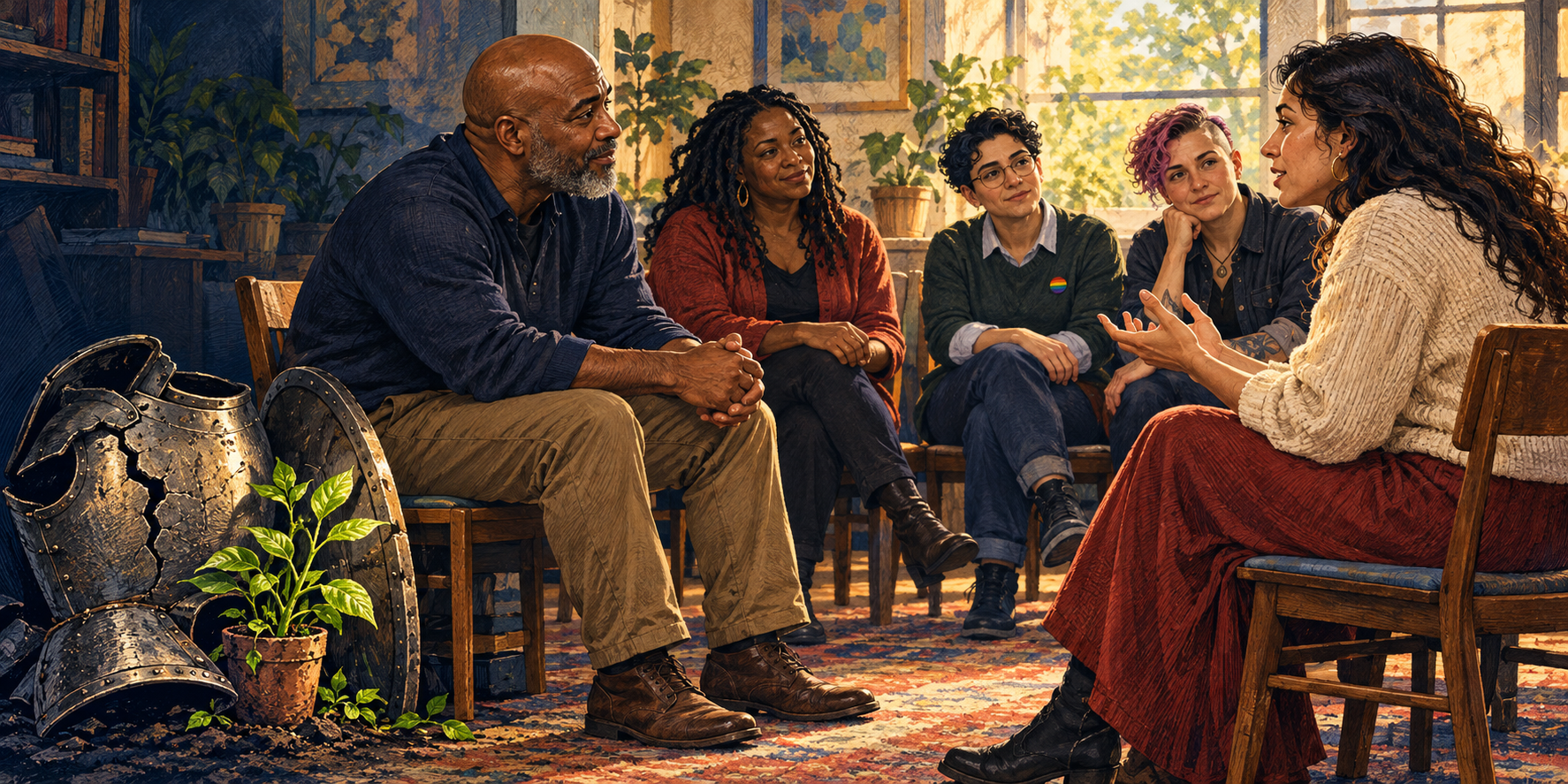
    When people in the LGBTQIA community make blanket statements about transphobia, homophobia, and other forms of bigotry against their community, and those statements are not directed specifically at me, I don’t get angry. I sit back and listen. Do I always agree? No. But I listen. I know that I have my own bigotry against the LGBTQIA community to work out.

    When women talk about rape culture and misogyny, and their comments are not directed specifically at me, I don’t get angry. I sit back and listen. Do I always agree? No. I still have much to learn, and I know I need to check my own sexism and misogyny.

    When my own people (Black people) talk about how Black people are cooning, and their comments are not directed specifically at me, I don’t get angry. I sit back and listen. Again, I don’t always agree… at first… but many times, I learn to adopt those positions. I know that I am guilty of cooning sometimes and have to check my internal anti-Black bias.

    Hit dogs holler. If you are deeply offended by a post that is not about you, to the point of being belligerent and lashing out like an angry child, maybe that is because, deep down, you know you are guilty but don’t want to grow and change. Growth and change require that we first admit there is something wrong. Growth and change require that we be willing to feel the discomfort we’ve made others feel. It requires introspection. It requires asking ourselves hard questions and accepting honest answers we don’t like. It requires that we listen to the voices of marginalized people we’ve affected in ways that go beyond hurt feelings, including acts of violence.

    I know that I am guilty of many things I don’t like. I know that I wrestle with many forms of bigotry. I was raised to be homophobic and transphobic. I was influenced to accept and participate in the exploitation of women. I was conditioned by society to believe that the White man’s ice was colder and his grass was greener. This was all programmed into me from birth and through childhood, and I’ve spent nearly a lifetime trying to deprogram myself.

    So our job is not to pout, cry, bitch, moan, complain, and act out when people are informing us about not only their own experiences with bigotry but also the proven pervasiveness of that bigotry and the continued and accepted marginalization of their communities. Our job is to see, listen, learn, and, most importantly, accept our roles and change. Yes, it is a long process. Yes, we do backslide. Yes, it is uncomfortable and demands that we take responsibility for actions we initially thought were benign. But the goal is growth. The goal is being a better human being.

    Don’t get angry and defensive. Listen.

  • Same Old Politics, Different Welfare Stereotype

    Same Old Politics, Different Welfare Stereotype

    Well, well, well. Republicans around the country, especially in Arkansas, are upset that Sarah Huckabee Sanders’ new political ad shows a young White man as a “welfare queen.” They are now turning against her for portraying a White man on welfare. They argue that White people have been discriminated against for decades (who has the “victim mindset” again?) and that the commercial should have shown a woman, particularly a Black woman (or a Black person in general), as the problem welfare recipient.

    And part of me agrees that the welfare recipient in the ad was not an accurate portrayal… but not for the racist and sexist reasons they are citing.

    The trope of the lazy young gamer is problematic by itself and many of these unemployed gamers are not on welfare. If they are not actively looking for work, they are usually being financially supported by parents, spouses, domestic partners, siblings, or other family members. Plus, most people who game regularly are employed.

    As for actual welfare recipients, more White people are on welfare than Black people. This is the part where the racists start talking about per capita. But in this case, per capita doesn’t matter. Most people in Arkansas who are on welfare are White (54%). Only 31% of welfare recipients in Arkansas are Black. This means that the face of welfare in Arkansas should more than likely be White, since more White people are on welfare than Black people by sheer number.

    The trope of lazy welfare recipients was popularized in the 1960s after Black people were allowed to participate in those programs. This was also when many conservative Southern politicians from both parties started imposing eligibility rules for welfare that removed men, especially Black men, from the home. Contrary to a popular talking point, it was not President Lyndon Johnson who removed Black men from the home. It was conservative Southern and Midwestern legislatures and governors, most of them Democrats, who started these policies locally and pushed for them to be implemented nationally. These policies were designed to punish Black families for participating in programs originally intended only for White families. Since then, Black people using public housing, housing assistance, food stamps, and other programs we collectively think of as “welfare” have been classified as “lazy” and saddled with other negative stereotypes. This happened despite many of them working low-paying jobs and despite many White families receiving welfare for generations.

    White conservatives need the narrative of Black welfare abuse to advance White supremacy and mask their own dependence on government assistance. In their minds, they use assistance because they need it. Black people use it because they supposedly lack morals and diligence. That is what they think. And then they wonder why they are constantly called “racist” and “bigoted.”

    They also hate that the commercial didn’t feature a woman. Because, Lord knows, you can feature a man with a chronic disability receiving Social Security benefits while mostly appearing able-bodied, and that disability never seems to bother them except when asked to work. But let’s demonize the woman he had children with while ignoring his failure to provide for them. Behind many women who need welfare is a deadbeat father who doesn’t provide for his children.

    This is not to shit on people receiving any form of welfare, including disability benefits. However, we need to stop with the racist and sexist tropes, stereotypes, and narratives around welfare.

    Do people abuse welfare? Yes. All types of people abuse welfare, including the rich…especially the rich. Elon Musk is one of the biggest “welfare queens” out there, spending much of his time playing video games and reposting Nazi propaganda on X. But no one talks about him or gets angry at him. “But Elon Musk is a ‘job creator!’” So are the Somali daycare owners you are now demonizing based on a deceptively produced and edited video by a conservative, made to make the whole community look bad. Again, you wonder why we think of you as “racist” and “bigoted.”

    The point is that all tropes are bad, especially when they are used to demonize the economically downtrodden. Whether it is a Black family, a single White mother, or a young unemployed gamer (of any race), these tropes and stereotypes need to go. We need to stop trying to punish individuals and families for being poor. We need to stop defining and demonizing whole groups of poor people based on the actions of a relative few. We need to stop the exploitation of labor and theft of wages by large corporations that underpay their employees and make them need welfare to live.

    This is my problem with Sarah Huckabee Sanders’ campaign commercial. It’s the same old conservative pastime of punching down. With Sanders, the targets are unemployed gamers and all welfare recipients. With her conservative critics, the targets are women and Black people. It all has to stop.

  • What Went Wrong With the Atheist Movement

    What Went Wrong With the Atheist Movement

    One of the ongoing debates about the atheist movement of the 2000s and early 2010s is whether it “collapsed” because it became too politically progressive or “too woke.”

    I don’t think that explanation holds up.

    In my view, the real problem with the movement was something else entirely: it contained a significant number of reactionary voices, particularly white male commentators, who eventually stopped hiding their hostility toward women, marginalized communities, and racial minorities.

    For a while, those tensions remained mostly beneath the surface. But when controversies like Elevatorgate, Gamergate, and similar disputes erupted, they exposed cultural problems that had been developing inside the movement for years.

    Regardless of where one stood on the details of those specific incidents, they represented opportunities for reflection and self-examination.

    Unfortunately, many of us (including myself) responded defensively rather than thoughtfully.

    Instead of listening to people who felt alienated or marginalized within atheist spaces, the dominant reaction in many circles was to dismiss their concerns, mock them, or accuse them of trying to impose political correctness on what was supposed to be a rationalist community.

    In hindsight, that response made things worse.

    Atheism itself is simply a position on one question: whether gods exist. But movements built around atheism inevitably become social communities, and communities bring their own cultural dynamics.

    When those dynamics include arrogance, hostility, or a lack of empathy, people eventually notice.

    The uncomfortable truth is that many of us behaved like self-important gatekeepers who were quick to criticize religion but much slower to examine our own toxic attitudes and behavior.

    The movement’s credibility suffered as a result.

    Looking back, it’s clear that moments of conflict within the atheist community could have been growth opportunities. They could have encouraged more thoughtful conversations about inclusion, respect, and how a community built around skepticism should treat the people within it.

    Instead, too often, those conversations devolved into hostility and factionalism.

    If there is a lesson to take from that period, it is a simple one: skepticism should not only apply to religious beliefs.

    It should also apply to our own behavior.

  • The Problem With “Not All”

    The Problem With “Not All”

    One of the most common responses people give when a social problem is discussed is the phrase “not all.”

    Someone raises concerns about racism, sexism, or discrimination, and almost immediately someone replies: “Not all [fill in the blank] are like that.”

    Of course not.

    Only a complete fool would believe that every member of any group behaves the same way. Human beings are not monoliths. Most of us already understand that.

    But the phrase “not all” often serves a different purpose in these conversations.

    It is a defensive reaction.

    Instead of encouraging reflection, it frequently becomes a way to shift attention away from the behavior being discussed. The focus moves from addressing a problem to protecting the feelings or reputations of people who do not want to be associated with it.

    In practice, this can prevent honest discussions about patterns of behavior within societies.

    For example, when discussing racism, many people immediately emphasize that there are white individuals who have fought against racial injustice. And that is absolutely true. History includes many white allies who actively resisted slavery, segregation, and discrimination. These include people like John Brown, Joan Mulholland, Andrew Goodman, Michael Schwerner, and many others who risked or even lost their lives in the struggle for civil rights.

    Those individuals deserve recognition.

    But acknowledging those exceptions does not erase the broader historical reality that systems of racial hierarchy existed and were maintained by large numbers of ordinary people who were not actively resisting them.

    The same pattern appears in other social issues.

    Consider conversations about sexual violence. Most men do not commit acts of rape or assault. Yet when the topic arises, discussions often shift quickly toward defending men as a group rather than addressing the cultural attitudes that can enable or excuse harmful behavior.

    In both cases, the “not all” response shifts attention away from the underlying problem.

    The issue is not whether every individual participates in wrongdoing. The issue is whether members of a society are willing to acknowledge patterns of harm and take responsibility for addressing them.

    Accountability requires honesty.

    That honesty includes recognizing when people within our own communities (whether defined by race, gender, nationality, or ideology) have contributed to injustice. It also requires recognizing that silence, indifference, or passive acceptance can sometimes help sustain those injustices.

    True allies rarely feel the need to insist on the phrase “not all.” They already understand that criticism of a system or pattern is not the same thing as condemning every individual.

    They also understand that progress begins with self-reflection.

    No person or community is perfect. Growth requires acknowledging shortcomings, learning from them, and striving to do better.

    Defensiveness may protect our pride, but it rarely helps us confront the problems that still need to be solved.