Tag: South

  • American History Myths #6: The Myth of “Northern Innocence”

    American History Myths #6: The Myth of “Northern Innocence”

    One of the most persistent myths in American history is the idea that legalized segregation and anti-Black racism were primarily Southern problems.

    According to this narrative, the South was the land of slavery, Jim Crow, and overt racial hostility, while the North, especially the so-called “liberal North,” was supposedly a place where racial equality flourished, and people lived together in relative harmony.

    For decades, this is essentially how American history was taught.

    But the reality is far more complicated.

    Anti-Black racism was not confined to the South. It existed throughout the United States, including in Northern cities that often presented themselves as progressive and tolerant. While Southern states openly enforced segregation through Jim Crow laws, Northern states frequently relied on other mechanisms to achieve many of the same results.

    One of the most powerful tools used to maintain racial segregation in Northern and Western cities was the racial covenant.

    Racial covenants were clauses written into property deeds by real estate developers, neighborhood associations, and homeowners. These clauses prohibited the sale or rental of property to certain groups, most commonly Black Americans, but also often including Asian Americans, Jews, and other minorities.
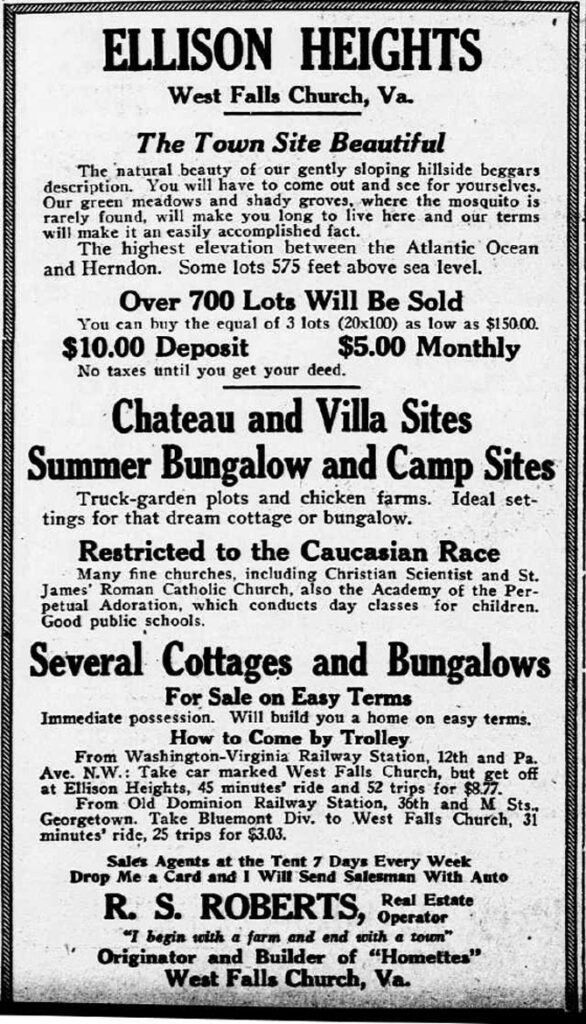
    Example of a racial covenant. Note the words “Restricted to the Caucasian Race”

    These restrictions were widespread across the country. Entire neighborhoods were built with the explicit condition that homes could not be sold to non-white residents.

    The consequences were enormous.

    By restricting where Black families could live, racial covenants effectively barred them from access to wealthier neighborhoods, better public schools, and the property values that allowed many white families to accumulate generational wealth through home ownership.

    Racial covenants were only one piece of a larger system of discrimination often referred to as racial steering or social steering. Through practices by real estate agents, banks, and government institutions, different racial groups were deliberately directed or confined to specific areas of cities and metropolitan regions.

    Although the Supreme Court ruled racially restrictive covenants unenforceable in Shelley v. Kraemer (1948) and the Fair Housing Act of 1968 outlawed many forms of housing discrimination, the patterns created by decades of segregation did not disappear overnight.
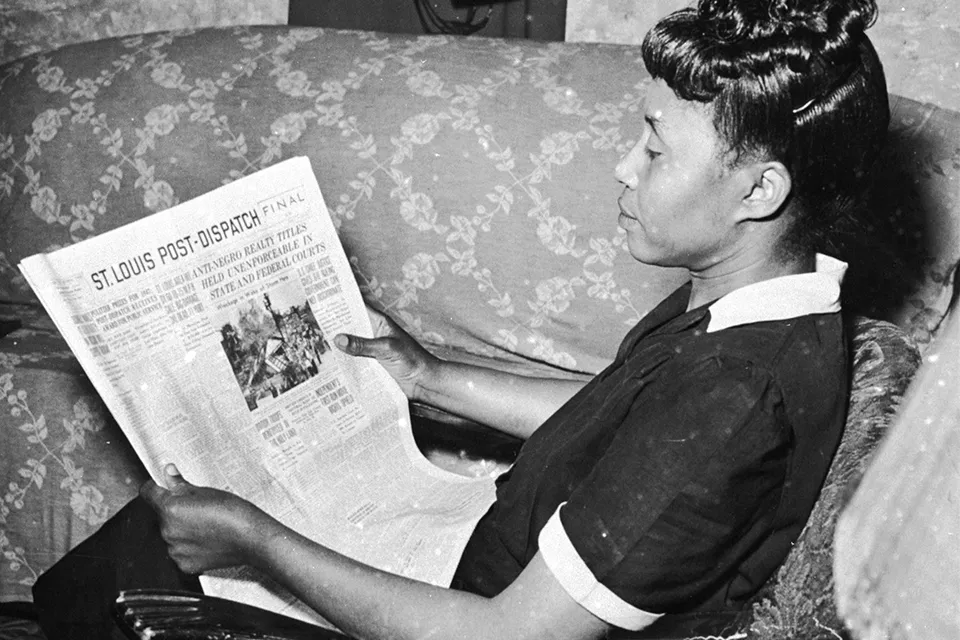
    Ethel Shelley reads a May 4, 1948, St. Louis Post-Dispatch story about the Supreme Court decision outlawing racial covenants. (Courtesy St. Louis Post-Dispatch)

    In many cases, they persisted.

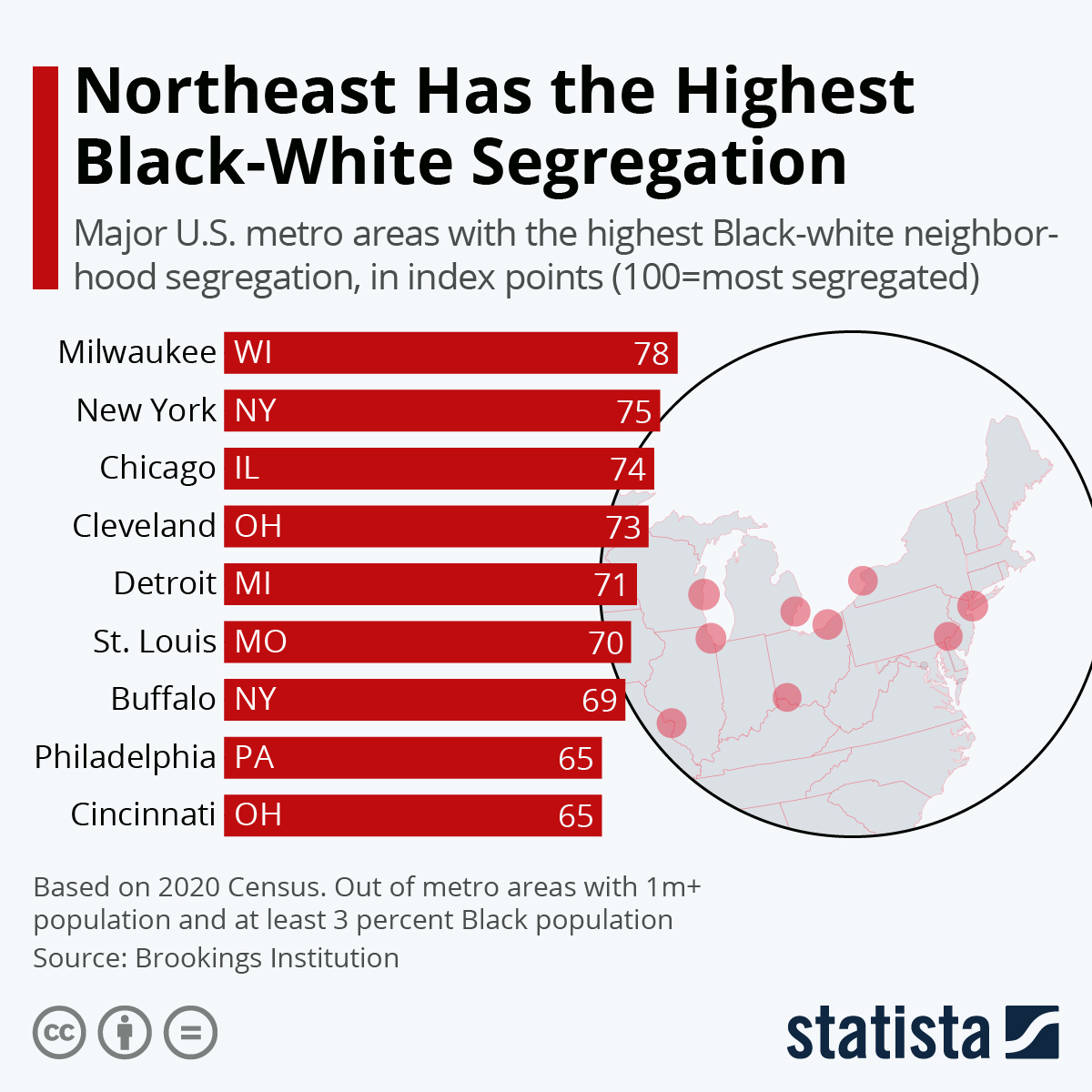
    Even today, many American cities remain deeply segregated along racial lines. Schools often reflect the same residential patterns, meaning that educational opportunities can still be shaped by where families are able… or allowed… to live.
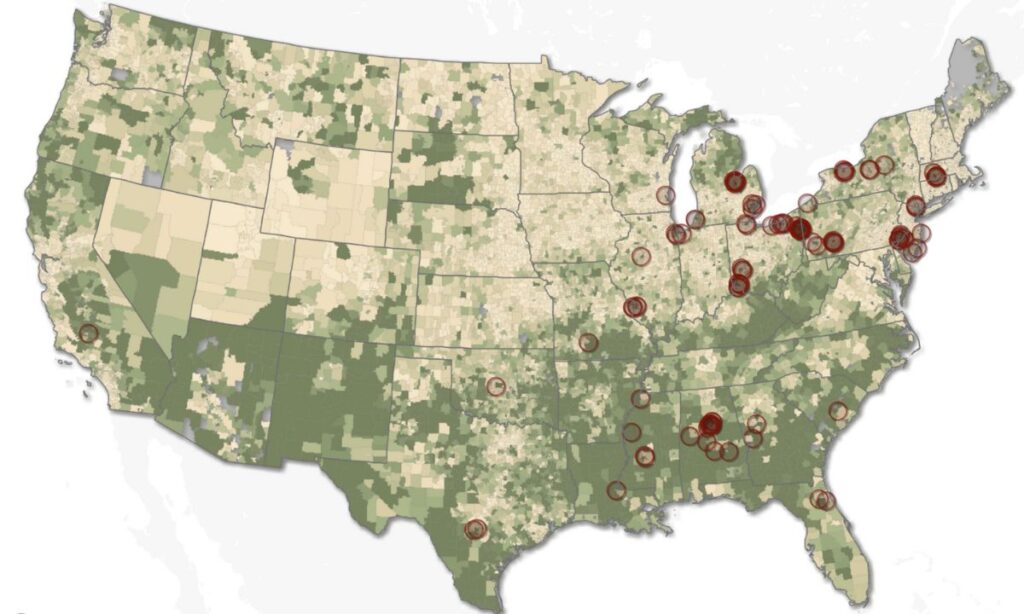
    Click on the link attached to the word “schools” in the paragraph above for more information on this map.

    Understanding this history challenges the comfortable narrative that racism was solely a Southern problem. The structures that created racial inequality in the United States were national in scope, and their effects continue to shape American society today.

    The myth of Northern innocence obscures that reality.
  • American History Myths #4: The Myth That the Parties Never Realigned

    American History Myths #4: The Myth That the Parties Never Realigned

    One of the most persistent claims in modern political debates is that the Democratic and Republican parties have remained essentially the same throughout American history. According to this argument, the political coalitions and ideologies of the nineteenth century supposedly still define the parties today.

    This claim ignores one of the most well-documented developments in American political history: the gradual ideological realignment of the two major parties from the late nineteenth century through the late twentieth century.

    Following the Civil War, the Republican Party was widely associated with the Union victory and the abolition of slavery. During Reconstruction, Republicans supported many early civil rights measures intended to protect the rights of newly freed Black Americans.

    However, that political commitment weakened dramatically after the Compromise of 1877, which effectively ended Reconstruction. Federal enforcement of civil rights protections collapsed, and white supremacist governments regained control across much of the South.

    For decades afterward, Southern politics was dominated by segregationist Democratic politicians often referred to as Dixiecrats. These politicians supported Jim Crow laws, racial segregation, and policies designed to disenfranchise Black voters.

    But American political coalitions were not static.

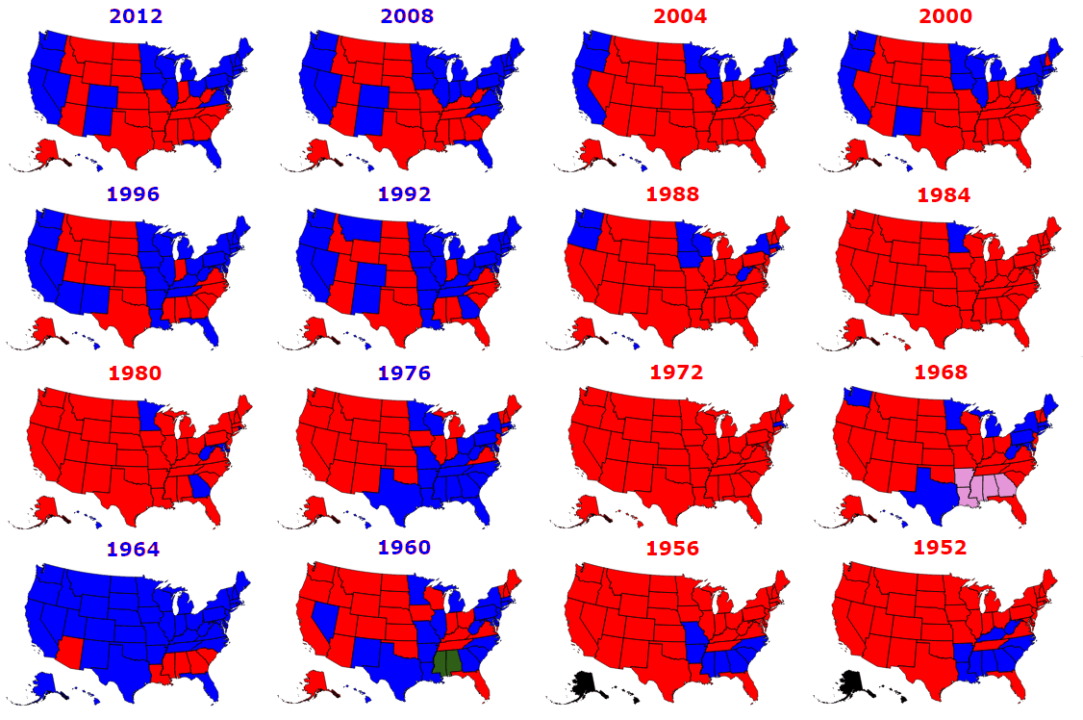
    Beginning in the mid-twentieth century, particularly during the Civil Rights Movement of the 1950s and 1960s, many white Southern conservatives began shifting their political allegiance. As national Democratic leaders increasingly supported civil rights legislation, large numbers of segregationist voters and politicians gradually moved toward the Republican Party.

    This transition did not happen overnight. It unfolded over several decades, from the 1960s through the 1980s and even into the early 1990s. Historians and political scientists commonly refer to this process as political realignment.

    The shift can be seen in electoral patterns across the South. States that had reliably voted for Democratic presidential candidates for nearly a century increasingly began supporting Republican candidates. Conservative Southern politicians who once identified as Democrats also began switching parties.

    Despite this well-documented transformation, some modern political commentators attempt to deny that any realignment occurred. Instead, they argue that the parties remain essentially unchanged and that historical responsibility for segregationist politics belongs exclusively to one party.

    But historical evidence tells a more complicated story.

    The ideological divide in American politics has long revolved less around party labels and more around competing views about civil rights, federal power, and social hierarchy. Over time, the political coalitions representing those views have shifted between parties.

    This is why discussions of American political history require careful attention to ideology, region, and historical context, rather than relying solely on party labels.

    Reducing the history of American civil rights struggles to simple partisan talking points obscures the reality of how political coalitions evolve. Understanding that evolution is essential for understanding the political landscape of the United States today.

  • American History Myth #3: The Myth That Civil Rights Were Simply a “Republican Achievement”

    American History Myth #3: The Myth That Civil Rights Were Simply a “Republican Achievement”

    Modern political debates often reduce complex historical events to simple partisan talking points. One of the most common claims is that the Civil Rights Movement and the landmark civil rights legislation of the 1960s were primarily the achievement of conservative Republicans.

    This claim is frequently used in contemporary political arguments, but it oversimplifies a far more complicated historical reality.

    It relies on several incorrect assumptions:

    1. The Republican Party has always been a party of fiscal, social, and small-government conservatives.
    2. American political parties historically operated as unified ideological blocs rather than coalitions containing both liberal and conservative wings.
    3. Republicans were never involved in segregationist politics, white supremacist movements, or anti-Black rhetoric and policies.

    All three assumptions are historically inaccurate.

    In the decade following the Civil War, Republicans championed early civil rights legislation during Reconstruction. However, after the contested election of 1876 and the Compromise of 1877, which effectively ended Reconstruction, national political commitment to protecting Black civil rights declined dramatically.

    During the late nineteenth and early twentieth centuries, what historians often call the Nadir of American Race Relations (roughly 1887–1923), racist policies and segregation became entrenched across much of the United States. During this period, many politicians from both major parties adopted or tolerated segregationist attitudes.

    Fast forward to the 1960s and the passage of the Civil Rights Act of 1964.

    The legislation was originally proposed by President John F. Kennedy (D) in 1963. After Kennedy’s assassination, President Lyndon B. Johnson (D) made the bill a central priority of his administration and pushed aggressively for its passage.

    Several key members of Congress played major roles in advancing the legislation, including:

    • Hubert Humphrey (D–MN)
    • Emanuel Celler (D–NY)
    • Everett Dirksen (R–IL)
    • William McCulloch (R–OH)

    The final legislation was the result of bipartisan cooperation, though it was strongly driven by the Democratic administration and several Democratic leaders in Congress.

    The final vote totals were:

    House of Representatives
    289–126 (70–30%)

    Senate
    73–27

    When broken down by party, the numbers appear to show stronger Republican support:

    House

    • Democrats: 153–91 (69%)
    • Republicans: 136–35 (82%)

    Senate

    • Democrats: 44–23 (66%)
    • Republicans: 27–6 (82%)

    At first glance, these numbers might suggest that Republicans were the primary supporters of civil rights legislation.

    However, this interpretation ignores a crucial factor: region.

    When the votes are separated by region, a very different pattern appears.

    House of Representatives

    Northern members: 281–32 (90%) in favor
    Southern members: 8–94 (8%) in favor

    Senate

    Northern members: 72–6 (92%) in favor
    Southern members: 1–21 (5%) in favor

    In other words, the major divide was not simply party affiliation—it was North versus South.

    Looking at the votes by both region and party makes this even clearer.

    House

    Southern Democrats: 8–83 (9%) in favor
    Southern Republicans: 0–11 (0%) in favor

    Northern Democrats: 145–8 (95%) in favor
    Northern Republicans: 136–24 (85%) in favor

    Senate

    Southern Democrats: 1–20 (5%) in favor
    Southern Republicans: 0–1 (0%) in favor

    Northern Democrats: 45–1 (98%) in favor
    Northern Republicans: 27–5 (84%) in favor

    Not a single Southern Republican voted for the Civil Rights Act of 1964. Meanwhile, Northern Democrats supported the bill at even higher rates than Northern Republicans.

    Another important point often overlooked in modern political debates is that Democrats held large congressional majorities during this period.

    In the 88th Congress (1964), Democrats held:

    • 66 seats in the Senate
    • 253 seats in the House

    Without substantial Democratic support, the Civil Rights Act simply would not have passed.

    A similar pattern appeared in the Voting Rights Act of 1965. At that time, Democrats held even larger majorities:

    • 68–32 in the Senate
    • 295–140 in the House

    The final votes were:

    House
    333–85

    Senate
    77–19

    Again, both parties supported the legislation. But the historical record shows that the outcome cannot be reduced to a simple narrative about one party single-handedly delivering civil rights.

    The reality is more complex.

    Civil rights legislation in the 1960s passed through bipartisan coalitions, but those coalitions were shaped far more by regional politics and ideological divisions than by party labels alone.

    Reducing this history to a partisan talking point oversimplifies one of the most important political struggles in American history.