Tag: xenophobia

  • MAGA’s Messiah and the Myth of the Good Old Days

    MAGA’s Messiah and the Myth of the Good Old Days

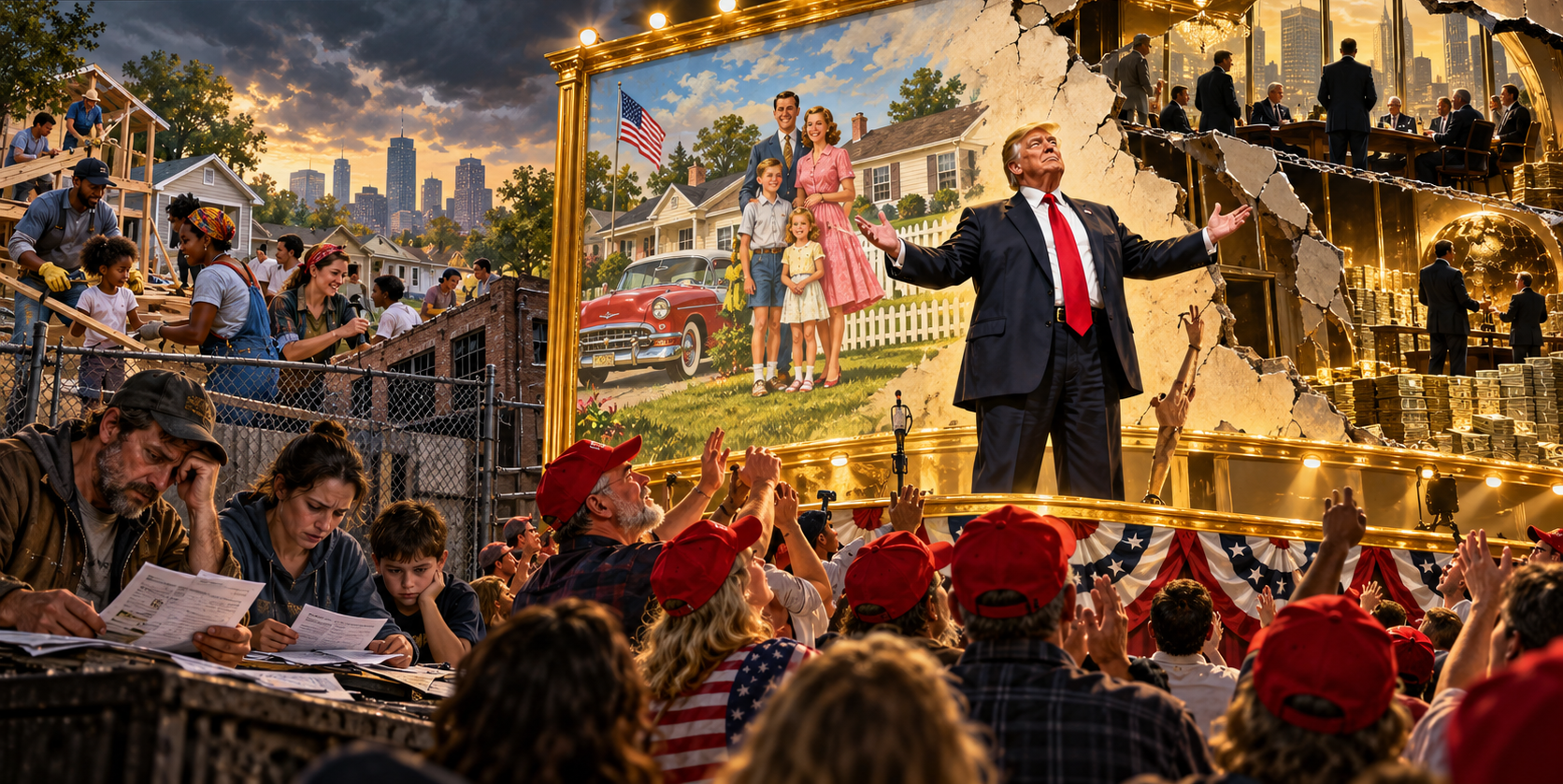
    The thing that fucks me up about the MAGA cult is that so many of them genuinely, blindly, and sadly believe that Chump (Trump) is some messianic figure here to rescue this country from cannibalizing itself through neoliberalism, crony capitalism, and privatization.

    To me, he represents the same appetite dressed up in a red hat. Nepotism, grifting, self-promotion, and incompetence sold as strength. Somehow, his petty belligerence becomes courage. His obsessive whining becomes a legitimate grievance. His need for applause becomes devotion to the country.

    They see a professional con man and call him their savior.

    And what, exactly, is he supposed to save them from? Those imaginary glory days when a White man could supposedly support a family with little education, women happily stayed in the kitchen, and Black people knew their place?
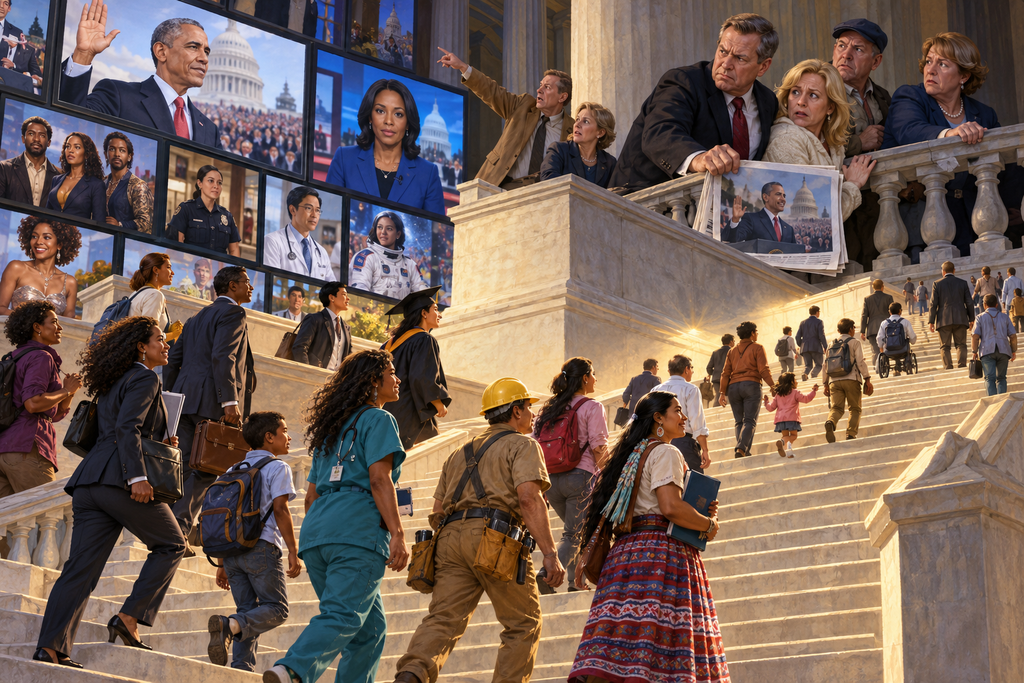
    An AI image of various marginalized groups climb up a tall stairway while there are angry White people on the top. On the left side of the picture, there are screens featuring various racial and ethnic minorities being represented in positions of power and Obama being sworn in as president.
    The visible rise of black people and other marginalized groups into socioeconomic positions once held exclusively by White people, including the presidency, created irrational fear and panic in many White Americans who felt that absolute power, wealth, and prestige belonged only to them.

    Some people had real economic security during those years. But the picture being sold leaves out who was excluded, whose labor was exploited, and whose freedom was sacrificed to maintain it. Women were not universally happy with dependence. Black people were not content with segregation, domestic service, limited menial work opportunities, and second-class citizenship.

    Your nostalgia does not get to erase our history.

    The past they long for is part memory, part mythology, and part desire to restore a hierarchy they think should never have been challenged. They want the wages and purchasing power associated with that period, but too many also want its social arrangements.
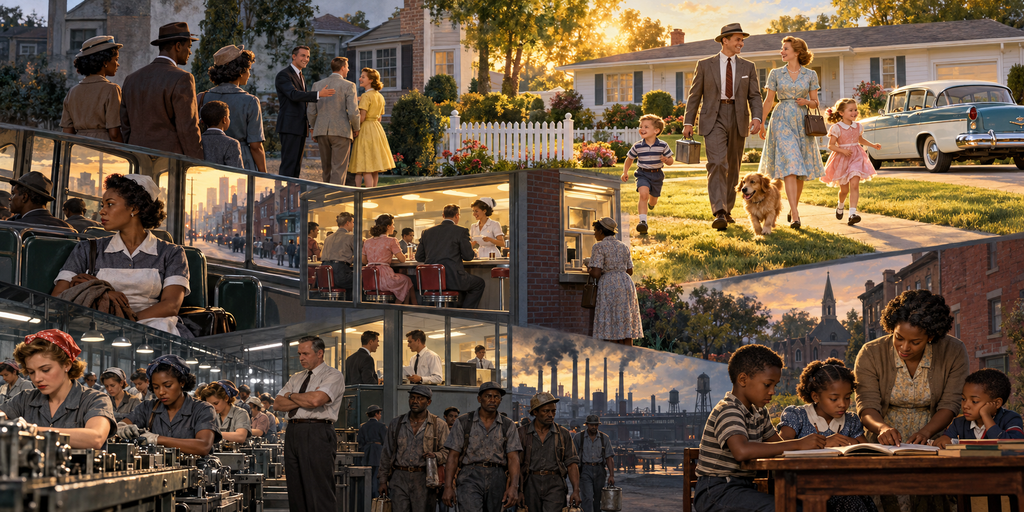
    An AI generated collage of White families moving into the suburbs during the 1950s while Black people and women faced job and housing discrimnation.
    During the United States’ economic golden age, Black people were still mostly working in menial jobs as domestics and laborers. They were being denied equal access to housing, especially in the newly built suburbs.

    Those are two different things. And I wish they would stop pretending otherwise.

    Personally, I never fell under the illusion that Biden (or even Obama) was a hero or a messiah. His presidency is over, and my standard remains the same: policies, actions, competence, and accountability. A diverse cabinet does not automatically transform an administration into a vehicle for liberation. Neither does putting a Democrat in the White House.

    I wanted someone to do his/her fucking job. I also wanted more than competent management of a system that keeps squeezing working people while rewarding those who already own everything.

    That criticism did not disappear because Trump returned to power.

    My problem with MAGA is that its devotion to Chump repeatedly swallows the very accountability its supporters claim to demand. When something goes wrong, somebody else must have caused it. When he contradicts himself, they supply the explanation. When he disappoints them, they move the goalposts.
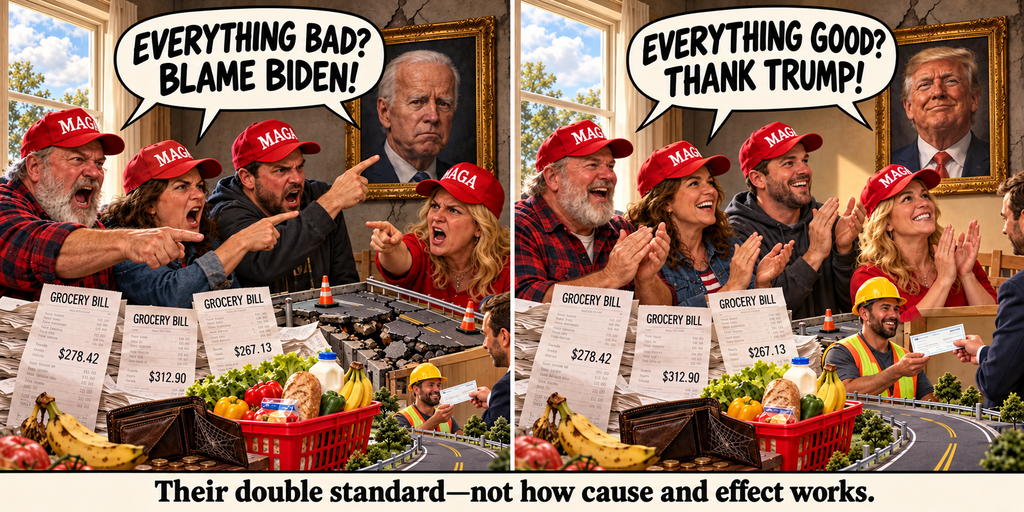
    An AI generated image of Trump being praised for everything good while Biden is blamed for everything bad.
    To many in MAGA, everything bad that happens during Trump’s presidency is the fault of Biden, Obama, or the Democrats. They see everything good as a direct result of Trump’s leadership.

    At what point does the man you elected become responsible for the things he does?

    The economic pain that helped create this movement is not imaginary. Communities have lost jobs, stability, and a sense of a future. But the explanation cannot begin and end with whichever president a cable news host tells you to hate.

    Deindustrialization devastated communities built around factory work. Automation changed how many workers employers needed. Highways and suburban development reshaped cities, often at the expense of established neighborhoods. Energy markets changed. Smaller towns lost employers, young people, and resources.
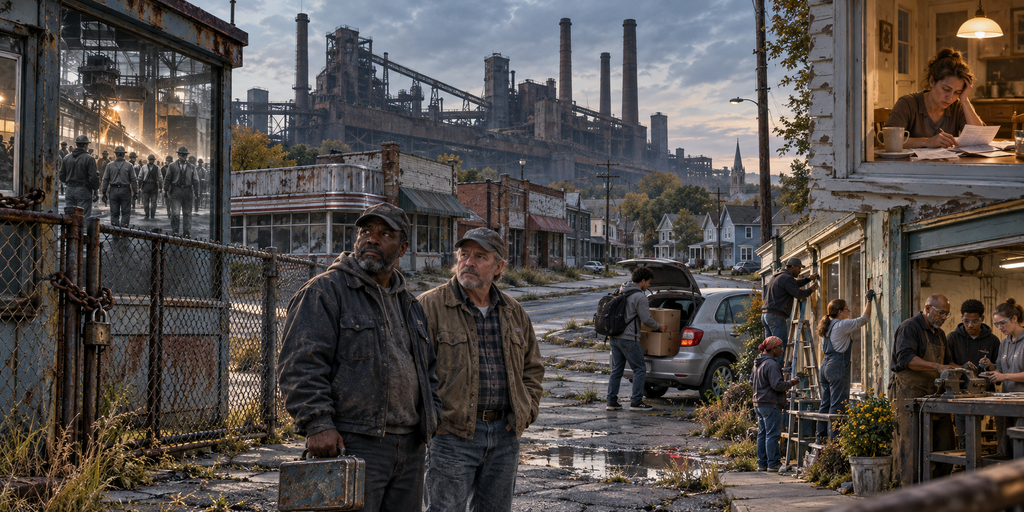
    An AI generated image of the negative effects of deindutrialization to many communities in the United States.
    Deindustrialization devastated once-thriving communities and neighborhoods, leaving them impoverished and blighted.

    These changes did not all come from one president, one party, or one secret meeting of cartoon villains.

    But political choices determined who received protection, who absorbed the losses, and who got rich from the transition. Decisions about labor rights, taxation, trade, public investment, and privatization were very important. And they still are today.

    And administrations from both parties helped build or preserve arrangements that concentrated wealth and weakened working people’s bargaining power.

    That is why I do not accept the idea that electing a billionaire with a talent for branding somehow frees us from billionaire power.

    Chump offers people a villain, a slogan, and somebody to look down on. That does not necessarily give them a pension, affordable housing, healthcare, or control over their working lives.

    You cannot pay the electric bill with the satisfaction of making somebody else miserable.

    I suspect that part of MAGA’s appeal goes beyond economics. For some of its most devoted supporters, the fear is having to share power with women, racial minorities, immigrants, and people of different faiths, gender identities, and sexual orientations.

    Equality feels like dispossession when you believe the country belongs to you.

    They hear demands for equal treatment and imagine revenge. They hear criticism of White supremacy and imagine an attack on their existence. Meanwhile, most of the people they fear are trying to live, raise their children, work, and enjoy some relative peace and prosperity.

    An AI generated photo of Black people living their lives while white people look out their windows fearing revenge.
    Many conservative White people fear acts of revenge from Black people. What they fail to understand is that most Black people just want to have equal opportunities for good neighborhoods, education, and jobs rather than plotting or enacting any form of revenge.

    We should not have to remain subordinate just to make somebody else feel secure.

    And Mango Mussolini’s constant need for praise does nothing to convince me that he is the tough guy he wants people to see. Pettiness is not strength. Vindictiveness is not leadership. Surrounding yourself with loyal sycophants does not make your judgment better.

    Neither does refusing to accept defeat.

    Trump lost the 2020 election and won the 2024 election. Both results can be true. Winning later does not retroactively turn an earlier loss into a stolen victory. If your respect for elections depends on whether your candidate wins, your loyalty is to the candidate.

    That is the problem.

    I have compared this kind of devotion to the danger represented by Jim Jones and the Peoples Temple. That is a serious analogy, and the circumstances are different. But the warning behind it is important here: people become vulnerable when loyalty to a leader takes priority over evidence, judgment, and their own well-being.

    A movement becomes dangerous when every criticism is treated as persecution and every demand from the leader becomes a test of faith.
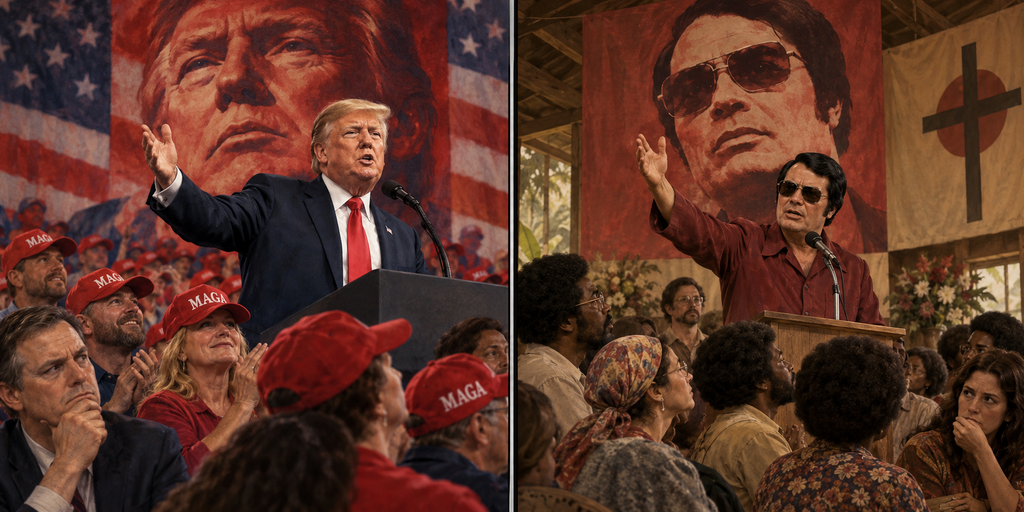
    An AI generated image comparing Donald Trump to Jim Jones.
    MAGA devotion to Trump looks eerily like the devotion that many people had to Jim Jones.

    Cultlike devotion to a person is never a substitute for political principles.

    And yes, that applies to Democrats too. It applies to politicians I like. It applies to politicians you like. Nobody should receive a lifetime exemption from scrutiny because they once inspired us or made the right people angry.

    I do not want a messiah. I want humane policies, accountable leadership, and a society where people can live without being sacrificed to somebody else’s profits.
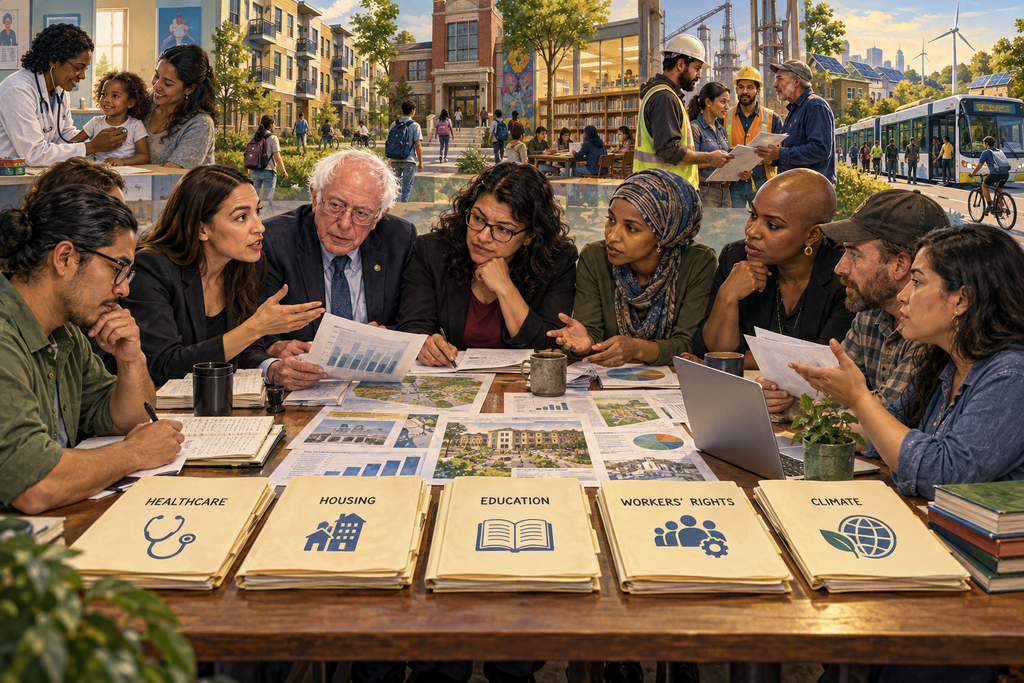
    An AI generated image of Bernie Sanders and the Squad meeting with regular Americans to discuss solutions to problems facing them.
    My admiration for Bernie Sanders and the Squad does not come from a cult of personality. It comes from the policy solutions that they propose and the fact that they seem to address the needs of average Americans rather than corporations and the super-rich. They do this without engaging in culture wars and mindless platitudes.

    The people I call “Y’all-Qaeda” are not going to disappear simply because an election ends or a politician eventually leaves office. The grievances, authoritarian impulses, and appetite for enemies require more than waiting for the next news cycle.

    We have to confront the conditions that make people desperate, and the politics that teach them to aim that desperation at everybody except those benefiting from it.

    Because the country does not need more people worshipping a man who promises to make them great.

    It needs people willing to ask who gets the wealth, who holds the power, and who keeps paying the fucking price.

  • Diaspora Divisions and the Cost of Infighting

    Diaspora Divisions and the Cost of Infighting

    One of the trends I have become increasingly frustrated with in recent years is the rise of diaspora conflicts among people of African descent, particularly the rhetoric coming from the Foundational Black American (FBA) movement and the American Descendants of Slavery (ADOS) movement.

    My criticism is not about recognizing the unique historical experience of Black Americans whose ancestors endured slavery and segregation in the United States. That history is real and deserves to be studied and acknowledged.

    Nor is my disagreement with these groups over the fight for reparations and the hypothetical distribution of any amount of personal funds that is a direct result of said fight.

    The problem arises when that recognition turns into hostility toward other Black communities, such as Africans, Caribbeans, Afro-Latinos, and others within the broader African diaspora (the sixth region of Africa).

    Movements that frame liberation as a zero-sum competition between groups of Black people misunderstand the history of Black struggle.

    Black liberation movements have always been global.

    Pan-African thinkers, such as Marcus Garvey, W.E.B. Du Bois, Kwame Nkrumah, Malcolm X, Kwame Ture, and many others, understood that the struggle against racism and colonialism was not confined to a single country. Activists, intellectuals, and artists from across the African diaspora have participated in and led movements for civil rights, cultural expression, and political freedom.

    This global exchange of ideas and customs had always shaped Black American culture.

    Music, political ideas, literature, and social movements have flowed back and forth between the United States, Europe, Canada, the Caribbean, Africa, and Latin America. That cross-pollination helped create many of the cultural forms and political traditions that people celebrate today.

    For that reason, turning these relationships into ideological battlegrounds does not strengthen Black communities. Instead, it weakens them.

    Diaspora conflicts often distract from the structural issues that affect people of African descent globally: economic inequality, systemic discrimination, political marginalization, and the long historical legacy of colonialism and racial hierarchy.

    Even debates about policies such as reparations often become framed in ways that pit Black communities against one another. Yet those discussions are largely hypothetical at the moment, given that meaningful reparations programs in the United States remain politically distant.

    Arguing among ourselves over potential future policies does little to advance the broader goals of empowerment, economic development, and collective liberation.

    If the goal is Black power, Black wealth, and meaningful progress, then building solidarity across the African diaspora is far more productive than deepening internal divisions.

    That does not mean ignoring real disagreements or historical differences.

    But it does mean recognizing that the struggles of people of African descent have always been interconnected, and that fragmentation ultimately benefits those who would prefer those struggles to remain divided.

  • The Problem With “Not All”

    The Problem With “Not All”

    One of the most common responses people give when a social problem is discussed is the phrase “not all.”

    Someone raises concerns about racism, sexism, or discrimination, and almost immediately someone replies: “Not all [fill in the blank] are like that.”

    Of course not.

    Only a complete fool would believe that every member of any group behaves the same way. Human beings are not monoliths. Most of us already understand that.

    But the phrase “not all” often serves a different purpose in these conversations.

    It is a defensive reaction.

    Instead of encouraging reflection, it frequently becomes a way to shift attention away from the behavior being discussed. The focus moves from addressing a problem to protecting the feelings or reputations of people who do not want to be associated with it.

    In practice, this can prevent honest discussions about patterns of behavior within societies.

    For example, when discussing racism, many people immediately emphasize that there are white individuals who have fought against racial injustice. And that is absolutely true. History includes many white allies who actively resisted slavery, segregation, and discrimination. These include people like John Brown, Joan Mulholland, Andrew Goodman, Michael Schwerner, and many others who risked or even lost their lives in the struggle for civil rights.

    Those individuals deserve recognition.

    But acknowledging those exceptions does not erase the broader historical reality that systems of racial hierarchy existed and were maintained by large numbers of ordinary people who were not actively resisting them.

    The same pattern appears in other social issues.

    Consider conversations about sexual violence. Most men do not commit acts of rape or assault. Yet when the topic arises, discussions often shift quickly toward defending men as a group rather than addressing the cultural attitudes that can enable or excuse harmful behavior.

    In both cases, the “not all” response shifts attention away from the underlying problem.

    The issue is not whether every individual participates in wrongdoing. The issue is whether members of a society are willing to acknowledge patterns of harm and take responsibility for addressing them.

    Accountability requires honesty.

    That honesty includes recognizing when people within our own communities (whether defined by race, gender, nationality, or ideology) have contributed to injustice. It also requires recognizing that silence, indifference, or passive acceptance can sometimes help sustain those injustices.

    True allies rarely feel the need to insist on the phrase “not all.” They already understand that criticism of a system or pattern is not the same thing as condemning every individual.

    They also understand that progress begins with self-reflection.

    No person or community is perfect. Growth requires acknowledging shortcomings, learning from them, and striving to do better.

    Defensiveness may protect our pride, but it rarely helps us confront the problems that still need to be solved.

  • No, the Left Doesn’t Want Open Borders: Immigration Myths vs. Reality and What the Right Gets Wrong

    No, the Left Doesn’t Want Open Borders: Immigration Myths vs. Reality and What the Right Gets Wrong

    Despite how the gaggle of goofy, gaumless, good-for-nothing goobers on the other side of the political spectrum keep straw-manning the position of those of us on the left side of the political spectrum (liberals, progressives, and leftists), most of us do not desire, nor are we advocating for, completely open borders. We don’t want foreign criminals in this country, we don’t want terrorists to enter this country easily, and we don’t wish to ruin our national ecology through the unchecked introduction of invasive species of plants, animals, fungi, and diseases. These are some of the reasons why borders exist and why they are regulated.

    However, we do not want to excuse or promote xenophobic ideas and policies. We do not engage in the wholesale demonization of segments of people because we find their looks, fashion, customs, diets, religions, or whatever too foreign for our tastes. We are not holding on to a fictionalized notion of the United States being the product of one dominant, default, and exemplary culture, devoid of any influence of the various other people who contributed to the cultural, intellectual, and economic capital of this melting pot and/or mosaic of a nation.

    In other words, many other people and I on the political left welcome immigrants, visitors, and migrants from all over the world, from different walks of life, whether from a developing country or from a wealthy, advanced, and developed nation. If we are indeed that “shining city on a hill” that Ronald Reagan talked about in his 1989 farewell address, then we would like to share our freedom, prosperity, opportunities, culture, and technology with people from the rest of the world who yearn for the freedom, opportunity, and prosperity that somehow eluded them in their home countries and that our nation can provide. After all, this is a country of mostly colonizers, enslaved or indentured labor, and immigrants living on the stolen ancestral land of the collective victims of one of the worst genocides in human history. I don’t say this to be facetious, contrarian, indignant, or self-righteous. That is not my point. I say this to illustrate that if there were a rigid enforcement of borders 400 years ago, the only people that would be here are those currently mostly forgotten people who make up 1% – 2 % of the population, many living in conditions worse than those of the urban slums that my people complain about, and who are routinely mistaken for foreigners themselves in some very disturbing twist of irony.

    The truth is that immigrant populations add to our overall economic prosperity. They are usually leaders in the various past innovations that made this country technologically advanced and prosperous. These people include Alexander Graham Bell, Albert Einstein, Nikola Tesla, Levi Strauss, and many others from various parts of the world (I focused more on the names that most people know). A study published by the Cato Institute a few days ago stated that immigrants paid trillions of dollars more in taxes than they received in benefits from 1994 to 2023. According to another study from 2024 by the Institute on Taxation and Economic Policy (ITEP), UNDOCUMENTED IMMIGRANTS alone paid close to $100 billion in federal, state, and local taxes in 2022. Most of that money went towards federal taxes (over 60%). This is money that they cannot receive in individualized social welfare programs like food stamps due to their immigration status.

    Despite the things that you’ve heard from your xenophobic family members, friends, and/or neighbors, despite what you watched on poorly produced internet documentaries with questionable methods, drawing unethical conclusions, and despite the cynical demagoguery of conservative (and some liberal) politicians, political pundits, and social media content creators, immigrants aren’t fleecing this country like hordes of swarming locusts or being given more opportunities and business loans than native born Americans. I already argued on how the former isn’t true, now the latter.

    According to an article by NBC News, immigrants have higher rates of entrepreneurship than native-born Americans. Yet immigrants get rejected for business loans at rates higher than their native-born counterparts. This is according to small business loan statistics from the Bankrate website. It is tougher to get grants and other benefits from the government if you are an immigrant.

    So why are there so many immigrant businesses? Immigrants usually have more of an entrepreneurial drive than native-born Americans. Having personally traveled to underdeveloped nations and spent time there, I saw firsthand how many people were forced to be creative to make money because the number of good-paying jobs was limited, along with the prospect of post-secondary education (education after high school). I saw people running small stores, barber shops, beauty salons, and restaurants out of their homes.

    According to the Cato Institute, immigrant groups consume and spend less than native-born Americans and rely less on credit. This is because the availability of credit is relatively low in their home countries. Thus, people have to save their money to buy homes, cars, or start businesses. They learn to do more with less while deferring their gratification until a later time.

    The answer to our immigration problems is not to trample all over our Constitution, one of the things that make this country special, to criminalize and commit acts of state-sponsored terrorism on people whose only crime was to leave the homes that they love due to desperation. Nor should we force adherence and assimilation into American values that are approved by only a small section of Americans who feel that their childish jingoism, denial, and hiding of uncomfortable historical facts and occurrences is the only way to truly “love” America. Their narrow-minded ideas of love, patriotism, and American culture are laughably juvenile and display a sickening self-aggrandizing narcissism. The fact that they perform this horrid bigotry in the name of Christianity is one of the biggest affronts and stains on our image. I personally don’t care whether individuals or groups of immigrants adopt a conservative philosophy or a progressive one. It doesn’t matter to me. All I care about is whether they are actively trying to harm the people of this country over grievances that have little to do with them, besides being a part of the propagandized masses being indoctrinated by political, business, and media interests. Acts of terrorism by foreign actors don’t make things better. They make them worse.

    But even that is an overhyped, xenophobic idea. Native born Americans commit most acts of terrorism, including lethal terrorism, in the United States. These are usually white males with right-wing ideologies. This is according to the Center for Statistics and International Studies (CSIS), Vox, Penn State University, and the Anti-Defamation League (ADL).  

    Those of us on the left are not asking for chaos or lawlessness at the border. What we want is an immigration system that is humane, rational, and consistent with the constitutional principles that make this country worth defending in the first place. Citizenship should not require people to navigate an unnecessarily cruel maze of bureaucracy, spend enormous sums of money, or prove their loyalty by parroting a narrow and childish form of jingoism.

    Patriotism in a democratic society cannot mean blind obedience to a single vision of what America is supposed to be. The right to criticize, challenge, and improve our country is exactly what separates the United States from the authoritarian governments many immigrants are fleeing. If you truly love this country, then you should understand why people around the world see it as a place of opportunity and refuge. Welcoming those who seek freedom and a better life is not a betrayal of American values. It is one of the clearest expressions of them.