When most people hear the term “deepfake,” they immediately think of misinformation. This is immediately what I thought. I think of fake speeches, manipulated videos, and the erosion of trust in what we see online. And to be fair, that concern is still very real for me. Deepfakes have already been used to put words in people’s mouths and create events that never happened.
But what if we flipped that narrative?
What if deepfake technology could be used not to deceive, but to educate?
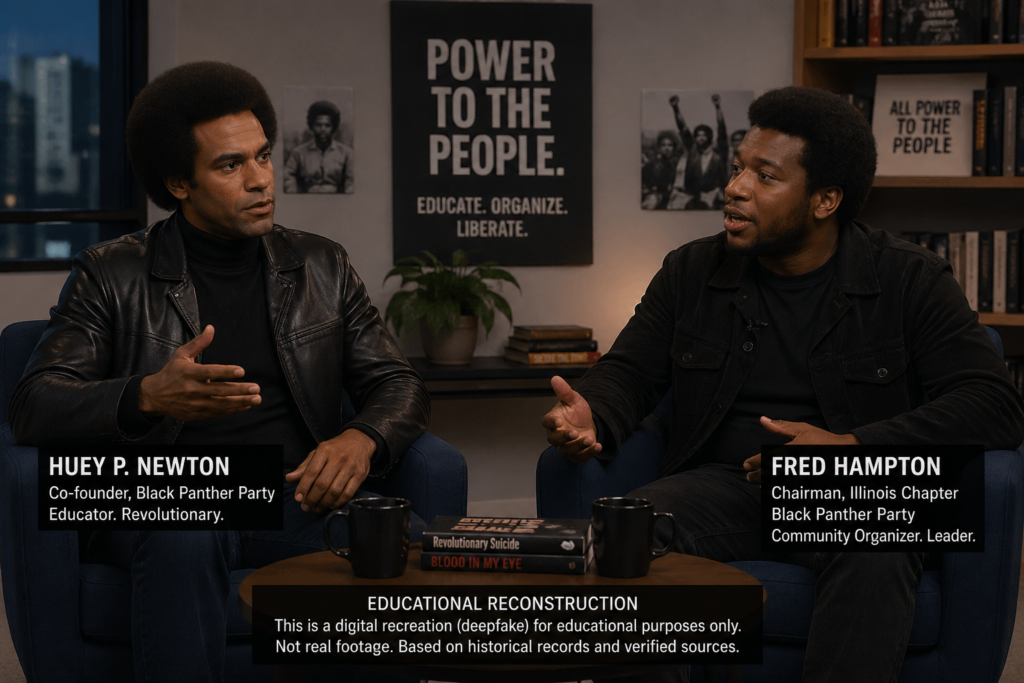
For this project, I propose a beneficial use of deepfakes: recreating historical figures like Huey P. Newton and Fred Hampton in a clearly labeled, transparent, educational format. The goal is not to trick viewers into believing they are watching real footage, but to bring history to life in a way that is accessible, engaging, and emotionally impactful, especially for younger audiences.
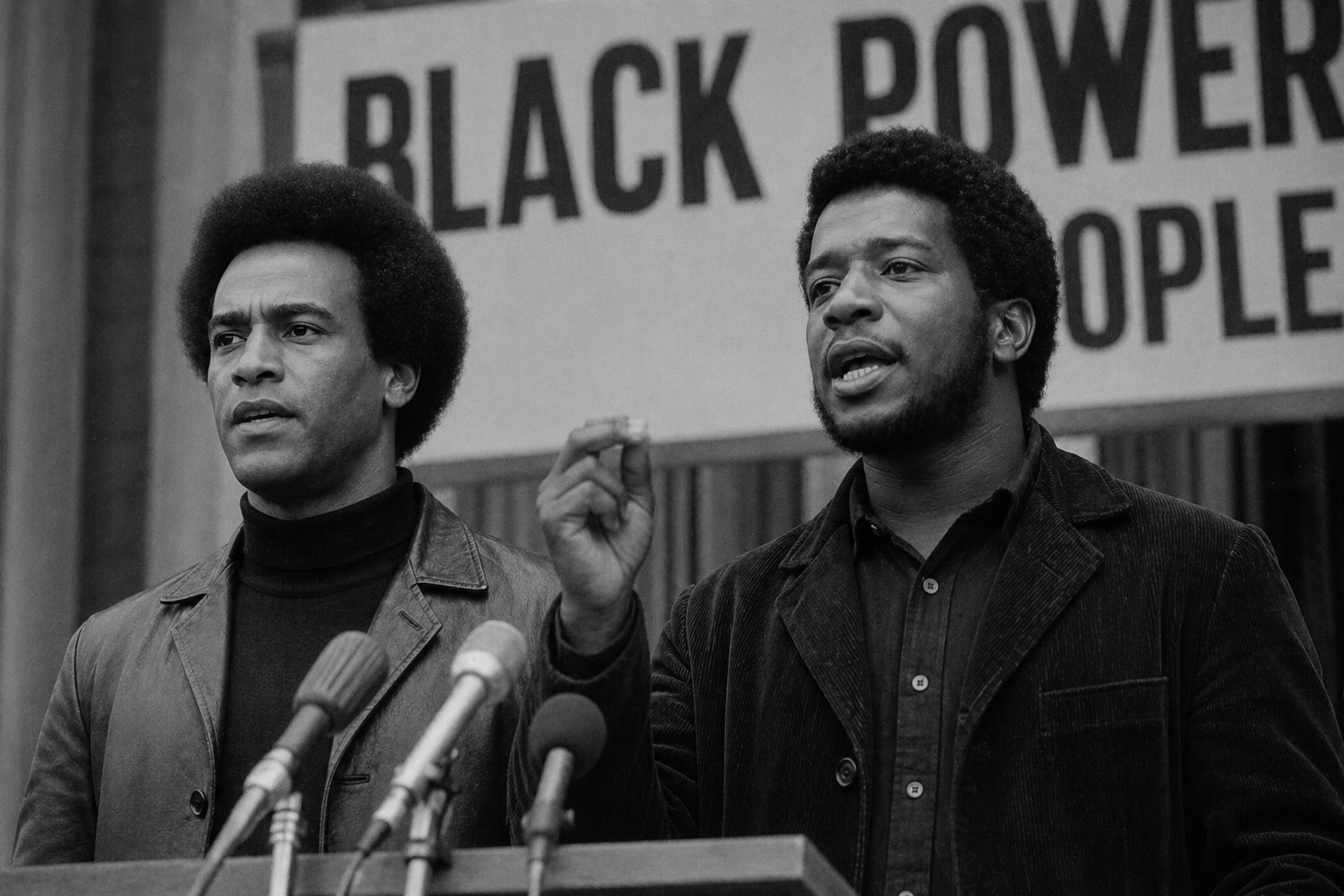
Huey P. Newton, co-founder of the Black Panther Party for Self Defense, and Fred Hampton, the charismatic chairman of the Illinois chapter, were central figures in the struggle for Black liberation in the late 1960s. Their words, ideas, and activism continue to resonate today.
They are two of my favorite heroes in the fight for Black Liberation and Black leftist thought and activism.
But for many people, they remain misunderstood and distant historical figures rather than living voices.
Using deepfake technology, we could recreate these figures delivering their actual speeches, drawn directly from verified historical texts and archives. For example, Newton’s writings on self-defense and community programs could be presented in a video format that allows viewers to “see” and “hear” him speak. Similarly, Hampton’s speeches on economic unity and coalition-building can be reconstructed to highlight his vision vividly and compellingly.
Importantly, this project would be built on transparency. Every video would include clear disclaimers stating that it is a digitally recreated performance based on historical records. The script would be sourced from credible materials such as the National Archives and educational foundations, ensuring accuracy and respect for the historical record.
This approach could be especially powerful in classrooms and digital media spaces, where attention spans are short and traditional text-based learning can struggle to connect. Seeing Newton and Hampton speak, even in a recreated form, could spark curiosity, empathy, and deeper engagement with history.
If done responsibly, deepfakes don’t have to be a threat. They can be a bridge, connecting past and present, and helping important voices continue to be heard.
A deepfake video of Huey P. Newton and Fred Hampton having a conversation based on speeches, writings, and other evidence could educate many people on the mission, impact, and legacy of the Black Panther Party.
In early 2025, social media platforms didn’t merely tweak their policies. They revealed something deeper about who actually controls the modern “public square.” Meta’s decision to eliminate independent fact-checkers in favor of “community notes,” framed as a return to free expression, corresponded with a broader political shift tied to the transition of power in Washington (the start of Trump’s second term in office). At the same time, users reported being automatically connected to new presidential accounts during the transition, highlighting the minute control individuals may actually have over their own digital environments.
These developments encourage us to contemplate the ownership of social media and how it is administered and regulated.
The benefits of centralized platforms such as Facebook, Instagram, and X are obvious. They allow for massive, instantaneous communication across geographic and social boundaries. These platforms function as digital “town squares” where people can exchange ideas quickly and at scale. Movements like Black Lives Matter, #MeToo, and even global protest movements have relied on these centralized networks to organize, mobilize, and amplify voices that might otherwise be marginalized.
But the drawbacks are just as significant and arguably more dangerous. These platforms are not public spaces in the traditional sense. They are privately owned, profit-driven environments. This makes the “public square” analogy misleading because these platforms are designed to maximize engagement and revenue. They are not necessarily environments of democratic deliberation.
That means outrage, misinformation, and polarization are not bugs. Instead, they are features of a media space in which these consequences lead to engagement and engagement leads to profits.
We’ve already seen the consequences. The Free Speech Project highlights how Facebook’s failure to control hate speech contributed to violence against the Rohingya in Myanmar. In the U.S., misinformation and extremist content have spread rapidly across platforms, influencing elections, public health decisions, and even acts of violence. At the same time, platforms have been accused of censorship, whether through banning users or limiting content tied to political conflicts.
So we’re stuck in a paradox. Too much moderation can be interpreted as censorship, but too little moderation can lead to societal harm.
This brings us to the question of whether we should depend on the goodwill of platform owners. The events of 2025 suggest we shouldn’t. Meta’s policy changes appear, at least in part, to be influenced by political pressure and shifting relationships with those in power. When billionaires and corporations control the infrastructure of public discourse, their incentives, whether political, financial, or personal, inevitably shape what we see and say.
Government intervention, however, is not a simple solution. The Supreme Court has heard arguments on whether social media companies are more like publishers with editorial rights or common carriers that must host all speech. Too much regulation risks violating the First Amendment and giving the state excessive control over speech. Too little regulation leaves private companies with unchecked power.
So what should society actually do?
First, we need to move away from the idea of a single, centralized “public square.” A more realistic and democratic approach can be a plurality of spaces, or “counterpublics,” where different communities can engage on their own terms. Decentralized platforms, such as Mastodon or other federated networks, offer one possible path forward by distributing power rather than concentrating it.
Second, structural reforms are necessary. This should include antitrust laws and policies to break up monopolistic control, provide stronger transparency requirements for algorithms, and allow users to move their data and communities across platforms. “Portability” shifts some of the power back to users rather than locking them into corporate ecosystems.
Third, platforms themselves need accountability mechanisms that go beyond PR-driven “community standards.” Community notes might sound democratic, but they can also be manipulated or ignored. Without enforceable standards, they risk becoming a substitute for responsibility rather than a solution.
On a personal level, I’ve started thinking more critically about where and how I engage online. I still use major platforms because, realistically, that’s where the audience is. But I’m increasingly aware that I’m operating in someone else’s space, under someone else’s rules.
That’s changed how I approach content, conversations, and even what I choose to amplify. I can feel myself changing with every online interaction from a courteous and nuanced person to a more radical and confrontational person. I’m also paying more attention to alternative platforms and independent media spaces that aren’t driven purely by algorithmic engagement.
At the end of the day, the biggest myth we need to let go of is that social media is a neutral public square. It never was. It’s a privately owned system that shapes public discourse in ways most users barely understand.
The real question isn’t just who owns the digital public square. Rather, it’s whether we’re willing to keep pretending it belongs to all of us.
I often use Wikipedia to start down rabbit holes on the internet. I type in a subject, skim the facts, maybe click a few rabbit-hole links. Then I move on with my life. Today, I transformed from a reader to a contributor when I added a short paragraph to the Wikipedia article about the 2025 St. Louis tornado. It may not sound dramatic, but for me it felt like participating in the public record.
The tornado was one of the most significant storms in recent St. Louis history. It carved through neighborhoods across the city, leaving destruction, heartbreak, and a long recovery process behind it that is still going on a year later. As I read the article, I noticed something missing: there was a discussion of the tornado’s path and damage, but there was no clear, centralized listing of the neighborhoods affected. This was a big deal to me.
My family and I were personally impacted by the tornado. My neighborhood caught the edge of it, and my house was moderately damaged. Around the corner from me, the damage was more severe. Yet, my neighborhood was missing from the paragraphs that followed the path of the tornado.
St. Louis is not just one generic place. It is a patchwork of communities, each with its own identity, history, and culture. Saying a tornado hit “St. Louis” is technically true, but incomplete. It matters whether it struck Fountain Park, The Ville, Greater Ville, Central West End, Penrose, O’Fallon, or North Riverfront. Those names tell residents something real. They tell us who was impacted, what communities are recovering, and where help may still be needed.
So I added a paragraph listing the neighborhoods damaged by the tornado: Wydown Skinker, Forest Park, Skinker-DeBaliviere, DeBaliviere Place, Central West End, West End, Visitation Park, Academy, Fountain Park, Lewis Place, Vandeventer, Hamilton Heights, Wells Goodfellow, Kingsway West, Kingsway East, Greater Ville, The Ville, Penrose, O’Fallon, Fairground Park, Bellefontaine Cemetery, O’Fallon Park, College Hill, North Riverfront, and Near North Riverfront
That may seem like a small edit, but small edits are often how knowledge improves. Wikipedia is built less by grand gestures and more by thousands of people noticing missing context and filling it in. A sentence here. A citation there. A correction to spelling. A date fixed. Piece by piece, the public archive gets stronger and the knowledge more complete and iron-clad.
What struck me most was how empowering the process felt. So much of modern life is passive. We scroll, consume, react, and complain. But editing Wikipedia is active. I was not just taking information. I was helping shape how information is presented to millions of people. That is a different feeling entirely. I felt… proud. I felt like I’ve accomplished something.
It may seem trivial, but to me it matters. Someone in another state may read that article and see a list of unfamiliar names. But to someone from St. Louis, those names mean schools, churches, corner stores, parks, family homes, and memories. They represent real people, not just map coordinates.
Plus, I felt my contribution was important because there is no adequate list of affected neighborhoods available, and people may need this for insurance purposes.
There is also something democratic about Wikipedia at its best. You do not need to be a celebrity, a professor, or a corporate media outlet to improve an article. If you have accurate information, good intent, and respect for standards, you can contribute.
My edit was modest. I did not rewrite history or uncover hidden facts. I simply made the article more complete and more human. But maybe that is enough.
Sometimes civic participation is voting. Sometimes it is volunteering. And sometimes it is adding a paragraph so the world remembers exactly which neighborhoods were hit.
One of the biggest lessons I keep learning while in Africa is something uncomfortable, but necessary to understand:
In a deeply twisted way, chattel slavery and apartheid in the Western world helped force Africans in the diaspora into a single racialized identity.
The “Black” identity became politically real and socially unavoidable in the Americas and much of Europe. But Africa itself did not historically evolve around that kind of singular identity. And if we are serious about understanding African history, slavery, and even Pan-Africanism, we have to start there.
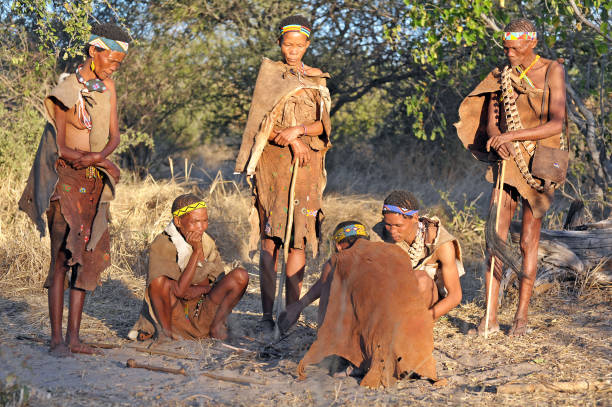
San bush people gather in the setting sun, Makgadikgadi Pans, Botswana, Southern Africa. The San are an ancient indigenous tribal people who inhabited much of southern Africa, and although few in number today remain proud of their culture, ancestry, and traditional ways of dress, customs, and behaviour that included subsistence hunting and foraging
Africa Is Not a Monolith
Africa is the most ethnically and genetically diverse continent on Earth. That matters more than most people realize.
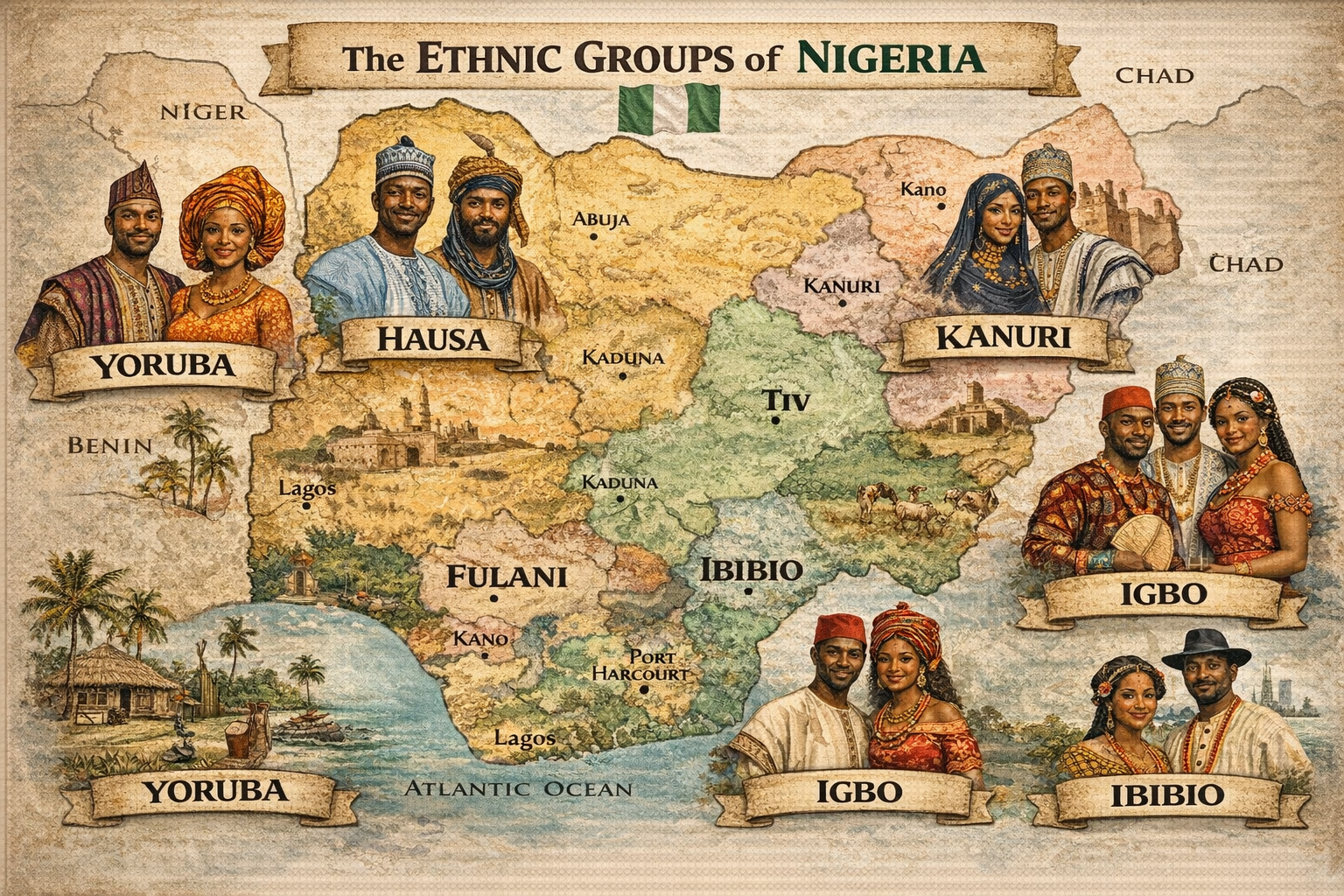
Many people outside the continent talk about “Africans” as if they are one people who are arbitrarily divided by colonial borders. But that is not really how Africa works. Across the continent, and even within individual countries, there exist many different ethnic groups with their own languages, cultures, religious traditions, histories, and political identities.
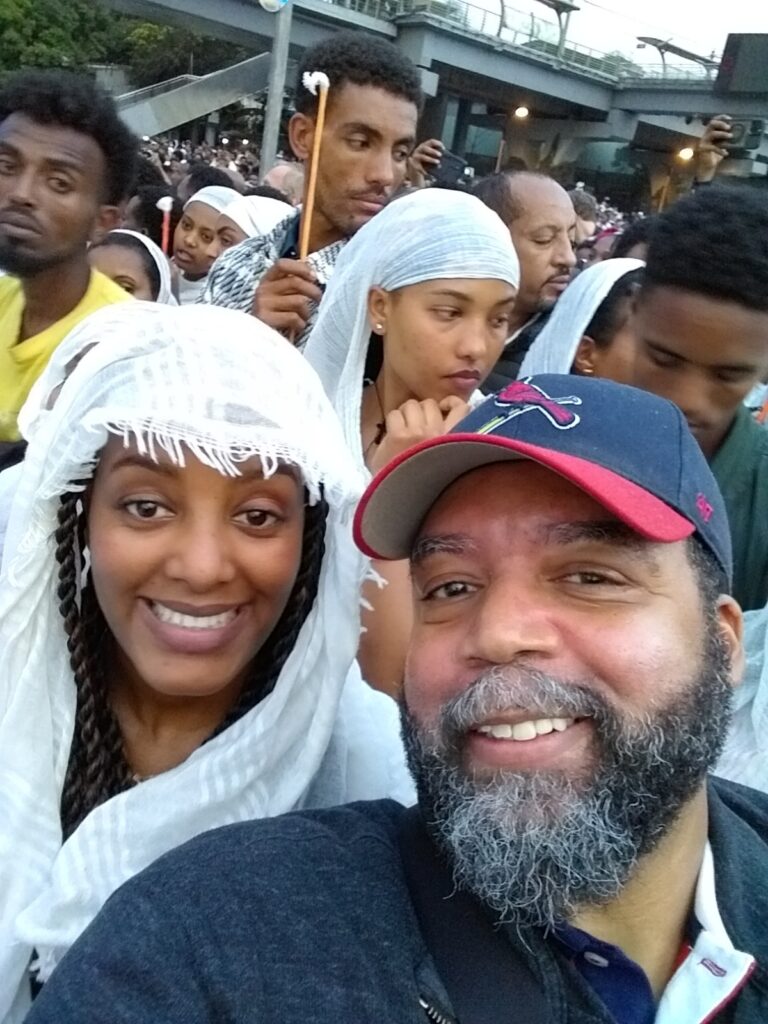
A picture of me and my fiancé at the Meskel festival in Addis Ababa, Ethiopia.
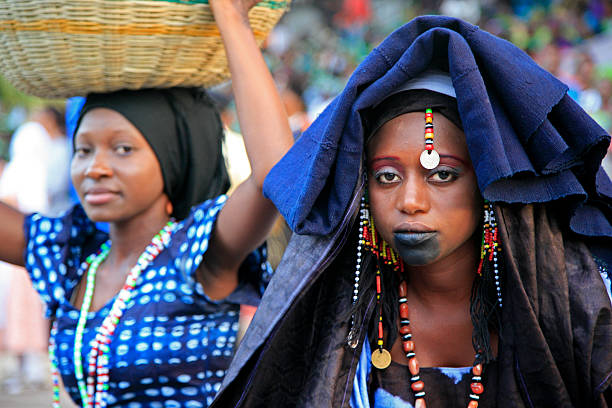
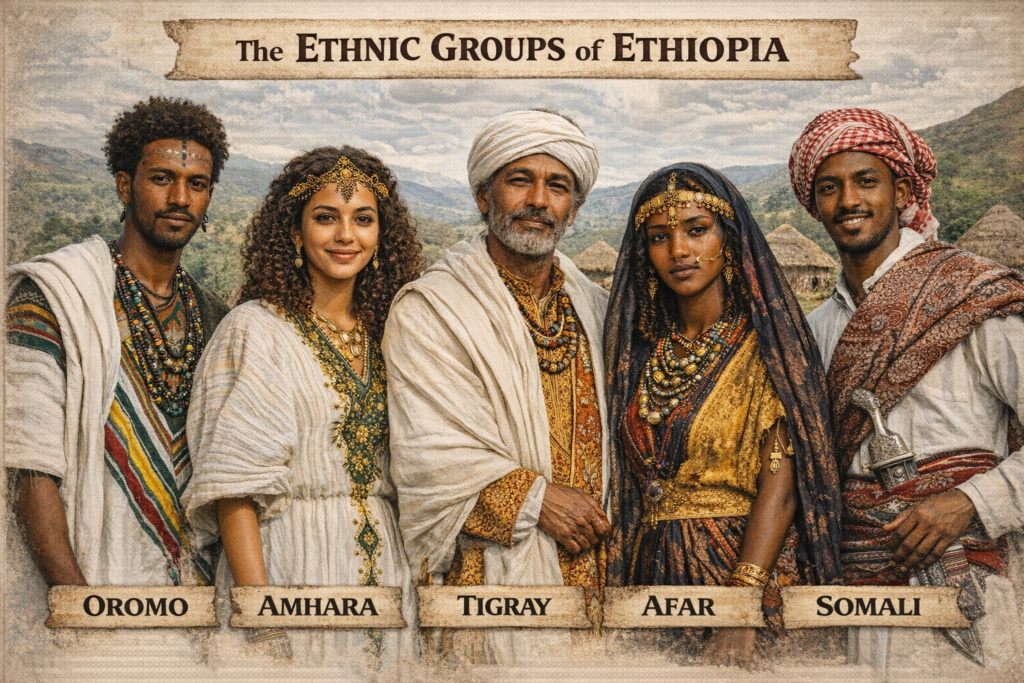
Take Ethiopia as an example. To outsiders, they are all simply “Ethiopian.” But within Ethiopia, people may identify first as Oromo, Tigray, Amhara, Afar, or something else entirely. Those identities are not cosmetic. They are rooted in deep histories, sometimes cooperation, sometimes rivalry, and sometimes conquest. These groups have their own languages, cultures, and histories that may seem similar to outsiders but are very distinct to Ethiopians themselves.
Some of the ethnicities in Ethiopia.
That is one reason why the question, “Why did Africans sell their own people into slavery?” is often framed misleadingly.
In many cases, they did not see the people they were selling as “their own people” in the way we mean that phrase today. That doesn’t excuse it morally, but it does make it historically legible.
A Weird Thought Experiment as a Comparison
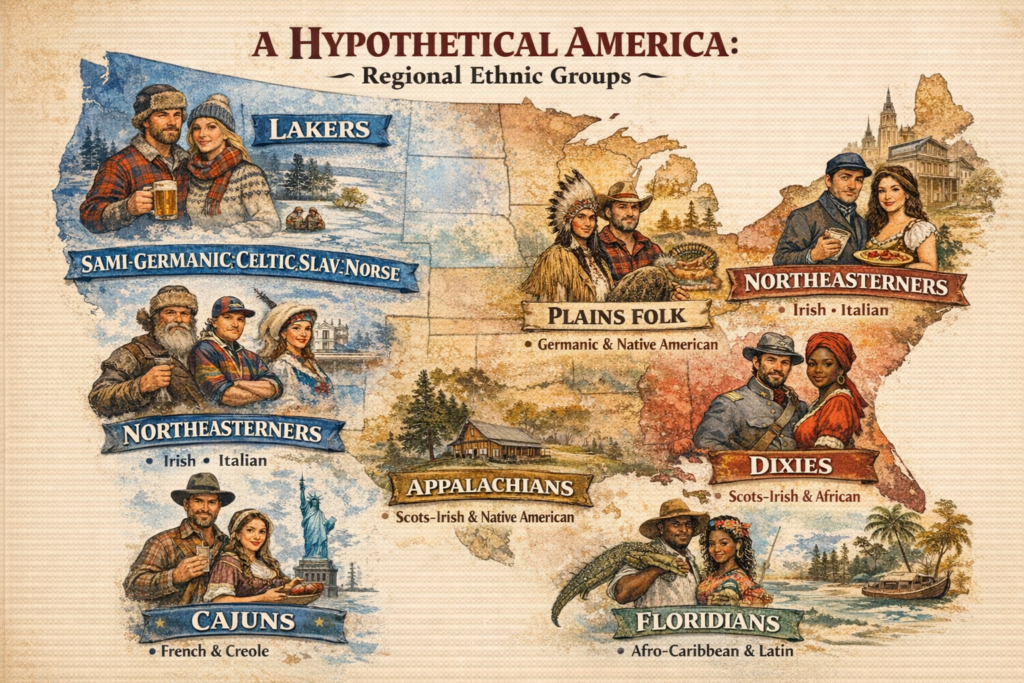
A relatively small number of the hypothetical American ethnicities in my thought experiment. These are the different people I imagined if the current makeup of the United States were allowed to develop separately for a long period of time.
Let’s imagine that the United States is much older than it is. Let’s, in turn, imagine that each region was able to evolve in some isolation for a long time. The Californians will have a different culture and possibly a different language from the Cajuns, the Appalachians, the Lakers to the North, the Dixies, the Floridians, the Plains Folk, the Northeasterners, etc.
Even right now, with all of us identifying as “American”, except with a hyphenated race identifying prefix, we are different people regionally, with different political ideologies.
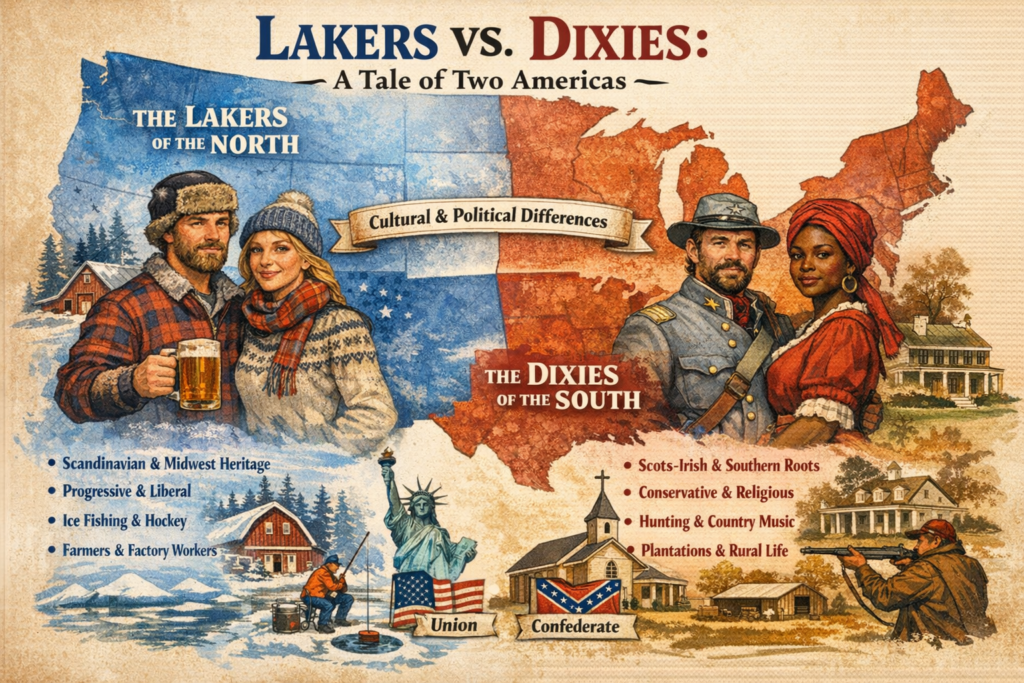
The Dixies (the people of the Deep South) have ALWAYS been very conservative, religious, and loyal to hierarchical systems, whether it was ruled by Republicans, Democrats, Whigs, Democratic-Republicans, Federalists, Loyalists, or whatever party or faction.
This is different than the Lakers of the eastern parts of the upper Midwest (from Michigan to Minnesota). The Lakers have always been more liberal, regardless of their political party allegiance.
Lakers and Dixies are different.
The Lakers and the Dixies are different people in this thought experiment, but their attitudes and sentiments come from reality.
Dixies are the descendants of Scots, Irish, Africans, and Native Americans. Lakers are the descendants of Scandinavians, the French, and Native Americans.
Please keep in mind that this is a weird thought experiment to explain African sentiment.
If the Dixies and Lakers were separated by up to 300K years and have evolved their own languages and customs, then why should we expect them to think of each other as “one people?” If the Dixies and Lakers are different now after only 250 years. Imagine how different they would be after 500 years, 1000 years, 10K years, 50K years, 70K years, 100K years, 150K years, and 300K years. And naturally, the Lakers and Dixies will branch into smaller subgroups and so forth.
A Better Comparison
A better comparison would be asking:
Why did the Greeks enslave the Macedonians?
Why did Spartans dominate Athenians?
Why did rival European peoples conquer one another for centuries?
The answer is simple: they did not see themselves as one people.
That is much closer to how many African societies historically understood themselves. Ethnicity, kinship, language, and political allegiance mattered more than some broad racial solidarity that would only become more meaningful later under European domination.
What Slavery and White Supremacy Changed
For Black people in the diaspora, however, the story was very different.
In the United States, especially, people of African descent were stripped of their original ethnic identities and grouped into a single racial caste. Whether your ancestors were Igbo, Wolof, Mende, Akan, Kongo, or something else became socially irrelevant in a white supremacist society that only saw one category: Black.
That process was violent, dehumanizing, and catastrophic.
But it also produced a single peoplehood forged through oppression. This is something new.
Black Americans today may have major internal cultural differences, such as Gullah, Creole, Black Midwesterners, Black Southerners, Black Northeasterners, and so on. However, we are still socially treated as one people. In that sense, our race had become our ethnicity and historical/cultural marker.
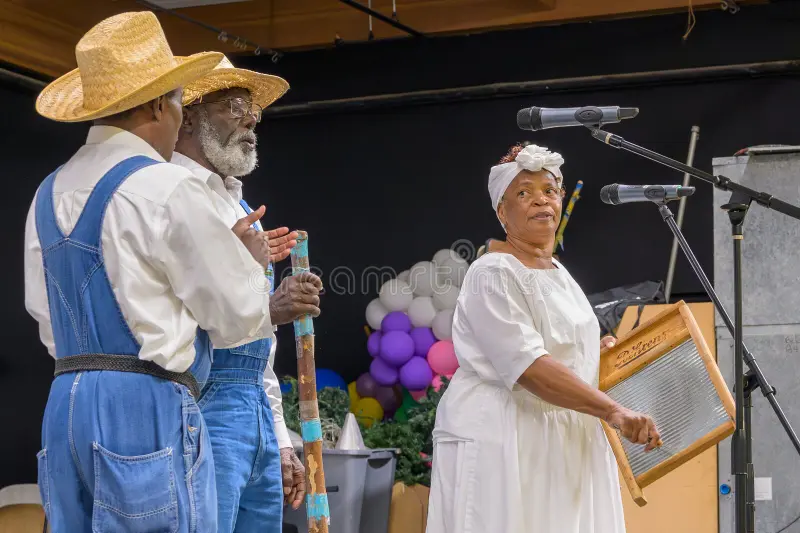
The Gullah people.
Africa and the Diaspora Are Related, But Not the Same
That is part of what makes the relationship between continental Africans and the diaspora so complicated.
We are connected by ancestry, by history, and by racialization in a white-dominated world. But we are not simply interchangeable. Africans are not automatically “us,” and we are not automatically “them,” at least not in a cultural or ethnic sense.
That doesn’t mean the connection is fake. It means the connection has to be understood honestly.
This is the same for Black Americans, Black Canadians, Black Jamaicans, Afro-Latinos, and other Diasporans. We’ve been separated long enough to have different cultures, different linguistic rules, and different sets of values.
And that honesty matters because it opens the door to a more mature version of Pan-Africanism based not on fantasy, but on political solidarity.
The Future of Pan-Africanism
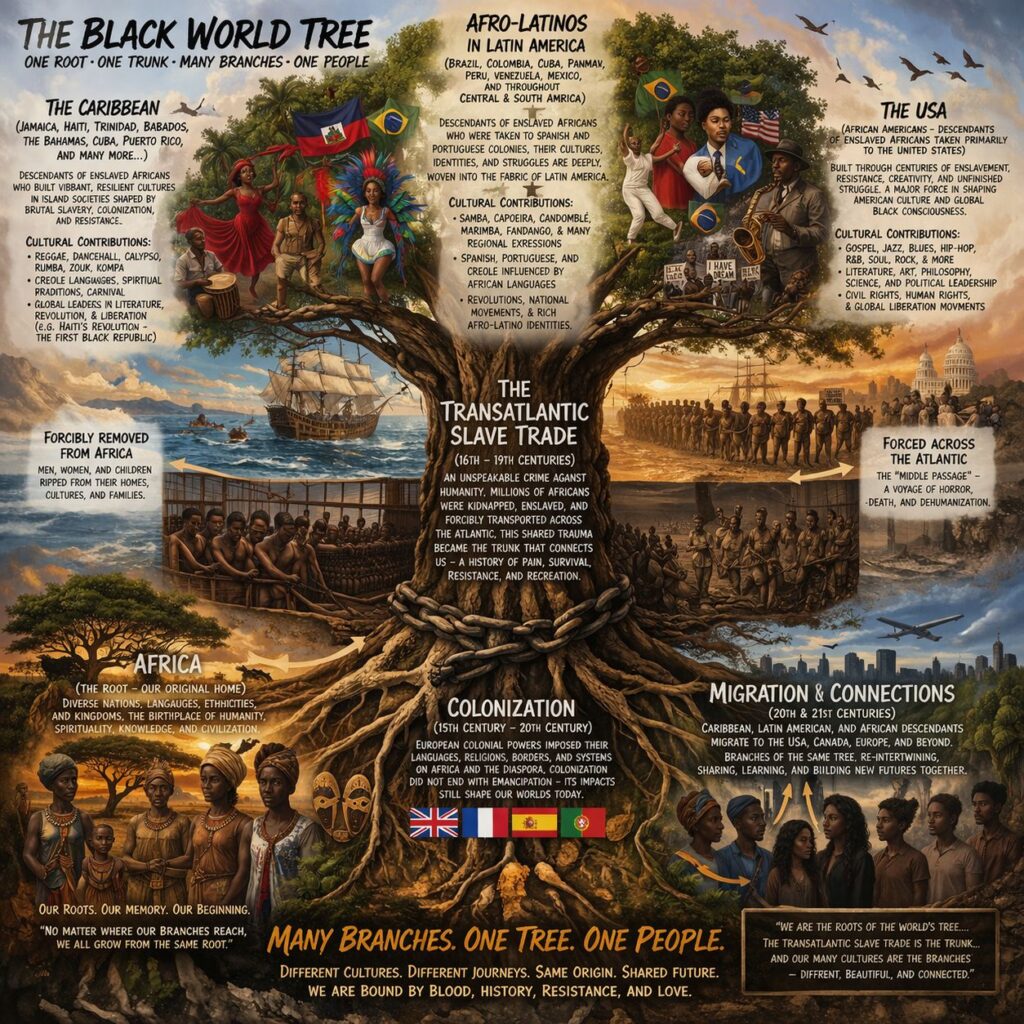
The Black World Tree by Dike Obioma Matthew. He had permitted me to use this image on my blog. In this, he makes the Trans-Atlantic Slave Trade the Trunk of the tree uniting the people of many different roots before they are branched off.
The encouraging thing is that many Africans and people across the diaspora are increasingly embracing a broader consciousness.
More and more people are beginning to see that, whatever their ethnic or national differences, they share a common struggle against White supremacy, neocolonialism, extraction, and domination.
In that sense, Pan-Africanism is not about pretending all Black people are the same. We are not. But neither are White people nor Asians.
It is about recognizing that we do not have to be the same to fight for one another.
That is the challenge and the promise.
Africa does not need to dominate the world. Neither does the diaspora.
The goal is about something much more meaningful than some bullshit race to the top.
Our goal is about self-determination, dignity, cooperation, and the power to shape our own destiny without the aid, supervision, or permission of powerful developed countries run by those of European or Asian descent.
In 2000, Spike Lee was already a household name and a well-respected writer and director. He had already directed 12 movies by this time. These were She’s Gotta Have It (1986), School Daze (1988), Do the Right Thing (1989), Mo’ Better Blues (1990), Jungle Fever (1991), Malcolm X (1992), Crooklyn (1994), Clockers(1995), Girl 6 (1996), Get on the Bus (1996), He Got Game (1998), and Summer of Sam (1999). Although the relative box office success of his movies from the late-1980s through the mid-1990s was already waning from Crooklyn onward during this time, his movies were still critically acclaimed, and his artsy filming and unapologetic and unafraid attitude on tackling subject matters that many other writers and directors were afraid to tackle, gave the studios and Hollywood as a whole, artistic legitimacy.
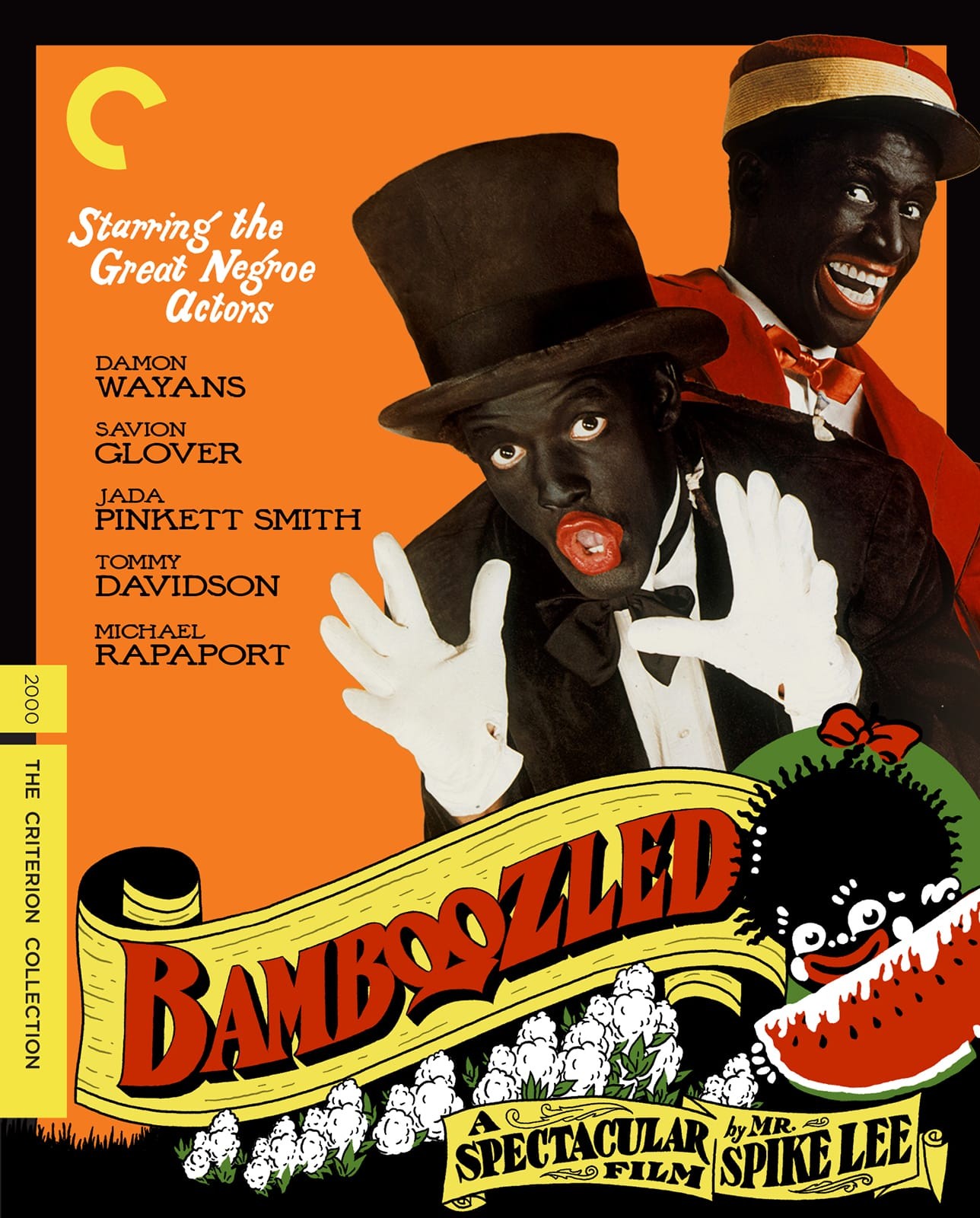
Spike Lee’s 13th movie, Bamboozled, a satirical comedy movie about the embedded racism of the entertainment media (particularly in television) along with society, did poorly at the box office and confused and even angered many people who initially watched it. Some critics, when it was released in 2000, thought that it was too shockingly heavy-headed. Roger Ebert thought that the use of blackface was too over-the-top and made the movie and its jokes more shocking than they were funny. I think that it was because of the initial shock of the use of blackface and the imitation of minstrel shows of a past in entertainment and media that is still very hurtful to black people and an embarrassment for whites, most audiences elected not to watch the movie at all.
A funny thing happens with time, though. The movies that few people wanted to watch in theaters develop a cult following later. These movies are lauded and appreciated by those who understand and appreciate the messages, the humor, and the artistic decisions that made these movies the bane of audiences and critics when they were initially released. This is what happened with movies like John Carpenter’s The Thing (1982). I will admit that although I barely knew anything about the movie before and during its theatrical release, I would often pass it by when trying to rent movies at Blockbuster. The cover art with the old school minstrel caricatures made the movie repulsive to me initially. It wasn’t until years later, seeing it on a streaming service, that I watched the movie after buzz about it on the internet, particularly on social media. I suspect that many people watched the movie via streaming services like Netflix. After giving the movie a chance, I could see the message of Spike Lee’s reimagining of old school, in-your-face minstrel shows, and parallel that with the more contemporary stereotypical media depictions and capitalizing on them.
A Brief History of Minstrel Shows
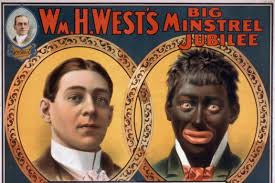
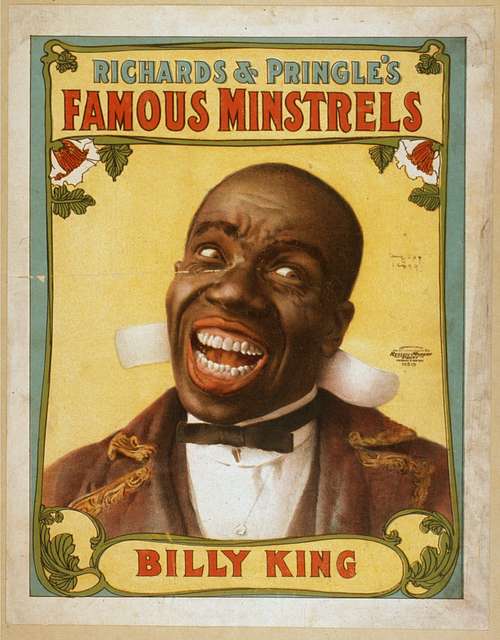
Example of blackface in minstrel shows.Even black performers participated in minstrel shows. Sometimes, it was the only work that they can find as performers.
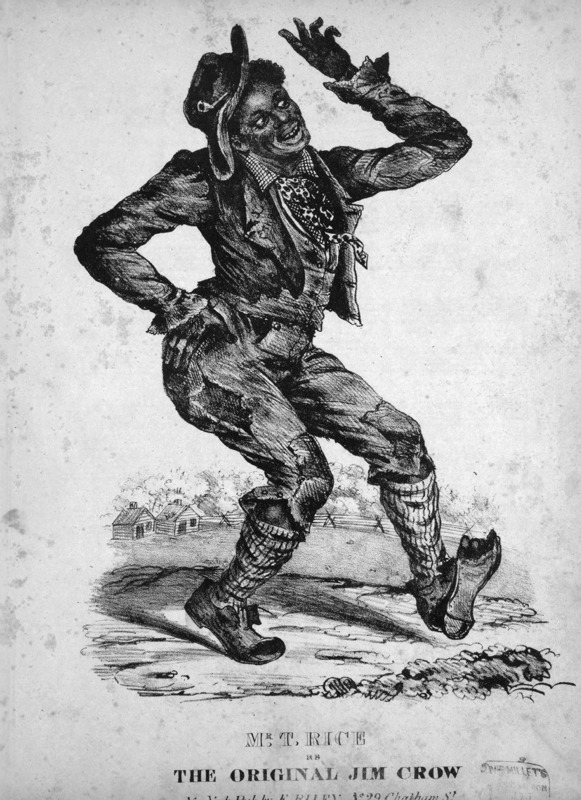
The minstrel show tradition officially began with the song and dance performance of Thomas Dartmouth “Daddy” Rice, who performed as a stereotypical character, Jim Crow, in 1828 as part of a variety show. The song “Jump Jim Crow” would become a national sensation, especially in the Northern United States, where minstrelsy would become more popular than in the Southern United States. Thomas Rice would perform the character in blackface. Jim Crow was a character that Rice created who was a black, physically disabled stablehand who walked with a limp and would do a shuffling, hopping dance.
Poster for Jim Crow
The character became very popular and spawned many more white people in blackface performing stereotypes of dim-witted, lazy, and content slaves. Increasingly, more variety shows included blackface performances. By the 1840s, shows started to be entirely in blackface. For the next five decades, minstrel shows would be the most popular form of entertainment in the United States. The Jim Crow character’s name would later be used to categorize laws that were meant to keep black people in subservient positions, as second-class citizens, and as victims of an American form of apartheid after slavery ended in 1965.
The “Disappearance” of the Minstrel Show
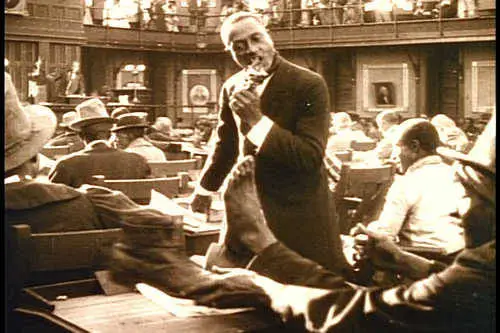
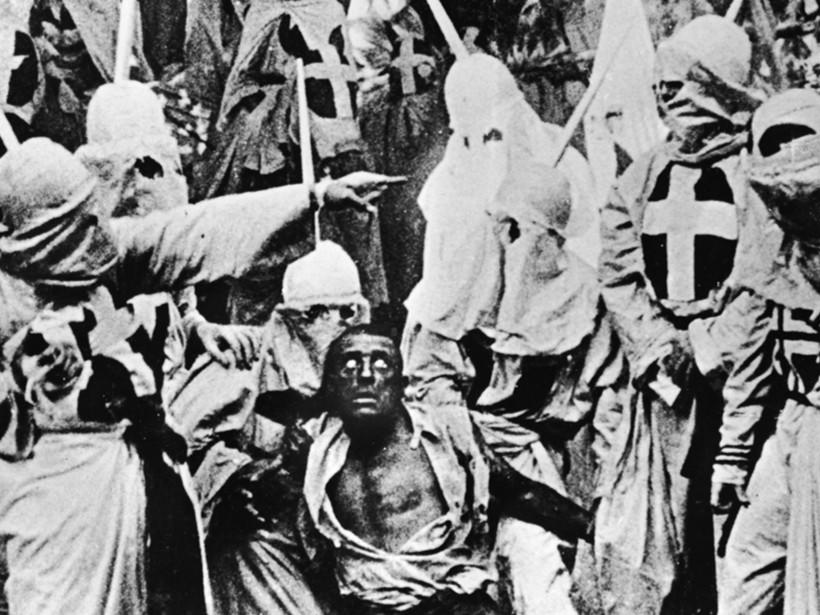
It can be argued that minstrelsy didn’t completely go away after the mid-20th Century when it seemed to disappear (around 1960). Stage shows weren’t as popular as they used to be as movies and television became popular media in which people mostly got their entertainment. In the beginning of the 20th Century and even with the new media, aspects of the minstrel show remained. D. W. Griffith’s The Birth of a Nation (1915) employed many of the tropes used in the minstrel shows on the stage. It had white actors in blackface and actual black people performing stereotypical roles. Its popularity and message resurrected a Ku Klux Klan (KKK) that was dead over 40 years before this and would make it one of the most popular political organizations of the 1920s and 1930s, with members of both major political parties having membership and being influenced by the terroristic organization.
The Birth of a Nation (1915) showed the majority black state governmental bodies as disorganized, undignified, and corrupt, and the black people in them as uncivilized.A white man in blackface, who acted as one of the antagonists in The Birth of a Nation (1915), is seen being “brought to justice” (about to be lynched) by the Klansmen who were the “heroes” of this movie.
However, a new stereotype would arise that would be more dangerous than that of the childlike buffoonish “coons” and/or “sambos” of earlier minstrelsy. Starting in literature, the “black brute” trope would appear. This trope painted black men as animalistic predators who stalked white women to rape. Whereas the “sambo” stereotype was used to justify the perpetual enslavement of black people, the “black brute” stereotype was used to justify the systemic murder and second-class citizenship of black people. It is no accident that these stereotypes became popular during the time period in the United States in which anti-black lynchings were the most active (1880s – 1920s). This stereotype would not go away. Instead, it will later dominate other negative stereotypes of black men.
The classic coon, mammy, and pickaninny tropes employed by minstrel shows would be seen in early movies and shorts. The Three Stooges would use them in scenes with black domestic or service workers. The black characters in the Our Gang (The Little Rascals) series were modeled after the pickaninnies of minstrel shows. Early cartoon characters like Mickey Mouse, Bugs Bunny and Felix the Cat were modeled after minstrel shows and would even sing minstrel songs in the shorts. Imitation of Life (1934) was full of the “mammy” character, Delilah Johnson, saying the most cringe-worthy anti-black things while pledging her undying loyalty to the white character, Beatrice Pullman. The biggest black stars of the early 20th Century, after movies had sound, were William (Willie) “Sleep ‘n’ Eat” Best and Lincoln Theodore Monroe Andrew “Stepin’ Fetchit” Perry.
More dignified and human black characters in mainstream Hollywood would come in the late 1940s. But minstrel characters would persist. In 1951, The Amos ‘n’ Andy Show premiered. The show was a live-action television sitcom based on the minstrel radio show by the same name. The show was a television hit and lasted all the way until 1960. This is the official end of the minstrel show.
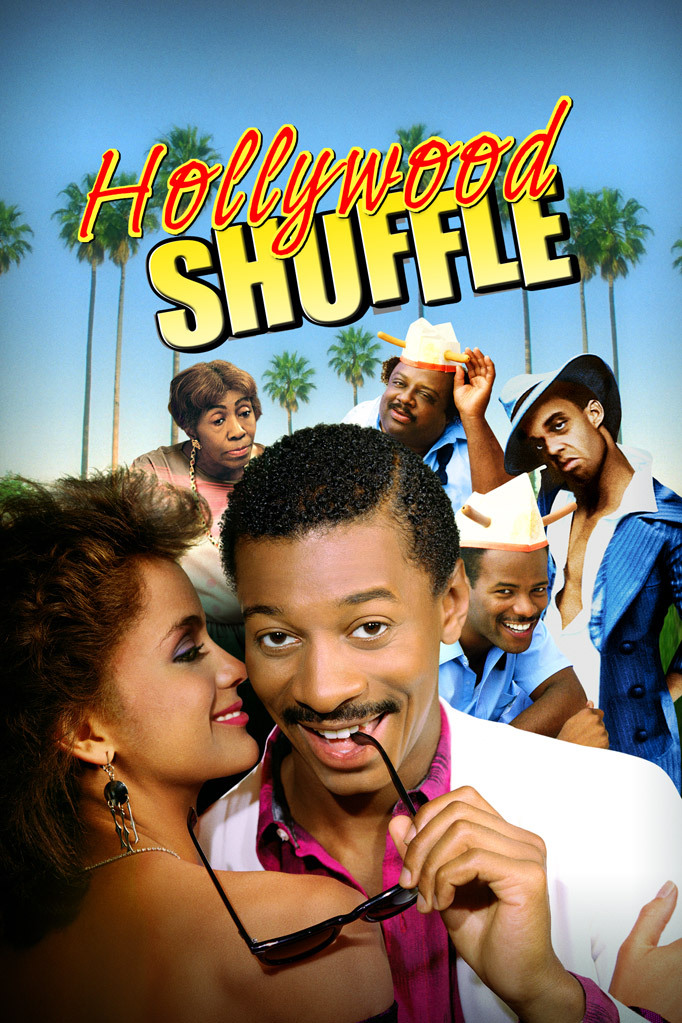
However, many of the most harmful aspects of the minstrel show would survive to this day through 1970s blaxploitation films, the popularity of James “JJ” Evans Jr. in the show Good Times, gangsta rap music and videos, many Tyler Perry movies, and various other popular forms of American entertainment. In fact, it is the persistence of these tropes and stereotypes in popular media, especially movies, that spawned Robert Townsend’s first movie, Hollywood Shuffle (1987). Hollywood Shuffle is a spiritual prequel to Bamboozled in many ways.
Movie poster for Hollywood Shuffle (1987)
A reimagined alternative to a current social condition
In Bamboozled, Spike Lee imagines a television network in which minstrelsy wasn’t just hidden and denied but accepted and made into a hit television show. It was the product of irresponsible capitalism that cares more about profits and the illusion of diversity than any sense of responsibility towards the community. The black caricatures are packaged and presented to mixed audiences as ironic or edgy humor while corporate executives monetize disturbingly grotesque racial spectacle, and black writers, directors, actors, producers, and crew are financially and professionally trapped in a system that greatly rewards self-exploitation. In this imagining, media is a direct descendant of the minstrel tradition and never broke from it. Society is not in a post-racist era; we are just in a more polished one.
Escaping this unfortunate reality requires systemic changes. The problems in Bamboozled are not due to changes in technology, nor will they be fixed with technology. Instead, what must be done is that the power structure must change. Modern art is profit-driven and controlled by capitalistic corporations. Capitalism rewards spectacle over dignity. This is what you experience when watching daytime talk shows featuring lie detectors and paternity tests or when listening to Sexy Redd songs. The ratings, box office receipts, album sales, and other metrics justify any moral compromise by the corporation. And most of the executives who control the distribution of art are white, so they have no sense of responsibility towards the black community, especially the poor and working-class black community.
In the movie, CNS television network is run by white people who have final say in the content that they put on air. The audiences love Mantan: The New Millennium Minstrel Show and CNS makes sure to protect itself from any charges of racism by making sure that that everyone from the cast to the crew is black. There is a scene in the movie in which Myrna Goldfarb the PR Consultant in CNS, a white woman, gives the “Mantan Manifesto” to shield the company from any scrutiny, criticism or charges of racism. It is as follows:
“Gainfully employ African Americans in front of and behind the camera.”
“Let the audience decide.”
“Who are these would-be ‘cultural police’?”
“Who determines what is Black? We are not saying anything about the entire African American community.”
“This is simply satire.”
“If they don’t like it, ‘F-‘em!’ ”
“And lastly, always smile, wear kente cloth, reference Dr. King, and remember, this show was created by a non-threatening Black male.”
The cynical way in which heavy and much-needed conversations about racist portrayals, racism, and responsibility, while hiding behind the positive public relations of black employment and opportunity, makes this manifesto even more insidious.
Spike Lee suggests that the things to do to escape this condition are to have changes in media ownership and governance. . This is not explicitly articulated; rather, it is conveyed implicitly. The issue was that everyone over Pierre Delacroix (whose real name is Peerless Dothan and the main protagonist of the movie) is white and feels no connection or responsibility towards the black audience that they are trying to capture and build on. They didn’t care if the show helped or harmed the community. The only thing they cared about was the ratings. However, simply putting black faces in seats of power in a company will not lead to any fundamental and/or significant changes if the overall economic model rewards racial exploitation. So, a big part of reform is to go with a model that doesn’t. Also, there would have to be reform when it comes to cultural gatekeeping.
The Legacy of Minstrelsy Lives On
Bamboozled is more appreciated today than it was when it was first released over a quarter of a century ago. The film is seen today as less absurd and more prophetic in the same vein as Network (1976). In 2023, the movie was selected for preservation in the Library of Congress National Film Registry. Although the film used the over-the-top idea of a modern-day minstrel show fashioned in the same manner as minstrel shows of the past, the message of the movie resonates more now than it did when it was initially released.
Online, content is measured by engagement metrics that reward outrage and caricature, and viral culture spreads and monetizes stereotypes. Black “trauma porn” is still very popular, and black pain and spectacle still generate profit. Today, many black content creators upload videos of themselves engaging in “coonery [and] buffoonery” (to quote Spike Lee himself) for clicks. Many of them are either being anti-black contrarians or engaging in hyper-performative racialized personas for algorithmic gain, mostly for the popularity and approval of non-black audiences. Both online and on television, corporate brands use black culture for capitalistic endeavors while avoiding structural change. Diversity is treated more like a public relations project and less like a way to redistribute power and ownership in the media.
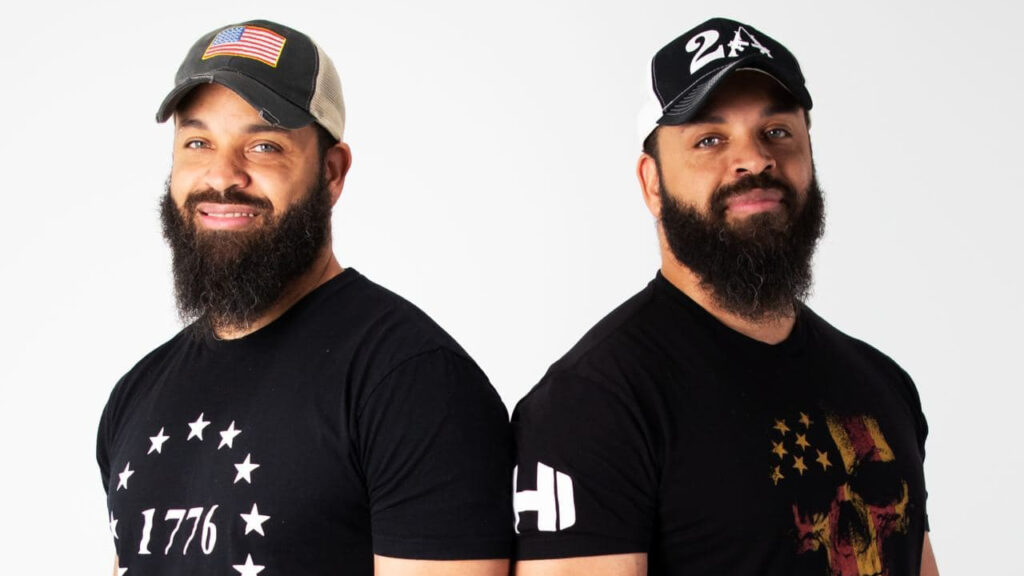
The Hodge Twins started off on YouTube as fitness influencers. After a while, they were doing comedic critiques on videos, sometimes being edgy and offensive while doing it. They slowly morphed into anti-black conservative panderers to maintain an audience online.
Bamboozled‘s extreme minstrel imagery is greatly exaggerated. But to me, that is the point. In reality, the minstrelsy is much more subtle and thus, deniable. Putting those images in one’s face makes one confront the ugly truths about the treatment of black people and culture in media. We no longer see people in literal blackface (at least most of the time) performing exaggerated and dehumanizing stereotypes. But we do see a constant parade of harmful “marketable stereotypes” which, in my opinion, aren’t too much better. Bamboozled is actually less of a reimagined condition and more of an amplified mirror held up to society, including black people themselves.
Conclusion
Spike Lee’s Bamboozled shows us that racial exploitation is not a glitch in a capitalistic society built on racism. Instead, it is the feature. What was thought of as grotesquely absurd satire is now being appreciated and studied. There are video essays about this movie by young content creators online. In true Spike Lee fashion, no one in this movie is immune from criticism. Even the somewhat “conscious” but hypocritical Mau Mau, who are miseducated “hoteps” (pro-black people who are usually socially conservative while embracing pseudo-intellectualism) that constantly indulge themselves in alcohol and marijuana while having trouble making an articulate statement, catch strays in this movie, y’know what I mean? The modern media ecosystem proves that this movie wasn’t a fantasy. Rather, it was a diagnosis of our society in the form of dark satirical comedy.
I am a leftist. I am an unapologetic leftist. I am an unapologetic pan-African, pro-black leftist. I am an unapologetic pan-African, pro-black leftist who is critical of everyone, very outspoken, speaks up for marginalized groups, and is an atheist. Because of this, I have many detractors on my social media. As of today, I have nearly 42,500 followers on my Facebook page and over 3000 on my TikTok. My reach is relatively high. This translates to more people who don’t like me or my posts engaging in them. With that engagement comes some… *ahem*… “colorful” comments.
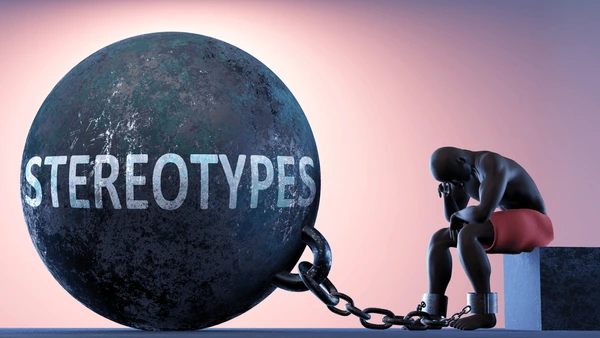
Among those “colorful” comments are those made usually by angry conservative white men who attack me and my character based on anti-black family stereotypes. To them, I am perpetually unemployed due to laziness. I am chronically and happily dependent on government welfare programs to live. I am either a high school dropout, a GED recipient, a high school graduate who was in the lower rankings in his class, or a man who didn’t earn his spot in college but was just given the spot to fill a quota. I don’t believe in marriage, have several “baby mamas,” and don’t take care of my children. This doesn’t count the other stereotypes attached to black men that I get regularly. Just yesterday, a friend of mine called me. he was lamenting about the stereotypes that he has to endure in his comments section as a black man.
Stereotypes About the Black Family
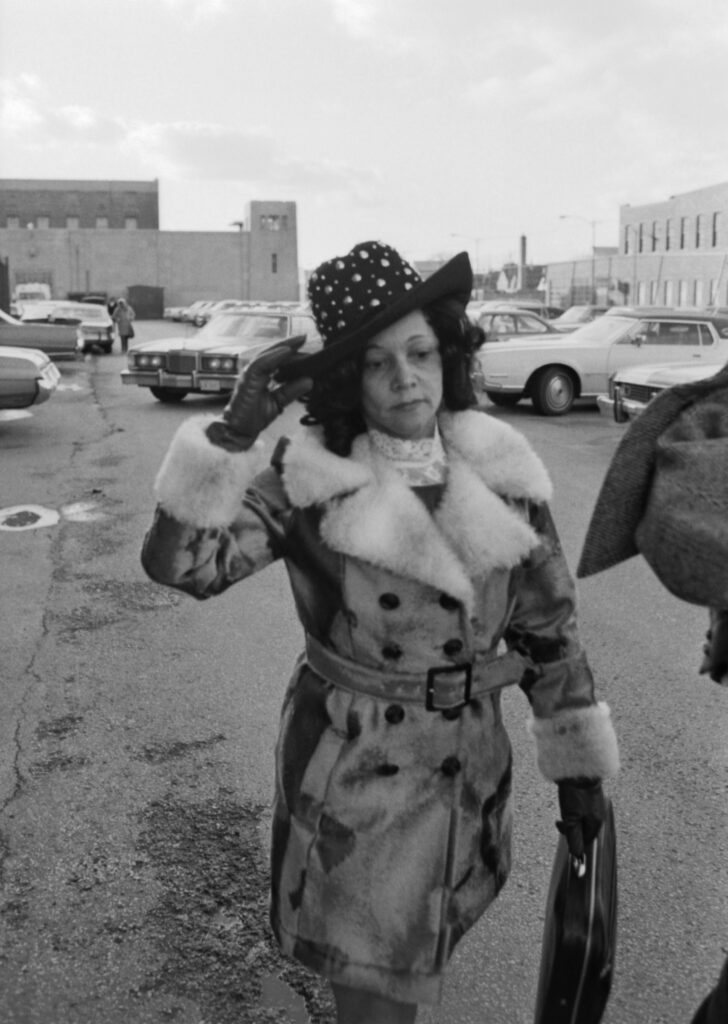
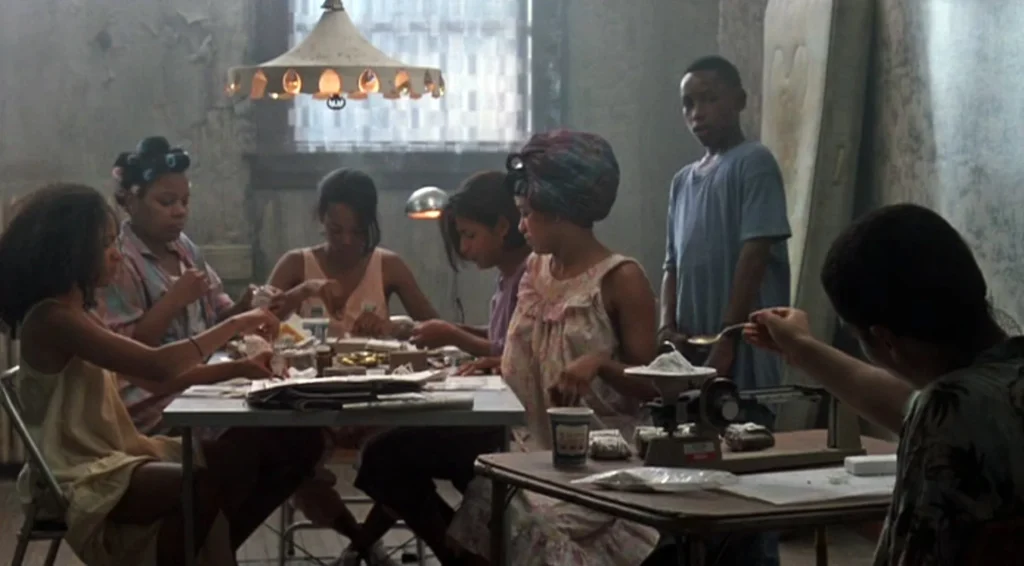
Linda Taylor was a mixed-race woman con artist who became the mascot for “welfare queens” during the 1980s. Then President Ronald Reagan used her to forward the stereotype about black women using social welfare programs to live a lavish life.Scene in the movie “Fresh” in which the very young protagonist, Fresh, is running a drug house.
The media often portrays black families in a negative light. Sometimes news programs and movies paint black mothers as unreasonably belligerent “welfare queens” who are prone to violent outbursts, constantly emasculate the men in their lives instead of supporting them (a notion that is shared by many black men in so-called “red-pill content, also known as “the manosphere“), and have multiple “baby-daddies” from several failed relationships that they are culpable of due to bad attitudes or promiscuity. Other times, black mothers are physically large, undesired, asexual women who only live to be caretakers of the people around them, especially white families. Black children are often depicted as coming from impoverished and dysfunctional homes. In these portrayals, they are often involved in criminal activity because of this. Even in cases where black children are “humanized,” they are seen participating in illegal endeavors to assume the responsibility that their absentee fathers and their neglectful mothers couldn’t handle. Thus, they are aged out of their innocence, even in television programs and movies. Black fathers are shown as mostly broke and lazy absentee fathers who love to make babies but don’t take care of them. We are seen as unintelligent, criminal, substance-abusing monsters who beat our wives and children harshly and mercilessly.
The Reality About Black Fathers
Three generations of black males together.
In reality, black fathers are the most active fathers with our children out of every other racial group, despite the conflations of black legitimacy with black male parental involvement by people like the late Charlie Kirk and others who used to paint negative stereotypes about black fathers. Most black men that I know personally are involved in the lives of their children. Many of them have at least partial custody of their children, even though they are not married to the child’s mother. In fact, many of the black men who engage in criminal behavior, like selling drugs, often cite caring for or providing for their children as a reason for it.
In the song “Foe Life” by West Coast hip-hop artist Mack 10, he raps:
“Cause a nigga gotta eat, fuck the world Let the bullets hurl and feed my baby girl”
In the beginning of “Juicy”, rapper Notorious B.I.G. said,
“Yeah, this album is dedicated to all the teachers that told me I’d never amount to nothin’, to all the people that lived above the buildings that I was hustlin’ in front of [and] called the police on me when I was just tryin’ to make some money to feed my daughter (it’s all good), and all the niggas in the struggle. You know what I’m sayin’? It’s all good, baby baby!”
How Does This Relate to Me?
However, I never been involved in the sale or distribution of illegal drugs. I’ve been working since I was 10 years old and had my first paycheck job at the age of 13. I came from a two-parent home in which my father was an entrepreneur. I married a woman at the age of 24, and we had three children together. Neither of us came into the marriage with children. We were married for 5 years before our first child was born. Our marriage ended after 22 years, and I became the primary parent to my three children, taking care of their daily needs. I was a paid paramedic /firefighter for years, was on the Dean’s List in college, and was an active PTO dad for all my children. I rarely drink or smoke marijuana.
However, let those whose only contact with black folks is in the evening news tell it, and I am some embodiment of negative black stereotypes. These notions are not benign. They have real-life consequences. Such negative stereotypes have gotten me harassed by police when I was younger, and perhaps closed the door on opportunities for me.
Local news stories and the utterances of famous talking heads in legacy media and online push these narratives. What is disturbing is that many people cannot see the racist undertones attached to the “harmless” facts and figures that are constantly thrown out to the public, yet rarely scrutinized.
I receive a few emails almost daily about failed login attempts to this very blog that wasn’t by me. After investigating the login attempts, I found that they all originated from a couple of countries in South Asia. I had my Netflix and Disney login stolen while traveling overseas. An unknown person withdrew money from my account for travel and a pizza party.
I used to think that I had nothing to hide and that my information was secure behind devices and passwords. But I was ignorant and naive to the many dangers that exist on the internet and how many people are willing to not only steal your money and identity but also steal your creative property and your credit. Privacy is about limiting harm and not about hiding crimes or shameful acts.
Identity theft remains the primary concern, in my opinion. In 2023 alone, around 1.1 million Americans had their identities stolen or misused. Once someone has your Social Security number, birthdate, or login credentials, they can open credit lines, drain accounts, or commit crimes in your name. Cleaning that up can take years. My mother was such a victim.
Another major threat is data breaches. Corporations lose your information constantly. Equifax exposed the data of 148 million people due to successful hacking by the Chinese military. There is also phishing and social engineering. These come in the forms of fake emails, fake texts, and fake “support” calls. Phishing has become one of the most common cybercrimes, according to the FBI.
Scammers can get your information through fake emails
Recommendations:
Here are some tips from the AARP on how to protect yourself. These include enabling multi-factor authentication, not oversharing on social media, and freezing your credit.
Conclusion:
Don’t be like me. I did many things wrong. My personal information was compromised because I didn’t take my online security seriously and didn’t understand the nature of the threat. I wrote this so that you can learn from me.
Ten years ago, Critical Race Theory was a relatively obscure academic course, typically offered at the university or graduate school level. Relatively few people, mostly those with majors and/or minors in sociology or African and African American Studies, or those seeking a law degree, were aware that this course even existed. Since around 2020, Critical Race Theory (CRT) has become one of, if not the most controversial, subjects in schooling, and the proverbial boogeyman of everything wrong with contemporary education in the United States. For those on the right side of the political spectrum, CRT has been blamed for many of the societal ills in today’s America.
But what exactly is Critical Race Theory?
CRT is an academic and legal framework created by law school professors, activists, and academics, including Derrick Bell, Alan Freeman, Kimberlé Crenshaw, Angela Harris, Charles Lawrence, Mari Matsuda, and Patricia Williams during the mid-1970s. These individuals observed that the advances of the Civil Rights Movement were stalling and even being rolled back. They realized that racism was getting more covert and subtler than it was during the 1950s and 1960s, the peak of the Civil Rights Movement. They concluded that new theories and legal strategies were necessary to identify and combat these more covert forms of racism.
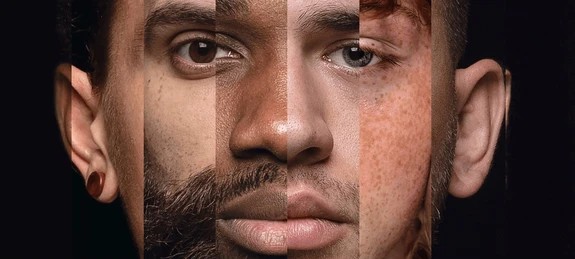
Critical Race Theory teaches that race is not a legitimate scientific taxonomical classification of human beings with varying physical differences. Instead, race is a somewhat arbitrary social construct in which the effects of the belief in the scientific validity of race are still very socially significant.
Mosaic of different racial characteristics forming one male face.Black and White twins, Lucy (L) and Maria Aylmer (R). The girls are fraternal twins with the same biological parents, Donna Douglas (a black woman with a white parent) and Vince Aylmer (a white man). Often mistaken for friends, the girls often carry birth certificates to prove that they are sisters.
It also teaches that racism is not merely the anomalous product of misled individuals. Rather, it is the embedded feature of a society built on racial separation, animosities, and rigid hierarchies. Racism is woven into laws, policies, and practices despite the claims and assertions of meritocracy and color-blindness. Racism is not always the intentional consequence of malevolent deeds of individuals due to ignorance, hatred, or irrationality. Instead, racism is more often a manifestation of the unintentional consequences of subconscious choices, even though these consequences can be predicted by those who are aware of the ambience of racism.
Opponents of CRT argue that it is a racist ideology, rooted in Marxism, that demonizes white people for the actions of a relative few in the past. In their minds, CRT scapegoats white people for the socioeconomic and moral failure of many black people and other racial minorities. They conflate Diversity, Equity, and Inclusion (DEI) initiatives (such as DEI training) with Critical Race Theory courses. They claim that CRT is being taught to children in K-12 schools in non-English and Non-Social Studies courses.
The Backlash…
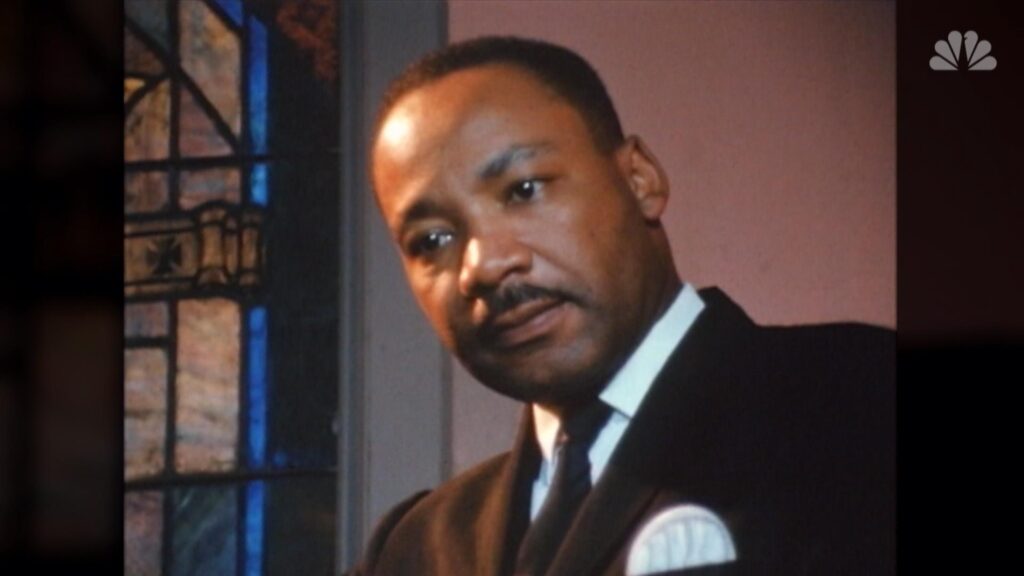
Dr. Martin Luther King Jr during his May 8, 1967, NBC Interview
“… And honesty impels me to admit that America has a broad racist element still alive. Racism is still existing in American society in many areas of America, North and South. And the other thing is that there has never been a single solid, determined commitment of large segments of white America on the whole question of racial equality. I think we have to see that vacillation has always existed. Ambivalence has always existed. And this, to me, is the so-called “white backlash.” It is merely a new name for an old phenomenon. I see the white backlash as a continuation of the same ambivalence and vacillation of white America on the whole question of racial justice that has existed since the founding of our nation.
I think the other thing that we must see at this time is that many of the people who supported us in Selma, in Birmingham, were really outraged about the extremist behavior toward Negroes, but they were not at that moment, and they are not now committed to genuine equality for Negroes. It’s much easier to integrate a lunch counter than it is to guarantee an annual income, for instance, to get rid of poverty for Negroes and all poor people. It’s much easier to integrate a bus than it is to make genuine integration a reality, quality education a reality in our schools. It’s much easier to integrate even a public park than it is to get rid of slums. I think we are in a new era, a new phase of the struggle, where we have moved from a struggle for decency, which characterized our struggle for 10 or 12 years, to a struggle for genuine equality. And THIS is where we’re getting the resistance, because there was never any intention to go this far. People were reacting to Bull Connor [Commissioner of Public Safety in Birmingham, Alabama] and to Jim Clark [sheriff of Dallas County, Alabama] rather than acting in good faith for the realization of genuine equality.”
Christopher Rufo seemed like a man looking for a cause. He found it in 2018 when he ran across anti-bias documents while running for a Seattle city council seat. He lost his race, but he gained a cause to advance his political career in other ways. He then started collecting curricula and slide shows for anti-racism seminars throughout Seattle, Washington. He interpreted the methods and bullet points from these workplace trainings as anti-white racist attacks.
The anti-racism seminars pointed him to books by anti-racism authors. Going further down the proverbial rabbit hole, the anti-racism authors, such as Ibram X. Kendi and Robin DiAngelo, led him to CRT and the works of its founders.
Rufo leaned heavily on CRT and its connections to more radical and leftist philosophical influences while ignoring influences of those more moderate or with more mainstream appeal, like Dr. Martin Luther King Jr., James Baldwin, and others. He was convinced that CRT was radical and Marxist and therefore a poison on this good and moral capitalistic society. Rufo found a new battle in the continuing culture war between the political left and the political right.
Christopher Rufo launched a relentless propaganda campaign against CRT. Critical Race Theory became a catch phrase for every aspect of black-centered, anti-racist, and inclusive lessons within all school programs, including K-12.
Rufo was proud of his work and how quickly news outlets and politicians on the right caught on to his messaging. Because of this, he wasn’t shy about bragging about his methods. He wrote in a correspondence with Angie Wang of the New Yorker:
“We’ve needed new language for these issues. ‘Political correctness’ is a dated term and, more importantly, doesn’t apply anymore. It’s not that elites are enforcing a set of manners and cultural limits, they’re seeking to reengineer the foundation of human psychology and social institutions through the new politics of race, It’s much more invasive than mere ‘correctness,’ which is a mechanism of social control, but not the heart of what’s happening. The other frames are wrong, too: ‘cancel culture’ is a vacuous term and doesn’t translate into a political program; ‘woke’ is a good epithet, but it’s too broad, too terminal, too easily brushed aside. ‘Critical race theory’ is the perfect villain
Its connotations are all negative to most middle-class Americans, including racial minorities, who see the world as ‘creative’ rather than ‘critical,’ ‘individual’ rather than ‘racial,’ ‘practical’ rather than ‘theoretical.’ Strung together, the phrase ‘critical race theory’ connotes hostile, academic, divisive, race-obsessed, poisonous, elitist, anti-American.” Most perfect of all critical race theory is not ‘an externally applied pejorative.’ Instead, it’s the label the critical race theorists chose themselves.”
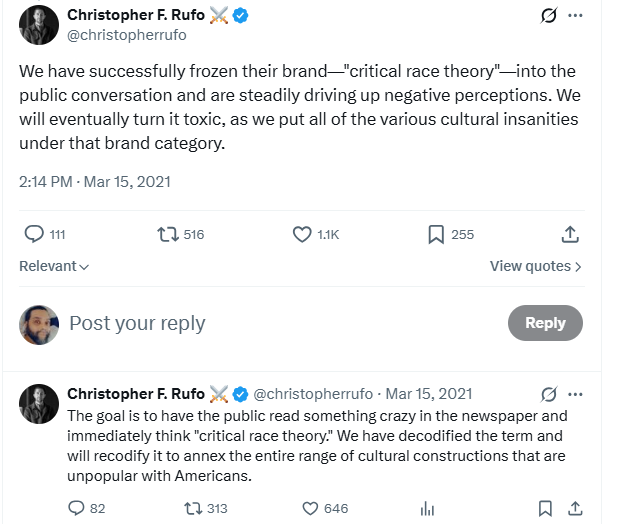
On X, Rufo made this post bragging about his work:
Rufo did a very good job with his propaganda, but he had given up the game on a public social media platform and to a writer in a media magazine. His ego is about as big as his goals, and he couldn’t help but take a bow and a victory lap. His work was done.
What now?
The issue with CRT was that it was a little bit too vague and too alien for most people. Rufo’s propaganda campaign worked, but not as well as he thought it would. CRT, as a sinister Marxist plot against white people and America, was replaced a couple of years ago by DEI. CRT is mainly about race. DEI can be about anything and everyone that doesn’t check all boxes for every privileged group in the various social hierarchical systems that exist in the United States. CRT is still looked at with suspicion by those on the political right, with school-aged children who may have gotten offended after a history lesson about chattel slavery in the United States. There were laws passed in many states to ban CRT in K-12 schools. However, there was no evidence that the course itself was being taught in K-12 schools. Rather, only certain ideas associated with CRT have made it to K-12 classrooms. Also, these bans are usually vague, with CRT being poorly defined.
Christopher Rufo got many people on the right side of the political spectrum to hate and fear a university and law school course that they don’t really understand through a constant propaganda campaign. He recognized that the obscurity of the course was its weakness from a public relations perspective. He also understood that emancipatory movements and initiatives were almost always followed by irrational reactionary backlash. He made a relatively unknown course and made it public enemy #1 for a period of four or five years.
From midnight January 30, 2026, to midnight January 31, 2026, this had been my media consumption for the day. I decided to start with the start of the calendar day to the end of the calendar day to cover a complete 24 hours.
00:00-00:06 I was thinking of playing a little bit of the Saints Row (2022) reboot on PlayStation 5, but I quickly got tired and bored. All I wanted to really do was wind down and go to sleep.
00:06-09:22 I allow YouTube to play various space and natural history documentaries while I sleep. My Attention Deficit Hyperactivity Disorder(ADHD) makes it so that it is hard for me to sleep in silence. Science documentaries sometimes act as my lullaby to get me to sleep. I was awakened from my sleep by a phone call.
09:22-09:37 Watched various political shows on YouTube. When I wake up, I like to get my daily dose of news and information. I didn’t really have much time today; I only watched one video from the Meidas Touch before getting ready to groom.
09:37-10:39 I allowed more videos to play from the I’ve Had It Podcast and the Vanguard while getting ready to leave.
10:45-12:37 I ran a few errands with my cousin and listened to my new playlist on Spotify. This playlist is filled with protest anthems and songs against the establishment.
12:40-16:46 I had been sick with COVID this week and didn’t feel too well. I decided to go back to sleep(take a nap)and be rested before running more errands. I once again allowed documentary videos on YouTube about natural history to play on my TV while I slept.
16:57-19:48 Ran a few more errands. I played a couple of videos from YouTube, but had to stop them a number of times to have conversations with my children and my cousin, who were with me. The videos that I was playing were political, and the conversations were about politics and social justice.
17:06-17:27 (Overlap) Checked my Facebook feed, but I was not as active today on social media as I usually am. I didn’t really feel like doing too much on social media.
20:00-21:32 I lay down and watched reruns of Sealab 2021 on the Adult Swim app on my computer.
21:32-23:23 Watched more political content on YouTube about the Epstein file drop that happened earlier in the day. I decided to post on Facebook about the file drop. I also went on X to see what some of my favorite media figures were saying about it.
23:23-23:40 Received a phone call from my fiancé on WhatsApp. She lives in a foreign country, and we talked until the call dropped due to a bad connection.
23:40-00:00 Played more documentaries to go to sleep. I didn’t really like staying up late.
This is not too atypical of a normal day for me, except for the fact that when I am at work, my day consists of more Spotify playlists than anything else. However, being sick made me very drowsy, so I slept most of the time.
My personal data was still out there for the world. YouTube knows what I like to watch while sleeping and/or napping. I don’t have to look for documentaries to watch. YouTube recommends them for me. Facebook gathers information about me every time I make a post or comment. WhatsApp can see what my fiancé and I send to each other. Cookies store information about what I’ve been doing on my computer.
YouTube knows that some of my interests are astronomy, paleontology, geology, politics, history, and other things. These are the things that I usually watch. Spotify knows that I am into nedrcore, neo-soul, and other genres. They will recommend certain artists to me. I am into a lot of left-wing political content and video essays. I don’t think there was much biometric data shared this day, if any, it did know some behavioral data from me.
Nothing was revealed about me that I didn’t want revealed about me in any of my media consumption for the day. If I posted on Facebook, it was what I wanted to be associated with my profile/page. However, information about my habits, which are VERY easy to predict, could be used by the algorithm to sell me products/services or lead me to other channels and users on social media. For example, I get advertisements from immigration services/lawyers for the purpose of obtaining a fiancé’s visa for the United States for my fiancé.
I try to be careful with my media use. I hide certain information about myself. I don’t post about my love life online. No one knows who I am dating and how serious it is. However, the algorithm knows because of my online activity on WhatsApp. I think as long as it is kept from my audience, I feel ok. But I do hate that my personal information is used to sell certain things to me.