Category: Culture & Society

  • Hit Dogs Holler: Growth Requires Listening

    Hit Dogs Holler: Growth Requires Listening

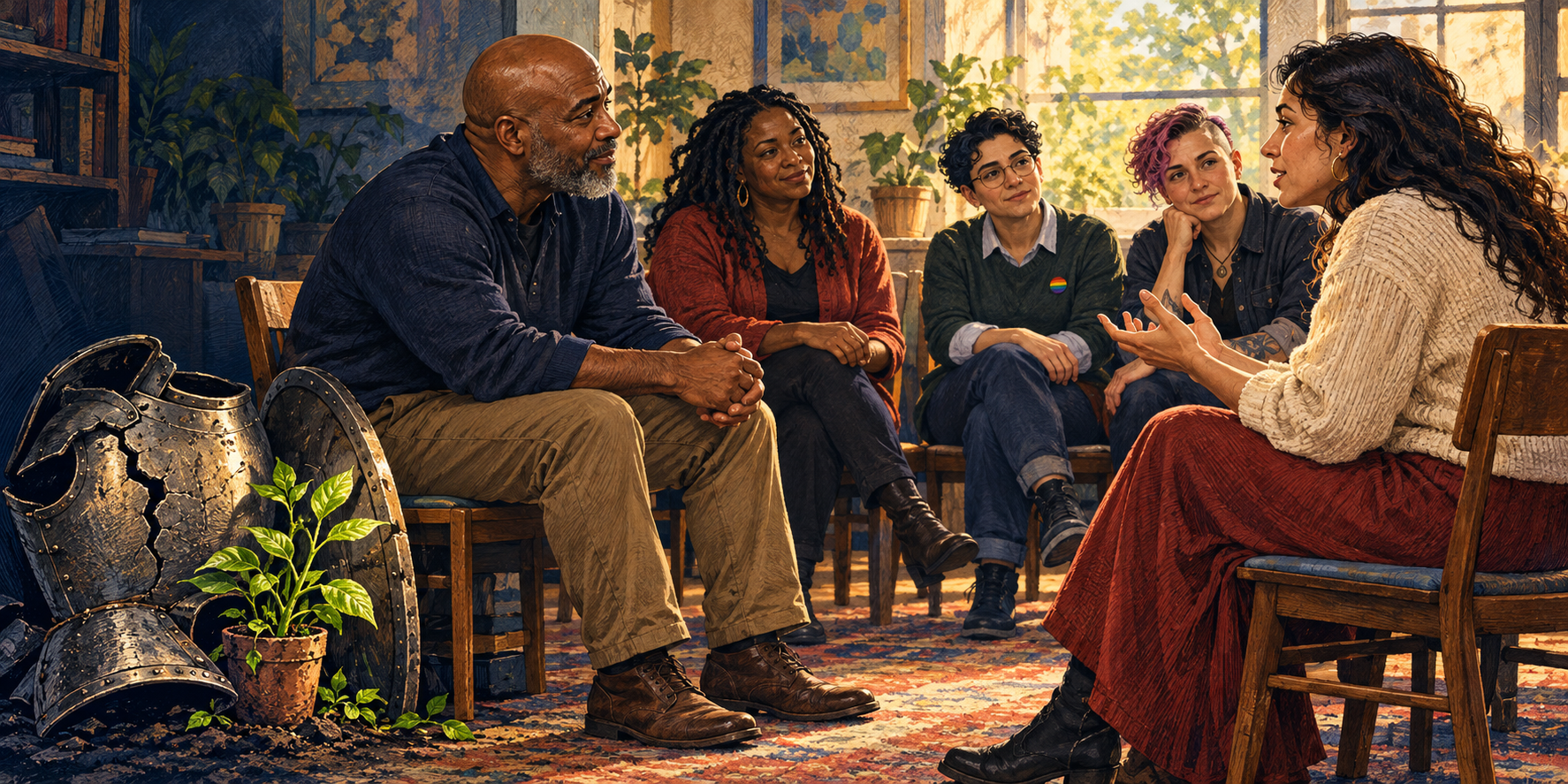
    When people in the LGBTQIA community make blanket statements about transphobia, homophobia, and other forms of bigotry against their community, and those statements are not directed specifically at me, I don’t get angry. I sit back and listen. Do I always agree? No. But I listen. I know that I have my own bigotry against the LGBTQIA community to work out.

    When women talk about rape culture and misogyny, and their comments are not directed specifically at me, I don’t get angry. I sit back and listen. Do I always agree? No. I still have much to learn, and I know I need to check my own sexism and misogyny.

    When my own people (Black people) talk about how Black people are cooning, and their comments are not directed specifically at me, I don’t get angry. I sit back and listen. Again, I don’t always agree… at first… but many times, I learn to adopt those positions. I know that I am guilty of cooning sometimes and have to check my internal anti-Black bias.

    Hit dogs holler. If you are deeply offended by a post that is not about you, to the point of being belligerent and lashing out like an angry child, maybe that is because, deep down, you know you are guilty but don’t want to grow and change. Growth and change require that we first admit there is something wrong. Growth and change require that we be willing to feel the discomfort we’ve made others feel. It requires introspection. It requires asking ourselves hard questions and accepting honest answers we don’t like. It requires that we listen to the voices of marginalized people we’ve affected in ways that go beyond hurt feelings, including acts of violence.

    I know that I am guilty of many things I don’t like. I know that I wrestle with many forms of bigotry. I was raised to be homophobic and transphobic. I was influenced to accept and participate in the exploitation of women. I was conditioned by society to believe that the White man’s ice was colder and his grass was greener. This was all programmed into me from birth and through childhood, and I’ve spent nearly a lifetime trying to deprogram myself.

    So our job is not to pout, cry, bitch, moan, complain, and act out when people are informing us about not only their own experiences with bigotry but also the proven pervasiveness of that bigotry and the continued and accepted marginalization of their communities. Our job is to see, listen, learn, and, most importantly, accept our roles and change. Yes, it is a long process. Yes, we do backslide. Yes, it is uncomfortable and demands that we take responsibility for actions we initially thought were benign. But the goal is growth. The goal is being a better human being.

    Don’t get angry and defensive. Listen.

  • “All the Factors”, Until the Subject Is Racism

    “All the Factors”, Until the Subject Is Racism

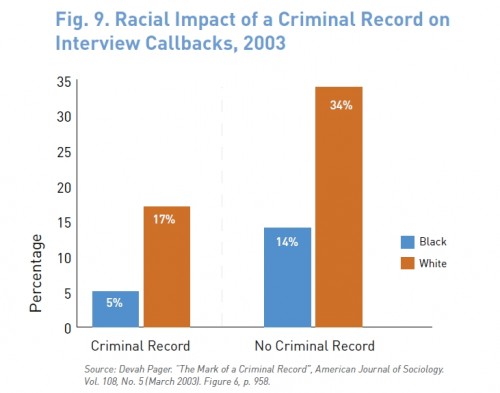
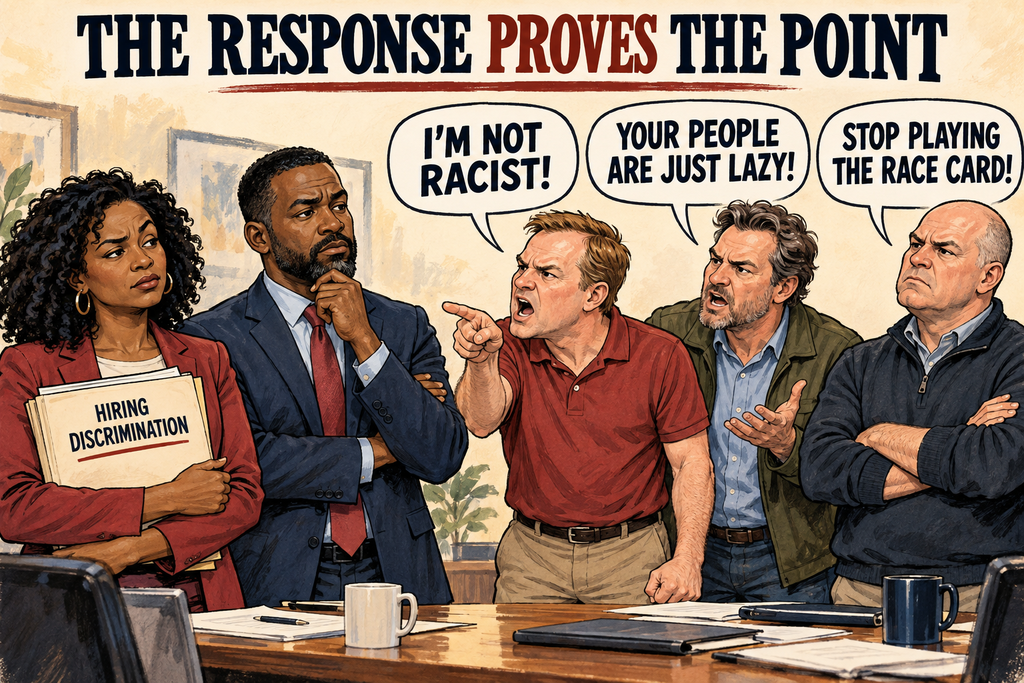
    Many White people love to deny the role that race and racism play in our society. For example, I erroneously posted about White convicted felons making more money than college-educated Black men with no criminal records on my Facebook profile. But I was wrong. It wasn’t necessarily pay that was the issue (even though pay disparities are an issue when looking at the overall populations of White and Black men). Rather, it was who gets contacted more frequently for job interviews. Either way, every factor and excuse in the book was offered instead of an examination or admission of White bias.

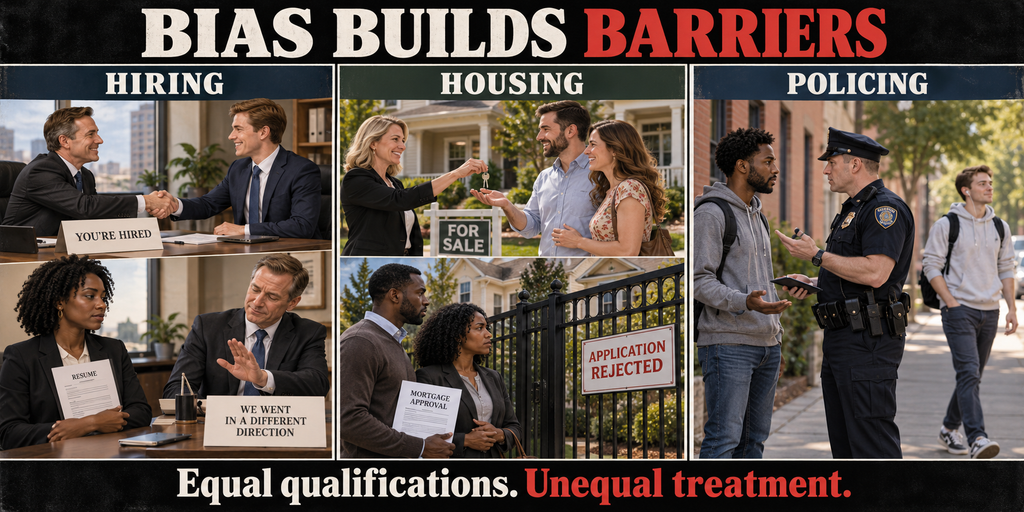
    Here is the thing: If White convicted felons are contacted more for interviews or potential employment than Black men with no records, based solely on applications and résumés, what is the factor? Studies show that applications and résumés with certain ZIP codes or “Black-sounding” names are rejected at very high rates. You cannot gauge work ethic from someone’s name, especially when the applications show identical work histories. And if someone has to choose between a person who was disciplined enough to never get into any serious trouble with the law and someone with a criminal record, chances are that most people would choose the person with the clean record over the person who served time.

    Now, this is not to say that convicted felons (sorry for the language) aren’t deserving of good jobs after paying their debts to society. This is not to say that convicted felons wouldn’t make good employees with strong work ethics. But this is to say that choosing White convicted felons over Black men with no criminal records… for the same jobs, with the same work histories… is troubling. Especially when the comparison between White men with no record and White convicted felons shows a strong preference, by more than double the rate, for White men with no record, while Black men with criminal records have a very hard time getting hired.

    How else does one explain this discrepancy?

    This has nothing to do with work ethic, white-collar jobs versus blue-collar jobs, choosing liberal arts degrees, or any number of other excuses offered.

    What’s worse is that when I presented the study showing this, no one actually read it, and a few dismissed it outright with no real argument about why it should be ignored. There was no argument about methodology. No argument about results. Nothing. There were plenty of racist assumptions. Ironically, those assumptions basically proved the premise of my post and even the conclusion of the study (or studies) used as evidence.

    Over 1,000 people responded to it, most of them with childish insults and racist comments. Others were defensive. I can count on one hand the number of people who were actually interested in the study. And when they couldn’t refute the claim I was making, they went silent. No apologies. No further comments.

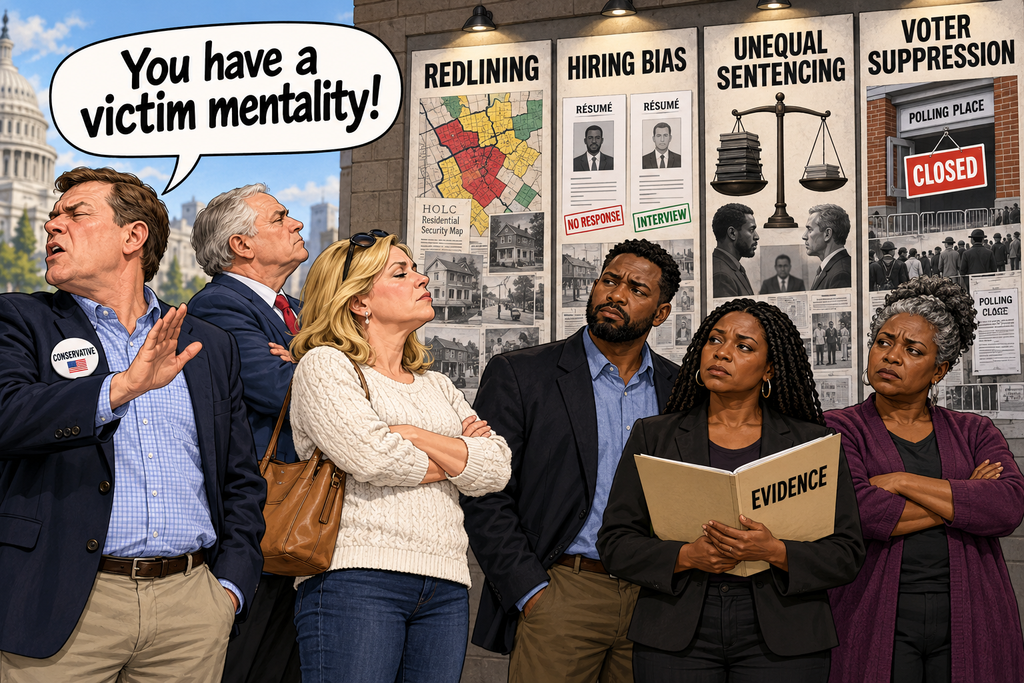
    “You just need someone to blame for your failures!”

    I don’t post these things to blame White people for my own personal failures. This is what I keep saying all the time. Despite my focus on racism, I had plenty of opportunities. I had access to a vehicle and reliable public transportation, so I could get a job anywhere in the metropolitan area. I’ve mentioned a few times that my olive (or beige) skin color may have opened doors that were closed to my darker-skinned brothers and sisters and gained me access to places and social circles. This is what privilege looks like. My name is ambiguous, and people don’t know what I am from an application. My ZIP code is in a somewhat affluent and racially diverse part of the city.

    So this was never about me. Most of my posts aren’t personal unless I specifically say they are. If I am talking about societal issues, they are usually not about me.

    I am not a member of the LGBTQIA community, but I sometimes post about their struggles. I have never served time in prison, but I sometimes post about people who have. I have never lived or worked on a farm, but I post about farmers’ issues. I didn’t grow up on welfare or need it as an adult (except financial aid for college, if you want to count that), but I constantly advocate for people who receive public aid. I am not a woman, but I speak out about rape culture and misogyny. I talk about relationships, and although my marriage failed, it was not due to many of the issues I discuss when talking about relationships.

    Like I’ve stated many times before, the motivation for my posts can come from anywhere. I have ADHD, remember. Videos I watch could spark a post. Seeing something happen can spark a post. Hell, a random thought on the porcelain throne while pinching a loaf could spark a post (sorry for the visual). And most of the time, it has nothing to do with my personal life, which I try to keep as private as humanly possible.

    For example, posting pictures from Ethiopia on Facebook was unusual because I usually hide my traveling. I don’t like many of the questions.

    But I digress.

    On White bias and Anti-Black racism

    White bias is normal in a country that has made Whiteness the exemplary model for humanity for the last four or five centuries. Mentioning this is not an attack on White people, per se, because they are not the only people mentally infected by this… condition. Truthfully, we all are infected, including Black people. This is how we have all been conditioned to think after 400-plus years of pro-White propaganda and the twin philosophies of White supremacy and Black inferiority. You cannot imagine the number of Black people I’ve had to check personally for spouting anti-Black racist ideas and talking points. There have been plenty of times when I needed to be checked, too. It’s just the way it is.

    The Repeating of Charlie-Kirk-Style Crime Statistics Without Adequate Context or Examination of Other Factors for Racist Reasons

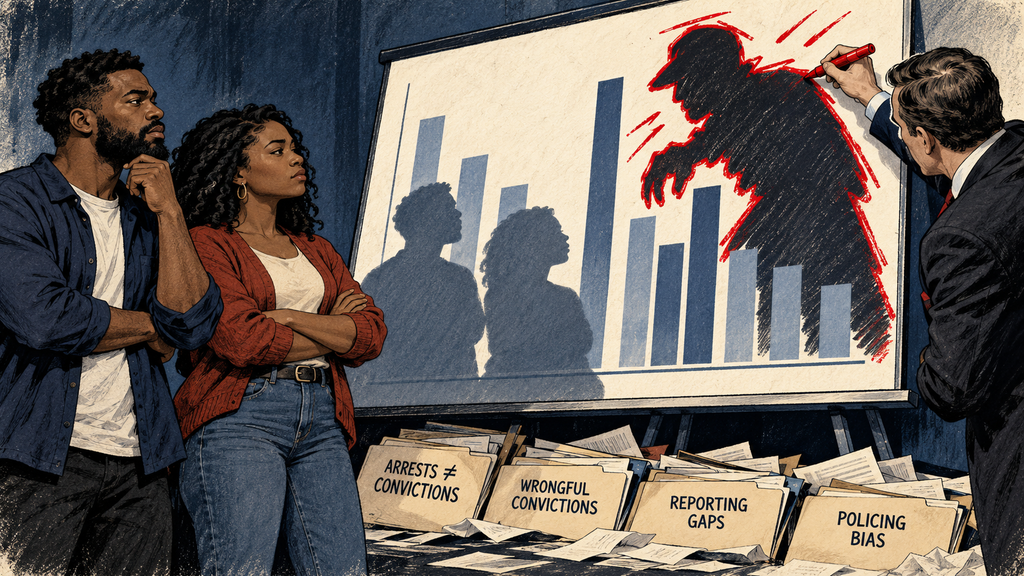
    But anti-Black racism isn’t imagined. It is real. Even the skewed crime statistics are a product of racism. For example, FBI Table 43 is not about who committed a crime or who was convicted of crimes. It is about who was arrested for certain crimes. What FBI Table 43 proves is not Black criminality but the perception of Black criminality and systemic racism in the criminal justice system. This claim is backed up by the OLL (Online Library of Liberty).

    Let me hit you with some issues:

    • The FBI’s Uniform Crime Reporting (UCR) program, which collects the statistics used in Table 43, is strictly voluntary, not mandatory, according to FBI.gov.
    • Although 87% of law enforcement agencies participate, the vast majority of those agencies are from big cities and their metropolitan areas, which all participate. Many small towns and rural areas don’t participate at all.
    • Participation is high in heavily populated areas but lower in more sparsely populated areas.
    • Black people are 7.5 times more likely to be wrongly convicted of murder than White people, according to the Death Penalty Information Center. This does not include total arrests.
    • The rate and risk of wrongful convictions for Black defendants are even higher when the victim is White.
    • Only around 70% of people arrested and charged with murder are convicted of murder.
    • Black people are much more likely to be exonerated for most crimes than White people, with the exceptions of child sexual abuse and white-collar crime, for which White people are arrested and convicted more often, according to the Syracuse Law Review. As a matter of fact, over half (53%) of all people exonerated since 1989 were Black.
    • Several White people have committed crimes and reported that someone Black committed them, leading to the arrests of Black men before it was determined that someone White—usually the person reporting the crime—had committed the crime and lied. It happened so much that the phrase “Blame a Black Man Syndrome” was coined.

    I don’t post all of this to deny that many Black men have a problem with conflict resolution that leads to homicides. Nor am I saying that the Black murder rate isn’t still too high compared to our percentage of the overall population. However, what I am saying is that the crime statistics used to construct racist narratives all over the internet and in White supremacist circles are misinterpreted and grossly exaggerated. Arrests are treated like convictions. Partial numbers are treated like the whole story. Numbers are weaponized without any examination of the factors, other than DNA, contributing to them.

    “All The Factors” Except When Being Racist

    And this brings me full circle to what I was talking about at the beginning of this post. Various factors were presented as reasons for the disparity in hiring rates between White convicted felons and Black men with no criminal records. Many people rejected the premise and the numbers while saying I had to look at “all of the factors.” However, these same people were more than happy to spout crime statistics without any examination of “all of the factors.”

    They are not totally wrong. All factors do need to be looked at. But it is hard to deny the conclusion of a controlled study in which the only real variable was race… or perceived race. There are not too many White men named “Quontavious Davis” from the Riverdale neighborhood of Chicago (the name and place were more than likely not used in the actual study). But “Brayden Braithwaite” from the Mount Greenwood neighborhood of Chicago could have a felony burglary or rape conviction and get a callback for a job over Quontavious, who navigated poverty, ever-present gangs, and various vices found in financially struggling communities with no criminal history other than speeding tickets.

    What’s worse (and even more ironic) is that the same people who were pissed off and lambasting me for being an anti-White “bigot” were the same people who either ignored or positively reacted to comments about “chimping out,” skewed racist crime statistics, assumptions that White men with felony convictions had a better work ethic than Black men who overcame the many traps set in “the hood,” and many other racist posts. This actually supports the point I was making. But many of them were “too high on their own supply” to see that.

  • Same Old Politics, Different Welfare Stereotype

    Same Old Politics, Different Welfare Stereotype

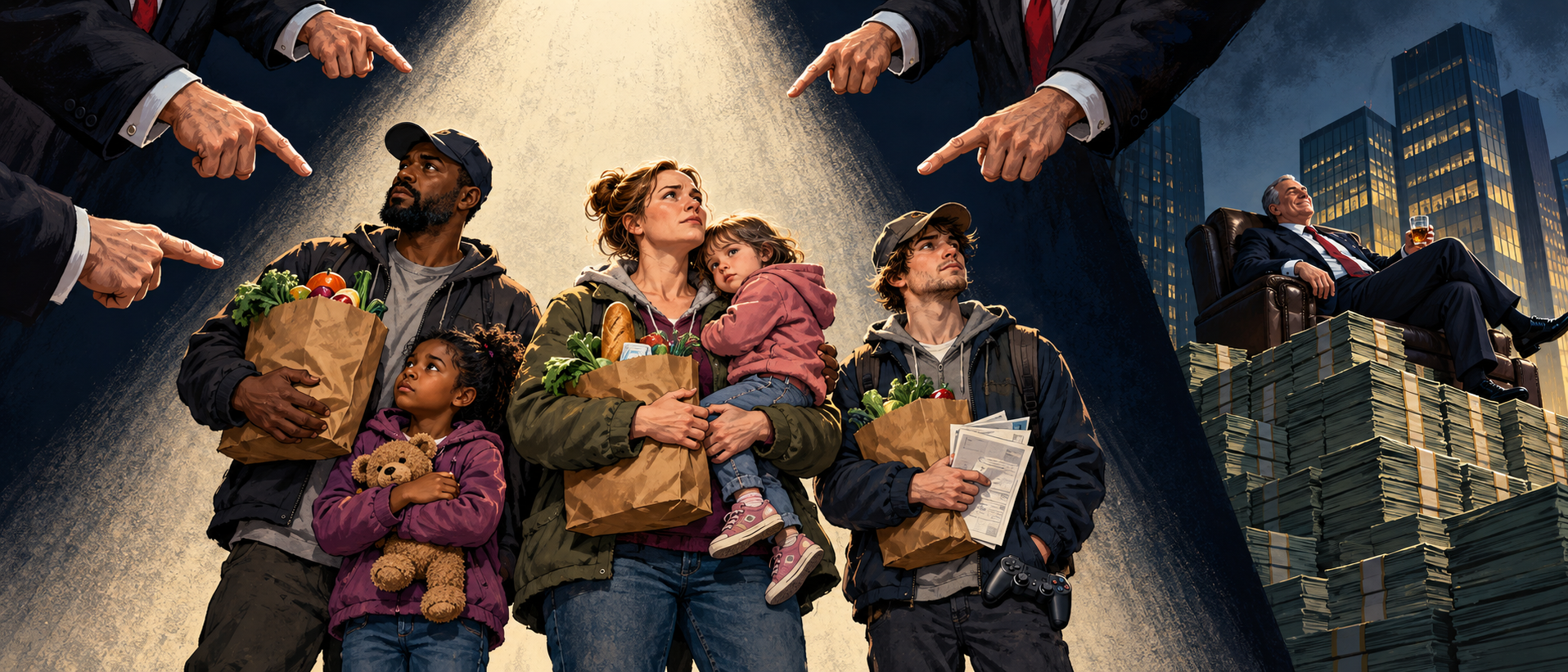
    Well, well, well. Republicans around the country, especially in Arkansas, are upset that Sarah Huckabee Sanders’ new political ad shows a young White man as a “welfare queen.” They are now turning against her for portraying a White man on welfare. They argue that White people have been discriminated against for decades (who has the “victim mindset” again?) and that the commercial should have shown a woman, particularly a Black woman (or a Black person in general), as the problem welfare recipient.

    And part of me agrees that the welfare recipient in the ad was not an accurate portrayal… but not for the racist and sexist reasons they are citing.

    The trope of the lazy young gamer is problematic by itself and many of these unemployed gamers are not on welfare. If they are not actively looking for work, they are usually being financially supported by parents, spouses, domestic partners, siblings, or other family members. Plus, most people who game regularly are employed.

    As for actual welfare recipients, more White people are on welfare than Black people. This is the part where the racists start talking about per capita. But in this case, per capita doesn’t matter. Most people in Arkansas who are on welfare are White (54%). Only 31% of welfare recipients in Arkansas are Black. This means that the face of welfare in Arkansas should more than likely be White, since more White people are on welfare than Black people by sheer number.

    The trope of lazy welfare recipients was popularized in the 1960s after Black people were allowed to participate in those programs. This was also when many conservative Southern politicians from both parties started imposing eligibility rules for welfare that removed men, especially Black men, from the home. Contrary to a popular talking point, it was not President Lyndon Johnson who removed Black men from the home. It was conservative Southern and Midwestern legislatures and governors, most of them Democrats, who started these policies locally and pushed for them to be implemented nationally. These policies were designed to punish Black families for participating in programs originally intended only for White families. Since then, Black people using public housing, housing assistance, food stamps, and other programs we collectively think of as “welfare” have been classified as “lazy” and saddled with other negative stereotypes. This happened despite many of them working low-paying jobs and despite many White families receiving welfare for generations.

    White conservatives need the narrative of Black welfare abuse to advance White supremacy and mask their own dependence on government assistance. In their minds, they use assistance because they need it. Black people use it because they supposedly lack morals and diligence. That is what they think. And then they wonder why they are constantly called “racist” and “bigoted.”

    They also hate that the commercial didn’t feature a woman. Because, Lord knows, you can feature a man with a chronic disability receiving Social Security benefits while mostly appearing able-bodied, and that disability never seems to bother them except when asked to work. But let’s demonize the woman he had children with while ignoring his failure to provide for them. Behind many women who need welfare is a deadbeat father who doesn’t provide for his children.

    This is not to shit on people receiving any form of welfare, including disability benefits. However, we need to stop with the racist and sexist tropes, stereotypes, and narratives around welfare.

    Do people abuse welfare? Yes. All types of people abuse welfare, including the rich…especially the rich. Elon Musk is one of the biggest “welfare queens” out there, spending much of his time playing video games and reposting Nazi propaganda on X. But no one talks about him or gets angry at him. “But Elon Musk is a ‘job creator!’” So are the Somali daycare owners you are now demonizing based on a deceptively produced and edited video by a conservative, made to make the whole community look bad. Again, you wonder why we think of you as “racist” and “bigoted.”

    The point is that all tropes are bad, especially when they are used to demonize the economically downtrodden. Whether it is a Black family, a single White mother, or a young unemployed gamer (of any race), these tropes and stereotypes need to go. We need to stop trying to punish individuals and families for being poor. We need to stop defining and demonizing whole groups of poor people based on the actions of a relative few. We need to stop the exploitation of labor and theft of wages by large corporations that underpay their employees and make them need welfare to live.

    This is my problem with Sarah Huckabee Sanders’ campaign commercial. It’s the same old conservative pastime of punching down. With Sanders, the targets are unemployed gamers and all welfare recipients. With her conservative critics, the targets are women and Black people. It all has to stop.

  • My Moral Standard Doesn’t Change: Thoughts on Israel, Palestine, and the Value of Human Life

    My Moral Standard Doesn’t Change: Thoughts on Israel, Palestine, and the Value of Human Life

    I meant to write this post a long time ago, but I wanted time to think before adding my voice to one of the most emotionally charged and controversial conflicts in the world.

    The horrific October 7, 2023 Hamas attack on Israeli civilians shocked the world. More than a thousand people were killed, many others were injured, and hundreds were taken hostage. The deliberate targeting of civilians is a war crime. It was morally wrong then, and it is morally wrong now. It deserves condemnation from governments, human rights organizations, and anyone who claims to value human life.

    Before I go any further, I want to make something absolutely clear because I know how discussions like this often unfold.

    The opinions expressed here are mine and mine alone. They do not represent my family, my friends, any organization I’m affiliated with, my political allies, or anyone else in my life. If you disagree with what I’ve written, direct your criticism toward me. Don’t harass people who have nothing to do with my opinions. I am fully capable of standing behind my own words.

    I also want to address something else before anyone tries to define my position for me or paint me as something that I am not.

    I have no hatred toward Jewish people.

    I have never embraced the claim that Ashkenazi Jews are somehow “not real Jews.” Even during periods of my life when I listened to voices like Louis Farrakhan, I never accepted that belief or similar conspiratorial ideas. I have always recognized the tremendous sacrifices many Jewish-Americans made during the Civil Rights Movement. Some literally gave their lives alongside Black Americans in the fight for equality. That history matters, and it deserves to be remembered.

    My appreciation isn’t just historical.

    Jewish-Americans played meaningful roles in my own life. A Jewish businessman helped mentor my father as he became an entrepreneur. Jewish educators and peers encouraged my academic growth and helped put me on the path toward college. When I entered a new school district in a largely unfamiliar community, some of my very first friends were Jewish students who welcomed me.

    Throughout my life, I have also spoken out against antisemitic conspiracy theories and stereotypes. I’ve challenged them publicly because they are false, harmful, and fundamentally incompatible with my values.

    So when I criticize the actions of the Israeli government, understand that my criticism has never been rooted in hostility toward Jewish people.

    I want Jewish people everywhere to live safely, practice their faith freely, preserve their culture, and enjoy the same dignity and security that every human being deserves.

    But supporting Jewish people does not require me to support every action taken by the Israeli government.

    It never has.

    For years, I have opposed the continued expansion of Israeli settlements, the occupation of Palestinian territories, discriminatory policies that many respected human rights organizations have criticized, and the unconditional military and diplomatic support the United States often provides regardless of the circumstances.

    None of those positions come from hatred. They come from applying the same moral standards that I apply everywhere else.

    Israel has a right to defend its citizens from armed attacks.

    And, Palestinians also have the right to live free from oppression, occupation, and collective punishment.

    Those two statements are not contradictory. They are an equal application of consistant morality to different groups on either side of this issue.

    As a Black American, I understand something about oppression and about how oppressed people are often condemned whenever they resist systems that deny them freedom and dignity. History is full of examples.

    Enslaved Africans in the United States were portrayed as criminals whenever they rebelled against slavery. Nelson Mandela and the African National Congress were once labeled terrorists because they resisted apartheid. Haiti’s successful revolution frightened colonial powers so much that the new nation was economically punished for generations. The Mau Mau in Kenya, Vietnamese resistance fighters, Irish republicans, and countless other liberation movements were often remembered primarily for their violence while the violence of the systems they opposed received far less attention.

    Recognizing that history does not excuse atrocities committed by those movements. The deliberate killing of civilians is wrong regardless of who does it and why.

    But understanding why violence emerges is not the same thing as celebrating violence. Too often people confuse explanation with justification. I don’t.

    The same moral standard that leads me to condemn Hamas for intentionally targeting civilians on October 7, 2023, also leads me to condemn the immense suffering inflicted upon Palestinian civilians throughout this conflict by the Israeli government.

    Thousands of Palestinian civilians, including children, have lost their lives. Entire neighborhoods have been destroyed. Families have been displaced repeatedly. Hospitals, schools, and refugee camps have become targets and battlefields. Humanitarian organizations have documented extraordinary levels of suffering.

    No child deserves that.

    No civilian deserves that.

    When leaders use language that appears to dehumanize entire populations or suggest that innocent civilians are acceptable collateral damage, it should concern all of us. History has shown repeatedly that dehumanization often precedes enormous human tragedy.

    Some people will point out that anti-Black racism exists within segments of Palestinian society in a cynical effort to get Black people to excuse the disproportionate violence against them. They’re right that anti-Black racism exists within segments of the Palestinian and greater Arab community. But, anti-Black racism also exists within Israel, the Israeli population and the Jewish diaspora around the world.

    It exists in Europe.

    It exists throughout Africa.

    It exists in Asia.

    It exists throughout the Americas.

    It exists almost everywhere.

    But my opposition to the killing of civilians cannot depend upon whether the victims hold enlightened views about race.

    Dr. Martin Luther King Jr. famously wrote that “Injustice anywhere is a threat to justice everywhere.”

    I’ve quoted that statement for years because I believe it.

    If I oppose injustice only when it affects people who agree with me, or only when it affects people who look like me, then I don’t actually oppose injustice. I’m simply choosing sides.

    That isn’t who I want to be. My moral compass requires consistency.

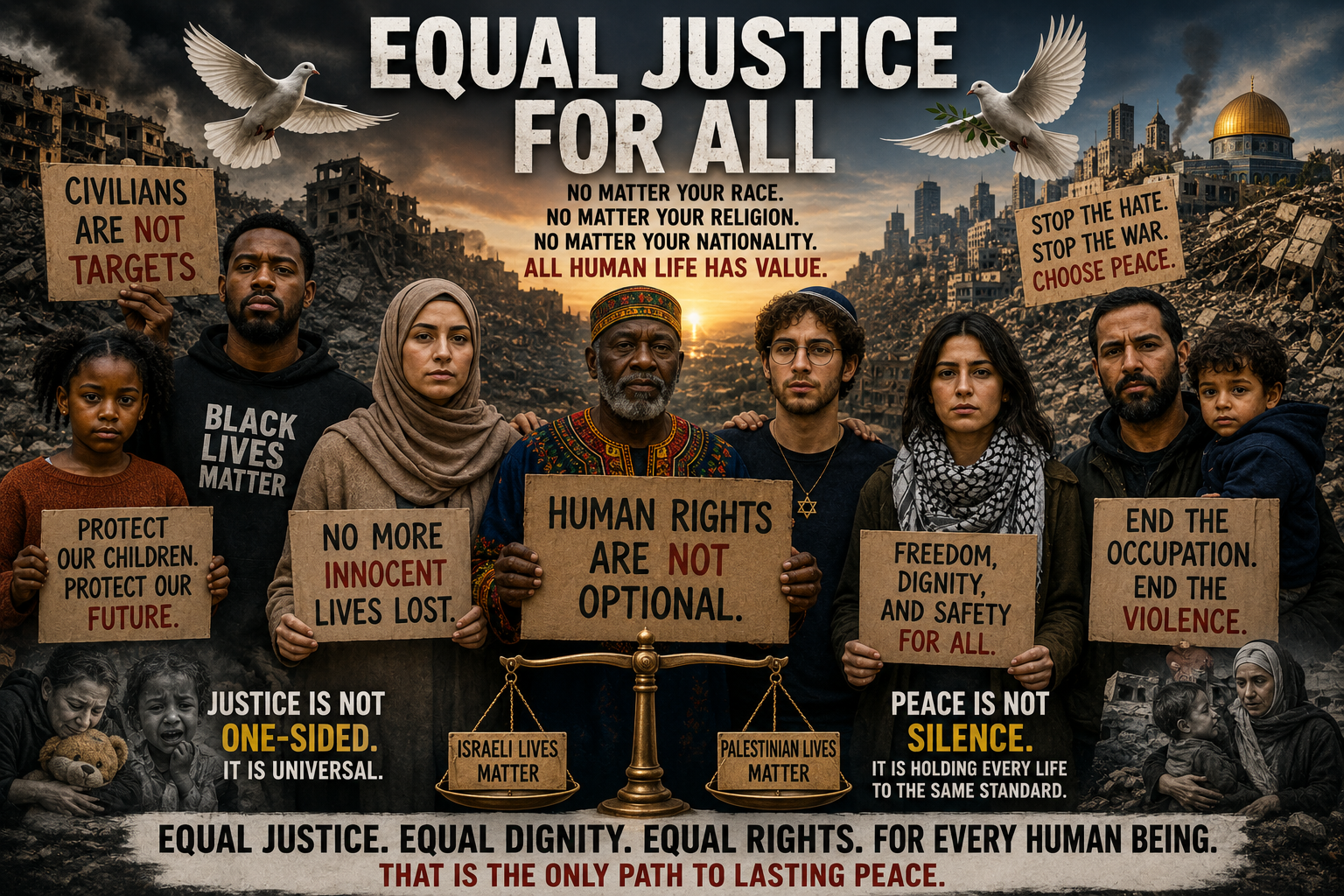
    I condemn Hamas AND Israel for murdering civilians. I condemn the taking of hostages. I condemn terrorism. I condemn collective punishment. I condemn indiscriminate attacks on civilians. And, I condemn violations of international humanitarian law regardless of who commits them.

    That standard applies equally whether the victims are Israeli or Palestinian.It should apply to every government and every armed group.

    Ultimately, I don’t believe this conflict will be solved through endless retaliation.

    Violence creates more violence. Trauma creates more trauma. Children raised amid war often become adults who know nothing except war.

    The world desperately needs diplomacy, accountability, humanitarian relief, the protection of civilians, the release of hostages, and a political solution that recognizes the humanity of both Israelis and Palestinians.

    Peace cannot be built upon revenge. Justice cannot exist without equal value being placed on every human life.

    That has always been my position.

    And it remains my position today.
  • America’s Racial Problem Is Not in the Past, And I’m Tired of People Pretending It Is

    America’s Racial Problem Is Not in the Past, And I’m Tired of People Pretending It Is

    One of the most frustrating parts of talking about racism in America is how often people act as if it is either exaggerated, isolated, or long behind us. Every time I say that most white Americans have, at minimum, participated in or benefited from racist systems and behavior, there is always a predictable backlash. The conversation shifts from the reality of racism to defensive utterances, including people charging me with racism, exaggerated claims of Black culpability in slavery, sloppy attempts to “both-sides” racism, and arguing that racism was a past reality that black people need to get over.

    But history (and the present) tell a very different story, and I’m not pulling that conclusion out of thin air.

    I’m looking at history, voting patterns, where people choose to live, how they react when Black people move into their neighborhoods, what they tolerate politically, and what I have personally watched happen over and over again in this country.

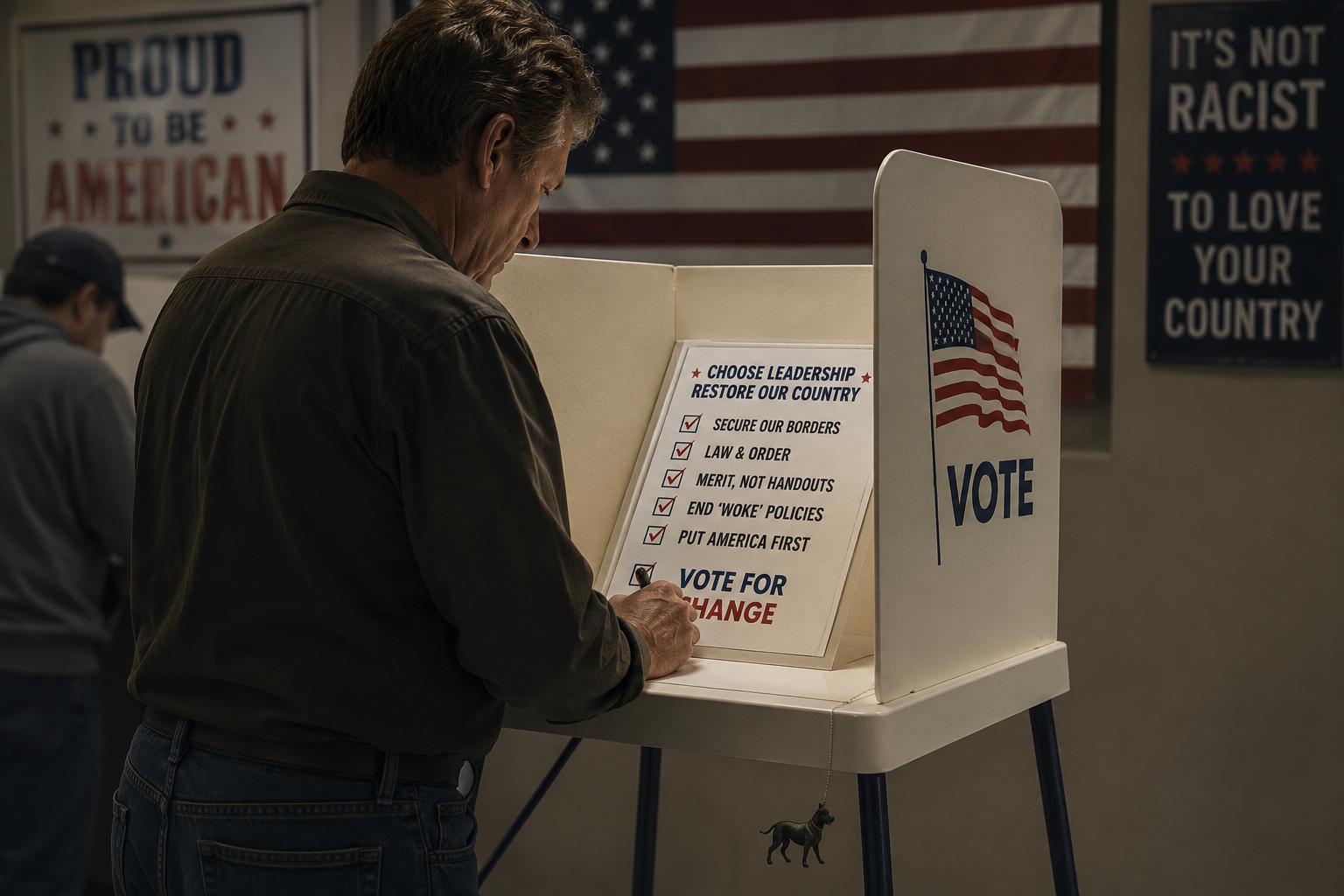
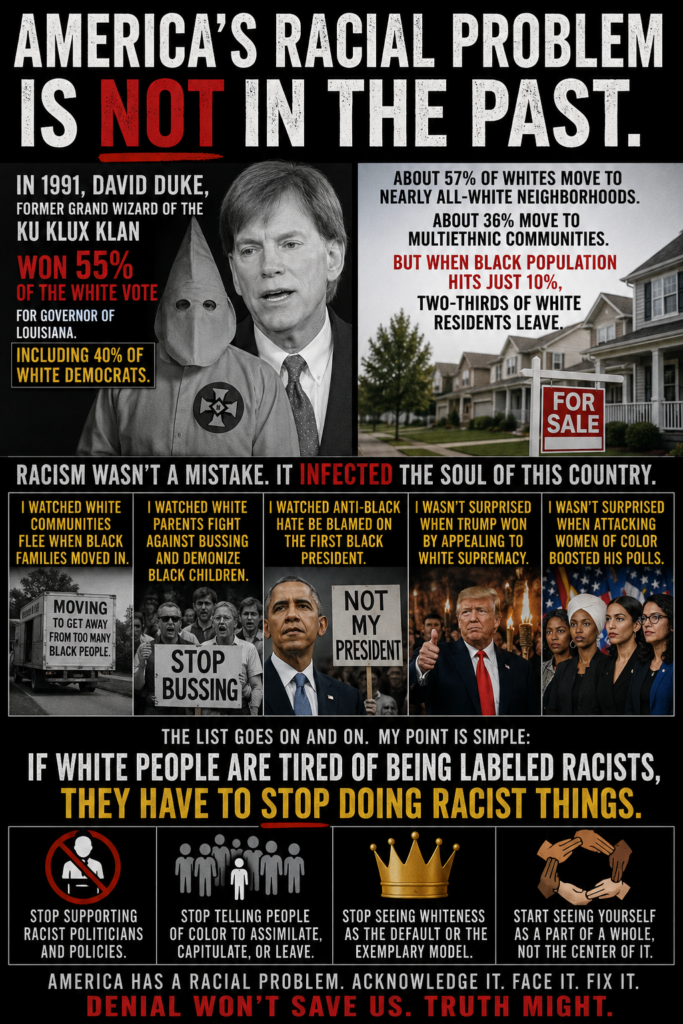
    In 1991, David Duke, a former Grand Wizard of the Ku Klux Klan, won 55% of the white vote when he ran for governor of Louisiana. Let that sink in. A man whose public identity was openly tied to white supremacy won a majority of white voters, including 40% of white Democrats. That was not the distant 1800s. That was the early 1990s.

    And this pattern is not an isolated one. Since the passage of the Civil Rights Act of 1964 and the Voting Rights Act of 1965, Democratic presidential candidates have consistently struggled to win the white vote. Even in 1976, when Jimmy Carter performed unusually well among white voters, Gerald Ford still won them overall. That should force us to ask uncomfortable questions about what racial backlash has looked like in American politics for the last half-century.

    These are not random or meaningless occurances. And it is not just “economic anxiety.” This is racism built into the bloodstream of American politics and manifest through voting decisions and patterns.

    The same dynamic has shaped where people live, where they send their children to school, and how they define “good” neighborhoods and “bad” neighborhoods. White flight did not happen by accident. It was not simply about “better schools” or “quality of life.”

    For decades, study after study (and plain old lived reality) has shown that white people love to talk about diversity until Black people actually start moving in next door. White families will say they want “good communities” and “nice neighborhoods,” but once a place becomes “too Black” (usually with a Black population at or above 10%), all of a sudden the moving trucks come out and the “For Sale” signs start multiplying like weeds.

    In community after community, once Black families moved in, white families moved out. I have seen it with my own eyes. Entire white communities expanded further and further outward, into what had once been farmland, not because they were escaping crime or collapse, but because too many Black people had moved nearby.

    And it did not matter if those Black families were educated, professional, stable, or middle class. Their Blackness alone was enough for those white families to flee further into the suburbs.

    We want to act like racism was just Bull Connor, George Wallace, fire hoses, and white robes. We want to tell ourselves that racism was a regrettable chapter that “we overcame,” and now the only real racists are a few cartoonishly evil people at the margins.

    That is a lie.

    Racism in America was never just about the loudest extremists. It has always depended on ordinary white people making racist choices in ordinary ways: where they live, who they vote for, what schools they support, what fears they indulge, what policies they excuse, and what kind of treatment of Black people they are willing to rationalize.

    I saw white parents rage against school bussing while talking about Black children as if they were grave threats. I saw anti-Black hostility dressed up as “concern” and “standards.” I saw white resentment toward Barack Obama, a man raised largely by white family members, treated as if he were some dangerous racial radical simply for existing in the White House while Black.

    So no, I was not surprised when Donald Trump rose to power by openly winking at white grievance and white nationalism. I was not surprised when racist attacks on women of color energized parts of his base. I have seen this movie before.

    A lot of white Americans want to be absolved without being examined.

    They want credit for not wearing a hood while still supporting racist politicians, racist policies, racist housing patterns, racist school systems, and racist cultural assumptions.

    That’s not how this works.

    America’s racial problem has never been confined to a handful of extremists in white robes. That is the lie people tell themselves so they do not have to examine the everyday racism embedded in housing, education, politics, media, and social life. Racism in America has never just been about “bad people.” It has been about a society that trained millions of ordinary people to see whiteness as the norm, the standard, and the default.

    And that is the real issue.

    If white Americans are tired of being associated with racism, then the answer is not to get offended when people point it out. The answer is to stop supporting racist policies, racist politicians, racist assumptions, and racist social arrangements. Stop demanding that people of color quietly assimilate into a system built to marginalize them. Stop treating whiteness as the universal model of what is “normal,” “civilized,” or “American.”

    Because America’s racial problem is not ancient history. It is not dead. And pretending otherwise is part of the problem.

  • The Diaspora Wars Are a Distraction from Black Liberation

    The Diaspora Wars Are a Distraction from Black Liberation

    I hate the so-called “Diaspora wars.” I really do.

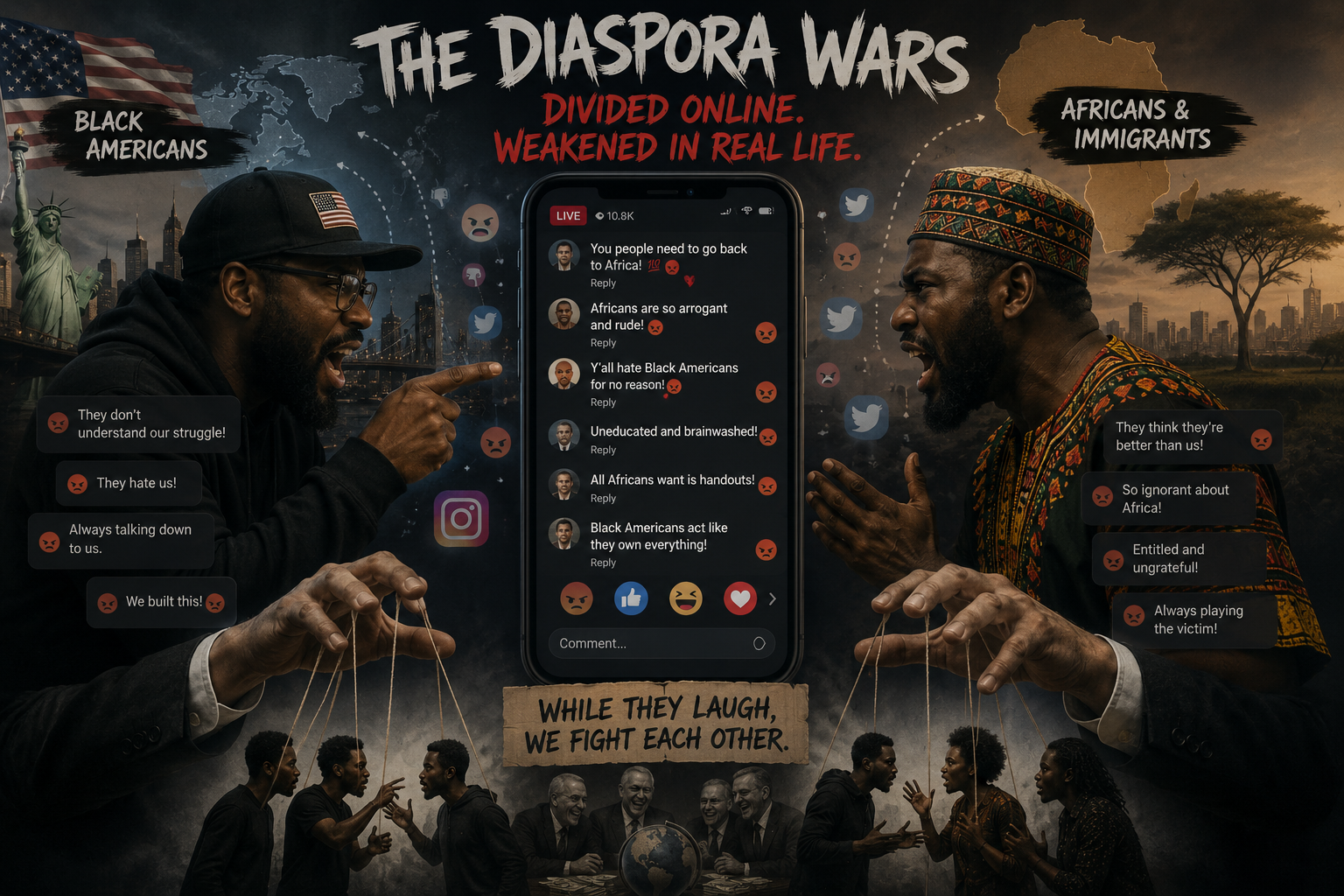
    The more I watch these online battles between Black Americans, Africans, Afro-Caribbeans, and other members of the African diaspora, the more convinced I become that they serve almost no productive purpose. At best, they are fueled by grifters within our own communities who care more about clicks, engagement, and money than they do about Black liberation or Black self-reliance. At worst, they function as a psychological operation that keeps Black people divided while distracting us from the systems that continue to harm all of us.

    The tragedy is that these conflicts are built on the words and actions of a relatively small number of people. Social media algorithms take the most outrageous opinions from a handful of Black Americans and immigrants, amplify them to millions, and convince us that these fringe voices represent entire communities. Existing mistrust, jealousy, and stereotypes (many of which were created and reinforced by white supremacist systems) do the rest.

    The supposed barrage of negative comments and feelings haven’t been my experience. I’ve spent time in the Dominican Republic, and I found most people to be warm and welcoming. I’ve traveled throughout Africa without experiencing the hostility that social media would have you expect. I’ve visited the Caribbean, and while many people understandably assume Americans have endless amounts of money, my interactions have overwhelmingly been positive. More importantly, I don’t stay isolated in luxury resorts. I spend time among everyday people.

    Even here in the United States, many of my friends are immigrants. They respect me, and many have expressed that they want to be accepted by Black Americans just as much as Black Americans want to be accepted by them.

    That’s a reality you don’t often see reflected online.

    Unfortunately, every Black community has people who have internalized anti-Black beliefs. Coons exist in every nationality and every ethnicity. That shouldn’t surprise anyone. After centuries of slavery, colonialism, segregation, imperialism, and the constant message that Black people are somehow inferior, many of us have absorbed those ideas in one form or another. When you’ve been taught for generations that your people contributed nothing to civilization except labor or criminality, some people eventually begin to believe it.

    Internalized oppression doesn’t stop at national borders.

    If we are serious about Black liberation, I believe the only path forward is Pan-Africanism.

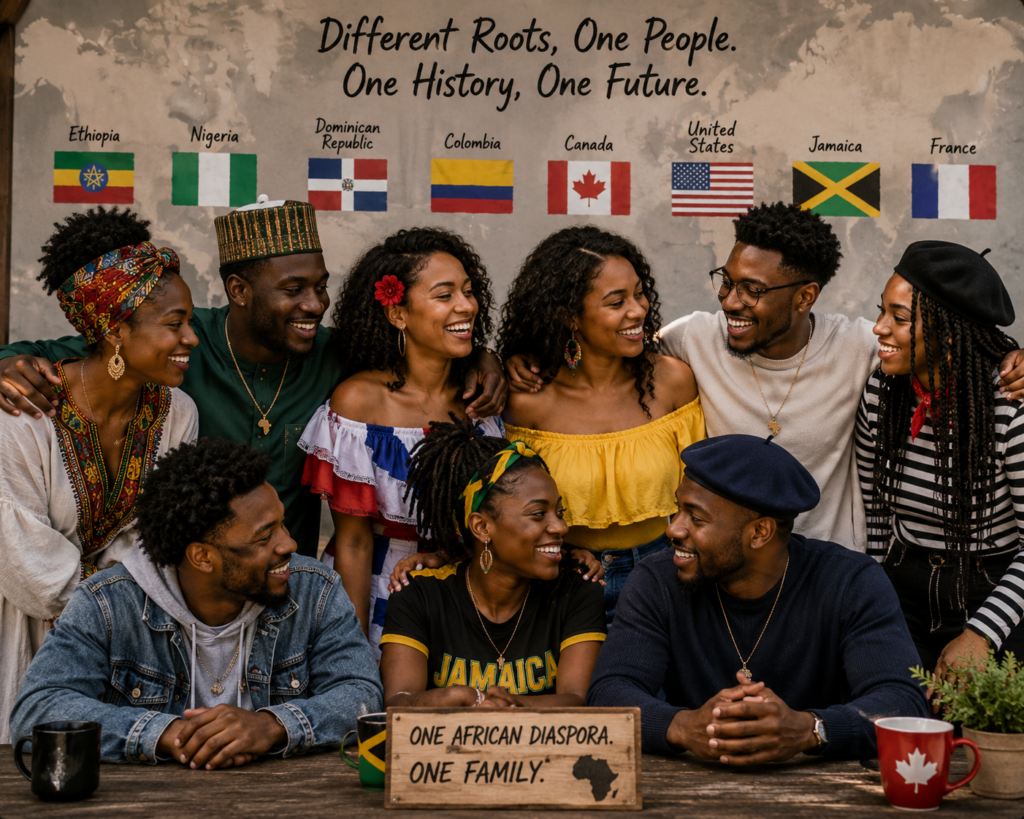
    That doesn’t mean pretending our experiences are identical. Black Americans have a unique history rooted in slavery, Jim Crow, and the ongoing struggle for civil rights. Africans have their own histories shaped by colonialism, independence movements, and modern political challenges. Afro-Caribbeans, Afro-Latinos, and other members of the diaspora have their own distinct experiences as well.

    Recognizing those differences shouldn’t prevent us from recognizing our shared humanity and our shared struggle.

    We are connected not only through ancestry but through centuries of resistance against systems built on white supremacy and the ideology of Black inferiority. Those systems have always benefited when Black people distrust one another more than they distrust the institutions that marginalize all of us.

    We shouldn’t allow a handful of loud voices on social media to define our relationships.

    Ignore the people whose entire online presence depends on attacking other Black people. Be skeptical of pseudo-intellectuals who use selective history to create division rather than understanding. And let’s stop demonizing foreign-born Black people over hypothetical reparations that have neither been promised nor seriously pursued by either major political party.

    I wholeheartedly support the idea and the pursuit of reparations. They can help address historical injustices and repair some of the damage caused by centuries of oppression. But no amount of money can guarantee genuine Black liberation if we remain divided and lack a shared vision for our future.

    Liberation requires more than compensation.

    It requires education, unity, and a unwavering love and trust of our people as a collective.

    One lesson I think we should seriously consider comes from communities that invest heavily in teaching their children history, identity, culture, and collective responsibility outside of traditional public education. One such community are Jewish people. Academic subjects are important, but so is learning who you are, where you come from, and what obligations you have to your community.

    We need Afrocentric educational spaces that strengthen our understanding of African civilizations, the global African diaspora, and the interconnected histories of Black people everywhere. Those spaces should include Black Americans, Africans, Afro-Caribbeans, Afro-Latinos, and every other branch of the African family.

    The encouraging news is that this work is already happening.

    I’ve seen Africans sharing the history of Black Americans with wider audiences. I’ve seen members of the diaspora eager to learn from one another, exchange culture, build businesses together, and strengthen Black institutions. There are far more people interested in unity than social media would have us believe.

    Those people deserve more attention than the influencers profiting from division.

    Our goal should never be isolation or xenophobia. Black Americans should not view other Black people as competitors or outsiders simply because they were born elsewhere. Likewise, members of the diaspora should recognize the unique history and contributions of Black Americans without relying on stereotypes.

    History gives us a better example.

    The Civil Rights Movement did not exist in isolation. Black American leaders built relationships with African independence movements, Caribbean intellectuals, and freedom struggles across the globe. Ideas, strategies, and inspiration flowed in both directions because they understood something that many people online seem to have forgotten:

    Our liberation has always been connected.

    Instead of fighting one another over social media narratives, we should be building institutions, exchanging knowledge, strengthening our communities, and creating the kind of global Black solidarity that those who came before us envisioned.

    The diaspora wars may generate clicks but pan-African unity can generate freedom.

    We are stronger as a people when we are united.
  • Reanimating History: Using Deepfakes to Educate, Not Deceive

    Reanimating History: Using Deepfakes to Educate, Not Deceive

    When most people hear the term “deepfake,” they immediately think of misinformation. This is immediately what I thought. I think of fake speeches, manipulated videos, and the erosion of trust in what we see online. And to be fair, that concern is still very real for me. Deepfakes have already been used to put words in people’s mouths and create events that never happened.

    But what if we flipped that narrative?

    What if deepfake technology could be used not to deceive, but to educate?

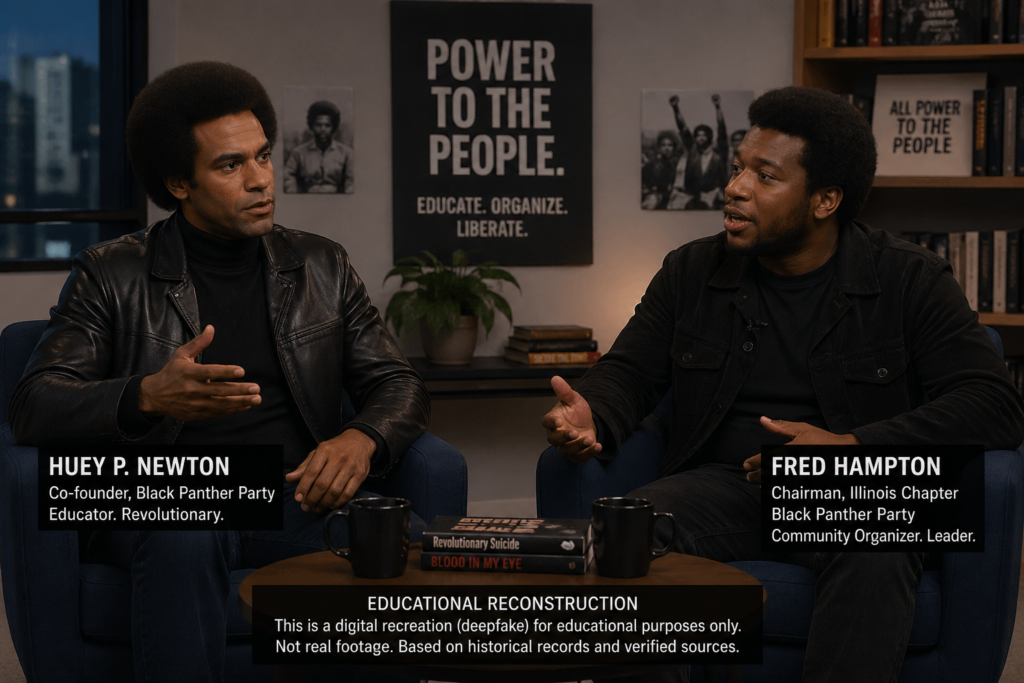
    For this project, I propose a beneficial use of deepfakes: recreating historical figures like Huey P. Newton and Fred Hampton in a clearly labeled, transparent, educational format. The goal is not to trick viewers into believing they are watching real footage, but to bring history to life in a way that is accessible, engaging, and emotionally impactful, especially for younger audiences.

    Huey P. Newton, co-founder of the Black Panther Party for Self Defense, and Fred Hampton, the charismatic chairman of the Illinois chapter, were central figures in the struggle for Black liberation in the late 1960s. Their words, ideas, and activism continue to resonate today.

    They are two of my favorite heroes in the fight for Black Liberation and Black leftist thought and activism.

    But for many people, they remain misunderstood and distant historical figures rather than living voices.

    Using deepfake technology, we could recreate these figures delivering their actual speeches, drawn directly from verified historical texts and archives. For example, Newton’s writings on self-defense and community programs could be presented in a video format that allows viewers to “see” and “hear” him speak. Similarly, Hampton’s speeches on economic unity and coalition-building can be reconstructed to highlight his vision vividly and compellingly.

    Importantly, this project would be built on transparency. Every video would include clear disclaimers stating that it is a digitally recreated performance based on historical records. The script would be sourced from credible materials such as the National Archives and educational foundations, ensuring accuracy and respect for the historical record.

    This approach could be especially powerful in classrooms and digital media spaces, where attention spans are short and traditional text-based learning can struggle to connect. Seeing Newton and Hampton speak, even in a recreated form, could spark curiosity, empathy, and deeper engagement with history.

    If done responsibly, deepfakes don’t have to be a threat. They can be a bridge, connecting past and present, and helping important voices continue to be heard.

    An AI image of Huey P. Newton and Fred Hampton having a discussion in an office decorated with pictures, books, and slogans.
    A deepfake video of Huey P. Newton and Fred Hampton having a conversation based on speeches, writings, and other evidence could educate many people on the mission, impact, and legacy of the Black Panther Party.
  • Who Owns the Digital Public Square? Power, Platforms, and the Illusion of Free Speech

    Who Owns the Digital Public Square? Power, Platforms, and the Illusion of Free Speech

    In early 2025, social media platforms didn’t merely tweak their policies. They revealed something deeper about who actually controls the modern “public square.” Meta’s decision to eliminate independent fact-checkers in favor of “community notes,” framed as a return to free expression, corresponded with a broader political shift tied to the transition of power in Washington (the start of Trump’s second term in office). At the same time, users reported being automatically connected to new presidential accounts during the transition, highlighting the minute control individuals may actually have over their own digital environments.

    These developments encourage us to contemplate the ownership of social media and how it is administered and regulated.

    The benefits of centralized platforms such as Facebook, Instagram, and X are obvious. They allow for massive, instantaneous communication across geographic and social boundaries. These platforms function as digital “town squares” where people can exchange ideas quickly and at scale. Movements like Black Lives Matter, #MeToo, and even global protest movements have relied on these centralized networks to organize, mobilize, and amplify voices that might otherwise be marginalized.

    But the drawbacks are just as significant and arguably more dangerous. These platforms are not public spaces in the traditional sense. They are privately owned, profit-driven environments. This makes the “public square” analogy misleading because these platforms are designed to maximize engagement and revenue. They are not necessarily environments of democratic deliberation.

    That means outrage, misinformation, and polarization are not bugs. Instead, they are features of a media space in which these consequences lead to engagement and engagement leads to profits.

    We’ve already seen the consequences. The Free Speech Project highlights how Facebook’s failure to control hate speech contributed to violence against the Rohingya in Myanmar. In the U.S., misinformation and extremist content have spread rapidly across platforms, influencing elections, public health decisions, and even acts of violence. At the same time, platforms have been accused of censorship, whether through banning users or limiting content tied to political conflicts.

    So we’re stuck in a paradox. Too much moderation can be interpreted as censorship, but too little moderation can lead to societal harm.

    This brings us to the question of whether we should depend on the goodwill of platform owners. The events of 2025 suggest we shouldn’t. Meta’s policy changes appear, at least in part, to be influenced by political pressure and shifting relationships with those in power. When billionaires and corporations control the infrastructure of public discourse, their incentives, whether political, financial, or personal, inevitably shape what we see and say.

    Government intervention, however, is not a simple solution. The Supreme Court has heard arguments on whether social media companies are more like publishers with editorial rights or common carriers that must host all speech. Too much regulation risks violating the First Amendment and giving the state excessive control over speech. Too little regulation leaves private companies with unchecked power.

    So what should society actually do?

    First, we need to move away from the idea of a single, centralized “public square.” A more realistic and democratic approach can be a plurality of spaces, or “counterpublics,” where different communities can engage on their own terms. Decentralized platforms, such as Mastodon or other federated networks, offer one possible path forward by distributing power rather than concentrating it.

    Second, structural reforms are necessary. This should include antitrust laws and policies to break up monopolistic control, provide stronger transparency requirements for algorithms, and allow users to move their data and communities across platforms. “Portability” shifts some of the power back to users rather than locking them into corporate ecosystems.

    Third, platforms themselves need accountability mechanisms that go beyond PR-driven “community standards.” Community notes might sound democratic, but they can also be manipulated or ignored. Without enforceable standards, they risk becoming a substitute for responsibility rather than a solution.

    On a personal level, I’ve started thinking more critically about where and how I engage online. I still use major platforms because, realistically, that’s where the audience is. But I’m increasingly aware that I’m operating in someone else’s space, under someone else’s rules.

    That’s changed how I approach content, conversations, and even what I choose to amplify. I can feel myself changing with every online interaction from a courteous and nuanced person to a more radical and confrontational person. I’m also paying more attention to alternative platforms and independent media spaces that aren’t driven purely by algorithmic engagement.

    At the end of the day, the biggest myth we need to let go of is that social media is a neutral public square. It never was. It’s a privately owned system that shapes public discourse in ways most users barely understand.

    The real question isn’t just who owns the digital public square. Rather, it’s whether we’re willing to keep pretending it belongs to all of us.

  • Extreme Sychophancy in the White House (An Invitation to my TikTok)

    Extreme Sychophancy in the White House (An Invitation to my TikTok)

    My name is Mario, and I was hoping you could check out this brief video of me ranting about the level of sychophancy in the Trump White House.

    There’s a difference between loyalty and outright sycophancy, and lately, that line has been completely erased in American politics.

    In my TikTok video, I briefly break down the level of blind praise and performative loyalty emanating from the Trump White House and how annoyingly unsettling it is.

    When public officials seem more focused on flattering one person than serving the public or speaking honestly, it raises serious questions about leadership, accountability, and the health of our political system. The goal is not to provide the American public with accurate information. Instead, the goal is to carry favor with Donald Trump by constantly over-complimenting him.

    What stood out to me, and what I highlight in the video, is how normalized this behavior has become. The constant sycophantic praising, followed by unrealistic claims designed more to make Trump seem like a divine solution to every problem facing the United States, doesn’t feel like governance. It feels like something else entirely. And regardless of where you fall politically, that should at least make you and any of us very concerned.

    I’m not interested in empty outrage, even though my language is often colorful and could perhaps rub some the wrong way. I’m interested in conversations that prompt people to think a little deeper about what we’re seeing and accepting in our politics and our society. This is true of most of my TikToks.

    If that’s the kind of discussion you’re into, check out other videos on my TikTok. I’m going to resume posting more content like this, of me breaking things down, asking uncomfortable questions, and keeping it real.

    As with this blog and my social media, I invite you to join the conversation, even if you disagree with me. Just be aware that if you bite (figuratively speaking), I bite back.

    An AI generated image of people in suits surrounding President Donald Trump who is sitting on a throne. The people around him are praising him as he soaks in all of it.
    This is not much of an exaggeration of how it really is.

  • Pan-Africanism, Repatriation, and the Hard Truths I Didn’t Want to Admit

    Pan-Africanism, Repatriation, and the Hard Truths I Didn’t Want to Admit

    It gives me no pleasure to write this, but I need to be honest with myself… and with everyone who has followed my thoughts on Africa, Pan-Africanism, and repatriation.

    For the past several years, I have seriously considered repatriating to Africa, especially Ghana. I’m not trying to do this as some fantasy vacation or “spiritual journey,” but as a real-life project. I saw myself, and still see myself, as part of something bigger. I saw myself as contributing, building, and helping blaze a trail for other people in the African diaspora who wanted to reconnect materially, politically, and culturally with the continent.

    And to be clear: I never went into this thinking Africa would be paradise.

    I already understood that many things Americans take for granted, such as reliable utilities, stable infrastructure, predictable bureaucracy, clean drinking water, consistent internet, traffic laws, and public systems that mostly function, are not guaranteed in many African countries. I also already knew that corruption, bribery, and dysfunction are real parts of daily life in many places.

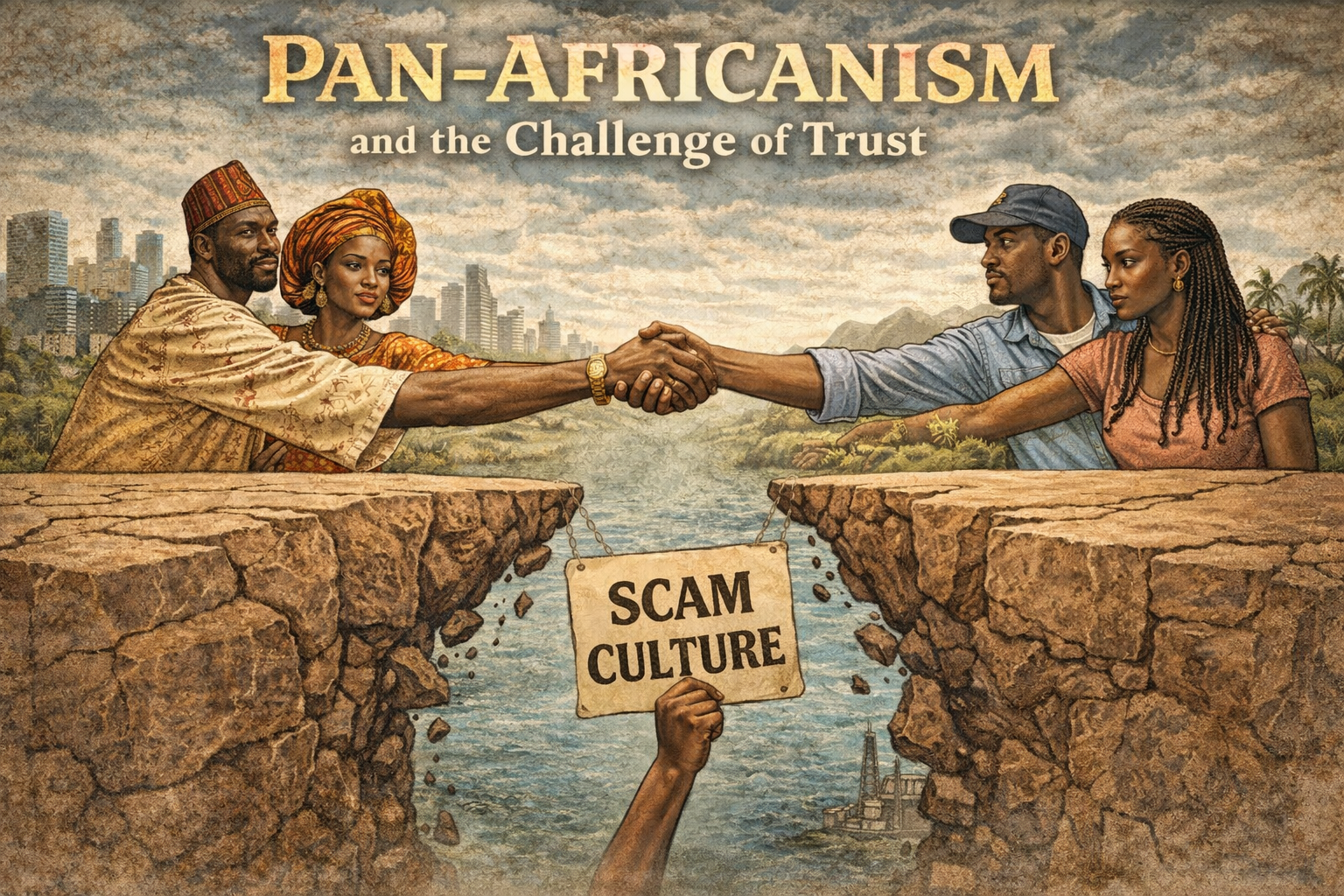
    But there is one issue that I have tried to rationalize for too long. That issue is scam culture.

    More and more Black American expats and Diasporans are citing it as one of the main reasons they leave Africa and return to the United States. And honestly, I can no longer dismiss that as whining, cultural ignorance, or anti-African cynicism.

    When people constantly raise prices, exploit your unfamiliarity, or see you first and foremost as a walking wallet, it destroys trust. And without trust, there can be no real unity.

    Yes, poverty is real. Yes, exploitation by the global North has devastated much of Africa. Yes, many people are surviving however they can. I understand all of that.

    But theft is still theft.

    And if the relationship between Africans on the continent and people in the diaspora is going to mean anything, it cannot be built on symbolic slogans while one side is constantly being hustled by the other.

    That does not mean I have abandoned Pan-Africanism.

    Far from it.

    I still believe deeply that unity among African peoples and the diaspora is essential to Black liberation. I still believe that a strong Africa (economically, militarily, scientifically, and industrially) is necessary if Black people anywhere are going to be taken seriously in a world that often sees us as little more than labor, entertainment, or obstacles to resource extraction.

    However, belief in unity cannot mean dishonesty.

    If we are serious about building a future together, we must be willing to say hard things out loud. We cannot build solidarity while normalizing exploitation among ourselves. We cannot discuss nation-building while preying on each other for crumbs.

    I still believe in African settlement. I still believe in African people.

    I still believe the diaspora has something valuable to offer the continent, and that Africa has much to teach us in return.

    But if we are ever going to build real bridges between us, those bridges will have to be built on more than romance, symbolism, and rhetoric.

    They will have to be built on trust.