Category: Culture & Society

  • What Went Wrong With the Atheist Movement

    What Went Wrong With the Atheist Movement

    One of the ongoing debates about the atheist movement of the 2000s and early 2010s is whether it “collapsed” because it became too politically progressive or “too woke.”

    I don’t think that explanation holds up.

    In my view, the real problem with the movement was something else entirely: it contained a significant number of reactionary voices, particularly white male commentators, who eventually stopped hiding their hostility toward women, marginalized communities, and racial minorities.

    For a while, those tensions remained mostly beneath the surface. But when controversies like Elevatorgate, Gamergate, and similar disputes erupted, they exposed cultural problems that had been developing inside the movement for years.

    Regardless of where one stood on the details of those specific incidents, they represented opportunities for reflection and self-examination.

    Unfortunately, many of us (including myself) responded defensively rather than thoughtfully.

    Instead of listening to people who felt alienated or marginalized within atheist spaces, the dominant reaction in many circles was to dismiss their concerns, mock them, or accuse them of trying to impose political correctness on what was supposed to be a rationalist community.

    In hindsight, that response made things worse.

    Atheism itself is simply a position on one question: whether gods exist. But movements built around atheism inevitably become social communities, and communities bring their own cultural dynamics.

    When those dynamics include arrogance, hostility, or a lack of empathy, people eventually notice.

    The uncomfortable truth is that many of us behaved like self-important gatekeepers who were quick to criticize religion but much slower to examine our own toxic attitudes and behavior.

    The movement’s credibility suffered as a result.

    Looking back, it’s clear that moments of conflict within the atheist community could have been growth opportunities. They could have encouraged more thoughtful conversations about inclusion, respect, and how a community built around skepticism should treat the people within it.

    Instead, too often, those conversations devolved into hostility and factionalism.

    If there is a lesson to take from that period, it is a simple one: skepticism should not only apply to religious beliefs.

    It should also apply to our own behavior.

  • Political Demonization and the Collapse of Civil Discourse

    Political Demonization and the Collapse of Civil Discourse

    Over the past several decades, a pattern has emerged in American political rhetoric, particularly in certain corners of conservative media and political leadership.

    People on the political left are not merely described as political opponents. We are often portrayed as existential threats to the nation.

    For years, many prominent conservative commentators and politicians have repeatedly described Democrats and left-leaning Americans as:

    • Anti-American or people who “hate America”
    • Socialists or communists
    • Participants in child-trafficking conspiracies
    • Doctors who secretly perform gender surgeries on children without parental knowledge
    • Supporters of violent crime
    • Architects of mass immigration designed to manipulate elections
    • Violent extremists who are responsible for “burning down cities”
    • Lazy individuals who simply want government handouts
    • Rampant sexual deviants who want to groom children into non-heteronormative lifestyles

    Many of these accusations are not policy disagreements. They are moral accusations. They are claims that state that their political opponents are fundamentally dangerous, corrupt, or evil.

    When these claims are repeated constantly through media ecosystems, they can shape how entire audiences perceive political reality. Over time, exaggerated or false narratives can become accepted as unquestioned truths.

    This dynamic has serious consequences.

    When political opponents are portrayed not simply as people with different policy views but as criminals, traitors, or threats to society, it becomes easier for some individuals to justify hostility or even lethal violence against them.

    At the same time, many of the same political figures who use this kind of rhetoric often react strongly when criticism is directed toward them. Labels such as “bigot” (in any form), “authoritarian,” or “fascist” are often condemned as unfair or offensive, even when critics argue that those labels are based on observable political behavior.

    The result is a deeply polarized environment in which one side hurls childish insults, irrational accusations, and charges of civic disloyalty, which endangers those on the receiving end. Then they clutch their pearls when met with the same energy in response.

    In the end, our political conversation devolves into arguing against strawman caricatures of people, on either side, rather than having good-faith arguments based on facts and reality.

    Healthy democratic societies require disagreement. Political conflict is inevitable and often productive.

    But democracy becomes fragile when political actors stop treating their opponents as fellow citizens and begin treating them as soulless enemies who don’t love the land that we are in.

    Once that shift happens, civil discourse becomes nearly impossible, and political conflict begins to resemble cultural warfare rather than democratic debate.

  • Diaspora Divisions and the Cost of Infighting

    Diaspora Divisions and the Cost of Infighting

    One of the trends I have become increasingly frustrated with in recent years is the rise of diaspora conflicts among people of African descent, particularly the rhetoric coming from the Foundational Black American (FBA) movement and the American Descendants of Slavery (ADOS) movement.

    My criticism is not about recognizing the unique historical experience of Black Americans whose ancestors endured slavery and segregation in the United States. That history is real and deserves to be studied and acknowledged.

    Nor is my disagreement with these groups over the fight for reparations and the hypothetical distribution of any amount of personal funds that is a direct result of said fight.

    The problem arises when that recognition turns into hostility toward other Black communities, such as Africans, Caribbeans, Afro-Latinos, and others within the broader African diaspora (the sixth region of Africa).

    Movements that frame liberation as a zero-sum competition between groups of Black people misunderstand the history of Black struggle.

    Black liberation movements have always been global.

    Pan-African thinkers, such as Marcus Garvey, W.E.B. Du Bois, Kwame Nkrumah, Malcolm X, Kwame Ture, and many others, understood that the struggle against racism and colonialism was not confined to a single country. Activists, intellectuals, and artists from across the African diaspora have participated in and led movements for civil rights, cultural expression, and political freedom.

    This global exchange of ideas and customs had always shaped Black American culture.

    Music, political ideas, literature, and social movements have flowed back and forth between the United States, Europe, Canada, the Caribbean, Africa, and Latin America. That cross-pollination helped create many of the cultural forms and political traditions that people celebrate today.

    For that reason, turning these relationships into ideological battlegrounds does not strengthen Black communities. Instead, it weakens them.

    Diaspora conflicts often distract from the structural issues that affect people of African descent globally: economic inequality, systemic discrimination, political marginalization, and the long historical legacy of colonialism and racial hierarchy.

    Even debates about policies such as reparations often become framed in ways that pit Black communities against one another. Yet those discussions are largely hypothetical at the moment, given that meaningful reparations programs in the United States remain politically distant.

    Arguing among ourselves over potential future policies does little to advance the broader goals of empowerment, economic development, and collective liberation.

    If the goal is Black power, Black wealth, and meaningful progress, then building solidarity across the African diaspora is far more productive than deepening internal divisions.

    That does not mean ignoring real disagreements or historical differences.

    But it does mean recognizing that the struggles of people of African descent have always been interconnected, and that fragmentation ultimately benefits those who would prefer those struggles to remain divided.

  • A Personal Note on Atheism and Religious Freedom

    A Personal Note on Atheism and Religious Freedom

    My name is Mario Stanton. I am an atheist and the founder of the Black Atheists Facebook group. Over the years, the group received attention from several media outlets, including The Grio and The New York Times.

    I mention this not to boast, but to clarify something important: I am not affiliated with any religious organization.

    My atheism is the result of years of study, reflection, and personal experience. I do not believe in any gods, and I often find many religious doctrines philosophically and intellectually irrational.

    However, there is an important distinction between disagreement and hostility.

    While I do not share religious beliefs, I strongly support the right of people to believe and practice the religion of their choice. Freedom of conscience is one of the most important principles in a pluralistic society.

    Over the years, I have found myself defending religious communities, particularly Muslims, against unfair stereotypes and discrimination. That might surprise some people, considering that my atheism would make me unwelcome in certain religious contexts, particularly with many Muslims.

    But fairness requires consistency.

    Muslims, like every other group, are not a monolith. Some individuals are admirable, compassionate people. Others are not. The same is true of Christians, Jews, Hindus, pagans, atheists, and every other category of human being.

    No group has a monopoly on virtue or vice.

    Unfortunately, public discourse often treats entire religious communities as if they can be defined by the actions of their worst members. This is one of the key characteristics of bigotry.

    Muslims are sometimes generally reduced to extremists in the public imagination. However, Christians and Jews are immune from this, even though Christians are sometimes associated with white supremacy and other troubling beliefs, and Jews are associated with Kahanism and extreme Zionism.

    Religious extremism is religious extremism, no matter what religion it is tied to.

    The reality is much simpler: people are individuals. Some are kind, thoughtful, and ethical. Others are not.

    My position is straightforward. I will continue to disagree with religious beliefs that I find unconvincing, but I will also continue to defend the right of others to practice their faith freely. I will do this as long as those practices do not harm others or infringe on their rights.

    Disagreement is inevitable in a diverse society.

    But fairness should be non-negotiable.

  • The Real Reason Birth Rates Are Falling in the West

    The Real Reason Birth Rates Are Falling in the West

    Many political commentators, particularly in certain corners of the internet, claim that declining birth rates in Western countries are caused by cultural forces such as feminism, LGBTQ visibility, secularism, or multiculturalism.

    But the data tells a much simpler story.

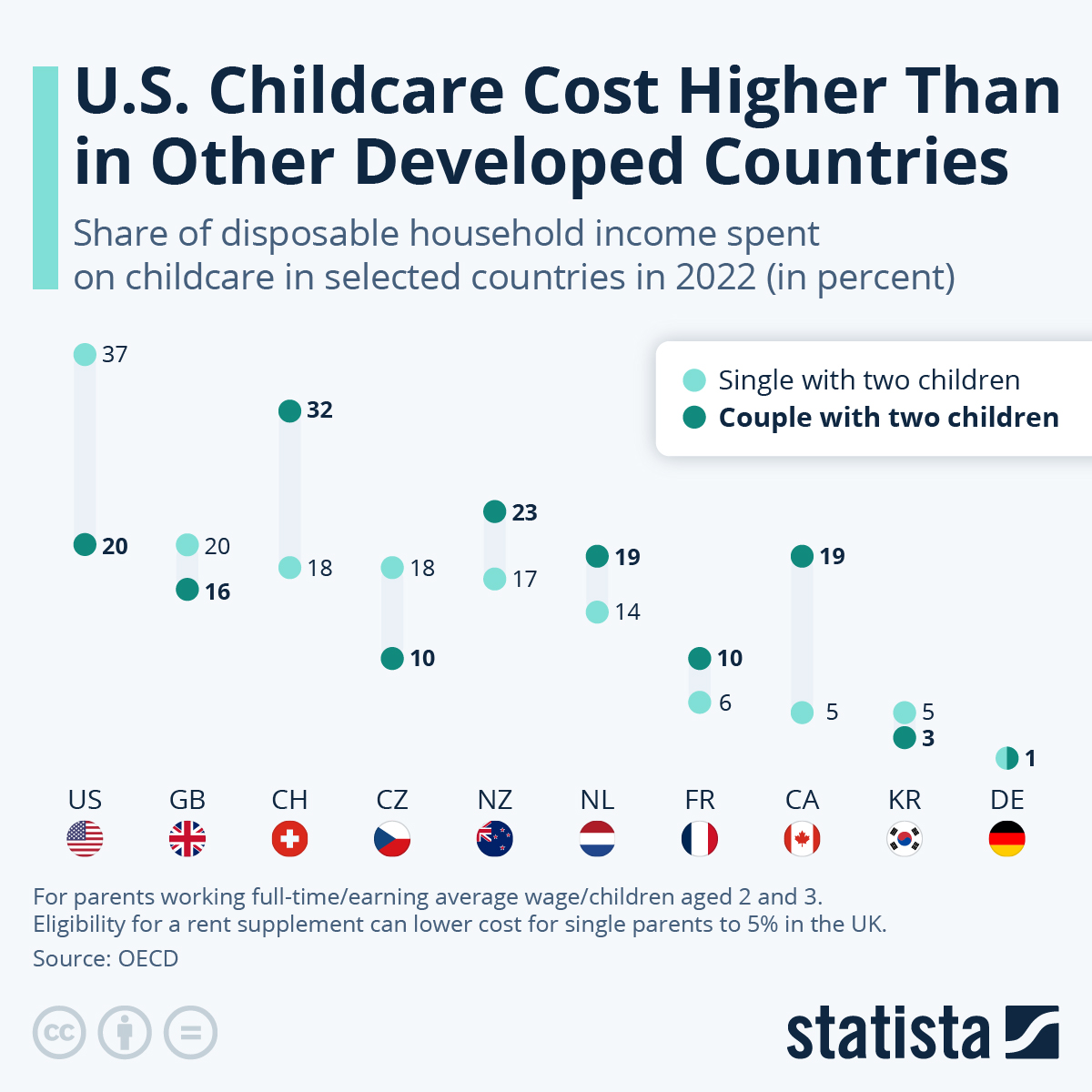
    Birth rates tend to decline in societies where the cost of living rises faster than wages and where raising children becomes financially burdensome. This pattern has been observed across numerous developed countries regardless of political ideology or cultural identity.

    The modern cost of raising children is enormous.

    Childcare alone can cost more than rent or a mortgage in many American cities. Necessities for early childhood, such as diapers, formula, baby supplies, healthcare, and education, add thousands of dollars in additional expenses each year. Even the cost of childbirth itself in the United States can reach tens of thousands of dollars, depending on insurance coverage.

    Beyond early childhood, families face additional financial pressures, including school activities, transportation, clothing, healthcare, housing, and eventually the cost of higher education.

    For many households, the financial calculation becomes unavoidable.

    Having children is no longer simply a social expectation—it is a long-term economic commitment that can reshape a family’s entire financial future.

    There is also the question of uncertainty.

    Parents today worry about issues that earlier generations rarely considered: school shootings, economic instability, climate change, political polarization, and the general unpredictability of the modern world. Whether those fears are fully justified or not, they still influence how people think about bringing children into that world.

    Historically, family structures looked very different.

    In the early twentieth century, large families were common not because people were more “family-oriented,” but because economic and social conditions were different. Housing was cheaper, extended families often lived together, and childcare responsibilities were shared across multiple generations.

    Children were also seen as economic contributors to the household rather than long-term financial obligations.

    Today, the expectations are very different. Families are expected to provide private bedrooms, extensive educational opportunities, extracurricular activities, and a high standard of living for each child. At the same time, extended family support systems have weakened, and childcare has become a market commodity rather than a shared community responsibility.

    The result is predictable.

    Many couples decide that having fewer children, or no children at all, is the most financially responsible decision they can make.

    If governments and societies genuinely want to increase birth rates, the solution is unlikely to come from cultural panic or political rhetoric.

    It will come from addressing the economic realities that make raising children increasingly difficult: housing costs, childcare affordability, healthcare expenses, and long-term financial security.

    When people feel economically stable and confident about the future, they are far more likely to start families.

    History suggests that prosperity and security—not cultural fear—are the conditions under which birth rates tend to rise.

  • Crime Statistics and the Problem of Misinterpretation

    Crime Statistics and the Problem of Misinterpretation

    Here is a simple analogy that helps illustrate how crime statistics are often misunderstood.

    Black Americans make up roughly 70% of professional American football players in the NFL.

    Does that mean every Black person is good at football? Of course not.

    Does it mean that most Black people are good enough to play professional football? Not even close.

    The reality is that less than one percent of high school and college football players ever make it to the professional level. Even within the population that is most heavily represented in the sport, only a tiny fraction actually reach the NFL.

    The same type of misunderstanding often appears in conversations about crime statistics.

    The United States currently has about 48 million Black residents. According to FBI data, roughly 2 million Black Americans are arrested for crimes in a given year. Even if we assume every arrest involved a guilty individual (which is clearly not the case) and that these arrests aren’t repeat arrests of many of the same people, that would still represent only about 4% of the Black population.

    The numbers become even smaller when we look at incarceration.

    According to the Bureau of Justice Statistics, less than half of one percent of Black Americans are currently in prison.

    That means more than 99% of Black Americans are not incarcerated.

    In other words, the overwhelming majority of Black people in the United States are law-abiding citizens.

    Yet public discussions about crime often create the impression that criminal behavior defines the community as a whole. That perception is driven less by statistical reality and more by media coverage, political rhetoric, and social stereotypes.

    Crime exists in every society and within every demographic group. But when statistics are removed from their full population context, they can easily be used to reinforce distorted narratives.

    Understanding numbers requires more than simply repeating percentages. It requires examining what those numbers actually represent relative to the size of the population being discussed.

    When viewed in that broader context, the stereotype of widespread criminality collapses under the weight of the data.

    Most people, regardless of race, are simply trying to live their lives, support their families, and stay out of trouble.

    The statistics, when properly understood, reflect that reality.

  • The Myth of “Woke” Entertainment

    The Myth of “Woke” Entertainment

    One of the more exhausting cultural debates today revolves around the idea that movies, television shows, and video games have suddenly become “woke.”

    The accusation is usually framed as if diversity in entertainment is something new. That it is an artificial political imposition that has recently invaded popular culture.

    But that claim ignores decades of history.

    Hollywood and the entertainment industry have been practicing what could easily be called “forced diversity” for a long time. The difference is that, historically, the diversity often involved inserting white characters into stories that were originally centered around other cultures.

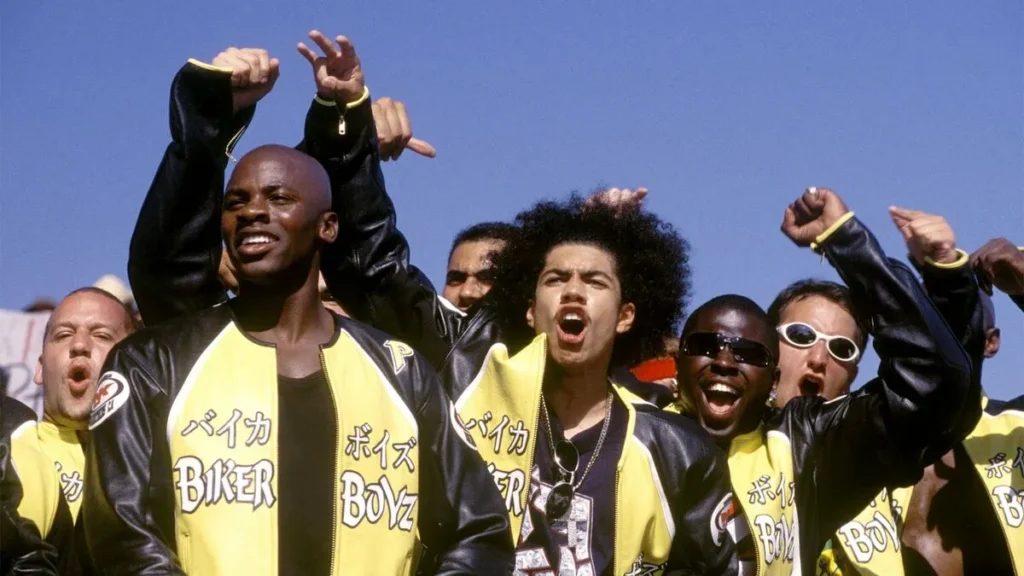
    Consider the 2003 film Biker Boyz. The movie was marketed as a story about predominantly Black motorcycle clubs. Yet by the time studio executives and producers finished reshaping the film, the central motorcycle crew looked far more like a corporate marketing brochure than a portrayal of the subculture it was supposed to represent.

    Kid and his motorcycle gang are cheering on their brother in the movie Biker Boyz

    This wasn’t unusual.

    Films like American Me (1992), Blood In, Blood Out (1993), Colors (1988), and even the breakdancing movies Breakin’ (1984) and Breakin’ 2: Electric Boogaloo (1984) frequently inserted characters designed to make the stories more accessible to mainstream audiences.

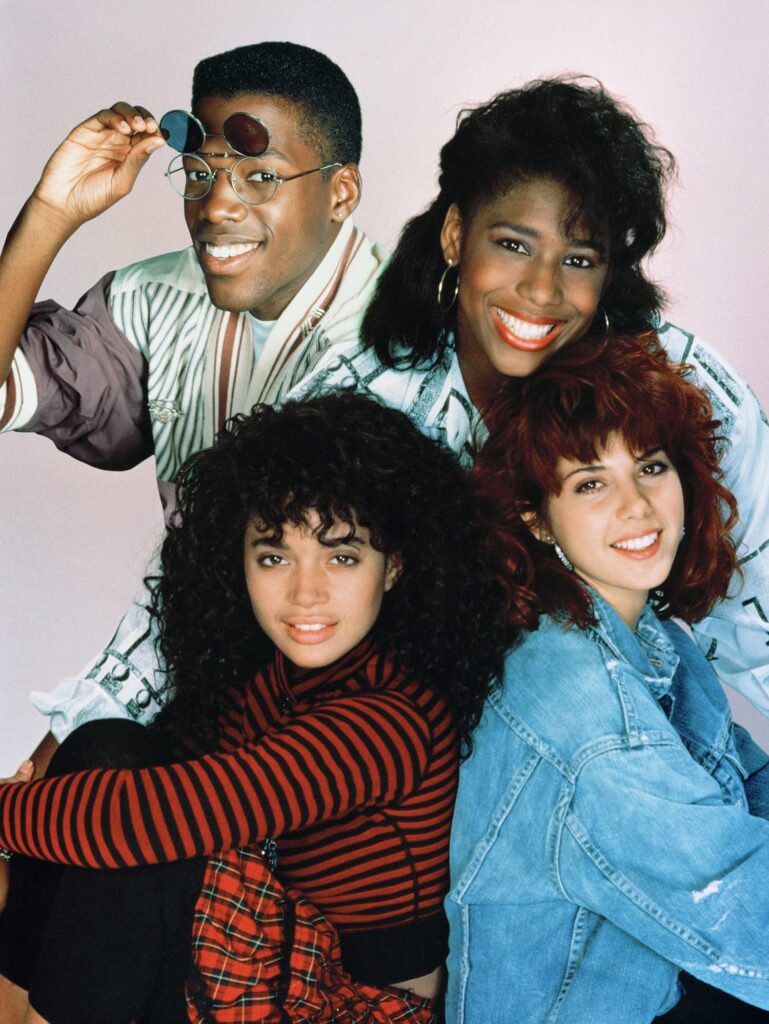
    Television followed the same pattern. The sitcom A Different World was originally conceived as a story about a white student attending a historically Black college. Only later, after becoming a spinoff of The Cosby Show, did it shift toward focusing on Black students and Black campus life.

    A Different World was originally supposed to be about Marisa Tomei’s character, Maggie Lauten (bottom right), going to an HBCU before it was decided that it was going to be a spinoff of The Cosby Show.

    In other words, the entertainment industry has long modified stories to appeal to broader audiences. Diversity in casting and storytelling is not a new phenomenon.

    This is not necessarily a bad thing. In fact, seeing more diversity, even in predominantly Black and Latino places and cultures, is good for society, in my humble opinion.

    So what actually changed?

    The major difference today is not the presence of diversity. The difference is who is being centered.

    For decades, popular entertainment overwhelmingly focused on white male protagonists. Stories that did not originally feature them were often altered to include them.

    Today, audiences are increasingly encountering films, television shows, and video games where women, racial minorities, LGBTQ characters, and other groups are present as main characters rather than background figures.

    For some viewers, this shift feels like displacement.

    But representation in storytelling reflects the societies that produce those stories. Modern societies are diverse, and entertainment inevitably reflects that reality.

    None of this means that every casting decision or creative choice is above criticism. There are legitimate artistic discussions about authenticity, historical context, and storytelling choices.

    For example, fantasy worlds inspired by specific historical cultures may raise reasonable questions about how representation is handled within those settings. Those discussions can be worthwhile when they focus on artistic and historical coherence rather than ideological outrage.

    There are legitimate artistic criticisms of Black Valyrians in HBO’s House of the Dragon. However, it must also be noted that these characters are from a fictional world in a fictional universe.

    But most of the current backlash has little to do with artistic and/or historical integrity.

    Instead, it reflects discomfort with the simple reality that entertainment no longer assumes that one particular demographic must always be the default center of every story.

    The sky is not falling because a video game allows players to customize their character’s identity and pronouns. A science fiction series featuring a Black protagonist does not signal the collapse of civilization. A female action hero does not erase decades of male-led action films.

    What has changed is not storytelling itself.

    What has changed is that more people are finally allowed to see themselves in the story.

  • Why Tangible Benefits Matter in Politics

    Why Tangible Benefits Matter in Politics

    The often-overlooked reality of American politics is that policy messaging often matters less to voters than tangible benefits they can see and feel in their everyday lives. This is something that the professional pundit class, political consultants, and many political analysts often miss.

    During the COVID-19 pandemic, stimulus checks were sent to millions of Americans. Although the checks were authorized through legislation passed by Congress, many people associate them directly with Donald Trump because his administration ensured his name appeared on them.

    Symbolism matters in politics.

    For many struggling households, those payments were not abstract policy decisions. They were rent money, grocery money, or the difference between making it through the month and falling further behind.

    This illustrates a broader lesson that many political strategists understand but that some policymakers still underestimate: voters tend to reward leaders who appear to deliver direct, tangible benefits.

    In contrast, the Democratic Party has often struggled to communicate its policy achievements in ways that feel immediate and visible to ordinary voters.

    The Biden administration did authorize $1,400 stimulus payments and temporarily expanded the Child Tax Credit, which significantly reduced child poverty while it was in place. Yet those policies were not framed with the same kind of direct political branding that many voters remember from the previous administration.

    Even more importantly, the expanded Child Tax Credit was allowed to expire after only one year, despite its measurable impact.

    For many voters, particularly those in economically struggling communities, this reinforces the perception that political leaders make promises but rarely sustain meaningful material improvements.

    That perception fuels cynicism and political apathy.

    When people feel that no political party consistently delivers real change, they often become disengaged or focus only on immediate personal survival rather than broader political issues. Concerns about systemic racism, economic inequality, or long-term policy debates can feel distant compared to the daily struggle of paying bills or putting food on the table.

    This dynamic also shapes how people interpret political messaging. When leaders speak about justice, reform, or social change without delivering visible economic improvements, the message can ring hollow to those who are struggling the most.

    None of these excuses the dangers posed by demagogic politics or authoritarian rhetoric. But it does highlight an important political truth: tangible benefits often carry more weight with voters than symbolic gestures and ideological arguments.

    If political leaders want lasting support from working-class communities, they cannot rely solely on rhetoric about values or identity. They must deliver policies that materially improve people’s lives and make sure those improvements are visible and sustained.

    Otherwise, frustration and disillusionment will continue to shape the political landscape.

  • The Problem With “Not All”

    The Problem With “Not All”

    One of the most common responses people give when a social problem is discussed is the phrase “not all.”

    Someone raises concerns about racism, sexism, or discrimination, and almost immediately someone replies: “Not all [fill in the blank] are like that.”

    Of course not.

    Only a complete fool would believe that every member of any group behaves the same way. Human beings are not monoliths. Most of us already understand that.

    But the phrase “not all” often serves a different purpose in these conversations.

    It is a defensive reaction.

    Instead of encouraging reflection, it frequently becomes a way to shift attention away from the behavior being discussed. The focus moves from addressing a problem to protecting the feelings or reputations of people who do not want to be associated with it.

    In practice, this can prevent honest discussions about patterns of behavior within societies.

    For example, when discussing racism, many people immediately emphasize that there are white individuals who have fought against racial injustice. And that is absolutely true. History includes many white allies who actively resisted slavery, segregation, and discrimination. These include people like John Brown, Joan Mulholland, Andrew Goodman, Michael Schwerner, and many others who risked or even lost their lives in the struggle for civil rights.

    Those individuals deserve recognition.

    But acknowledging those exceptions does not erase the broader historical reality that systems of racial hierarchy existed and were maintained by large numbers of ordinary people who were not actively resisting them.

    The same pattern appears in other social issues.

    Consider conversations about sexual violence. Most men do not commit acts of rape or assault. Yet when the topic arises, discussions often shift quickly toward defending men as a group rather than addressing the cultural attitudes that can enable or excuse harmful behavior.

    In both cases, the “not all” response shifts attention away from the underlying problem.

    The issue is not whether every individual participates in wrongdoing. The issue is whether members of a society are willing to acknowledge patterns of harm and take responsibility for addressing them.

    Accountability requires honesty.

    That honesty includes recognizing when people within our own communities (whether defined by race, gender, nationality, or ideology) have contributed to injustice. It also requires recognizing that silence, indifference, or passive acceptance can sometimes help sustain those injustices.

    True allies rarely feel the need to insist on the phrase “not all.” They already understand that criticism of a system or pattern is not the same thing as condemning every individual.

    They also understand that progress begins with self-reflection.

    No person or community is perfect. Growth requires acknowledging shortcomings, learning from them, and striving to do better.

    Defensiveness may protect our pride, but it rarely helps us confront the problems that still need to be solved.

  • What White Supremacy Actually Means

    What White Supremacy Actually Means

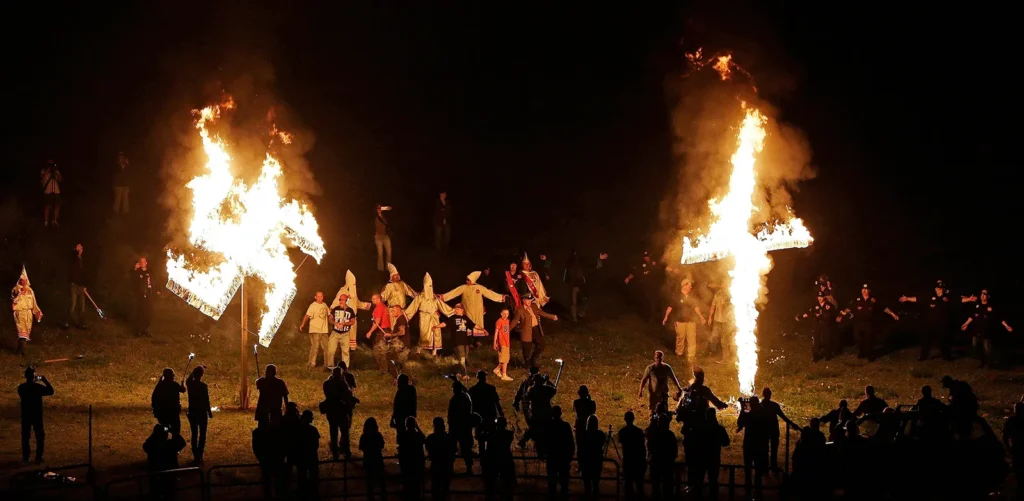
    In political debates today, the term “white supremacy” is often treated as if it only refers to extremist groups of people wearing robes, burning crosses, having shaved heads, sporting swastikas, or openly identifying with organizations like the Ku Klux Klan.

    A cross and a swastika burning at a modern Klan rally.

    But historically and academically, the concept is broader than that.

    White supremacy refers to the belief (explicit or implicit) that white people and white cultural norms represent the highest or most advanced model of civilization and humanity. It is the assumption that whiteness is the standard by which intelligence, morality, competence, and social order should be measured.

    This belief does not always appear in openly violent or in cartoonishly belligerent forms. It often appears in subtler assumptions about who is naturally suited for leadership, who is presumed competent, and who must constantly prove themselves.

    For example, racial explanations are frequently used to explain social outcomes. Certain groups are sometimes associated with crime, others with academic achievement, others with competent leadership, and others with athletic success.

    But when scientists examine many of these assumptions, the explanations often turn out to be social rather than biological.

    A useful example comes from long-distance running.

    For decades, athletes from Kenya and Ethiopia have dominated international distance running competitions, frequently winning Olympic and marathon events. Some Western researchers initially suspected that East Africans might possess unique genetic advantages that gave them superior endurance.

    After extensive study, scientists found no definitive genetic explanation.

    What they did find were social and environmental factors: training culture, altitude conditions, economic incentives, and the perception that success in distance running could provide a path to financial mobility.

    In other words, success was driven less by biology than by opportunity, culture, and motivation.

    The same dynamic appears in many other areas of life. When communities see certain fields as viable paths to advancement and upward socioeconomic mobility, they invest time, energy, and cultural value into those pursuits. This is true whether these pursuits are sports, academics, entertainment, or various professions (think of Irish immigrants of the 19th century and their attraction towards first responder professions).

    When people attribute success or failure primarily to race, they overlook these structural and social factors.

    That is where racial ideology begins to appear.

    If someone believes that race alone determines intelligence, morality, or ability, they are embracing a worldview that closely resembles classical racist thinking. The assumption that certain groups are naturally superior or inferior has historically been used to justify exclusion, discrimination, and unequal opportunity.

    Understanding these ideas requires moving beyond stereotypes and examining how beliefs about race shape expectations and institutions.

    White supremacy, in this broader sense, is not only about extremist organizations.

    It is about the belief that human potential can be ranked according to race, and that some groups are naturally meant to lead while others must struggle to be accepted.

    History and science consistently show that reality is far more complex than that.