Category: Culture & Society

  • Political Realignment and the Persistence of Racial Tension

    Political Realignment and the Persistence of Racial Tension

    One of the most uncomfortable facts in American political history is that the party alignments of the Jim Crow era no longer resemble the political landscape we see today.

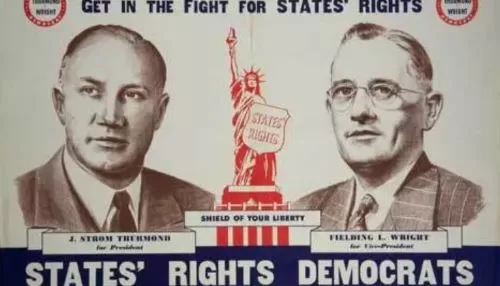
    During the late nineteenth and early twentieth centuries, most white voters in the South identified with the Democratic Party. The Democratic Party of that era included the segregationist political leadership that dominated Southern politics during the Jim Crow period.

    That began to change in the mid-twentieth century.

    After the passage of the Civil Rights Act of 1964, the Voting Rights Act of 1965, and the Fair Housing Act of 1968 (landmark laws supported and signed by Democratic leadership), the political map of the United States gradually shifted. Over the following decades, many white Southern voters moved toward the Republican Party, while Black voters overwhelmingly aligned with the Democratic Party.

    This shift did not happen overnight, but the trend is well documented in voting patterns from the late 1960s onward.

    Today, white voters, particularly white voters without college degrees and many white voters in the South, tend to support Republican candidates by significant margins. Meanwhile, Black voters remain one of the most consistently Democratic voting blocs in American politics.

    These voting patterns are measurable realities, even if they make people uncomfortable.

    At the same time, discussions about race in the United States often provoke strong reactions. Many Americans reject the idea that racial attitudes still influence political behavior. Others argue that the issue is not simply politics, but broader patterns of social separation.

    Sociologists have long observed that Americans often feel more comfortable within communities that resemble themselves culturally or demographically. Neighborhood patterns, school demographics, and social networks frequently reflect those tendencies.

    The result is a society that remains more segregated in practice than many people are willing to acknowledge.

    When people point out these patterns, the conversation often becomes heated. Accusations of racism are exchanged, defensiveness rises, and productive discussion becomes difficult.

    But acknowledging uncomfortable realities does not make those realities disappear.

    If Americans want to have honest conversations about race, politics, and social trust, then those conversations must be grounded in evidence rather than denial. Voting patterns, historical developments, and lived experiences all contribute to understanding the country we live in today.

    Ignoring those realities may feel easier in the moment, but it does little to address the underlying tensions that continue to shape American political life.


  • The Pandemic Conspiracy That Makes No Economic Sense

    The Pandemic Conspiracy That Makes No Economic Sense

    One argument that has circulated repeatedly since the beginning of the COVID-19 pandemic is the idea that governments and major industries somehow wanted lockdowns, mask mandates, and vaccine mandates.

    But when you stop and look at the economic reality, that claim becomes very difficult to understand.

    Entire sectors of the economy were devastated by the pandemic. Restaurants, tourism, hospitality, airlines, amusement parks, theaters, sports leagues, universities, entertainment industries, public transportation systems, and countless small businesses lost enormous amounts of revenue beginning in March 2020.

    Many of these industries lost billions of dollars. Some may never fully recover.

    If the goal of modern capitalism is economic growth (more consumption, more travel, more entertainment spending, more tourism, more investment), then deliberately shutting down large portions of the economy would make very little sense as a strategy.

    Yet conspiracy narratives often assume that powerful actors wanted exactly that outcome.

    This assumption ignores how economic systems actually function. Modern capitalism depends on expanding markets and constant activity. The pandemic disrupted supply chains, slowed production, closed venues, and drastically reduced consumer spending in many sectors.

    In other words, the pandemic did not strengthen the economic system. It destabilized it.

    At the same time, many of the people promoting conspiracy theories about public health measures express deep distrust of pharmaceutical companies while simultaneously promoting alternative drug treatments produced by the same pharmaceutical industry.

    That contradiction often goes unnoticed.

    Another common pattern during the pandemic has been the rejection of scientific expertise in favor of viral claims circulating through social media, talk shows, or online influencers. Medical studies are cited without being understood, preliminary data is interpreted incorrectly, and isolated findings are often exaggerated into sweeping conclusions.

    Skepticism toward institutions can be healthy. Governments, corporations, and medical authorities should absolutely be questioned and held accountable.

    But skepticism is not the same thing as assuming that every crisis is part of a hidden plot.

    Public health policies during the pandemic have been controversial, imperfect, and sometimes poorly communicated. But the idea that entire economies would intentionally sabotage themselves in order to impose temporary public health measures requires a level of coordination and self-destruction that makes little practical sense.

    The pandemic created real economic disruption, real political conflict, and real human tragedy.

    Understanding those realities requires serious discussion—not conspiracy theories about why a society built on economic growth would willingly shut itself down.

  • What Critics Get Wrong About DEI

    What Critics Get Wrong About DEI

    If critics of diversity, equity, and inclusion programs truly want to understand what they are criticizing, they should start by understanding what those programs actually do.

    Much of the political rhetoric surrounding DEI rests on a simple assumption: that these initiatives exist primarily to hire underqualified minorities over more qualified white applicants.

    But that assumption misunderstands the purpose of many DEI programs.

    In many workplaces, DEI initiatives are not hiring programs at all. They are training programs focused on workplace conduct, like how employees interact with one another, how discrimination complaints are handled, and how organizations avoid hostile work environments.

    In other words, they are about behavior inside the workplace, not simply about who gets hired.

    This distinction is often lost in political debates.

    Critics frequently frame DEI as a system that lowers standards or promotes unqualified candidates. Yet those claims are rarely supported with concrete evidence. Instead, the arguments often rely on anecdotes, rumors, or viral stories that later turn out to be false or exaggerated.

    The “litter box in schools” rumor is a good example of how quickly misinformation can spread when it reinforces existing political narratives. The story circulated widely online despite having no factual basis.

    The same pattern often appears in debates about DEI.

    Whenever a person from a marginalized group enters a field traditionally dominated by white men, whether as a pilot, executive, professor, or public official, critics sometimes assume that the person must have been hired to satisfy a quota rather than because of their qualifications.

    That assumption says less about hiring practices than it does about the expectations behind it.

    It reflects a long-standing cultural narrative suggesting that success among minorities must be explained by special treatment rather than merit.

    Yet there are many examples throughout American history that challenge that assumption. The Tuskegee Airmen, for example, demonstrated extraordinary skill and discipline during World War II despite facing discrimination and skepticism about their abilities.

    The same dynamic continues today.

    A recent viral video showed a Black woman completing her first liftoff during pilot training. Professional pilots reviewing the footage described the maneuver as textbook and appropriate for the conditions. Yet some online commentators quickly turned the moment into an argument about DEI and supposed lowered standards.

    This response illustrates how quickly discussions about diversity can become framed through suspicion rather than evidence.

    At the same time, conversations about merit often ignore another powerful force in hiring: nepotism.

    Family connections, social networks, and institutional favoritism have long shaped access to jobs and opportunities across many industries. These advantages disproportionately benefit those already connected to existing power structures.

    Yet these dynamics rarely receive the same level of scrutiny as diversity initiatives.

    The result is a debate that focuses intensely on hypothetical examples of unqualified minority hires while overlooking longstanding systems that have quietly shaped opportunity for generations.

    If we are going to have an honest discussion about merit and fairness, then the conversation needs to address all of the ways opportunity is distributed, not just the ones that fit a particular political narrative.

    The goal is not to flood various industries with underqualified people who check off certain boxes in a checklist of representation from marginalized communities. That is not how DEI works.

    Rather, the goal should be to build institutions where ability, preparation, and performance actually matter more than assumptions about who belongs in a particular role, and everyone has an equal opportunity to get and to promote in various careers without doing so in a hostile work environment.

  • The Real Purpose of College in Modern America

    The Real Purpose of College in Modern America

    One uncomfortable truth about higher education in the United States is that very few people actually attend universities for a liberal arts education.

    In fact, the idea of pursuing knowledge for its own sake is often mocked in our society. Students who study philosophy, history, literature, or other liberal arts fields are frequently told they are wasting their time.

    For most people, the real reasons for attending college are much simpler: career advancement and social networking(which are not necessarily bad pursuits).

    The goal is not to become more learned. The goal is to get paid.

    At the same time, the economic reality of college has changed dramatically. College degrees do not guarantee the salaries they once did, and millions of students graduate carrying large amounts of debt. This debt can take decades to repay and often weighs heavily on their financial futures.

    Because of this, trade schools are beginning to look like a much more practical option for many people.

    Many skilled trades, such as electricians, mechanics, welders, plumbers, construction specialists, and others, often pay solid wages relatively quickly while also providing hands-on experience. In many cases, people in these professions begin earning money sooner and accumulate far less debt than those who pursue traditional four-year degrees.

    Yet these professions are often looked down upon in a culture that tends to equate white-collar work with success and blue-collar work with failure.

    That assumption is deeply misguided.

    Our society depends on skilled labor just as much as it depends on professionals with university degrees. We need the people who build and maintain our infrastructure. We need the technicians who repair our aircraft and maintain our electrical systems. We need the workers who build roads, maintain water systems, repair engines, and keep cities functioning.

    These jobs may not always carry the same social prestige as corporate or professional careers, but they are no less essential.

    None of this is an argument against universities themselves. Higher education still plays a vital role in a healthy and thoughtful society, particularly when universities function as places for intellectual exploration, critical thinking, and the exchange of ideas.

    The problem is not education. I love education.

    The problem is the way education has increasingly been treated as a business model and reduced to a credentialing system designed primarily to produce workers rather than thinkers.

    A society that values knowledge should support universities.

    But a society that understands how the world actually works should also respect the skilled trades.

    Electricians, mechanics, construction workers, and technicians are not somehow lesser contributors to society.

    They are essential to it.

  • When I Disagreed With the New Atheists

    When I Disagreed With the New Atheists

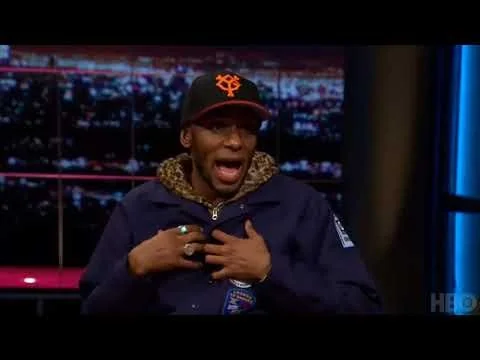
    Years ago, I wrote about a debate that took place on Real Time with Bill Maher between Yasiin Bey (formerly Mos Def) on one side and Bill Maher and Christopher Hitchens on the other. The topic, unsurprisingly, was the September 11 attacks and the broader question of Islam.

    At the time, I was widely known among my peers as an atheist thinker and leader. I would jokingly refer to myself as “the atheist.” Because of that, many people expected me to side with Maher and Hitchens. Both men were major figures in the New Atheist movement, and their criticism of religion (especially Islam) was widely embraced within those circles.

    But I found myself agreeing with Yasiin Bey.

    The reason was simple: I have never trusted the United States government’s justifications for many of the wars and military actions it has undertaken since World War II. History provides too many examples of misleading narratives, exaggerated threats, or outright falsehoods used to justify military intervention.

    I was also uncomfortable with the way Muslims were being singled out as uniquely dangerous.

    Most Muslims are not violent extremists. In my own life, I have known many Muslims, and they are as diverse in their beliefs, practices, and interpretations of their religion as Christians or Jews are.

    As a Black American, I also could not ignore another historical reality: my community has experienced far more terrorism from people identifying as Christians than from Muslims. Groups like the Ku Klux Klan cloaked themselves in Christian imagery and language while carrying out campaigns of terror against Black Americans.

    That history makes it difficult for me to accept arguments that treat Islam as uniquely violent while giving Christianity or Judaism a pass for the actions of their worst adherents.

    Maher and Hitchens often insisted that extremist Muslim groups represented something intrinsic to Islam itself. Yet when confronted with violent or extremist groups within Christianity, such as the KKK or Christian Identity movements, they were much quicker to argue that those groups were distortions of the religion rather than expressions of it.

    That double standard always bothered me.

    If organizations like ISIS or Al-Qaeda are considered perversions of Islam (and I believe they are), then the same intellectual honesty should be applied when discussing extremist groups that claim Christian identity.

    At the time, my position drew criticism from some of my fellow atheists. Many people in the New Atheist movement treated Maher and Hitchens almost as intellectual heroes, and disagreeing with them was not always well received.

    But I have always believed that intellectual honesty matters more than tribal loyalty.

    I still respect both Maher and Hitchens for their role in normalizing atheism and encouraging people to question religious authority. Their contributions to secular thought are significant.

    But admiration does not require agreement.

    Even then, I could see that their criticism of religion, particularly Islam, sometimes crossed the line from critique into something that felt more like cultural hostility at best and bigotry at worst.

    Looking back now, I feel even more confident in the position I took at the time.

    Sometimes the most honest place to stand is not with your allies or your critics, but simply where the evidence and your own conscience lead you.

  • Poverty Looks the Same Everywhere

    Poverty Looks the Same Everywhere

    One of the things that traveling around the United States has taught me is that poverty appears remarkably similar, regardless of where you encounter it.

    Despite the racial narratives that often dominate political conversations, the visible signs of poverty tend to repeat themselves in the same ways across the country.

    The same kinds of conditions that people associate with poor urban neighborhoods (many of which are predominantly Black or Latino) can also be found in economically depressed small towns that are overwhelmingly white.

    In both places, you see the same signs of economic struggle.

    You see old vehicles with long-expired temporary tags.
    You see houses in serious need of repair.
    You see groups of men standing around with little to do but pass the time drinking.
    You see drug use and the informal economies that grow around poverty, including prostitution.

    The physical environments may differ somewhat. Urban poverty often exists in densely populated neighborhoods surrounded by wealthier suburbs. Rural poverty tends to exist in isolated towns surrounded by farmland or land owned by more affluent property holders.

    But the underlying conditions are strikingly similar.

    Poverty produces the same kinds of social and economic realities regardless of the racial makeup of the people experiencing it.

    Traveling makes that clear in a way that political rhetoric often obscures.

    In political debates, poverty is frequently racialized. Certain communities are blamed for the conditions in which they live, while others are treated as victims of economic change or government neglect.

    But when you actually see these communities up close—when you drive through them, walk through them, and talk to the people who live there—the similarities become difficult to ignore.

    Poverty is not confined to one race or one region.

    It is a structural condition that appears wherever economic opportunity disappears, and communities are left behind.

    And the longer people ignore that reality, the easier it becomes for political narratives to divide communities that are, in many ways, experiencing the same struggles.

  • Being Nice Is Not the Same Thing as Being Good

    Being Nice Is Not the Same Thing as Being Good

    One of the strangest arguments that repeatedly appears in political discourse is the idea that harmful political movements should be judged more gently because the people involved in them can sometimes be “nice in person.”

    Yes, many people who hold destructive political views are perfectly capable of being polite, friendly, or even charming in everyday interactions.

    But that has very little to do with the consequences of the ideas they support.

    History provides countless examples of people who were socially pleasant while simultaneously supporting or participating in deeply immoral systems. The ability to be personable does not erase the harm caused by one’s beliefs or actions.

    Human beings are complex. Someone can be a friendly neighbor, a generous host, or an engaging conversationalist while still supporting policies, movements, or ideologies that cause real harm to other people.

    Personal charm has never been a reliable measure of moral character.

    Yet in modern political debates, some commentators, particularly within media circles, occasionally suggest that ideological hostility should soften if the person expressing those ideas happens to be courteous in private conversation or polite in a televised debate.

    That standard makes very little sense.

    Political ideas should be judged based on their substance and consequences, not the personal demeanor of the person expressing them.

    A polite presentation does not make a harmful idea less harmful. A friendly tone does not transform prejudice into principle.

    Being civil in conversation is a positive trait. But civility should not become a substitute for accountability.

    If a political movement promotes policies or rhetoric that harm vulnerable communities, that reality does not disappear simply because some of its supporters are personable in everyday interactions.

    The lesson here is simple.

    Do not confuse personal niceness with moral integrity.

    They are not the same thing.

  • Policing, Power, and the Battle Over Public Narrative Part 3: Why “Blue Lives Matter” Misses the Point

    Policing, Power, and the Battle Over Public Narrative Part 3: Why “Blue Lives Matter” Misses the Point

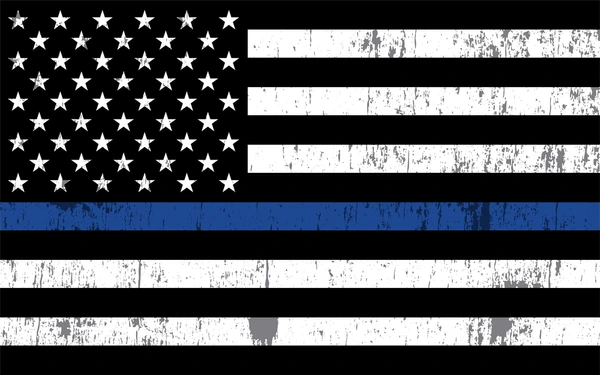
    In response to the Black Lives Matter movement, a new slogan began circulating in political discourse: “Blue Lives Matter.”

    Supporters of the phrase often describe it as a show of solidarity with law enforcement officers. At first glance, that explanation may appear reasonable.

    However, the slogan presents several problems.

    First, policing is a profession, not an identity. Individuals choose to become police officers, while race is an inherent characteristic that people do not choose.

    Second, police officers already receive substantial institutional support and public recognition.

    When an officer is killed in the line of duty, the incident typically receives widespread media attention. Memorial funds are established, funeral services are attended by officials from multiple agencies, and the officer’s name may be added to national memorials honoring fallen law enforcement personnel.

    Numerous organizations also exist specifically to support police officers and their families. These include groups such as:

    • Concerns of Police Survivors (C.O.P.S.)
    • The Fraternal Order of Police Foundation
    • The Officer Down Memorial Page
    • The National Law Enforcement Officers Memorial Fund

    In other words, support systems for police officers already exist and are widely recognized.

    The phrase “Blue Lives Matter,” therefore, does not address a lack of recognition or support for law enforcement. Instead, it emerged primarily as a reaction to the concerns raised by Black Lives Matter.

    Because of this context, many people, including me, view the slogan not as a genuine expression of support for police officers, but as a cynical rhetorical attempt to dismiss the grievances being expressed by those calling for police accountability.

    It is entirely possible to support the idea of law enforcement while also demanding transparency and accountability within policing institutions.

    In fact, those goals are not contradictory. They are mutually reinforcing.

    Public trust in law enforcement grows stronger when citizens believe that misconduct will be taken seriously and addressed fairly.

    Ultimately, the goal should not be to compete over slogans or hashtags. The goal should be to create a justice system that treats every person with equal dignity and respect under the law.

  • Policing, Power, and the Battle Over Public Narrative Part 2: The Myth of a “War on Police”

    Policing, Power, and the Battle Over Public Narrative Part 2: The Myth of a “War on Police”

    One of the most common claims made by critics of the Black Lives Matter movement is that it promotes hostility toward law enforcement or contributes to what some commentators describe as a “war on police.”

    This claim has been repeated frequently in political commentary and media coverage. However, when the available evidence is examined, the narrative becomes far less convincing.

    Statistics from organizations such as the National Law Enforcement Officers Memorial Fund show that the number of police officers killed in the line of duty has generally declined over the past several decades (except for during the peak of the COVID pandemic, when all crimes were spiking).

    Even during the years following the rise of the Black Lives Matter movement, the overall number of officer fatalities has remained historically low compared to earlier periods in American history.

    In other words, the idea that police officers are facing unprecedented levels of violence is not supported by the available data.

    It is also worth noting that the individuals responsible for attacks on police officers come from a wide variety of backgrounds and motivations. Some attacks have been politically motivated, while others were committed by individuals with no connection to any political movement.

    Despite this, critics often attempt to attribute every violent incident involving police officers to the Black Lives Matter movement as a whole.

    This is a logical fallacy.

    Large social movements consist of many individuals and groups with different motivations and beliefs. Holding an entire movement responsible for the actions of isolated individuals is both inaccurate and intellectually dishonest.

    At the same time, when politically motivated violence against police officers has been carried out by individuals associated with far-right ideologies, those incidents are rarely used to condemn conservative political movements as a whole.

    This double standard plays a significant role in shaping the public narrative surrounding policing and protest.

    Criticism of police misconduct is not the same thing as hostility toward police officers. In fact, many people who call for police accountability also believe that effective and professional law enforcement is essential to a functioning society.

    The real issue is not whether police officers deserve support.

    The real issue is whether the institutions responsible for enforcing the law are held accountable when mistakes or abuses occur.

  • Policing, Power, and the Battle Over Public Narrative Part 1: The Origins of “Black Lives Matter”

    Policing, Power, and the Battle Over Public Narrative Part 1: The Origins of “Black Lives Matter”

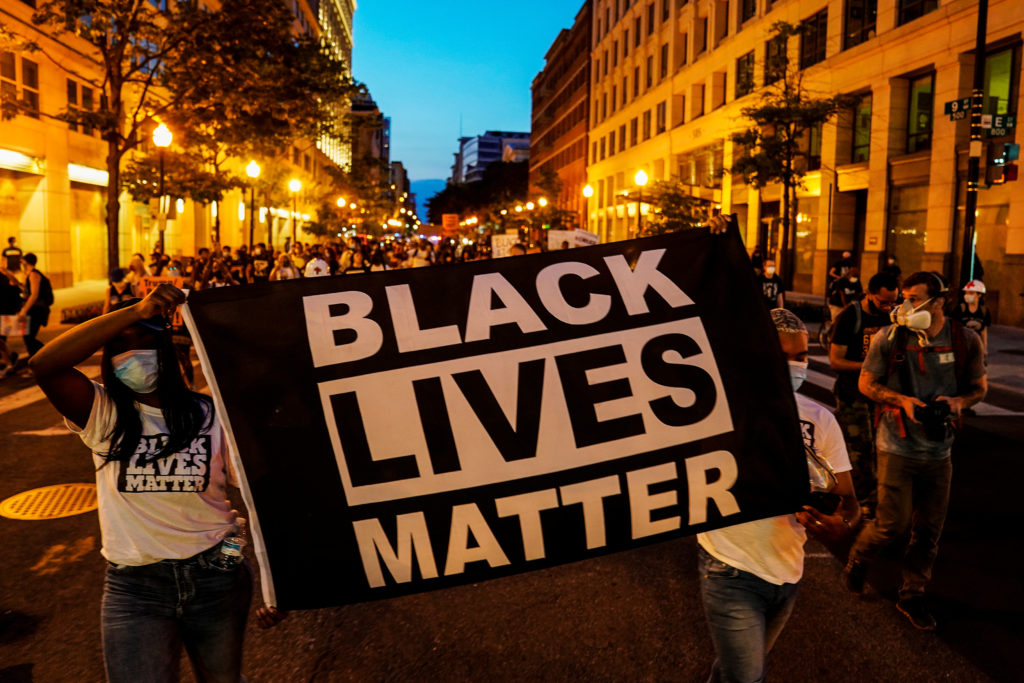
    In recent years, the phrase “Black Lives Matter” has become one of the most widely discussed and widely misunderstood slogans in American public life.

    To many supporters, the phrase represents a call for accountability and equal justice under the law. To many critics, however, it has been portrayed as anti-police, anti-white, or even anti-American.

    To understand the movement honestly, it is important to start with the basic facts about how it began.

    Black Lives Matter did not emerge from a political think tank, a political party, or a coordinated national organization. Instead, it began as a social media response to a widely publicized case that many people believed represented a failure of the justice system.

    On February 26, 2012, seventeen-year-old Trayvon Martin was shot and killed in Sanford, Florida, by neighborhood watch volunteer George Zimmerman. Martin was unarmed and had been walking back from a convenience store after purchasing a bag of Skittles and a drink.

    Initially, Zimmerman was not arrested. The police accepted his claim of self-defense and released him without charges.

    As news of the case spread across social media, many Americans (particularly Black Americans) viewed the situation as part of a long pattern in which violence against Black people was often minimized or excused.

    Following Zimmerman’s eventual acquittal in 2013, three community organizers, Alicia Garza, Patrisse Cullors, and Opal Tometi, helped popularize the phrase “Black Lives Matter.”

    Garza made a Facebook post which ended in the phrase, “Our lives Matter, Black Lives Matter”. The hashtag and online campaign were born due to that post, and it went viral.

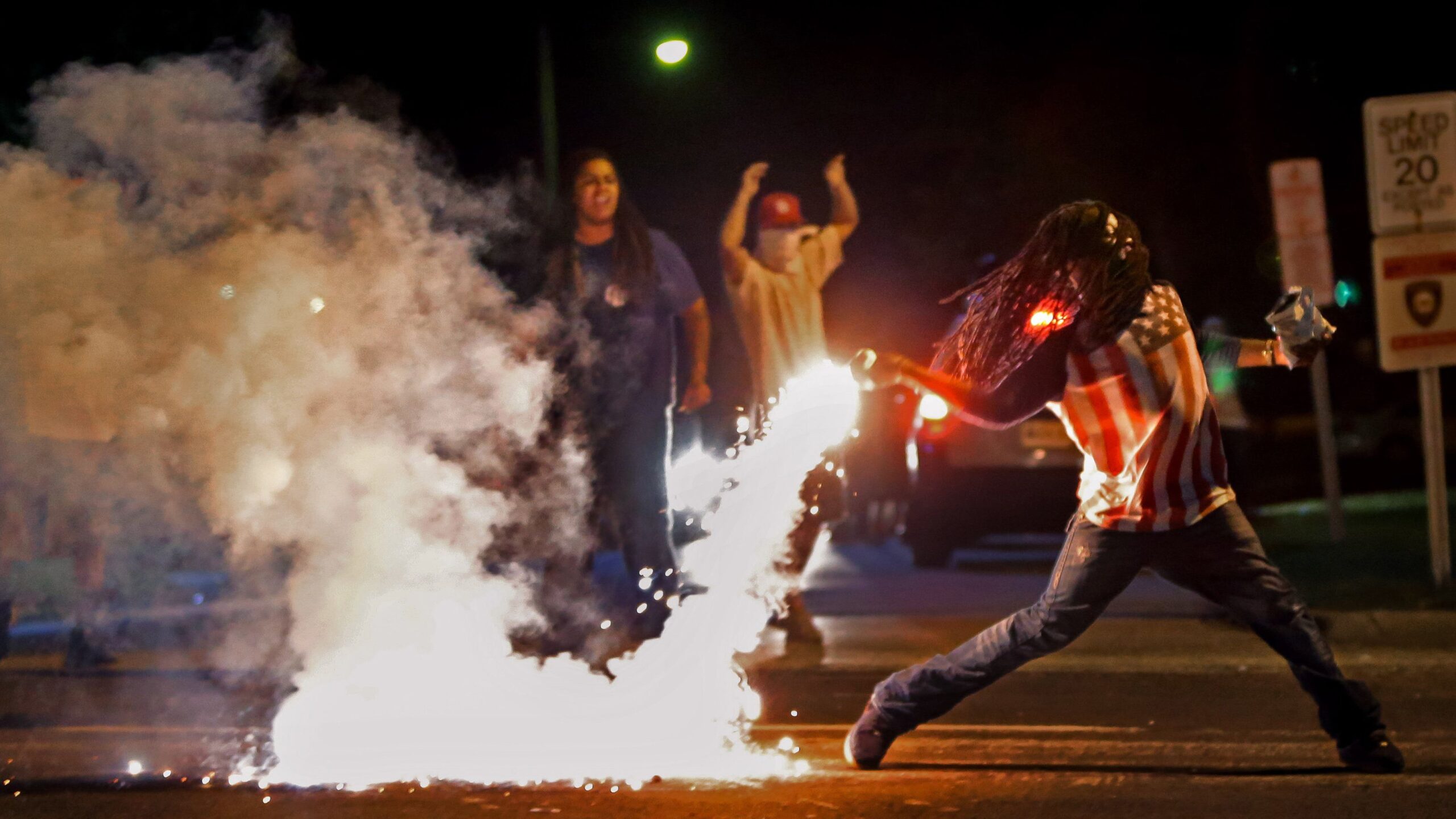
    Black Lives Matter didn’t make it into the national and mainstream public spotlight until the following summer (2014) after the killing of Michael Brown Jr. by Ferguson Officer Darren Wilson. More than one hundred Black Lives Matter protestors came from out of state to Ferguson, Missouri, a suburb of St. Louis, to join the local protests that had been going on immediately after the shooting.

    The phrase was not meant to suggest that other lives do not matter. Instead, it was intended to emphasize a specific concern: that Black lives have historically been treated as less valuable within American legal and social systems.

    In other words, the statement “Black Lives Matter” was not meant to exclude anyone. It was meant to highlight a problem that many people believed had long been ignored.

    The movement that followed was decentralized and loosely organized. It consisted of activists, community leaders, and ordinary citizens who were concerned about issues such as police accountability, racial profiling, and unequal treatment within the criminal justice system.

    Understanding this origin is important because much of the debate surrounding Black Lives Matter today is shaped by narratives that emerged after the movement began — narratives that often bear little resemblance to its original purpose.