Category: Media Narratives

The Media Narratives section of The Rio Stanton Report explores how information is framed, interpreted, and circulated in modern media environments. In an era of 24-hour news cycles, social media algorithms, and partisan commentary, the stories we hear about politics and society are often shaped as much by narrative as by facts.

Articles in this category examine how media outlets, political actors, and online communities construct and amplify particular interpretations of events. From viral talking points and misleading statistics to the ways propaganda and messaging influence public opinion, these essays analyze how narratives form and why they spread.

Understanding media narratives is essential in a world where information travels quickly and context is often lost. By examining how stories are told—and sometimes manipulated—this section encourages readers to think critically about the information they consume and share.

  • Policing, Power, and the Battle Over Public Narrative Part 2: The Myth of a “War on Police”

    Policing, Power, and the Battle Over Public Narrative Part 2: The Myth of a “War on Police”

    One of the most common claims made by critics of the Black Lives Matter movement is that it promotes hostility toward law enforcement or contributes to what some commentators describe as a “war on police.”

    This claim has been repeated frequently in political commentary and media coverage. However, when the available evidence is examined, the narrative becomes far less convincing.

    Statistics from organizations such as the National Law Enforcement Officers Memorial Fund show that the number of police officers killed in the line of duty has generally declined over the past several decades (except for during the peak of the COVID pandemic, when all crimes were spiking).

    Even during the years following the rise of the Black Lives Matter movement, the overall number of officer fatalities has remained historically low compared to earlier periods in American history.

    In other words, the idea that police officers are facing unprecedented levels of violence is not supported by the available data.

    It is also worth noting that the individuals responsible for attacks on police officers come from a wide variety of backgrounds and motivations. Some attacks have been politically motivated, while others were committed by individuals with no connection to any political movement.

    Despite this, critics often attempt to attribute every violent incident involving police officers to the Black Lives Matter movement as a whole.

    This is a logical fallacy.

    Large social movements consist of many individuals and groups with different motivations and beliefs. Holding an entire movement responsible for the actions of isolated individuals is both inaccurate and intellectually dishonest.

    At the same time, when politically motivated violence against police officers has been carried out by individuals associated with far-right ideologies, those incidents are rarely used to condemn conservative political movements as a whole.

    This double standard plays a significant role in shaping the public narrative surrounding policing and protest.

    Criticism of police misconduct is not the same thing as hostility toward police officers. In fact, many people who call for police accountability also believe that effective and professional law enforcement is essential to a functioning society.

    The real issue is not whether police officers deserve support.

    The real issue is whether the institutions responsible for enforcing the law are held accountable when mistakes or abuses occur.

  • Policing, Power, and the Battle Over Public Narrative Part 1: The Origins of “Black Lives Matter”

    Policing, Power, and the Battle Over Public Narrative Part 1: The Origins of “Black Lives Matter”

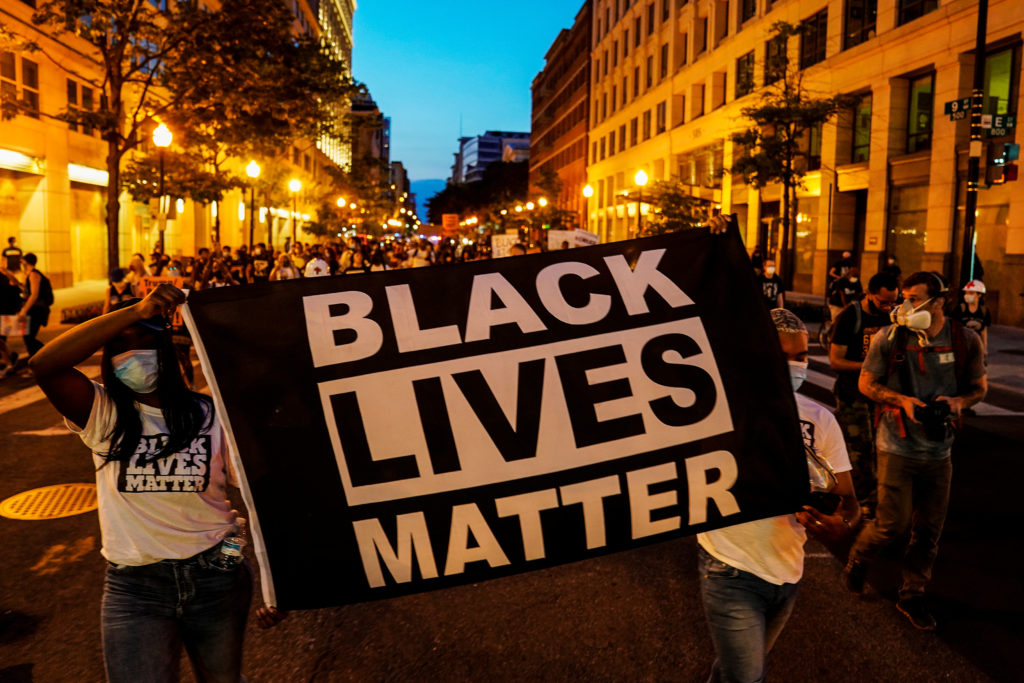
    In recent years, the phrase “Black Lives Matter” has become one of the most widely discussed and widely misunderstood slogans in American public life.

    To many supporters, the phrase represents a call for accountability and equal justice under the law. To many critics, however, it has been portrayed as anti-police, anti-white, or even anti-American.

    To understand the movement honestly, it is important to start with the basic facts about how it began.

    Black Lives Matter did not emerge from a political think tank, a political party, or a coordinated national organization. Instead, it began as a social media response to a widely publicized case that many people believed represented a failure of the justice system.

    On February 26, 2012, seventeen-year-old Trayvon Martin was shot and killed in Sanford, Florida, by neighborhood watch volunteer George Zimmerman. Martin was unarmed and had been walking back from a convenience store after purchasing a bag of Skittles and a drink.

    Initially, Zimmerman was not arrested. The police accepted his claim of self-defense and released him without charges.

    As news of the case spread across social media, many Americans (particularly Black Americans) viewed the situation as part of a long pattern in which violence against Black people was often minimized or excused.

    Following Zimmerman’s eventual acquittal in 2013, three community organizers, Alicia Garza, Patrisse Cullors, and Opal Tometi, helped popularize the phrase “Black Lives Matter.”

    Garza made a Facebook post which ended in the phrase, “Our lives Matter, Black Lives Matter”. The hashtag and online campaign were born due to that post, and it went viral.

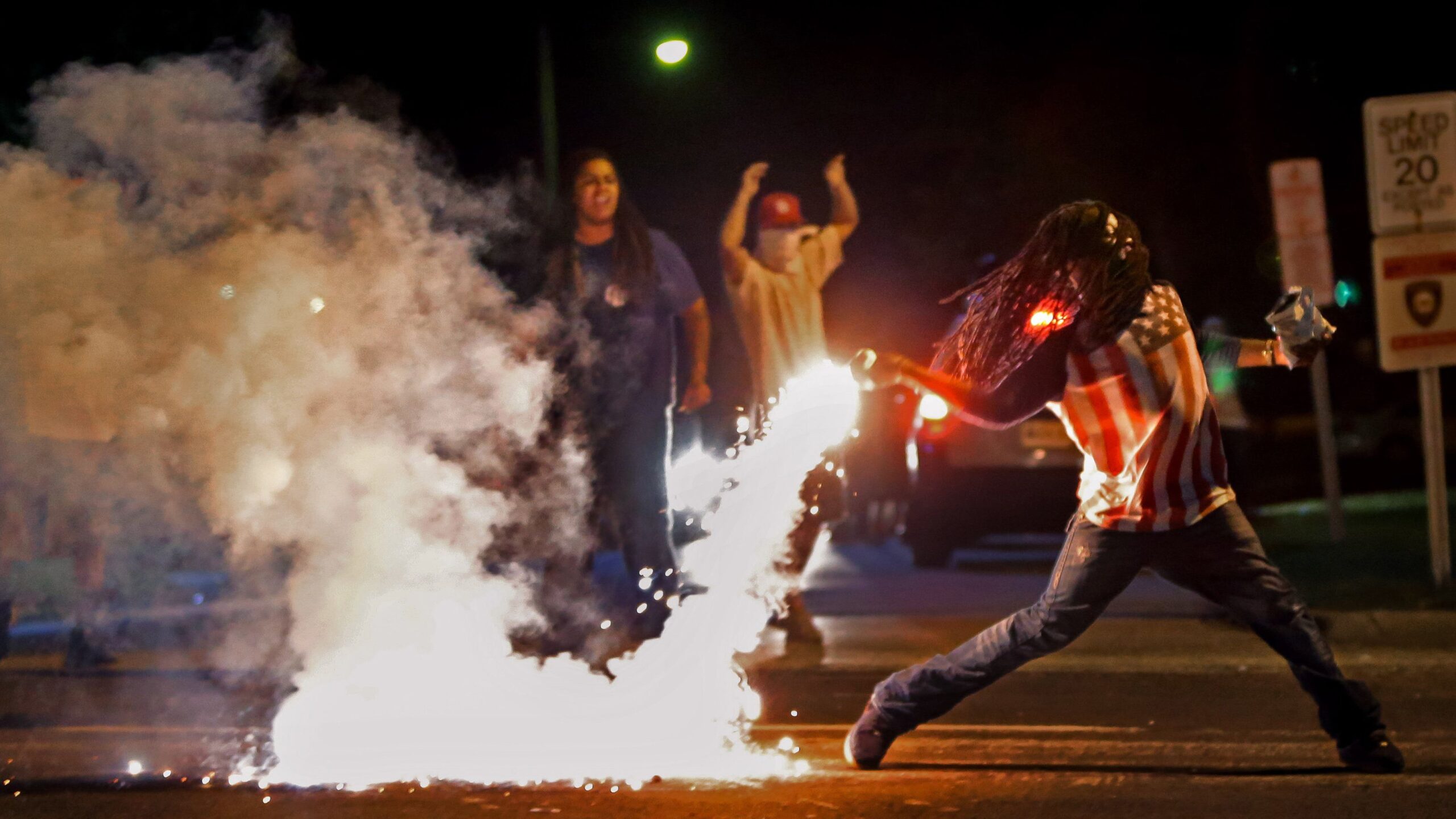
    Black Lives Matter didn’t make it into the national and mainstream public spotlight until the following summer (2014) after the killing of Michael Brown Jr. by Ferguson Officer Darren Wilson. More than one hundred Black Lives Matter protestors came from out of state to Ferguson, Missouri, a suburb of St. Louis, to join the local protests that had been going on immediately after the shooting.

    The phrase was not meant to suggest that other lives do not matter. Instead, it was intended to emphasize a specific concern: that Black lives have historically been treated as less valuable within American legal and social systems.

    In other words, the statement “Black Lives Matter” was not meant to exclude anyone. It was meant to highlight a problem that many people believed had long been ignored.

    The movement that followed was decentralized and loosely organized. It consisted of activists, community leaders, and ordinary citizens who were concerned about issues such as police accountability, racial profiling, and unequal treatment within the criminal justice system.

    Understanding this origin is important because much of the debate surrounding Black Lives Matter today is shaped by narratives that emerged after the movement began — narratives that often bear little resemblance to its original purpose.

  • How Crime Statistics Are Used to Push Racist Narratives

    How Crime Statistics Are Used to Push Racist Narratives

    One of the most common talking points used in online debates about race and crime is the so-called “13/50” statistic. The claim is frequently repeated by people attempting to justify racist narratives about Black Americans and criminality.

    But statistics, when presented without context, can easily be used to mislead.

    The “13/50” argument relies on the selective interpretation of crime statistics, particularly FBI arrest data. It highlights the overrepresentation of Black Americans in certain categories of arrests, especially homicide and robbery, while ignoring the broader context of crime statistics and how those numbers are interpreted.

    For example, according to the U.S. Census Bureau, white Americans (white alone) make up roughly 60 percent of the U.S. population. When looking at FBI arrest data, however, white Americans account for large majorities in many categories of crime.

    Using the same FBI tables often cited in online debates, white Americans account for:

    • 82% of DUI arrests
    • 75% of sex offense arrests (excluding rape)
    • 74% of vehicle theft arrests
    • 72% of drug abuse violation arrests
    • 70% of rape arrests
    • 68% of burglary arrests
    • 67% of property crime arrests
    • 66% of arrests for offenses against family and children
    • 65% of simple assault arrests
    • 62% of aggravated assault arrests
    • 62% of arrests for possession of stolen property

    Overall, white Americans account for roughly 69 percent of all arrests, a number that exceeds their share of the population.

    None of this means that crime patterns should be ignored, or that certain communities do not face serious challenges related to violence and crime. Black Americans are indeed statistically overrepresented in some categories of arrests.

    But simply presenting one statistic without context does not explain why those patterns exist.

    Crime statistics are shaped by many factors, including poverty, neighborhood segregation, historical inequality, policing patterns, economic opportunity, and social conditions. Reducing complex social problems to a single racial statistic ignores these realities and turns data into a political weapon.

    This is why statistics must always be interpreted carefully.

    Numbers can illuminate reality, but they can also be manipulated to reinforce existing prejudices. Selective data presentation allows people to construct narratives that appear objective while still serving ideological agendas.

    The goal of examining these statistics is not to deny problems within any community, nor is it to portray any racial group as inherently criminal or morally inferior.

    Rather, the point is to demonstrate how easily statistics can be used to construct misleading narratives.

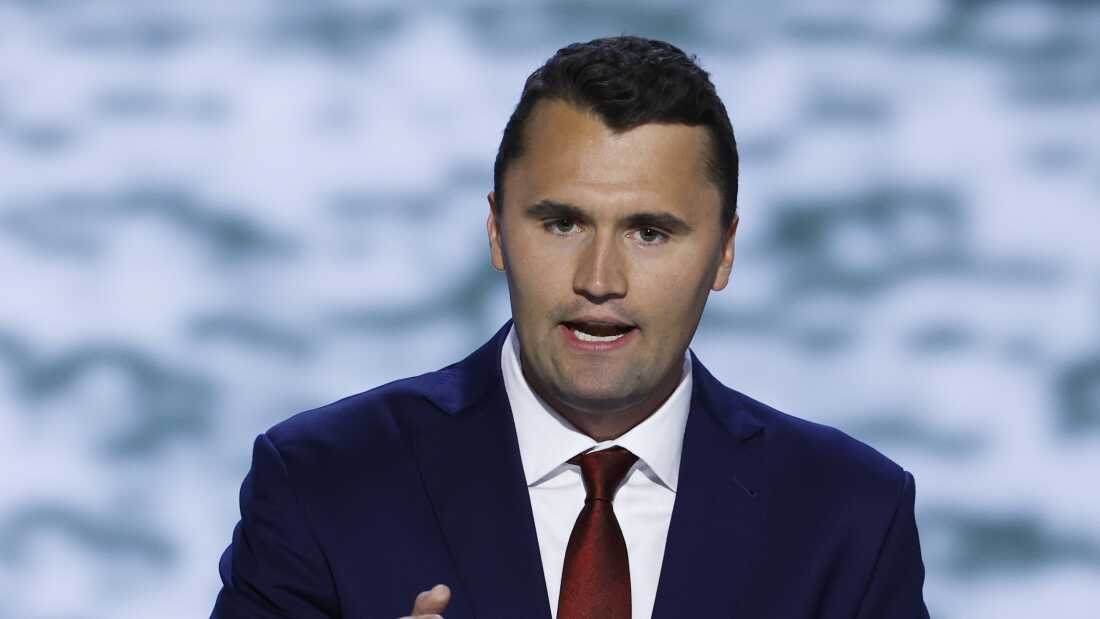
    When numbers are stripped of context and deployed as political talking points, they stop being tools of understanding and become instruments of propaganda. This is why Charlie Kirk wasn’t an objective truth teller. He was a racist but skillful manipulator of facts.

    Understanding crime, inequality, and social policy requires more than slogans and selective data. It requires an honest analysis of the underlying conditions that shape those numbers in the first place

  • Biden Didn’t Have “Open Borders.” The Numbers Prove It.

    Biden Didn’t Have “Open Borders.” The Numbers Prove It.

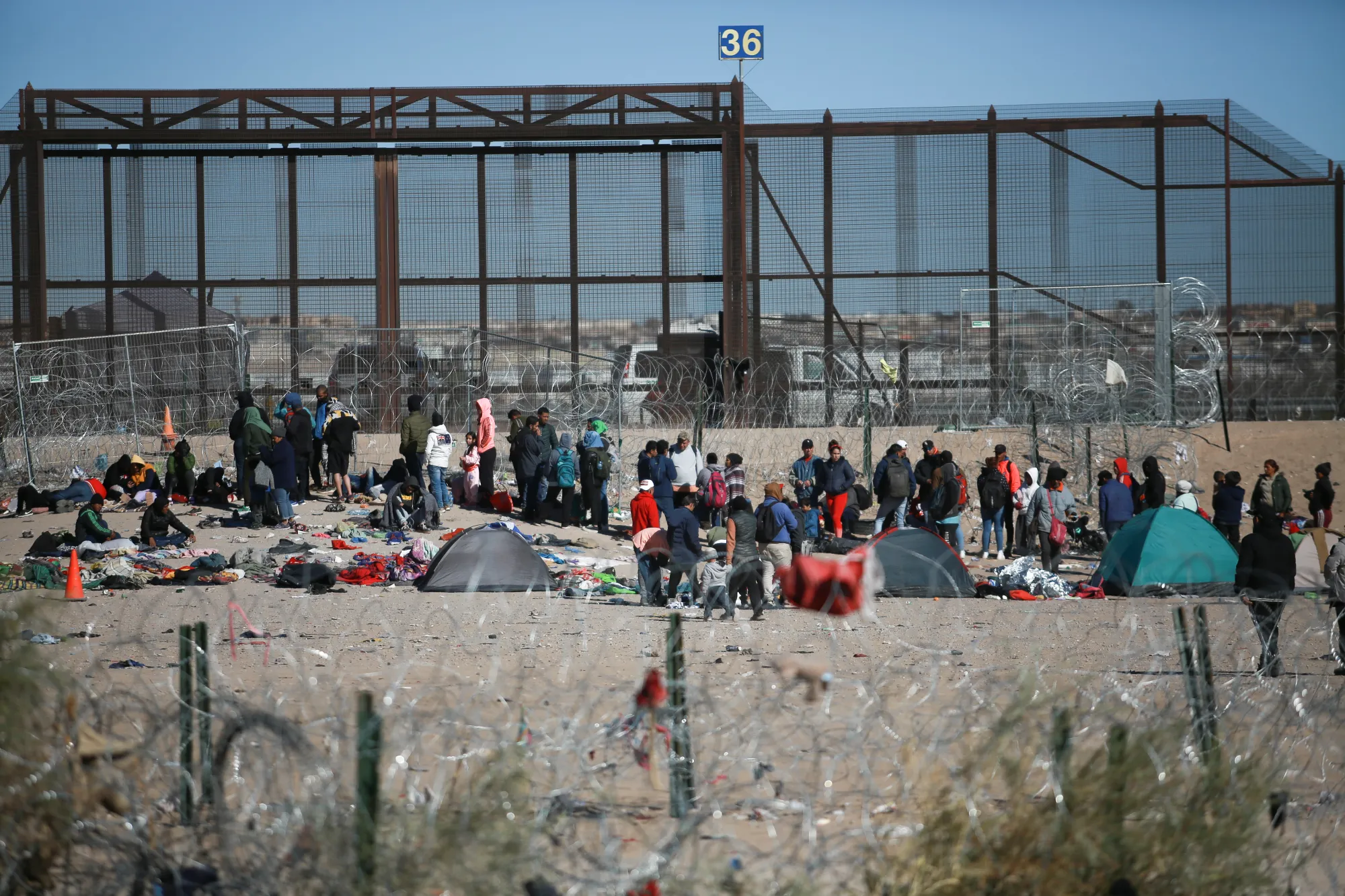
    One of the most common claims made by conservative commentators is that Joe Biden created an “open border” policy. The problem is that the actual numbers tell a very different story.

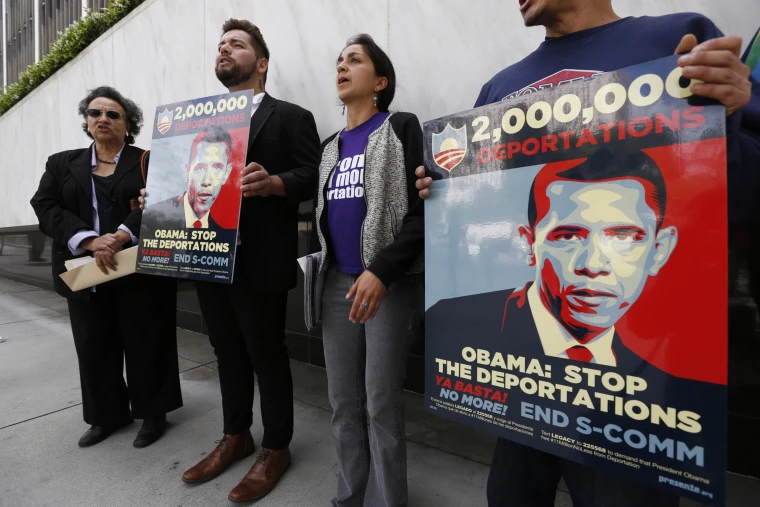
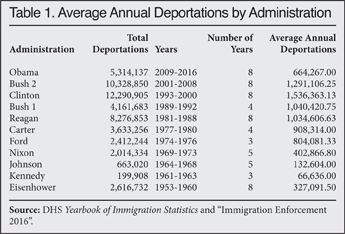
    According to data compiled by the Migration Policy Institute, the deportation numbers between Trump’s first term in office and Biden’s term in office are nearly identical (around 1.5 million people. In fact, deportations under Presidents Barack Obama and Bill Clinton were significantly higher than under Trump. Conservatives love to cite those comparisons, but rarely provide the context that would actually explain what those numbers mean.

    Rather than rehash arguments I’ve made many times before about who gets deported and why, it’s worth addressing the larger myth that keeps circulating: the idea that Biden somehow allowed unlimited immigration into the United States.

    For the first two years of Biden’s presidency, the country was still operating under pandemic-era restrictions that limited cross-border movement. These policies were largely a continuation of the restrictions implemented during the Trump administration. During that time, many asylum seekers from Central American countries such as El Salvador and Honduras waited at the border for years or were detained while their cases were processed.

    Allowing asylum seekers to enter the country after those restrictions eased was not an “open border” policy. It was the United States complying with its own asylum laws.

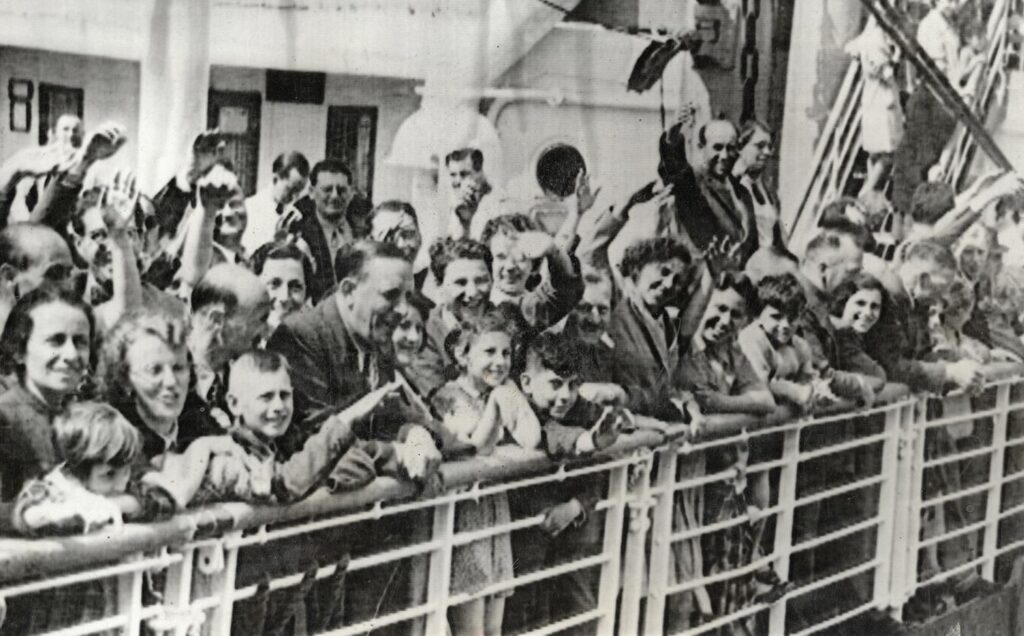
    Those laws exist for a reason. After the United States turned away thousands of Jewish refugees fleeing Nazi persecution in the 1930s—many of whom were sent back to Europe and ultimately died in the Holocaust—the country adopted legal frameworks intended to ensure that people fleeing persecution would at least have their claims heard before being turned away.

    Jewish refugees aboard the MS St. Louis in 1939. They were waiting in Havana, Cuba, just to be turned away by the United States and sent back to Nazi-occupied Europe, where many of them would be killed.

    In other words, Biden didn’t create open borders. He followed existing law.

    If Americans truly want fewer people migrating to the United States, we also need to confront a more uncomfortable truth: U.S. foreign policy has often contributed to the instability that drives migration in the first place. For decades, the United States has interfered in the politics and economies of countries across Latin America, Africa, and parts of Asia—sometimes installing authoritarian leaders or imposing sanctions and economic pressures that destabilize entire regions.

    When people leave their homes out of desperation, they are not doing it for fun. They are responding to conditions that often have deep historical and geopolitical roots.

    If we want fewer migrants at the border, addressing those root causes would be a far more honest place to start than repeating the politically convenient myth of “open borders.”

  • No, the Left Doesn’t Want Open Borders: Immigration Myths vs. Reality and What the Right Gets Wrong

    No, the Left Doesn’t Want Open Borders: Immigration Myths vs. Reality and What the Right Gets Wrong

    Despite how the gaggle of goofy, gaumless, good-for-nothing goobers on the other side of the political spectrum keep straw-manning the position of those of us on the left side of the political spectrum (liberals, progressives, and leftists), most of us do not desire, nor are we advocating for, completely open borders. We don’t want foreign criminals in this country, we don’t want terrorists to enter this country easily, and we don’t wish to ruin our national ecology through the unchecked introduction of invasive species of plants, animals, fungi, and diseases. These are some of the reasons why borders exist and why they are regulated.

    However, we do not want to excuse or promote xenophobic ideas and policies. We do not engage in the wholesale demonization of segments of people because we find their looks, fashion, customs, diets, religions, or whatever too foreign for our tastes. We are not holding on to a fictionalized notion of the United States being the product of one dominant, default, and exemplary culture, devoid of any influence of the various other people who contributed to the cultural, intellectual, and economic capital of this melting pot and/or mosaic of a nation.

    In other words, many other people and I on the political left welcome immigrants, visitors, and migrants from all over the world, from different walks of life, whether from a developing country or from a wealthy, advanced, and developed nation. If we are indeed that “shining city on a hill” that Ronald Reagan talked about in his 1989 farewell address, then we would like to share our freedom, prosperity, opportunities, culture, and technology with people from the rest of the world who yearn for the freedom, opportunity, and prosperity that somehow eluded them in their home countries and that our nation can provide. After all, this is a country of mostly colonizers, enslaved or indentured labor, and immigrants living on the stolen ancestral land of the collective victims of one of the worst genocides in human history. I don’t say this to be facetious, contrarian, indignant, or self-righteous. That is not my point. I say this to illustrate that if there were a rigid enforcement of borders 400 years ago, the only people that would be here are those currently mostly forgotten people who make up 1% – 2 % of the population, many living in conditions worse than those of the urban slums that my people complain about, and who are routinely mistaken for foreigners themselves in some very disturbing twist of irony.

    The truth is that immigrant populations add to our overall economic prosperity. They are usually leaders in the various past innovations that made this country technologically advanced and prosperous. These people include Alexander Graham Bell, Albert Einstein, Nikola Tesla, Levi Strauss, and many others from various parts of the world (I focused more on the names that most people know). A study published by the Cato Institute a few days ago stated that immigrants paid trillions of dollars more in taxes than they received in benefits from 1994 to 2023. According to another study from 2024 by the Institute on Taxation and Economic Policy (ITEP), UNDOCUMENTED IMMIGRANTS alone paid close to $100 billion in federal, state, and local taxes in 2022. Most of that money went towards federal taxes (over 60%). This is money that they cannot receive in individualized social welfare programs like food stamps due to their immigration status.

    Despite the things that you’ve heard from your xenophobic family members, friends, and/or neighbors, despite what you watched on poorly produced internet documentaries with questionable methods, drawing unethical conclusions, and despite the cynical demagoguery of conservative (and some liberal) politicians, political pundits, and social media content creators, immigrants aren’t fleecing this country like hordes of swarming locusts or being given more opportunities and business loans than native born Americans. I already argued on how the former isn’t true, now the latter.

    According to an article by NBC News, immigrants have higher rates of entrepreneurship than native-born Americans. Yet immigrants get rejected for business loans at rates higher than their native-born counterparts. This is according to small business loan statistics from the Bankrate website. It is tougher to get grants and other benefits from the government if you are an immigrant.

    So why are there so many immigrant businesses? Immigrants usually have more of an entrepreneurial drive than native-born Americans. Having personally traveled to underdeveloped nations and spent time there, I saw firsthand how many people were forced to be creative to make money because the number of good-paying jobs was limited, along with the prospect of post-secondary education (education after high school). I saw people running small stores, barber shops, beauty salons, and restaurants out of their homes.

    According to the Cato Institute, immigrant groups consume and spend less than native-born Americans and rely less on credit. This is because the availability of credit is relatively low in their home countries. Thus, people have to save their money to buy homes, cars, or start businesses. They learn to do more with less while deferring their gratification until a later time.

    The answer to our immigration problems is not to trample all over our Constitution, one of the things that make this country special, to criminalize and commit acts of state-sponsored terrorism on people whose only crime was to leave the homes that they love due to desperation. Nor should we force adherence and assimilation into American values that are approved by only a small section of Americans who feel that their childish jingoism, denial, and hiding of uncomfortable historical facts and occurrences is the only way to truly “love” America. Their narrow-minded ideas of love, patriotism, and American culture are laughably juvenile and display a sickening self-aggrandizing narcissism. The fact that they perform this horrid bigotry in the name of Christianity is one of the biggest affronts and stains on our image. I personally don’t care whether individuals or groups of immigrants adopt a conservative philosophy or a progressive one. It doesn’t matter to me. All I care about is whether they are actively trying to harm the people of this country over grievances that have little to do with them, besides being a part of the propagandized masses being indoctrinated by political, business, and media interests. Acts of terrorism by foreign actors don’t make things better. They make them worse.

    But even that is an overhyped, xenophobic idea. Native born Americans commit most acts of terrorism, including lethal terrorism, in the United States. These are usually white males with right-wing ideologies. This is according to the Center for Statistics and International Studies (CSIS), Vox, Penn State University, and the Anti-Defamation League (ADL).  

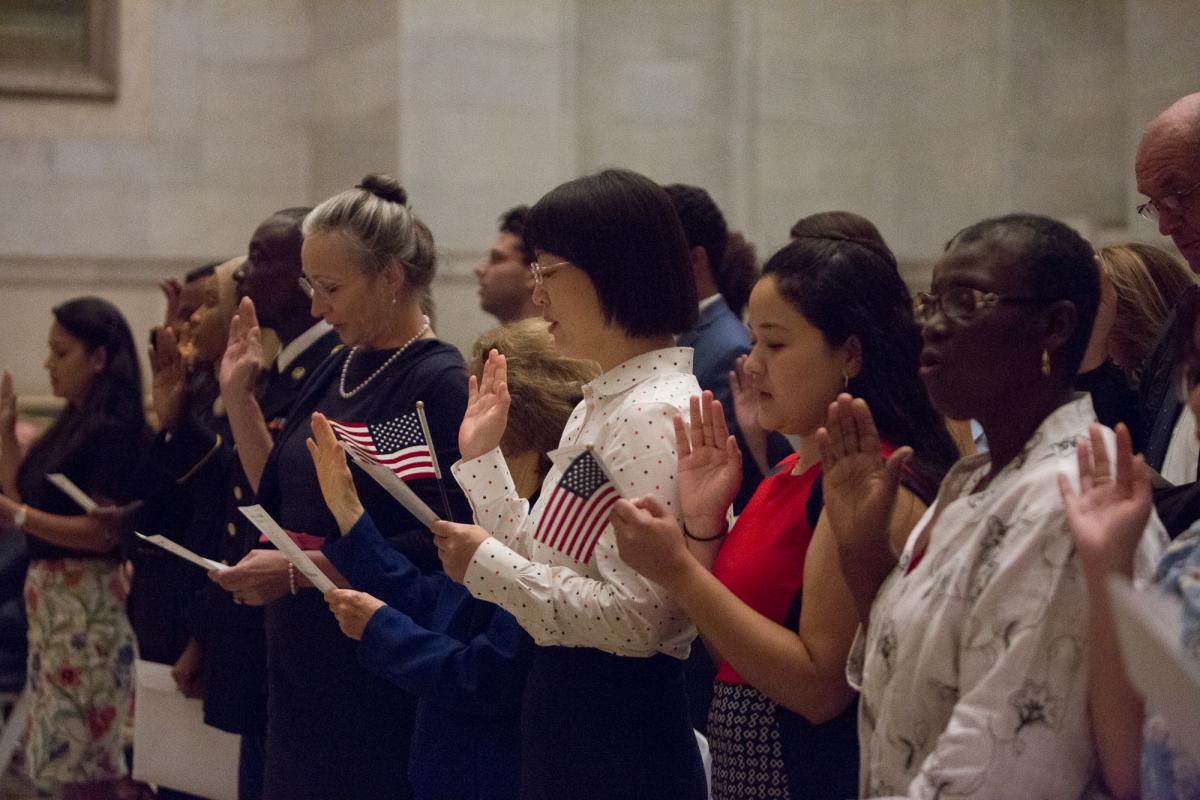
    Those of us on the left are not asking for chaos or lawlessness at the border. What we want is an immigration system that is humane, rational, and consistent with the constitutional principles that make this country worth defending in the first place. Citizenship should not require people to navigate an unnecessarily cruel maze of bureaucracy, spend enormous sums of money, or prove their loyalty by parroting a narrow and childish form of jingoism.

    Patriotism in a democratic society cannot mean blind obedience to a single vision of what America is supposed to be. The right to criticize, challenge, and improve our country is exactly what separates the United States from the authoritarian governments many immigrants are fleeing. If you truly love this country, then you should understand why people around the world see it as a place of opportunity and refuge. Welcoming those who seek freedom and a better life is not a betrayal of American values. It is one of the clearest expressions of them.