Every year on July 4th, Americans celebrate Independence Day with family gatherings, barbecues, and fireworks. For many, it is a day of patriotic pride, a celebration of freedom and the sacrifices made to preserve it.
But for others, the holiday carries a very different meaning.
Frederick Douglass once famously asked, “What to the slave is the Fourth of July?” In 1852, his answer was clear: the holiday represented a painful contradiction between America’s ideals and its reality. More than a century later, that question still echoes—but the answer has evolved.
Critics of Independence Day often point out a painful historical truth: when the United States declared its independence in 1776, the promise of liberty did not apply to everyone. Millions of people were enslaved, Native Americans were being displaced and killed, and women and poor men were excluded from political power.
The contradiction is obvious.
The same document that declared, “We hold these truths to be self-evident, that all men are created equal,” was written by Thomas Jefferson, who owned slaves and wrote extensively about his belief in Black inferiority.
These criticisms are not wrong. They are historically accurate.
The freedom celebrated on July 4th was originally intended primarily for land-owning white men. Black Americans, Native Americans, women, and many others were excluded from those rights.
Even during the Revolutionary War, enslaved Black people who sought to fight for the American colonies were often rejected. Meanwhile, the British offered freedom to enslaved people who joined their forces. Later, during the Constitutional Convention, the young nation again refused to confront slavery to maintain unity between Northern and Southern states.
For these reasons, I understand why some people view Independence Day with skepticism or even contempt.
But while I sympathize with that perspective, I do not share it.
Despite the hypocrisy of many of the Founding Fathers, we must also remember another truth: this country was built in large part by the labor, skill, and resilience of enslaved Black people.
The American colonies became economically powerful through crops such as tobacco, sugar, and rice. These industries made their overwhelming prosperity possible by enslaved labor and agricultural knowledge brought from Africa. In many ways, the wealth that allowed the colonies to rebel against Britain was created by the very people who were denied freedom.
Our ancestors helped build this country.
And many of them knew it.
Throughout the nineteenth century, some white abolitionists supported efforts to relocate free Black Americans to Africa through organizations such as the American Colonization Society. Liberia itself was founded by freed American slaves.
But many Black Americans rejected that idea. They chose to remain in the United States and fight for their rightful place within the country their ancestors had helped build.
That is a perspective I share.
If someone kidnaps you, forces you to build a house, and then tells you that you are free to leave once the work is finished, that does not erase the fact that you helped build the house.
You have a claim to it.
I am an American. This is my country.
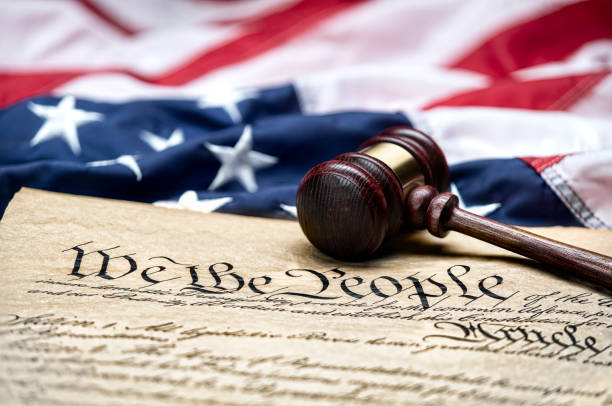
The personal beliefs of many of the Founding Fathers matter less to me than the political framework they created. The words they wrote, however imperfectly applied at the time, provided the foundation for later struggles for freedom.
The ideals expressed in the Declaration of Independence and the United States Constitution were eventually used by abolitionists, civil rights leaders, and countless activists to argue that the nation must live up to its own principles.
Jefferson may not have meant all people when he wrote that all men are created equal. But that is what he wrote, and those words became powerful tools in the fight for equality.
The American political system, flawed as it has been, allowed movements for abolition, civil rights, and expanded democratic rights to emerge and reshape the country.
The fact that I can speak freely today (even critically) about the history and institutions of this country is evidence of that evolution.
Because of the protections enshrined in the Constitution and the Bill of Rights, I can express my beliefs, criticize injustice, and advocate for change without fear of imprisonment or execution.
That freedom matters.
So, when I celebrate Independence Day, I am not celebrating the perfection of the Founding Fathers. I am not celebrating a past that excluded my ancestors.
What I celebrate is freedom itself.
The freedom that was denied to my ancestors.
The freedom that generations of Americans struggled to expand.
The freedom that remains imperfect, but real.
This country has a painful history, and it still faces serious challenges. But it is also my home.
And despite everything, I love it.
When I celebrate Independence Day, I celebrate the ongoing struggle to make the promise of liberty real for everyone.
Because the words written in 1776 still matter:
“We hold these truths to be self-evident, that all men are created equal, that they are endowed by their Creator with certain unalienable Rights, that among these are Life, Liberty and the pursuit of Happiness.”
May we continue working toward a country where those words apply to all of us.