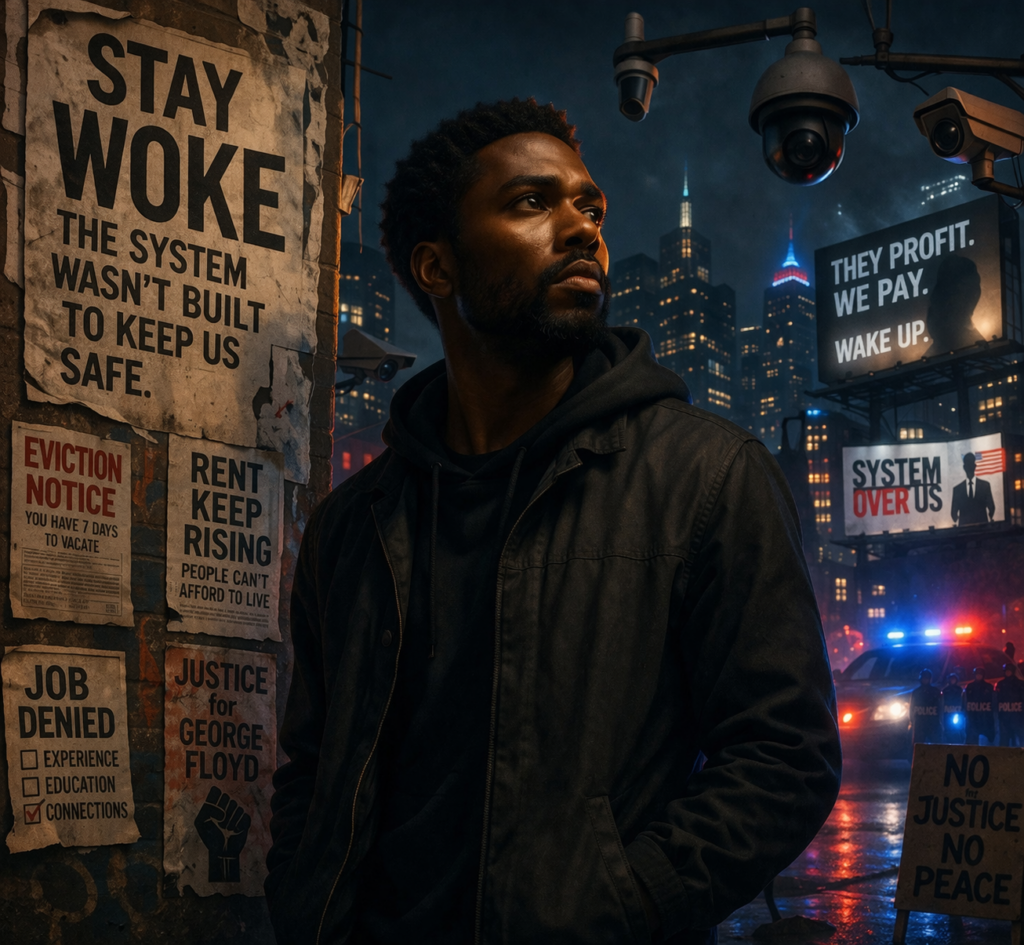
One of the biggest mistakes I see in some corners of the Black community is the tendency to give white people far too much credit.
White people are not omniscient.
They are not omnipotent.
They do not spend centuries carrying out flawless master plans that unfold exactly as intended. History simply doesn’t support that view.
Most governments, corporations, and powerful institutions don’t operate like the cartoonish villains in a Hollywood movie. Their conspiracies (when they exist) are usually messy, short-sighted, reactive, and often exposed much sooner than people imagine. They make mistakes. They fight among themselves. They pursue immediate political or economic gains without fully understanding the long-term consequences of their decisions.
History is full of examples where powerful people achieved one objective only to create entirely new problems they never anticipated.
That doesn’t make oppression any less real. I am certainly not arguing that. Rather, it simply makes the oppressors more human.
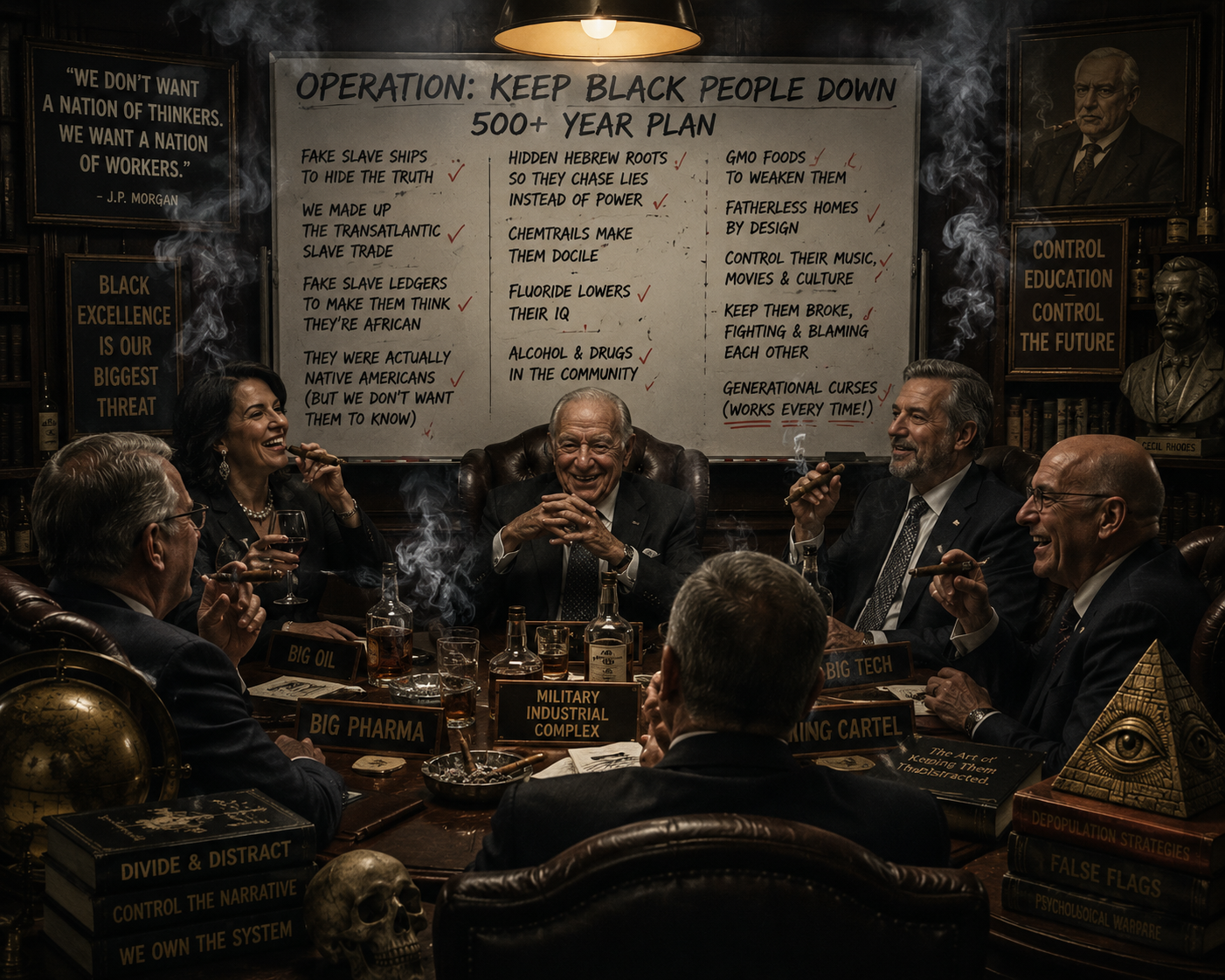
Unfortunately, some people have embraced a worldview where every historical event is interpreted as evidence of an elaborate, centuries-long conspiracy that only a handful of self-proclaimed “enlightened” YouTubers can supposedly decode.
I don’t buy it.
Ironically, this kind of thinking can become a form of white supremacy itself.
Why?
Because it assumes that Europeans and their descendants possess almost supernatural intelligence and foresight, and that every outcome in history happened exactly as they intended. It turns them into all-knowing masterminds while reducing everyone else to passive spectators with no agency of their own.
History is far more complicated than that. Empires rise, and empires fall. Wars produce unintended consequences. Economic systems evolve. And, technology changes societies in unexpected ways.
Entire civilizations have been transformed by accidents, disease, environmental changes, and decisions that looked reasonable at the time but produced completely unforeseen results.
The world we live in today wasn’t built from one perfect blueprint. Instead, it emerged from countless successes, failures, conflicts, compromises, and historical accidents.
The same applies to European dominance.
Europeans didn’t become globally dominant because they were biologically smarter than everyone else. Wealth, geography, trade networks, military competition, access to resources, political institutions, and centuries of technological development all contributed to that outcome. And let’s not forget the unfortunate accidental “luck” of wiping out most of the people on two continents with new diseases. The Innovation tends to flourish where societies have the resources, security, and incentives to pursue it.
More importantly, what we choose to believe affects what we choose to do.
If we convince ourselves that every aspect of our current reality was perfectly engineered hundreds of years ago, we risk believing that nothing can be changed. This fatalism has never liberated anyone and saps people of any real empowerment.
This is one reason I have little patience for theories claiming that the countless slave ledgers documenting the forced transportation of Africans across the Atlantic are all fabricated because “they” supposedly want us to believe we’re Africans instead of Native Americans or ancient Israelites.
The historical evidence overwhelmingly points to the fact that Black Americans are primarily descendants of West and West-Central Africans. Accepting that reality doesn’t diminish us. It does the opposite. It connects us to one of the richest, oldest, and most diverse regions in human history.
Instead of spending our energy chasing increasingly elaborate conspiracy theories, we should be asking far more practical questions:
How do we build stronger Black-owned businesses?
How do we create institutions that outlive us?
How do we increase homeownership?
How do we educate our children about African and African American history?
How do we develop economic relationships with countries throughout Africa and the wider African diaspora?
How do we build wealth instead of merely talking about it?
These questions are much more important than hanging on to weird conspiracy theories.
Nation-building is harder than conspiracy-building. It requires discipline instead of speculation, investment instead of internet debates, and cooperation instead of division.
If we truly want liberation, then our greatest challenge isn’t uncovering another secret plot.
Our greatest challenge is building communities that are economically independent, culturally confident, politically organized, and connected to the broader African world.
That’s work worth doing. Everything else is just a distraction.
One of the most frustrating parts of talking about racism in America is how often people act as if it is either exaggerated, isolated, or long behind us. Every time I say that most white Americans have, at minimum, participated in or benefited from racist systems and behavior, there is always a predictable backlash. The conversation shifts from the reality of racism to defensive utterances, including people charging me with racism, exaggerated claims of Black culpability in slavery, sloppy attempts to “both-sides” racism, and arguing that racism was a past reality that black people need to get over.
But history (and the present) tell a very different story, and I’m not pulling that conclusion out of thin air.
I’m looking at history,voting patterns, where people choose to live, how they react when Black people move into their neighborhoods, what they tolerate politically, and what I have personally watched happen over and over again in this country.
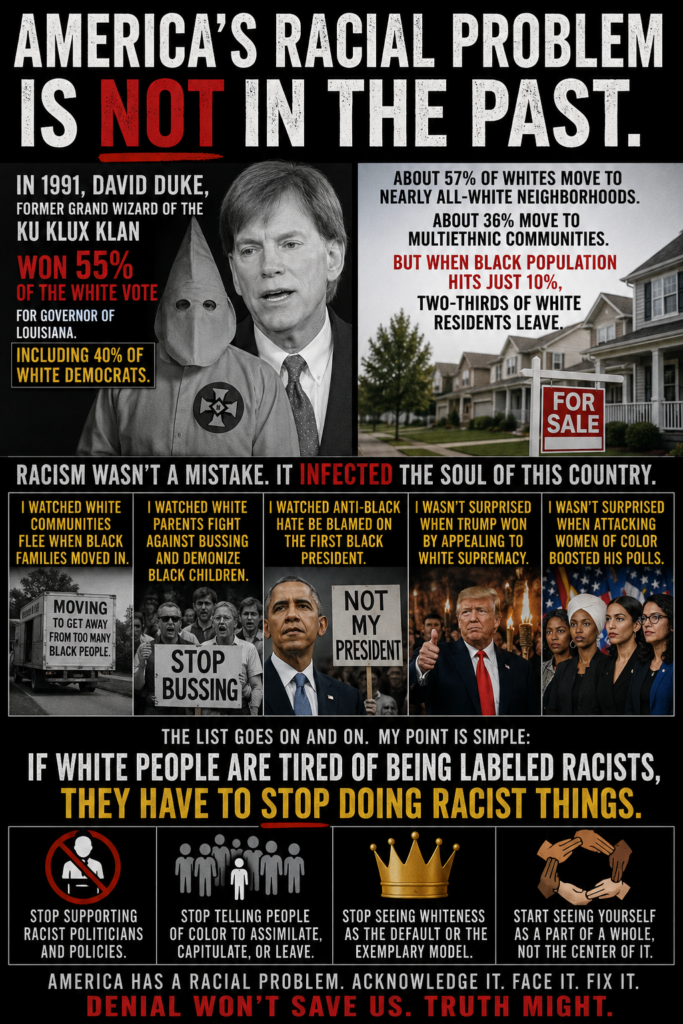
In 1991, David Duke, a former Grand Wizard of the Ku Klux Klan, won 55% of the white vote when he ran for governor of Louisiana. Let that sink in. A man whose public identity was openly tied to white supremacy won a majority of white voters, including 40% of white Democrats. That was not the distant 1800s. That was the early 1990s.
And this pattern is not an isolated one. Since the passage of the Civil Rights Act of 1964 and the Voting Rights Act of 1965, Democratic presidential candidates have consistently struggled to win the white vote. Even in 1976, when Jimmy Carter performed unusually well among white voters, Gerald Ford still won them overall. That should force us to ask uncomfortable questions about what racial backlash has looked like in American politics for the last half-century.
These are not random or meaningless occurances. And it is not just “economic anxiety.” This is racism built into the bloodstream of American politics and manifest through voting decisions and patterns.
The same dynamic has shaped where people live, where they send their children to school, and how they define “good” neighborhoods and “bad” neighborhoods. White flight did not happen by accident. It was not simply about “better schools” or “quality of life.”
For decades, study after study (and plain old lived reality) has shown that white people love to talk about diversity until Black people actually start moving in next door. White families will say they want “good communities” and “nice neighborhoods,” but once a place becomes “too Black” (usually with a Black population at or above 10%), all of a sudden the moving trucks come out and the “For Sale” signs start multiplying like weeds.
In community after community, once Black families moved in, white families moved out. I have seen it with my own eyes. Entire white communities expanded further and further outward, into what had once been farmland, not because they were escaping crime or collapse, but because too many Black people had moved nearby.
And it did not matter if those Black families were educated, professional, stable, or middle class. Their Blackness alone was enough for those white families to flee further into the suburbs.
We want to act like racism was just Bull Connor, George Wallace, fire hoses, and white robes. We want to tell ourselves that racism was a regrettable chapter that “we overcame,” and now the only real racists are a few cartoonishly evil people at the margins.
That is a lie.
Racism in America was never just about the loudest extremists. It has always depended on ordinary white people making racist choices in ordinary ways: where they live, who they vote for, what schools they support, what fears they indulge, what policies they excuse, and what kind of treatment of Black people they are willing to rationalize.
I saw white parents rage against school bussing while talking about Black children as if they were grave threats. I saw anti-Black hostility dressed up as “concern” and “standards.” I saw white resentment toward Barack Obama, a man raised largely by white family members, treated as if he were some dangerous racial radical simply for existing in the White House while Black.
So no, I was not surprised when Donald Trump rose to power by openly winking at white grievance and white nationalism. I was not surprised when racist attacks on women of color energized parts of his base. I have seen this movie before.
A lot of white Americans want to be absolved without being examined.
They want credit for not wearing a hood while still supporting racist politicians, racist policies, racist housing patterns, racist school systems, and racist cultural assumptions.
That’s not how this works.
America’s racial problem has never been confined to a handful of extremists in white robes. That is the lie people tell themselves so they do not have to examine the everyday racism embedded in housing, education, politics, media, and social life. Racism in America has never just been about “bad people.” It has been about a society that trained millions of ordinary people to see whiteness as the norm, the standard, and the default.
And that is the real issue.
If white Americans are tired of being associated with racism, then the answer is not to get offended when people point it out. The answer is to stop supporting racist policies, racist politicians, racist assumptions, and racist social arrangements. Stop demanding that people of color quietly assimilate into a system built to marginalize them. Stop treating whiteness as the universal model of what is “normal,” “civilized,” or “American.”
Because America’s racial problem is not ancient history. It is not dead. And pretending otherwise is part of the problem.
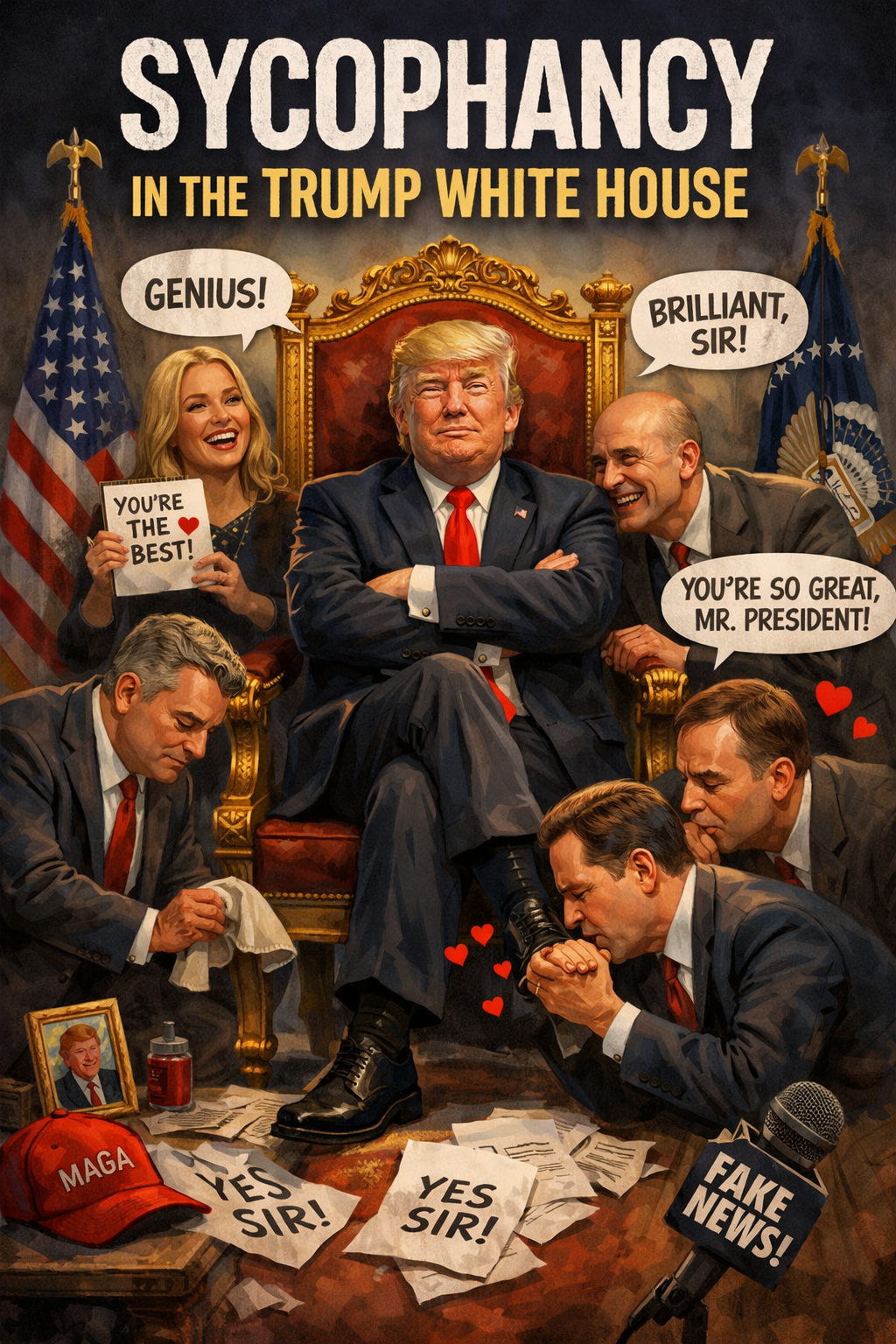
My name is Mario, and I was hoping you could check out this brief video of me ranting about the level of sychophancy in the Trump White House.
There’s a difference between loyalty and outright sycophancy, and lately, that line has been completely erased in American politics.
In my TikTok video, I briefly break down the level of blind praise and performative loyalty emanating from the Trump White House and how annoyingly unsettling it is.
When public officials seem more focused on flattering one person than serving the public or speaking honestly, it raises serious questions about leadership, accountability, and the health of our political system. The goal is not to provide the American public with accurate information. Instead, the goal is to carry favor with Donald Trump by constantly over-complimenting him.
What stood out to me, and what I highlight in the video, is how normalized this behavior has become. The constant sycophantic praising, followed by unrealistic claims designed more to make Trump seem like a divine solution to every problem facing the United States, doesn’t feel like governance. It feels like something else entirely. And regardless of where you fall politically, that should at least make you and any of us very concerned.
I’m not interested in empty outrage, even though my language is often colorful and could perhaps rub some the wrong way. I’m interested in conversations that prompt people to think a little deeper about what we’re seeing and accepting in our politics and our society. This is true of most of my TikToks.
If that’s the kind of discussion you’re into, check out other videos on my TikTok. I’m going to resume posting more content like this, of me breaking things down, asking uncomfortable questions, and keeping it real.
As with this blog and my social media, I invite you to join the conversation, even if you disagree with me. Just be aware that if you bite (figuratively speaking), I bite back.
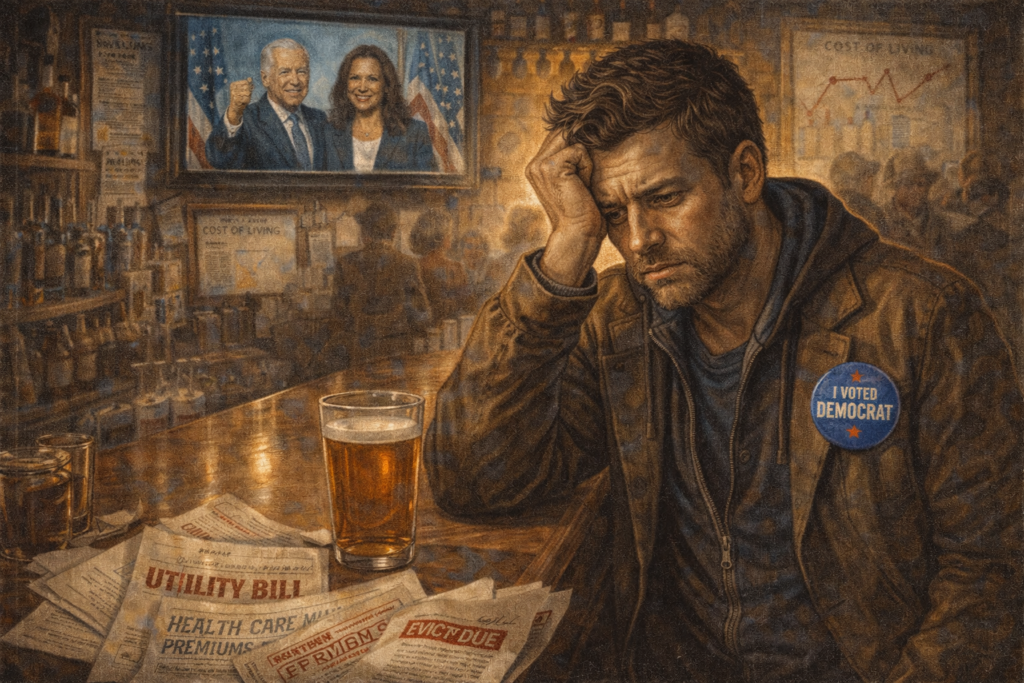
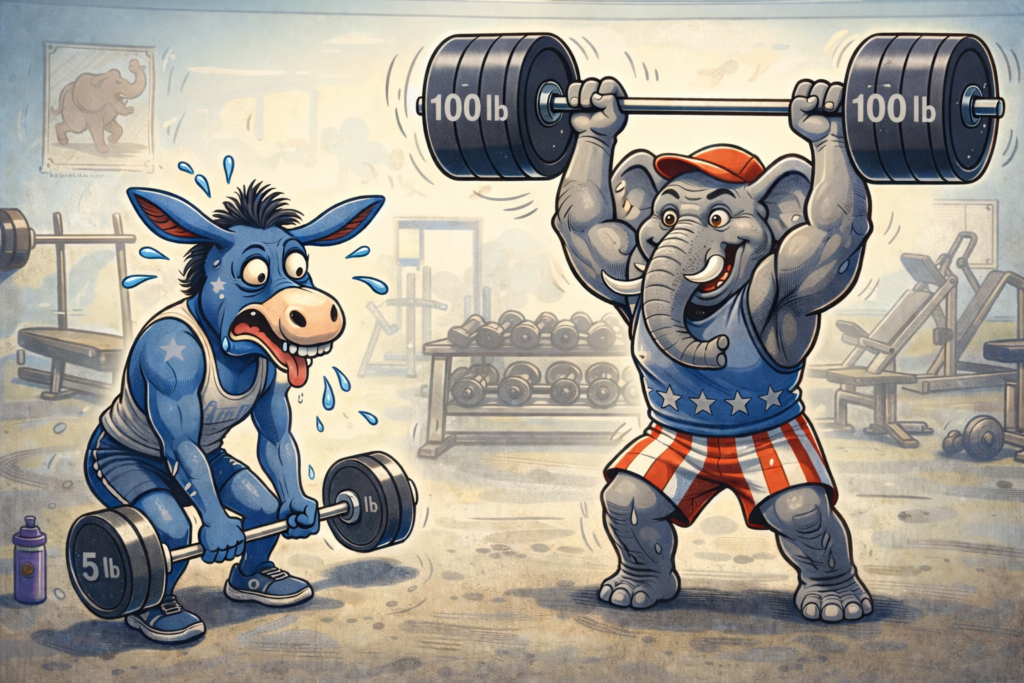
This is not much of an exaggeration of how it really is.
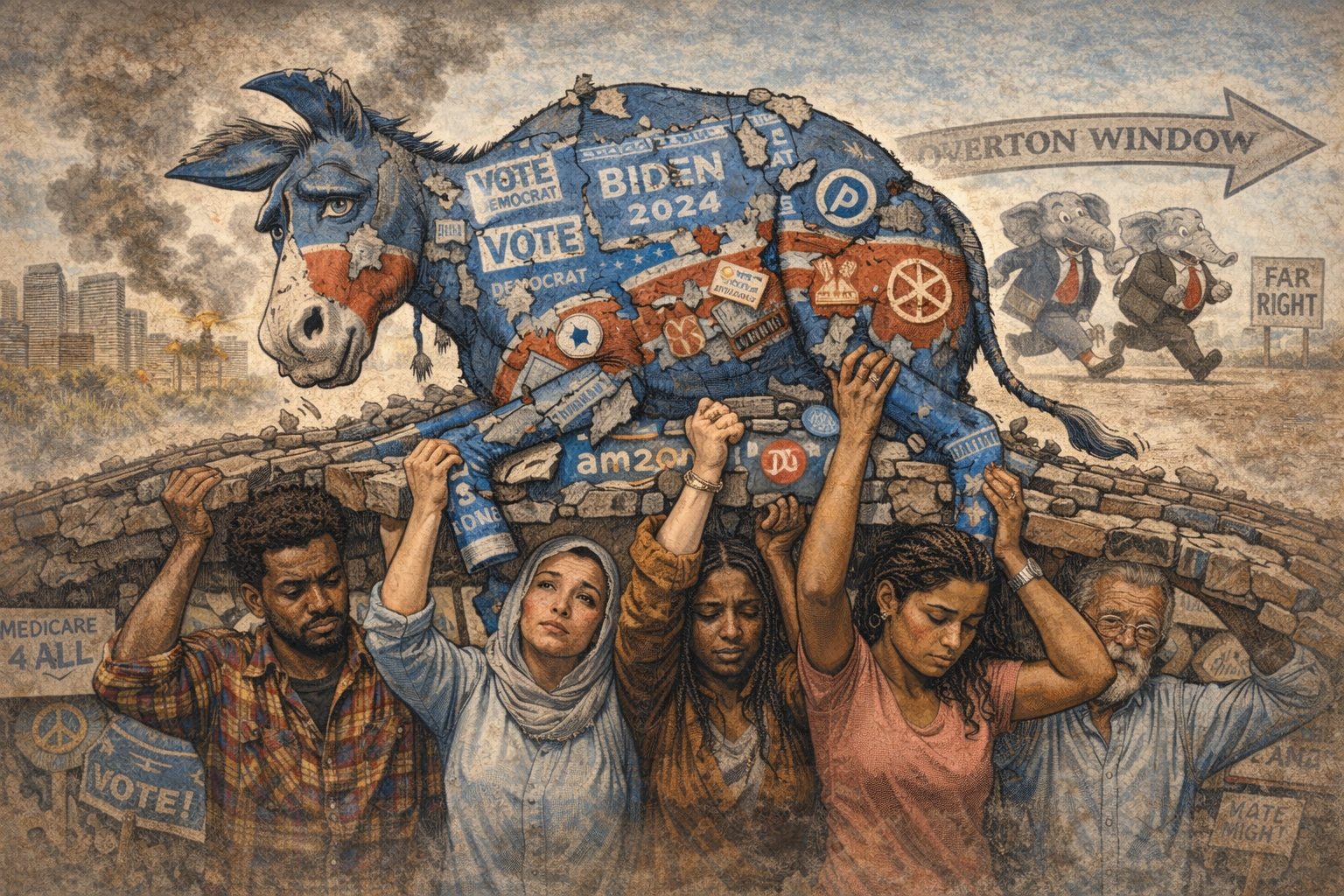
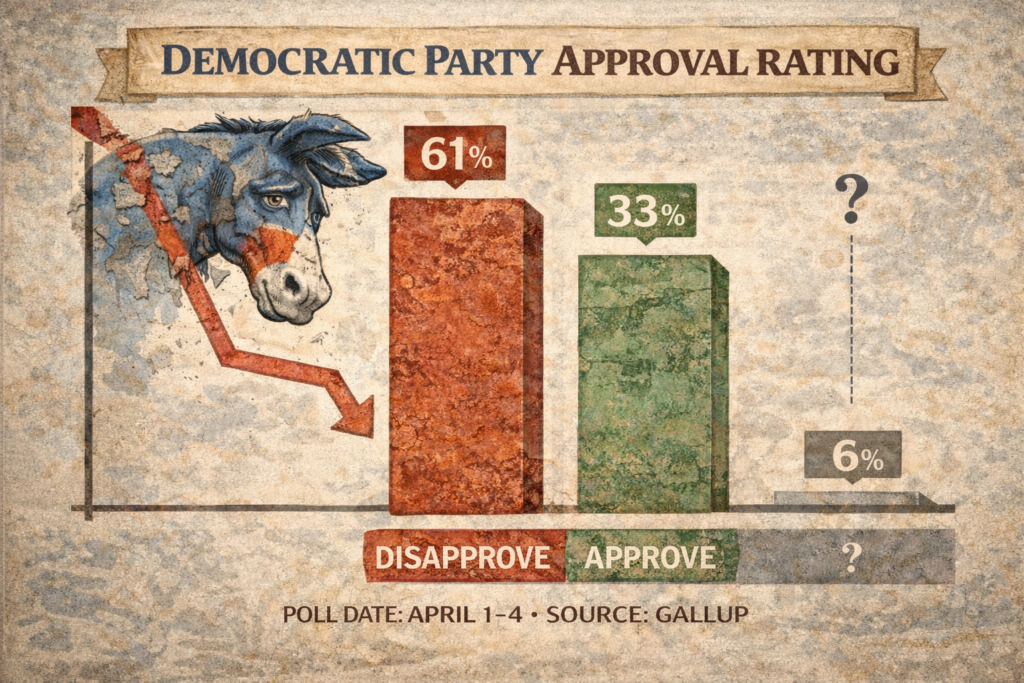
The Democratic Party is currently under water in the polls. Their approval rating is lower than that of an unhinged and failing Republican President.
One of the biggest lies in American politics right now is the conservative claim that the Democratic Party’s low approval ratings are proof that progressive or left-wing ideas are unpopular.
That is not what is happening.
The Democratic Party’s low approval is not a sweeping public endorsement of conservatism, nor is it some grand rejection of ideas like police reform, clean energy, immigrant dignity, labor rights, racial justice, or social equality. If anything, many of those ideas remain more popular than the politicians and institutions claiming to represent them.
What people are rejecting is how Democrats campaign, govern, and legislate.
That distinction matters.
Many Democratic Voters Do Not Actually Like the Democratic Party
One of the most misunderstood things about American politics is that a huge portion of people who vote Democrat are not loyal Democrats.
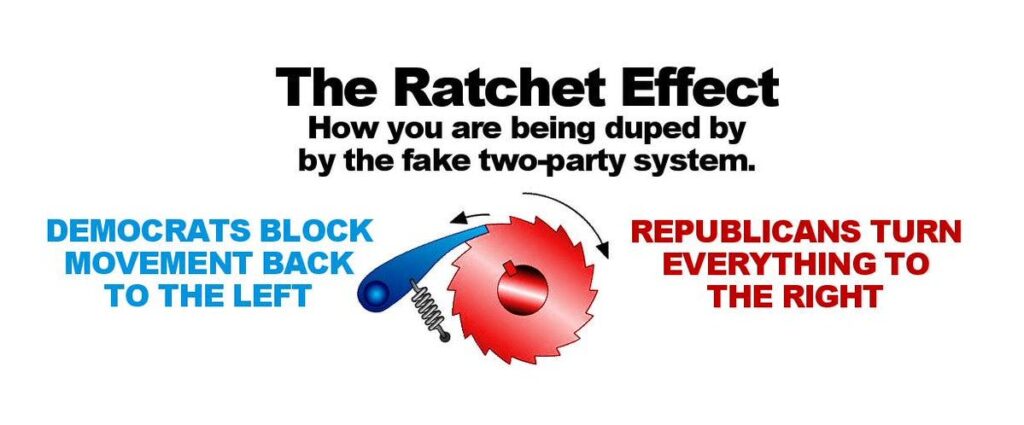
Many progressives, leftists, disillusioned liberals, and politically alienated voters do not support the Democratic Party because they believe in it. They support it because there is no other viable alternative under the current two-party system.
That is not enthusiasm. That is containment.
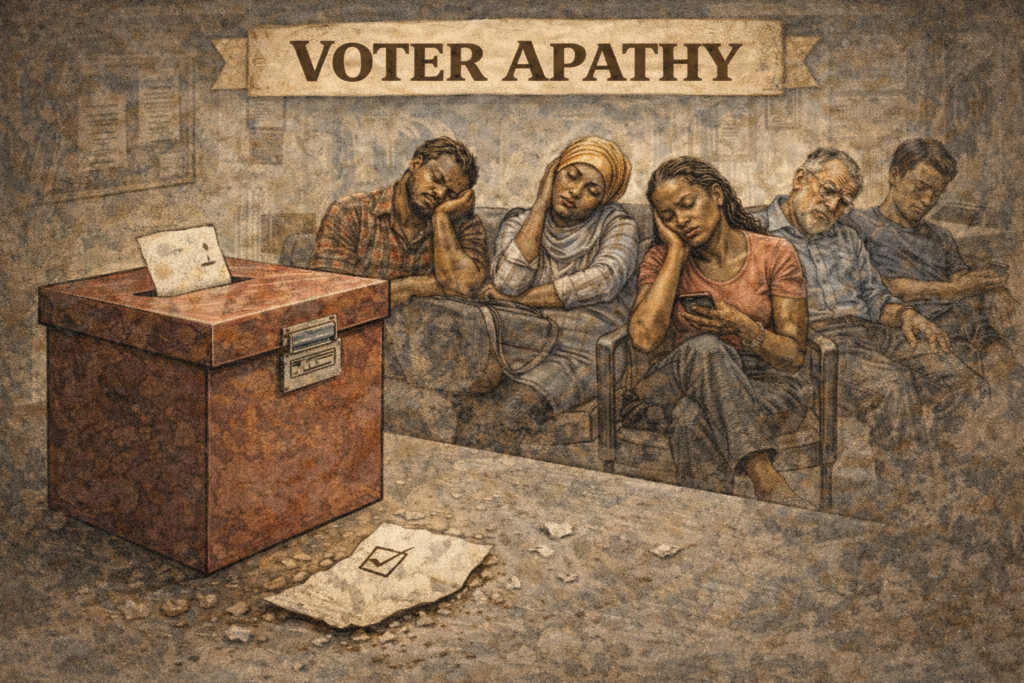
Failure to articulate, fight, and deliever real changes leads to voter apathy.
Many Democratic voters are not politically “at home.” They are politically homeless.
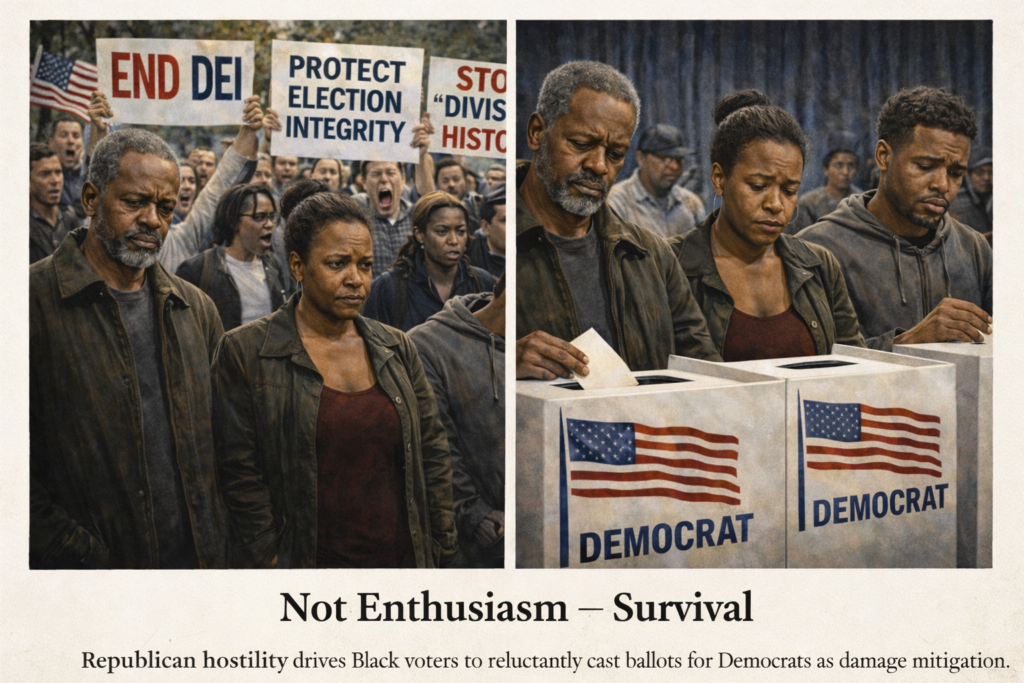
They vote Democrat not because they think the party is transformational, but because the Republican Party has become openly hostile to democracy, labor, immigrants, women, LGBTQ people, Black communities, Muslims, and virtually anyone outside its reactionary coalition.
That means Democratic votes are often votes of defense, not belief.
Democrats Are Not “Too Woke.” They Are Not Woke Enough.
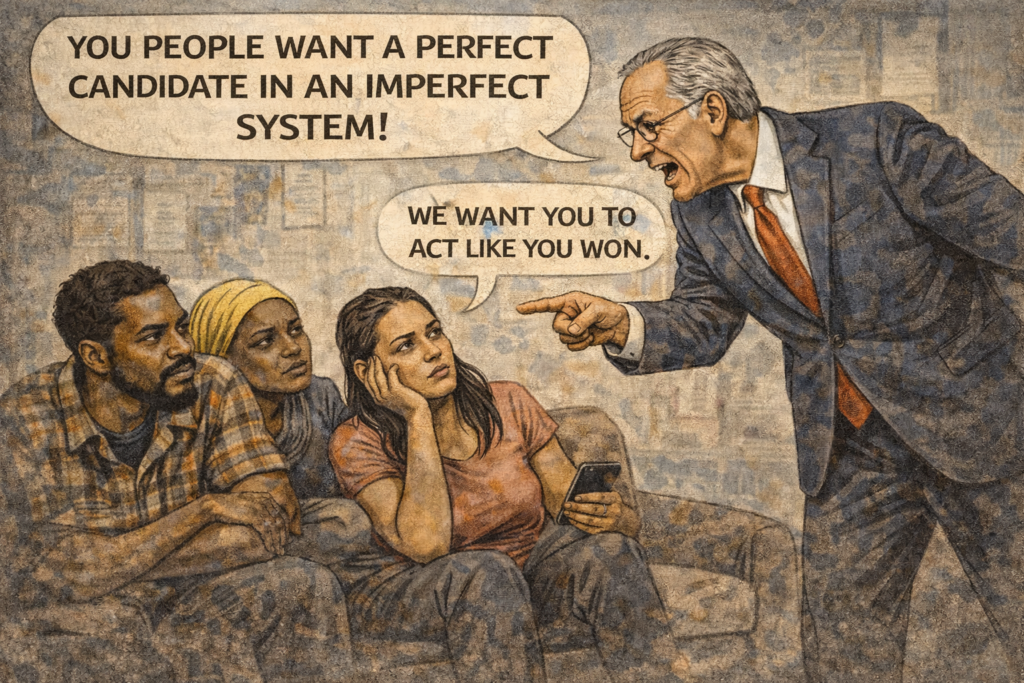
Democrats charging progressives and leftists with seeking perfection is the latest in gaslighting excuses for their failure to champion and deliver for their most vulnerable constituents.
One of the more absurd claims pushed by conservatives (and sometimes even accepted by Democrats themselves)is that the party has become too “woke.”
But that depends entirely on what one means by “woke.”
Being “woke” is being aware, conscious, and alert. It is being ready to face systems of oppression with adequate knoiwledge to navigate through them without being a victim. Black poeople know that our freedom constantly hangs by a thread and enemies are everywhere.
In its original Black political meaning, being woke meant being conscious of danger, power, injustice, and the need to protect one’s people and community. It was never just about representation, branding, or inclusion language.
And that is exactly where Democrats fail.
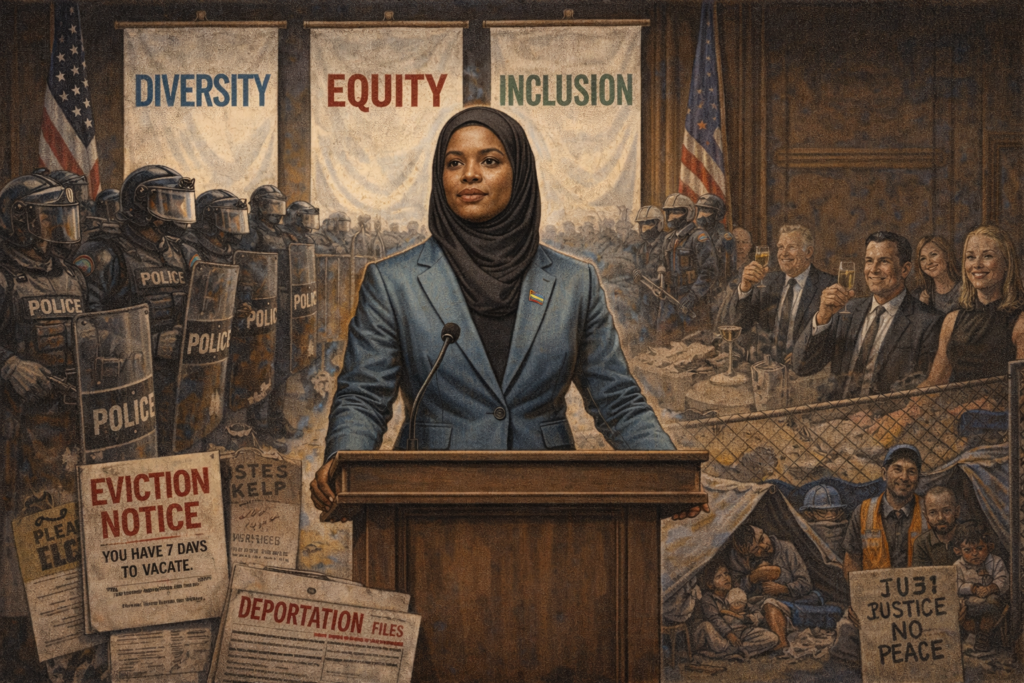
They are often fluent in the language of diversity, equity, and inclusion while being utterly unwilling to confront the structures that actually produce inequality.
They do not threaten the system. At best, they try to make the status quo look kinder, more polished, and more diverse.
But a more diverse ruling class is not the same thing as justice. It truly doesn’t matter if the foot on our necks belong to a woman, minority, or a member of some other marginalized group, the oppression is still there.
In fact, the tokenism that puts a member of a marginalized community in charge makes the problem worse.
Diversity in positions of power does nothing for marginalized communities as long as the mechanisms of their oppression are still operating and supported by those in power.
The Core Problem: Democrats Campaign Left and Govern Center-Right
This is where much of the anger comes from.
Democrats routinely campaign on bold, popular ideas, such as healthcare reform, abortion protections, criminal justice reform, labor rights, student debt relief, climate action, immigration reform, etc., only to retreat, dilute, abandon, or proceduralize those promises once in office.
There is no joy in Democratic Party victories if the end result is that the people’s basic standard of living either doesn’t improve or worsen.
And when they fail, they almost always have an excuse ready:
Senate procedure
“Moderate” Democrats
institutional norms
electability concerns
donor pressure
political timing
fear of backlash
At some point, people stop hearing these as obstacles and start hearing them as the pre-scripted permission slips for inaction they often are.
This is one of the main reasons the Democratic Party feels hollow to so many of the very people it depends on.
Democrats Alienate Their Own Coalition
Democrats often actively resist moving to the left. In fact, their solutions to electorial win and losses is to move further to the right.
The Democratic Party survives through a broad coalition, but it often governs as though that coalition is a burden.
Black voters, women, Arab and Muslim communities, immigrants, labor-oriented voters, poor and working-class people, LGBTQ communities, and younger progressives are all expected to show up every election cycle. But when it is time to govern, many of those same groups are sidelined, ignored, triangulated against, or used symbolically rather than materially.
Black voters have long experienced this in the form of tokenism, local “benign” neglect, selective outrage, and empty rhetoric about justice that rarely translates into structural change.
Benign neglect of communities only breeds resentment by many within those communities. If the Democrats want to keep their coalition of diverse voters, they have to fight harder for each and every one of them.
Muslim and Arab communities have seen it through surveillance, Islamophobia, selective empathy, and the treatment of dissenting lawmakers as liabilities.
Women have seen it through decades of strategic delay and complacency around abortion rights, only to watch those rights collapse under a reactionary judiciary.
Immigrants and Latinos have seen it through cruelty repackaged as pragmatism.
And progressives have seen it through endless lectures about realism from people who somehow always find the political courage to disappoint the left but never that same courage to seriously confront the right.
The Gaza Crisis Exposed Democratic Hypocrisy
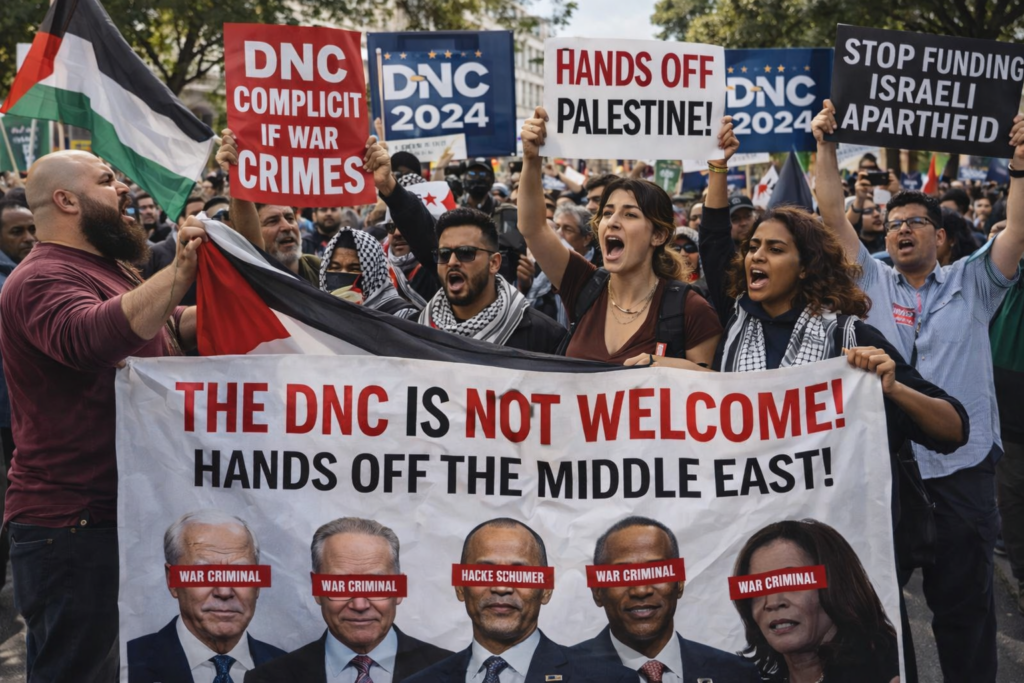
There were calls by many of the political left in 2024 for Democrats to stop supporting the genocide in Gaza and support a ceasefire, These calls were mostly ignored and scoffed at by the Democratic Party leadership.
If there was one issue that crystallized this contradiction for many younger voters, leftists, Muslims, Arab Americans, and anti-imperialists, it was Gaza.
For many people, the Democratic Party’s response to the destruction and mass death in Gaza was not merely disappointing but it was also morally disqualifying.
Many potential Democratic voters could not vote for Democratic candidates alligned with Israel and its lobby in good conscious.
Pro-Palestinian protestors started to express their disappointment with the Democratic Party and vowed to vote against the Democratic Party during the general election.
Instead of responding with honesty, moral clarity, and equal concern for Palestinian humanity, much of the party defaulted to the same old framework: criminalize dissent, sanitize atrocity, and demand loyalty from people expected to ignore what they could plainly see with their own eyes.
That mattered and it sidelined many voters and activists who could have carried the Democrats to victory.
Why?
Because once a party asks people to suspend not just strategy, but conscience, it should not be surprised when those people begin to emotionally detach from it.
Republicans Have an Ideological Core. Democrats Often Seem to Have None.
Democrats struggle to use their power to help the people who elected them. They seem afraid to embrace popular left-wing positions. The Republicans, in contrast, use their power to push their agenda no matter how unpopular it my be. The Democrats appear weak while the Republican seem strong.
Part of the frustration here is comparative.
Republicans, however destructive, reactionary, and dangerous their project may be, often appear more ideologically committed than Democrats. They are willing to fight for what they believe in, even when those beliefs are cruel, anti-democratic, and deeply unpopular.
Democrats, by contrast, often appear to be a party whose primary belief is managing decline politely.
They want stability and not transformation. Procedure and not confrontation. Brand management and not political struggle.
That makes them seem weak, not simply because they lose, but because even when they win, they often act as if they do not know how to wield the power that they have.
This Is Not an Argument for Republicans
Let me be crystal clear about this post lest my words are taken out of context by conservatives using my words to make bad faith arguments: none of this is an endorsement of the Republican Party.
The current Republican Party is more overtly hostile to Black people and other marginalized communities than the Democratic Party is. That is reality.
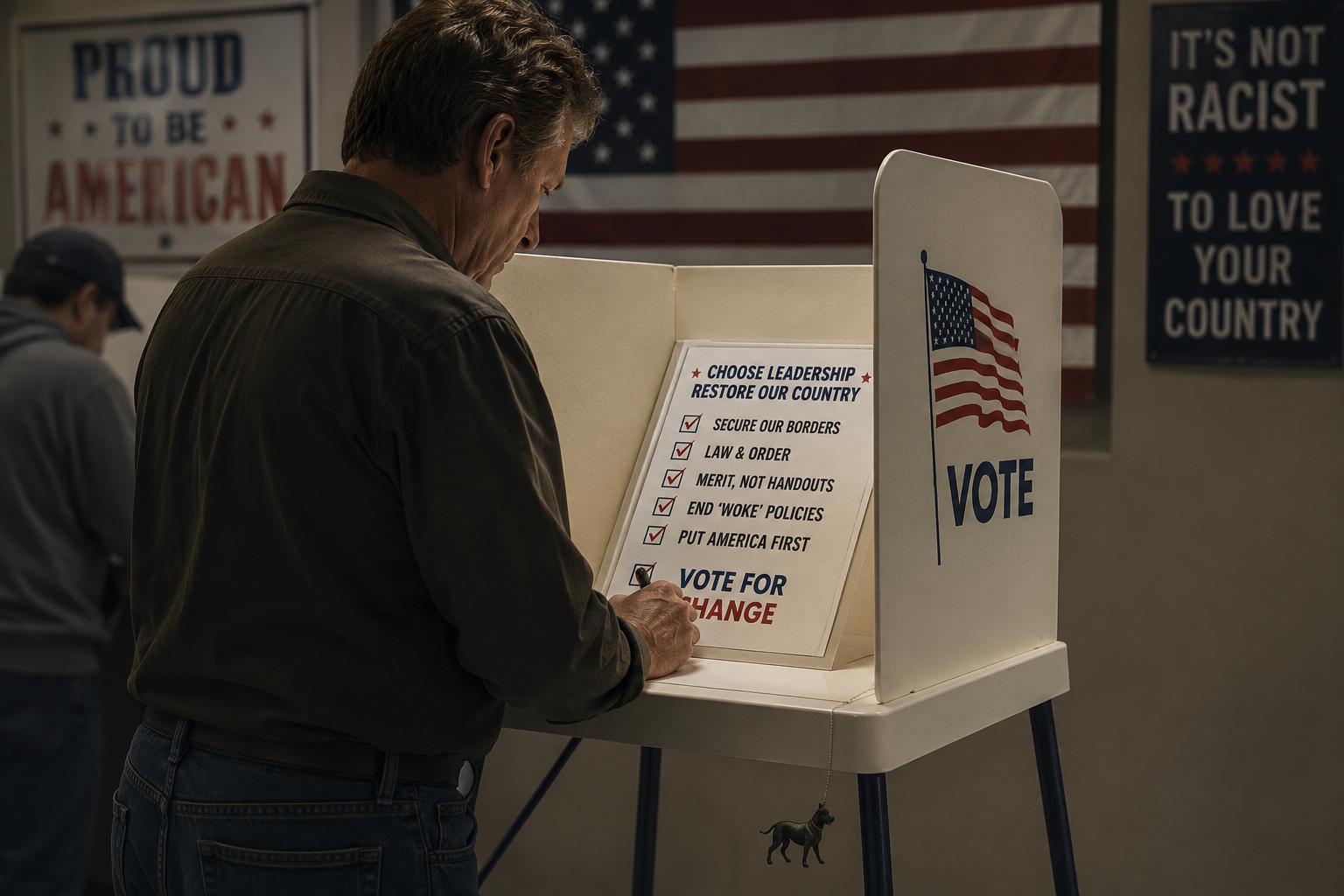
One of the main reasons why Black voters overwhelmingly vote Democrat is not due to satisfaction or loyalty. Instead, it is because the Republican Party had been openly hostile toward the Black Community for decades. Racist dog-whistle politics may fool some but, Black people can indentify it easily.
Most Black voters, myself included, vote Democrat not because we are enchanted by the party, but because under the present system, it is often the only viable barrier against a more openly reactionary political project.
That is not love.That is only risk management. This is something many Black Republicans, who talk about loyalty to plantations seem to forget.
And Black history gives us every reason to take that risk seriously.
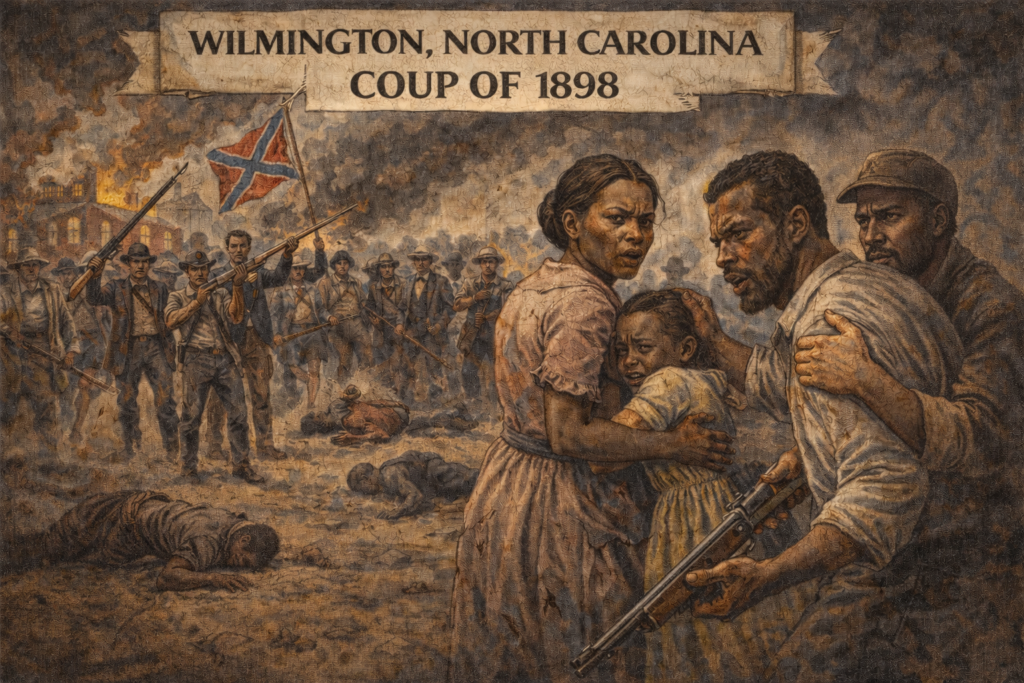
After the electoral victories of many Black people in Wilmington, North Carolina in 1898, an angry White Mob conducted a violent coup of the town in which Black residents were killed or driven away. This was one of the last holdovers of a succesful diverse government after the end of the Recontruction Era 20 years earlier.
The gains won through struggle can be reversed. They can be rolled back. They can be destroyed. Reconstruction taught us that. Wilmington taught us that. The 20th century taught us that. And the present is teaching it again.
The Real Crisis Is Political Homelessness
The deeper issue here is not simply that Democrats are unpopular.
It is that millions of people feel politically stranded.
They are too conscious to be satisfied with Democratic symbolism. too threatened to gamble on Republican barbarism, and too trapped in a two-party duopoly to build immediate alternatives with real electoral power.
That is a recipe for alienation. The largest voting bloc during the 2024 presidential election was eligible voters who chose the proverbial couch over casting any vote and any election.
Constant disappoinment leads to political disengagement.
And unless that changes, Democrats will continue to suffer from a contradiction that conservatives fundamentally do not understand.
This is that people may still vote for Democrats while deeply resenting them.
That is not political strength. Instead, that is political exhaustion.
And unless Democrats become something more than “the only adults in the room,” that exhaustion will continue to define American politics.
One of the biggest lessons I keep learning while in Africa is something uncomfortable, but necessary to understand:
In a deeply twisted way, chattel slavery and apartheid in the Western world helped force Africans in the diaspora into a single racialized identity.
The “Black” identity became politically real and socially unavoidable in the Americas and much of Europe. But Africa itself did not historically evolve around that kind of singular identity. And if we are serious about understanding African history, slavery, and even Pan-Africanism, we have to start there.
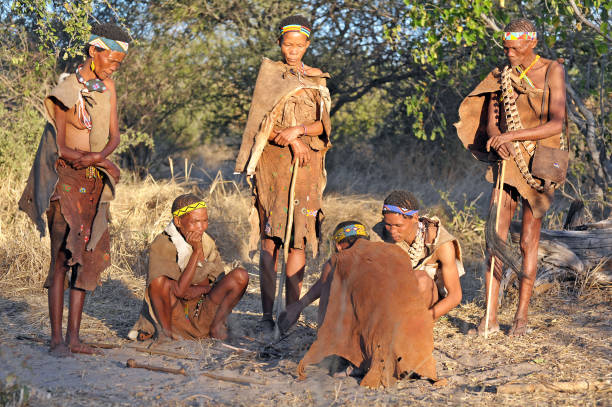
San bush people gather in the setting sun, Makgadikgadi Pans, Botswana, Southern Africa. The San are an ancient indigenous tribal people who inhabited much of southern Africa, and although few in number today remain proud of their culture, ancestry, and traditional ways of dress, customs, and behaviour that included subsistence hunting and foraging
Africa Is Not a Monolith
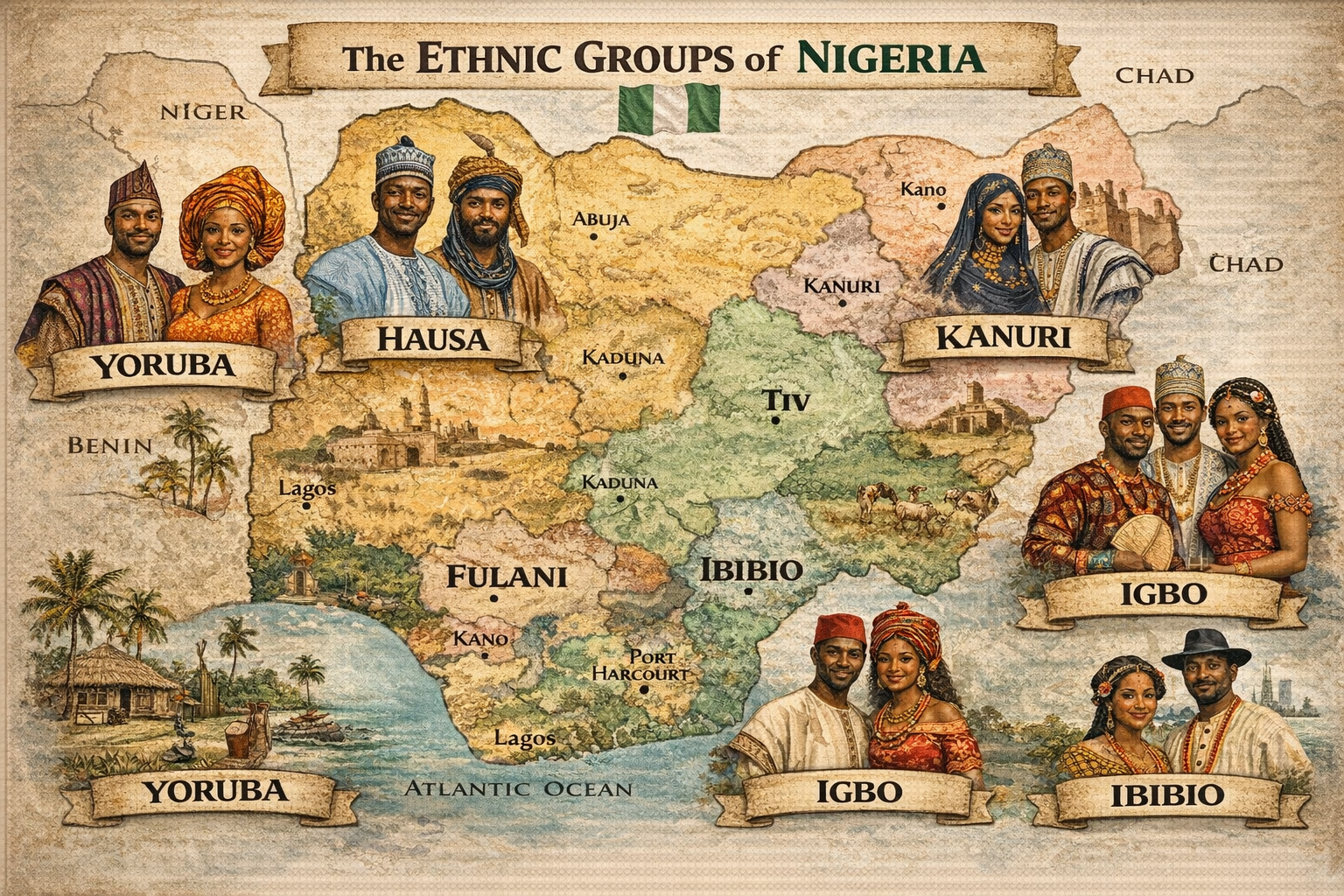
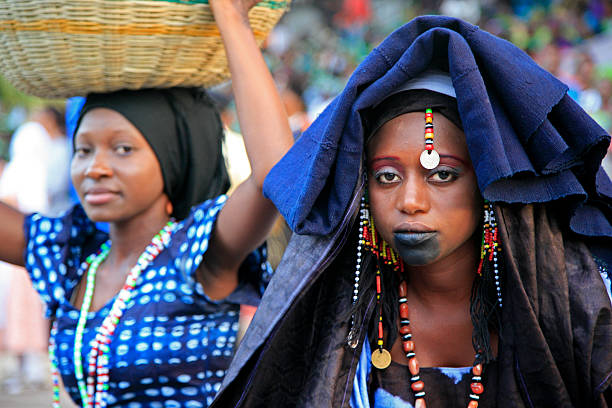
Africa is the most ethnically and genetically diverse continent on Earth. That matters more than most people realize.
Many people outside the continent talk about “Africans” as if they are one people who are arbitrarily divided by colonial borders. But that is not really how Africa works. Across the continent, and even within individual countries, there exist many different ethnic groups with their own languages, cultures, religious traditions, histories, and political identities.
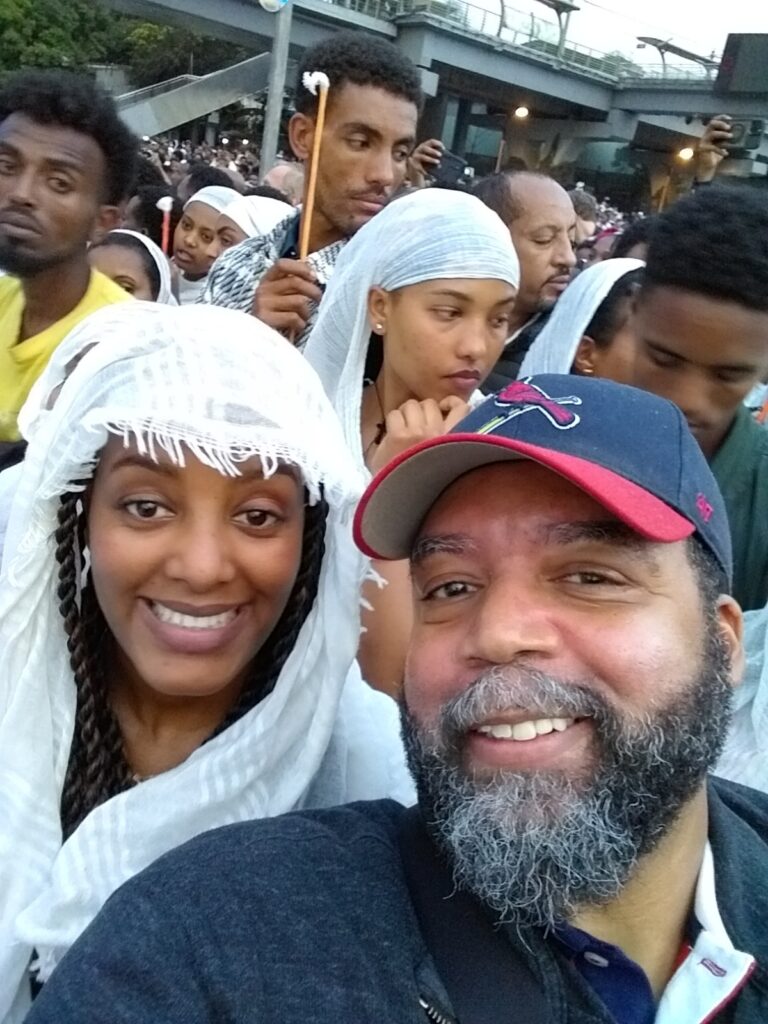
A picture of me and my fiancé at the Meskel festival in Addis Ababa, Ethiopia.
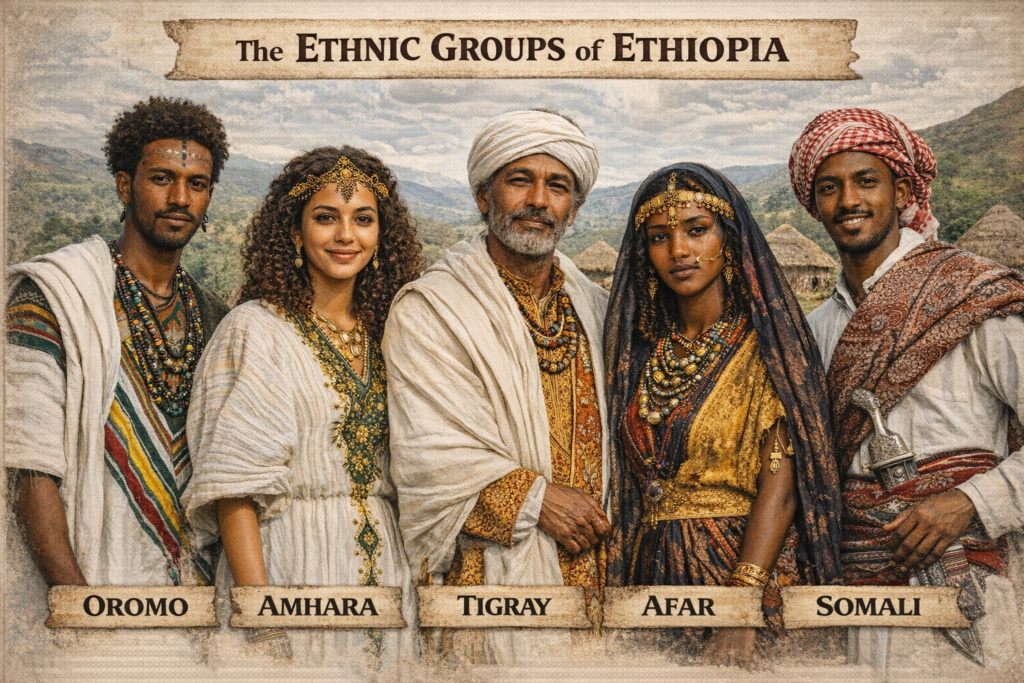
Take Ethiopia as an example. To outsiders, they are all simply “Ethiopian.” But within Ethiopia, people may identify first as Oromo, Tigray, Amhara, Afar, or something else entirely. Those identities are not cosmetic. They are rooted in deep histories, sometimes cooperation, sometimes rivalry, and sometimes conquest. These groups have their own languages, cultures, and histories that may seem similar to outsiders but are very distinct to Ethiopians themselves.
Some of the ethnicities in Ethiopia.
That is one reason why the question, “Why did Africans sell their own people into slavery?” is often framed misleadingly.
In many cases, they did not see the people they were selling as “their own people” in the way we mean that phrase today. That doesn’t excuse it morally, but it does make it historically legible.
A Weird Thought Experiment as a Comparison
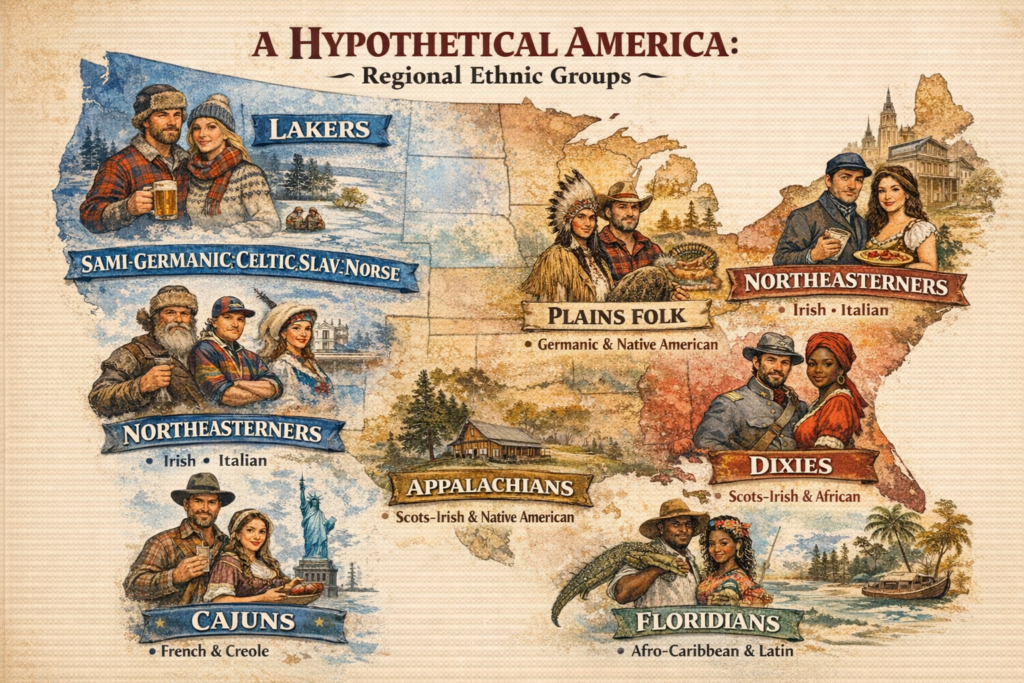
A relatively small number of the hypothetical American ethnicities in my thought experiment. These are the different people I imagined if the current makeup of the United States were allowed to develop separately for a long period of time.
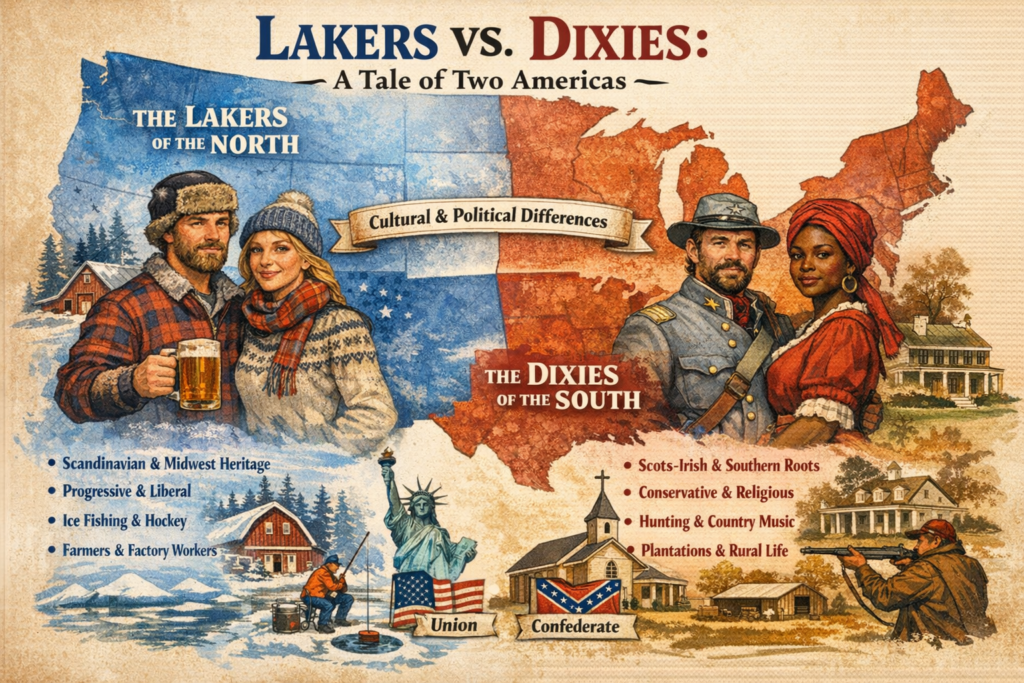
Let’s imagine that the United States is much older than it is. Let’s, in turn, imagine that each region was able to evolve in some isolation for a long time. The Californians will have a different culture and possibly a different language from the Cajuns, the Appalachians, the Lakers to the North, the Dixies, the Floridians, the Plains Folk, the Northeasterners, etc.
Even right now, with all of us identifying as “American”, except with a hyphenated race identifying prefix, we are different people regionally, with different political ideologies.
The Dixies (the people of the Deep South) have ALWAYS been very conservative, religious, and loyal to hierarchical systems, whether it was ruled by Republicans, Democrats, Whigs, Democratic-Republicans, Federalists, Loyalists, or whatever party or faction.
This is different than the Lakers of the eastern parts of the upper Midwest (from Michigan to Minnesota). The Lakers have always been more liberal, regardless of their political party allegiance.
Lakers and Dixies are different.
The Lakers and the Dixies are different people in this thought experiment, but their attitudes and sentiments come from reality.
Dixies are the descendants of Scots, Irish, Africans, and Native Americans. Lakers are the descendants of Scandinavians, the French, and Native Americans.
Please keep in mind that this is a weird thought experiment to explain African sentiment.
If the Dixies and Lakers were separated by up to 300K years and have evolved their own languages and customs, then why should we expect them to think of each other as “one people?” If the Dixies and Lakers are different now after only 250 years. Imagine how different they would be after 500 years, 1000 years, 10K years, 50K years, 70K years, 100K years, 150K years, and 300K years. And naturally, the Lakers and Dixies will branch into smaller subgroups and so forth.
A Better Comparison
A better comparison would be asking:
Why did the Greeks enslave the Macedonians?
Why did Spartans dominate Athenians?
Why did rival European peoples conquer one another for centuries?
The answer is simple: they did not see themselves as one people.
That is much closer to how many African societies historically understood themselves. Ethnicity, kinship, language, and political allegiance mattered more than some broad racial solidarity that would only become more meaningful later under European domination.
What Slavery and White Supremacy Changed
For Black people in the diaspora, however, the story was very different.
In the United States, especially, people of African descent were stripped of their original ethnic identities and grouped into a single racial caste. Whether your ancestors were Igbo, Wolof, Mende, Akan, Kongo, or something else became socially irrelevant in a white supremacist society that only saw one category: Black.
That process was violent, dehumanizing, and catastrophic.
But it also produced a single peoplehood forged through oppression. This is something new.
Black Americans today may have major internal cultural differences, such as Gullah, Creole, Black Midwesterners, Black Southerners, Black Northeasterners, and so on. However, we are still socially treated as one people. In that sense, our race had become our ethnicity and historical/cultural marker.
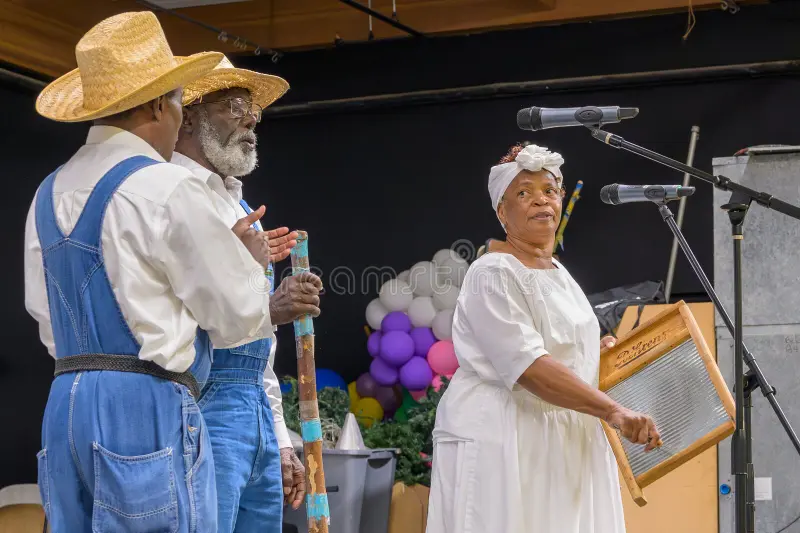
The Gullah people.
Africa and the Diaspora Are Related, But Not the Same
That is part of what makes the relationship between continental Africans and the diaspora so complicated.
We are connected by ancestry, by history, and by racialization in a white-dominated world. But we are not simply interchangeable. Africans are not automatically “us,” and we are not automatically “them,” at least not in a cultural or ethnic sense.
That doesn’t mean the connection is fake. It means the connection has to be understood honestly.
This is the same for Black Americans, Black Canadians, Black Jamaicans, Afro-Latinos, and other Diasporans. We’ve been separated long enough to have different cultures, different linguistic rules, and different sets of values.
And that honesty matters because it opens the door to a more mature version of Pan-Africanism based not on fantasy, but on political solidarity.
The Future of Pan-Africanism
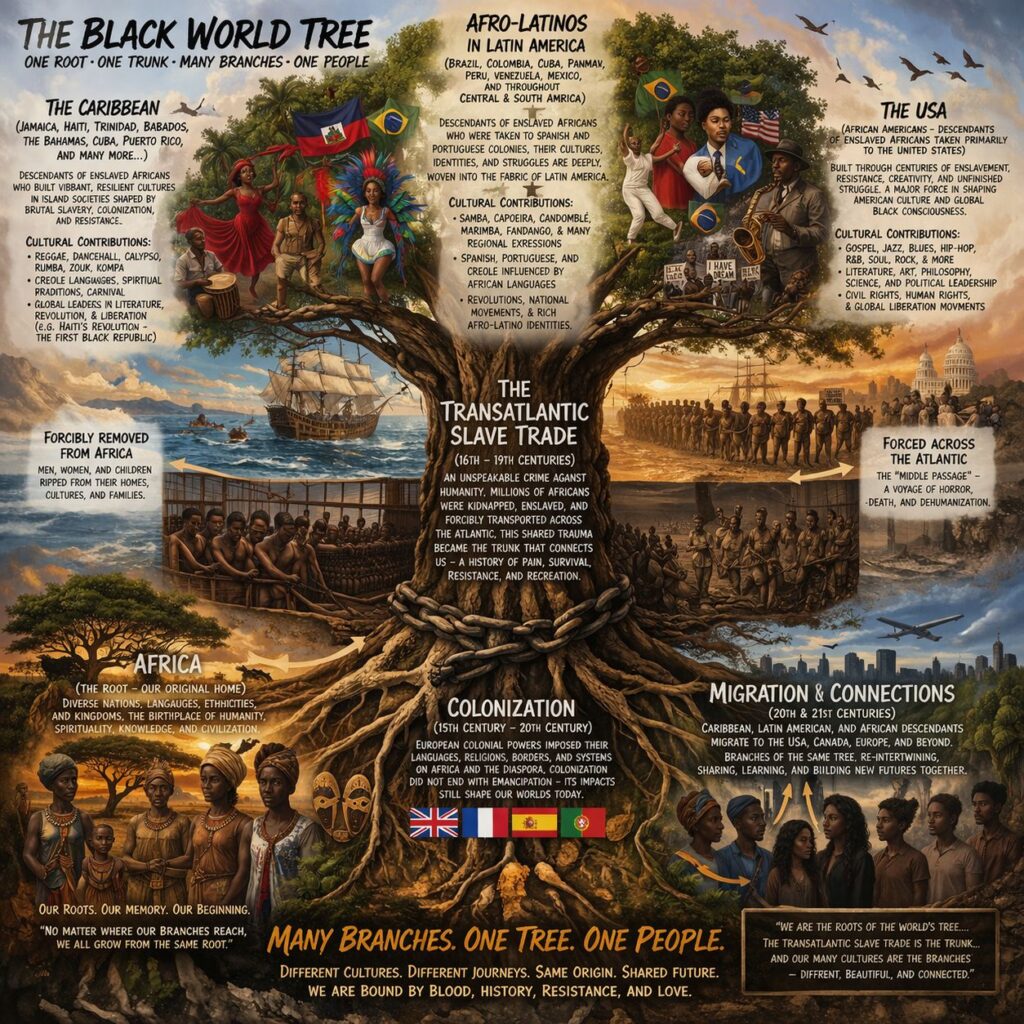
The Black World Tree by Dike Obioma Matthew. He had permitted me to use this image on my blog. In this, he makes the Trans-Atlantic Slave Trade the Trunk of the tree uniting the people of many different roots before they are branched off.
The encouraging thing is that many Africans and people across the diaspora are increasingly embracing a broader consciousness.
More and more people are beginning to see that, whatever their ethnic or national differences, they share a common struggle against White supremacy, neocolonialism, extraction, and domination.
In that sense, Pan-Africanism is not about pretending all Black people are the same. We are not. But neither are White people nor Asians.
It is about recognizing that we do not have to be the same to fight for one another.
That is the challenge and the promise.
Africa does not need to dominate the world. Neither does the diaspora.
The goal is about something much more meaningful than some bullshit race to the top.
Our goal is about self-determination, dignity, cooperation, and the power to shape our own destiny without the aid, supervision, or permission of powerful developed countries run by those of European or Asian descent.
I have a hard time participating in jingoism, even when it is meant to honor people I respect, sometimes even members of my own family.
Memorial Day is the day Americans set aside to remember the men and women who made the ultimate sacrifice while serving in the United States armed forces. It also happens to be the unofficial start of summer, a day of barbecues, pools, and gatherings with friends and family.
But every year, as the speeches and social media posts roll in, I find myself increasingly uncomfortable with the rhetoric surrounding the holiday. Much of it feels less like remembrance and more like pseudo-patriotic flag-waving.
Let’s be honest about something.
The United States has not fought a war primarily over the freedom of its own citizens since either the War of 1812 or the Civil War, depending on how one chooses to frame it. Nearly every major conflict since then has been tied to geopolitical strategy, alliances, or the protection of American economic and imperial interests abroad.
From the Cold War through the late twentieth century, many U.S. military interventions were justified under the Truman Doctrine, a policy aimed at stopping the spread of communism. But communism was never an immediate threat to the civil liberties of most Americans. What it threatened was the global political and economic order dominated by the United States and its Western allies.
And while American leaders were promoting narratives about defending freedom abroad, millions of Black Americans were still fighting for the most basic civil rights at home.
Black soldiers served in every American war. They fought and died under the banner of freedom while living in a country that often denied them full citizenship, equal protection under the law, and even basic dignity.
In many cases, they returned home from battle only to be treated as second-class citizens. Their sacrifices were praised in speeches, but their humanity was still questioned in everyday life.
In that sense, the people who fought most directly for my freedom were not generals or politicians. They were activists, organizers, and everyday citizens who challenged systems of racial injustice. Many of these heroes were harassed, imprisoned, exiled, or assassinated for their efforts.
They fought not on foreign battlefields but in American streets, courtrooms, churches, and communities.
That history makes it difficult for me to fully embrace the triumphant, chest-pounding patriotism that often dominates the Memorial Day holiday.
This doesn’t mean I don’t respect the individuals who served. Many of them acted out of genuine belief, duty, or economic necessity. Some of them were family members. Their sacrifices were real.
But respect for those individuals doesn’t require me to accept the mythology that surrounds American military power and American motivation.
So while others participate in the patriotic pageantry and blast Toby Keith songs about American might, I’ll probably spend the day doing something much quieter.
I’ll remember the complicated history behind the holiday.
Then I’ll enjoy the food, spend time with family, and maybe take a dip in the pool.
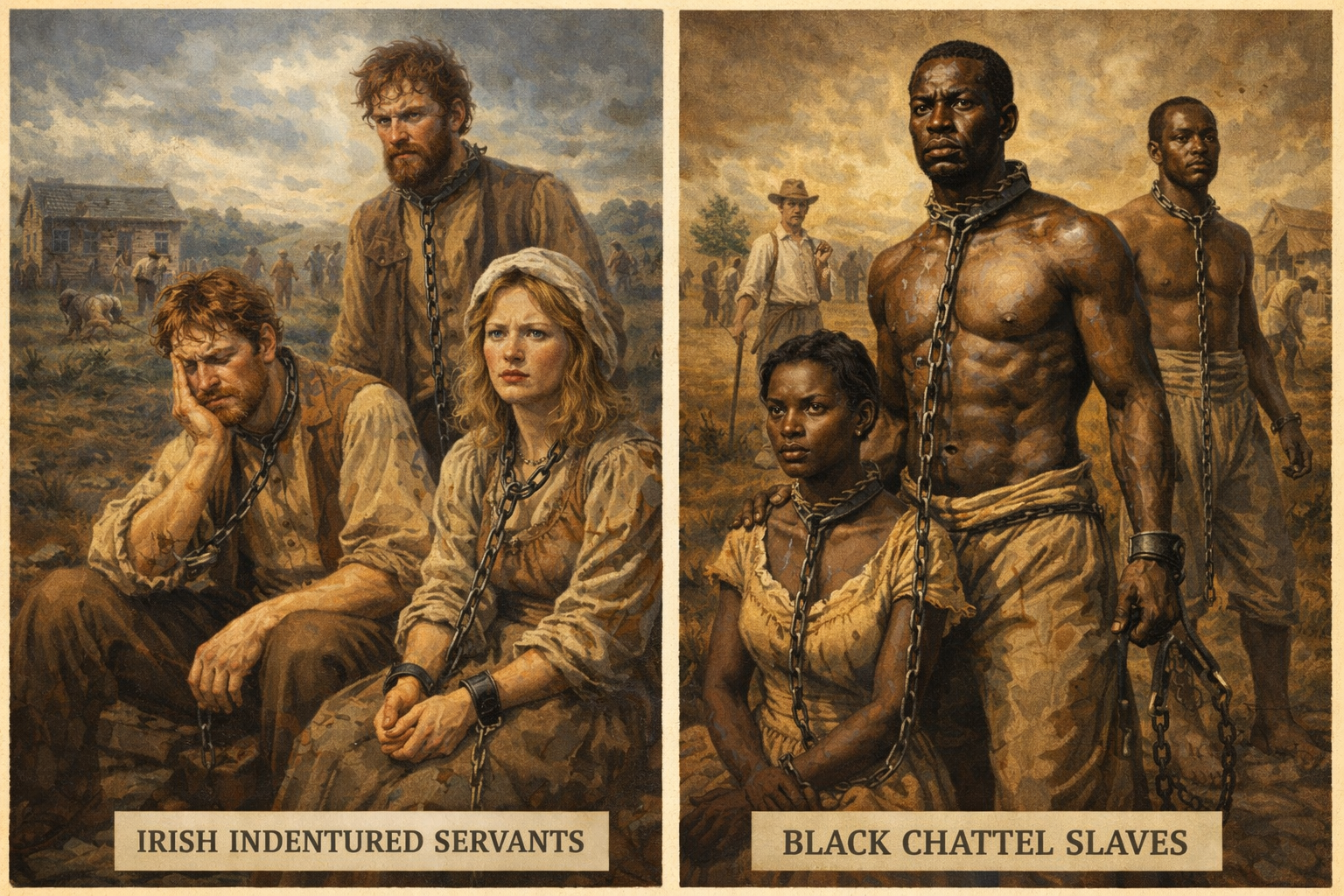
Every so often, a meme or viral post circulates claiming that the Irish were enslaved in the Americas in the same way that Africans were. It’s one of the biggest historical distortions I see repeated online. The idea that “Irish slaves” existed in the same way as African slaves is about as academically credible as the claim that Black Americans are actually Native Americans and not part of the African diaspora (that post will be coming soon).
In other words, the entire premise is built on bad research, misinterpretation, and repetition. When a claim gets repeated often enough within a certain audience, people begin to treat it as fact, even when it collapses under the slightest historical scrutiny.
But let’s entertain the argument for a moment.
Let’s pretend, for the sake of discussion, that Irish people in colonial America were enslaved under conditions as harsh as, or even worse than, those faced by enslaved Africans or descendants of Africans. Even in that hypothetical scenario, the historical outcomes would still be vastly different than the horrific reality that Black slaves endured.
After slavery ended in the United States, Irish immigrants were able to assimilate into the broader category of whiteness after a relatively brief period of northern discrimination against them. This was mostly based on xenophobic ideas rather than strict adherence to a rigid and inhumane racial hierarchy.
Although there was some discrimination against Irish immigrants during much of the latter half of the 19th century and the early 20th century, there were no “Irish Codes” modeled after the Black Codes. There were no Jim Crow laws designed to keep Irish Americans segregated. There were only a relatively few systematic housing policies designed to prevent Irish people from living in certain neighborhoods, and no widespread legal restrictions prevented them from entering particular professions.
In fact, Irish Americans quickly became deeply embedded in American civic life. In cities across the country, from Boston to New York to Chicago, Irish Americans filled municipal jobs, political offices, and police departments.
Whatever discrimination the Irish faced as immigrants in the nineteenth century eventually gave way to full incorporation into the American definition of “white.”
The same cannot be said for Black Americans.
Other European immigrant groups—Italians, Poles, and others—also faced discrimination when they first arrived in the United States. Yet over time, most of these groups were absorbed into the dominant white majority. In many cases, they even became participants in the same social and political systems that marginalized Black Americans.
This is a crucial aspect of the historical narrative that is often overlooked.
The uncomfortable truth is that many Europeans, including the Irish, participated in systems that upheld slavery and racial hierarchy. Irish immigrants were not merely victims of history. Many were slaveholders in the Caribbean, plantation overseers, or participants in slave-catching systems within the United States.
The New York Draft Riots of 1863 offer a stark example of this tension. Irish immigrants in New York violently resisted being drafted to fight in the Civil War, and many of those riots turned into attacks against Black residents of the city. It would make little sense for Irish rioters to protest a war that was supposedly freeing “Irish slaves.” They understood perfectly well to whom slavery applied in America.
And the reality was simple: slavery in the United States was overwhelmingly imposed on Black people.
Some people feel compelled to rewrite history to minimize that fact. But arguments built on historical distortions ultimately collapse under their own weight. When people attempt to counter the legacy of slavery with myths, they end up strengthening the very grievances they are trying to dismiss.
So let’s state the truth and the historical record clearly.
Irish Americans ultimately assimilated into the broader category of whiteness and were able to participate fully in American society by the early to mid-20th century.
The system of American slavery became explicitly racial because race made it easier to identify who could be enslaved and who could not.
The legacy of chattel slavery, followed by Jim Crow, segregation, and institutional discrimination, continues to shape American society today. There is no such legacy connected with the mistreatment of Irish immigrants.
When Black Americans discuss slavery, we are not asking for pity or charity. What we are demanding is full participation in American society without harassment, stigma, or the expectation that we must hide parts of ourselves to be accepted.
History is complicated. But it becomes even more complicated when people intentionally distort it for political convenience or to escape collective culpability.
The truth is difficult enough without myths getting in the way. And lying about and/or omitting history will not shield the guilty from accountability.
Every January, around the time of Martin Luther King Jr. Day, a familiar political ritual begins.
Public figures across the political spectrum invoke King’s name in support of their own positions. Liberals quote him. Conservatives quote him. Moderates quote him. Everyone suddenly seems convinced that Dr. King would agree with them if he were alive today.
In many cases, these attempts say more about the people invoking King than about King himself.
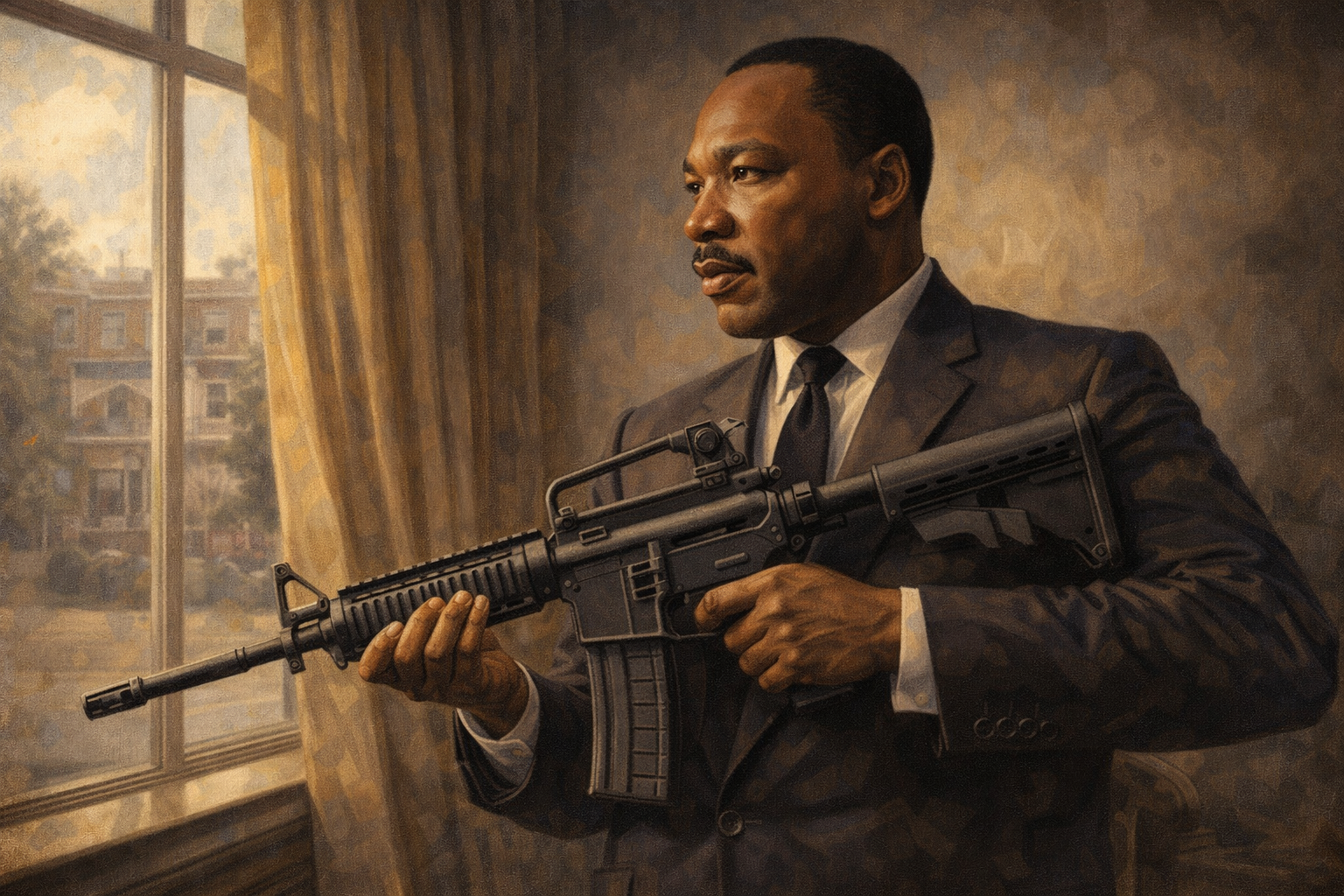
One of the more curious examples in recent years has been the claim that Dr. King would have opposed modern gun control laws because he owned firearms.
At first glance, this argument might sound plausible. It is true that King once applied for a permit to carry a handgun after his home was bombed during the Montgomery Bus Boycott. In the violent atmosphere of the Jim Crow South, many civil rights leaders faced credible threats to their lives.
But isolating that fact while ignoring King’s broader philosophy creates a deeply misleading picture.
Dr. King was one of the most committed advocates of nonviolence in modern history. His entire political and moral philosophy centered on the belief that violence ultimately corrupts both individuals and societies. Throughout his career, he repeatedly emphasized that the civil rights movement must reject violence—even in the face of brutal repression.
More importantly, King’s political views extended far beyond the narrow civil rights narrative that is often presented today.
In the final years of his life, King increasingly criticized economic inequality, militarism, and American foreign policy. He spoke openly about the need for a radical restructuring of American society and argued that poverty, racism, and war were interconnected problems.
He supported strong labor rights, called for major government programs to address poverty, and spoke favorably about forms of democratic socialism.
In other words, the historical Dr. King was far more politically complex and far more radical than the sanitized figure often presented in modern political debates.
Projecting modern ideological battles onto King may be tempting, but it risks distorting the historical record.
Rather than imagining the version of King we wish existed, it might be more productive to engage honestly with the one who actually did.
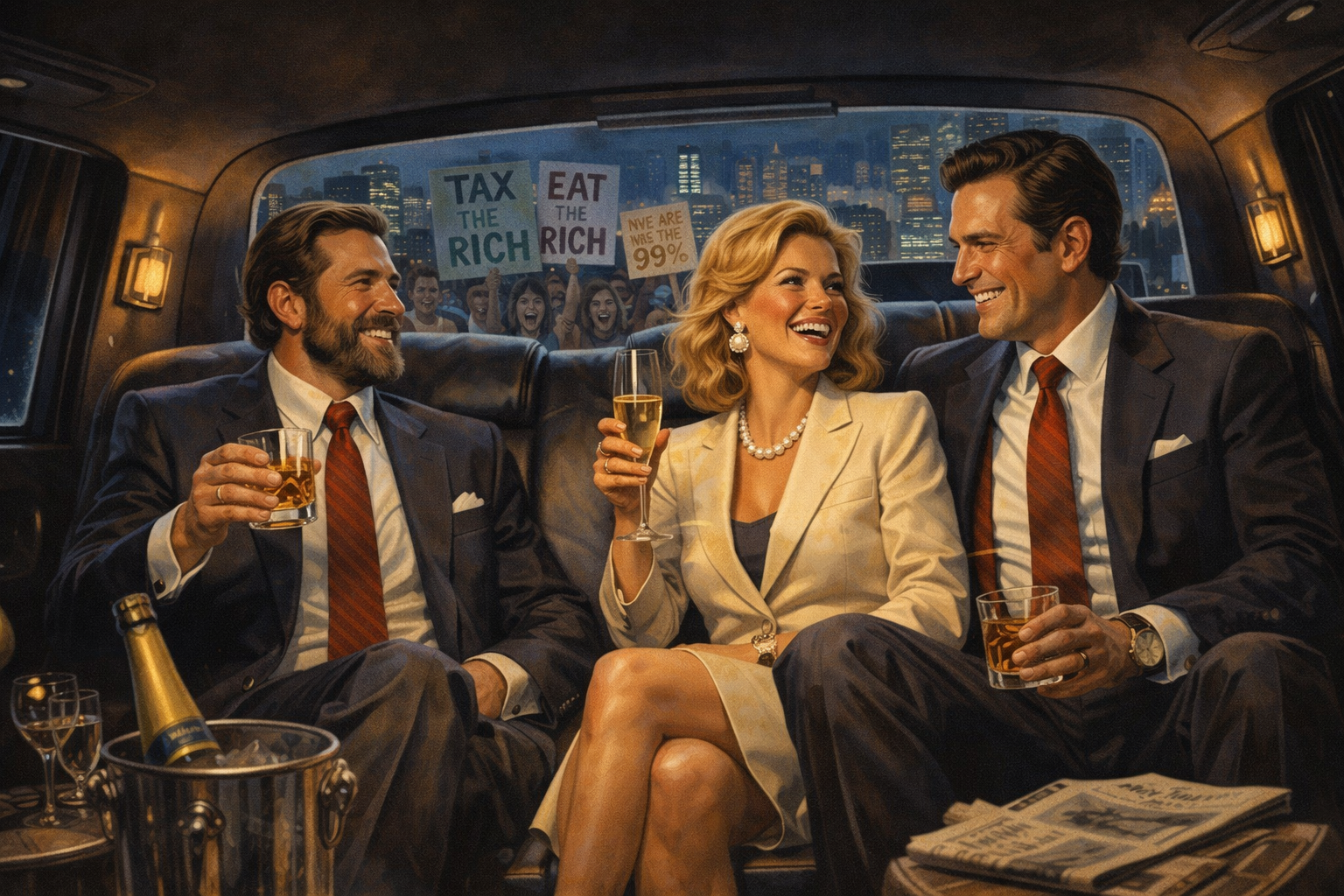
If the phrase “limousine liberal” needed a modern example, many critics would point to Bill Maher.
For decades, conservatives have used the term to describe a particular kind of liberal politics… one practiced by wealthy cultural elites who champion progressive social causes while remaining largely disconnected from the economic struggles of ordinary people.
Whether that label is fair in every case is debatable. But the criticism highlights a real tension within American liberalism.
The problem is not support for civil rights, LGBTQ equality, environmental protection, or other social issues, no matter how tepid and/or performative it may be. Those struggles are important and necessary. The problem arises when those causes are championed without addressing the economic structures that produce inequality in the first place.
This tension was visible in a recent segment of Maher’s show in which he criticized younger Americans for being overly pessimistic and encouraged people to “cheer the fuck up.” In his view, dissatisfaction with the current political environment reflects an overly negative outlook among younger generations.
But that interpretation overlooks the economic reality facing millions of Americans.
Over the past several decades, the United States has undergone a dramatic economic transformation. Manufacturing jobs that once provided stable middle-class livelihoods have been replaced by lower-paying service work. Wages have stagnated while the cost of housing, healthcare, education, and childcare has steadily risen.
Today, many Americans are financially fragile. Surveys regularly show that a large percentage of households would struggle to cover even a modest emergency expense. At the same time, economic growth and stock market gains are increasingly concentrated among a relatively small segment of the population.
When commentators dismiss widespread economic frustration as simple negativity, it can come across as profoundly out of touch.
For people living paycheck to paycheck, debates about stock market performance or macroeconomic indicators feel distant from their everyday reality. Economic insecurity is not simply a matter of attitude. It is a real material condition.
This is where critiques of “limousine liberalism” gain traction.
Symbolic gestures and self-righteous virtue signaling can coexist with an economic system that continues to produce inequality and insecurity. Without adequately examining the deeper structural issues of unsafe labor conditions, wage stagnation, sharply rising housing costs, decreased access to affordable healthcare, and the massive influence of corporate power, political rhetoric about social progress can begin to feel hollow.
Many Americans are not asking for perfection. They are merely asking for a political system that seriously addresses the economic pressures shaping their lives.
When those concerns are dismissed as whining or irrational pessimism, the gap between political elites and working people only widens.
And that gap helps explain why so many voters remain deeply dissatisfied with the current political moment.
One of the things that has always puzzled me about the Baby Boomer generation is the contrast between their revolutionary youth and their often conservative attitudes later in life.
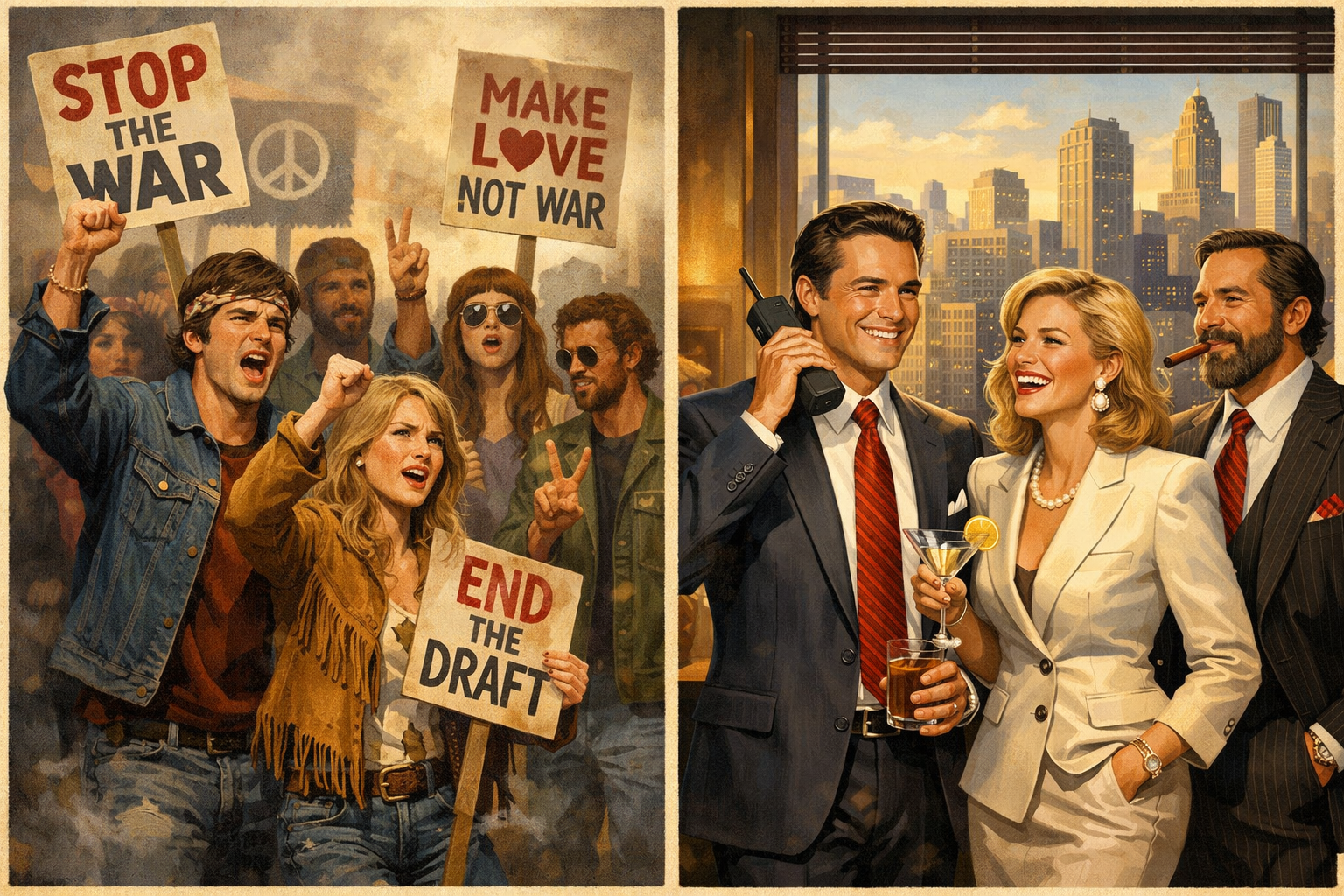
The Boomers, along with many members of the Silent Generation, were the people that Generation X grew up admiring. They were the students sitting at segregated lunch counters while mobs attacked them. They were the Freedom Riders. They were marching against the war in Vietnam. Some were even killed during protests, such as the students shot by National Guard troops at Kent State.
They were the generation that gave rise to the Civil Rights Movement, the Black Power Movement, women’s liberation, the American Indian Movement, early gay rights activism, and a broader counterculture that questioned the entire structure of American society.
They were also the generation that gave us revolutionary genres of music, such as classic rock, heavy metal, punk, and hip-hop. Melly Mel was a Boomer who gave us “The Message”, and Chuck D was a Boomer telling us to “Fight The Power”.
Of course, not every Boomer was part of those movements. Many supported segregation, the Vietnam War, and conservative politics. But the public image of the generation was shaped by its loudest voices: young people challenging authority and demanding social change.
Somewhere along the way, that spirit changed.
By the 1980s, large portions of the Silent Generation and the Baby Boomers had embraced a very different political outlook. Ronald Reagan’s landslide victory in 1984, in which he won every state except Minnesota, was powered largely by voters from the Greatest Generation, the Silent Generation, and many Boomers who had entered middle age.
To understand this shift, we must first look at the economic environment in which those generations came of age.
The decades following World War II produced one of the most prosperous periods in American history. Beginning in the late 1940s and continuing through the early 1970s, the American middle class experienced a dramatic expansion. Unionized manufacturing jobs were plentiful and often paid wages that allowed a single worker to support an entire family.
For many Americans, especially and particularly white Americans, economic security was relatively attainable.
By the mid-1970s, however, the foundations of that economy were beginning to erode. Deindustrialization affected major cities such as Detroit, Cleveland, Baltimore, and St. Louis particularly hard. Manufacturing jobs disappeared, urban budgets were slashed, and many white families relocated to suburbs that remained economically stable.
While inner cities struggled with job loss, poverty, and rising crime, many suburban communities continued to experience relative prosperity well into the 1980s and 1990s.
This created a divide in perception.
Many Baby Boomers came of age during a period when stable employment and home ownership were still achievable for large segments of the population. Younger generations, by contrast, entered adulthood during a period defined by stagnant wages, rising housing costs, student debt, and declining economic mobility.
As a result, Millennials and younger generations often experience economic conditions acutely differently from how their parents did.
From the perspective of many Boomers, the United States has already achieved enormous social progress. Segregation has been dismantled, women have gained expanded rights and opportunities, and same-sex marriage has been legalized.
From that viewpoint, younger generations may appear overly pessimistic or overly focused on grievances.
However, that perspective sometimes overlooks a crucial reality: the economic landscape has changed dramatically.
Many Millennials and younger adults face rising costs of education, healthcare, and housing while earning wages that have not kept pace with inflation. Buying a home, starting a family, or building long-term financial security has become significantly more difficult than it was for many members of earlier generations.
This creates a generational misunderstanding.
Older generations may view younger people as overly sensitive or insufficiently resilient. Younger generations may view older voters as disconnected from the economic realities they now face.
Both perceptions contain elements of truth and misunderstanding.
The social struggles fought by earlier generations were enormously important and deserve recognition. But social progress alone cannot resolve the economic challenges confronting younger Americans today.
As Martin Luther King Jr. increasingly emphasized in the final years of his life, the struggle for social justice is incomplete without a parallel struggle for economic justice.
Understanding that connection may be one of the most important tasks facing the generations living in America today.