I have shared videos of Ku Klux Klan members and other racists explaining what they believe on my Facebook page. What interests me is how familiar some of those beliefs sound once you look past the robes, the slurs, and the willingness to say the quiet part out loud.
The KKK does not represent every American. Nor should one town, one interview, or one group stand in for the whole country.
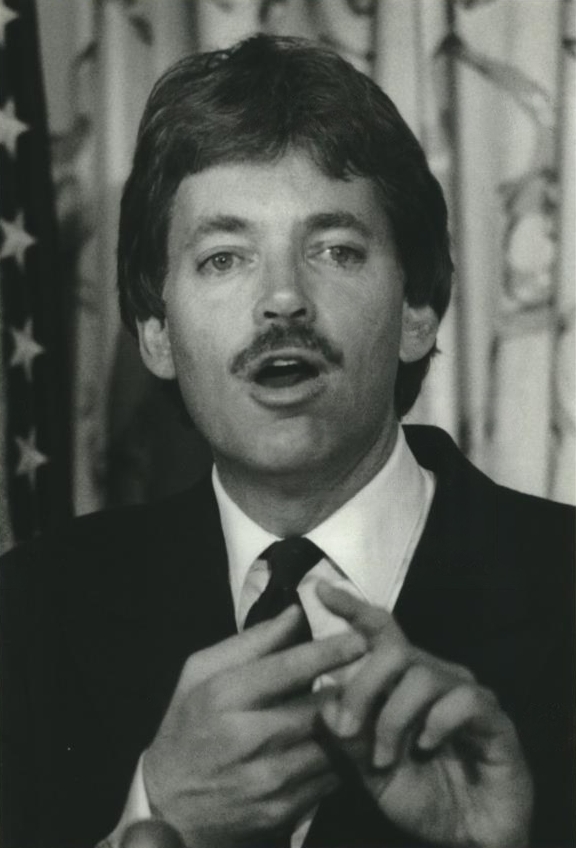
David Duke wanted to make the KKK more acceptable to theAmerican public by presenting a more polished and white collar image of the group.
But that does not mean the ideas expressed in those videos exist only among people who openly identify as racists.
The belief that Black people are inherently less capable, less civilized, more dangerous, or less deserving can appear in different forms and degrees. Someone can reject the Klan and still accept assumptions that have a great deal in common with its worldview.
That is what I want people to examine.
For generations, racism helped justify conquest, enslavement, colonial exploitation, and exclusion. People dressed those justifications up as science, religion, common sense, and concern for civilization.
The cruelty came with an explanation. The explanation made the cruelty easier to defend.
We still need to pay attention to that process.
Racism can become so familiar that people stop recognizing it unless it appears in its most extreme form. They know a hood and a burning cross when they see them. They know an explicit slur when they hear one.
But a polished commentator making insinuations about Black intelligence, criminality, or belonging? Suddenly, we are supposed to consider whether that person is simply a misunderstood truth-teller.
Apparently, racism becomes harder to recognize when the speaker has a studio, a suit, and a respectable vocabulary.
Nick Fuentes is literally a self-professed Nazi (or Nazi sympathizer) who can get away with much of what he says, and was invited to Donald Trump’s mansion for dinner because he isn’t seen in the uniform of White supremacy.
I am tired of the idea that avoiding the N-word automatically makes an argument free of racism.
What is the argument asking us to believe? How is the evidence being used? What context has been left out? Is a problem being examined, or is an entire people being assigned a negative character?
Those questions matter more than whether the speaker remembered to avoid a slur.
Statistics deserve scrutiny too. A number can be accurate while the story built around it is misleading. Selective comparisons, missing context, and sweeping conclusions can turn data into a tool for reinforcing prejudice.
If someone uses a statistic to suggest that Black people are inherently defective, the presence of a number does not make that suggestion objective.
A spreadsheet does not wash racism out of an argument.
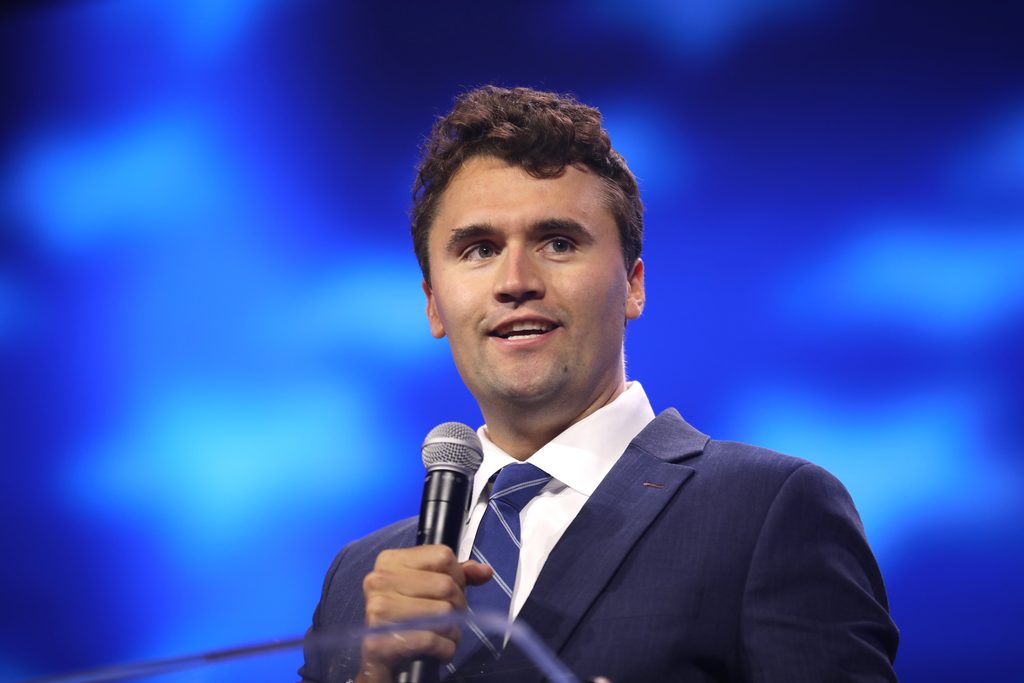
Charlie Kirk’s “truth” was nothing more than racism using cherry-picked and out-of-context statistics. These are often quoted on his podcast and while debating undergrad students on college campuses.
One of the things I wanted people to notice in those videos was the date.
When were these people saying these things? When were the incidents happening? How long after the major civil-rights victories were communities still facing intimidation, exclusion, and openly racist hostility?
Too many people talk as though the Civil Rights Act of 1964 and the Voting Rights Act of 1965 closed the book on racism.
Those laws were extremely important. But passing a law did not instantly change everyone’s beliefs, dismantle every discriminatory practice, or erase the advantages accumulated under the old arrangements.
Some attitudes changed. Some people changed. Others learned to conceal what they believed or express it in language that gave them plausible deniability.
We should recognize progress without pretending that it finished the job.
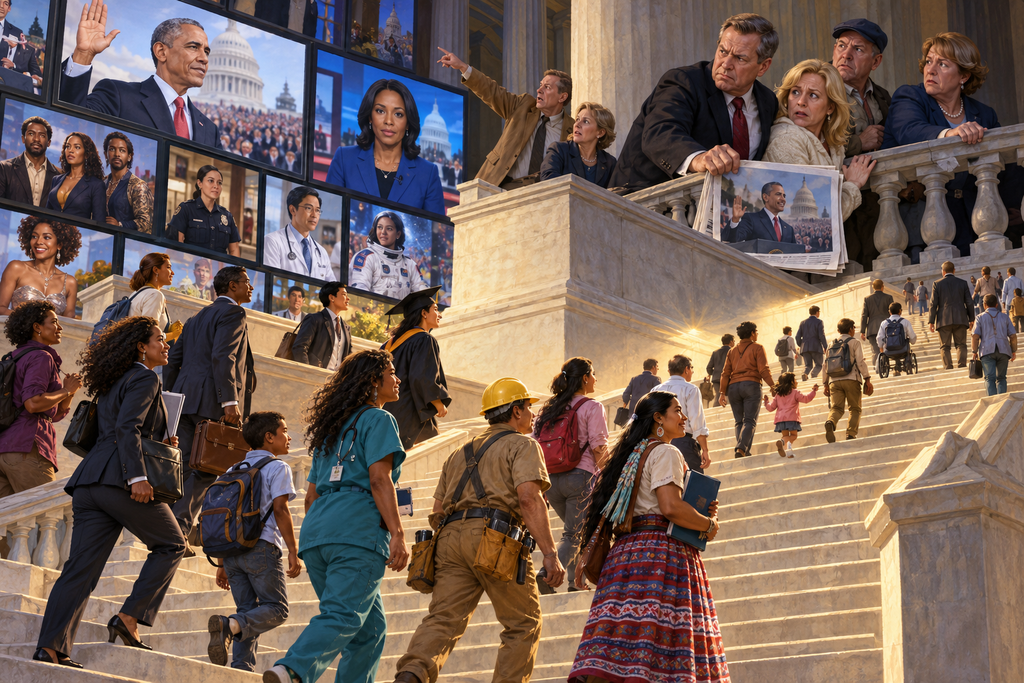
That is also why I keep returning to the contrast between how Barack Obama and Donald Trump have been judged.
I am not arguing that every criticism of Obama was racist. I criticized him myself. His policies and decisions deserve examination like those of any other president.
But I watched people demand that he be endlessly calm, polished, articulate, restrained, and reassuring—and still treat him as illegitimate, threatening, or fundamentally out of place.
He could meet their stated standards and still fail the test.
Then I watched some of those same people celebrate Trump’s belligerence, insults, and disregard for restraint as signs of strength.
Conduct they would have treated as disqualifying in Obama became proof that Trump was authentic and willing to fight.
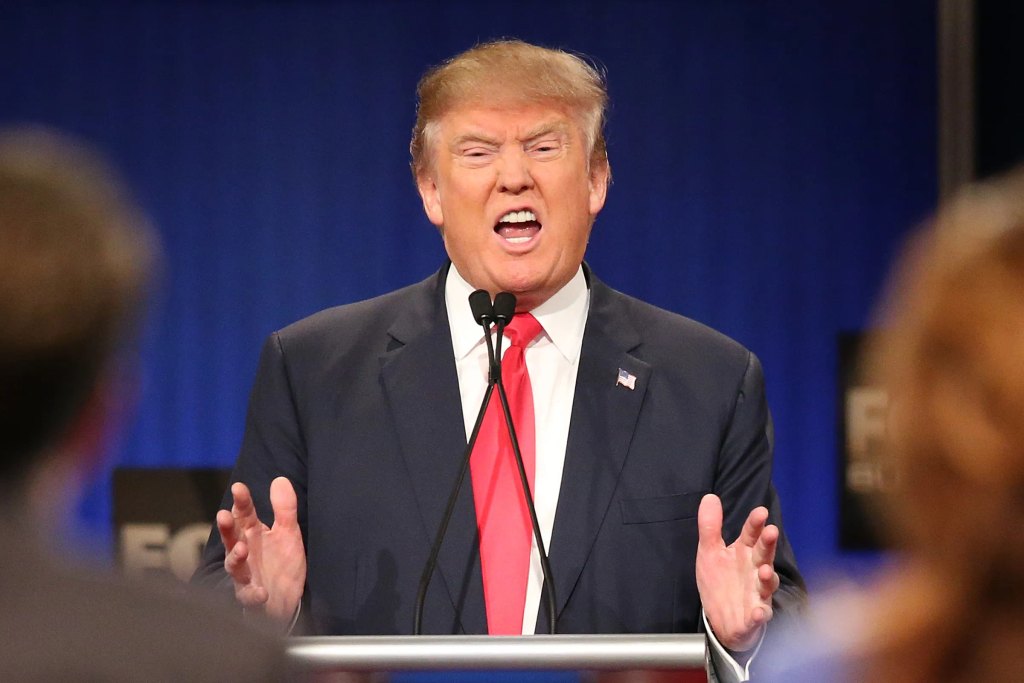
Donald Trump can get away with egregious behavior that Obama is not able to get away with. Obama had to mostly remain stoic during his presidency, while Trump can be angry and belligerent.
What changed—the standard, or the person being judged?
That question deserves more than a reflexive accusation that I am “making everything about race.”
I do not need to claim that every measure of the country’s condition was better under Obama to make this point. Presidents should be judged on evidence, and different outcomes require different comparisons.
My concern here is the permission some people grant one leader while demanding constant reassurance from another.
If restraint is essential to presidential character, it should matter when Trump lacks it. If inflammatory rhetoric is dangerous, it should not become admirable simply because the speaker is someone you support.
And if intelligence, preparation, and dignity are the standards, meeting them should count regardless of the president’s race.
Too often, that consistency disappears.
This is why the openly racist videos matter to me. They make certain assumptions easier to hear. Once we recognize those assumptions in their bluntest form, we should be willing to examine where else they appear.
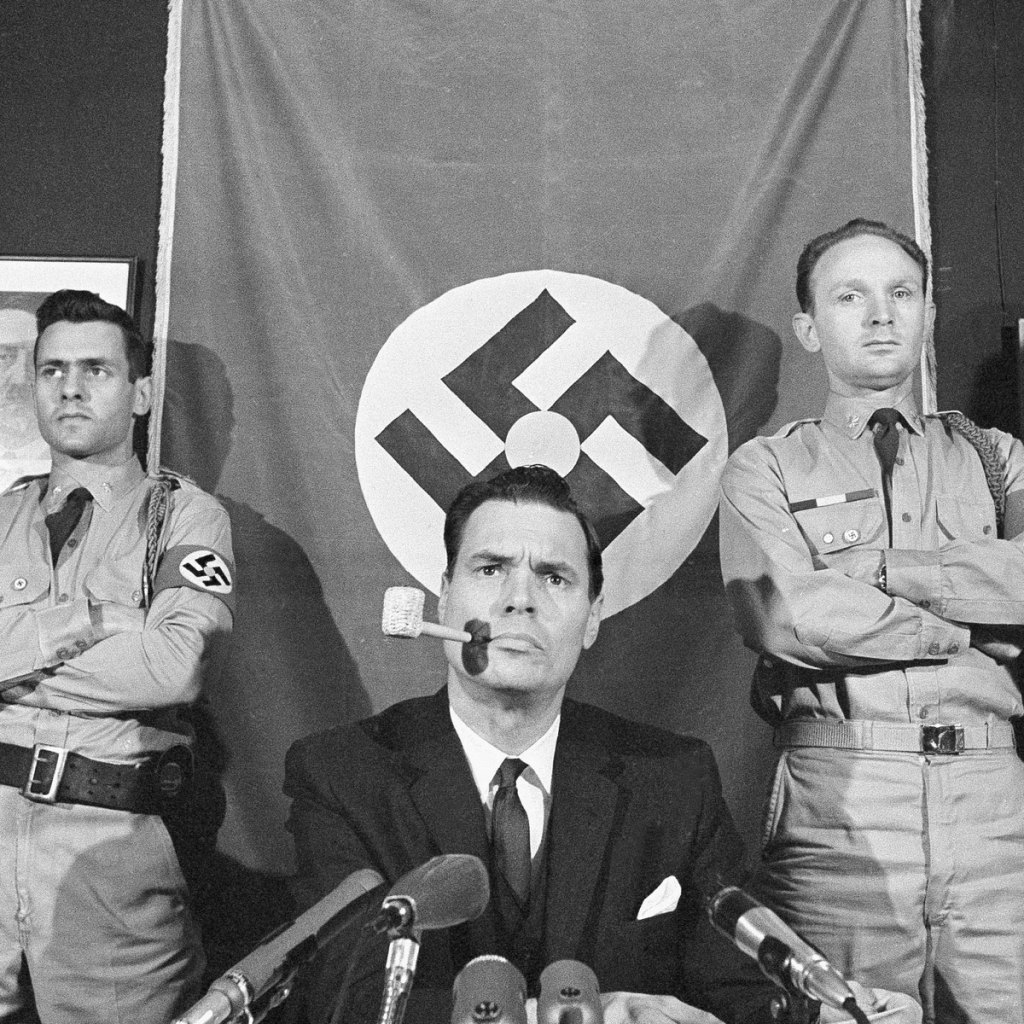
George Lincoln Rockwell was the founder of the American Nazi Party (ANP). He was a very articulate man who attended an Ivy League University (Brown University). Often, he would dress in Nazi uniforms but he would often dress in a suit and speak while smoking his signature pipe. Often, his message wasn’t necessarily antagonistic or violent, but they were exclusionary and racist.
The delivery may be smoother. The speaker may deny any prejudice. The audience may insist that it is all about policy, statistics, or “telling the truth.”
But we still have to examine the substance.
Racism does not need a hood, a slur, or a confession to operate.
And refusing to recognize it until someone supplies all three gives far too many people permission to keep doing it.
I have absolutely no respect for people who spread the racist and transphobic conspiracy theory that Michelle Obama was born male.
None.
This lie has been debunked repeatedly, yet people keep recycling it as though repetition will turn it into evidence. Michelle Obama was born Michelle LaVaughn Robinson. There is no credible evidence for the claim that she was born “Michael” or assigned male at birth.
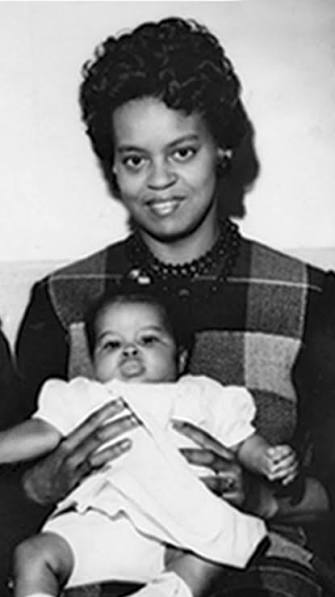
A picture of Michelle Obama as a baby.
But this is about more than one lie about one woman.
It is about the willingness to treat Black women’s bodies, voices, and appearance as public property. Apparently, anyone with an internet connection gets to inspect them and decide whether they qualify as women.
And some Black men participate in this bullshit when they should know better.
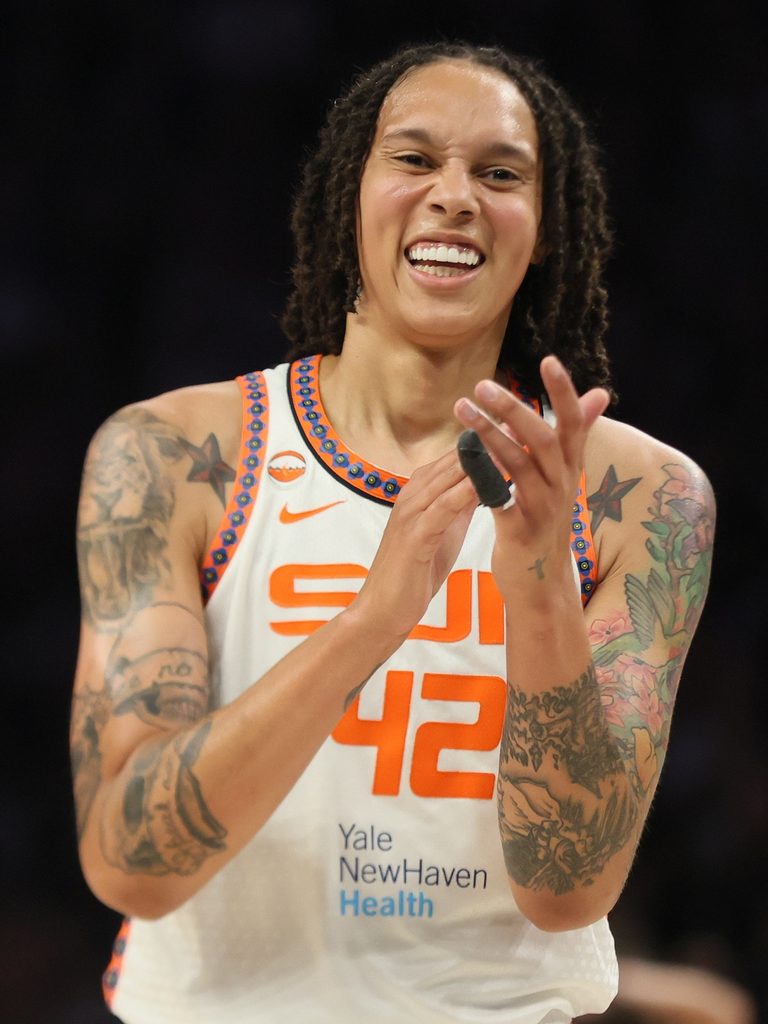
There are few better examples of Black women’s sex and gender being questioned than Brittney Griner. Griner is the subject of some very ugly conspiracy theories and assumptions. Griner is tall, has a deep voice, has no pronounced breasts, and doesn’t conform to traditional gender roles. And all of those things are ok and don’t take away from her womanhood.
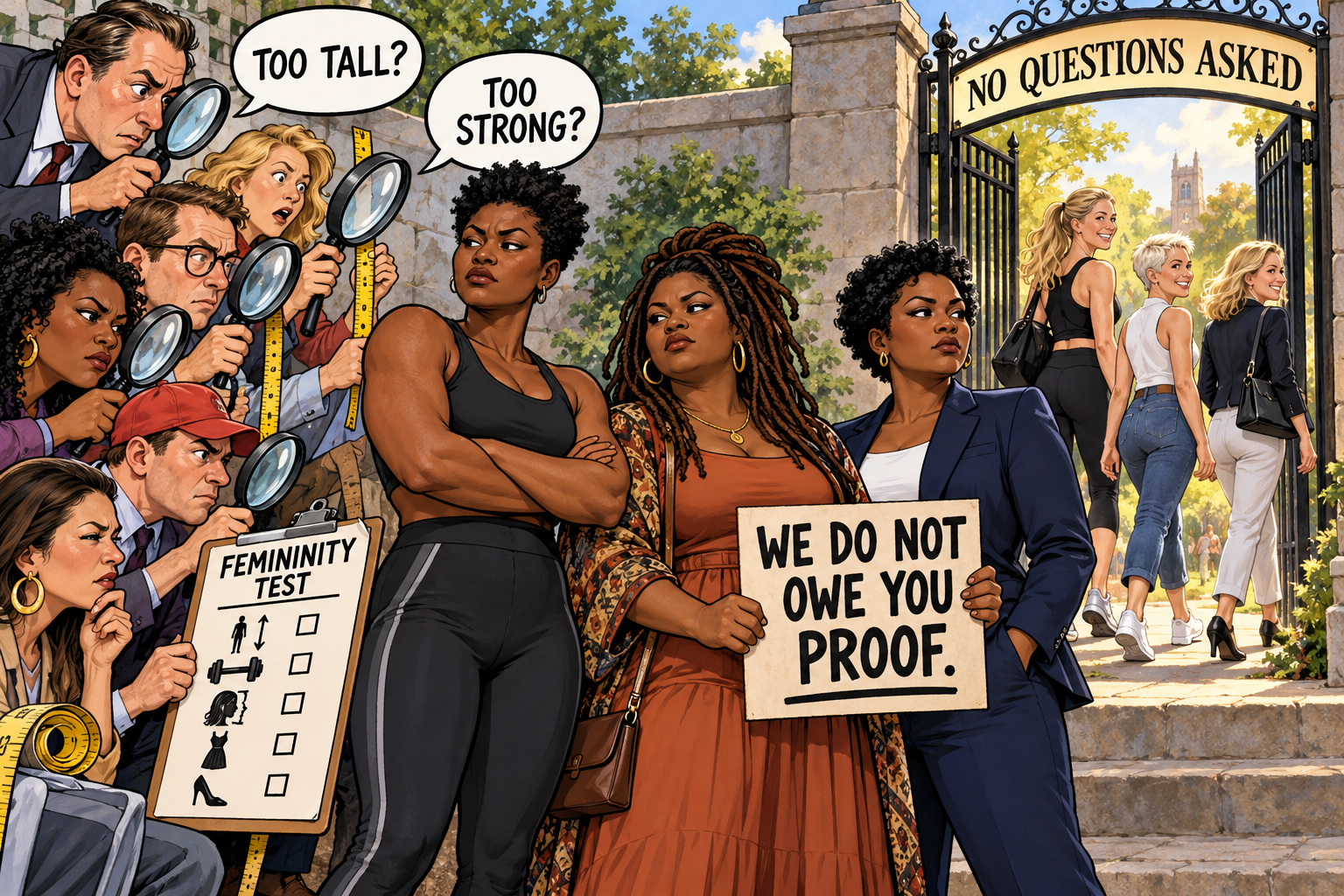
Black women get called “masculine” for being tall, strong, outspoken, athletic, angry, or unwilling to make themselves small. A deeper voice becomes suspicious. Short hair becomes suspicious. Muscles become suspicious.
Even confidence becomes suspicious.
Women of other races can possess those same characteristics, but Black women are too often treated as though they have violated some rule of womanhood by possessing them.
Who made that rule? And why are we helping enforce it?
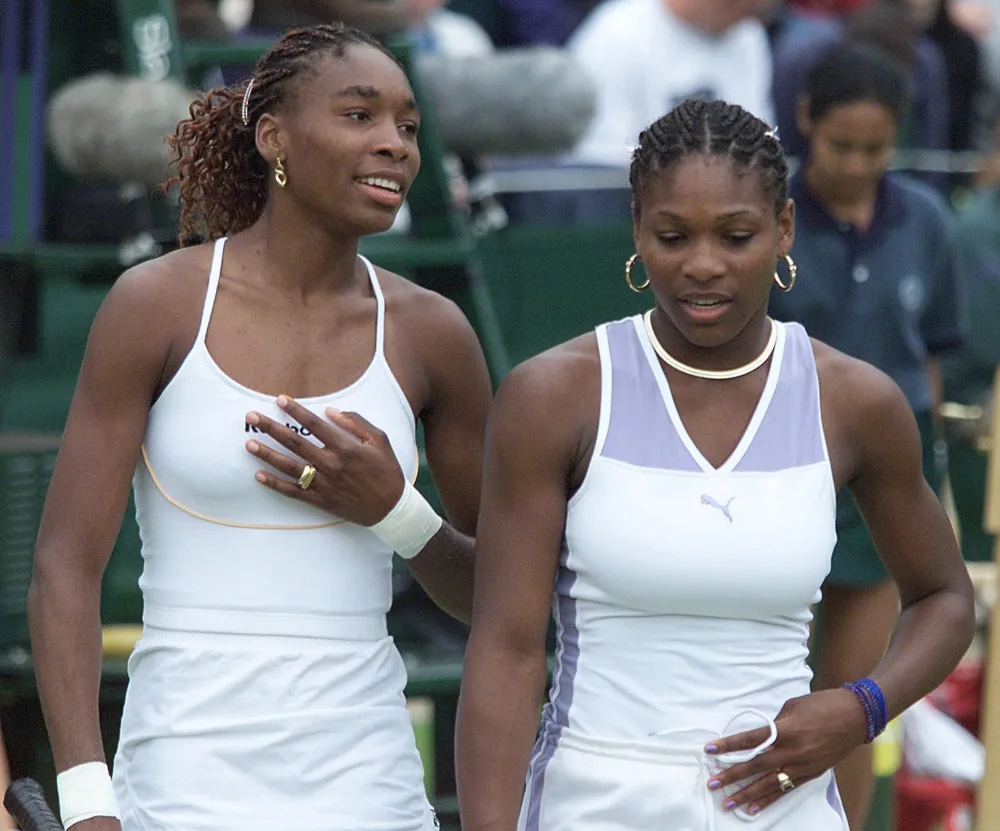
Venus and Serena Williams were attacked for their appearance, their athleticism, and their muscular build.
Think about the scrutiny directed at Venus and Serena Williams. Think about Brittney Griner and Grace Jones. Think about how quickly people turn a Black woman’s strength, stature, or appearance into an accusation.
The details of each woman’s experience differ. But the impulse to inspect, mock, and police Black women’s bodies is familiar as hell.
I hear echoes of Malcolm X’s criticism of the disrespect and lack of protection Black women face. Decades later, we are still watching people turn that disrespect into entertainment.
And the supposed defense of Michelle Obama sometimes falls into the same trap.
People point to her children, her marriage, her clothes, or how feminine she looks, as though the right combination of evidence will finally satisfy the people attacking her.
We should challenge the lie. But we should also challenge the premise.
A woman does not have to give birth, wear dresses, have a particular body shape, or meet somebody’s beauty standard to deserve respect.
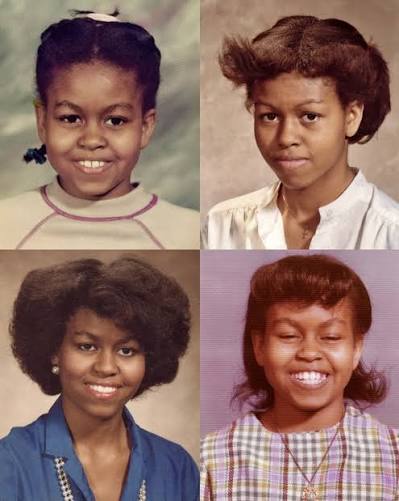
Picture of Michelle Obama throughout her young years.
Michelle Obama does not need an exception made for her height or her facial features. There is nothing about those things that needs explaining away.
Nor should defending her require treating transgender women as an insult she must be separated from. The conspiracy is false, and its use of trans identity as a weapon is part of what makes it ugly.
Being transgender is not a disgrace. Lying about someone’s identity to humiliate them is disgraceful.
The people spreading this story often try to demean Barack Obama at the same time. In their telling, supposedly exposing his wife would somehow diminish his manhood.
That tells us something about the prejudices doing the work here. Black womanhood becomes something to ridicule. Black manhood becomes something to undermine. Transgender identity becomes something to sneer at.
And the whole thing gets passed around as a joke.
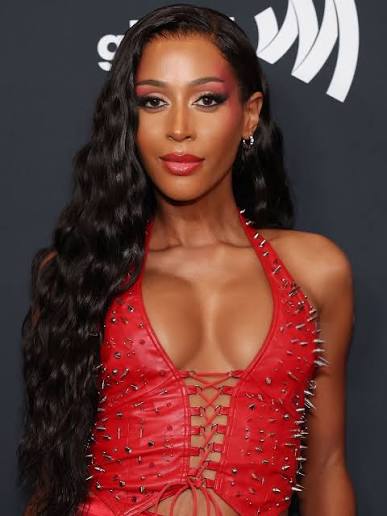
Isis King is a trans woman who is an actress and a model. One doesn’t have to be born anatomically female to be feminine.
What, exactly, is funny?
The contempt for Black women? The attempt to humiliate a Black family? The idea that somebody’s gender can be determined by studying a photograph and making shit up?
I do not find any of that clever.
You do not have to like Michelle Obama. You do not have to agree with her politics, admire her speeches, buy her books, or defend her husband’s administration.
There are legitimate things to discuss and criticize.
But disagreement does not entitle you to invent a different identity for her or subject her body to some imaginary gender inspection.
And being Black does not make participation in that harassment less anti-Black.
If you are a Black man spreading this lie, ask yourself why you are so eager to help people degrade a Black woman. Ask yourself whose approval you are seeking and what, exactly, you think our community gains from your participation.
The same goes for Black women who join in. Familiarity with this kind of scrutiny should give us more reason to reject it.
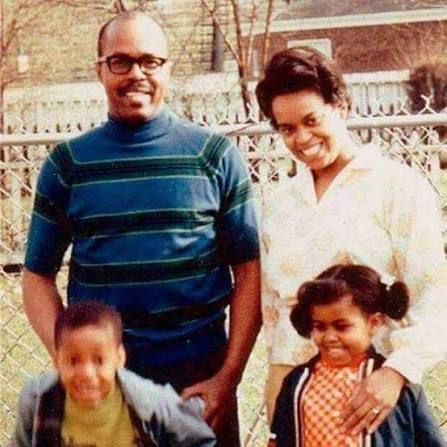
Michelle Obama as a child with her brother and her parents.
I am not going to insult somebody’s mother, grandmother, or partner to make that point. Those women do not deserve to have their appearance dragged into this either.
That is the whole damn problem: too many people think a woman’s appearance is fair game whenever they want to win an argument.
It needs to stop.
Black women do not owe you a particular kind of femininity. They do not owe you access to their private lives. And they do not owe you proof that they are women.
Criticize what Michelle Obama actually says and does if you have an argument to make.
But stop spreading this racist, transphobic bullshit and pretending it is political commentary.
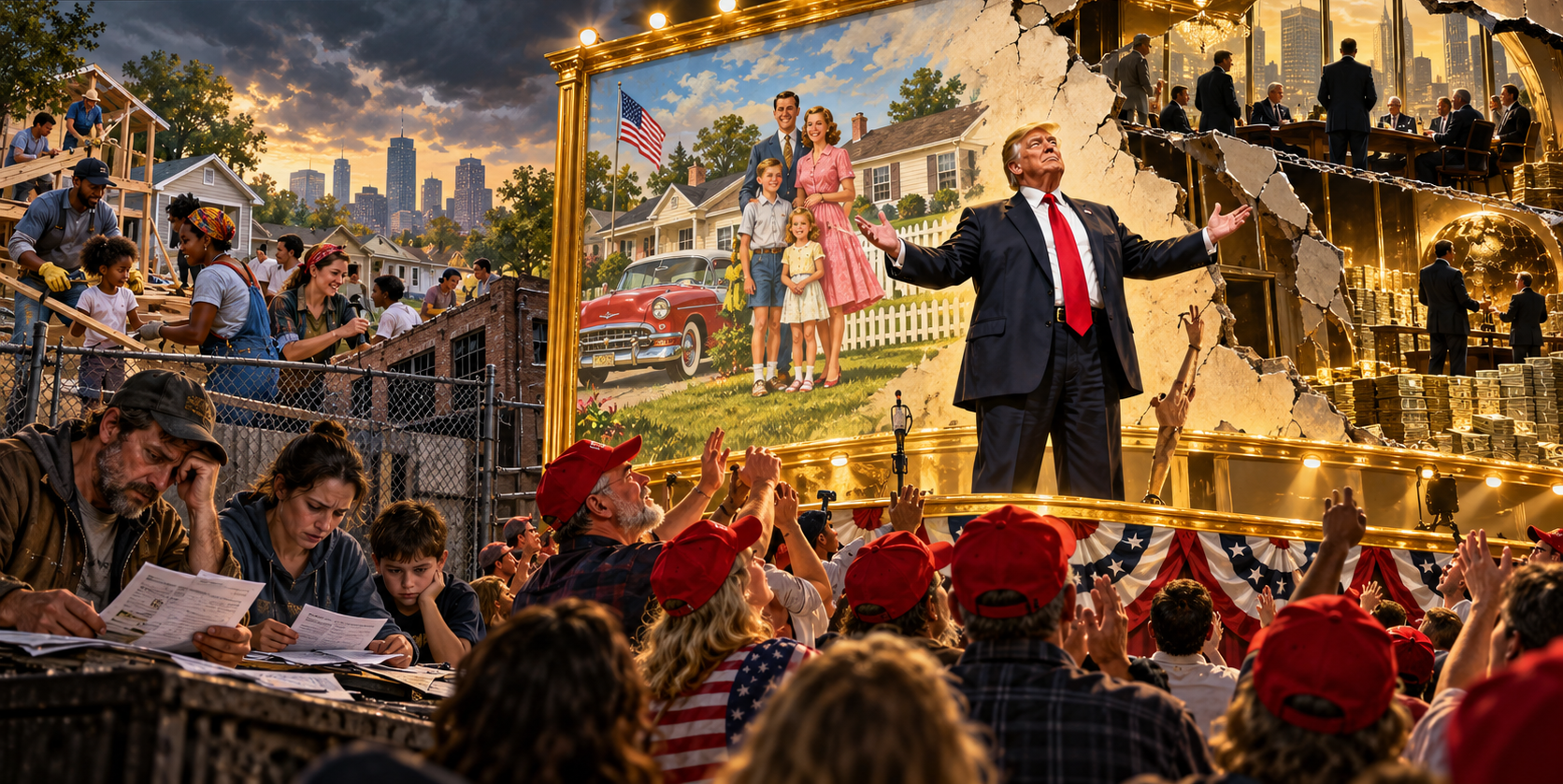
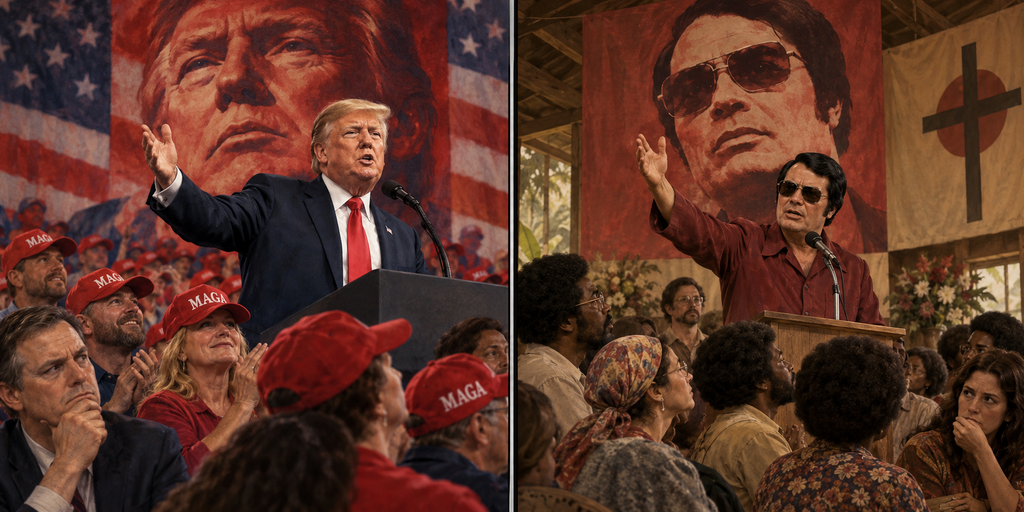
The thing that fucks me up about the MAGA cult is that so many of them genuinely, blindly, and sadly believe that Chump (Trump) is some messianic figure here to rescue this country from cannibalizing itself through neoliberalism, crony capitalism, and privatization.
To me, he represents the same appetite dressed up in a red hat. Nepotism, grifting, self-promotion, and incompetence sold as strength. Somehow, his petty belligerence becomes courage. His obsessive whining becomes a legitimate grievance. His need for applause becomes devotion to the country.
They see a professional con man and call him their savior.
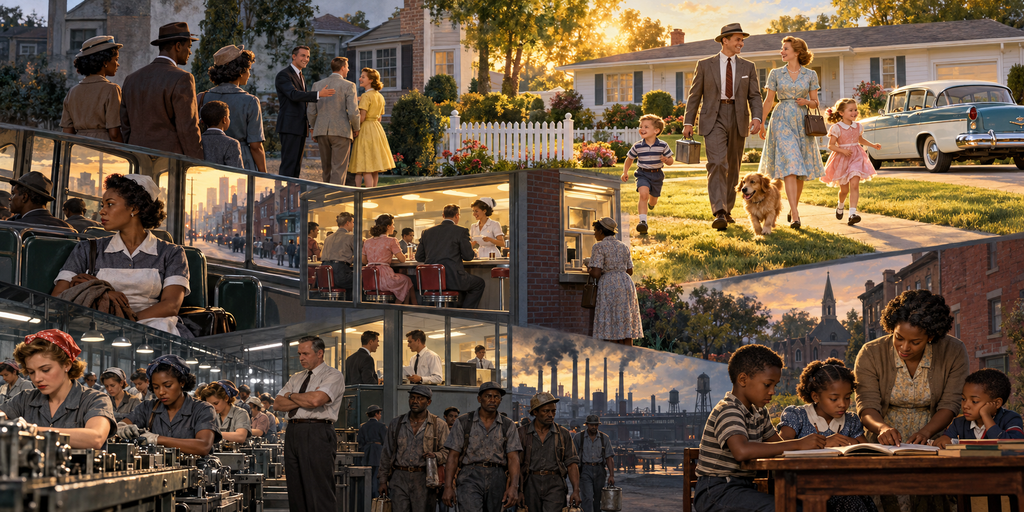
And what, exactly, is he supposed to save them from? Those imaginary glory days when a White man could supposedly support a family with little education, women happily stayed in the kitchen, and Black people knew their place?
The visible rise of black people and other marginalized groups into socioeconomic positions once held exclusively by White people, including the presidency, created irrational fear and panic in many White Americans who felt that absolute power, wealth, and prestige belonged only to them.
Some people had real economic security during those years. But the picture being sold leaves out who was excluded, whose labor was exploited, and whose freedom was sacrificed to maintain it. Women were not universally happy with dependence. Black people were not content with segregation, domestic service, limited menial work opportunities, and second-class citizenship.
Your nostalgia does not get to erase our history.
The past they long for is part memory, part mythology, and part desire to restore a hierarchy they think should never have been challenged. They want the wages and purchasing power associated with that period, but too many also want its social arrangements.
During the United States’ economic golden age, Black people were still mostly working in menial jobs as domestics and laborers. They were being denied equal access to housing, especially in the newly built suburbs.
Those are two different things. And I wish they would stop pretending otherwise.
Personally, I never fell under the illusion that Biden (or even Obama) was a hero or a messiah. His presidency is over, and my standard remains the same: policies, actions, competence, and accountability. A diverse cabinet does not automatically transform an administration into a vehicle for liberation. Neither does putting a Democrat in the White House.
I wanted someone to do his/her fucking job. I also wanted more than competent management of a system that keeps squeezing working people while rewarding those who already own everything.
That criticism did not disappear because Trump returned to power.
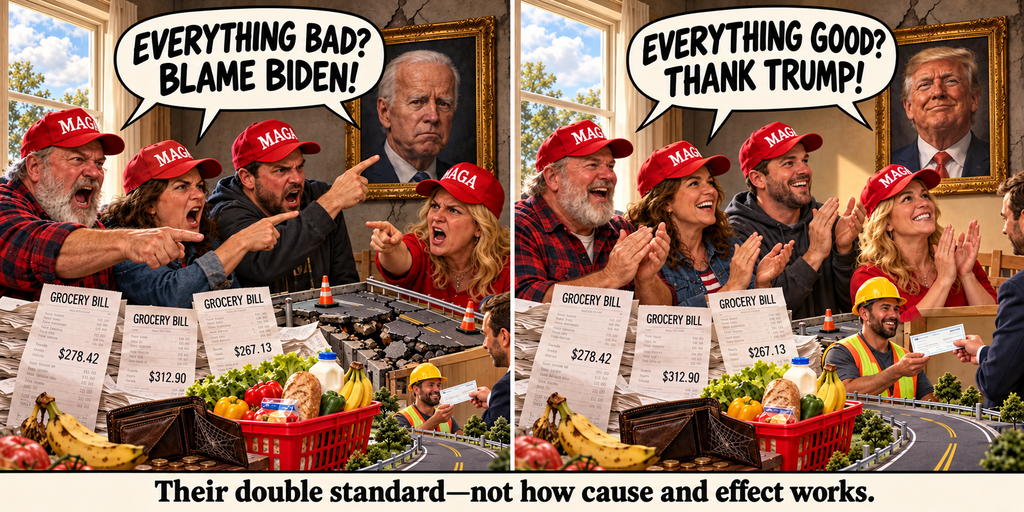
My problem with MAGA is that its devotion to Chump repeatedly swallows the very accountability its supporters claim to demand. When something goes wrong, somebody else must have caused it. When he contradicts himself, they supply the explanation. When he disappoints them, they move the goalposts.
To many in MAGA, everything bad that happens during Trump’s presidency is the fault of Biden, Obama, or the Democrats. They see everything good as a direct result of Trump’s leadership.
At what point does the man you elected become responsible for the things he does?
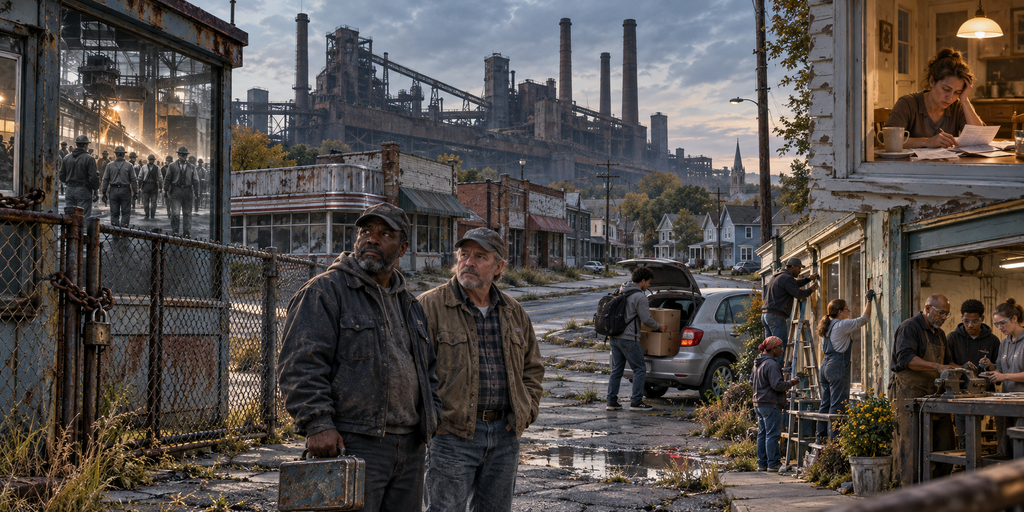
The economic pain that helped create this movement is not imaginary. Communities have lost jobs, stability, and a sense of a future. But the explanation cannot begin and end with whichever president a cable news host tells you to hate.
Deindustrialization devastated communities built around factory work. Automation changed how many workers employers needed. Highways and suburban development reshaped cities, often at the expense of established neighborhoods. Energy markets changed. Smaller towns lost employers, young people, and resources.
Deindustrialization devastated once-thriving communities and neighborhoods, leaving them impoverished and blighted.
These changes did not all come from one president, one party, or one secret meeting of cartoon villains.
But political choices determined who received protection, who absorbed the losses, and who got rich from the transition. Decisions about labor rights, taxation, trade, public investment, and privatization were very important. And they still are today.
And administrations from both parties helped build or preserve arrangements that concentrated wealth and weakened working people’s bargaining power.
That is why I do not accept the idea that electing a billionaire with a talent for branding somehow frees us from billionaire power.
Chump offers people a villain, a slogan, and somebody to look down on. That does not necessarily give them a pension, affordable housing, healthcare, or control over their working lives.
You cannot pay the electric bill with the satisfaction of making somebody else miserable.
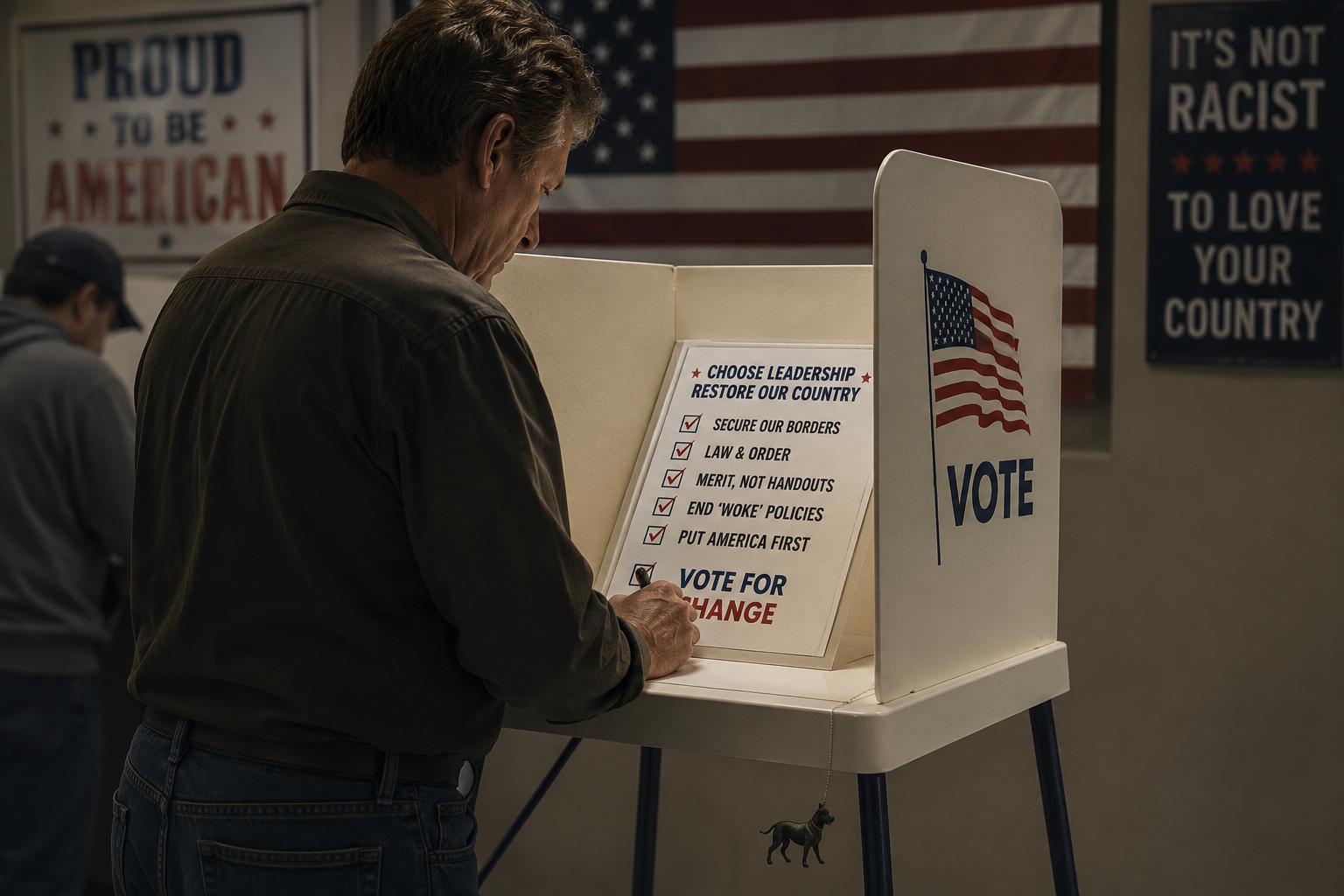
I suspect that part of MAGA’s appeal goes beyond economics. For some of its most devoted supporters, the fear is having to share power with women, racial minorities, immigrants, and people of different faiths, gender identities, and sexual orientations.
Equality feels like dispossession when you believe the country belongs to you.
They hear demands for equal treatment and imagine revenge. They hear criticism of White supremacy and imagine an attack on their existence. Meanwhile, most of the people they fear are trying to live, raise their children, work, and enjoy some relative peace and prosperity.
Many conservative White people fear acts of revenge from Black people. What they fail to understand is that most Black people just want to have equal opportunities for good neighborhoods, education, and jobs rather than plotting or enacting any form of revenge.
We should not have to remain subordinate just to make somebody else feel secure.
And Mango Mussolini’s constant need for praise does nothing to convince me that he is the tough guy he wants people to see. Pettiness is not strength. Vindictiveness is not leadership. Surrounding yourself with loyal sycophants does not make your judgment better.
Neither does refusing to accept defeat.
Trump lost the 2020 election and won the 2024 election. Both results can be true. Winning later does not retroactively turn an earlier loss into a stolen victory. If your respect for elections depends on whether your candidate wins, your loyalty is to the candidate.
That is the problem.
I have compared this kind of devotion to the danger represented by Jim Jones and the Peoples Temple. That is a serious analogy, and the circumstances are different. But the warning behind it is important here: people become vulnerable when loyalty to a leader takes priority over evidence, judgment, and their own well-being.
A movement becomes dangerous when every criticism is treated as persecution and every demand from the leader becomes a test of faith.
MAGA devotion to Trump looks eerily like the devotion that many people had to Jim Jones.
Cultlike devotion to a person is never a substitute for political principles.
And yes, that applies to Democrats too. It applies to politicians I like. It applies to politicians you like. Nobody should receive a lifetime exemption from scrutiny because they once inspired us or made the right people angry.
I do not want a messiah. I want humane policies, accountable leadership, and a society where people can live without being sacrificed to somebody else’s profits.
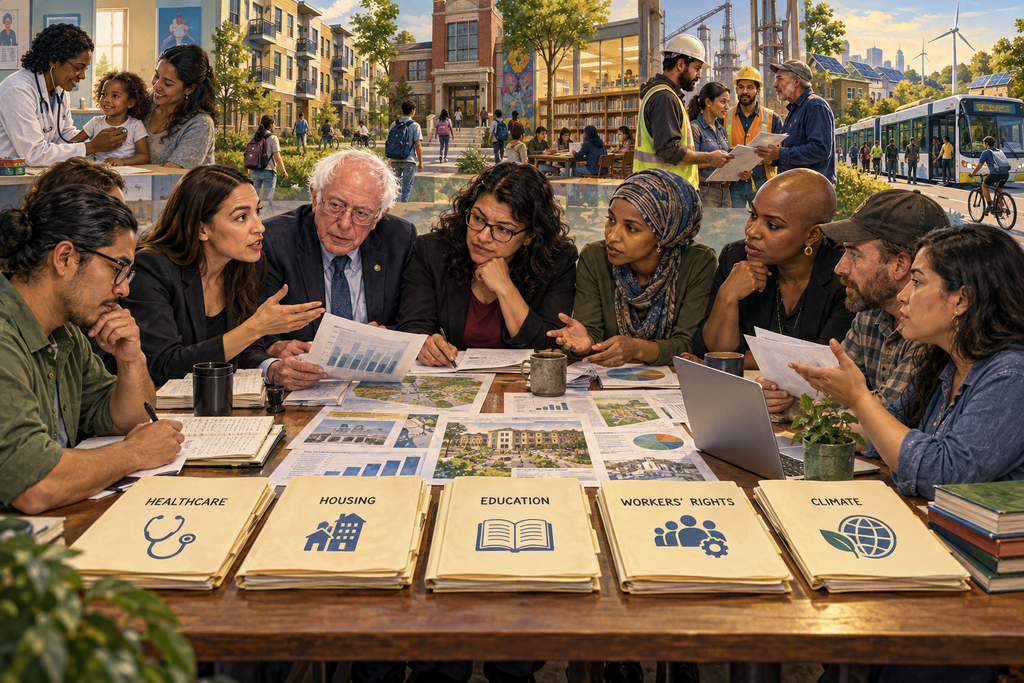
My admiration for Bernie Sanders and the Squad does not come from a cult of personality. It comes from the policy solutions that they propose and the fact that they seem to address the needs of average Americans rather than corporations and the super-rich. They do this without engaging in culture wars and mindless platitudes.
The people I call “Y’all-Qaeda” are not going to disappear simply because an election ends or a politician eventually leaves office. The grievances, authoritarian impulses, and appetite for enemies require more than waiting for the next news cycle.
We have to confront the conditions that make people desperate, and the politics that teach them to aim that desperation at everybody except those benefiting from it.
Because the country does not need more people worshipping a man who promises to make them great.
It needs people willing to ask who gets the wealth, who holds the power, and who keeps paying the fucking price.
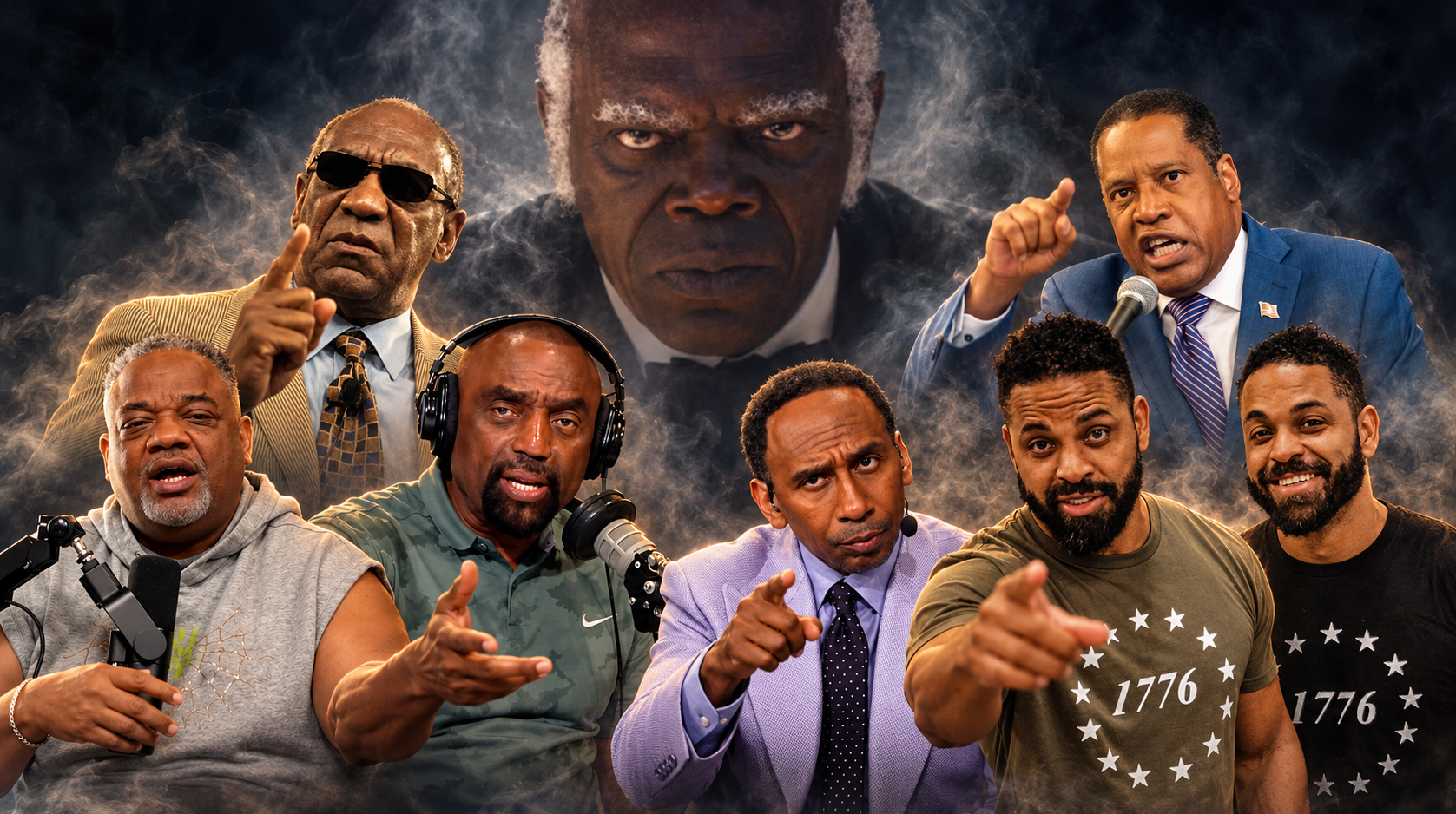
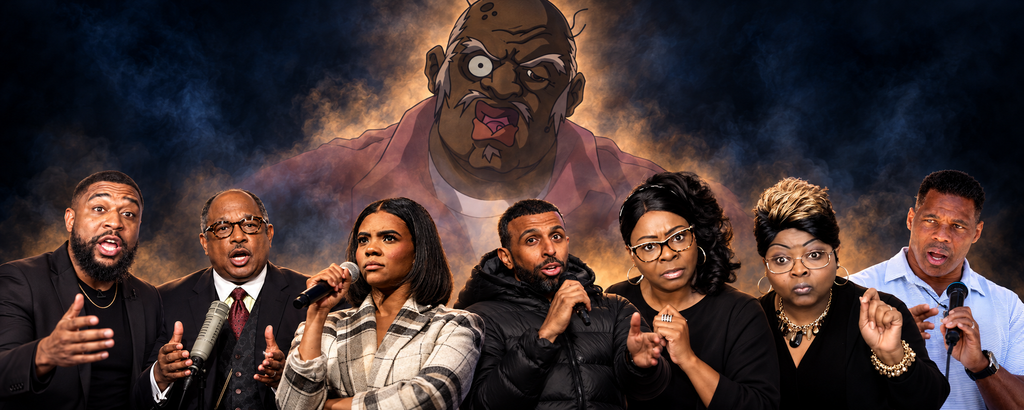
I’ve realized that White conservatives love Black people who tell them exactly what they want to hear about other Black people. These people get away with saying the shit that their White supporters can’t say without being correctly labeled as racist. So they need Black mouthpieces to label Black people as “EBT Americans,” “ghetto,” and “hood rats,” while conveniently ignoring how many White people receive assistance or engage in the same behaviors they condemn in Black people.
But “redneck” culture and poor White culture are often celebrated in country music and the mainstream, while similar expressions of poor Black culture are treated as subversive and problematic. Apparently, the behavior isn’t always the problem. Sometimes, it’s the color of the people doing it.
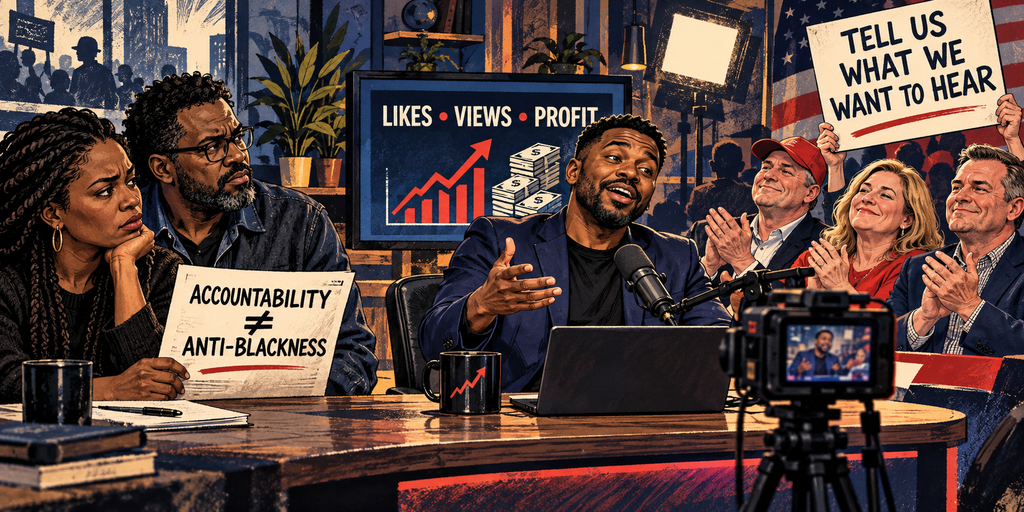
Being a Black person who produces anti-Black content online is an easy way to get notoriety and profits very fast. Many conservative White fans laud them as “freethinking” “truth-tellers,” but, these people’s connection to the Black community is permanently marred.
I was watching a video compilation of Black people responding to allegations that Texas Roadhouse employees had posted about spitting in Black patrons’ food. The controversy has prompted calls for a boycott. And sure enough, there was a Black man celebrating the idea of White employees spitting in the food of Black paying customers.
In his Uncle Ruckus-style rant, he called Black patrons the names I mentioned earlier and said Texas Roadhouse should “keep doing what they are doing” to keep Black people out so others could dine in “peace.”
Never mind the chaotic restaurant incidents involving White people. Never mind White people dining and dashing. Never mind all the examples that contradict this racist narrative. Somehow, when a White person acts out, it’s an individual incident. When a Black person acts out, it becomes an indictment of Black people as a whole.
Do you think conservative White people came after this “pick-me” for celebrating racial discrimination and alleged food tampering? No. They co-signed. And then they wonder why we call them racist.
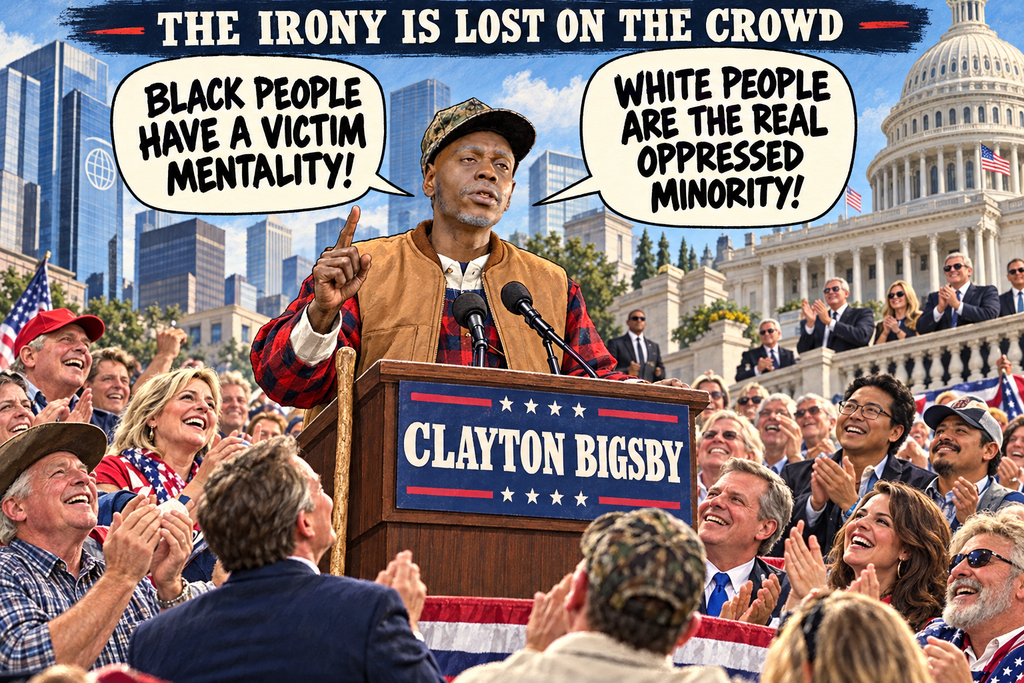
Self-hating Black mouthpieces for White supremacy tell many conservative whites exactly what they want to hear. Many of these Black commentators downplay anti-Black racism in the West while painting White people as the victims of constant discrimination. The irony is that those who claim that marginalized people have a “victim complex” love to cosplay as victims themselves.
I don’t know whether this man believes everything he says or is chasing the attention and money that anti-Black commentary can bring. Either way, the result is the same: Black people are demeaned, and his audience gets a Black voice to validate its prejudices.
Liberal, progressive, and leftist Black people don’t want our dining experiences ruined by people acting out in public, either. But the difference is that many of us separate problematic behavior from race, ethnicity, and even class. And even when we are annoyed by the uncouth behavior of certain patrons, we are not going to celebrate someone tampering with their food based on race and the assumptions that come with it.
I tip well. I also have problems with the history of tipping in the United States and the way employers use it to shift responsibility for paying workers onto customers. Having worked for tips for years, I’m well aware of the stereotype that Black people don’t tip.
However, whether someone tips or not is not an excuse for poor customer service or mistreating anyone who comes into an establishment. An optional tip is a courtesy. It should not take the place of an adequate living wage. And it certainly should not determine whether someone’s food is safe to eat.
But I tip well anyway because I know it is appreciated, because it can lead to better service, and because I want to help people.
Although many of these Black commentators are conservatives… or PRETEND to be conservatives as part of their grift, it is NOT necessarily conservatism that is the issue with these people. Rather, it is the fact that many of these people are almost constantly contrarian and antithetical to issues that the majority of Black people champion.
Black people being anti-Black is never a good thing and should not be rewarded. Yet White conservatives are quick to embrace Black people who demean other Black people while treating White people as the exemplary model for humanity. Wrap it in a flag, call it “patriotism,” and suddenly contempt for your own people becomes a marketable personality.
Many of these commentators wear the backlash from other Black people as a badge of honor. Their White supporters call them “freethinkers” and “truth-tellers” for repeating the same racist talking points those supporters already believed.
What, exactly, is free-thinking about telling an audience everything it wants to hear?
You can criticize Black people. You can criticize public behavior. You can demand accountability. But celebrating racial humiliation and the idea of someone contaminating Black customers’ food is not accountability. It is anti-Blackness, and having a Black person deliver the message does not make it any less racist.
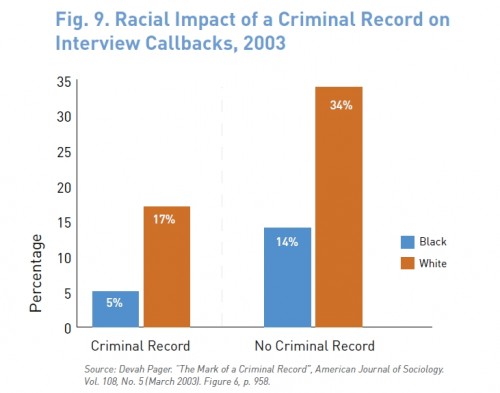
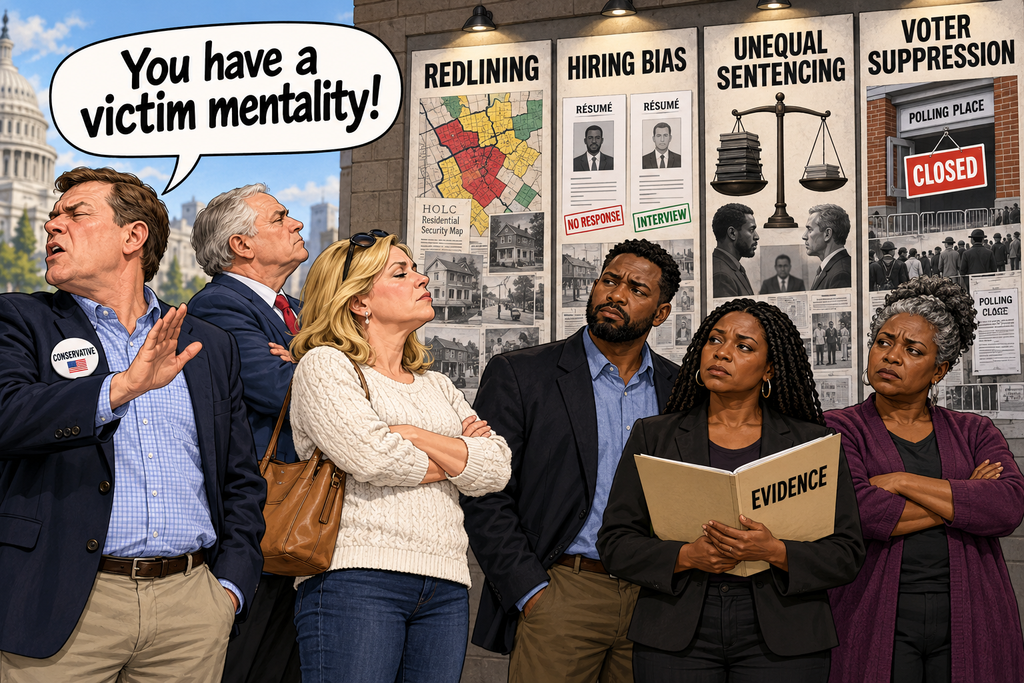
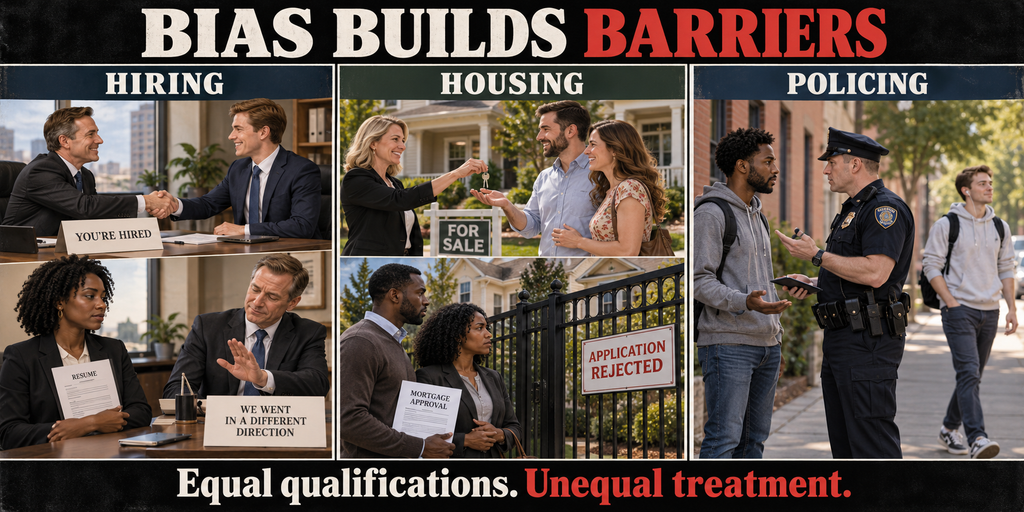
Many White people love to deny the role that race and racism play in our society. For example, I erroneously posted about White convicted felons making more money than college-educated Black men with no criminal records on my Facebook profile. But I was wrong. It wasn’t necessarily pay that was the issue (even though pay disparities are an issue when looking at the overall populations of White and Black men). Rather, it was who gets contacted more frequently for job interviews. Either way, every factor and excuse in the book was offered instead of an examination or admission of White bias.
Here is the thing: If White convicted felons are contacted more for interviews or potential employment than Black men with no records, based solely on applications and résumés, what is the factor? Studies show that applications and résumés with certain ZIP codes or “Black-sounding” names are rejected at very high rates. You cannot gauge work ethic from someone’s name, especially when the applications show identical work histories. And if someone has to choose between a person who was disciplined enough to never get into any serious trouble with the law and someone with a criminal record, chances are that most people would choose the person with the clean record over the person who served time.
Now, this is not to say that convicted felons (sorry for the language) aren’t deserving of good jobs after paying their debts to society. This is not to say that convicted felons wouldn’t make good employees with strong work ethics. But this is to say that choosing White convicted felons over Black men with no criminal records… for the same jobs, with the same work histories… is troubling. Especially when the comparison between White men with no record and White convicted felons shows a strong preference, by more than double the rate, for White men with no record, while Black men with criminal records have a very hard time getting hired.
How else does one explain this discrepancy?
This has nothing to do with work ethic, white-collar jobs versus blue-collar jobs, choosing liberal arts degrees, or any number of other excuses offered.
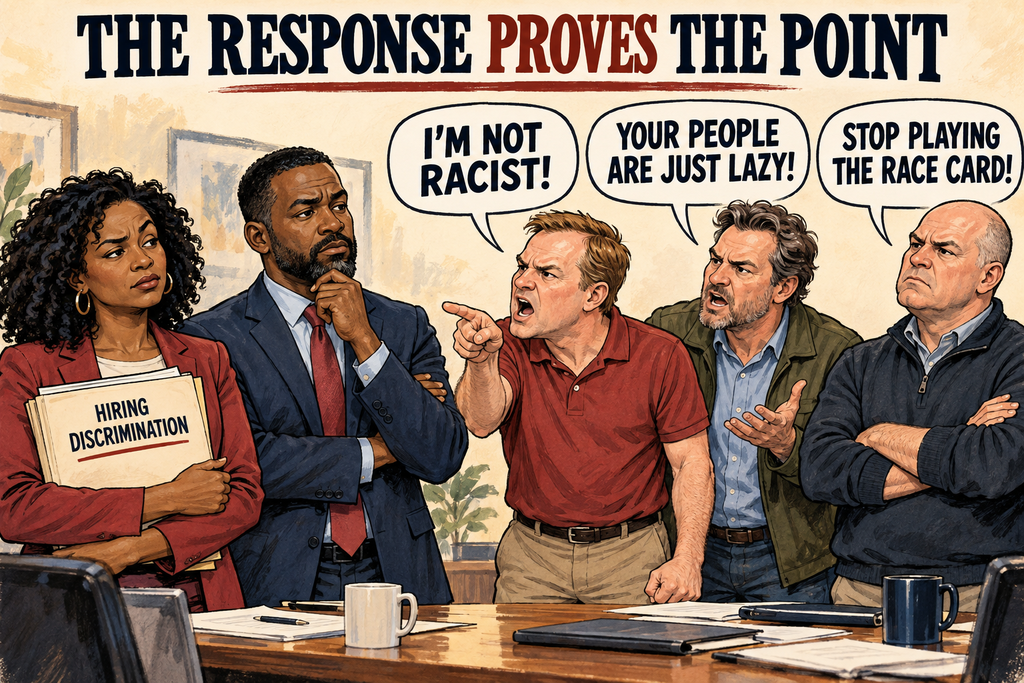
What’s worse is that when I presented the study showing this, no one actually read it, and a few dismissed it outright with no real argument about why it should be ignored. There was no argument about methodology. No argument about results. Nothing. There were plenty of racist assumptions. Ironically, those assumptions basically proved the premise of my post and even the conclusion of the study (or studies) used as evidence.
Over 1,000 people responded to it, most of them with childish insults and racist comments. Others were defensive. I can count on one hand the number of people who were actually interested in the study. And when they couldn’t refute the claim I was making, they went silent. No apologies. No further comments.
“You just need someone to blame for your failures!”
I don’t post these things to blame White people for my own personal failures. This is what I keep saying all the time. Despite my focus on racism, I had plenty of opportunities. I had access to a vehicle and reliable public transportation, so I could get a job anywhere in the metropolitan area. I’ve mentioned a few times that my olive (or beige) skin color may have opened doors that were closed to my darker-skinned brothers and sisters and gained me access to places and social circles. This is what privilege looks like. My name is ambiguous, and people don’t know what I am from an application. My ZIP code is in a somewhat affluent and racially diverse part of the city.
So this was never about me. Most of my posts aren’t personal unless I specifically say they are. If I am talking about societal issues, they are usually not about me.
I am not a member of the LGBTQIA community, but I sometimes post about their struggles. I have never served time in prison, but I sometimes post about people who have. I have never lived or worked on a farm, but I post about farmers’ issues. I didn’t grow up on welfare or need it as an adult (except financial aid for college, if you want to count that), but I constantly advocate for people who receive public aid. I am not a woman, but I speak out about rape culture and misogyny. I talk about relationships, and although my marriage failed, it was not due to many of the issues I discuss when talking about relationships.
Like I’ve stated many times before, the motivation for my posts can come from anywhere. I have ADHD, remember. Videos I watch could spark a post. Seeing something happen can spark a post. Hell, a random thought on the porcelain throne while pinching a loaf could spark a post (sorry for the visual). And most of the time, it has nothing to do with my personal life, which I try to keep as private as humanly possible.
For example, posting pictures from Ethiopia on Facebook was unusual because I usually hide my traveling. I don’t like many of the questions.
But I digress.
On White bias and Anti-Black racism
White bias is normal in a country that has made Whiteness the exemplary model for humanity for the last four or five centuries. Mentioning this is not an attack on White people, per se, because they are not the only people mentally infected by this… condition. Truthfully, we all are infected, including Black people. This is how we have all been conditioned to think after 400-plus years of pro-White propaganda and the twin philosophies of White supremacy and Black inferiority. You cannot imagine the number of Black people I’ve had to check personally for spouting anti-Black racist ideas and talking points. There have been plenty of times when I needed to be checked, too. It’s just the way it is.
The Repeating of Charlie-Kirk-Style Crime Statistics Without Adequate Context or Examination of Other Factors for Racist Reasons
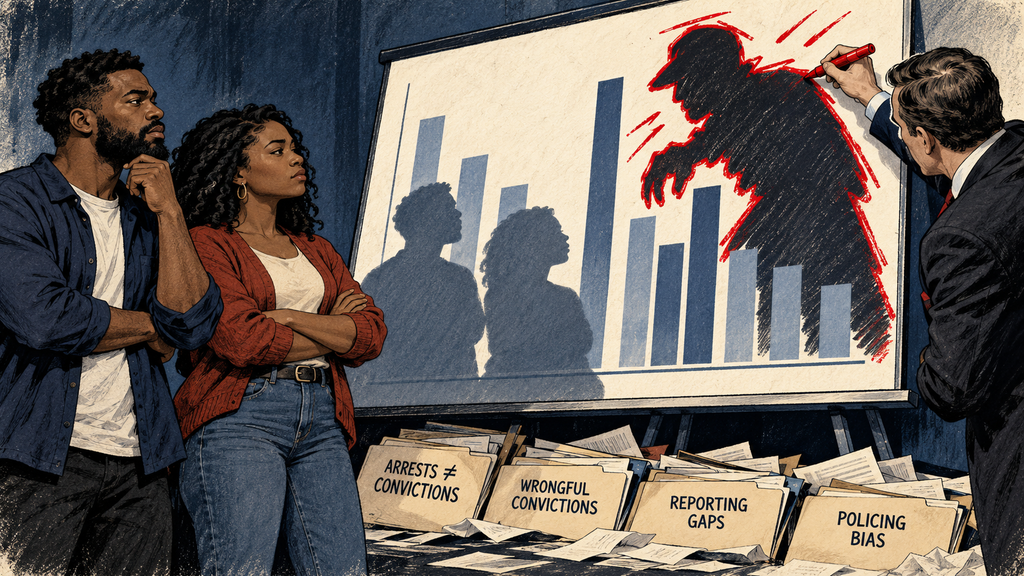
But anti-Black racism isn’t imagined. It is real. Even the skewed crime statistics are a product of racism. For example, FBI Table 43 is not about who committed a crime or who was convicted of crimes. It is about who was arrested for certain crimes. What FBI Table 43 proves is not Black criminality but the perception of Black criminality and systemic racism in the criminal justice system. This claim is backed up by the OLL (Online Library of Liberty).
Let me hit you with some issues:
The FBI’s Uniform Crime Reporting (UCR) program, which collects the statistics used in Table 43, is strictly voluntary, not mandatory, according to FBI.gov.
Although 87% of law enforcement agencies participate, the vast majority of those agencies are from big cities and their metropolitan areas, which all participate. Many small towns and rural areas don’t participate at all.
Participation is high in heavily populated areas but lower in more sparsely populated areas.
Black people are 7.5 times more likely to be wrongly convicted of murder than White people, according to the Death Penalty Information Center. This does not include total arrests.
The rate and risk of wrongful convictions for Black defendants are even higher when the victim is White.
Only around 70% of people arrested and charged with murder are convicted of murder.
Black people are much more likely to be exonerated for most crimes than White people, with the exceptions of child sexual abuse and white-collar crime, for which White people are arrested and convicted more often, according to the Syracuse Law Review. As a matter of fact, over half (53%) of all people exonerated since 1989 were Black.
Several White people have committed crimes and reported that someone Black committed them, leading to the arrests of Black men before it was determined that someone White—usually the person reporting the crime—had committed the crime and lied. It happened so much that the phrase “Blame a Black Man Syndrome” was coined.
I don’t post all of this to deny that many Black men have a problem with conflict resolution that leads to homicides. Nor am I saying that the Black murder rate isn’t still too high compared to our percentage of the overall population. However, what I am saying is that the crime statistics used to construct racist narratives all over the internet and in White supremacist circles are misinterpreted and grossly exaggerated. Arrests are treated like convictions. Partial numbers are treated like the whole story. Numbers are weaponized without any examination of the factors, other than DNA, contributing to them.
“All The Factors” Except When Being Racist
And this brings me full circle to what I was talking about at the beginning of this post. Various factors were presented as reasons for the disparity in hiring rates between White convicted felons and Black men with no criminal records. Many people rejected the premise and the numbers while saying I had to look at “all of the factors.” However, these same people were more than happy to spout crime statistics without any examination of “all of the factors.”
They are not totally wrong. All factors do need to be looked at. But it is hard to deny the conclusion of a controlled study in which the only real variable was race… or perceived race. There are not too many White men named “Quontavious Davis” from the Riverdale neighborhood of Chicago (the name and place were more than likely not used in the actual study). But “Brayden Braithwaite” from the Mount Greenwood neighborhood of Chicago could have a felony burglary or rape conviction and get a callback for a job over Quontavious, who navigated poverty, ever-present gangs, and various vices found in financially struggling communities with no criminal history other than speeding tickets.
What’s worse (and even more ironic) is that the same people who were pissed off and lambasting me for being an anti-White “bigot” were the same people who either ignored or positively reacted to comments about “chimping out,” skewed racist crime statistics, assumptions that White men with felony convictions had a better work ethic than Black men who overcame the many traps set in “the hood,” and many other racist posts. This actually supports the point I was making. But many of them were “too high on their own supply” to see that.
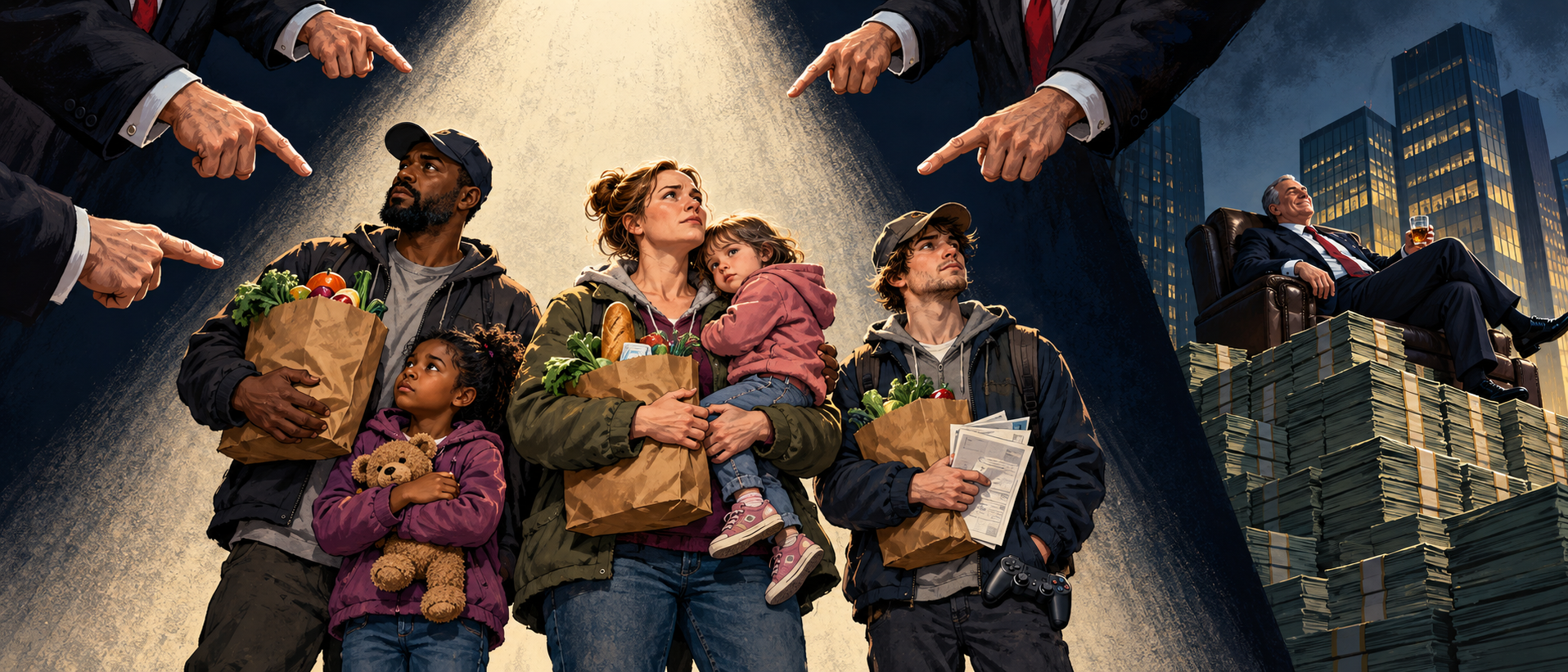
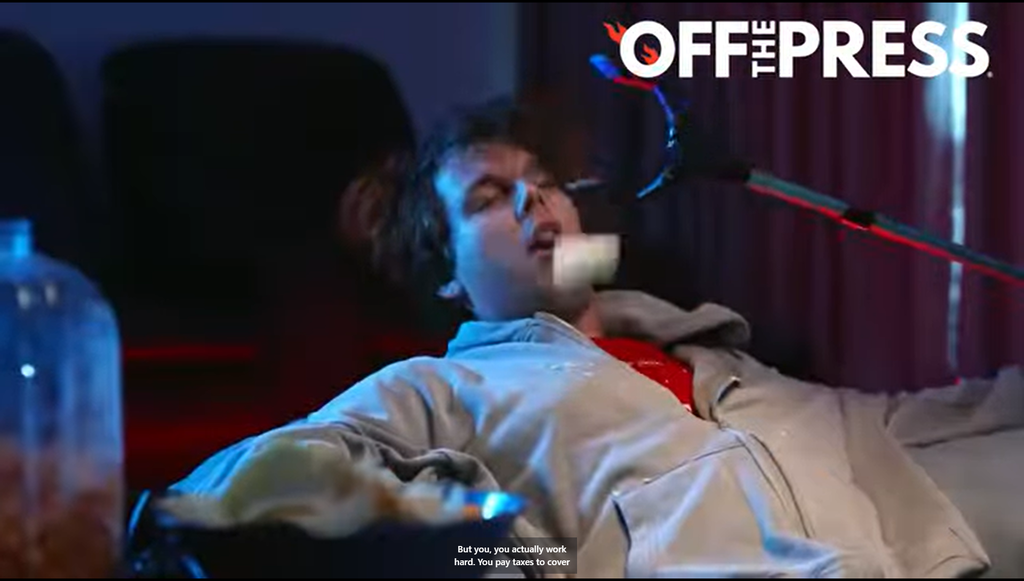
Well, well, well. Republicans around the country, especially in Arkansas, are upset that Sarah Huckabee Sanders’ new political ad shows a young White man as a “welfare queen.” They are now turning against her for portraying a White man on welfare. They argue that White people have been discriminated against for decades (who has the “victim mindset” again?) and that the commercial should have shown a woman, particularly a Black woman (or a Black person in general), as the problem welfare recipient.
And part of me agrees that the welfare recipient in the ad was not an accurate portrayal… but not for the racist and sexist reasons they are citing.
The trope of the lazy young gamer is problematic by itself and many of these unemployed gamers are not on welfare. If they are not actively looking for work, they are usually being financially supported by parents, spouses, domestic partners, siblings, or other family members. Plus, most people who game regularly are employed.
As for actual welfare recipients, more White people are on welfare than Black people. This is the part where the racists start talking about per capita. But in this case, per capita doesn’t matter. Most people in Arkansas who are on welfare are White (54%). Only 31% of welfare recipients in Arkansas are Black. This means that the face of welfare in Arkansas should more than likely be White, since more White people are on welfare than Black people by sheer number.
The trope of lazy welfare recipients was popularized in the 1960s after Black people were allowed to participate in those programs. This was also when many conservative Southern politicians from both parties started imposing eligibility rules for welfare that removed men, especially Black men, from the home. Contrary to a popular talking point, it was not President Lyndon Johnson who removed Black men from the home. It was conservative Southern and Midwestern legislatures and governors, most of them Democrats, who started these policies locally and pushed for them to be implemented nationally. These policies were designed to punish Black families for participating in programs originally intended only for White families. Since then, Black people using public housing, housing assistance, food stamps, and other programs we collectively think of as “welfare” have been classified as “lazy” and saddled with other negative stereotypes. This happened despite many of them working low-paying jobs and despite many White families receiving welfare for generations.
White conservatives need the narrative of Black welfare abuse to advance White supremacy and mask their own dependence on government assistance. In their minds, they use assistance because they need it. Black people use it because they supposedly lack morals and diligence. That is what they think. And then they wonder why they are constantly called “racist” and “bigoted.”
They also hate that the commercial didn’t feature a woman. Because, Lord knows, you can feature a man with a chronic disability receiving Social Security benefits while mostly appearing able-bodied, and that disability never seems to bother them except when asked to work. But let’s demonize the woman he had children with while ignoring his failure to provide for them. Behind many women who need welfare is a deadbeat father who doesn’t provide for his children.
This is not to shit on people receiving any form of welfare, including disability benefits. However, we need to stop with the racist and sexist tropes, stereotypes, and narratives around welfare.
Do people abuse welfare? Yes. All types of people abuse welfare, including the rich…especially the rich. Elon Musk is one of the biggest “welfare queens” out there, spending much of his time playing video games and reposting Nazi propaganda on X. But no one talks about him or gets angry at him. “But Elon Musk is a ‘job creator!’” So are the Somali daycare owners you are now demonizing based on a deceptively produced and edited video by a conservative, made to make the whole community look bad. Again, you wonder why we think of you as “racist” and “bigoted.”
The point is that all tropes are bad, especially when they are used to demonize the economically downtrodden. Whether it is a Black family, a single White mother, or a young unemployed gamer (of any race), these tropes and stereotypes need to go. We need to stop trying to punish individuals and families for being poor. We need to stop defining and demonizing whole groups of poor people based on the actions of a relative few. We need to stop the exploitation of labor and theft of wages by large corporations that underpay their employees and make them need welfare to live.
This is my problem with Sarah Huckabee Sanders’ campaign commercial. It’s the same old conservative pastime of punching down. With Sanders, the targets are unemployed gamers and all welfare recipients. With her conservative critics, the targets are women and Black people. It all has to stop.
One of the most frustrating parts of talking about racism in America is how often people act as if it is either exaggerated, isolated, or long behind us. Every time I say that most white Americans have, at minimum, participated in or benefited from racist systems and behavior, there is always a predictable backlash. The conversation shifts from the reality of racism to defensive utterances, including people charging me with racism, exaggerated claims of Black culpability in slavery, sloppy attempts to “both-sides” racism, and arguing that racism was a past reality that black people need to get over.
But history (and the present) tell a very different story, and I’m not pulling that conclusion out of thin air.
I’m looking at history,voting patterns, where people choose to live, how they react when Black people move into their neighborhoods, what they tolerate politically, and what I have personally watched happen over and over again in this country.
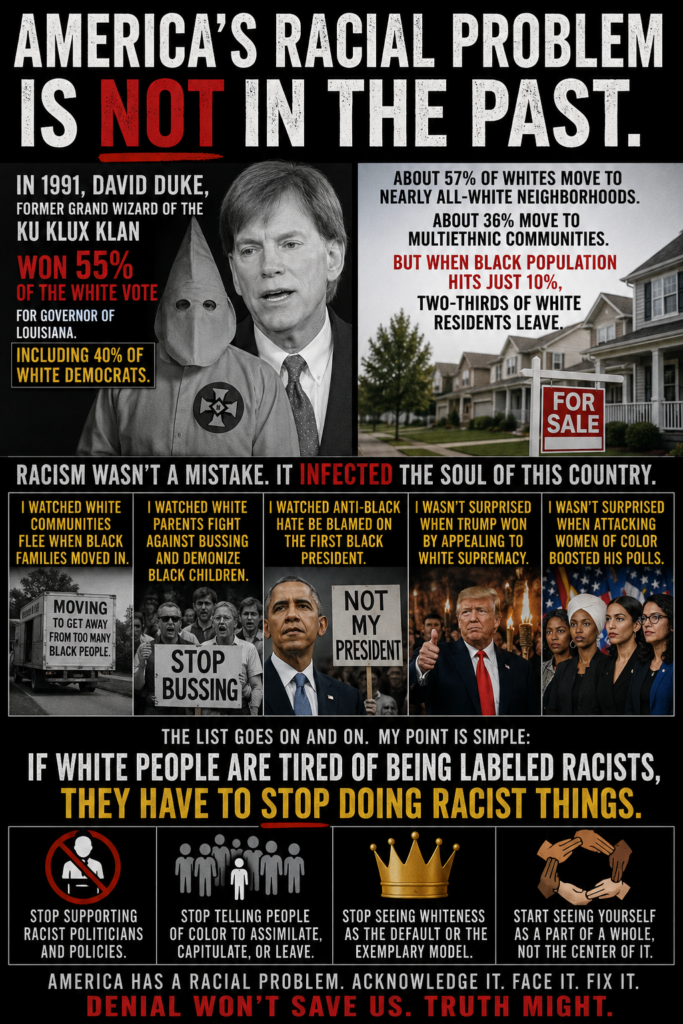
In 1991, David Duke, a former Grand Wizard of the Ku Klux Klan, won 55% of the white vote when he ran for governor of Louisiana. Let that sink in. A man whose public identity was openly tied to white supremacy won a majority of white voters, including 40% of white Democrats. That was not the distant 1800s. That was the early 1990s.
And this pattern is not an isolated one. Since the passage of the Civil Rights Act of 1964 and the Voting Rights Act of 1965, Democratic presidential candidates have consistently struggled to win the white vote. Even in 1976, when Jimmy Carter performed unusually well among white voters, Gerald Ford still won them overall. That should force us to ask uncomfortable questions about what racial backlash has looked like in American politics for the last half-century.
These are not random or meaningless occurances. And it is not just “economic anxiety.” This is racism built into the bloodstream of American politics and manifest through voting decisions and patterns.
The same dynamic has shaped where people live, where they send their children to school, and how they define “good” neighborhoods and “bad” neighborhoods. White flight did not happen by accident. It was not simply about “better schools” or “quality of life.”
For decades, study after study (and plain old lived reality) has shown that white people love to talk about diversity until Black people actually start moving in next door. White families will say they want “good communities” and “nice neighborhoods,” but once a place becomes “too Black” (usually with a Black population at or above 10%), all of a sudden the moving trucks come out and the “For Sale” signs start multiplying like weeds.
In community after community, once Black families moved in, white families moved out. I have seen it with my own eyes. Entire white communities expanded further and further outward, into what had once been farmland, not because they were escaping crime or collapse, but because too many Black people had moved nearby.
And it did not matter if those Black families were educated, professional, stable, or middle class. Their Blackness alone was enough for those white families to flee further into the suburbs.
We want to act like racism was just Bull Connor, George Wallace, fire hoses, and white robes. We want to tell ourselves that racism was a regrettable chapter that “we overcame,” and now the only real racists are a few cartoonishly evil people at the margins.
That is a lie.
Racism in America was never just about the loudest extremists. It has always depended on ordinary white people making racist choices in ordinary ways: where they live, who they vote for, what schools they support, what fears they indulge, what policies they excuse, and what kind of treatment of Black people they are willing to rationalize.
I saw white parents rage against school bussing while talking about Black children as if they were grave threats. I saw anti-Black hostility dressed up as “concern” and “standards.” I saw white resentment toward Barack Obama, a man raised largely by white family members, treated as if he were some dangerous racial radical simply for existing in the White House while Black.
So no, I was not surprised when Donald Trump rose to power by openly winking at white grievance and white nationalism. I was not surprised when racist attacks on women of color energized parts of his base. I have seen this movie before.
A lot of white Americans want to be absolved without being examined.
They want credit for not wearing a hood while still supporting racist politicians, racist policies, racist housing patterns, racist school systems, and racist cultural assumptions.
That’s not how this works.
America’s racial problem has never been confined to a handful of extremists in white robes. That is the lie people tell themselves so they do not have to examine the everyday racism embedded in housing, education, politics, media, and social life. Racism in America has never just been about “bad people.” It has been about a society that trained millions of ordinary people to see whiteness as the norm, the standard, and the default.
And that is the real issue.
If white Americans are tired of being associated with racism, then the answer is not to get offended when people point it out. The answer is to stop supporting racist policies, racist politicians, racist assumptions, and racist social arrangements. Stop demanding that people of color quietly assimilate into a system built to marginalize them. Stop treating whiteness as the universal model of what is “normal,” “civilized,” or “American.”
Because America’s racial problem is not ancient history. It is not dead. And pretending otherwise is part of the problem.
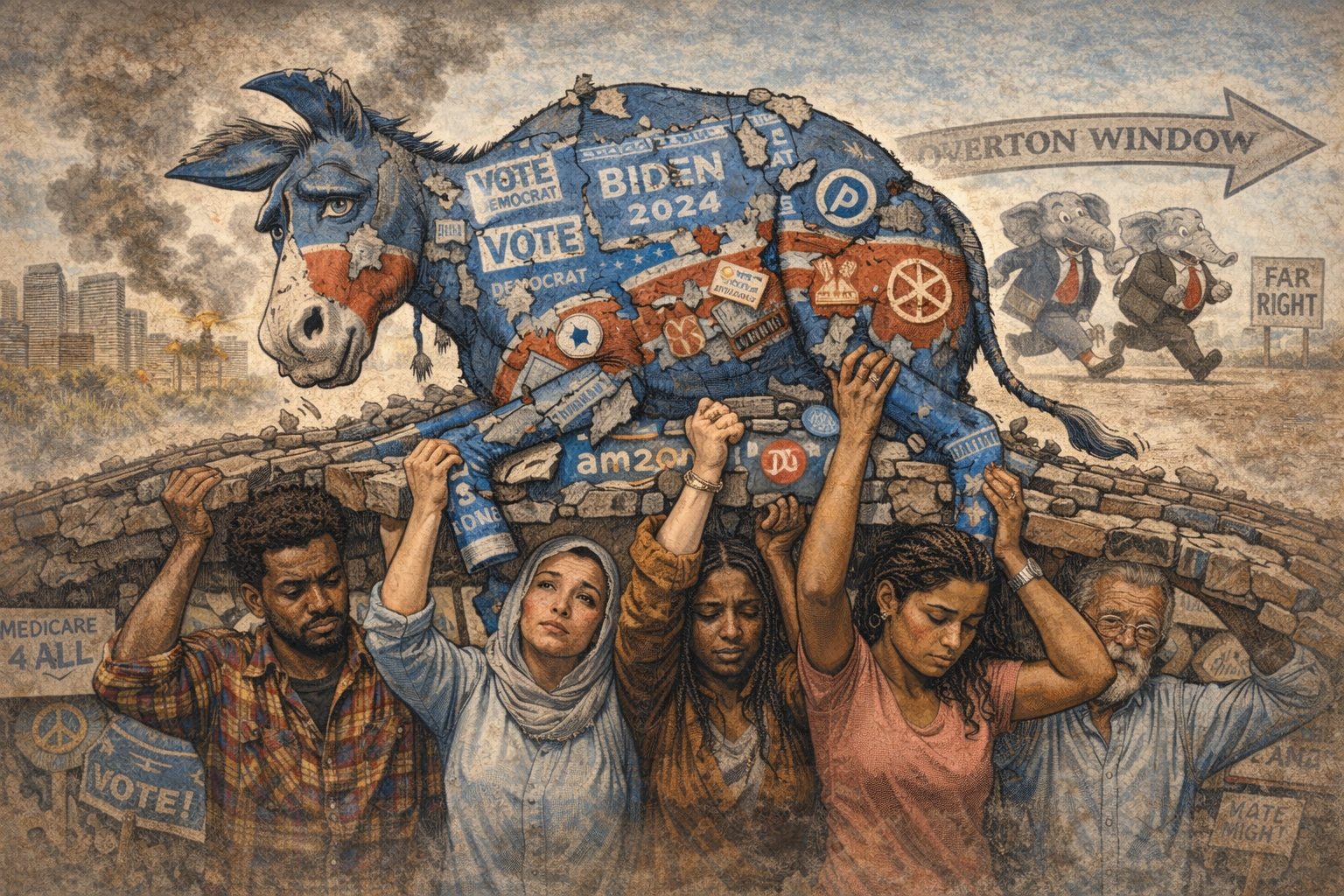
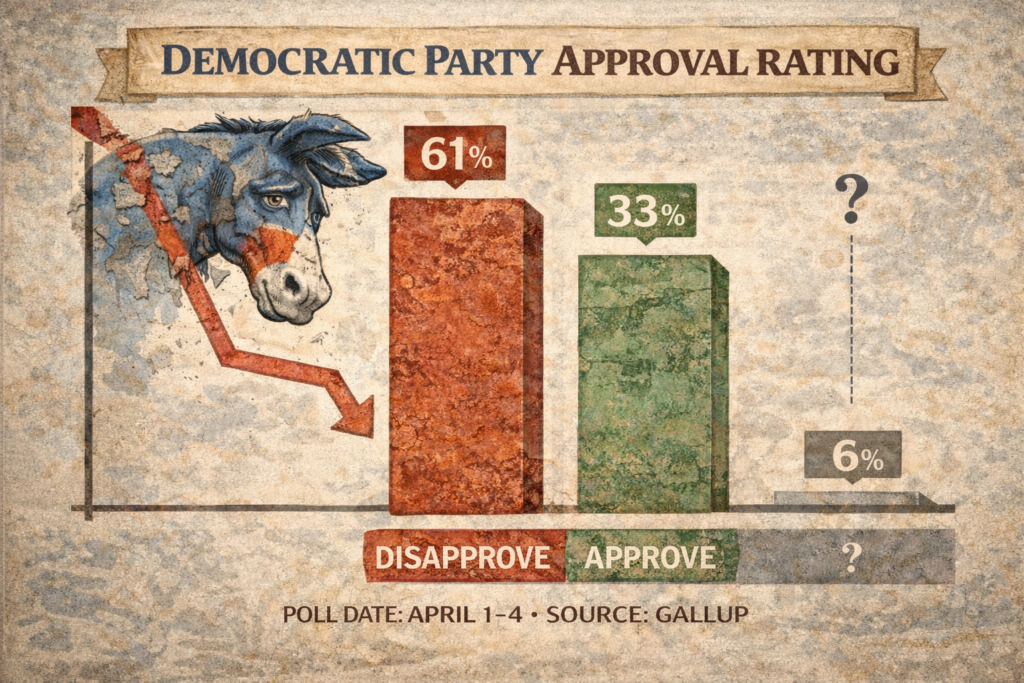
The Democratic Party is currently under water in the polls. Their approval rating is lower than that of an unhinged and failing Republican President.
One of the biggest lies in American politics right now is the conservative claim that the Democratic Party’s low approval ratings are proof that progressive or left-wing ideas are unpopular.
That is not what is happening.
The Democratic Party’s low approval is not a sweeping public endorsement of conservatism, nor is it some grand rejection of ideas like police reform, clean energy, immigrant dignity, labor rights, racial justice, or social equality. If anything, many of those ideas remain more popular than the politicians and institutions claiming to represent them.
What people are rejecting is how Democrats campaign, govern, and legislate.
That distinction matters.
Many Democratic Voters Do Not Actually Like the Democratic Party
One of the most misunderstood things about American politics is that a huge portion of people who vote Democrat are not loyal Democrats.
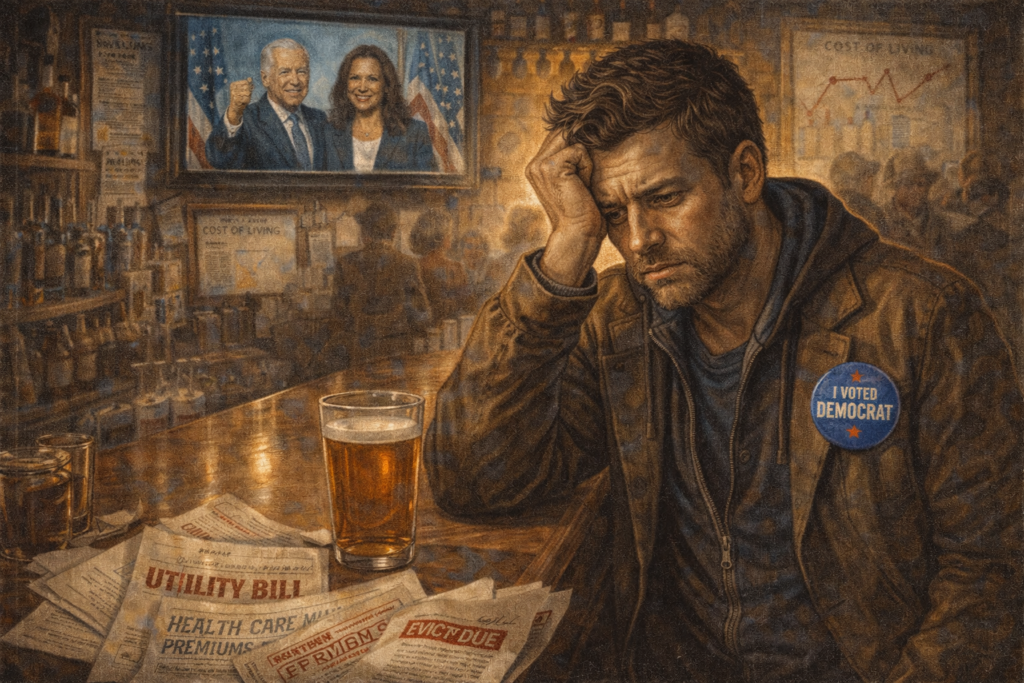
Many progressives, leftists, disillusioned liberals, and politically alienated voters do not support the Democratic Party because they believe in it. They support it because there is no other viable alternative under the current two-party system.
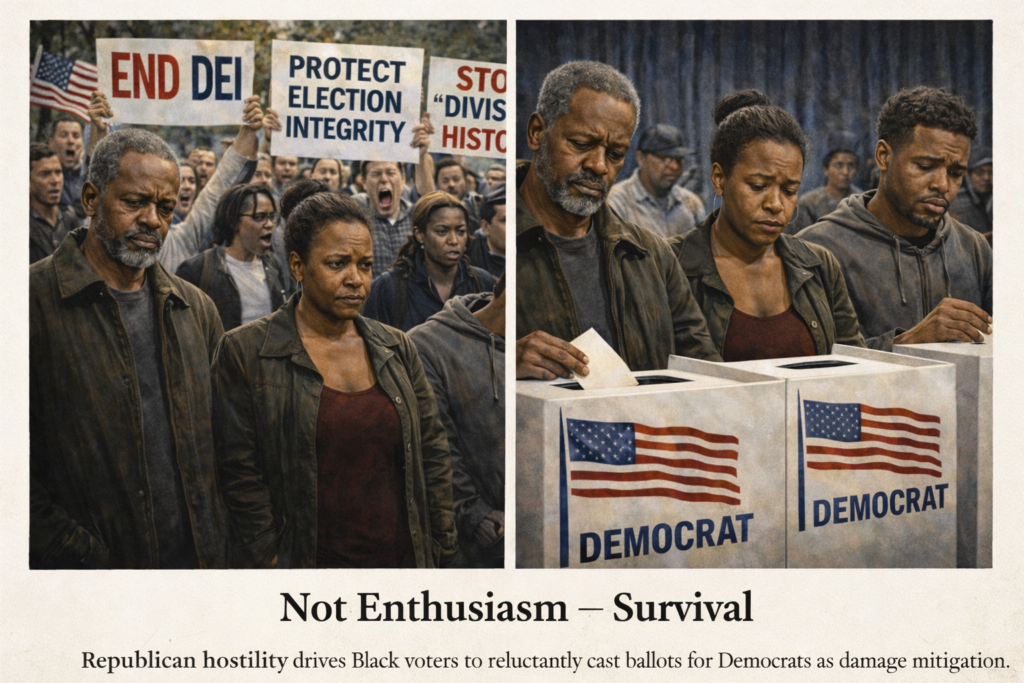
That is not enthusiasm. That is containment.
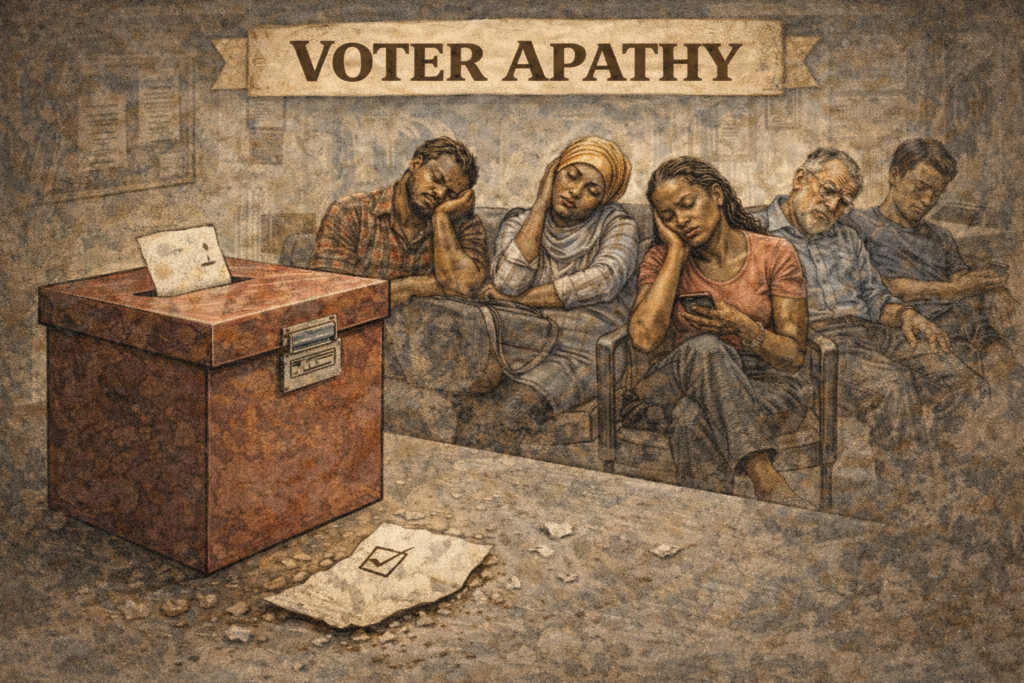
Failure to articulate, fight, and deliever real changes leads to voter apathy.
Many Democratic voters are not politically “at home.” They are politically homeless.
They vote Democrat not because they think the party is transformational, but because the Republican Party has become openly hostile to democracy, labor, immigrants, women, LGBTQ people, Black communities, Muslims, and virtually anyone outside its reactionary coalition.
That means Democratic votes are often votes of defense, not belief.
Democrats Are Not “Too Woke.” They Are Not Woke Enough.
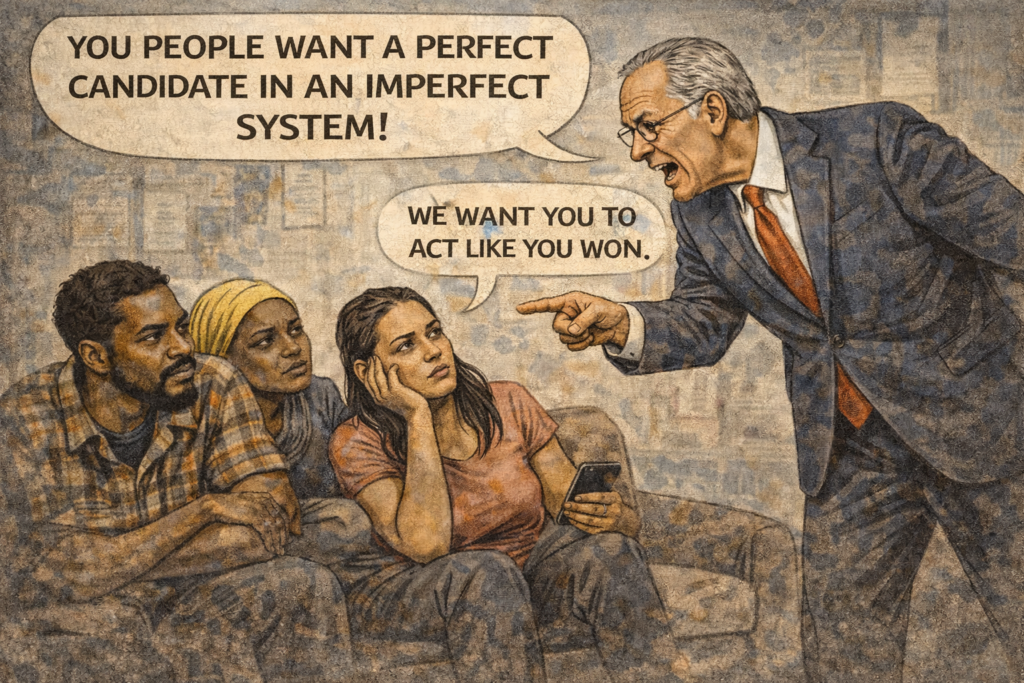
Democrats charging progressives and leftists with seeking perfection is the latest in gaslighting excuses for their failure to champion and deliver for their most vulnerable constituents.
One of the more absurd claims pushed by conservatives (and sometimes even accepted by Democrats themselves)is that the party has become too “woke.”
But that depends entirely on what one means by “woke.”
Being “woke” is being aware, conscious, and alert. It is being ready to face systems of oppression with adequate knoiwledge to navigate through them without being a victim. Black poeople know that our freedom constantly hangs by a thread and enemies are everywhere.
In its original Black political meaning, being woke meant being conscious of danger, power, injustice, and the need to protect one’s people and community. It was never just about representation, branding, or inclusion language.
And that is exactly where Democrats fail.
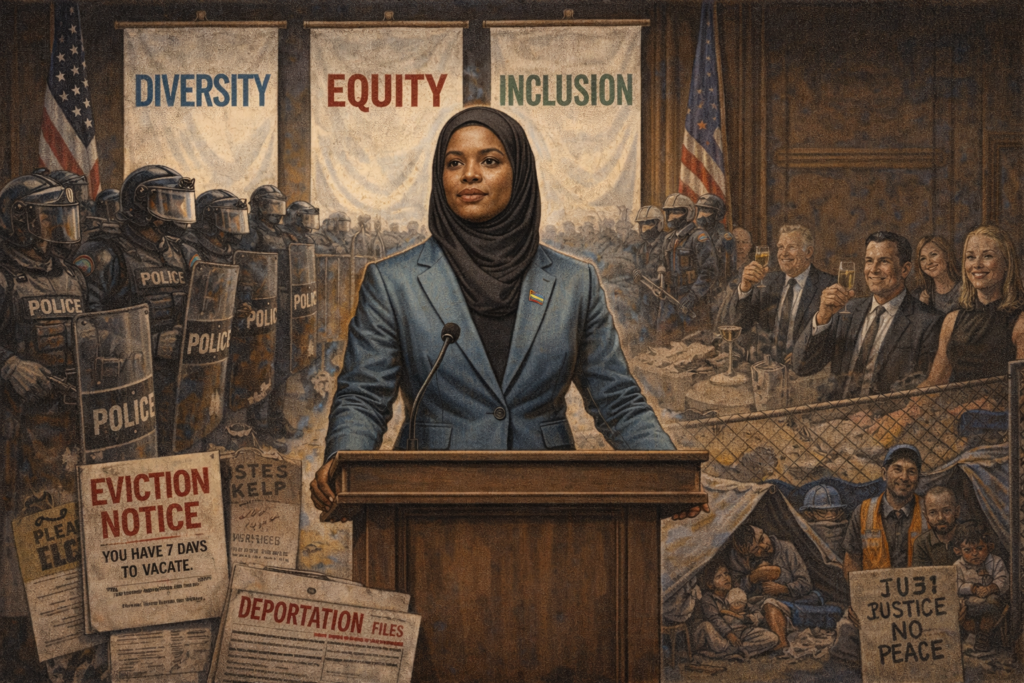
They are often fluent in the language of diversity, equity, and inclusion while being utterly unwilling to confront the structures that actually produce inequality.
They do not threaten the system. At best, they try to make the status quo look kinder, more polished, and more diverse.
But a more diverse ruling class is not the same thing as justice. It truly doesn’t matter if the foot on our necks belong to a woman, minority, or a member of some other marginalized group, the oppression is still there.
In fact, the tokenism that puts a member of a marginalized community in charge makes the problem worse.
Diversity in positions of power does nothing for marginalized communities as long as the mechanisms of their oppression are still operating and supported by those in power.
The Core Problem: Democrats Campaign Left and Govern Center-Right
This is where much of the anger comes from.
Democrats routinely campaign on bold, popular ideas, such as healthcare reform, abortion protections, criminal justice reform, labor rights, student debt relief, climate action, immigration reform, etc., only to retreat, dilute, abandon, or proceduralize those promises once in office.
There is no joy in Democratic Party victories if the end result is that the people’s basic standard of living either doesn’t improve or worsen.
And when they fail, they almost always have an excuse ready:
Senate procedure
“Moderate” Democrats
institutional norms
electability concerns
donor pressure
political timing
fear of backlash
At some point, people stop hearing these as obstacles and start hearing them as the pre-scripted permission slips for inaction they often are.
This is one of the main reasons the Democratic Party feels hollow to so many of the very people it depends on.
Democrats Alienate Their Own Coalition
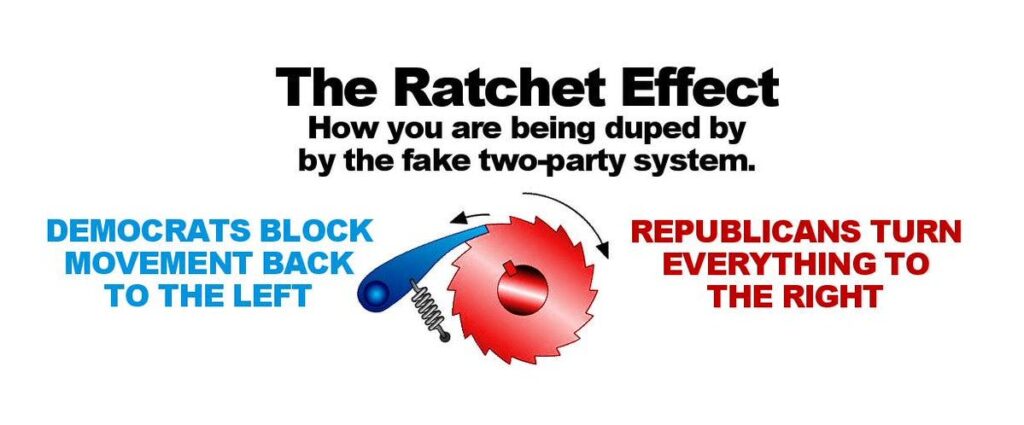
Democrats often actively resist moving to the left. In fact, their solutions to electorial win and losses is to move further to the right.
The Democratic Party survives through a broad coalition, but it often governs as though that coalition is a burden.
Black voters, women, Arab and Muslim communities, immigrants, labor-oriented voters, poor and working-class people, LGBTQ communities, and younger progressives are all expected to show up every election cycle. But when it is time to govern, many of those same groups are sidelined, ignored, triangulated against, or used symbolically rather than materially.
Black voters have long experienced this in the form of tokenism, local “benign” neglect, selective outrage, and empty rhetoric about justice that rarely translates into structural change.
Benign neglect of communities only breeds resentment by many within those communities. If the Democrats want to keep their coalition of diverse voters, they have to fight harder for each and every one of them.
Muslim and Arab communities have seen it through surveillance, Islamophobia, selective empathy, and the treatment of dissenting lawmakers as liabilities.
Women have seen it through decades of strategic delay and complacency around abortion rights, only to watch those rights collapse under a reactionary judiciary.
Immigrants and Latinos have seen it through cruelty repackaged as pragmatism.
And progressives have seen it through endless lectures about realism from people who somehow always find the political courage to disappoint the left but never that same courage to seriously confront the right.
The Gaza Crisis Exposed Democratic Hypocrisy
There were calls by many of the political left in 2024 for Democrats to stop supporting the genocide in Gaza and support a ceasefire, These calls were mostly ignored and scoffed at by the Democratic Party leadership.
If there was one issue that crystallized this contradiction for many younger voters, leftists, Muslims, Arab Americans, and anti-imperialists, it was Gaza.
For many people, the Democratic Party’s response to the destruction and mass death in Gaza was not merely disappointing but it was also morally disqualifying.
Many potential Democratic voters could not vote for Democratic candidates alligned with Israel and its lobby in good conscious.
Pro-Palestinian protestors started to express their disappointment with the Democratic Party and vowed to vote against the Democratic Party during the general election.
Instead of responding with honesty, moral clarity, and equal concern for Palestinian humanity, much of the party defaulted to the same old framework: criminalize dissent, sanitize atrocity, and demand loyalty from people expected to ignore what they could plainly see with their own eyes.
That mattered and it sidelined many voters and activists who could have carried the Democrats to victory.
Why?
Because once a party asks people to suspend not just strategy, but conscience, it should not be surprised when those people begin to emotionally detach from it.
Republicans Have an Ideological Core. Democrats Often Seem to Have None.
Democrats struggle to use their power to help the people who elected them. They seem afraid to embrace popular left-wing positions. The Republicans, in contrast, use their power to push their agenda no matter how unpopular it my be. The Democrats appear weak while the Republican seem strong.
Part of the frustration here is comparative.
Republicans, however destructive, reactionary, and dangerous their project may be, often appear more ideologically committed than Democrats. They are willing to fight for what they believe in, even when those beliefs are cruel, anti-democratic, and deeply unpopular.
Democrats, by contrast, often appear to be a party whose primary belief is managing decline politely.
They want stability and not transformation. Procedure and not confrontation. Brand management and not political struggle.
That makes them seem weak, not simply because they lose, but because even when they win, they often act as if they do not know how to wield the power that they have.
This Is Not an Argument for Republicans
Let me be crystal clear about this post lest my words are taken out of context by conservatives using my words to make bad faith arguments: none of this is an endorsement of the Republican Party.
The current Republican Party is more overtly hostile to Black people and other marginalized communities than the Democratic Party is. That is reality.
One of the main reasons why Black voters overwhelmingly vote Democrat is not due to satisfaction or loyalty. Instead, it is because the Republican Party had been openly hostile toward the Black Community for decades. Racist dog-whistle politics may fool some but, Black people can indentify it easily.
Most Black voters, myself included, vote Democrat not because we are enchanted by the party, but because under the present system, it is often the only viable barrier against a more openly reactionary political project.
That is not love.That is only risk management. This is something many Black Republicans, who talk about loyalty to plantations seem to forget.
And Black history gives us every reason to take that risk seriously.
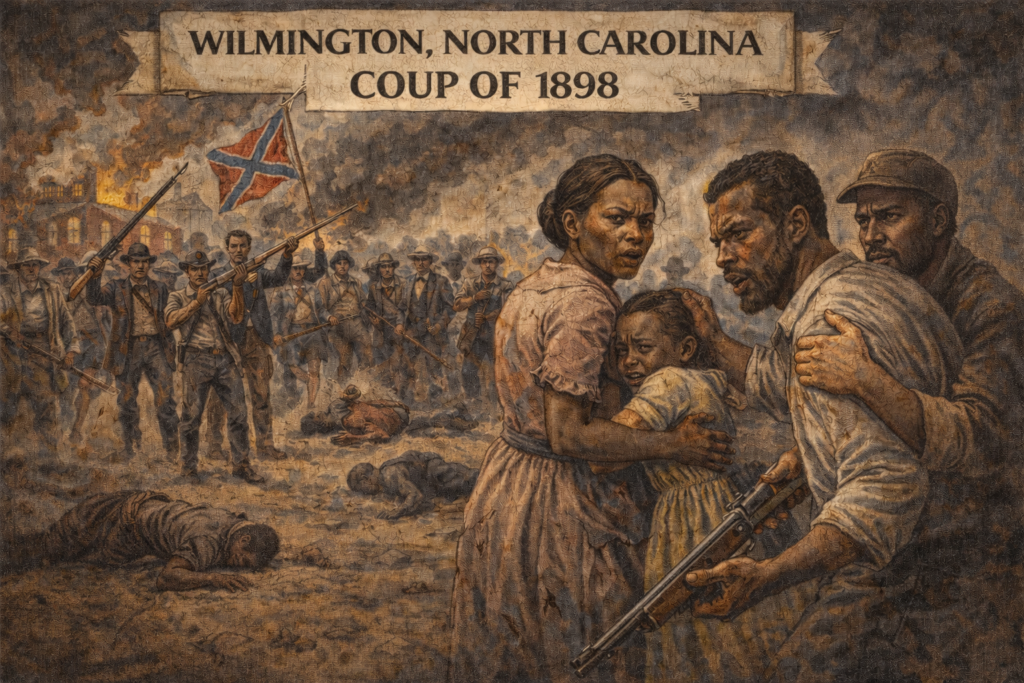
After the electoral victories of many Black people in Wilmington, North Carolina in 1898, an angry White Mob conducted a violent coup of the town in which Black residents were killed or driven away. This was one of the last holdovers of a succesful diverse government after the end of the Recontruction Era 20 years earlier.
The gains won through struggle can be reversed. They can be rolled back. They can be destroyed. Reconstruction taught us that. Wilmington taught us that. The 20th century taught us that. And the present is teaching it again.
The Real Crisis Is Political Homelessness
The deeper issue here is not simply that Democrats are unpopular.
It is that millions of people feel politically stranded.
They are too conscious to be satisfied with Democratic symbolism. too threatened to gamble on Republican barbarism, and too trapped in a two-party duopoly to build immediate alternatives with real electoral power.
That is a recipe for alienation. The largest voting bloc during the 2024 presidential election was eligible voters who chose the proverbial couch over casting any vote and any election.
Constant disappoinment leads to political disengagement.
And unless that changes, Democrats will continue to suffer from a contradiction that conservatives fundamentally do not understand.
This is that people may still vote for Democrats while deeply resenting them.
That is not political strength. Instead, that is political exhaustion.
And unless Democrats become something more than “the only adults in the room,” that exhaustion will continue to define American politics.
Every January, around the time of Martin Luther King Jr. Day, a familiar political ritual begins.
Public figures across the political spectrum invoke King’s name in support of their own positions. Liberals quote him. Conservatives quote him. Moderates quote him. Everyone suddenly seems convinced that Dr. King would agree with them if he were alive today.
In many cases, these attempts say more about the people invoking King than about King himself.
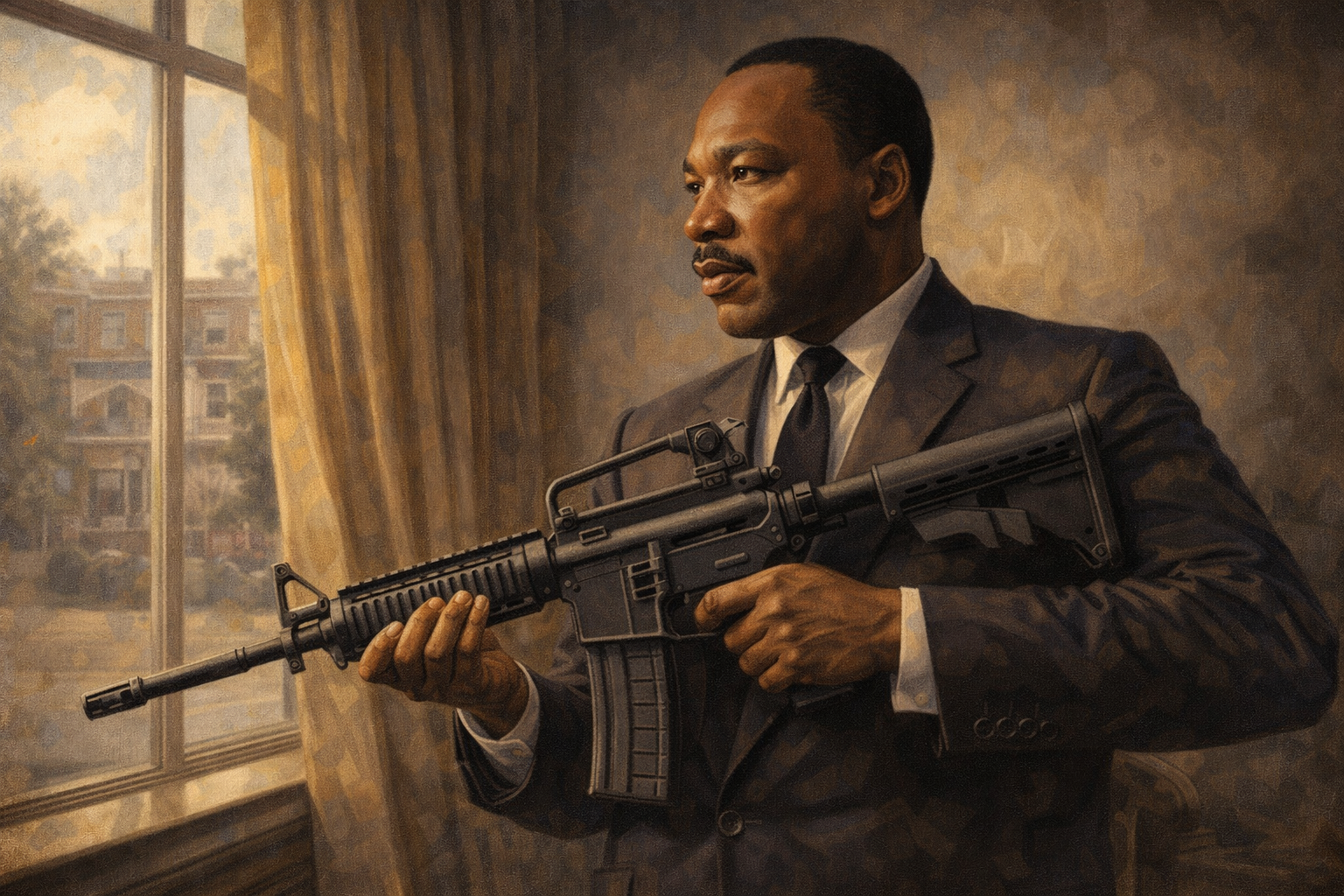
One of the more curious examples in recent years has been the claim that Dr. King would have opposed modern gun control laws because he owned firearms.
At first glance, this argument might sound plausible. It is true that King once applied for a permit to carry a handgun after his home was bombed during the Montgomery Bus Boycott. In the violent atmosphere of the Jim Crow South, many civil rights leaders faced credible threats to their lives.
But isolating that fact while ignoring King’s broader philosophy creates a deeply misleading picture.
Dr. King was one of the most committed advocates of nonviolence in modern history. His entire political and moral philosophy centered on the belief that violence ultimately corrupts both individuals and societies. Throughout his career, he repeatedly emphasized that the civil rights movement must reject violence—even in the face of brutal repression.
More importantly, King’s political views extended far beyond the narrow civil rights narrative that is often presented today.
In the final years of his life, King increasingly criticized economic inequality, militarism, and American foreign policy. He spoke openly about the need for a radical restructuring of American society and argued that poverty, racism, and war were interconnected problems.
He supported strong labor rights, called for major government programs to address poverty, and spoke favorably about forms of democratic socialism.
In other words, the historical Dr. King was far more politically complex and far more radical than the sanitized figure often presented in modern political debates.
Projecting modern ideological battles onto King may be tempting, but it risks distorting the historical record.
Rather than imagining the version of King we wish existed, it might be more productive to engage honestly with the one who actually did.
When conservatives are asked to provide empirical evidence of a connection between the LGBTQIA community and pedophilia, the response is rarely data.
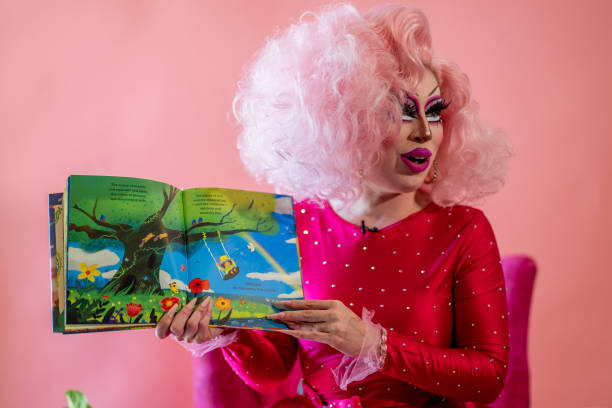
Instead, what usually appears are viral clips taken out of context, screenshots circulated by accounts like Libs of TikTok, isolated drag performances from other countries, sermons from openly hostile churches, anecdotes repeated on podcasts, or emotionally charged testimony from activists at school board meetings.
What rarely appears are numbers, peer-reviewed studies, or credible statistical research demonstrating a meaningful relationship between LGBTQIA identity and child predation.
This is not accidental.
The current panic surrounding “groomers” follows a pattern that has appeared repeatedly throughout history. Moral panics often rely on emotionally powerful accusations that frame a targeted group as a threat to children or social order. Once that framing takes hold, evidence becomes secondary to fear.
In many cases, the people promoting these accusations present themselves as defenders of vulnerable children. Yet it is often the same political actors who oppose policies that materially support children, such as expanded healthcare, education funding, or protections against abuse.
That contradiction should raise questions.
For Black Americans in particular, this rhetoric has an unsettling historical echo. Throughout the late nineteenth and early twentieth centuries, Black men were routinely portrayed as sexual predators who threatened white women. These accusations were rarely supported by evidence, but they were politically powerful. They were used to justify segregation, mass incarceration, racial terror, and the destruction of entire Black communities.
The narrative did not have to be true. It only had to be believed.
The same mechanism is visible today. By portraying LGBTQIA people as inherently predatory, political movements can frame discrimination as protection. Policies restricting LGBTQIA rights are then presented not as acts of exclusion, but as necessary defenses of children.
This strategy is not new.
In the early twentieth century, the Ku Klux Klan expanded its influence by presenting itself as a protector of “American values,” white womanhood, and Christian civilization. Films like The Birth of a Nation helped transform the Klan’s image from that of a small terrorist organization in the South into a supposed guardian of social order.
History shows how dangerous that type of narrative can become.
None of this means that abuse never occurs in any community. Sexual abuse exists across every demographic group and social category. But addressing it responsibly requires evidence, data, and careful investigation—not broad accusations aimed at entire populations.
When accusations replace evidence, the goal is rarely child protection. More often, the goal is political mobilization.