Tag: conservatives

  • Political Demonization and the Collapse of Civil Discourse

    Political Demonization and the Collapse of Civil Discourse

    Over the past several decades, a pattern has emerged in American political rhetoric, particularly in certain corners of conservative media and political leadership.

    People on the political left are not merely described as political opponents. We are often portrayed as existential threats to the nation.

    For years, many prominent conservative commentators and politicians have repeatedly described Democrats and left-leaning Americans as:

    • Anti-American or people who “hate America”
    • Socialists or communists
    • Participants in child-trafficking conspiracies
    • Doctors who secretly perform gender surgeries on children without parental knowledge
    • Supporters of violent crime
    • Architects of mass immigration designed to manipulate elections
    • Violent extremists who are responsible for “burning down cities”
    • Lazy individuals who simply want government handouts
    • Rampant sexual deviants who want to groom children into non-heteronormative lifestyles

    Many of these accusations are not policy disagreements. They are moral accusations. They are claims that state that their political opponents are fundamentally dangerous, corrupt, or evil.

    When these claims are repeated constantly through media ecosystems, they can shape how entire audiences perceive political reality. Over time, exaggerated or false narratives can become accepted as unquestioned truths.

    This dynamic has serious consequences.

    When political opponents are portrayed not simply as people with different policy views but as criminals, traitors, or threats to society, it becomes easier for some individuals to justify hostility or even lethal violence against them.

    At the same time, many of the same political figures who use this kind of rhetoric often react strongly when criticism is directed toward them. Labels such as “bigot” (in any form), “authoritarian,” or “fascist” are often condemned as unfair or offensive, even when critics argue that those labels are based on observable political behavior.

    The result is a deeply polarized environment in which one side hurls childish insults, irrational accusations, and charges of civic disloyalty, which endangers those on the receiving end. Then they clutch their pearls when met with the same energy in response.

    In the end, our political conversation devolves into arguing against strawman caricatures of people, on either side, rather than having good-faith arguments based on facts and reality.

    Healthy democratic societies require disagreement. Political conflict is inevitable and often productive.

    But democracy becomes fragile when political actors stop treating their opponents as fellow citizens and begin treating them as soulless enemies who don’t love the land that we are in.

    Once that shift happens, civil discourse becomes nearly impossible, and political conflict begins to resemble cultural warfare rather than democratic debate.

  • Political Realignment and the Persistence of Racial Tension

    Political Realignment and the Persistence of Racial Tension

    One of the most uncomfortable facts in American political history is that the party alignments of the Jim Crow era no longer resemble the political landscape we see today.

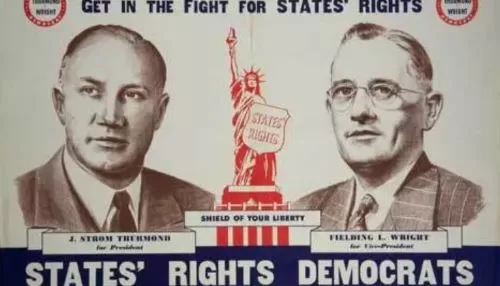
    During the late nineteenth and early twentieth centuries, most white voters in the South identified with the Democratic Party. The Democratic Party of that era included the segregationist political leadership that dominated Southern politics during the Jim Crow period.

    That began to change in the mid-twentieth century.

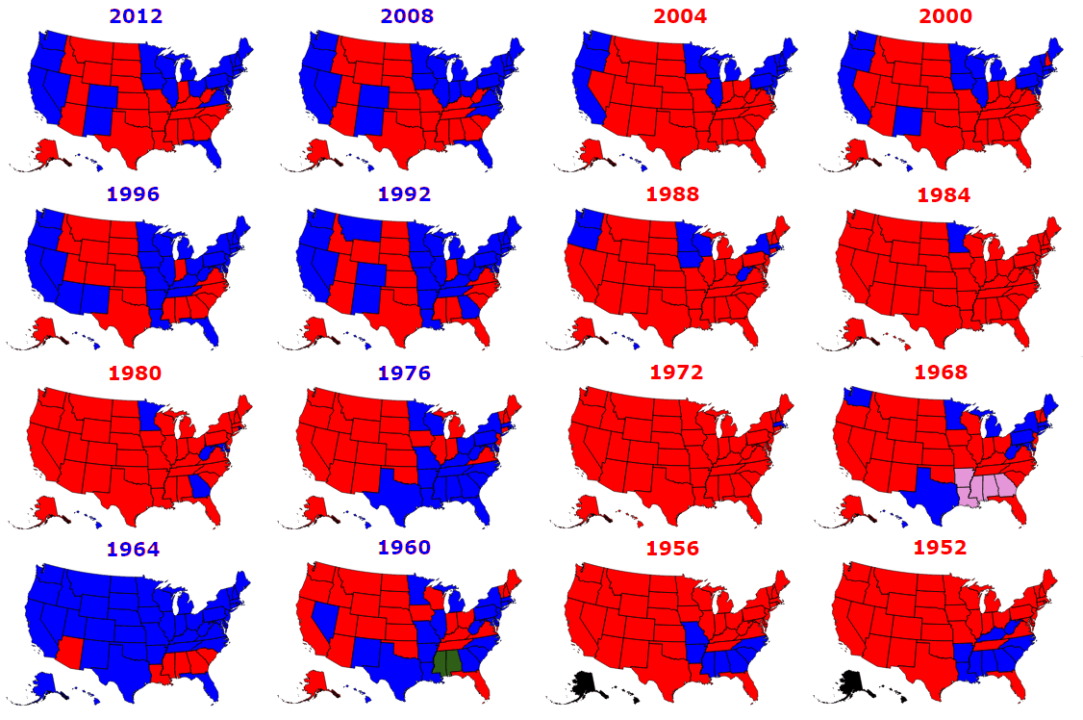
    After the passage of the Civil Rights Act of 1964, the Voting Rights Act of 1965, and the Fair Housing Act of 1968 (landmark laws supported and signed by Democratic leadership), the political map of the United States gradually shifted. Over the following decades, many white Southern voters moved toward the Republican Party, while Black voters overwhelmingly aligned with the Democratic Party.

    This shift did not happen overnight, but the trend is well documented in voting patterns from the late 1960s onward.

    Today, white voters, particularly white voters without college degrees and many white voters in the South, tend to support Republican candidates by significant margins. Meanwhile, Black voters remain one of the most consistently Democratic voting blocs in American politics.

    These voting patterns are measurable realities, even if they make people uncomfortable.

    At the same time, discussions about race in the United States often provoke strong reactions. Many Americans reject the idea that racial attitudes still influence political behavior. Others argue that the issue is not simply politics, but broader patterns of social separation.

    Sociologists have long observed that Americans often feel more comfortable within communities that resemble themselves culturally or demographically. Neighborhood patterns, school demographics, and social networks frequently reflect those tendencies.

    The result is a society that remains more segregated in practice than many people are willing to acknowledge.

    When people point out these patterns, the conversation often becomes heated. Accusations of racism are exchanged, defensiveness rises, and productive discussion becomes difficult.

    But acknowledging uncomfortable realities does not make those realities disappear.

    If Americans want to have honest conversations about race, politics, and social trust, then those conversations must be grounded in evidence rather than denial. Voting patterns, historical developments, and lived experiences all contribute to understanding the country we live in today.

    Ignoring those realities may feel easier in the moment, but it does little to address the underlying tensions that continue to shape American political life.

  • Being Nice Is Not the Same Thing as Being Good

    Being Nice Is Not the Same Thing as Being Good

    One of the strangest arguments that repeatedly appears in political discourse is the idea that harmful political movements should be judged more gently because the people involved in them can sometimes be “nice in person.”

    Yes, many people who hold destructive political views are perfectly capable of being polite, friendly, or even charming in everyday interactions.

    But that has very little to do with the consequences of the ideas they support.

    History provides countless examples of people who were socially pleasant while simultaneously supporting or participating in deeply immoral systems. The ability to be personable does not erase the harm caused by one’s beliefs or actions.

    Human beings are complex. Someone can be a friendly neighbor, a generous host, or an engaging conversationalist while still supporting policies, movements, or ideologies that cause real harm to other people.

    Personal charm has never been a reliable measure of moral character.

    Yet in modern political debates, some commentators, particularly within media circles, occasionally suggest that ideological hostility should soften if the person expressing those ideas happens to be courteous in private conversation or polite in a televised debate.

    That standard makes very little sense.

    Political ideas should be judged based on their substance and consequences, not the personal demeanor of the person expressing them.

    A polite presentation does not make a harmful idea less harmful. A friendly tone does not transform prejudice into principle.

    Being civil in conversation is a positive trait. But civility should not become a substitute for accountability.

    If a political movement promotes policies or rhetoric that harm vulnerable communities, that reality does not disappear simply because some of its supporters are personable in everyday interactions.

    The lesson here is simple.

    Do not confuse personal niceness with moral integrity.

    They are not the same thing.

  • The Constitution Is Not That Long… Read It!

    The Constitution Is Not That Long… Read It!

    One of the most amusing aspects of modern political debates is how often people loudly proclaim their love for the United States Constitution while simultaneously demonstrating that they have never actually read it.

    I bought my own copy of the Constitution for my personal library back in 1999. When smartphones became common, one of the first things I downloaded was a Constitution app so I could reference the document whenever I needed it.

    The reason is simple: the Constitution is not a long document.

    In fact, it is surprisingly short.

    The original Constitution consists of seven articles. The longest of these, Article I, establishes the legislative branch and contains ten sections. The shortest, Article VII, is only a single sentence.

    Add the 27 amendments that have been ratified over the course of American history, and the entire document is still roughly the length of a long magazine article or a short story.

    Yes, the language reflects the legal style of the late eighteenth century. But it is not particularly difficult to understand, especially if you read an annotated edition that includes explanatory notes or writings such as the Federalist Papers.

    The problem is that many of the loudest self-described “constitutional patriots” have never taken the time to read it themselves.

    Instead, they treat the Constitution the same way many people treat religious texts: they claim to revere it, but rely entirely on other people to tell them what it says and what it means.

    And those interpretations rarely come from constitutional scholars, legal historians, or practicing constitutional lawyers. More often, they come from political commentators or activists whose understanding of the document is shaped more by ideology than by careful study.

    Blind allegiance to a document that one has never actually read is not patriotism. It is intellectual laziness.

    If Americans truly care about the Constitution, the first step should be obvious.

    Read it.

  • American History Myths #5: Once More on the Myth That the Major Political Parties Never Realigned

    American History Myths #5: Once More on the Myth That the Major Political Parties Never Realigned

    I’m going to beat the proverbial dead horse here, but I feel I need to reiterate a point I made previously in this blog.

    One of the most persistent myths in modern American political discourse is the claim that the Democratic and Republican parties have remained ideologically consistent throughout history. According to this narrative, the Republican Party has always been the party of civil rights and racial progress, while the Democratic Party has always been the party of racism.

    This claim collapses under even the most basic historical scrutiny.

    To maintain the illusion, modern conservatives must ignore several inconvenient facts. They must ignore the political dealignment and realignment that occurred between the late nineteenth century and the late twentieth century. They must ignore the steady migration of white Southern conservatives—particularly segregationists—from the Democratic Party into the Republican Party during the second half of the twentieth century.

    They must also ignore the uncomfortable reality that many of the political figures celebrated in modern conservative circles were themselves defenders of slavery, segregation, and white supremacy.

    The historical record is clear: the ideology of Southern conservatism did not disappear after the Civil Rights Movement. It simply found a new political home.

    During the 1960s through the 1990s, many of the most hardline segregationist politicians—often referred to as Dixiecrats—gradually abandoned the Democratic Party and aligned themselves with the Republican Party. At the same time, the Republican Party increasingly adopted political strategies designed to attract white Southern voters who opposed civil rights reforms.

    This shift was not subtle. It was openly discussed by political strategists and historians alike.

    Yet modern conservatives often pretend that none of this happened.

    Instead, they promote a simplified narrative in which the Republican Party “freed the slaves” and therefore cannot possibly bear any responsibility for the racial politics that emerged in the twentieth century. The fact that the ideological descendants of segregationists now overwhelmingly identify as conservative Republicans is conveniently ignored.

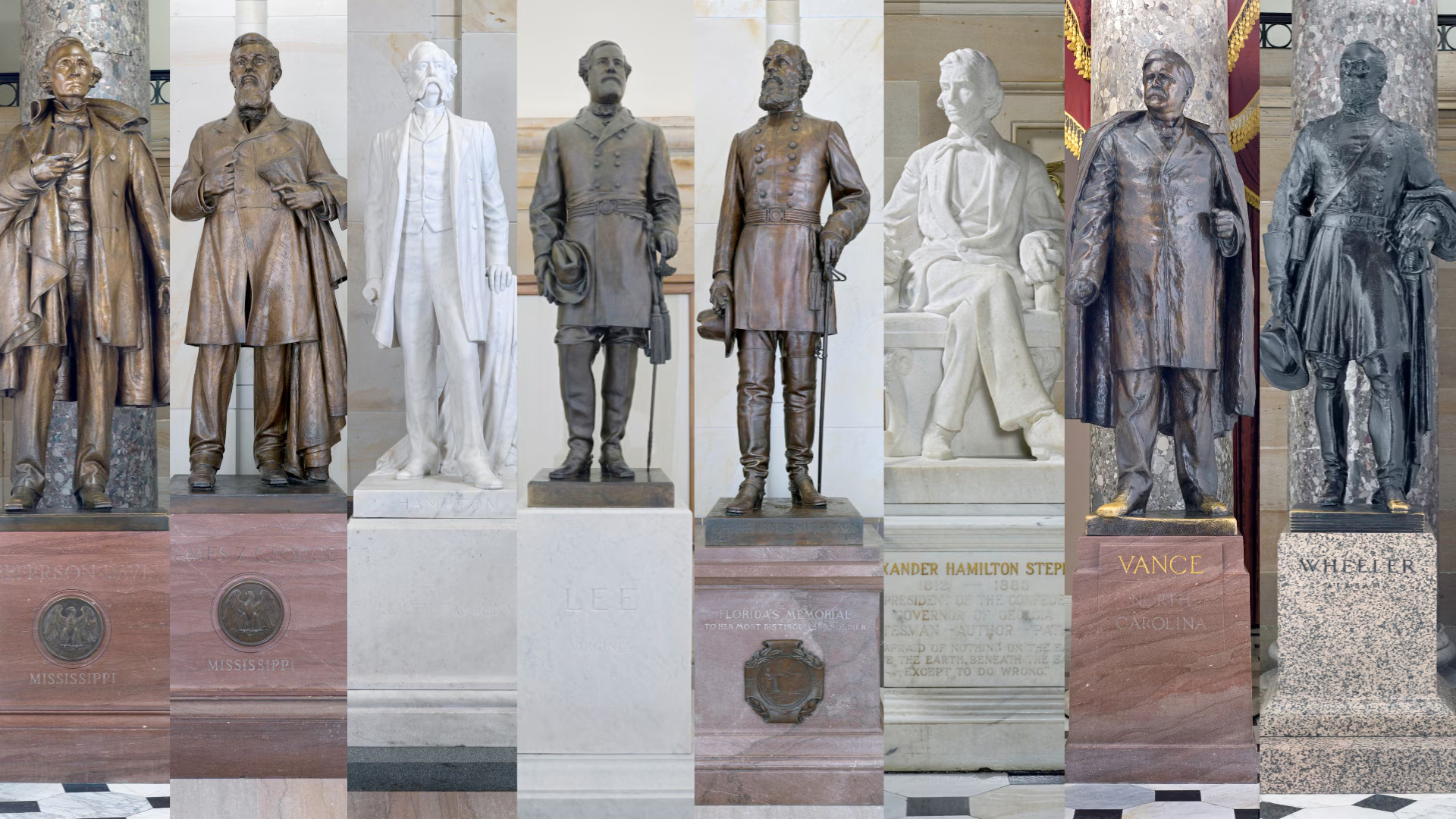
    At the same time, many conservative politicians and commentators openly celebrate figures from the Confederate past while dismissing or ignoring the Republican leaders who actually fought to preserve the Union and end slavery.

    Where are the monuments to Republican generals such as William Tecumseh Sherman or Ulysses S. Grant in the regions that once formed the Confederacy? Why are Confederate leaders, who were Democrats of their time, so often praised in modern conservative political culture?

    The answer is uncomfortable but obvious.

    For many conservatives, the issue has never truly been about party labels. It has always been about political ideology.

    This ideological continuity becomes particularly visible when modern politicians attempt to avoid even the most basic historical truths.

    For example, when asked about the causes of the American Civil War, some contemporary conservative politicians have offered vague explanations about “government,” “freedom,” or “states’ rights,” while carefully avoiding the central issue that historians overwhelmingly agree defined the conflict: chattel slavery.

    Yet the leaders of the Confederacy themselves left no such ambiguity.

    In their own declarations of secession, Southern states repeatedly and explicitly identified the preservation of slavery as the primary reason for leaving the Union.

    The historical record could not be clearer.

    Attempts to obscure that fact are not efforts to promote historical nuance. They are attempts to preserve comforting myths about the past.

    And those myths serve a political purpose.

    By denying the ideological continuity between past and present forms of white supremacist politics, modern conservatives attempt to distance themselves from the legacy of segregation and racial hierarchy while continuing to benefit from many of the political narratives that sustained those systems.

    None of this is to suggest that racism exists exclusively within one political party. Racism has existed across the American political spectrum throughout history.

    But it is impossible to have an honest conversation about American history—or modern American politics—without acknowledging the ideological realignment that reshaped the nation’s two major political parties during the twentieth century.

    History cannot be rewritten simply because it makes some people uncomfortable.

    In fact, the opposite is true.

    Understanding the darker chapters of our past is precisely how societies learn to avoid repeating them.

    Black Americans have long demonstrated that it is possible to love this country while also confronting its historical injustices. Despite centuries of discrimination, violence, and exclusion, Black Americans have served in the nation’s military, represented the country in international competition, and fought relentlessly to expand the promise of American democracy.

    Acknowledging historical injustice does not weaken the country.

    Pretending that those injustices never happened does.

    If Americans truly want to move forward, they must first be willing to tell the truth about where they have been.

  • American History Myths #4: The Myth That the Parties Never Realigned

    American History Myths #4: The Myth That the Parties Never Realigned

    One of the most persistent claims in modern political debates is that the Democratic and Republican parties have remained essentially the same throughout American history. According to this argument, the political coalitions and ideologies of the nineteenth century supposedly still define the parties today.

    This claim ignores one of the most well-documented developments in American political history: the gradual ideological realignment of the two major parties from the late nineteenth century through the late twentieth century.

    Following the Civil War, the Republican Party was widely associated with the Union victory and the abolition of slavery. During Reconstruction, Republicans supported many early civil rights measures intended to protect the rights of newly freed Black Americans.

    However, that political commitment weakened dramatically after the Compromise of 1877, which effectively ended Reconstruction. Federal enforcement of civil rights protections collapsed, and white supremacist governments regained control across much of the South.

    For decades afterward, Southern politics was dominated by segregationist Democratic politicians often referred to as Dixiecrats. These politicians supported Jim Crow laws, racial segregation, and policies designed to disenfranchise Black voters.

    But American political coalitions were not static.

    Beginning in the mid-twentieth century, particularly during the Civil Rights Movement of the 1950s and 1960s, many white Southern conservatives began shifting their political allegiance. As national Democratic leaders increasingly supported civil rights legislation, large numbers of segregationist voters and politicians gradually moved toward the Republican Party.

    This transition did not happen overnight. It unfolded over several decades, from the 1960s through the 1980s and even into the early 1990s. Historians and political scientists commonly refer to this process as political realignment.

    The shift can be seen in electoral patterns across the South. States that had reliably voted for Democratic presidential candidates for nearly a century increasingly began supporting Republican candidates. Conservative Southern politicians who once identified as Democrats also began switching parties.

    Despite this well-documented transformation, some modern political commentators attempt to deny that any realignment occurred. Instead, they argue that the parties remain essentially unchanged and that historical responsibility for segregationist politics belongs exclusively to one party.

    But historical evidence tells a more complicated story.

    The ideological divide in American politics has long revolved less around party labels and more around competing views about civil rights, federal power, and social hierarchy. Over time, the political coalitions representing those views have shifted between parties.

    This is why discussions of American political history require careful attention to ideology, region, and historical context, rather than relying solely on party labels.

    Reducing the history of American civil rights struggles to simple partisan talking points obscures the reality of how political coalitions evolve. Understanding that evolution is essential for understanding the political landscape of the United States today.

  • American History Myth #3: The Myth That Civil Rights Were Simply a “Republican Achievement”

    American History Myth #3: The Myth That Civil Rights Were Simply a “Republican Achievement”

    Modern political debates often reduce complex historical events to simple partisan talking points. One of the most common claims is that the Civil Rights Movement and the landmark civil rights legislation of the 1960s were primarily the achievement of conservative Republicans.

    This claim is frequently used in contemporary political arguments, but it oversimplifies a far more complicated historical reality.

    It relies on several incorrect assumptions:

    1. The Republican Party has always been a party of fiscal, social, and small-government conservatives.
    2. American political parties historically operated as unified ideological blocs rather than coalitions containing both liberal and conservative wings.
    3. Republicans were never involved in segregationist politics, white supremacist movements, or anti-Black rhetoric and policies.

    All three assumptions are historically inaccurate.

    In the decade following the Civil War, Republicans championed early civil rights legislation during Reconstruction. However, after the contested election of 1876 and the Compromise of 1877, which effectively ended Reconstruction, national political commitment to protecting Black civil rights declined dramatically.

    During the late nineteenth and early twentieth centuries, what historians often call the Nadir of American Race Relations (roughly 1887–1923), racist policies and segregation became entrenched across much of the United States. During this period, many politicians from both major parties adopted or tolerated segregationist attitudes.

    Fast forward to the 1960s and the passage of the Civil Rights Act of 1964.

    The legislation was originally proposed by President John F. Kennedy (D) in 1963. After Kennedy’s assassination, President Lyndon B. Johnson (D) made the bill a central priority of his administration and pushed aggressively for its passage.

    Several key members of Congress played major roles in advancing the legislation, including:

    • Hubert Humphrey (D–MN)
    • Emanuel Celler (D–NY)
    • Everett Dirksen (R–IL)
    • William McCulloch (R–OH)

    The final legislation was the result of bipartisan cooperation, though it was strongly driven by the Democratic administration and several Democratic leaders in Congress.

    The final vote totals were:

    House of Representatives
    289–126 (70–30%)

    Senate
    73–27

    When broken down by party, the numbers appear to show stronger Republican support:

    House

    • Democrats: 153–91 (69%)
    • Republicans: 136–35 (82%)

    Senate

    • Democrats: 44–23 (66%)
    • Republicans: 27–6 (82%)

    At first glance, these numbers might suggest that Republicans were the primary supporters of civil rights legislation.

    However, this interpretation ignores a crucial factor: region.

    When the votes are separated by region, a very different pattern appears.

    House of Representatives

    Northern members: 281–32 (90%) in favor
    Southern members: 8–94 (8%) in favor

    Senate

    Northern members: 72–6 (92%) in favor
    Southern members: 1–21 (5%) in favor

    In other words, the major divide was not simply party affiliation—it was North versus South.

    Looking at the votes by both region and party makes this even clearer.

    House

    Southern Democrats: 8–83 (9%) in favor
    Southern Republicans: 0–11 (0%) in favor

    Northern Democrats: 145–8 (95%) in favor
    Northern Republicans: 136–24 (85%) in favor

    Senate

    Southern Democrats: 1–20 (5%) in favor
    Southern Republicans: 0–1 (0%) in favor

    Northern Democrats: 45–1 (98%) in favor
    Northern Republicans: 27–5 (84%) in favor

    Not a single Southern Republican voted for the Civil Rights Act of 1964. Meanwhile, Northern Democrats supported the bill at even higher rates than Northern Republicans.

    Another important point often overlooked in modern political debates is that Democrats held large congressional majorities during this period.

    In the 88th Congress (1964), Democrats held:

    • 66 seats in the Senate
    • 253 seats in the House

    Without substantial Democratic support, the Civil Rights Act simply would not have passed.

    A similar pattern appeared in the Voting Rights Act of 1965. At that time, Democrats held even larger majorities:

    • 68–32 in the Senate
    • 295–140 in the House

    The final votes were:

    House
    333–85

    Senate
    77–19

    Again, both parties supported the legislation. But the historical record shows that the outcome cannot be reduced to a simple narrative about one party single-handedly delivering civil rights.

    The reality is more complex.

    Civil rights legislation in the 1960s passed through bipartisan coalitions, but those coalitions were shaped far more by regional politics and ideological divisions than by party labels alone.

    Reducing this history to a partisan talking point oversimplifies one of the most important political struggles in American history.

  • Biden Didn’t Have “Open Borders.” The Numbers Prove It.

    Biden Didn’t Have “Open Borders.” The Numbers Prove It.

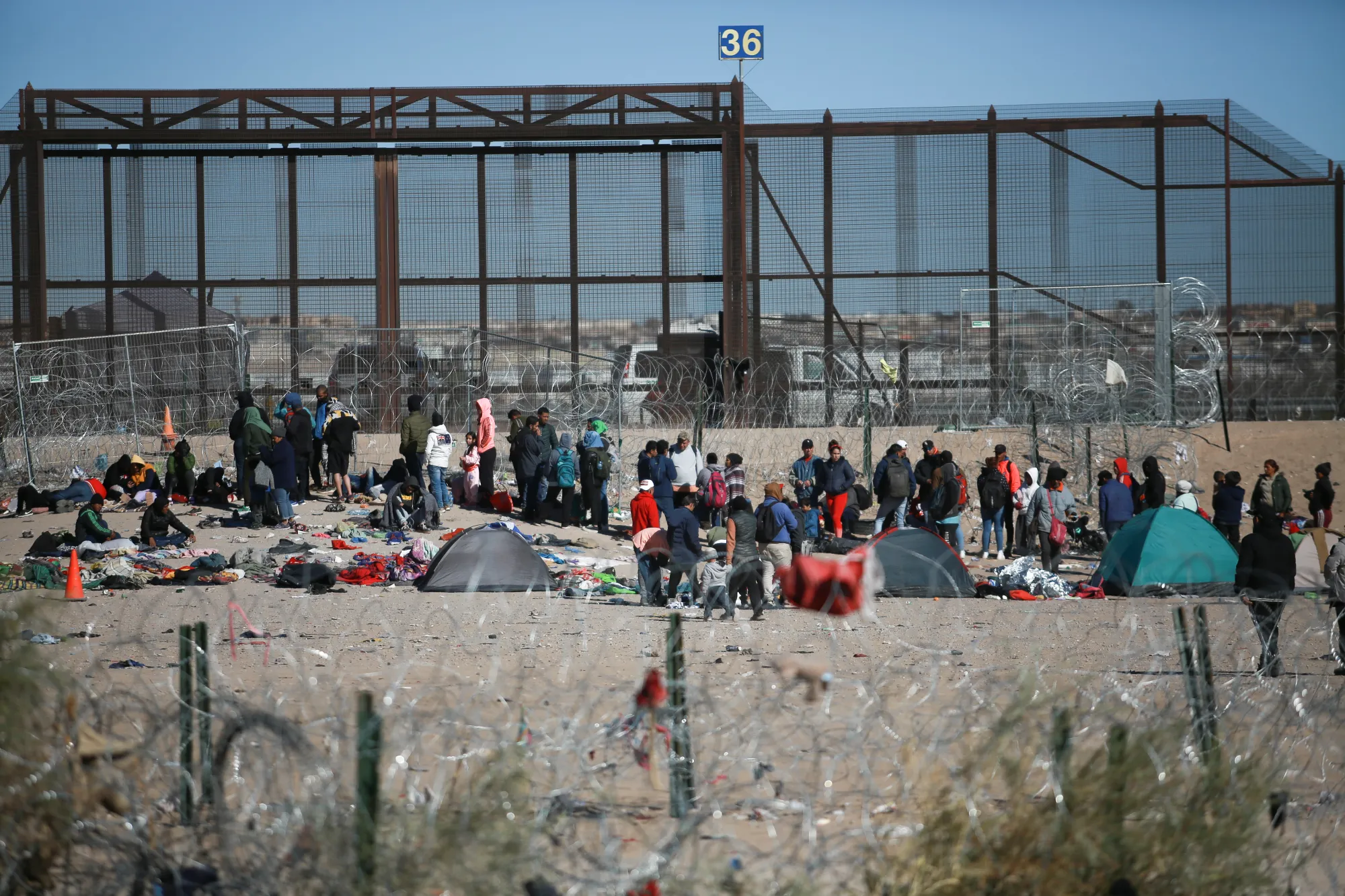
    One of the most common claims made by conservative commentators is that Joe Biden created an “open border” policy. The problem is that the actual numbers tell a very different story.

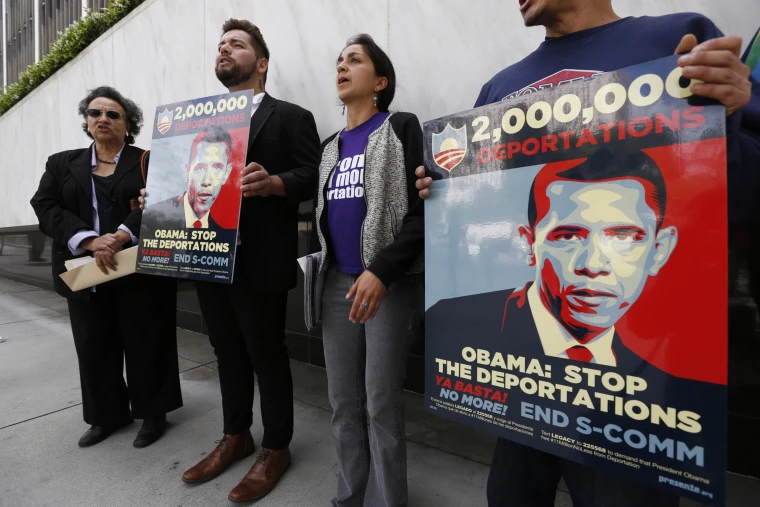
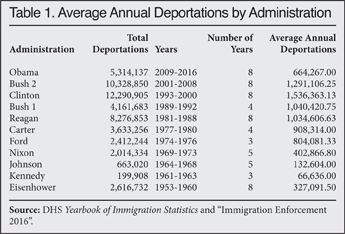
    According to data compiled by the Migration Policy Institute, the deportation numbers between Trump’s first term in office and Biden’s term in office are nearly identical (around 1.5 million people. In fact, deportations under Presidents Barack Obama and Bill Clinton were significantly higher than under Trump. Conservatives love to cite those comparisons, but rarely provide the context that would actually explain what those numbers mean.

    Rather than rehash arguments I’ve made many times before about who gets deported and why, it’s worth addressing the larger myth that keeps circulating: the idea that Biden somehow allowed unlimited immigration into the United States.

    For the first two years of Biden’s presidency, the country was still operating under pandemic-era restrictions that limited cross-border movement. These policies were largely a continuation of the restrictions implemented during the Trump administration. During that time, many asylum seekers from Central American countries such as El Salvador and Honduras waited at the border for years or were detained while their cases were processed.

    Allowing asylum seekers to enter the country after those restrictions eased was not an “open border” policy. It was the United States complying with its own asylum laws.

    Those laws exist for a reason. After the United States turned away thousands of Jewish refugees fleeing Nazi persecution in the 1930s—many of whom were sent back to Europe and ultimately died in the Holocaust—the country adopted legal frameworks intended to ensure that people fleeing persecution would at least have their claims heard before being turned away.

    Jewish refugees aboard the MS St. Louis in 1939. They were waiting in Havana, Cuba, just to be turned away by the United States and sent back to Nazi-occupied Europe, where many of them would be killed.

    In other words, Biden didn’t create open borders. He followed existing law.

    If Americans truly want fewer people migrating to the United States, we also need to confront a more uncomfortable truth: U.S. foreign policy has often contributed to the instability that drives migration in the first place. For decades, the United States has interfered in the politics and economies of countries across Latin America, Africa, and parts of Asia—sometimes installing authoritarian leaders or imposing sanctions and economic pressures that destabilize entire regions.

    When people leave their homes out of desperation, they are not doing it for fun. They are responding to conditions that often have deep historical and geopolitical roots.

    If we want fewer migrants at the border, addressing those root causes would be a far more honest place to start than repeating the politically convenient myth of “open borders.”

  • No, the Left Doesn’t Want Open Borders: Immigration Myths vs. Reality and What the Right Gets Wrong

    No, the Left Doesn’t Want Open Borders: Immigration Myths vs. Reality and What the Right Gets Wrong

    Despite how the gaggle of goofy, gaumless, good-for-nothing goobers on the other side of the political spectrum keep straw-manning the position of those of us on the left side of the political spectrum (liberals, progressives, and leftists), most of us do not desire, nor are we advocating for, completely open borders. We don’t want foreign criminals in this country, we don’t want terrorists to enter this country easily, and we don’t wish to ruin our national ecology through the unchecked introduction of invasive species of plants, animals, fungi, and diseases. These are some of the reasons why borders exist and why they are regulated.

    However, we do not want to excuse or promote xenophobic ideas and policies. We do not engage in the wholesale demonization of segments of people because we find their looks, fashion, customs, diets, religions, or whatever too foreign for our tastes. We are not holding on to a fictionalized notion of the United States being the product of one dominant, default, and exemplary culture, devoid of any influence of the various other people who contributed to the cultural, intellectual, and economic capital of this melting pot and/or mosaic of a nation.

    In other words, many other people and I on the political left welcome immigrants, visitors, and migrants from all over the world, from different walks of life, whether from a developing country or from a wealthy, advanced, and developed nation. If we are indeed that “shining city on a hill” that Ronald Reagan talked about in his 1989 farewell address, then we would like to share our freedom, prosperity, opportunities, culture, and technology with people from the rest of the world who yearn for the freedom, opportunity, and prosperity that somehow eluded them in their home countries and that our nation can provide. After all, this is a country of mostly colonizers, enslaved or indentured labor, and immigrants living on the stolen ancestral land of the collective victims of one of the worst genocides in human history. I don’t say this to be facetious, contrarian, indignant, or self-righteous. That is not my point. I say this to illustrate that if there were a rigid enforcement of borders 400 years ago, the only people that would be here are those currently mostly forgotten people who make up 1% – 2 % of the population, many living in conditions worse than those of the urban slums that my people complain about, and who are routinely mistaken for foreigners themselves in some very disturbing twist of irony.

    The truth is that immigrant populations add to our overall economic prosperity. They are usually leaders in the various past innovations that made this country technologically advanced and prosperous. These people include Alexander Graham Bell, Albert Einstein, Nikola Tesla, Levi Strauss, and many others from various parts of the world (I focused more on the names that most people know). A study published by the Cato Institute a few days ago stated that immigrants paid trillions of dollars more in taxes than they received in benefits from 1994 to 2023. According to another study from 2024 by the Institute on Taxation and Economic Policy (ITEP), UNDOCUMENTED IMMIGRANTS alone paid close to $100 billion in federal, state, and local taxes in 2022. Most of that money went towards federal taxes (over 60%). This is money that they cannot receive in individualized social welfare programs like food stamps due to their immigration status.

    Despite the things that you’ve heard from your xenophobic family members, friends, and/or neighbors, despite what you watched on poorly produced internet documentaries with questionable methods, drawing unethical conclusions, and despite the cynical demagoguery of conservative (and some liberal) politicians, political pundits, and social media content creators, immigrants aren’t fleecing this country like hordes of swarming locusts or being given more opportunities and business loans than native born Americans. I already argued on how the former isn’t true, now the latter.

    According to an article by NBC News, immigrants have higher rates of entrepreneurship than native-born Americans. Yet immigrants get rejected for business loans at rates higher than their native-born counterparts. This is according to small business loan statistics from the Bankrate website. It is tougher to get grants and other benefits from the government if you are an immigrant.

    So why are there so many immigrant businesses? Immigrants usually have more of an entrepreneurial drive than native-born Americans. Having personally traveled to underdeveloped nations and spent time there, I saw firsthand how many people were forced to be creative to make money because the number of good-paying jobs was limited, along with the prospect of post-secondary education (education after high school). I saw people running small stores, barber shops, beauty salons, and restaurants out of their homes.

    According to the Cato Institute, immigrant groups consume and spend less than native-born Americans and rely less on credit. This is because the availability of credit is relatively low in their home countries. Thus, people have to save their money to buy homes, cars, or start businesses. They learn to do more with less while deferring their gratification until a later time.

    The answer to our immigration problems is not to trample all over our Constitution, one of the things that make this country special, to criminalize and commit acts of state-sponsored terrorism on people whose only crime was to leave the homes that they love due to desperation. Nor should we force adherence and assimilation into American values that are approved by only a small section of Americans who feel that their childish jingoism, denial, and hiding of uncomfortable historical facts and occurrences is the only way to truly “love” America. Their narrow-minded ideas of love, patriotism, and American culture are laughably juvenile and display a sickening self-aggrandizing narcissism. The fact that they perform this horrid bigotry in the name of Christianity is one of the biggest affronts and stains on our image. I personally don’t care whether individuals or groups of immigrants adopt a conservative philosophy or a progressive one. It doesn’t matter to me. All I care about is whether they are actively trying to harm the people of this country over grievances that have little to do with them, besides being a part of the propagandized masses being indoctrinated by political, business, and media interests. Acts of terrorism by foreign actors don’t make things better. They make them worse.

    But even that is an overhyped, xenophobic idea. Native born Americans commit most acts of terrorism, including lethal terrorism, in the United States. These are usually white males with right-wing ideologies. This is according to the Center for Statistics and International Studies (CSIS), Vox, Penn State University, and the Anti-Defamation League (ADL).  

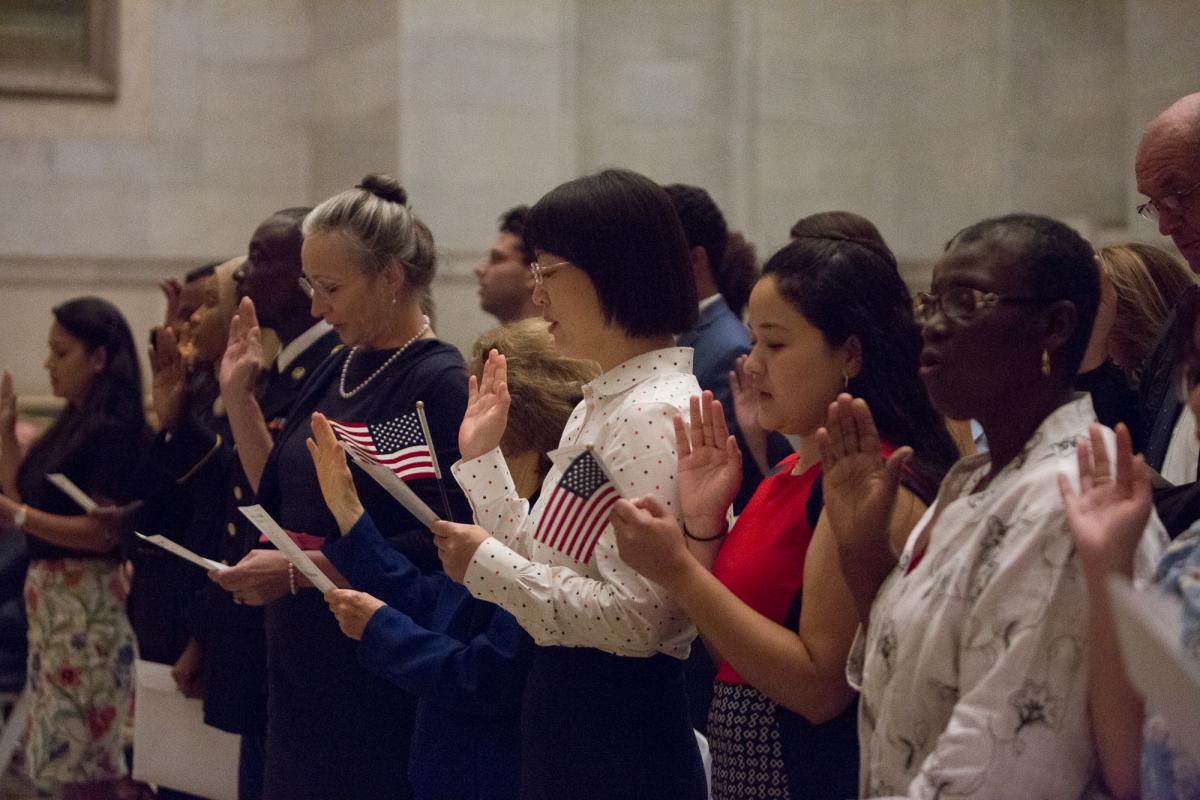
    Those of us on the left are not asking for chaos or lawlessness at the border. What we want is an immigration system that is humane, rational, and consistent with the constitutional principles that make this country worth defending in the first place. Citizenship should not require people to navigate an unnecessarily cruel maze of bureaucracy, spend enormous sums of money, or prove their loyalty by parroting a narrow and childish form of jingoism.

    Patriotism in a democratic society cannot mean blind obedience to a single vision of what America is supposed to be. The right to criticize, challenge, and improve our country is exactly what separates the United States from the authoritarian governments many immigrants are fleeing. If you truly love this country, then you should understand why people around the world see it as a place of opportunity and refuge. Welcoming those who seek freedom and a better life is not a betrayal of American values. It is one of the clearest expressions of them.