Tag: culture

  • Racism Did Not Disappear. It Learned to Dress Better.

    Racism Did Not Disappear. It Learned to Dress Better.

    I have shared videos of Ku Klux Klan members and other racists explaining what they believe on my Facebook page. What interests me is how familiar some of those beliefs sound once you look past the robes, the slurs, and the willingness to say the quiet part out loud.

    The KKK does not represent every American. Nor should one town, one interview, or one group stand in for the whole country.
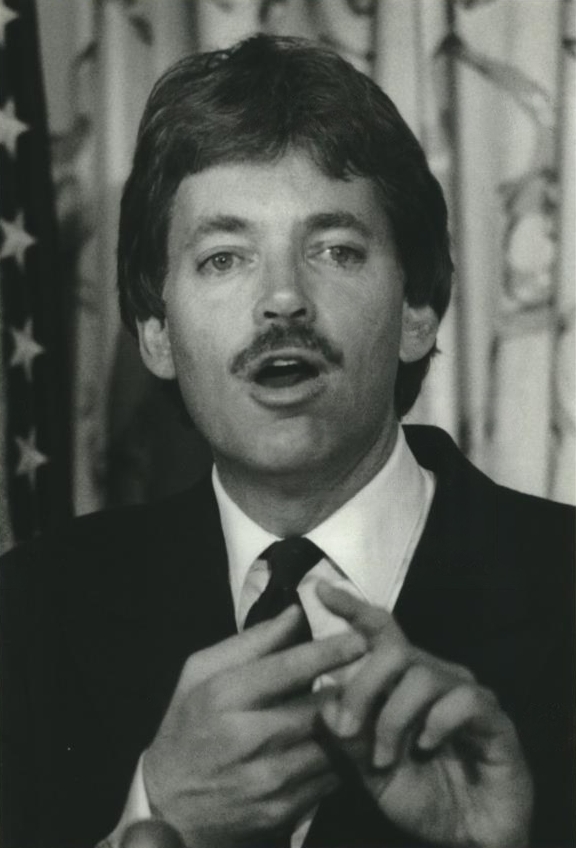
    A photo of David Duke from 1989.
    David Duke wanted to make the KKK more acceptable to theAmerican public by presenting a more polished and white collar image of the group.

    But that does not mean the ideas expressed in those videos exist only among people who openly identify as racists.

    The belief that Black people are inherently less capable, less civilized, more dangerous, or less deserving can appear in different forms and degrees. Someone can reject the Klan and still accept assumptions that have a great deal in common with its worldview.

    That is what I want people to examine.

    For generations, racism helped justify conquest, enslavement, colonial exploitation, and exclusion. People dressed those justifications up as science, religion, common sense, and concern for civilization.

    The cruelty came with an explanation. The explanation made the cruelty easier to defend.

    We still need to pay attention to that process.

    Racism can become so familiar that people stop recognizing it unless it appears in its most extreme form. They know a hood and a burning cross when they see them. They know an explicit slur when they hear one.

    But a polished commentator making insinuations about Black intelligence, criminality, or belonging? Suddenly, we are supposed to consider whether that person is simply a misunderstood truth-teller.

    Apparently, racism becomes harder to recognize when the speaker has a studio, a suit, and a respectable vocabulary.

    A photo of Nick Fuentes.
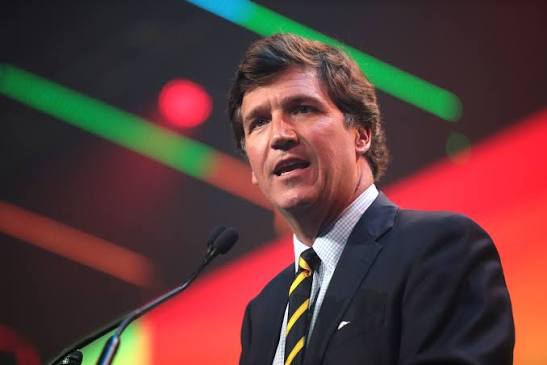
    Nick Fuentes is literally a self-professed Nazi (or Nazi sympathizer) who can get away with much of what he says, and was invited to Donald Trump’s mansion for dinner because he isn’t seen in the uniform of White supremacy.

    I am tired of the idea that avoiding the N-word automatically makes an argument free of racism.

    What is the argument asking us to believe? How is the evidence being used? What context has been left out? Is a problem being examined, or is an entire people being assigned a negative character?

    Those questions matter more than whether the speaker remembered to avoid a slur.

    Statistics deserve scrutiny too. A number can be accurate while the story built around it is misleading. Selective comparisons, missing context, and sweeping conclusions can turn data into a tool for reinforcing prejudice.

    If someone uses a statistic to suggest that Black people are inherently defective, the presence of a number does not make that suggestion objective.

    A spreadsheet does not wash racism out of an argument.
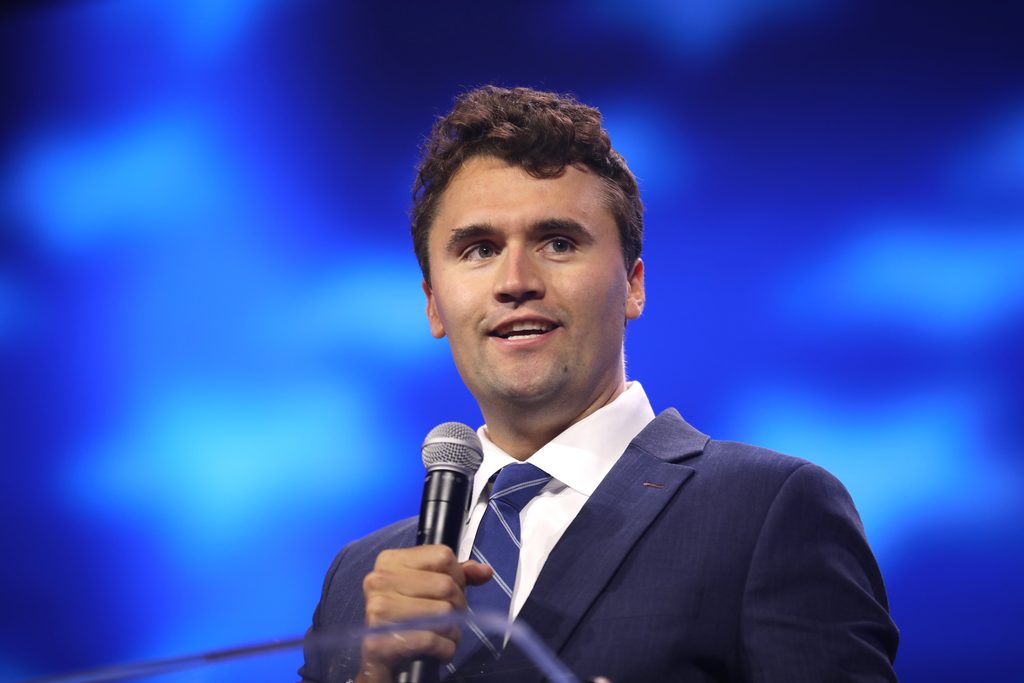
    A photo of Charlie Kirk holding a microphone.
    Charlie Kirk’s “truth” was nothing more than racism using cherry-picked and out-of-context statistics. These are often quoted on his podcast and while debating undergrad students on college campuses.

    One of the things I wanted people to notice in those videos was the date.

    When were these people saying these things? When were the incidents happening? How long after the major civil-rights victories were communities still facing intimidation, exclusion, and openly racist hostility?

    Too many people talk as though the Civil Rights Act of 1964 and the Voting Rights Act of 1965 closed the book on racism.

    Those laws were extremely important. But passing a law did not instantly change everyone’s beliefs, dismantle every discriminatory practice, or erase the advantages accumulated under the old arrangements.

    Some attitudes changed. Some people changed. Others learned to conceal what they believed or express it in language that gave them plausible deniability.

    We should recognize progress without pretending that it finished the job.

    That is also why I keep returning to the contrast between how Barack Obama and Donald Trump have been judged.

    I am not arguing that every criticism of Obama was racist. I criticized him myself. His policies and decisions deserve examination like those of any other president.

    But I watched people demand that he be endlessly calm, polished, articulate, restrained, and reassuring—and still treat him as illegitimate, threatening, or fundamentally out of place.

    He could meet their stated standards and still fail the test.

    Then I watched some of those same people celebrate Trump’s belligerence, insults, and disregard for restraint as signs of strength.

    Conduct they would have treated as disqualifying in Obama became proof that Trump was authentic and willing to fight.
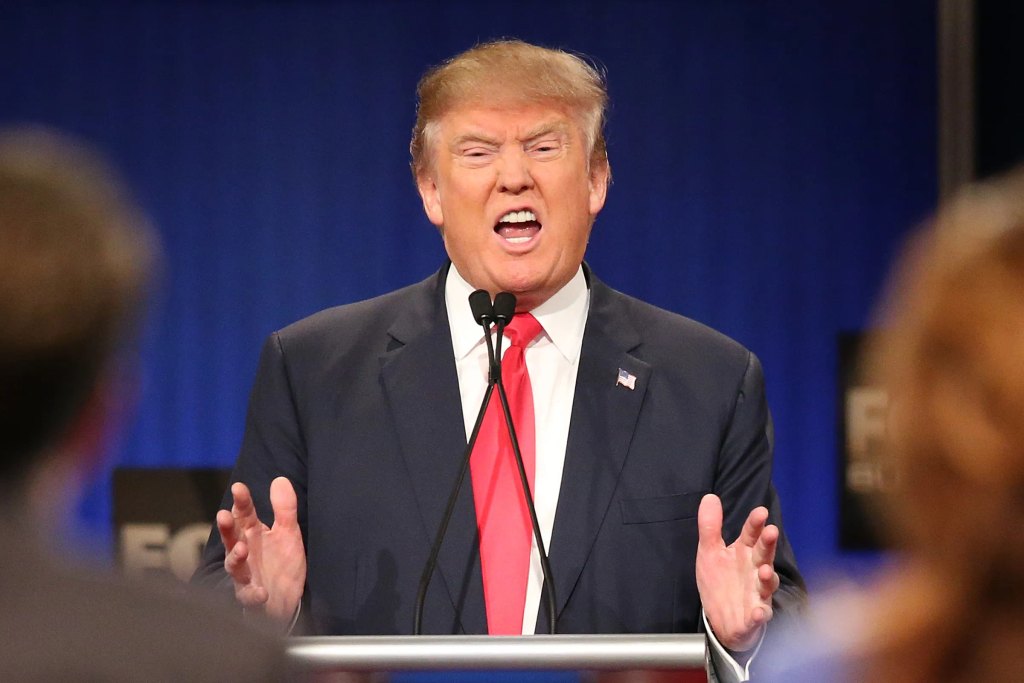
    A picture of Donald Trump at a podium looking angry.
    Donald Trump can get away with egregious behavior that Obama is not able to get away with. Obama had to mostly remain stoic during his presidency, while Trump can be angry and belligerent.

    What changed—the standard, or the person being judged?

    That question deserves more than a reflexive accusation that I am “making everything about race.”

    I do not need to claim that every measure of the country’s condition was better under Obama to make this point. Presidents should be judged on evidence, and different outcomes require different comparisons.

    My concern here is the permission some people grant one leader while demanding constant reassurance from another.

    If restraint is essential to presidential character, it should matter when Trump lacks it. If inflammatory rhetoric is dangerous, it should not become admirable simply because the speaker is someone you support.

    And if intelligence, preparation, and dignity are the standards, meeting them should count regardless of the president’s race.

    Too often, that consistency disappears.

    This is why the openly racist videos matter to me. They make certain assumptions easier to hear. Once we recognize those assumptions in their bluntest form, we should be willing to examine where else they appear.
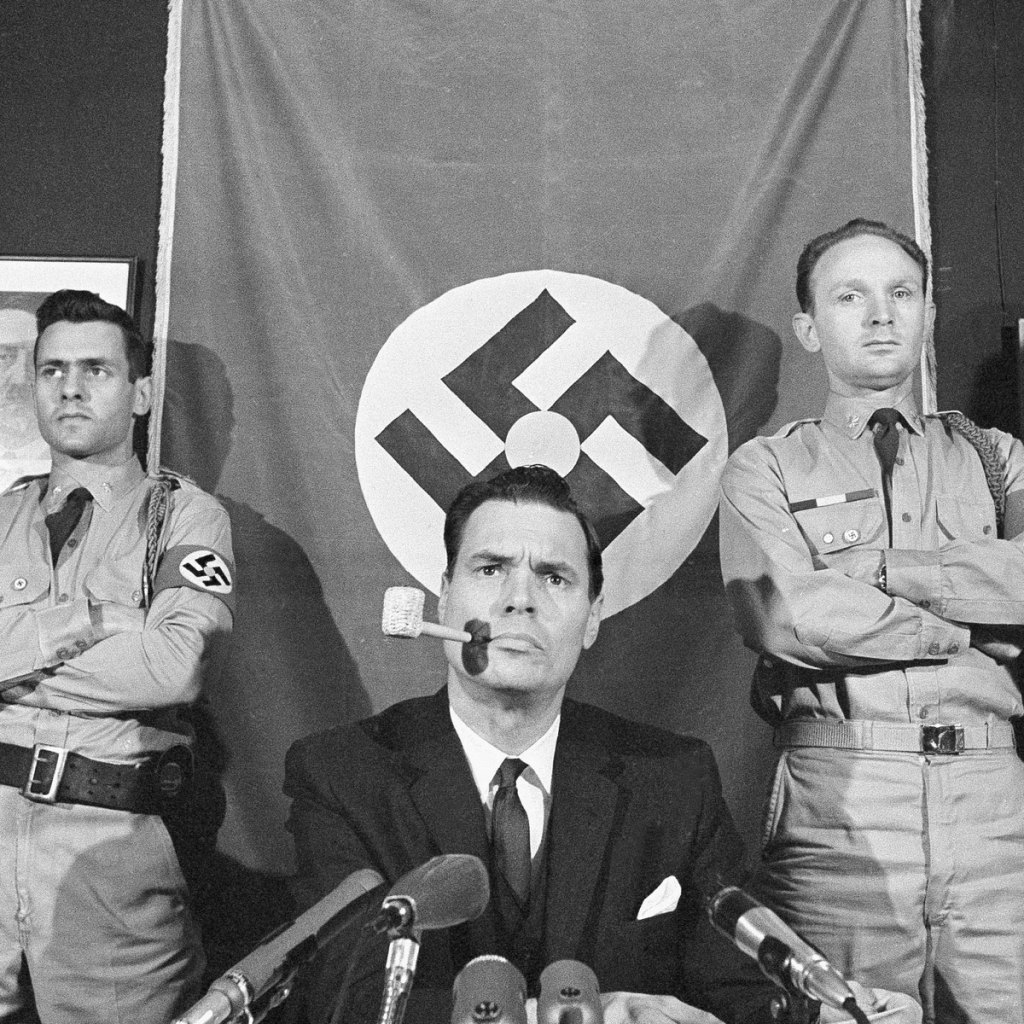
    A picture of George Lincoln Rockwell wearing a suit and tie while flanked by two White men wearing Nazi uniforms. A Nazi flag hangs behind them.
    George Lincoln Rockwell was the founder of the American Nazi Party (ANP). He was a very articulate man who attended an Ivy League University (Brown University). Often, he would dress in Nazi uniforms but he would often dress in a suit and speak while smoking his signature pipe. Often, his message wasn’t necessarily antagonistic or violent, but they were exclusionary and racist.

    The delivery may be smoother. The speaker may deny any prejudice. The audience may insist that it is all about policy, statistics, or “telling the truth.”

    But we still have to examine the substance.

    Racism does not need a hood, a slur, or a confession to operate.

    And refusing to recognize it until someone supplies all three gives far too many people permission to keep doing it.
  • Black Women Do Not Owe You Proof of Their Womanhood

    Black Women Do Not Owe You Proof of Their Womanhood

    I have absolutely no respect for people who spread the racist and transphobic conspiracy theory that Michelle Obama was born male.

    None.

    This lie has been debunked repeatedly, yet people keep recycling it as though repetition will turn it into evidence. Michelle Obama was born Michelle LaVaughn Robinson. There is no credible evidence for the claim that she was born “Michael” or assigned male at birth.

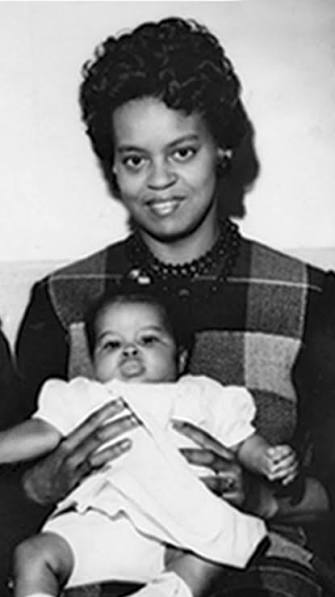
    A picture of Michelle Obama as a baby being held by her mother, Marian Robinson.
    A picture of Michelle Obama as a baby.

    But this is about more than one lie about one woman.

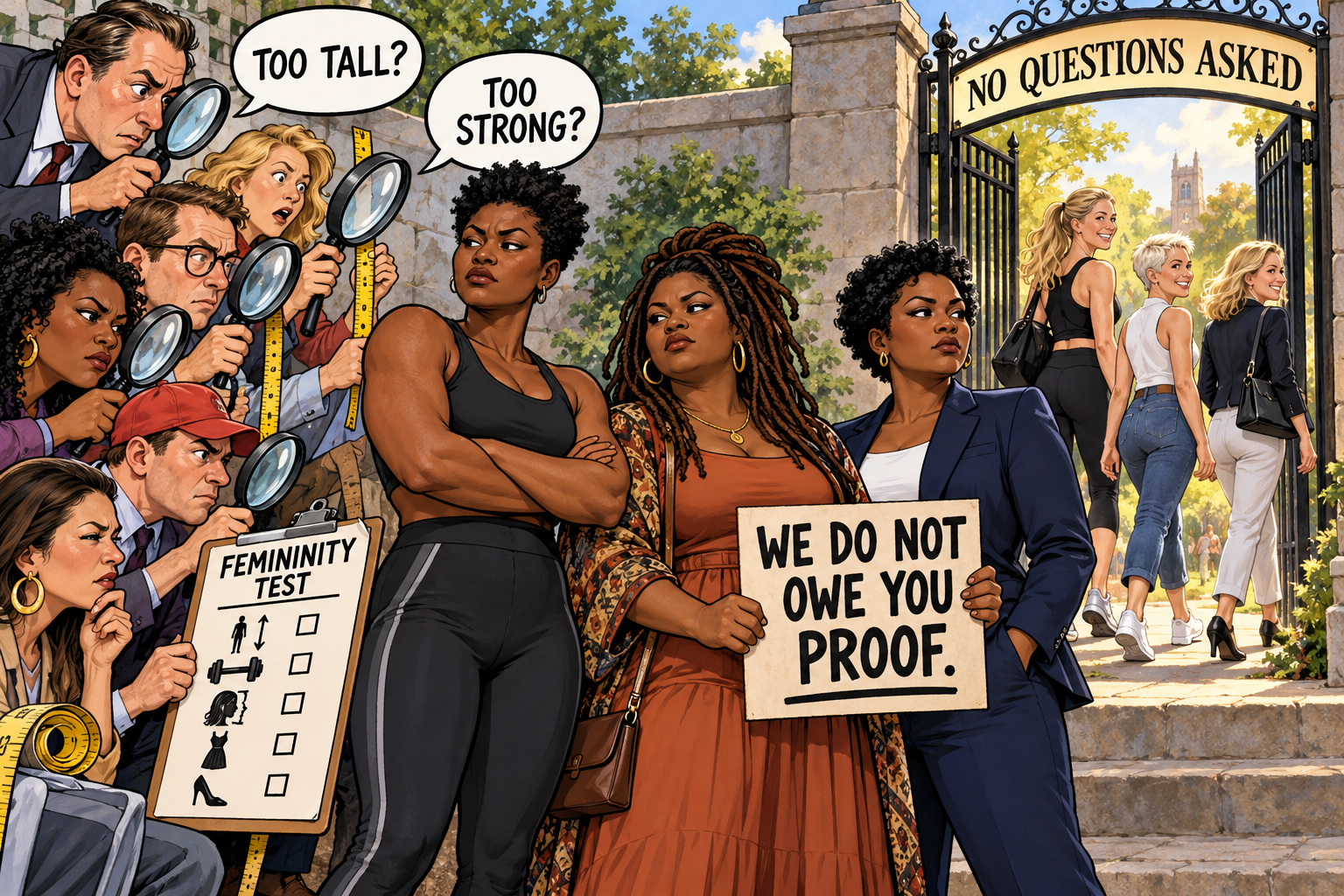
    It is about the willingness to treat Black women’s bodies, voices, and appearance as public property. Apparently, anyone with an internet connection gets to inspect them and decide whether they qualify as women.

    And some Black men participate in this bullshit when they should know better.

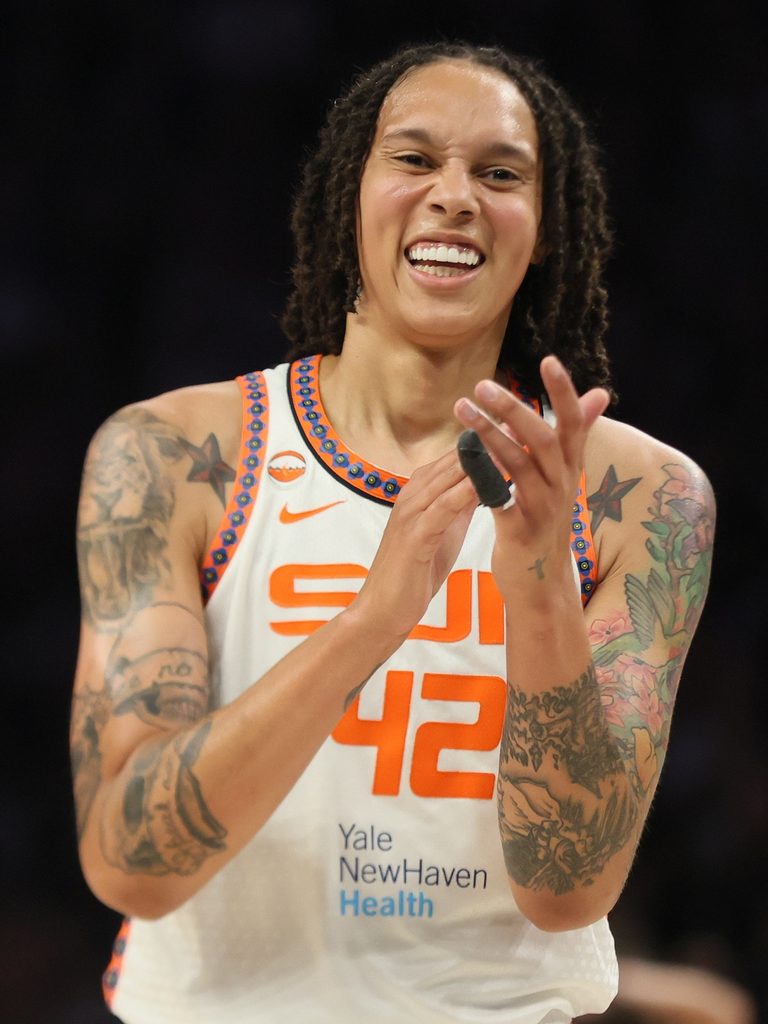
    A photo of Brittney Griner.
    There are few better examples of Black women’s sex and gender being questioned than Brittney Griner. Griner is the subject of some very ugly conspiracy theories and assumptions. Griner is tall, has a deep voice, has no pronounced breasts, and doesn’t conform to traditional gender roles. And all of those things are ok and don’t take away from her womanhood.

    Black women get called “masculine” for being tall, strong, outspoken, athletic, angry, or unwilling to make themselves small. A deeper voice becomes suspicious. Short hair becomes suspicious. Muscles become suspicious.

    Even confidence becomes suspicious.

    Women of other races can possess those same characteristics, but Black women are too often treated as though they have violated some rule of womanhood by possessing them.

    Who made that rule? And why are we helping enforce it?

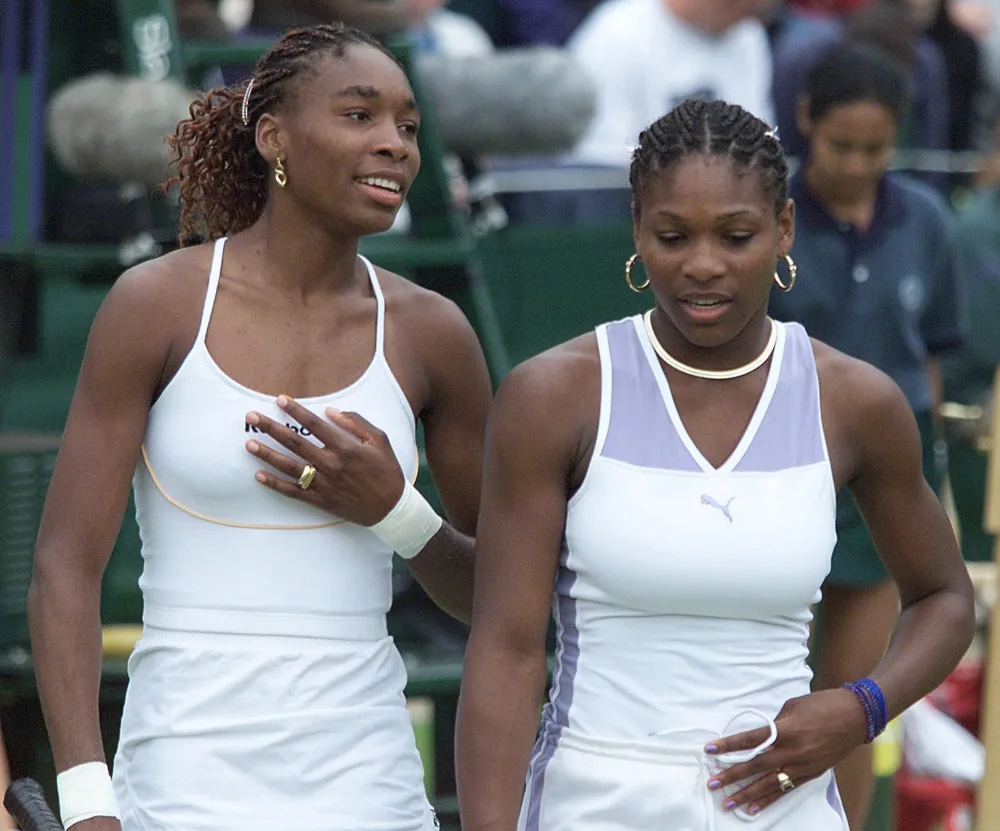
    A picture of the Williams Sisters.
    Venus and Serena Williams were attacked for their appearance, their athleticism, and their muscular build.

    Think about the scrutiny directed at Venus and Serena Williams. Think about Brittney Griner and Grace Jones. Think about how quickly people turn a Black woman’s strength, stature, or appearance into an accusation.

    The details of each woman’s experience differ. But the impulse to inspect, mock, and police Black women’s bodies is familiar as hell.

    I hear echoes of Malcolm X’s criticism of the disrespect and lack of protection Black women face. Decades later, we are still watching people turn that disrespect into entertainment.

    And the supposed defense of Michelle Obama sometimes falls into the same trap.

    People point to her children, her marriage, her clothes, or how feminine she looks, as though the right combination of evidence will finally satisfy the people attacking her.

    We should challenge the lie. But we should also challenge the premise.

    A woman does not have to give birth, wear dresses, have a particular body shape, or meet somebody’s beauty standard to deserve respect.

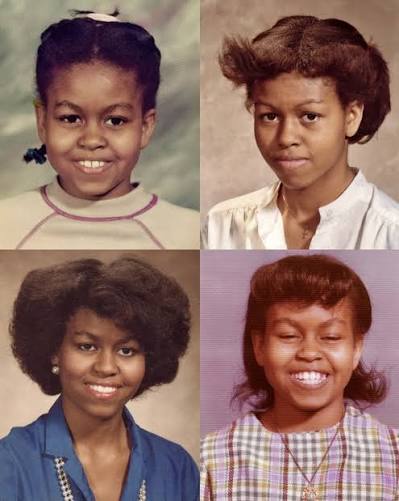
    A small collage of pictures of Michelle Obama as a young lady.
    Picture of Michelle Obama throughout her young years.

    Michelle Obama does not need an exception made for her height or her facial features. There is nothing about those things that needs explaining away.

    Nor should defending her require treating transgender women as an insult she must be separated from. The conspiracy is false, and its use of trans identity as a weapon is part of what makes it ugly.

    Being transgender is not a disgrace. Lying about someone’s identity to humiliate them is disgraceful.

    The people spreading this story often try to demean Barack Obama at the same time. In their telling, supposedly exposing his wife would somehow diminish his manhood.

    That tells us something about the prejudices doing the work here. Black womanhood becomes something to ridicule. Black manhood becomes something to undermine. Transgender identity becomes something to sneer at.

    And the whole thing gets passed around as a joke.

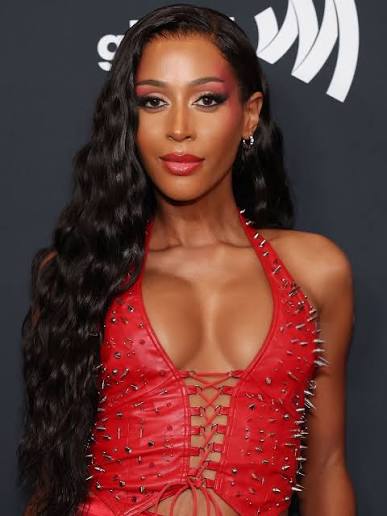
    A photo of Isis King.
    Isis King is a trans woman who is an actress and a model. One doesn’t have to be born anatomically female to be feminine.

    What, exactly, is funny?

    The contempt for Black women? The attempt to humiliate a Black family? The idea that somebody’s gender can be determined by studying a photograph and making shit up?

    I do not find any of that clever.

    You do not have to like Michelle Obama. You do not have to agree with her politics, admire her speeches, buy her books, or defend her husband’s administration.

    There are legitimate things to discuss and criticize.

    But disagreement does not entitle you to invent a different identity for her or subject her body to some imaginary gender inspection.

    And being Black does not make participation in that harassment less anti-Black.

    If you are a Black man spreading this lie, ask yourself why you are so eager to help people degrade a Black woman. Ask yourself whose approval you are seeking and what, exactly, you think our community gains from your participation.

    The same goes for Black women who join in. Familiarity with this kind of scrutiny should give us more reason to reject it.

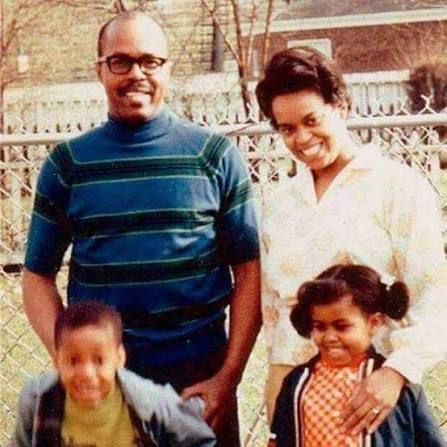
    A photo of the Robinson family when Michelle Obama was a little girl.
    Michelle Obama as a child with her brother and her parents.

    I am not going to insult somebody’s mother, grandmother, or partner to make that point. Those women do not deserve to have their appearance dragged into this either.

    That is the whole damn problem: too many people think a woman’s appearance is fair game whenever they want to win an argument.

    It needs to stop.

    Black women do not owe you a particular kind of femininity. They do not owe you access to their private lives. And they do not owe you proof that they are women.

    Criticize what Michelle Obama actually says and does if you have an argument to make.

    But stop spreading this racist, transphobic bullshit and pretending it is political commentary.

  • Policies Matter. Actions Matter More.

    Policies Matter. Actions Matter More.

    Let me explain something again for the liberals who keep confusing progressive politics with a cult of personality.

    Ahem.

    We do not give a fuck about worshipping politicians. We care about what they do.

    If Trump delivered humane, progressive policies that materially improved people’s lives, I would acknowledge those accomplishments. That would not require me to excuse everything else about him.

    When Biden was president, I wanted him to succeed. I wanted an administration willing to meet the scale of the problems facing us. Give us the ambition associated with FDR’s New Deal or LBJ’s Great Society (without the devastating and unjust war, of course), and I would have plenty to praise.

    But wanting a president to succeed does not mean pretending that everything they do is enough.

    And voting for someone does not mean surrendering the right to criticize them.

    That was true when I wrote the original version of this post. It is still true now.

    I am tired of people treating progressive demands as unreasonable while expecting us to accept political responses that fall short of the conditions we are living through.

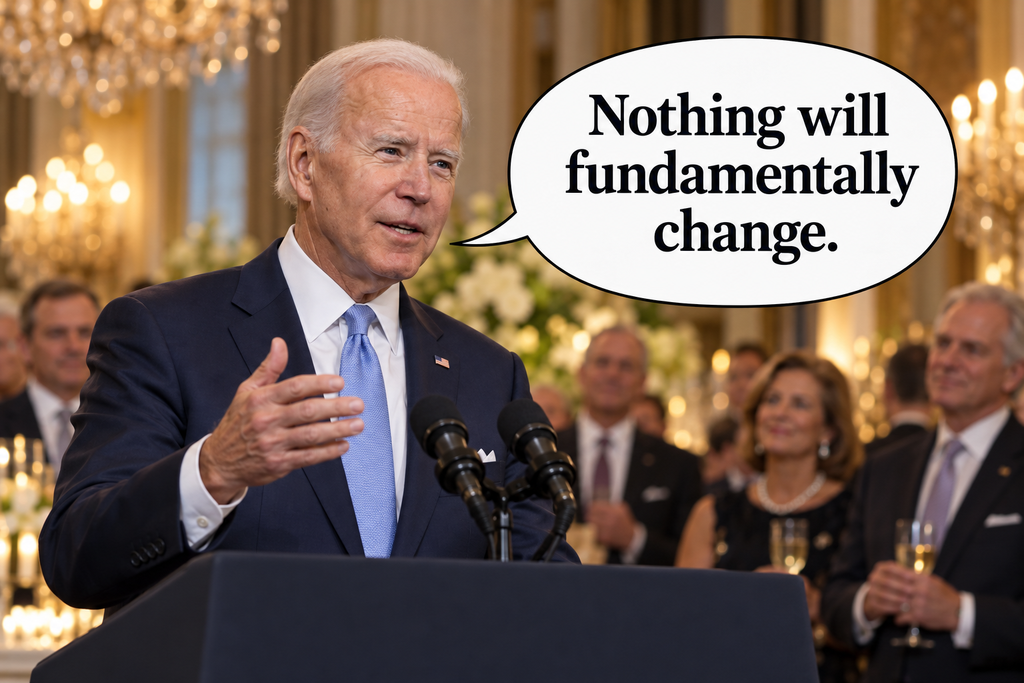
    An AI-generated image of Joe Biden speaking at an expensive fundraiser telling the donors that nothing will fundamentally change.
    Yes, Biden actually said this to a group of wealthy donors behind closed doors. But he governed surprisingly to the left (even by a little) than anyone who has occupied that position since Jimmy Carter, in my opinion.

    People cannot afford housing. They struggle to get healthcare. They work themselves into exhaustion and still cannot establish financial security. Racism continues to shape their opportunities and treatment. Environmental threats keep demanding action.

    Then we get told to be patient, lower our expectations, and remember how much worse the other side would be.

    We know the other side is worse. What the fuck are you going to do about the problems we elected you to address?

    That question should not cause this much damn discomfort.

    I am not opposed to every smaller improvement. If a policy helps people today, that matters. What I reject is treating incrementalism as the permanent ceiling on what we can demand.

    A partial victory should give us something to build on. It should not become an excuse to declare the work finished or tell the people who are still struggling that they are asking for too much.

    Too often, “be realistic” means accepting that the people with power will remain comfortable while everyone else adjusts to insecurity.

    I do not accept that as a political goal.

    And no, Bernie Sanders is not a messiah.

    He became important to many of us because he gave national attention to policies and grievances that other politicians dismissed. He spoke about healthcare, wages, education, corporate power, and the lives of people who felt unseen.

    That is why we supported him. His appeal came from what he advocated and what he appeared willing to fight for.

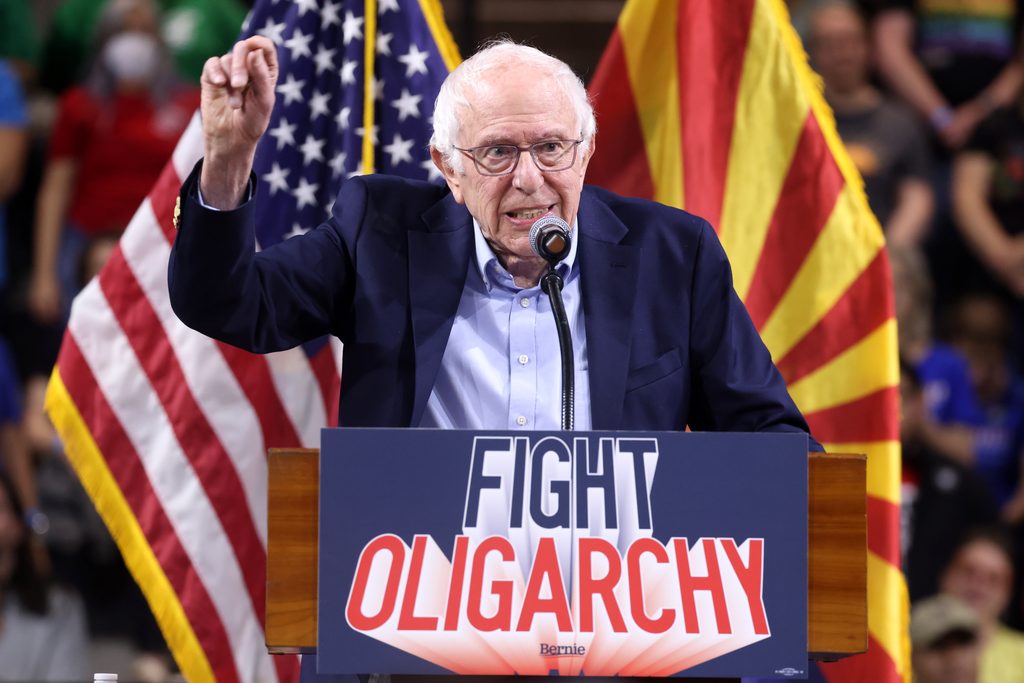
    A photo of Bernie Sanders with "Fight Oligarchy" on his podium.
    My appeal to Bernie Sanders was solely based on policies that Sanders fights for.

    Sanders is fallible. He has disappointed people on the left, including me. When he does, he gets criticized too.

    The same should apply to Alexandria Ocasio-Cortez, any other progressive politician, and whoever comes next. Nobody gets to substitute their name or reputation for accountability.

    If a politician abandons the commitments that earned our support, we have every right to challenge them. That is political consistency.

    I wanted Biden to be a good progressive president. I wanted him to deliver. I wanted the people who voted for him to have something meaningful to show for it.

    I also wanted the United States to confront its racism. Wanting that did not require me to pretend we had already achieved it.

    The same principle applies to an administration. I can want it to succeed and still refuse to accept inadequate responses to real problems.

    People’s lives cannot be managed as though the goal is to keep them just hopeful enough to make it to the next election cycle.

    They need relief. They need security. They need power over the conditions shaping their lives.

    And they need more than a lecture about how complicated everything is.

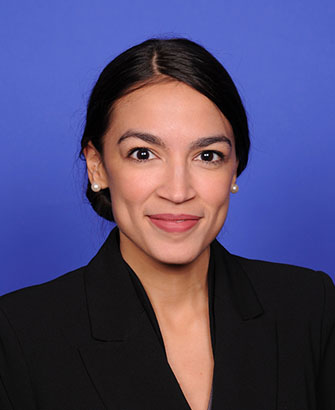
    I like Alexandria Ocasio-Cortez (AOC). However, she is not above criticism. She needs to be judged on the policies that she fights for and her voting record, not on her looks, her former job, or slander about her intelligence.

    Yes, governing is complicated. There are institutional barriers, hostile courts, narrow majorities, and opponents who will obstruct whatever they can. Those things deserve serious consideration. They really do.

    But an explanation should help us understand what happened, what was attempted, and what needs to change. It should not shut down every question about whether leadership could have done more.

    I hate excuses that make no logical sense. I hate watching people dodge simple questions about matters they are supposed to understand. I hate the double-speak that turns failure into strategy and criticism into disloyalty.

    And I cannot stand the dismissive attitude toward corruption, donor influence, and the conflicts between what politicians promise voters and what they protect once they hold office.

    Do not tell me I am being unreasonable for noticing those conflicts.

    Policies are important. Policies are important. Policies are very important.

    And actions are more important, especially when the country is watching how politicians move.

    A platform tells me what you claim to support. Your actions tell me what you are willing to pursue, defend, compromise, or abandon.

    That is what I am watching and paying the most attention to.

    When Biden was president, many of us criticizing him had voted for him in the general election. We understood the choice before us. We made that choice.

    But our votes were not promises to remain silent.

    We did not agree to applaud every compromise, excuse every disappointment, or defend the administration against the very people whose needs it was supposed to serve.

    We voted to put someone in office. Then we expected them to do the work.

    That standard survives Biden’s presidency. It applies to the current administration, to Democratic leadership, and to every future candidate asking for our support.

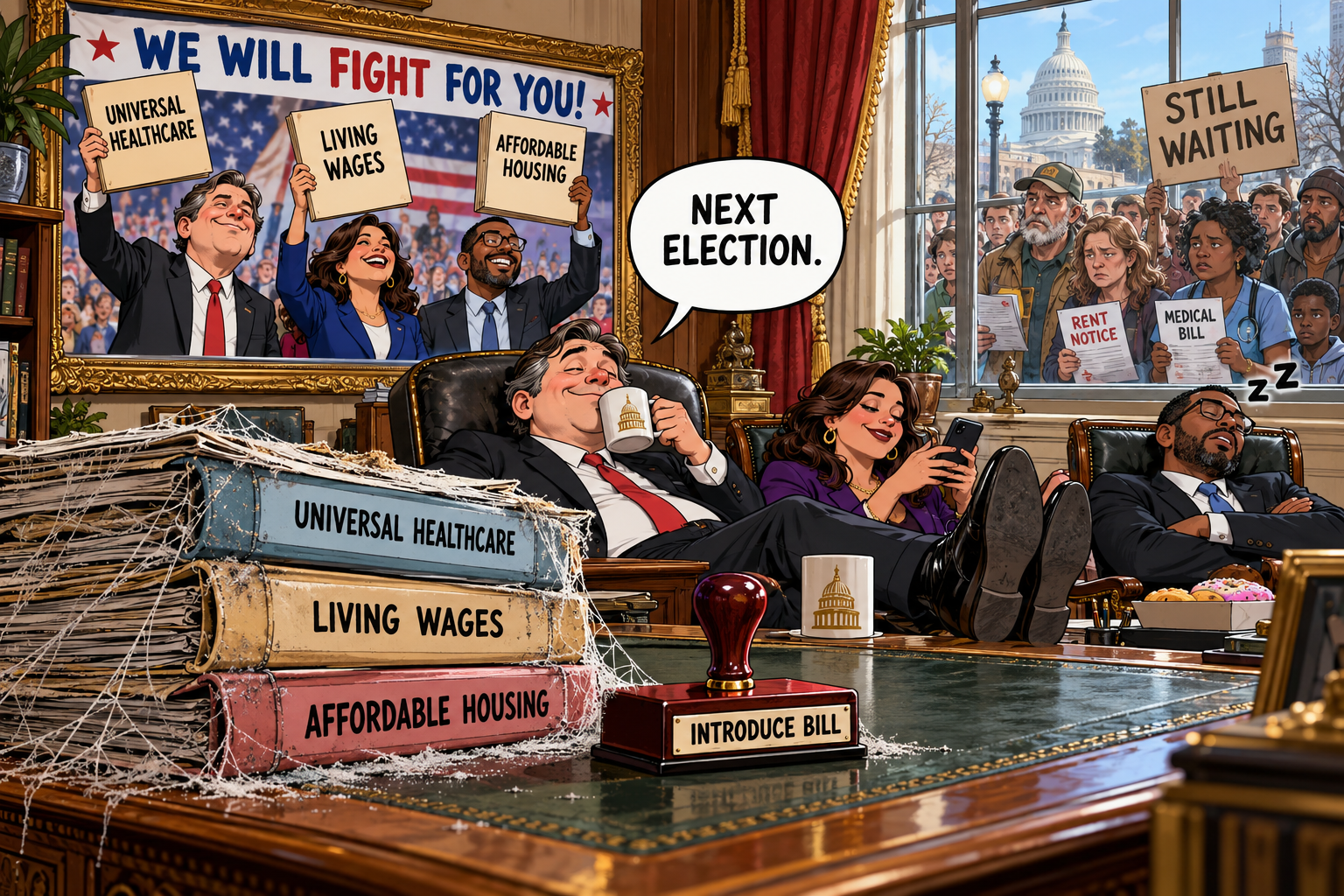
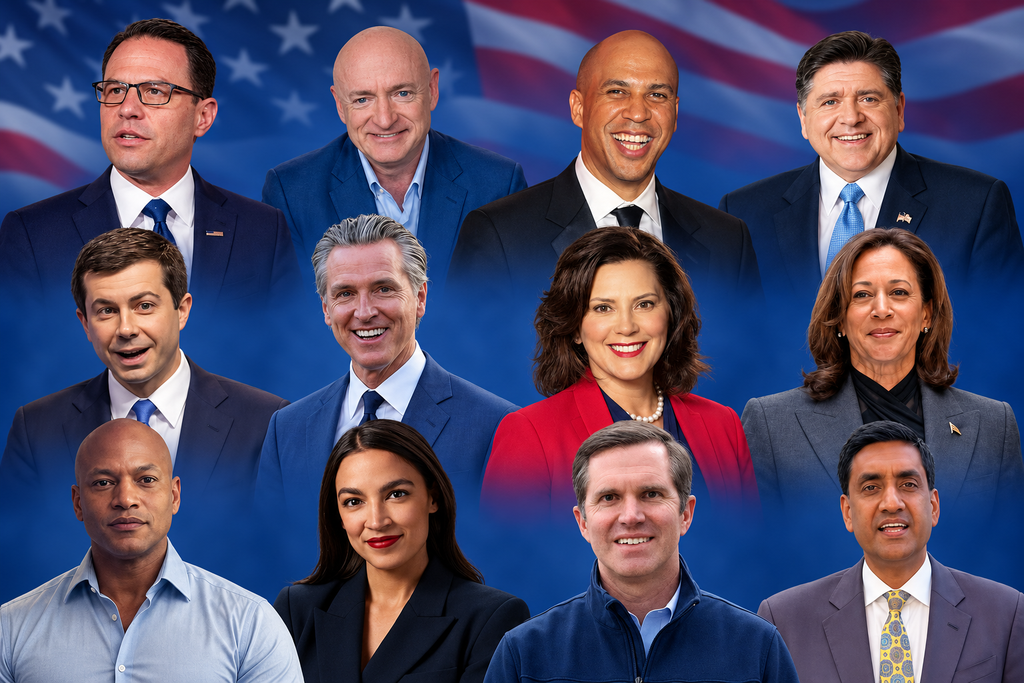
    An AI-generated Collage of potential 2028 Democratic Party presidential candidates.
    At the time that this was written (well, rewritten) and published in this Blog, all of the people that you see here are speculated to seek the 2028 Democratic Party nomination for president. There are some that I like. There are some that I don’t like. Race doesn’t matter. Looks don’t matter. Name recognition doesn’t matter to me. What matters are the policies that help American people and end wars. Any one of these people could get my vote if they are advocating for things that align with my personal politics and morals.

    You are not owed our devotion. You are accountable for what you do with our votes.

    We have to keep holding their feet to the fire. Organize. Ask the questions. Make the demands. Recognize the gains, and keep pushing where the work falls short.

    Because if we stop demanding accountability, the people in power have every reason to keep giving us less… and expecting us to thank them for it.

  • Black Liberation Requires Black Action

    Black Liberation Requires Black Action

    No one is the savior of Black people except Black people. And even then, only a few of us are dedicated to the upliftment and liberation of Black people. This is why we shouldn’t count on other people to rescue or even respect us. This is why, when I see ADOS and FBA fighting other Black folks over imaginary money that we may never get, I shake my head.

    Reparations, although owed, will not help us. Black capitalism will not help us collectively. Begging White people will never grant us respect, liberation, and self-determination. What is needed is for Black people to unite. Black people need education (and not just in a few subjects) to become engineers, computer programmers, architects, medical doctors, and much more. Our aspirations cannot all be about being an entrepreneur, getting “the bag,” and living a “soft life.” Ultramaterialism and vulgar displays of wealth do nothing for our people as a whole.

    The point is that we have to roll up our own sleeves. We have to clean up our own streets. We have to build and support our own schools. We have to build our own business hubs. We have to discipline our own. We need our own media. This is not about exclusion. This is about empowering ourselves.

    This was the message of people like Malcolm X. The same people who love to quote-mine Malcolm X to attack Black liberals, progressives, and leftists conveniently ignore Malcolm X’s overarching message of Black self-determination and liberation.

  • America’s Racial Problem Is Not in the Past, And I’m Tired of People Pretending It Is

    America’s Racial Problem Is Not in the Past, And I’m Tired of People Pretending It Is

    One of the most frustrating parts of talking about racism in America is how often people act as if it is either exaggerated, isolated, or long behind us. Every time I say that most white Americans have, at minimum, participated in or benefited from racist systems and behavior, there is always a predictable backlash. The conversation shifts from the reality of racism to defensive utterances, including people charging me with racism, exaggerated claims of Black culpability in slavery, sloppy attempts to “both-sides” racism, and arguing that racism was a past reality that black people need to get over.

    But history (and the present) tell a very different story, and I’m not pulling that conclusion out of thin air.

    I’m looking at history, voting patterns, where people choose to live, how they react when Black people move into their neighborhoods, what they tolerate politically, and what I have personally watched happen over and over again in this country.

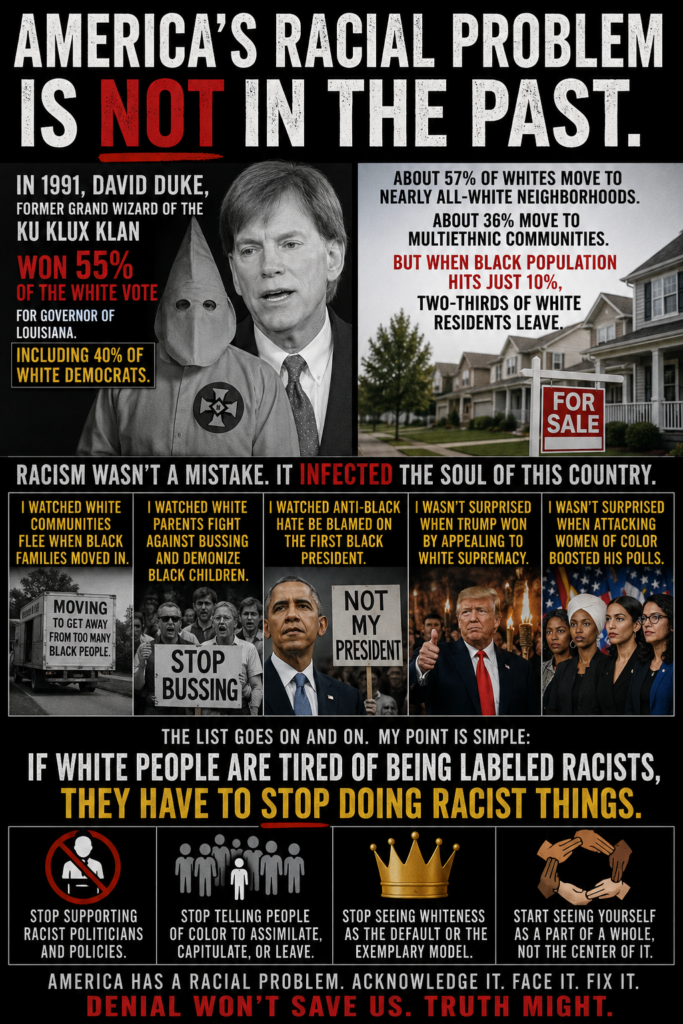
    In 1991, David Duke, a former Grand Wizard of the Ku Klux Klan, won 55% of the white vote when he ran for governor of Louisiana. Let that sink in. A man whose public identity was openly tied to white supremacy won a majority of white voters, including 40% of white Democrats. That was not the distant 1800s. That was the early 1990s.

    And this pattern is not an isolated one. Since the passage of the Civil Rights Act of 1964 and the Voting Rights Act of 1965, Democratic presidential candidates have consistently struggled to win the white vote. Even in 1976, when Jimmy Carter performed unusually well among white voters, Gerald Ford still won them overall. That should force us to ask uncomfortable questions about what racial backlash has looked like in American politics for the last half-century.

    These are not random or meaningless occurances. And it is not just “economic anxiety.” This is racism built into the bloodstream of American politics and manifest through voting decisions and patterns.

    The same dynamic has shaped where people live, where they send their children to school, and how they define “good” neighborhoods and “bad” neighborhoods. White flight did not happen by accident. It was not simply about “better schools” or “quality of life.”

    For decades, study after study (and plain old lived reality) has shown that white people love to talk about diversity until Black people actually start moving in next door. White families will say they want “good communities” and “nice neighborhoods,” but once a place becomes “too Black” (usually with a Black population at or above 10%), all of a sudden the moving trucks come out and the “For Sale” signs start multiplying like weeds.

    In community after community, once Black families moved in, white families moved out. I have seen it with my own eyes. Entire white communities expanded further and further outward, into what had once been farmland, not because they were escaping crime or collapse, but because too many Black people had moved nearby.

    And it did not matter if those Black families were educated, professional, stable, or middle class. Their Blackness alone was enough for those white families to flee further into the suburbs.

    We want to act like racism was just Bull Connor, George Wallace, fire hoses, and white robes. We want to tell ourselves that racism was a regrettable chapter that “we overcame,” and now the only real racists are a few cartoonishly evil people at the margins.

    That is a lie.

    Racism in America was never just about the loudest extremists. It has always depended on ordinary white people making racist choices in ordinary ways: where they live, who they vote for, what schools they support, what fears they indulge, what policies they excuse, and what kind of treatment of Black people they are willing to rationalize.

    I saw white parents rage against school bussing while talking about Black children as if they were grave threats. I saw anti-Black hostility dressed up as “concern” and “standards.” I saw white resentment toward Barack Obama, a man raised largely by white family members, treated as if he were some dangerous racial radical simply for existing in the White House while Black.

    So no, I was not surprised when Donald Trump rose to power by openly winking at white grievance and white nationalism. I was not surprised when racist attacks on women of color energized parts of his base. I have seen this movie before.

    A lot of white Americans want to be absolved without being examined.

    They want credit for not wearing a hood while still supporting racist politicians, racist policies, racist housing patterns, racist school systems, and racist cultural assumptions.

    That’s not how this works.

    America’s racial problem has never been confined to a handful of extremists in white robes. That is the lie people tell themselves so they do not have to examine the everyday racism embedded in housing, education, politics, media, and social life. Racism in America has never just been about “bad people.” It has been about a society that trained millions of ordinary people to see whiteness as the norm, the standard, and the default.

    And that is the real issue.

    If white Americans are tired of being associated with racism, then the answer is not to get offended when people point it out. The answer is to stop supporting racist policies, racist politicians, racist assumptions, and racist social arrangements. Stop demanding that people of color quietly assimilate into a system built to marginalize them. Stop treating whiteness as the universal model of what is “normal,” “civilized,” or “American.”

    Because America’s racial problem is not ancient history. It is not dead. And pretending otherwise is part of the problem.

  • The Imaginary Conservative Dr. Martin Luther King Jr.

    The Imaginary Conservative Dr. Martin Luther King Jr.

    Every January, around the time of Martin Luther King Jr. Day, a familiar political ritual begins.

    Public figures across the political spectrum invoke King’s name in support of their own positions. Liberals quote him. Conservatives quote him. Moderates quote him. Everyone suddenly seems convinced that Dr. King would agree with them if he were alive today.

    In many cases, these attempts say more about the people invoking King than about King himself.

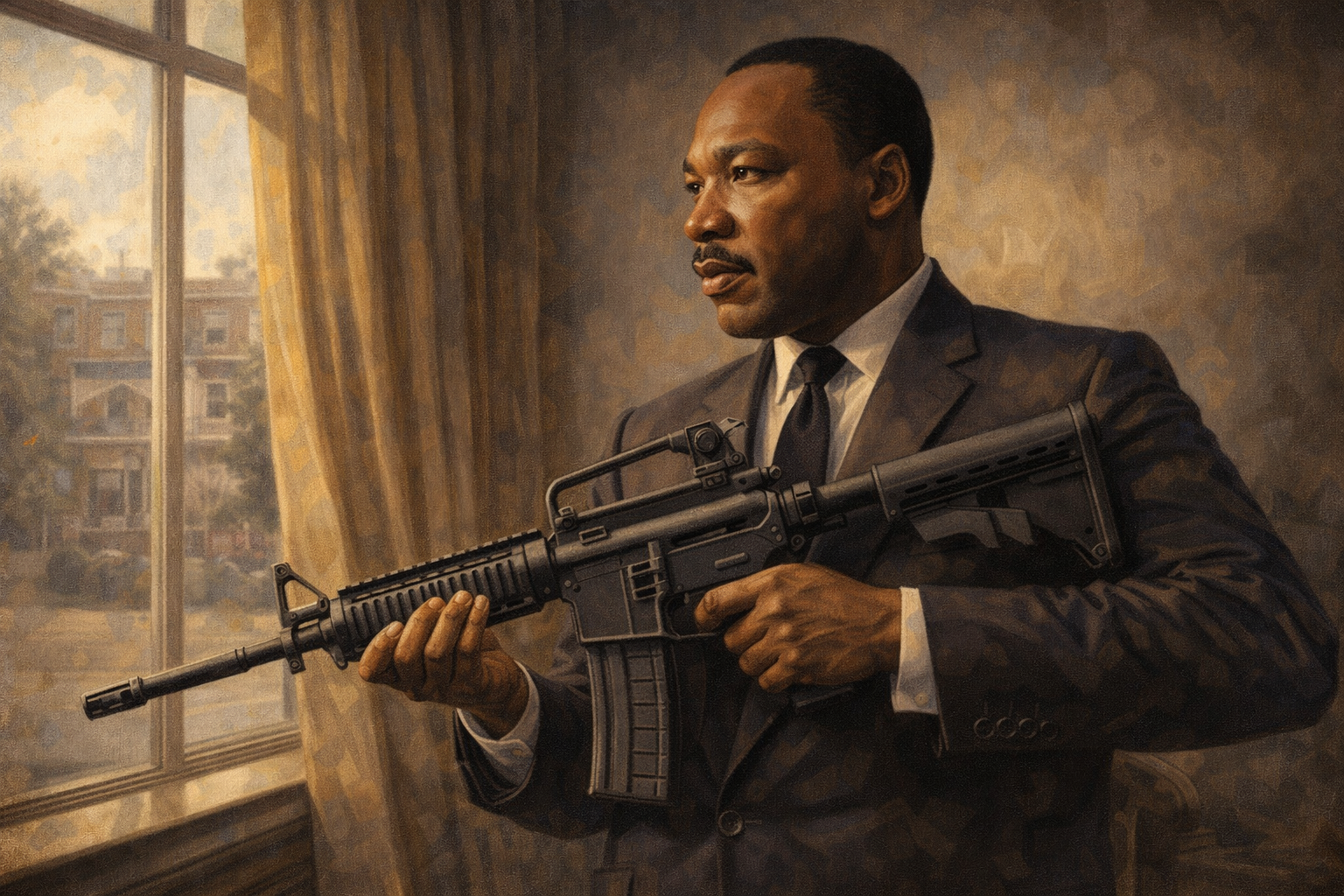
    One of the more curious examples in recent years has been the claim that Dr. King would have opposed modern gun control laws because he owned firearms.

    At first glance, this argument might sound plausible. It is true that King once applied for a permit to carry a handgun after his home was bombed during the Montgomery Bus Boycott. In the violent atmosphere of the Jim Crow South, many civil rights leaders faced credible threats to their lives.

    But isolating that fact while ignoring King’s broader philosophy creates a deeply misleading picture.

    Dr. King was one of the most committed advocates of nonviolence in modern history. His entire political and moral philosophy centered on the belief that violence ultimately corrupts both individuals and societies. Throughout his career, he repeatedly emphasized that the civil rights movement must reject violence—even in the face of brutal repression.

    More importantly, King’s political views extended far beyond the narrow civil rights narrative that is often presented today.

    In the final years of his life, King increasingly criticized economic inequality, militarism, and American foreign policy. He spoke openly about the need for a radical restructuring of American society and argued that poverty, racism, and war were interconnected problems.

    He supported strong labor rights, called for major government programs to address poverty, and spoke favorably about forms of democratic socialism.

    In other words, the historical Dr. King was far more politically complex and far more radical than the sanitized figure often presented in modern political debates.

    Projecting modern ideological battles onto King may be tempting, but it risks distorting the historical record.

    Rather than imagining the version of King we wish existed, it might be more productive to engage honestly with the one who actually did.

  • From Protest to Prosperity: The Generational Divide Between Boomers and Millennials

    From Protest to Prosperity: The Generational Divide Between Boomers and Millennials

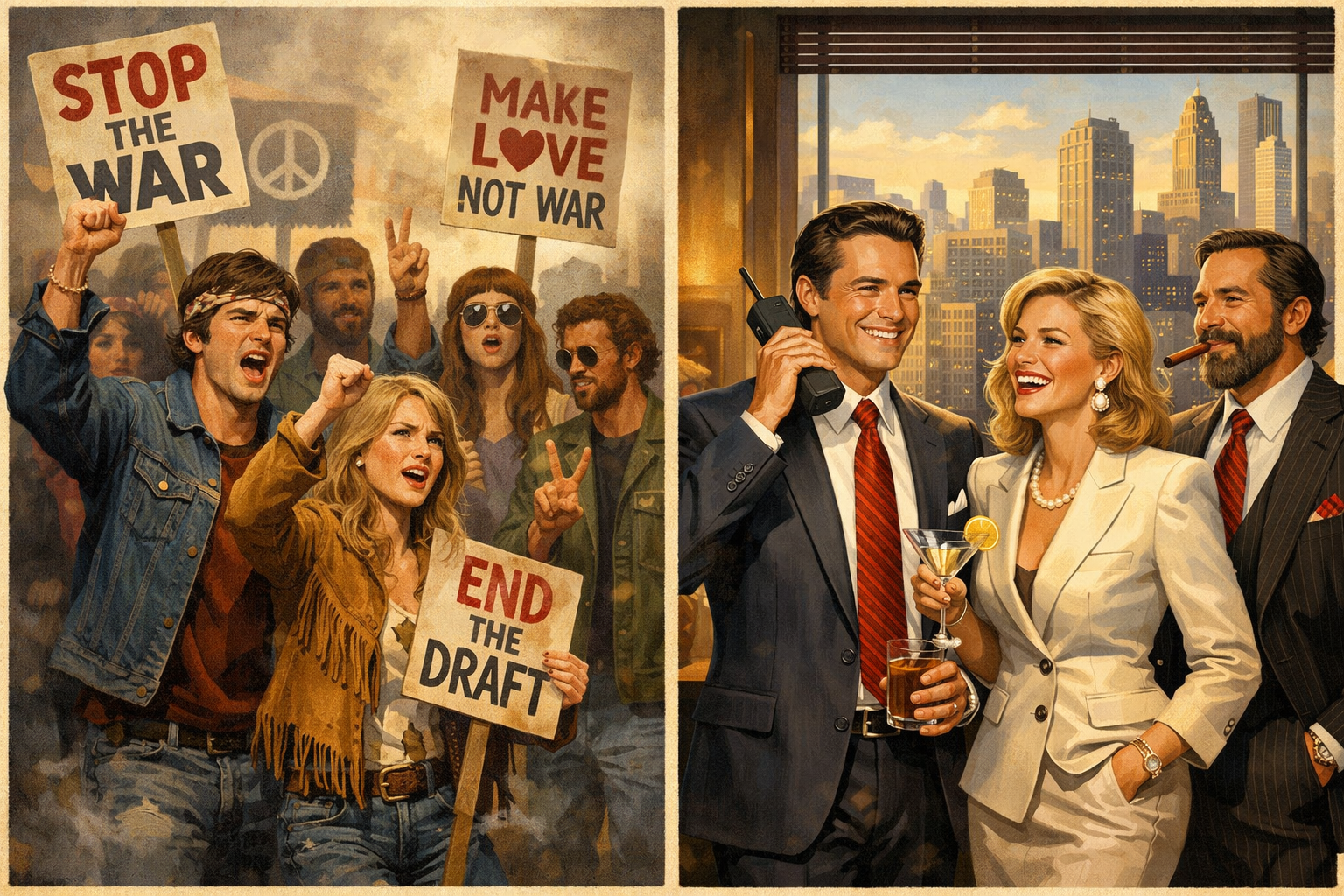
    One of the things that has always puzzled me about the Baby Boomer generation is the contrast between their revolutionary youth and their often conservative attitudes later in life.

    The Boomers, along with many members of the Silent Generation, were the people that Generation X grew up admiring. They were the students sitting at segregated lunch counters while mobs attacked them. They were the Freedom Riders. They were marching against the war in Vietnam. Some were even killed during protests, such as the students shot by National Guard troops at Kent State.

    They were the generation that gave rise to the Civil Rights Movement, the Black Power Movement, women’s liberation, the American Indian Movement, early gay rights activism, and a broader counterculture that questioned the entire structure of American society.

    They were also the generation that gave us revolutionary genres of music, such as classic rock, heavy metal, punk, and hip-hop. Melly Mel was a Boomer who gave us “The Message”, and Chuck D was a Boomer telling us to “Fight The Power”.

    Of course, not every Boomer was part of those movements. Many supported segregation, the Vietnam War, and conservative politics. But the public image of the generation was shaped by its loudest voices: young people challenging authority and demanding social change.

    Somewhere along the way, that spirit changed.

    By the 1980s, large portions of the Silent Generation and the Baby Boomers had embraced a very different political outlook. Ronald Reagan’s landslide victory in 1984, in which he won every state except Minnesota, was powered largely by voters from the Greatest Generation, the Silent Generation, and many Boomers who had entered middle age.

    To understand this shift, we must first look at the economic environment in which those generations came of age.

    The decades following World War II produced one of the most prosperous periods in American history. Beginning in the late 1940s and continuing through the early 1970s, the American middle class experienced a dramatic expansion. Unionized manufacturing jobs were plentiful and often paid wages that allowed a single worker to support an entire family.

    For many Americans, especially and particularly white Americans, economic security was relatively attainable.

    By the mid-1970s, however, the foundations of that economy were beginning to erode. Deindustrialization affected major cities such as Detroit, Cleveland, Baltimore, and St. Louis particularly hard. Manufacturing jobs disappeared, urban budgets were slashed, and many white families relocated to suburbs that remained economically stable.

    While inner cities struggled with job loss, poverty, and rising crime, many suburban communities continued to experience relative prosperity well into the 1980s and 1990s.

    This created a divide in perception.

    Many Baby Boomers came of age during a period when stable employment and home ownership were still achievable for large segments of the population. Younger generations, by contrast, entered adulthood during a period defined by stagnant wages, rising housing costs, student debt, and declining economic mobility.

    As a result, Millennials and younger generations often experience economic conditions acutely differently from how their parents did.

    From the perspective of many Boomers, the United States has already achieved enormous social progress. Segregation has been dismantled, women have gained expanded rights and opportunities, and same-sex marriage has been legalized.

    From that viewpoint, younger generations may appear overly pessimistic or overly focused on grievances.

    However, that perspective sometimes overlooks a crucial reality: the economic landscape has changed dramatically.

    Many Millennials and younger adults face rising costs of education, healthcare, and housing while earning wages that have not kept pace with inflation. Buying a home, starting a family, or building long-term financial security has become significantly more difficult than it was for many members of earlier generations.

    This creates a generational misunderstanding.

    Older generations may view younger people as overly sensitive or insufficiently resilient. Younger generations may view older voters as disconnected from the economic realities they now face.

    Both perceptions contain elements of truth and misunderstanding.

    The social struggles fought by earlier generations were enormously important and deserve recognition. But social progress alone cannot resolve the economic challenges confronting younger Americans today.

    As Martin Luther King Jr. increasingly emphasized in the final years of his life, the struggle for social justice is incomplete without a parallel struggle for economic justice.

    Understanding that connection may be one of the most important tasks facing the generations living in America today.

  • The Death of Nuance in the Social Media Era

    The Death of Nuance in the Social Media Era

    One of the things that constantly amazes me about social media discourse is the tendency to treat historical figures, as well as contemporary public figures, as if they must be either entirely good or entirely evil.

    The moment someone mentions something positive about a controversial figure, it is almost guaranteed that someone will jump into the conversation to remind everyone of that person’s worst actions.

    Mention that Henry Ford introduced innovative ideas about wages and working hours, and someone will immediately point out that he was a racist and an antisemite.

    Discuss the artistic achievements of a filmmaker, and someone will remind you that the director was a convicted criminal. Mention a political leader’s accomplishments, and someone will respond with a list of that leader’s moral failures.

    Now, to be clear, none of that information is wrong. History should not sanitize or hide the harmful actions of powerful people.

    But the question is whether those reminders are always necessary in every conversation.

    There is a difference between acknowledging wrongdoing and insisting that a person’s flaws invalidate everything else they ever did. Human beings are rarely that simple.

    Franklin D. Roosevelt oversaw the internment of Japanese Americans during World War II. This was undoubtedly a grave injustice. Yet he was also responsible for the New Deal, which reshaped the American economy and expanded social protections during the Great Depression.

    General William Tecumseh Sherman played a decisive role in defeating the Confederacy during the Civil War, even though his campaigns later involved violent acts of genocide against Native Americans.

    History is filled with figures whose lives encompass both achievements and moral failures.

    The same is true in other fields. A performer like R. Kelly can be both a talented songwriter and someone who committed horrific crimes. Kevin Spacey can be a brilliant actor while also facing serious accusations of abuse.

    Recognizing these contradictions does not excuse wrongdoing. It simply acknowledges reality.

    The problem is that social media often rewards a much simpler way of thinking. Online discourse often reduces people to heroes or villains, leaving little room for complexity. If someone is morally flawed, the logic goes, then every accomplishment must be dismissed.

    But that approach does not lead to a deeper understanding of history or human behavior.

    It leads to something much simpler: moral sorting.

    The truth is that human beings are capable of doing both admirable and terrible things. Acknowledging that complexity does not weaken moral judgment, it actually strengthens it.

    Unfortunately, nuance is rarely rewarded in the age of social media.

    And that may be one of the greatest intellectual casualties of the digital era.

  • Trust, History, and the Controversy Over Leave the World Behind

    Trust, History, and the Controversy Over Leave the World Behind

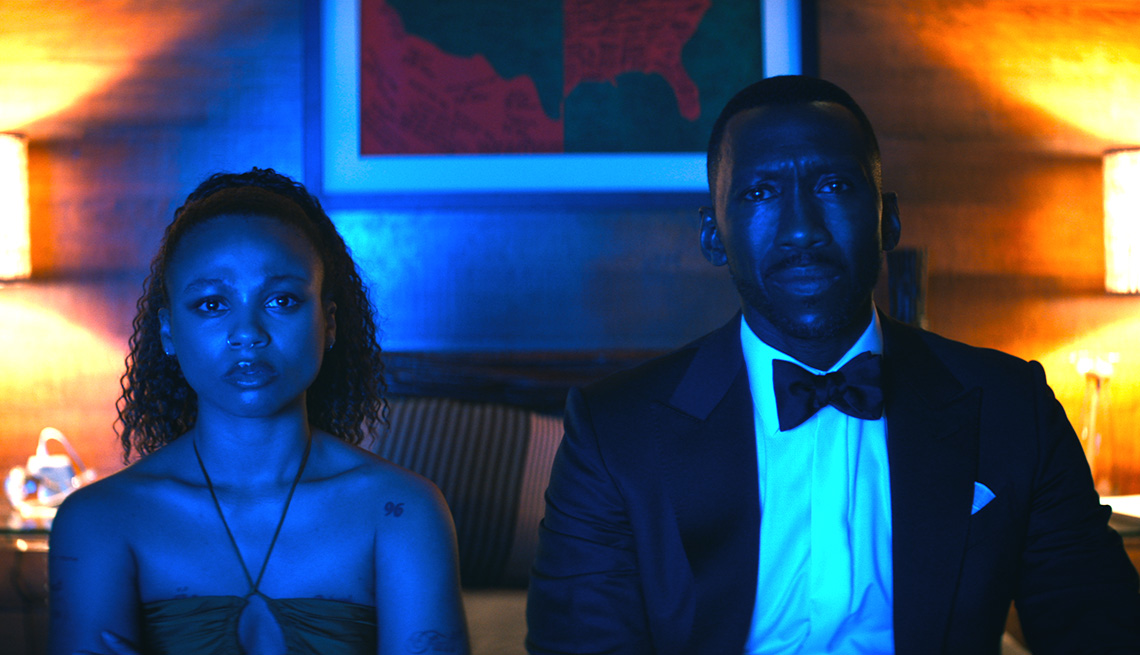
    A line from the film Leave the World Behind has recently sparked outrage among conservative commentators:

    “I’m sorry, but if the world falls apart, trust should not be given easily to anyone… especially white people.”

    The quote, spoken by the character Ruth Washington (played by Myha’la Herrold), has been interpreted by critics as an example of “anti-white racism” and “woke propaganda.”

    But the reaction misses the larger historical context behind the sentiment.

    The scene itself depicts a tense, pre-apocalyptic situation. A Black family returns to their own home, even though white vacationers are renting it through Airbnb. The white family, especially the matriarch, is immediately distrustful of them. Although the house belongs to the Black family, the white characters initially assume they must be staff or impostors.

    Even when the owner of the house offers to refund half of their money and has the key to a locked drawer, the white matriarch still views them as dangerously and criminally suspicious.

    Anyone familiar with American racial dynamics knows that situations like this are not purely fictional.

    But the deeper issue raised by the quote is not about a single awkward interaction. It raises a broader question:

    What historical reasons do Black Americans have to extend unconditional trust toward white institutions or white society as a whole?

    The history of the United States complicates that question.

    After the Civil War and the passage of the 13th, 14th, and 15th Amendments, the promise of freedom for Black Americans was quickly undermined by a series of legal and social systems designed to recreate racial hierarchy. Black Codes, vagrancy laws, convict leasing, peonage, and sharecropping placed many formerly enslaved people back into conditions that closely resembled slavery.

    When Black political power briefly emerged in parts of the South during Reconstruction, it was violently suppressed through campaigns of racial terrorism carried out by groups like the Ku Klux Klan and the Red Shirts.

    The pattern did not stop there.

    From housing discrimination to segregated schools, from redlining to unequal policing, institutions throughout American history have repeatedly produced outcomes that harmed Black communities. Even today, debates continue over disparities in healthcare, environmental exposure, policing, and incarceration.

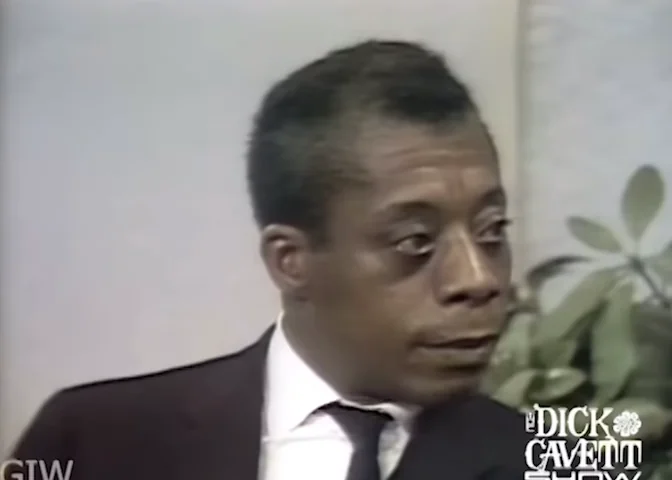
    The writer James Baldwin addressed this exact problem during a debate on The Dick Cavett Show in 1969. Baldwin explained that distrust was not based on abstract hostility toward white people but on lived evidence produced by American institutions.

    He said:

    “I don’t know what most white people in this country feel. But I can only [conclude] what they feel from the state of their institutions.”

    Baldwin’s point was simple but powerful. His point was that people judge a society not by its ideals, but by its outcomes.

    If institutions repeatedly disadvantage a group of people, it is unrealistic to expect that group to respond with automatic trust.

    This helps explain many of the cultural dynamics that outsiders often misunderstand. Black Americans frequently “gatekeep” aspects of their culture, remain skeptical of institutions, and react strongly to racial issues that others see as trivial.

    Those reactions are not random or irrational. They emerge from decades and centuries of historical experience.

    None of this means that every individual white person is malicious or untrustworthy. But collective histories shape collective perceptions.

    If trust is going to grow between communities, it cannot be demanded through outrage over a line in a movie. It has to be earned through meaningful changes in the institutions and behaviors that produced the distrust in the first place.

    History matters.

    And until that history is confronted honestly, lines like the one in Leave the World Behind will continue to resonate with many viewers, even as others find them uncomfortable.

  • The Myth of “Woke” Entertainment

    The Myth of “Woke” Entertainment

    One of the more exhausting cultural debates today revolves around the idea that movies, television shows, and video games have suddenly become “woke.”

    The accusation is usually framed as if diversity in entertainment is something new. That it is an artificial political imposition that has recently invaded popular culture.

    But that claim ignores decades of history.

    Hollywood and the entertainment industry have been practicing what could easily be called “forced diversity” for a long time. The difference is that, historically, the diversity often involved inserting white characters into stories that were originally centered around other cultures.

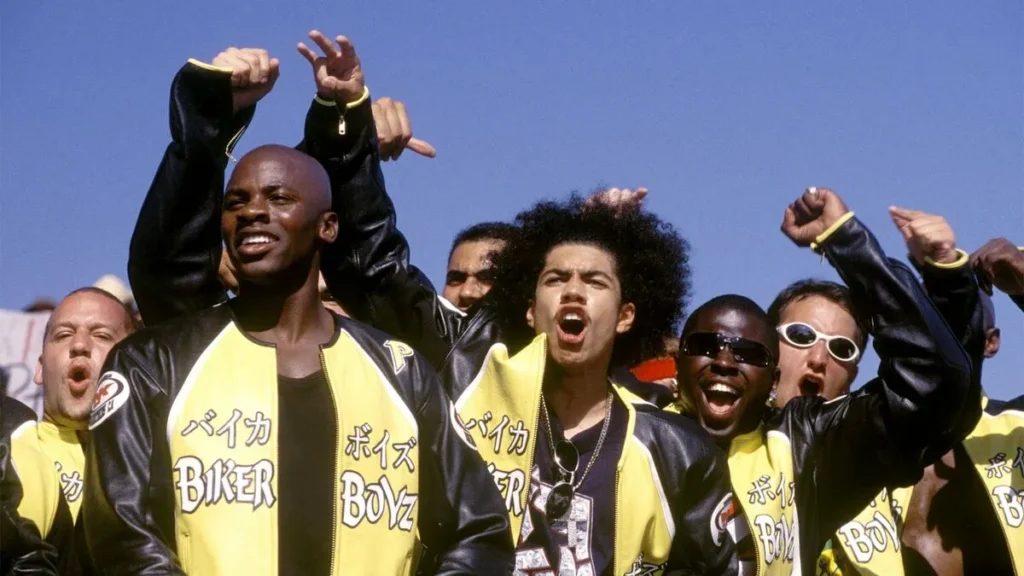
    Consider the 2003 film Biker Boyz. The movie was marketed as a story about predominantly Black motorcycle clubs. Yet by the time studio executives and producers finished reshaping the film, the central motorcycle crew looked far more like a corporate marketing brochure than a portrayal of the subculture it was supposed to represent.

    Kid and his motorcycle gang are cheering on their brother in the movie Biker Boyz

    This wasn’t unusual.

    Films like American Me (1992), Blood In, Blood Out (1993), Colors (1988), and even the breakdancing movies Breakin’ (1984) and Breakin’ 2: Electric Boogaloo (1984) frequently inserted characters designed to make the stories more accessible to mainstream audiences.

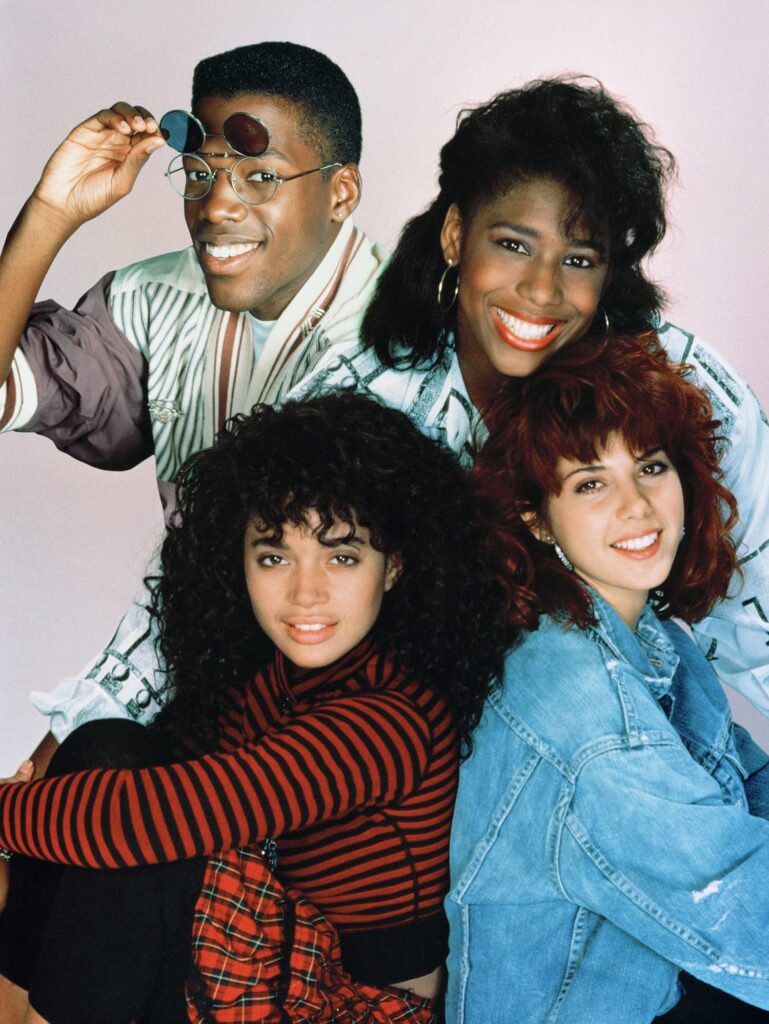
    Television followed the same pattern. The sitcom A Different World was originally conceived as a story about a white student attending a historically Black college. Only later, after becoming a spinoff of The Cosby Show, did it shift toward focusing on Black students and Black campus life.

    A Different World was originally supposed to be about Marisa Tomei’s character, Maggie Lauten (bottom right), going to an HBCU before it was decided that it was going to be a spinoff of The Cosby Show.

    In other words, the entertainment industry has long modified stories to appeal to broader audiences. Diversity in casting and storytelling is not a new phenomenon.

    This is not necessarily a bad thing. In fact, seeing more diversity, even in predominantly Black and Latino places and cultures, is good for society, in my humble opinion.

    So what actually changed?

    The major difference today is not the presence of diversity. The difference is who is being centered.

    For decades, popular entertainment overwhelmingly focused on white male protagonists. Stories that did not originally feature them were often altered to include them.

    Today, audiences are increasingly encountering films, television shows, and video games where women, racial minorities, LGBTQ characters, and other groups are present as main characters rather than background figures.

    For some viewers, this shift feels like displacement.

    But representation in storytelling reflects the societies that produce those stories. Modern societies are diverse, and entertainment inevitably reflects that reality.

    None of this means that every casting decision or creative choice is above criticism. There are legitimate artistic discussions about authenticity, historical context, and storytelling choices.

    For example, fantasy worlds inspired by specific historical cultures may raise reasonable questions about how representation is handled within those settings. Those discussions can be worthwhile when they focus on artistic and historical coherence rather than ideological outrage.

    There are legitimate artistic criticisms of Black Valyrians in HBO’s House of the Dragon. However, it must also be noted that these characters are from a fictional world in a fictional universe.

    But most of the current backlash has little to do with artistic and/or historical integrity.

    Instead, it reflects discomfort with the simple reality that entertainment no longer assumes that one particular demographic must always be the default center of every story.

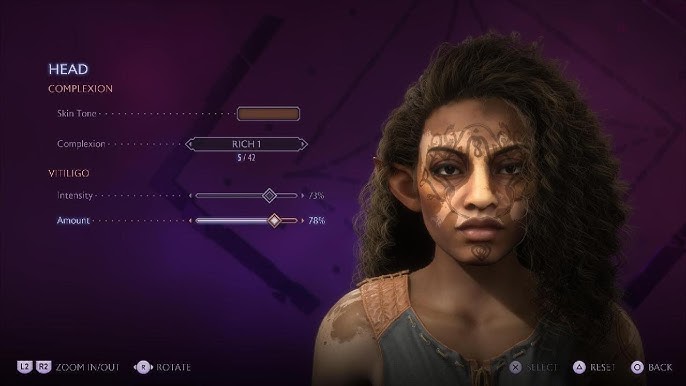
    The sky is not falling because a video game allows players to customize their character’s identity and pronouns. A science fiction series featuring a Black protagonist does not signal the collapse of civilization. A female action hero does not erase decades of male-led action films.

    What has changed is not storytelling itself.

    What has changed is that more people are finally allowed to see themselves in the story.