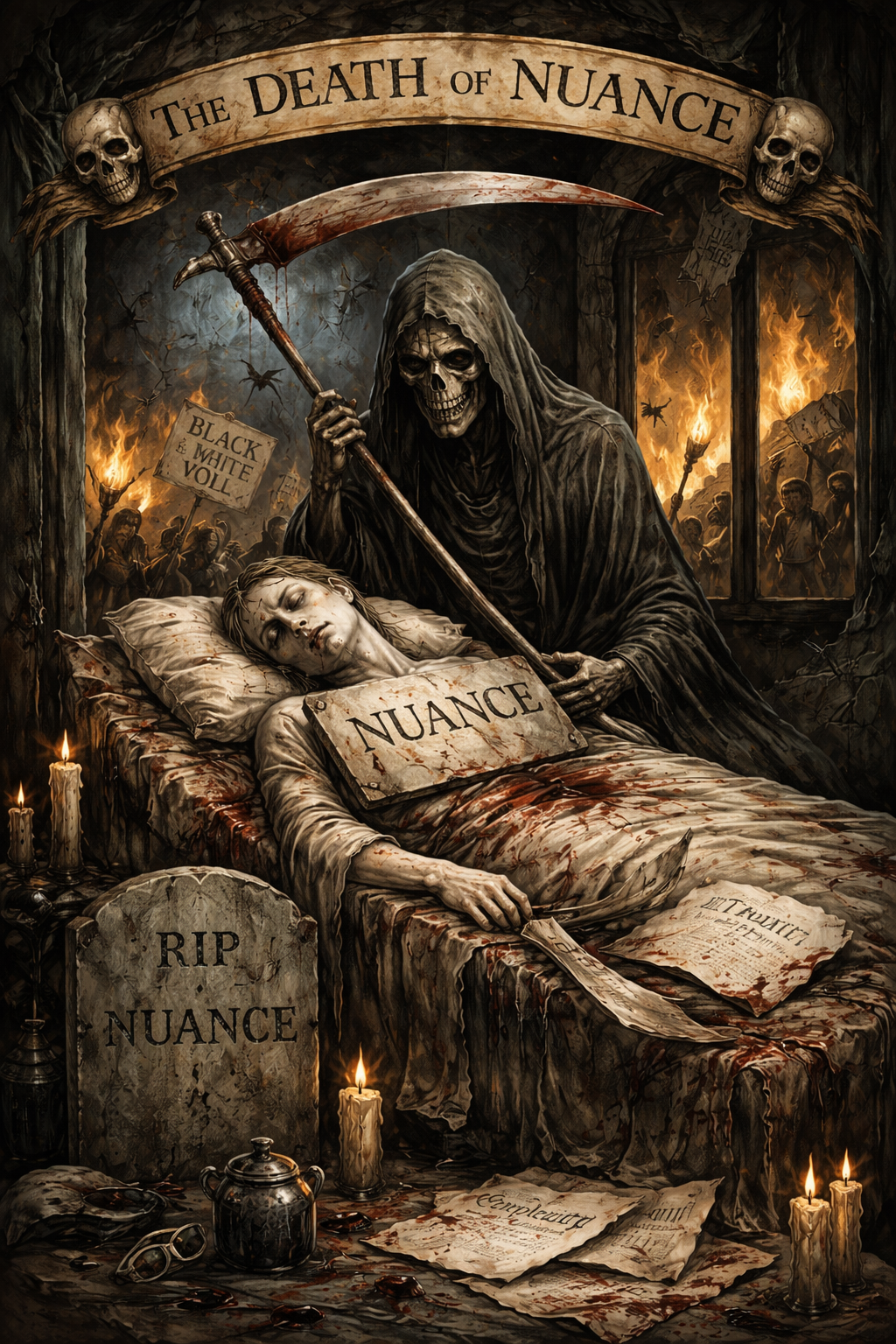
One of the things that constantly amazes me about social media discourse is the tendency to treat historical figures, as well as contemporary public figures, as if they must be either entirely good or entirely evil.
The moment someone mentions something positive about a controversial figure, it is almost guaranteed that someone will jump into the conversation to remind everyone of that person’s worst actions.
Mention that Henry Ford introduced innovative ideas about wages and working hours, and someone will immediately point out that he was a racist and an antisemite.
Discuss the artistic achievements of a filmmaker, and someone will remind you that the director was a convicted criminal. Mention a political leader’s accomplishments, and someone will respond with a list of that leader’s moral failures.
Now, to be clear, none of that information is wrong. History should not sanitize or hide the harmful actions of powerful people.
But the question is whether those reminders are always necessary in every conversation.
There is a difference between acknowledging wrongdoing and insisting that a person’s flaws invalidate everything else they ever did. Human beings are rarely that simple.
Franklin D. Roosevelt oversaw the internment of Japanese Americans during World War II. This was undoubtedly a grave injustice. Yet he was also responsible for the New Deal, which reshaped the American economy and expanded social protections during the Great Depression.
General William Tecumseh Sherman played a decisive role in defeating the Confederacy during the Civil War, even though his campaigns later involved violent acts of genocide against Native Americans.
History is filled with figures whose lives encompass both achievements and moral failures.
The same is true in other fields. A performer like R. Kelly can be both a talented songwriter and someone who committed horrific crimes. Kevin Spacey can be a brilliant actor while also facing serious accusations of abuse.
Recognizing these contradictions does not excuse wrongdoing. It simply acknowledges reality.
The problem is that social media often rewards a much simpler way of thinking. Online discourse often reduces people to heroes or villains, leaving little room for complexity. If someone is morally flawed, the logic goes, then every accomplishment must be dismissed.
But that approach does not lead to a deeper understanding of history or human behavior.
It leads to something much simpler: moral sorting.
The truth is that human beings are capable of doing both admirable and terrible things. Acknowledging that complexity does not weaken moral judgment, it actually strengthens it.
Unfortunately, nuance is rarely rewarded in the age of social media.
And that may be one of the greatest intellectual casualties of the digital era.
Leave a Reply