Tag: social media

  • The Diaspora Wars Are a Distraction from Black Liberation

    The Diaspora Wars Are a Distraction from Black Liberation

    I hate the so-called “Diaspora wars.” I really do.

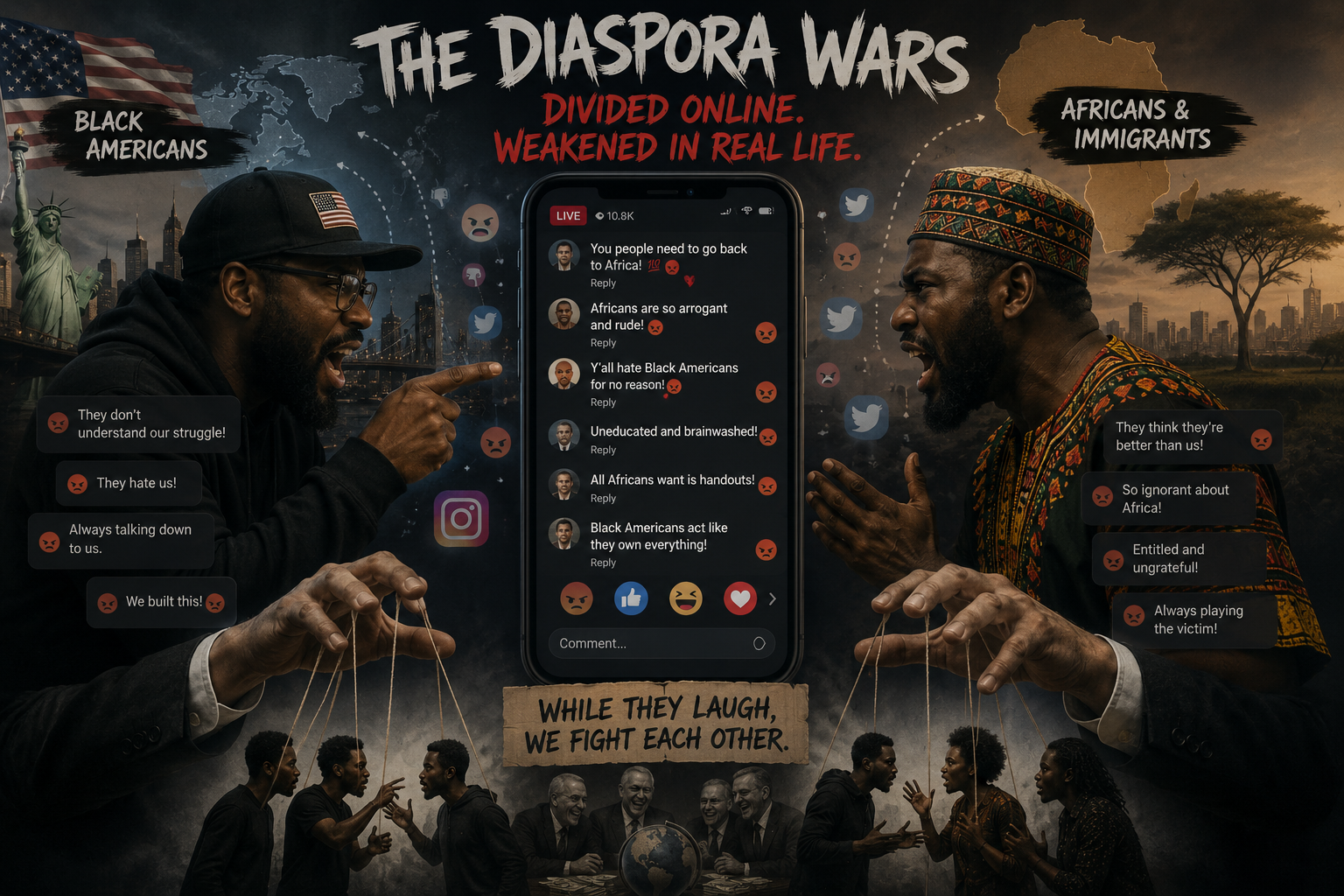
    The more I watch these online battles between Black Americans, Africans, Afro-Caribbeans, and other members of the African diaspora, the more convinced I become that they serve almost no productive purpose. At best, they are fueled by grifters within our own communities who care more about clicks, engagement, and money than they do about Black liberation or Black self-reliance. At worst, they function as a psychological operation that keeps Black people divided while distracting us from the systems that continue to harm all of us.

    The tragedy is that these conflicts are built on the words and actions of a relatively small number of people. Social media algorithms take the most outrageous opinions from a handful of Black Americans and immigrants, amplify them to millions, and convince us that these fringe voices represent entire communities. Existing mistrust, jealousy, and stereotypes (many of which were created and reinforced by white supremacist systems) do the rest.

    The supposed barrage of negative comments and feelings haven’t been my experience. I’ve spent time in the Dominican Republic, and I found most people to be warm and welcoming. I’ve traveled throughout Africa without experiencing the hostility that social media would have you expect. I’ve visited the Caribbean, and while many people understandably assume Americans have endless amounts of money, my interactions have overwhelmingly been positive. More importantly, I don’t stay isolated in luxury resorts. I spend time among everyday people.

    Even here in the United States, many of my friends are immigrants. They respect me, and many have expressed that they want to be accepted by Black Americans just as much as Black Americans want to be accepted by them.

    That’s a reality you don’t often see reflected online.

    Unfortunately, every Black community has people who have internalized anti-Black beliefs. Coons exist in every nationality and every ethnicity. That shouldn’t surprise anyone. After centuries of slavery, colonialism, segregation, imperialism, and the constant message that Black people are somehow inferior, many of us have absorbed those ideas in one form or another. When you’ve been taught for generations that your people contributed nothing to civilization except labor or criminality, some people eventually begin to believe it.

    Internalized oppression doesn’t stop at national borders.

    If we are serious about Black liberation, I believe the only path forward is Pan-Africanism.

    That doesn’t mean pretending our experiences are identical. Black Americans have a unique history rooted in slavery, Jim Crow, and the ongoing struggle for civil rights. Africans have their own histories shaped by colonialism, independence movements, and modern political challenges. Afro-Caribbeans, Afro-Latinos, and other members of the diaspora have their own distinct experiences as well.

    Recognizing those differences shouldn’t prevent us from recognizing our shared humanity and our shared struggle.

    We are connected not only through ancestry but through centuries of resistance against systems built on white supremacy and the ideology of Black inferiority. Those systems have always benefited when Black people distrust one another more than they distrust the institutions that marginalize all of us.

    We shouldn’t allow a handful of loud voices on social media to define our relationships.

    Ignore the people whose entire online presence depends on attacking other Black people. Be skeptical of pseudo-intellectuals who use selective history to create division rather than understanding. And let’s stop demonizing foreign-born Black people over hypothetical reparations that have neither been promised nor seriously pursued by either major political party.

    I wholeheartedly support the idea and the pursuit of reparations. They can help address historical injustices and repair some of the damage caused by centuries of oppression. But no amount of money can guarantee genuine Black liberation if we remain divided and lack a shared vision for our future.

    Liberation requires more than compensation.

    It requires education, unity, and a unwavering love and trust of our people as a collective.

    One lesson I think we should seriously consider comes from communities that invest heavily in teaching their children history, identity, culture, and collective responsibility outside of traditional public education. One such community are Jewish people. Academic subjects are important, but so is learning who you are, where you come from, and what obligations you have to your community.

    We need Afrocentric educational spaces that strengthen our understanding of African civilizations, the global African diaspora, and the interconnected histories of Black people everywhere. Those spaces should include Black Americans, Africans, Afro-Caribbeans, Afro-Latinos, and every other branch of the African family.
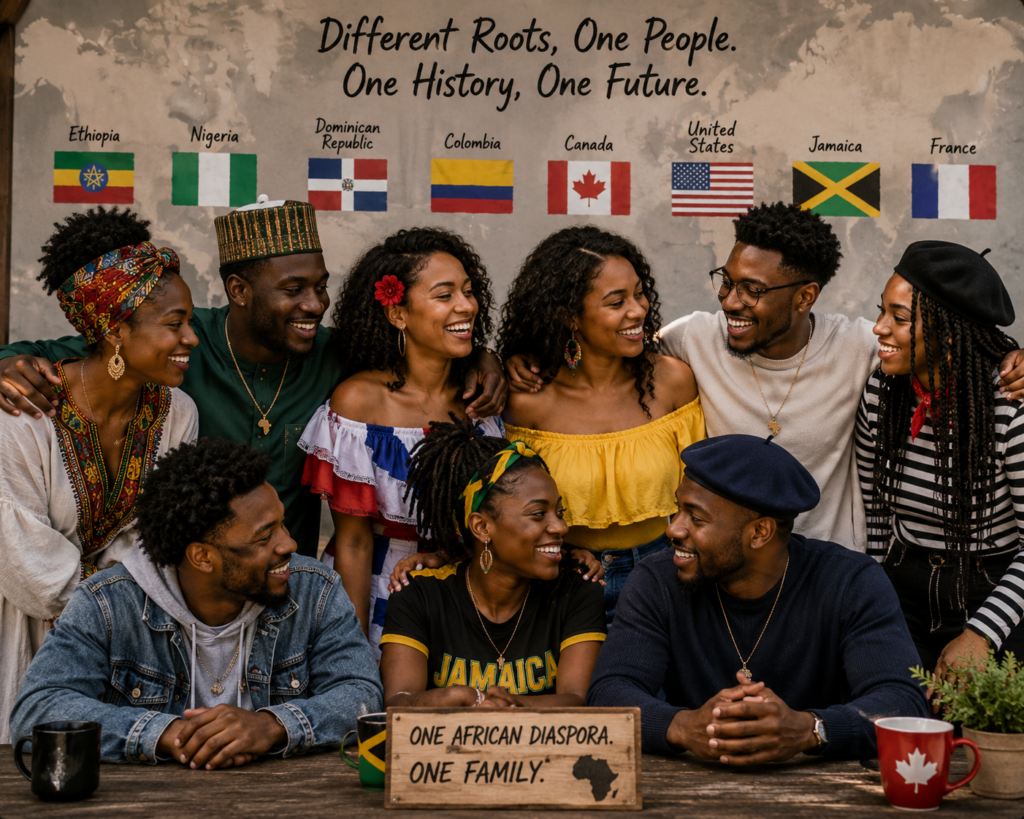
    The encouraging news is that this work is already happening.

    I’ve seen Africans sharing the history of Black Americans with wider audiences. I’ve seen members of the diaspora eager to learn from one another, exchange culture, build businesses together, and strengthen Black institutions. There are far more people interested in unity than social media would have us believe.

    Those people deserve more attention than the influencers profiting from division.

    Our goal should never be isolation or xenophobia. Black Americans should not view other Black people as competitors or outsiders simply because they were born elsewhere. Likewise, members of the diaspora should recognize the unique history and contributions of Black Americans without relying on stereotypes.

    History gives us a better example.

    The Civil Rights Movement did not exist in isolation. Black American leaders built relationships with African independence movements, Caribbean intellectuals, and freedom struggles across the globe. Ideas, strategies, and inspiration flowed in both directions because they understood something that many people online seem to have forgotten:

    Our liberation has always been connected.

    Instead of fighting one another over social media narratives, we should be building institutions, exchanging knowledge, strengthening our communities, and creating the kind of global Black solidarity that those who came before us envisioned.

    The diaspora wars may generate clicks but pan-African unity can generate freedom.
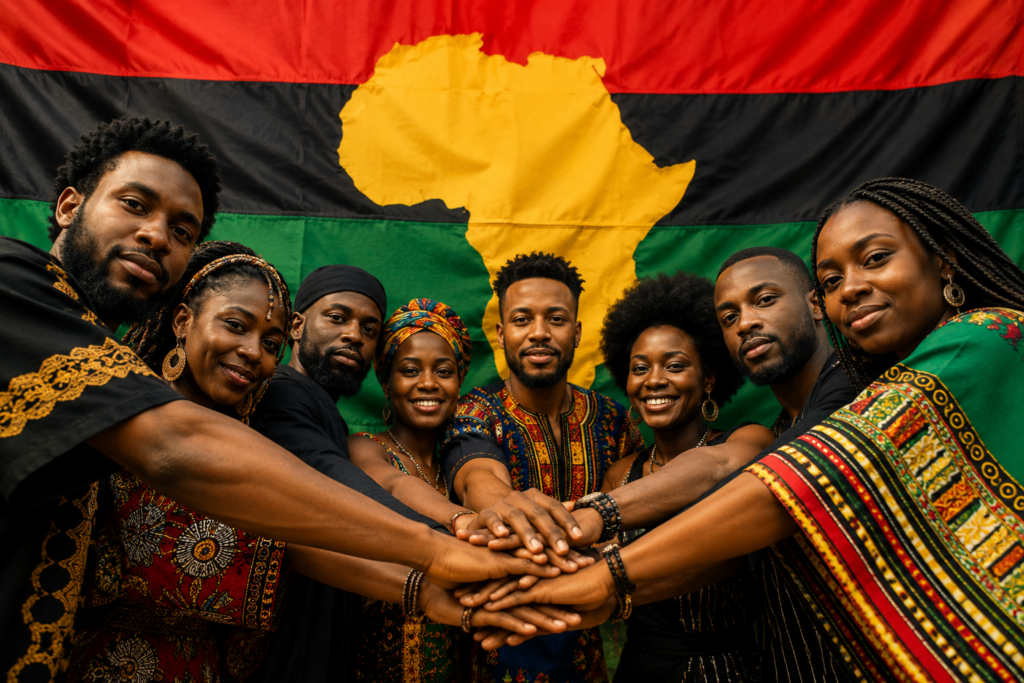
    We are stronger as a people when we are united.
  • Who Owns the Digital Public Square? Power, Platforms, and the Illusion of Free Speech

    Who Owns the Digital Public Square? Power, Platforms, and the Illusion of Free Speech

    In early 2025, social media platforms didn’t merely tweak their policies. They revealed something deeper about who actually controls the modern “public square.” Meta’s decision to eliminate independent fact-checkers in favor of “community notes,” framed as a return to free expression, corresponded with a broader political shift tied to the transition of power in Washington (the start of Trump’s second term in office). At the same time, users reported being automatically connected to new presidential accounts during the transition, highlighting the minute control individuals may actually have over their own digital environments.

    These developments encourage us to contemplate the ownership of social media and how it is administered and regulated.

    The benefits of centralized platforms such as Facebook, Instagram, and X are obvious. They allow for massive, instantaneous communication across geographic and social boundaries. These platforms function as digital “town squares” where people can exchange ideas quickly and at scale. Movements like Black Lives Matter, #MeToo, and even global protest movements have relied on these centralized networks to organize, mobilize, and amplify voices that might otherwise be marginalized.

    But the drawbacks are just as significant and arguably more dangerous. These platforms are not public spaces in the traditional sense. They are privately owned, profit-driven environments. This makes the “public square” analogy misleading because these platforms are designed to maximize engagement and revenue. They are not necessarily environments of democratic deliberation.

    That means outrage, misinformation, and polarization are not bugs. Instead, they are features of a media space in which these consequences lead to engagement and engagement leads to profits.

    We’ve already seen the consequences. The Free Speech Project highlights how Facebook’s failure to control hate speech contributed to violence against the Rohingya in Myanmar. In the U.S., misinformation and extremist content have spread rapidly across platforms, influencing elections, public health decisions, and even acts of violence. At the same time, platforms have been accused of censorship, whether through banning users or limiting content tied to political conflicts.

    So we’re stuck in a paradox. Too much moderation can be interpreted as censorship, but too little moderation can lead to societal harm.

    This brings us to the question of whether we should depend on the goodwill of platform owners. The events of 2025 suggest we shouldn’t. Meta’s policy changes appear, at least in part, to be influenced by political pressure and shifting relationships with those in power. When billionaires and corporations control the infrastructure of public discourse, their incentives, whether political, financial, or personal, inevitably shape what we see and say.

    Government intervention, however, is not a simple solution. The Supreme Court has heard arguments on whether social media companies are more like publishers with editorial rights or common carriers that must host all speech. Too much regulation risks violating the First Amendment and giving the state excessive control over speech. Too little regulation leaves private companies with unchecked power.

    So what should society actually do?

    First, we need to move away from the idea of a single, centralized “public square.” A more realistic and democratic approach can be a plurality of spaces, or “counterpublics,” where different communities can engage on their own terms. Decentralized platforms, such as Mastodon or other federated networks, offer one possible path forward by distributing power rather than concentrating it.

    Second, structural reforms are necessary. This should include antitrust laws and policies to break up monopolistic control, provide stronger transparency requirements for algorithms, and allow users to move their data and communities across platforms. “Portability” shifts some of the power back to users rather than locking them into corporate ecosystems.

    Third, platforms themselves need accountability mechanisms that go beyond PR-driven “community standards.” Community notes might sound democratic, but they can also be manipulated or ignored. Without enforceable standards, they risk becoming a substitute for responsibility rather than a solution.

    On a personal level, I’ve started thinking more critically about where and how I engage online. I still use major platforms because, realistically, that’s where the audience is. But I’m increasingly aware that I’m operating in someone else’s space, under someone else’s rules.

    That’s changed how I approach content, conversations, and even what I choose to amplify. I can feel myself changing with every online interaction from a courteous and nuanced person to a more radical and confrontational person. I’m also paying more attention to alternative platforms and independent media spaces that aren’t driven purely by algorithmic engagement.

    At the end of the day, the biggest myth we need to let go of is that social media is a neutral public square. It never was. It’s a privately owned system that shapes public discourse in ways most users barely understand.

    The real question isn’t just who owns the digital public square. Rather, it’s whether we’re willing to keep pretending it belongs to all of us.

  • The Death of Nuance in the Social Media Era

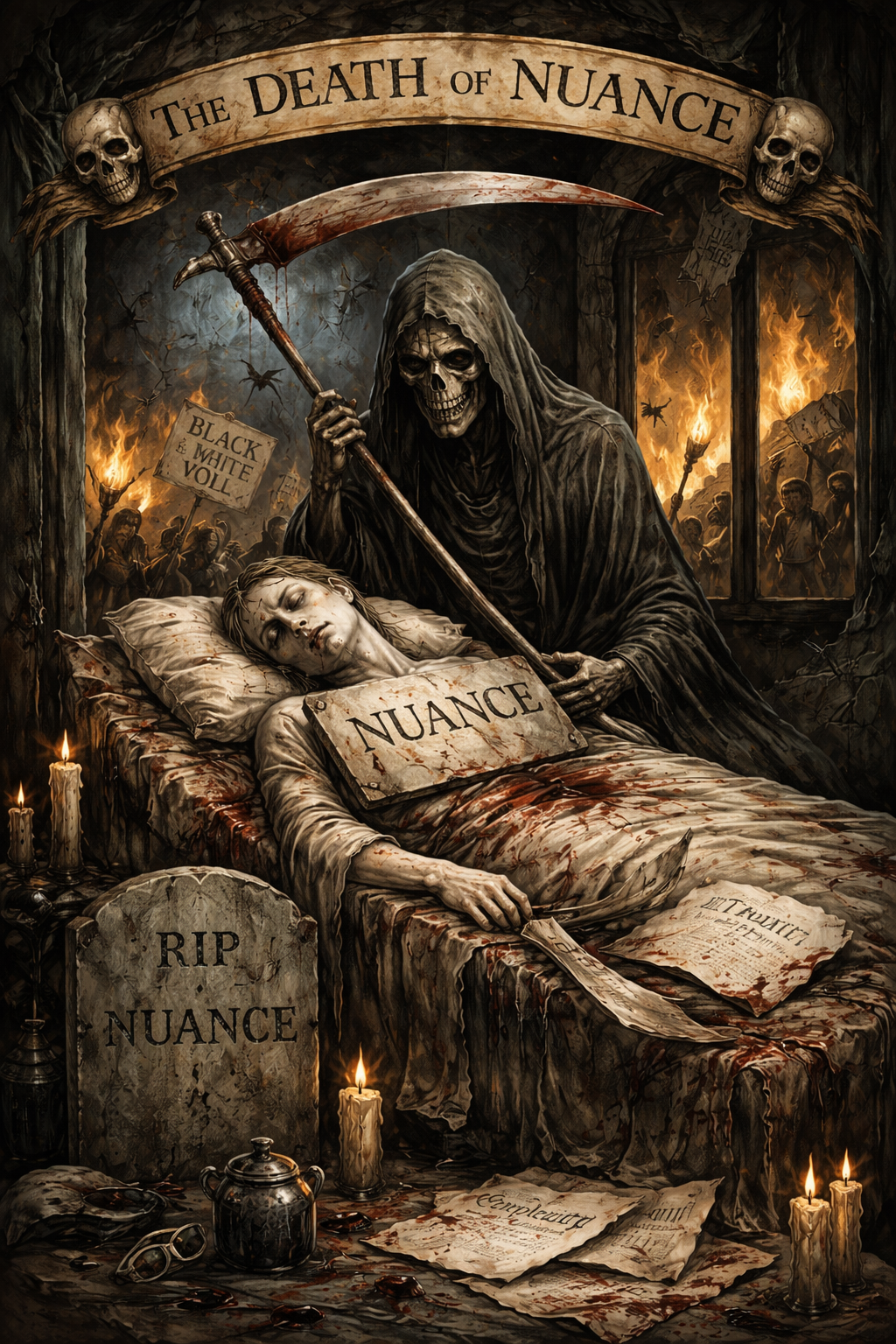
    The Death of Nuance in the Social Media Era

    One of the things that constantly amazes me about social media discourse is the tendency to treat historical figures, as well as contemporary public figures, as if they must be either entirely good or entirely evil.

    The moment someone mentions something positive about a controversial figure, it is almost guaranteed that someone will jump into the conversation to remind everyone of that person’s worst actions.

    Mention that Henry Ford introduced innovative ideas about wages and working hours, and someone will immediately point out that he was a racist and an antisemite.

    Discuss the artistic achievements of a filmmaker, and someone will remind you that the director was a convicted criminal. Mention a political leader’s accomplishments, and someone will respond with a list of that leader’s moral failures.

    Now, to be clear, none of that information is wrong. History should not sanitize or hide the harmful actions of powerful people.

    But the question is whether those reminders are always necessary in every conversation.

    There is a difference between acknowledging wrongdoing and insisting that a person’s flaws invalidate everything else they ever did. Human beings are rarely that simple.

    Franklin D. Roosevelt oversaw the internment of Japanese Americans during World War II. This was undoubtedly a grave injustice. Yet he was also responsible for the New Deal, which reshaped the American economy and expanded social protections during the Great Depression.

    General William Tecumseh Sherman played a decisive role in defeating the Confederacy during the Civil War, even though his campaigns later involved violent acts of genocide against Native Americans.

    History is filled with figures whose lives encompass both achievements and moral failures.

    The same is true in other fields. A performer like R. Kelly can be both a talented songwriter and someone who committed horrific crimes. Kevin Spacey can be a brilliant actor while also facing serious accusations of abuse.

    Recognizing these contradictions does not excuse wrongdoing. It simply acknowledges reality.

    The problem is that social media often rewards a much simpler way of thinking. Online discourse often reduces people to heroes or villains, leaving little room for complexity. If someone is morally flawed, the logic goes, then every accomplishment must be dismissed.

    But that approach does not lead to a deeper understanding of history or human behavior.

    It leads to something much simpler: moral sorting.

    The truth is that human beings are capable of doing both admirable and terrible things. Acknowledging that complexity does not weaken moral judgment, it actually strengthens it.

    Unfortunately, nuance is rarely rewarded in the age of social media.

    And that may be one of the greatest intellectual casualties of the digital era.

  • Your Data Is Currency. Stop Giving It Away for Free.

    Your Data Is Currency. Stop Giving It Away for Free.

    I receive a few emails almost daily about failed login attempts to this very blog that wasn’t by me. After investigating the login attempts, I found that they all originated from a couple of countries in South Asia. I had my Netflix and Disney login stolen while traveling overseas. An unknown person withdrew money from my account for travel and a pizza party.

    I used to think that I had nothing to hide and that my information was secure behind devices and passwords. But I was ignorant and naive to the many dangers that exist on the internet and how many people are willing to not only steal your money and identity but also steal your creative property and your credit. Privacy is about limiting harm and not about hiding crimes or shameful acts.

    Identity theft remains the primary concern, in my opinion. In 2023 alone, around 1.1 million Americans had their identities stolen or misused. Once someone has your Social Security number, birthdate, or login credentials, they can open credit lines, drain accounts, or commit crimes in your name. Cleaning that up can take years. My mother was such a victim.

    Another major threat is data breaches. Corporations lose your information constantly. Equifax exposed the data of 148 million people due to successful hacking by the Chinese military. There is also phishing and social engineering. These come in the forms of fake emails, fake texts, and fake “support” calls. Phishing has become one of the most common cybercrimes, according to the FBI.

    Scammers can get your information through fake emails

    Recommendations:

    Here are some tips from the AARP on how to protect yourself. These include enabling multi-factor authentication, not oversharing on social media, and freezing your credit.

    Conclusion:

    Don’t be like me. I did many things wrong. My personal information was compromised because I didn’t take my online security seriously and didn’t understand the nature of the threat. I wrote this so that you can learn from me.