Tag: Diaspora

  • The Diaspora Wars Are a Distraction from Black Liberation

    The Diaspora Wars Are a Distraction from Black Liberation

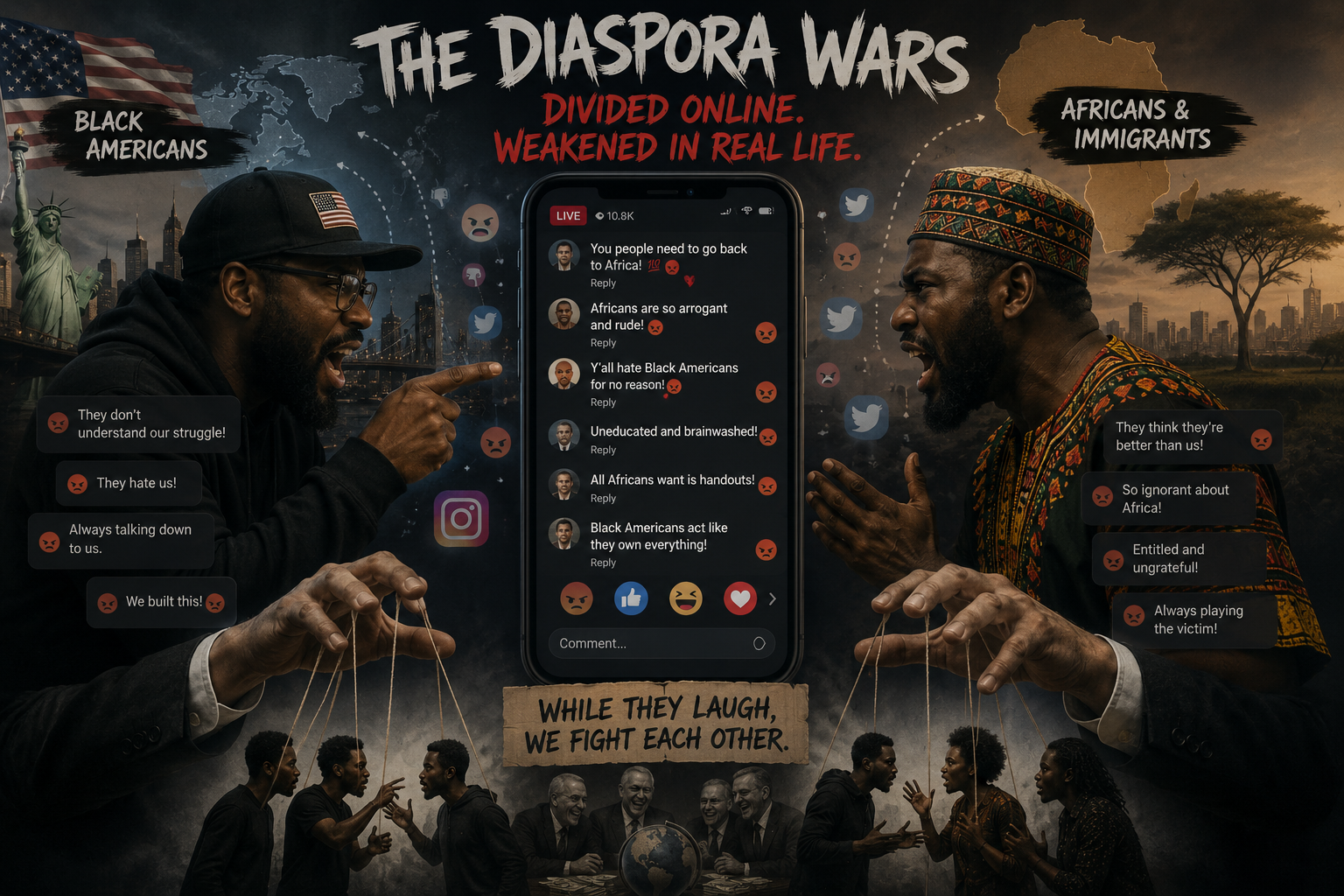
    I hate the so-called “Diaspora wars.” I really do.

    The more I watch these online battles between Black Americans, Africans, Afro-Caribbeans, and other members of the African diaspora, the more convinced I become that they serve almost no productive purpose. At best, they are fueled by grifters within our own communities who care more about clicks, engagement, and money than they do about Black liberation or Black self-reliance. At worst, they function as a psychological operation that keeps Black people divided while distracting us from the systems that continue to harm all of us.

    The tragedy is that these conflicts are built on the words and actions of a relatively small number of people. Social media algorithms take the most outrageous opinions from a handful of Black Americans and immigrants, amplify them to millions, and convince us that these fringe voices represent entire communities. Existing mistrust, jealousy, and stereotypes (many of which were created and reinforced by white supremacist systems) do the rest.

    The supposed barrage of negative comments and feelings haven’t been my experience. I’ve spent time in the Dominican Republic, and I found most people to be warm and welcoming. I’ve traveled throughout Africa without experiencing the hostility that social media would have you expect. I’ve visited the Caribbean, and while many people understandably assume Americans have endless amounts of money, my interactions have overwhelmingly been positive. More importantly, I don’t stay isolated in luxury resorts. I spend time among everyday people.

    Even here in the United States, many of my friends are immigrants. They respect me, and many have expressed that they want to be accepted by Black Americans just as much as Black Americans want to be accepted by them.

    That’s a reality you don’t often see reflected online.

    Unfortunately, every Black community has people who have internalized anti-Black beliefs. Coons exist in every nationality and every ethnicity. That shouldn’t surprise anyone. After centuries of slavery, colonialism, segregation, imperialism, and the constant message that Black people are somehow inferior, many of us have absorbed those ideas in one form or another. When you’ve been taught for generations that your people contributed nothing to civilization except labor or criminality, some people eventually begin to believe it.

    Internalized oppression doesn’t stop at national borders.

    If we are serious about Black liberation, I believe the only path forward is Pan-Africanism.

    That doesn’t mean pretending our experiences are identical. Black Americans have a unique history rooted in slavery, Jim Crow, and the ongoing struggle for civil rights. Africans have their own histories shaped by colonialism, independence movements, and modern political challenges. Afro-Caribbeans, Afro-Latinos, and other members of the diaspora have their own distinct experiences as well.

    Recognizing those differences shouldn’t prevent us from recognizing our shared humanity and our shared struggle.

    We are connected not only through ancestry but through centuries of resistance against systems built on white supremacy and the ideology of Black inferiority. Those systems have always benefited when Black people distrust one another more than they distrust the institutions that marginalize all of us.

    We shouldn’t allow a handful of loud voices on social media to define our relationships.

    Ignore the people whose entire online presence depends on attacking other Black people. Be skeptical of pseudo-intellectuals who use selective history to create division rather than understanding. And let’s stop demonizing foreign-born Black people over hypothetical reparations that have neither been promised nor seriously pursued by either major political party.

    I wholeheartedly support the idea and the pursuit of reparations. They can help address historical injustices and repair some of the damage caused by centuries of oppression. But no amount of money can guarantee genuine Black liberation if we remain divided and lack a shared vision for our future.

    Liberation requires more than compensation.

    It requires education, unity, and a unwavering love and trust of our people as a collective.

    One lesson I think we should seriously consider comes from communities that invest heavily in teaching their children history, identity, culture, and collective responsibility outside of traditional public education. One such community are Jewish people. Academic subjects are important, but so is learning who you are, where you come from, and what obligations you have to your community.

    We need Afrocentric educational spaces that strengthen our understanding of African civilizations, the global African diaspora, and the interconnected histories of Black people everywhere. Those spaces should include Black Americans, Africans, Afro-Caribbeans, Afro-Latinos, and every other branch of the African family.
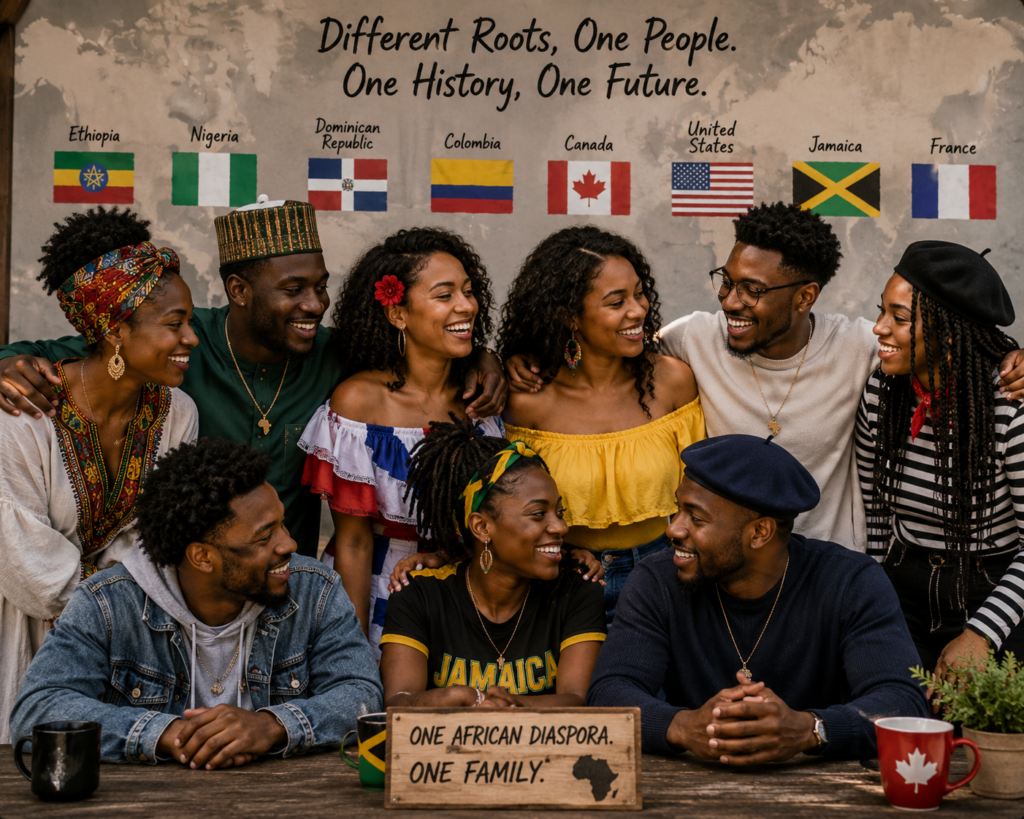
    The encouraging news is that this work is already happening.

    I’ve seen Africans sharing the history of Black Americans with wider audiences. I’ve seen members of the diaspora eager to learn from one another, exchange culture, build businesses together, and strengthen Black institutions. There are far more people interested in unity than social media would have us believe.

    Those people deserve more attention than the influencers profiting from division.

    Our goal should never be isolation or xenophobia. Black Americans should not view other Black people as competitors or outsiders simply because they were born elsewhere. Likewise, members of the diaspora should recognize the unique history and contributions of Black Americans without relying on stereotypes.

    History gives us a better example.

    The Civil Rights Movement did not exist in isolation. Black American leaders built relationships with African independence movements, Caribbean intellectuals, and freedom struggles across the globe. Ideas, strategies, and inspiration flowed in both directions because they understood something that many people online seem to have forgotten:

    Our liberation has always been connected.

    Instead of fighting one another over social media narratives, we should be building institutions, exchanging knowledge, strengthening our communities, and creating the kind of global Black solidarity that those who came before us envisioned.

    The diaspora wars may generate clicks but pan-African unity can generate freedom.
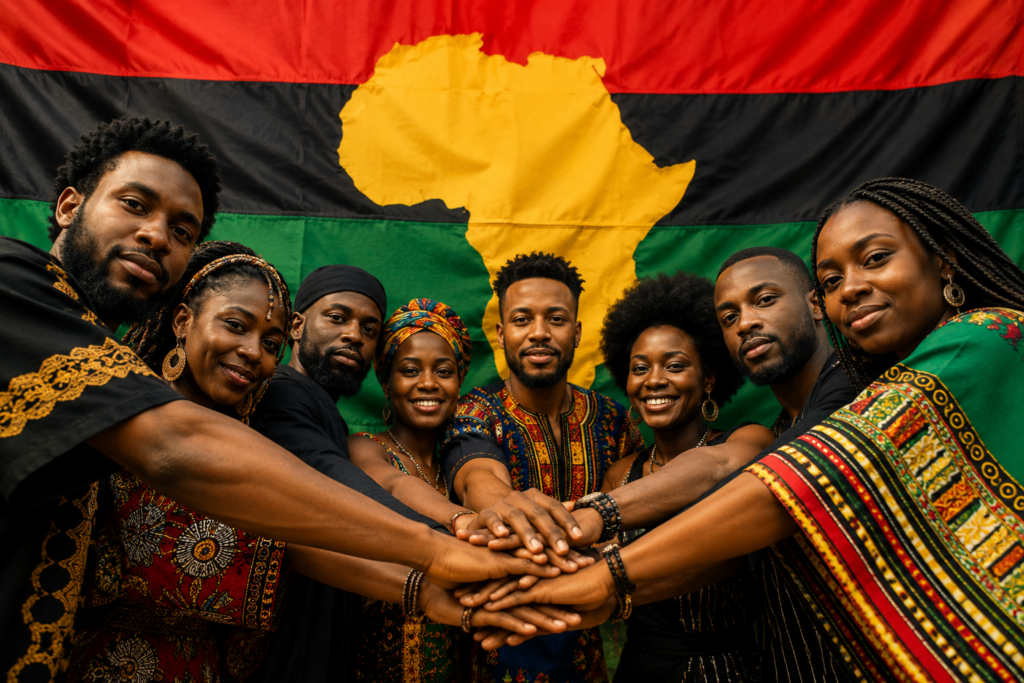
    We are stronger as a people when we are united.
  • Africa Is Not One People… And That Changes How We Should Think About Slavery, Identity, and Pan-Africanism

    Africa Is Not One People… And That Changes How We Should Think About Slavery, Identity, and Pan-Africanism

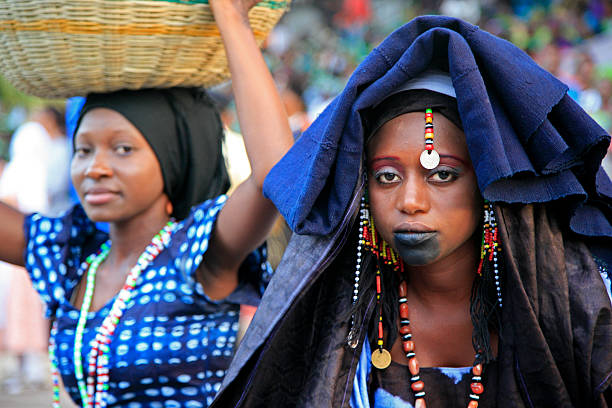
    A picture of Fulani women from iStock. The women have blue traditional garb, makeup, and Fulani jewelry and braids with headdresses on.
    Fulani women wearing traditional garb.

    One of the biggest lessons I keep learning while in Africa is something uncomfortable, but necessary to understand:

    In a deeply twisted way, chattel slavery and apartheid in the Western world helped force Africans in the diaspora into a single racialized identity.

    The “Black” identity became politically real and socially unavoidable in the Americas and much of Europe. But Africa itself did not historically evolve around that kind of singular identity. And if we are serious about understanding African history, slavery, and even Pan-Africanism, we have to start there.

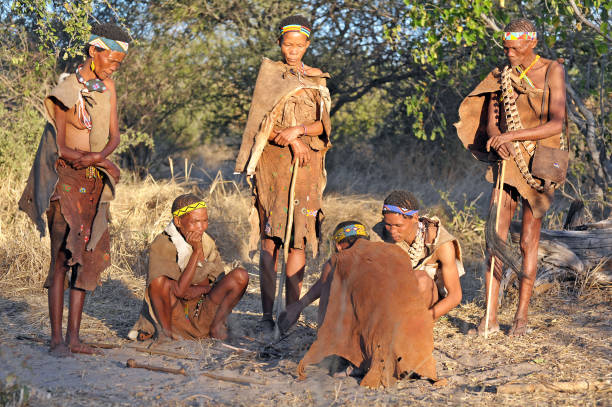
    A group of San people. Some of them are standing. Some are sitting on the ground.
    San bush people gather in the setting sun, Makgadikgadi Pans, Botswana, Southern Africa. The San are an ancient indigenous tribal people who inhabited much of southern Africa, and although few in number today remain proud of their culture, ancestry, and traditional ways of dress, customs, and behaviour that included subsistence hunting and foraging

    Africa Is Not a Monolith

    Africa is the most ethnically and genetically diverse continent on Earth. That matters more than most people realize.

    Many people outside the continent talk about “Africans” as if they are one people who are arbitrarily divided by colonial borders. But that is not really how Africa works. Across the continent, and even within individual countries, there exist many different ethnic groups with their own languages, cultures, religious traditions, histories, and political identities.

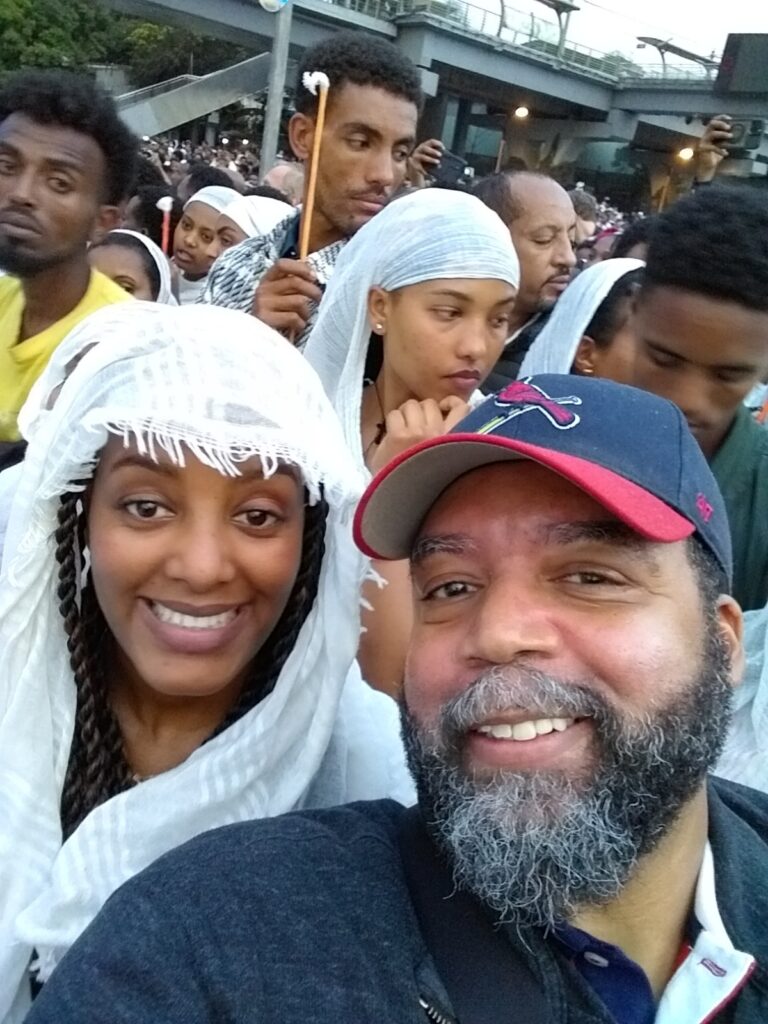
    A selfie taken at the Meskel celebration with my fiance.
    A picture of me and my fiancé at the Meskel festival in Addis Ababa, Ethiopia.

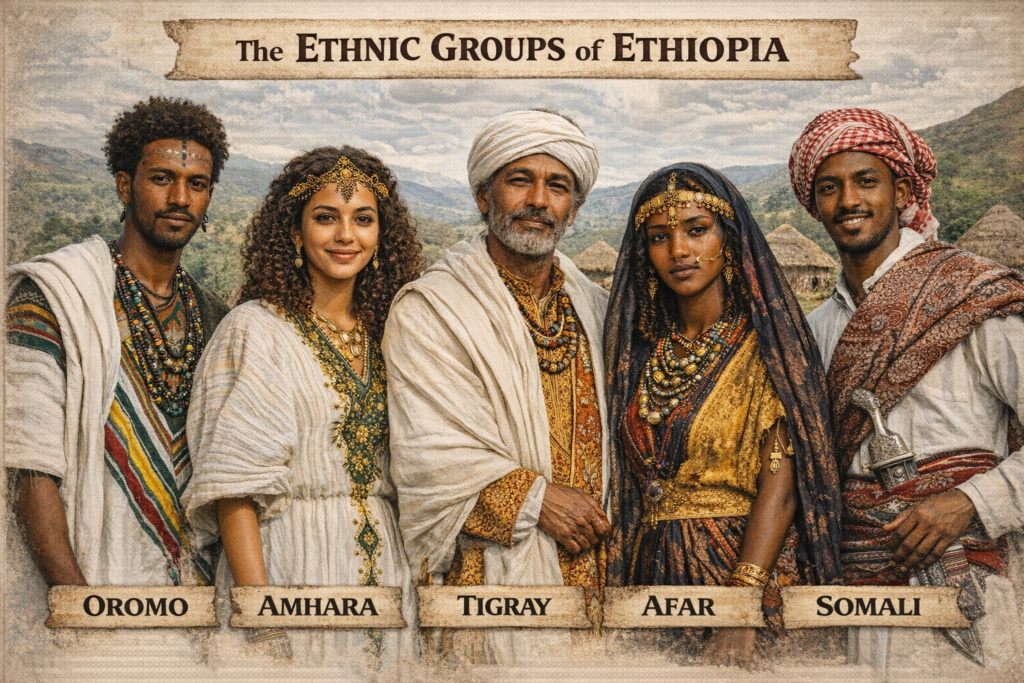
    Take Ethiopia as an example. To outsiders, they are all simply “Ethiopian.” But within Ethiopia, people may identify first as Oromo, Tigray, Amhara, Afar, or something else entirely. Those identities are not cosmetic. They are rooted in deep histories, sometimes cooperation, sometimes rivalry, and sometimes conquest. These groups have their own languages, cultures, and histories that may seem similar to outsiders but are very distinct to Ethiopians themselves.

    An AI generated image comparing the different ethnicities of Ethiopia.
    Some of the ethnicities in Ethiopia.

    That is one reason why the question, “Why did Africans sell their own people into slavery?” is often framed misleadingly.

    In many cases, they did not see the people they were selling as “their own people” in the way we mean that phrase today. That doesn’t excuse it morally, but it does make it historically legible.

    A Weird Thought Experiment as a Comparison

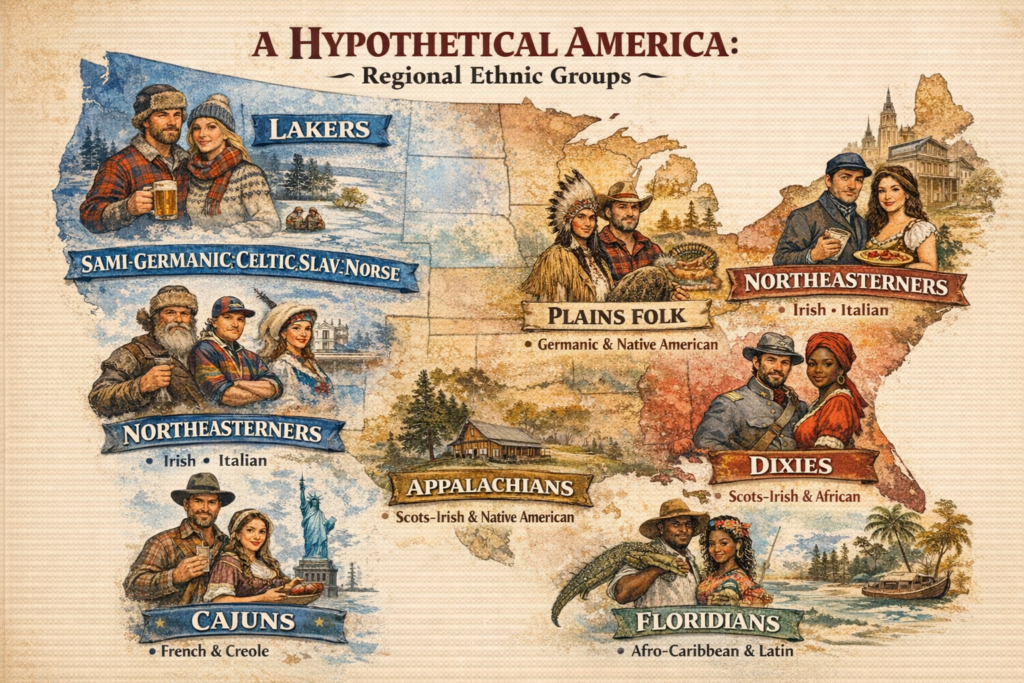
    An AI generated picture with different hypothetical ethnicities of people on a map of the mainland United States.
    A relatively small number of the hypothetical American ethnicities in my thought experiment. These are the different people I imagined if the current makeup of the United States were allowed to develop separately for a long period of time.

    Let’s imagine that the United States is much older than it is. Let’s, in turn, imagine that each region was able to evolve in some isolation for a long time. The Californians will have a different culture and possibly a different language from the Cajuns, the Appalachians, the Lakers to the North, the Dixies, the Floridians, the Plains Folk, the Northeasterners, etc.

    Even right now, with all of us identifying as “American”, except with a hyphenated race identifying prefix, we are different people regionally, with different political ideologies.

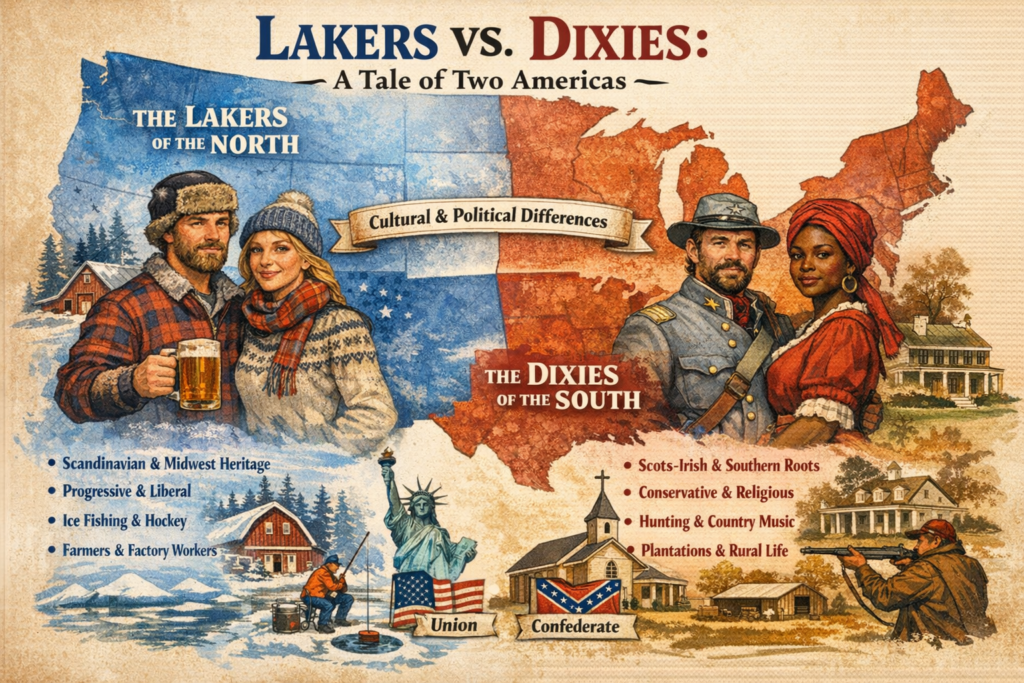
    The Dixies (the people of the Deep South) have ALWAYS been very conservative, religious, and loyal to hierarchical systems, whether it was ruled by Republicans, Democrats, Whigs, Democratic-Republicans, Federalists, Loyalists, or whatever party or faction.

    This is different than the Lakers of the eastern parts of the upper Midwest (from Michigan to Minnesota). The Lakers have always been more liberal, regardless of their political party allegiance.

    Lakers and Dixies are different.

    An AI generated picture highlighting the differences of the Lakers and the Dixies.
    The Lakers and the Dixies are different people in this thought experiment, but their attitudes and sentiments come from reality.

    Dixies are the descendants of Scots, Irish, Africans, and Native Americans. Lakers are the descendants of Scandinavians, the French, and Native Americans.

    Please keep in mind that this is a weird thought experiment to explain African sentiment.

    If the Dixies and Lakers were separated by up to 300K years and have evolved their own languages and customs, then why should we expect them to think of each other as “one people?” If the Dixies and Lakers are different now after only 250 years. Imagine how different they would be after 500 years, 1000 years, 10K years, 50K years, 70K years, 100K years, 150K years, and 300K years. And naturally, the Lakers and Dixies will branch into smaller subgroups and so forth.

    A Better Comparison

    A better comparison would be asking:

    • Why did the Greeks enslave the Macedonians?
    • Why did Spartans dominate Athenians?
    • Why did rival European peoples conquer one another for centuries?

    The answer is simple: they did not see themselves as one people.

    That is much closer to how many African societies historically understood themselves. Ethnicity, kinship, language, and political allegiance mattered more than some broad racial solidarity that would only become more meaningful later under European domination.

    What Slavery and White Supremacy Changed

    For Black people in the diaspora, however, the story was very different.

    In the United States, especially, people of African descent were stripped of their original ethnic identities and grouped into a single racial caste. Whether your ancestors were Igbo, Wolof, Mende, Akan, Kongo, or something else became socially irrelevant in a white supremacist society that only saw one category: Black.

    That process was violent, dehumanizing, and catastrophic.

    But it also produced a single peoplehood forged through oppression. This is something new.

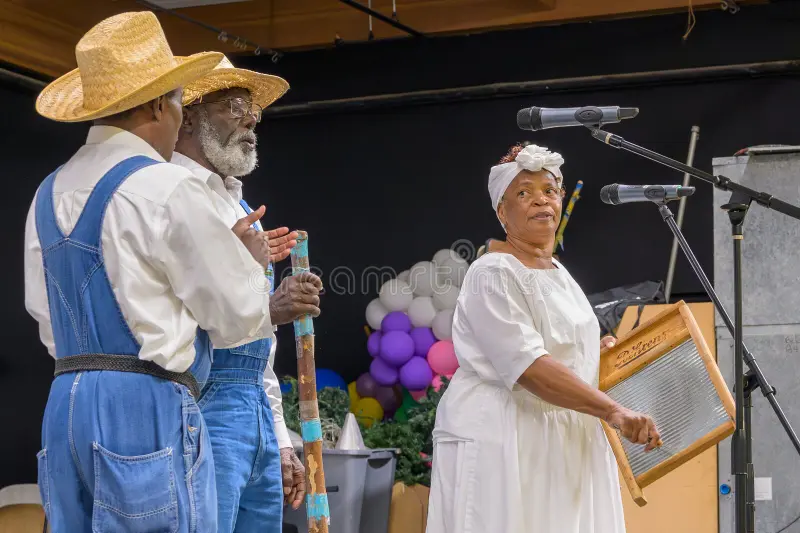
    Black Americans today may have major internal cultural differences, such as Gullah, Creole, Black Midwesterners, Black Southerners, Black Northeasterners, and so on. However, we are still socially treated as one people. In that sense, our race had become our ethnicity and historical/cultural marker.

    A royalty free image from Dreamstime of Gullah.
    The Gullah people.

    Africa and the Diaspora Are Related, But Not the Same

    That is part of what makes the relationship between continental Africans and the diaspora so complicated.

    We are connected by ancestry, by history, and by racialization in a white-dominated world. But we are not simply interchangeable. Africans are not automatically “us,” and we are not automatically “them,” at least not in a cultural or ethnic sense.

    That doesn’t mean the connection is fake. It means the connection has to be understood honestly.

    This is the same for Black Americans, Black Canadians, Black Jamaicans, Afro-Latinos, and other Diasporans. We’ve been separated long enough to have different cultures, different linguistic rules, and different sets of values.

    And that honesty matters because it opens the door to a more mature version of Pan-Africanism based not on fantasy, but on political solidarity.

    The Future of Pan-Africanism

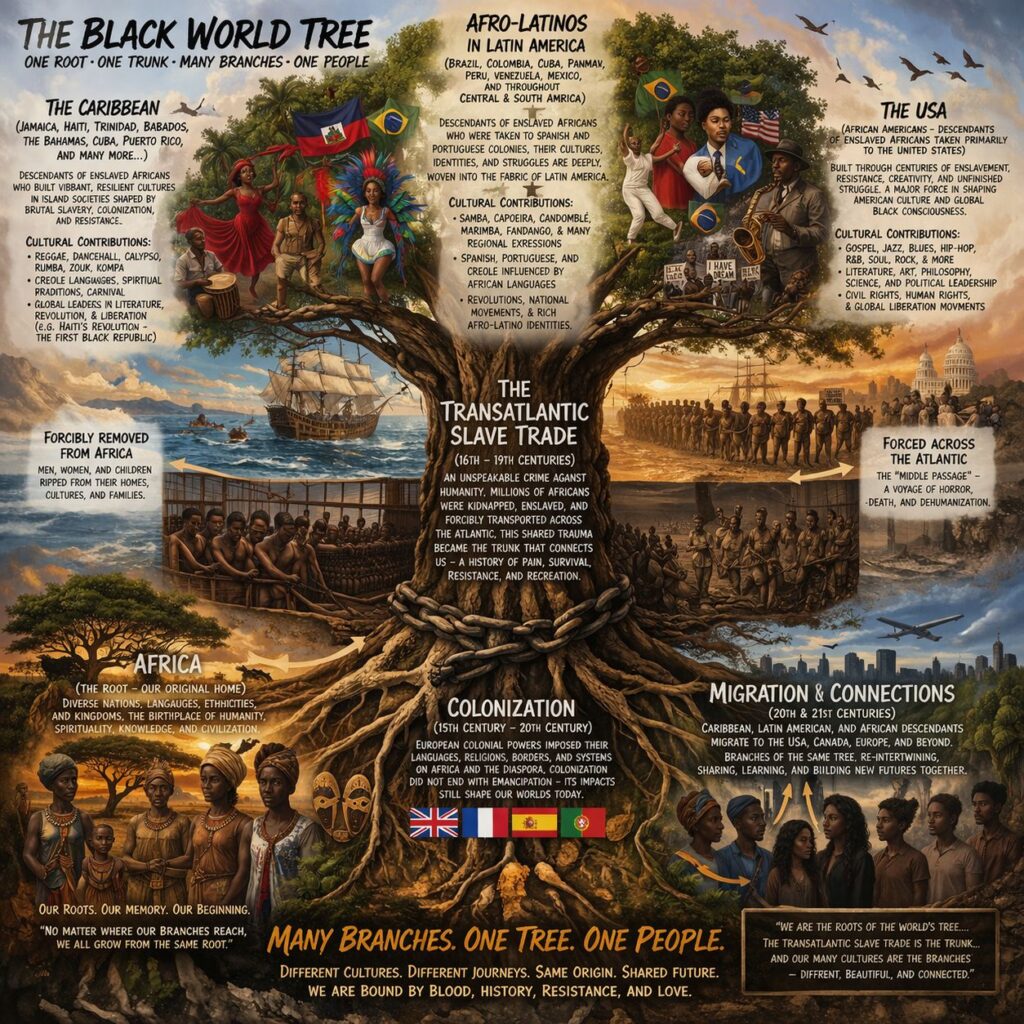
    An AI image of the African Diaspora represented by a tree.
    The Black World Tree by Dike Obioma Matthew. He had permitted me to use this image on my blog. In this, he makes the Trans-Atlantic Slave Trade the Trunk of the tree uniting the people of many different roots before they are branched off.

    The encouraging thing is that many Africans and people across the diaspora are increasingly embracing a broader consciousness.

    More and more people are beginning to see that, whatever their ethnic or national differences, they share a common struggle against White supremacy, neocolonialism, extraction, and domination.

    In that sense, Pan-Africanism is not about pretending all Black people are the same. We are not. But neither are White people nor Asians.

    It is about recognizing that we do not have to be the same to fight for one another.

    That is the challenge and the promise.

    Africa does not need to dominate the world. Neither does the diaspora.

    The goal is about something much more meaningful than some bullshit race to the top.

    Our goal is about self-determination, dignity, cooperation, and the power to shape our own destiny without the aid, supervision, or permission of powerful developed countries run by those of European or Asian descent.