Tag: myth

  • American History Myths #4: The Myth That the Parties Never Realigned

    American History Myths #4: The Myth That the Parties Never Realigned

    One of the most persistent claims in modern political debates is that the Democratic and Republican parties have remained essentially the same throughout American history. According to this argument, the political coalitions and ideologies of the nineteenth century supposedly still define the parties today.

    This claim ignores one of the most well-documented developments in American political history: the gradual ideological realignment of the two major parties from the late nineteenth century through the late twentieth century.

    Following the Civil War, the Republican Party was widely associated with the Union victory and the abolition of slavery. During Reconstruction, Republicans supported many early civil rights measures intended to protect the rights of newly freed Black Americans.

    However, that political commitment weakened dramatically after the Compromise of 1877, which effectively ended Reconstruction. Federal enforcement of civil rights protections collapsed, and white supremacist governments regained control across much of the South.

    For decades afterward, Southern politics was dominated by segregationist Democratic politicians often referred to as Dixiecrats. These politicians supported Jim Crow laws, racial segregation, and policies designed to disenfranchise Black voters.

    But American political coalitions were not static.

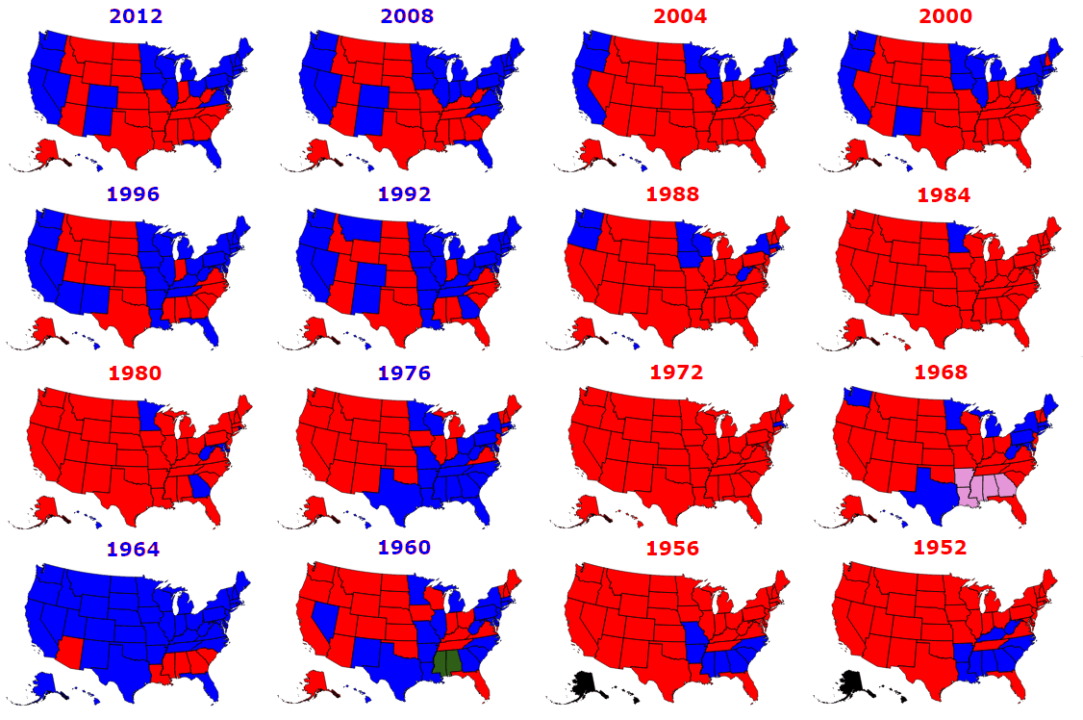
    Beginning in the mid-twentieth century, particularly during the Civil Rights Movement of the 1950s and 1960s, many white Southern conservatives began shifting their political allegiance. As national Democratic leaders increasingly supported civil rights legislation, large numbers of segregationist voters and politicians gradually moved toward the Republican Party.

    This transition did not happen overnight. It unfolded over several decades, from the 1960s through the 1980s and even into the early 1990s. Historians and political scientists commonly refer to this process as political realignment.

    The shift can be seen in electoral patterns across the South. States that had reliably voted for Democratic presidential candidates for nearly a century increasingly began supporting Republican candidates. Conservative Southern politicians who once identified as Democrats also began switching parties.

    Despite this well-documented transformation, some modern political commentators attempt to deny that any realignment occurred. Instead, they argue that the parties remain essentially unchanged and that historical responsibility for segregationist politics belongs exclusively to one party.

    But historical evidence tells a more complicated story.

    The ideological divide in American politics has long revolved less around party labels and more around competing views about civil rights, federal power, and social hierarchy. Over time, the political coalitions representing those views have shifted between parties.

    This is why discussions of American political history require careful attention to ideology, region, and historical context, rather than relying solely on party labels.

    Reducing the history of American civil rights struggles to simple partisan talking points obscures the reality of how political coalitions evolve. Understanding that evolution is essential for understanding the political landscape of the United States today.

  • American History Myth #2: The Myth of “Anglo-American Culture”

    American History Myth #2: The Myth of “Anglo-American Culture”

    Why American culture has always been a cultural fusion.

    In recent years, the word “culture” has increasingly become a coded talking point in political debates about immigration and national identity. Some commentators claim that the United States was founded on a supposedly pure “Anglo-American culture” that must be protected from outside influence.

    The problem is that this idea collapses under even basic historical scrutiny.

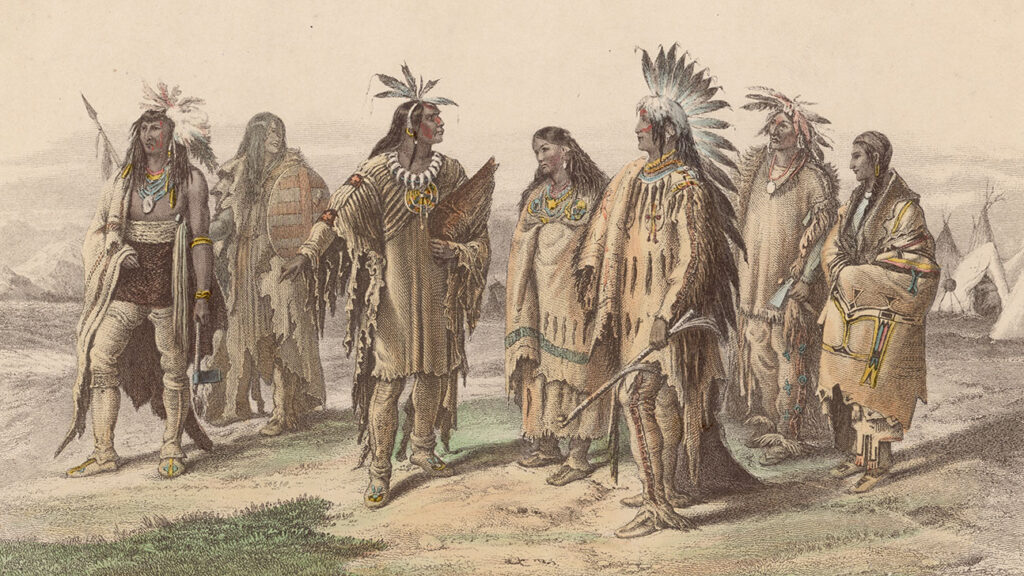
    From its very beginning, the United States was not the product of a single culture. It emerged from the interaction of many peoples: Native Americans, Europeans from multiple nations, and Africans brought through the transatlantic slave trade. What developed over time was not a uniform tradition but a cultural fusion.

    Even the political ideas behind the United States were influenced by multiple traditions. The Magna Carta is often cited as an inspiration for American constitutional principles, but historians have also noted the influence of the Iroquois Confederacy’s Great Law of Peace on early American political thought.

    The Iroquois Confederacy’s Great Law of Peace was one of the inspirations for the Constitution of the United States

    The same cultural blending appears throughout everyday American life.

    Many foods commonly associated with European cuisine actually originated in the Americas. Crops such as corn, potatoes, and tomatoes, and meats such as turkeys were unknown in Europe before the Columbian Exchange. Today, these foods are staples in dishes that people often assume are traditionally European.

    American music tells a similar story. Genres that many people associate with “white” American culture (such as country, bluegrass, and rock) developed from the interaction of African instruments and musical traditions with European instruments and folk styles. Even square dancing reflects this cultural exchange.

    The English language as spoken in the United States also reveals the depth of these influences. Many common words come from Native American languages. Animals such as moose, coyote, and skunk all derive their names from Indigenous sources. Other words, such as banjo, banana, cola, yam, and goober, entered English through African languages.

    This pattern is not unique to the United States. Cultural mixing has shaped societies throughout history.

    The culture of the modern United Kingdom, for example, developed from layers of migration and conquest. The British Isles were shaped by the interactions of Celtic peoples, Romans, Anglo-Saxons, Vikings, Normans, and others. Each group influenced the culture that followed.

    The same dynamic occurred in the United States.

    Throughout American history, waves of immigrants from Ireland, Germany, Italy, Poland, China, Japan, Mexico, and many other places have contributed to the country’s evolving culture. Each group added elements that eventually became part of what we now recognize as American life.

    Even in the colonial period, there was no single “Anglo-American” culture. Colonial societies differed dramatically from region to region. New York began as a Dutch colony before the British took control. Pennsylvania attracted Quakers and later large numbers of Catholics. Delaware was originally settled by the Swedes. Cultural diversity existed from the very beginning.

    This is why the claim that America must preserve a single “Anglo-American culture” is historically misleading. American culture has never been static, and it has never belonged to just one group.

    It has always been shaped by the interaction of many peoples and traditions.

    The United States will continue to evolve as people from places such as Nigeria, Honduras, Haiti, Nepal, and Fiji make their lives here. That evolution is not a threat to American culture. It is how American culture has always developed.

    No culture remains frozen in time. The story of American culture, like the story of every nation, is one of constant change.