
Why American culture has always been a cultural fusion.
In recent years, the word “culture” has increasingly become a coded talking point in political debates about immigration and national identity. Some commentators claim that the United States was founded on a supposedly pure “Anglo-American culture” that must be protected from outside influence.
The problem is that this idea collapses under even basic historical scrutiny.
From its very beginning, the United States was not the product of a single culture. It emerged from the interaction of many peoples: Native Americans, Europeans from multiple nations, and Africans brought through the transatlantic slave trade. What developed over time was not a uniform tradition but a cultural fusion.
Even the political ideas behind the United States were influenced by multiple traditions. The Magna Carta is often cited as an inspiration for American constitutional principles, but historians have also noted the influence of the Iroquois Confederacy’s Great Law of Peace on early American political thought.
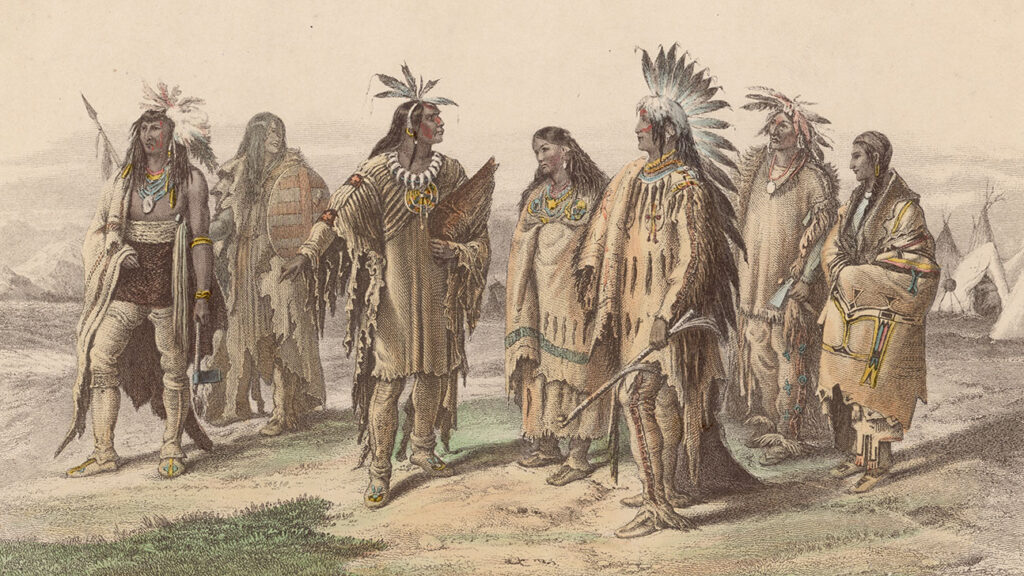
The same cultural blending appears throughout everyday American life.
Many foods commonly associated with European cuisine actually originated in the Americas. Crops such as corn, potatoes, and tomatoes, and meats such as turkeys were unknown in Europe before the Columbian Exchange. Today, these foods are staples in dishes that people often assume are traditionally European.
American music tells a similar story. Genres that many people associate with “white” American culture (such as country, bluegrass, and rock) developed from the interaction of African instruments and musical traditions with European instruments and folk styles. Even square dancing reflects this cultural exchange.
The English language as spoken in the United States also reveals the depth of these influences. Many common words come from Native American languages. Animals such as moose, coyote, and skunk all derive their names from Indigenous sources. Other words, such as banjo, banana, cola, yam, and goober, entered English through African languages.
This pattern is not unique to the United States. Cultural mixing has shaped societies throughout history.
The culture of the modern United Kingdom, for example, developed from layers of migration and conquest. The British Isles were shaped by the interactions of Celtic peoples, Romans, Anglo-Saxons, Vikings, Normans, and others. Each group influenced the culture that followed.
The same dynamic occurred in the United States.
Throughout American history, waves of immigrants from Ireland, Germany, Italy, Poland, China, Japan, Mexico, and many other places have contributed to the country’s evolving culture. Each group added elements that eventually became part of what we now recognize as American life.
Even in the colonial period, there was no single “Anglo-American” culture. Colonial societies differed dramatically from region to region. New York began as a Dutch colony before the British took control. Pennsylvania attracted Quakers and later large numbers of Catholics. Delaware was originally settled by the Swedes. Cultural diversity existed from the very beginning.
This is why the claim that America must preserve a single “Anglo-American culture” is historically misleading. American culture has never been static, and it has never belonged to just one group.
It has always been shaped by the interaction of many peoples and traditions.
The United States will continue to evolve as people from places such as Nigeria, Honduras, Haiti, Nepal, and Fiji make their lives here. That evolution is not a threat to American culture. It is how American culture has always developed.
No culture remains frozen in time. The story of American culture, like the story of every nation, is one of constant change.
Leave a Reply