Category: American History Myths

The American History Myths series examines widely repeated claims about the history of the United States and places them in proper historical context. Many popular narratives about American history are built on incomplete information, misleading statistics, or simplified interpretations that are repeated so often they begin to sound like fact.

This section of The Rio Stanton Report explores those claims by looking at historical evidence, political context, and the ways certain stories about the past continue to shape modern debates. From misconceptions about slavery and the Civil War to myths about culture, immigration, and national identity, these essays aim to separate historical reality from political talking points.

Understanding history requires more than repeating familiar slogans. It requires examining evidence, asking difficult questions, and recognizing how the past continues to influence the present.

  • American History Myths #7:The Myth of “Irish Slavery” and the Politics of Bad History

    American History Myths #7:The Myth of “Irish Slavery” and the Politics of Bad History

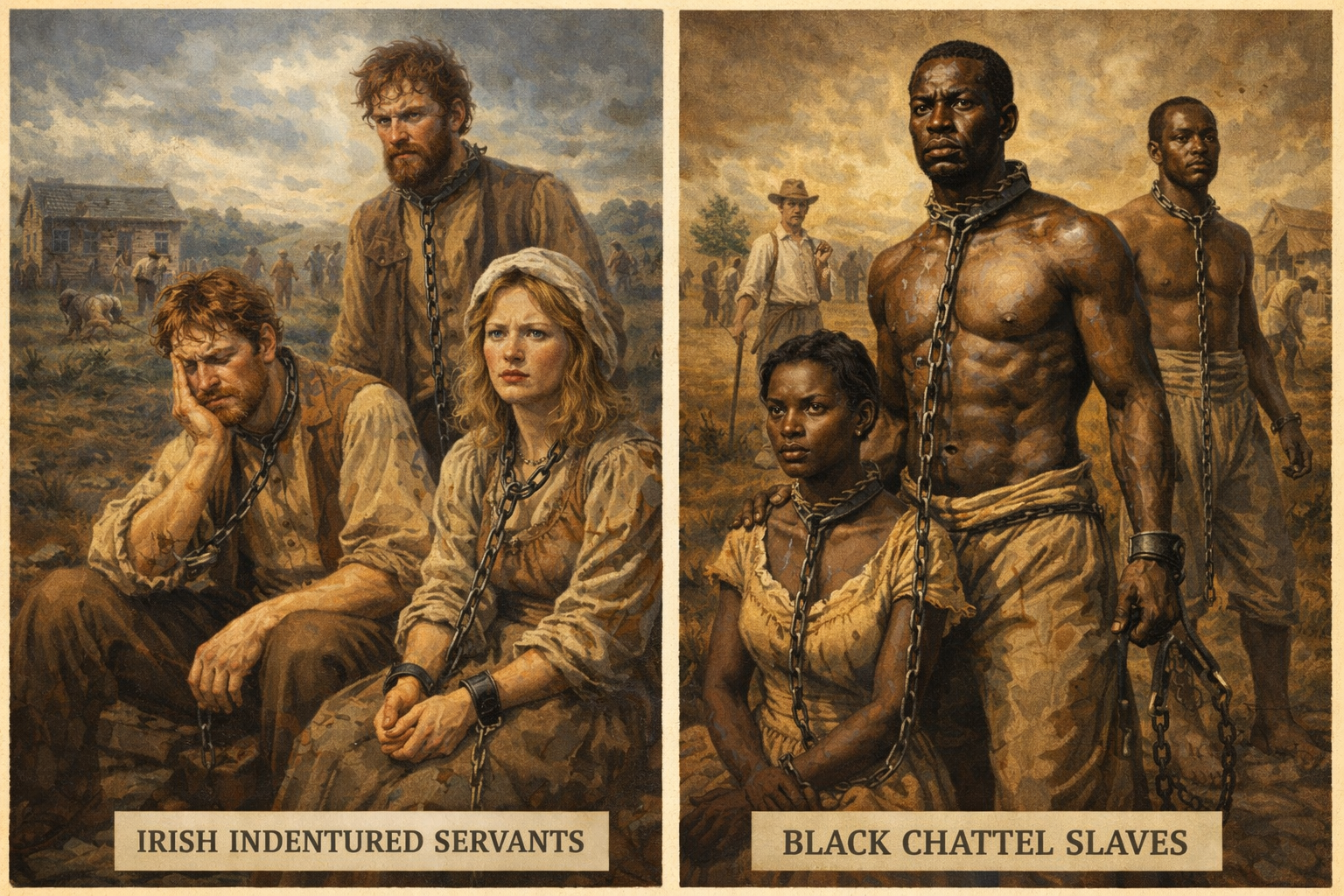
    Every so often, a meme or viral post circulates claiming that the Irish were enslaved in the Americas in the same way that Africans were. It’s one of the biggest historical distortions I see repeated online. The idea that “Irish slaves” existed in the same way as African slaves is about as academically credible as the claim that Black Americans are actually Native Americans and not part of the African diaspora (that post will be coming soon).

    In other words, the entire premise is built on bad research, misinterpretation, and repetition. When a claim gets repeated often enough within a certain audience, people begin to treat it as fact, even when it collapses under the slightest historical scrutiny.

    But let’s entertain the argument for a moment.

    Let’s pretend, for the sake of discussion, that Irish people in colonial America were enslaved under conditions as harsh as, or even worse than, those faced by enslaved Africans or descendants of Africans. Even in that hypothetical scenario, the historical outcomes would still be vastly different than the horrific reality that Black slaves endured.

    After slavery ended in the United States, Irish immigrants were able to assimilate into the broader category of whiteness after a relatively brief period of northern discrimination against them. This was mostly based on xenophobic ideas rather than strict adherence to a rigid and inhumane racial hierarchy.

    Although there was some discrimination against Irish immigrants during much of the latter half of the 19th century and the early 20th century, there were no “Irish Codes” modeled after the Black Codes. There were no Jim Crow laws designed to keep Irish Americans segregated. There were only a relatively few systematic housing policies designed to prevent Irish people from living in certain neighborhoods, and no widespread legal restrictions prevented them from entering particular professions.

    In fact, Irish Americans quickly became deeply embedded in American civic life. In cities across the country, from Boston to New York to Chicago, Irish Americans filled municipal jobs, political offices, and police departments.

    Whatever discrimination the Irish faced as immigrants in the nineteenth century eventually gave way to full incorporation into the American definition of “white.”

    The same cannot be said for Black Americans.

    Other European immigrant groups—Italians, Poles, and others—also faced discrimination when they first arrived in the United States. Yet over time, most of these groups were absorbed into the dominant white majority. In many cases, they even became participants in the same social and political systems that marginalized Black Americans.

    This is a crucial aspect of the historical narrative that is often overlooked.

    The uncomfortable truth is that many Europeans, including the Irish, participated in systems that upheld slavery and racial hierarchy. Irish immigrants were not merely victims of history. Many were slaveholders in the Caribbean, plantation overseers, or participants in slave-catching systems within the United States.

    The New York Draft Riots of 1863 offer a stark example of this tension. Irish immigrants in New York violently resisted being drafted to fight in the Civil War, and many of those riots turned into attacks against Black residents of the city. It would make little sense for Irish rioters to protest a war that was supposedly freeing “Irish slaves.” They understood perfectly well to whom slavery applied in America.

    And the reality was simple: slavery in the United States was overwhelmingly imposed on Black people.

    Some people feel compelled to rewrite history to minimize that fact. But arguments built on historical distortions ultimately collapse under their own weight. When people attempt to counter the legacy of slavery with myths, they end up strengthening the very grievances they are trying to dismiss.

    So let’s state the truth and the historical record clearly.

    • Irish Americans ultimately assimilated into the broader category of whiteness and were able to participate fully in American society by the early to mid-20th century.
    • The system of American slavery became explicitly racial because race made it easier to identify who could be enslaved and who could not.
    • The legacy of chattel slavery, followed by Jim Crow, segregation, and institutional discrimination, continues to shape American society today. There is no such legacy connected with the mistreatment of Irish immigrants.
    • When Black Americans discuss slavery, we are not asking for pity or charity. What we are demanding is full participation in American society without harassment, stigma, or the expectation that we must hide parts of ourselves to be accepted.

    History is complicated. But it becomes even more complicated when people intentionally distort it for political convenience or to escape collective culpability.

    The truth is difficult enough without myths getting in the way. And lying about and/or omitting history will not shield the guilty from accountability.
  • American History Myths #6: The Myth of “Northern Innocence”

    American History Myths #6: The Myth of “Northern Innocence”

    One of the most persistent myths in American history is the idea that legalized segregation and anti-Black racism were primarily Southern problems.

    According to this narrative, the South was the land of slavery, Jim Crow, and overt racial hostility, while the North, especially the so-called “liberal North,” was supposedly a place where racial equality flourished, and people lived together in relative harmony.

    For decades, this is essentially how American history was taught.

    But the reality is far more complicated.

    Anti-Black racism was not confined to the South. It existed throughout the United States, including in Northern cities that often presented themselves as progressive and tolerant. While Southern states openly enforced segregation through Jim Crow laws, Northern states frequently relied on other mechanisms to achieve many of the same results.

    One of the most powerful tools used to maintain racial segregation in Northern and Western cities was the racial covenant.

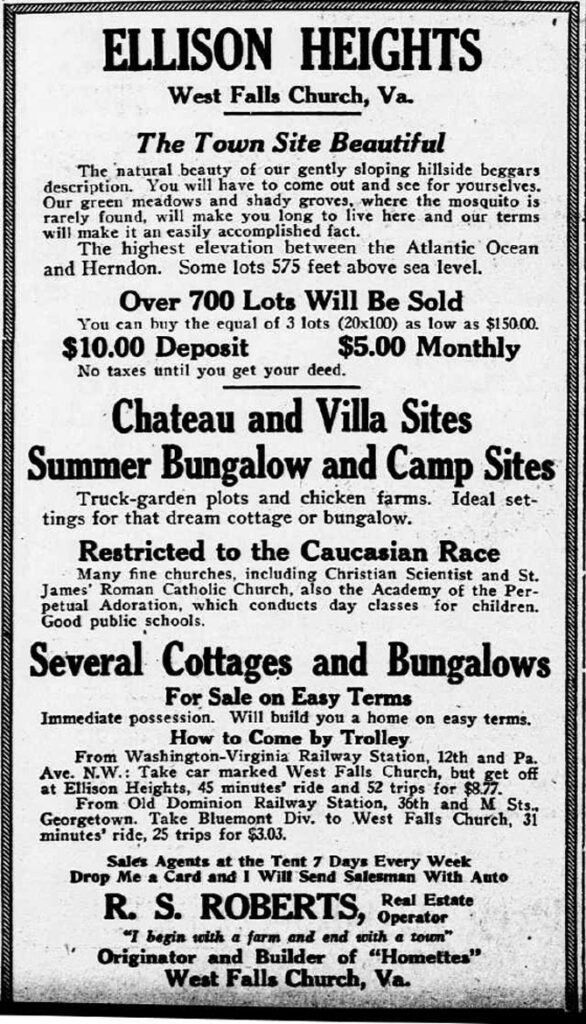
    Racial covenants were clauses written into property deeds by real estate developers, neighborhood associations, and homeowners. These clauses prohibited the sale or rental of property to certain groups, most commonly Black Americans, but also often including Asian Americans, Jews, and other minorities.

    Example of a racial covenant. Note the words “Restricted to the Caucasian Race”

    These restrictions were widespread across the country. Entire neighborhoods were built with the explicit condition that homes could not be sold to non-white residents.

    The consequences were enormous.

    By restricting where Black families could live, racial covenants effectively barred them from access to wealthier neighborhoods, better public schools, and the property values that allowed many white families to accumulate generational wealth through home ownership.

    Racial covenants were only one piece of a larger system of discrimination often referred to as racial steering or social steering. Through practices by real estate agents, banks, and government institutions, different racial groups were deliberately directed or confined to specific areas of cities and metropolitan regions.

    Although the Supreme Court ruled racially restrictive covenants unenforceable in Shelley v. Kraemer (1948) and the Fair Housing Act of 1968 outlawed many forms of housing discrimination, the patterns created by decades of segregation did not disappear overnight.

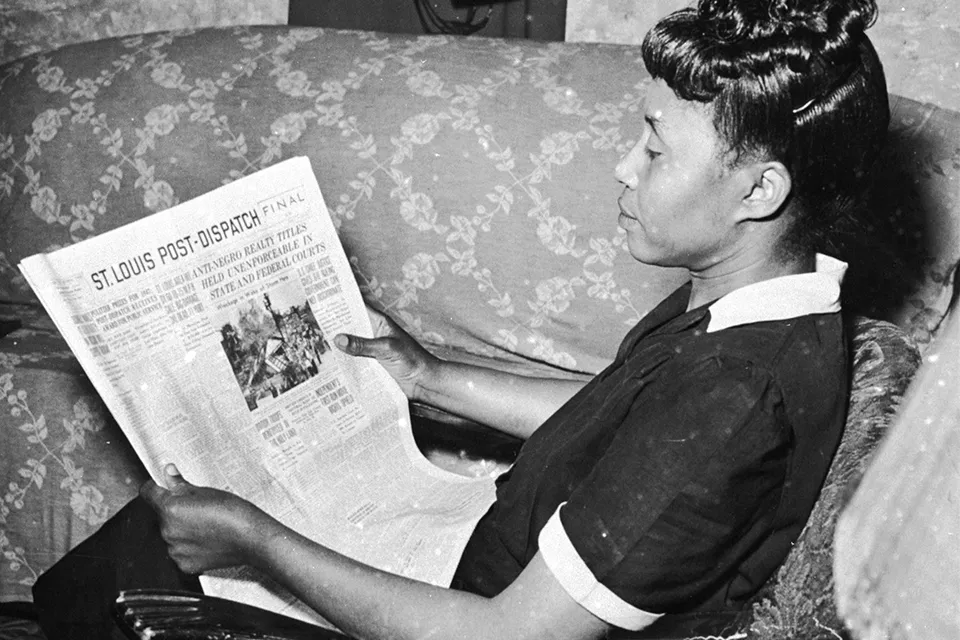
    Ethel Shelley reads a May 4, 1948, St. Louis Post-Dispatch story about the Supreme Court decision outlawing racial covenants. (Courtesy St. Louis Post-Dispatch)

    In many cases, they persisted.

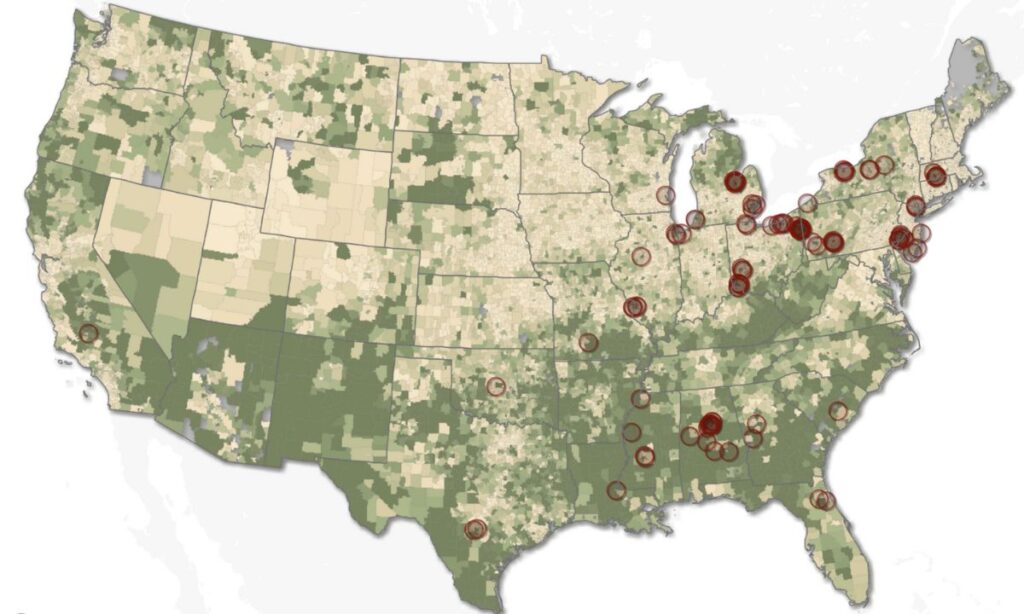
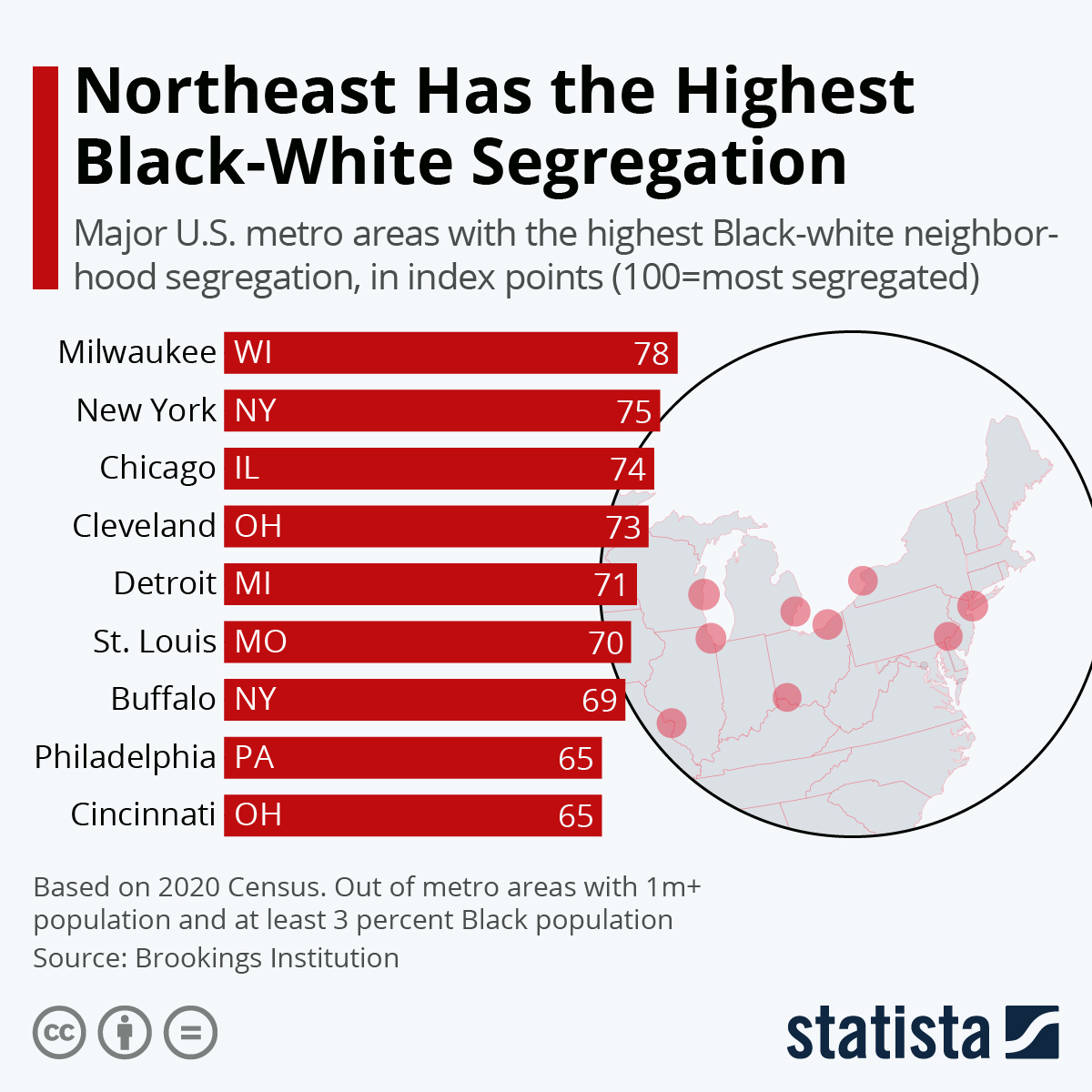
    Even today, many American cities remain deeply segregated along racial lines. Schools often reflect the same residential patterns, meaning that educational opportunities can still be shaped by where families are able… or allowed… to live.

    Click on the link attached to the word “schools” in the paragraph above for more information on this map.

    Understanding this history challenges the comfortable narrative that racism was solely a Southern problem. The structures that created racial inequality in the United States were national in scope, and their effects continue to shape American society today.

    The myth of Northern innocence obscures that reality.

  • American History Myths #5: Once More on the Myth That the Major Political Parties Never Realigned

    American History Myths #5: Once More on the Myth That the Major Political Parties Never Realigned

    I’m going to beat the proverbial dead horse here, but I feel I need to reiterate a point I made previously in this blog.

    One of the most persistent myths in modern American political discourse is the claim that the Democratic and Republican parties have remained ideologically consistent throughout history. According to this narrative, the Republican Party has always been the party of civil rights and racial progress, while the Democratic Party has always been the party of racism.

    This claim collapses under even the most basic historical scrutiny.

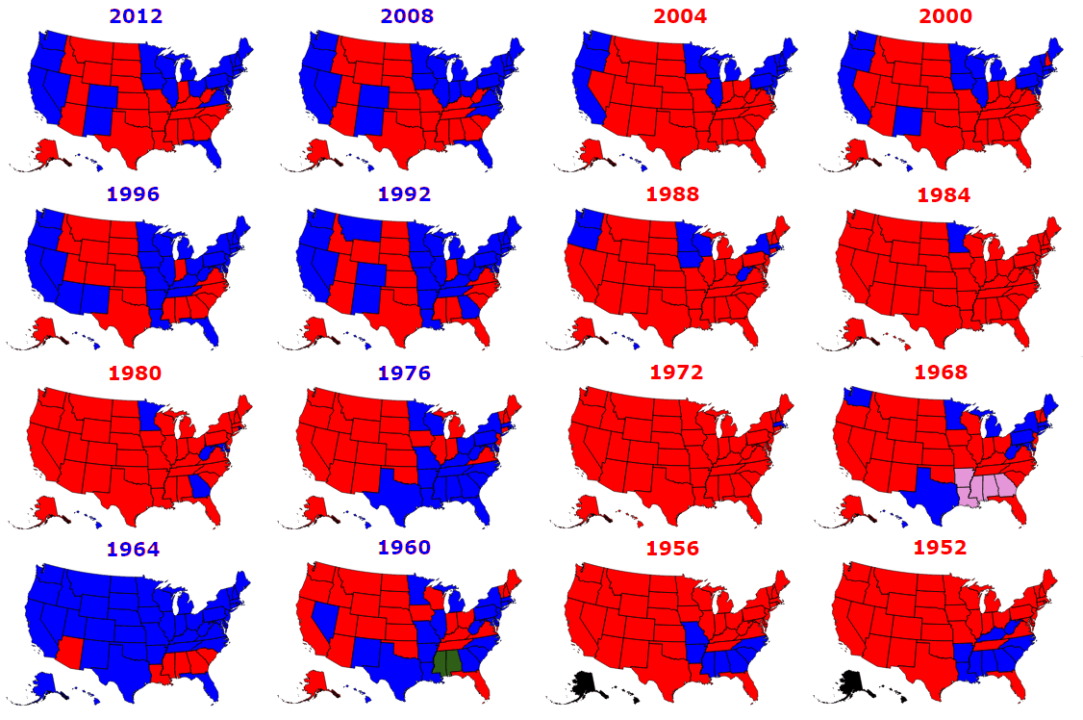
    To maintain the illusion, modern conservatives must ignore several inconvenient facts. They must ignore the political dealignment and realignment that occurred between the late nineteenth century and the late twentieth century. They must ignore the steady migration of white Southern conservatives—particularly segregationists—from the Democratic Party into the Republican Party during the second half of the twentieth century.

    They must also ignore the uncomfortable reality that many of the political figures celebrated in modern conservative circles were themselves defenders of slavery, segregation, and white supremacy.

    The historical record is clear: the ideology of Southern conservatism did not disappear after the Civil Rights Movement. It simply found a new political home.

    During the 1960s through the 1990s, many of the most hardline segregationist politicians—often referred to as Dixiecrats—gradually abandoned the Democratic Party and aligned themselves with the Republican Party. At the same time, the Republican Party increasingly adopted political strategies designed to attract white Southern voters who opposed civil rights reforms.

    This shift was not subtle. It was openly discussed by political strategists and historians alike.

    Yet modern conservatives often pretend that none of this happened.

    Instead, they promote a simplified narrative in which the Republican Party “freed the slaves” and therefore cannot possibly bear any responsibility for the racial politics that emerged in the twentieth century. The fact that the ideological descendants of segregationists now overwhelmingly identify as conservative Republicans is conveniently ignored.

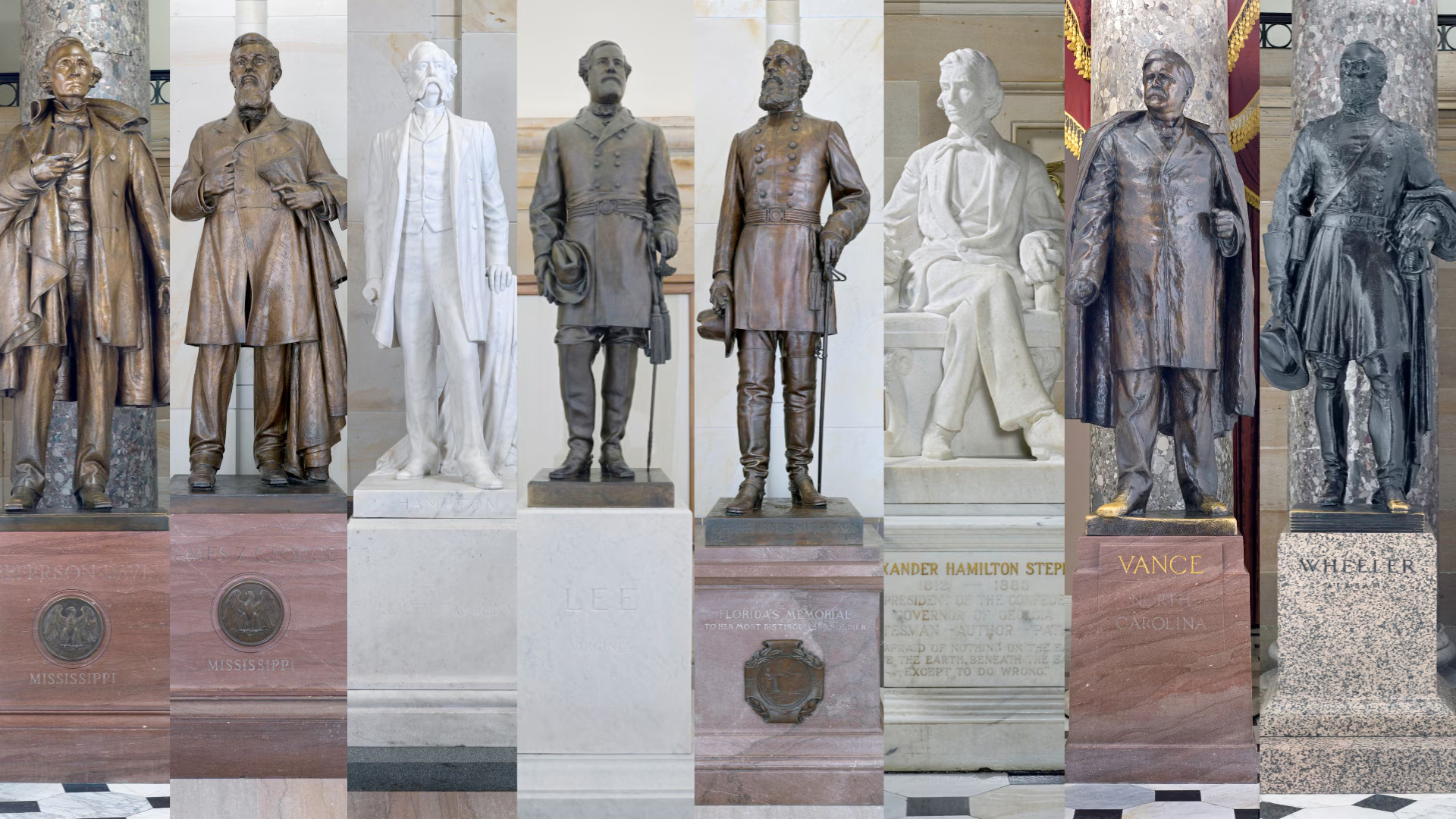
    At the same time, many conservative politicians and commentators openly celebrate figures from the Confederate past while dismissing or ignoring the Republican leaders who actually fought to preserve the Union and end slavery.

    Where are the monuments to Republican generals such as William Tecumseh Sherman or Ulysses S. Grant in the regions that once formed the Confederacy? Why are Confederate leaders, who were Democrats of their time, so often praised in modern conservative political culture?

    The answer is uncomfortable but obvious.

    For many conservatives, the issue has never truly been about party labels. It has always been about political ideology.

    This ideological continuity becomes particularly visible when modern politicians attempt to avoid even the most basic historical truths.

    For example, when asked about the causes of the American Civil War, some contemporary conservative politicians have offered vague explanations about “government,” “freedom,” or “states’ rights,” while carefully avoiding the central issue that historians overwhelmingly agree defined the conflict: chattel slavery.

    Yet the leaders of the Confederacy themselves left no such ambiguity.

    In their own declarations of secession, Southern states repeatedly and explicitly identified the preservation of slavery as the primary reason for leaving the Union.

    The historical record could not be clearer.

    Attempts to obscure that fact are not efforts to promote historical nuance. They are attempts to preserve comforting myths about the past.

    And those myths serve a political purpose.

    By denying the ideological continuity between past and present forms of white supremacist politics, modern conservatives attempt to distance themselves from the legacy of segregation and racial hierarchy while continuing to benefit from many of the political narratives that sustained those systems.

    None of this is to suggest that racism exists exclusively within one political party. Racism has existed across the American political spectrum throughout history.

    But it is impossible to have an honest conversation about American history—or modern American politics—without acknowledging the ideological realignment that reshaped the nation’s two major political parties during the twentieth century.

    History cannot be rewritten simply because it makes some people uncomfortable.

    In fact, the opposite is true.

    Understanding the darker chapters of our past is precisely how societies learn to avoid repeating them.

    Black Americans have long demonstrated that it is possible to love this country while also confronting its historical injustices. Despite centuries of discrimination, violence, and exclusion, Black Americans have served in the nation’s military, represented the country in international competition, and fought relentlessly to expand the promise of American democracy.

    Acknowledging historical injustice does not weaken the country.

    Pretending that those injustices never happened does.

    If Americans truly want to move forward, they must first be willing to tell the truth about where they have been.

  • American History Myths #4: The Myth That the Parties Never Realigned

    American History Myths #4: The Myth That the Parties Never Realigned

    One of the most persistent claims in modern political debates is that the Democratic and Republican parties have remained essentially the same throughout American history. According to this argument, the political coalitions and ideologies of the nineteenth century supposedly still define the parties today.

    This claim ignores one of the most well-documented developments in American political history: the gradual ideological realignment of the two major parties from the late nineteenth century through the late twentieth century.

    Following the Civil War, the Republican Party was widely associated with the Union victory and the abolition of slavery. During Reconstruction, Republicans supported many early civil rights measures intended to protect the rights of newly freed Black Americans.

    However, that political commitment weakened dramatically after the Compromise of 1877, which effectively ended Reconstruction. Federal enforcement of civil rights protections collapsed, and white supremacist governments regained control across much of the South.

    For decades afterward, Southern politics was dominated by segregationist Democratic politicians often referred to as Dixiecrats. These politicians supported Jim Crow laws, racial segregation, and policies designed to disenfranchise Black voters.

    But American political coalitions were not static.

    Beginning in the mid-twentieth century, particularly during the Civil Rights Movement of the 1950s and 1960s, many white Southern conservatives began shifting their political allegiance. As national Democratic leaders increasingly supported civil rights legislation, large numbers of segregationist voters and politicians gradually moved toward the Republican Party.

    This transition did not happen overnight. It unfolded over several decades, from the 1960s through the 1980s and even into the early 1990s. Historians and political scientists commonly refer to this process as political realignment.

    The shift can be seen in electoral patterns across the South. States that had reliably voted for Democratic presidential candidates for nearly a century increasingly began supporting Republican candidates. Conservative Southern politicians who once identified as Democrats also began switching parties.

    Despite this well-documented transformation, some modern political commentators attempt to deny that any realignment occurred. Instead, they argue that the parties remain essentially unchanged and that historical responsibility for segregationist politics belongs exclusively to one party.

    But historical evidence tells a more complicated story.

    The ideological divide in American politics has long revolved less around party labels and more around competing views about civil rights, federal power, and social hierarchy. Over time, the political coalitions representing those views have shifted between parties.

    This is why discussions of American political history require careful attention to ideology, region, and historical context, rather than relying solely on party labels.

    Reducing the history of American civil rights struggles to simple partisan talking points obscures the reality of how political coalitions evolve. Understanding that evolution is essential for understanding the political landscape of the United States today.

  • American History Myth #3: The Myth That Civil Rights Were Simply a “Republican Achievement”

    American History Myth #3: The Myth That Civil Rights Were Simply a “Republican Achievement”

    Modern political debates often reduce complex historical events to simple partisan talking points. One of the most common claims is that the Civil Rights Movement and the landmark civil rights legislation of the 1960s were primarily the achievement of conservative Republicans.

    This claim is frequently used in contemporary political arguments, but it oversimplifies a far more complicated historical reality.

    It relies on several incorrect assumptions:

    1. The Republican Party has always been a party of fiscal, social, and small-government conservatives.
    2. American political parties historically operated as unified ideological blocs rather than coalitions containing both liberal and conservative wings.
    3. Republicans were never involved in segregationist politics, white supremacist movements, or anti-Black rhetoric and policies.

    All three assumptions are historically inaccurate.

    In the decade following the Civil War, Republicans championed early civil rights legislation during Reconstruction. However, after the contested election of 1876 and the Compromise of 1877, which effectively ended Reconstruction, national political commitment to protecting Black civil rights declined dramatically.

    During the late nineteenth and early twentieth centuries, what historians often call the Nadir of American Race Relations (roughly 1887–1923), racist policies and segregation became entrenched across much of the United States. During this period, many politicians from both major parties adopted or tolerated segregationist attitudes.

    Fast forward to the 1960s and the passage of the Civil Rights Act of 1964.

    The legislation was originally proposed by President John F. Kennedy (D) in 1963. After Kennedy’s assassination, President Lyndon B. Johnson (D) made the bill a central priority of his administration and pushed aggressively for its passage.

    Several key members of Congress played major roles in advancing the legislation, including:

    • Hubert Humphrey (D–MN)
    • Emanuel Celler (D–NY)
    • Everett Dirksen (R–IL)
    • William McCulloch (R–OH)

    The final legislation was the result of bipartisan cooperation, though it was strongly driven by the Democratic administration and several Democratic leaders in Congress.

    The final vote totals were:

    House of Representatives
    289–126 (70–30%)

    Senate
    73–27

    When broken down by party, the numbers appear to show stronger Republican support:

    House

    • Democrats: 153–91 (69%)
    • Republicans: 136–35 (82%)

    Senate

    • Democrats: 44–23 (66%)
    • Republicans: 27–6 (82%)

    At first glance, these numbers might suggest that Republicans were the primary supporters of civil rights legislation.

    However, this interpretation ignores a crucial factor: region.

    When the votes are separated by region, a very different pattern appears.

    House of Representatives

    Northern members: 281–32 (90%) in favor
    Southern members: 8–94 (8%) in favor

    Senate

    Northern members: 72–6 (92%) in favor
    Southern members: 1–21 (5%) in favor

    In other words, the major divide was not simply party affiliation—it was North versus South.

    Looking at the votes by both region and party makes this even clearer.

    House

    Southern Democrats: 8–83 (9%) in favor
    Southern Republicans: 0–11 (0%) in favor

    Northern Democrats: 145–8 (95%) in favor
    Northern Republicans: 136–24 (85%) in favor

    Senate

    Southern Democrats: 1–20 (5%) in favor
    Southern Republicans: 0–1 (0%) in favor

    Northern Democrats: 45–1 (98%) in favor
    Northern Republicans: 27–5 (84%) in favor

    Not a single Southern Republican voted for the Civil Rights Act of 1964. Meanwhile, Northern Democrats supported the bill at even higher rates than Northern Republicans.

    Another important point often overlooked in modern political debates is that Democrats held large congressional majorities during this period.

    In the 88th Congress (1964), Democrats held:

    • 66 seats in the Senate
    • 253 seats in the House

    Without substantial Democratic support, the Civil Rights Act simply would not have passed.

    A similar pattern appeared in the Voting Rights Act of 1965. At that time, Democrats held even larger majorities:

    • 68–32 in the Senate
    • 295–140 in the House

    The final votes were:

    House
    333–85

    Senate
    77–19

    Again, both parties supported the legislation. But the historical record shows that the outcome cannot be reduced to a simple narrative about one party single-handedly delivering civil rights.

    The reality is more complex.

    Civil rights legislation in the 1960s passed through bipartisan coalitions, but those coalitions were shaped far more by regional politics and ideological divisions than by party labels alone.

    Reducing this history to a partisan talking point oversimplifies one of the most important political struggles in American history.

  • American History Myth #2: The Myth of “Anglo-American Culture”

    American History Myth #2: The Myth of “Anglo-American Culture”

    Why American culture has always been a cultural fusion.

    In recent years, the word “culture” has increasingly become a coded talking point in political debates about immigration and national identity. Some commentators claim that the United States was founded on a supposedly pure “Anglo-American culture” that must be protected from outside influence.

    The problem is that this idea collapses under even basic historical scrutiny.

    From its very beginning, the United States was not the product of a single culture. It emerged from the interaction of many peoples: Native Americans, Europeans from multiple nations, and Africans brought through the transatlantic slave trade. What developed over time was not a uniform tradition but a cultural fusion.

    Even the political ideas behind the United States were influenced by multiple traditions. The Magna Carta is often cited as an inspiration for American constitutional principles, but historians have also noted the influence of the Iroquois Confederacy’s Great Law of Peace on early American political thought.

    The Iroquois Confederacy’s Great Law of Peace was one of the inspirations for the Constitution of the United States

    The same cultural blending appears throughout everyday American life.

    Many foods commonly associated with European cuisine actually originated in the Americas. Crops such as corn, potatoes, and tomatoes, and meats such as turkeys were unknown in Europe before the Columbian Exchange. Today, these foods are staples in dishes that people often assume are traditionally European.

    American music tells a similar story. Genres that many people associate with “white” American culture (such as country, bluegrass, and rock) developed from the interaction of African instruments and musical traditions with European instruments and folk styles. Even square dancing reflects this cultural exchange.

    The English language as spoken in the United States also reveals the depth of these influences. Many common words come from Native American languages. Animals such as moose, coyote, and skunk all derive their names from Indigenous sources. Other words, such as banjo, banana, cola, yam, and goober, entered English through African languages.

    This pattern is not unique to the United States. Cultural mixing has shaped societies throughout history.

    The culture of the modern United Kingdom, for example, developed from layers of migration and conquest. The British Isles were shaped by the interactions of Celtic peoples, Romans, Anglo-Saxons, Vikings, Normans, and others. Each group influenced the culture that followed.

    The same dynamic occurred in the United States.

    Throughout American history, waves of immigrants from Ireland, Germany, Italy, Poland, China, Japan, Mexico, and many other places have contributed to the country’s evolving culture. Each group added elements that eventually became part of what we now recognize as American life.

    Even in the colonial period, there was no single “Anglo-American” culture. Colonial societies differed dramatically from region to region. New York began as a Dutch colony before the British took control. Pennsylvania attracted Quakers and later large numbers of Catholics. Delaware was originally settled by the Swedes. Cultural diversity existed from the very beginning.

    This is why the claim that America must preserve a single “Anglo-American culture” is historically misleading. American culture has never been static, and it has never belonged to just one group.

    It has always been shaped by the interaction of many peoples and traditions.

    The United States will continue to evolve as people from places such as Nigeria, Honduras, Haiti, Nepal, and Fiji make their lives here. That evolution is not a threat to American culture. It is how American culture has always developed.

    No culture remains frozen in time. The story of American culture, like the story of every nation, is one of constant change.

  • American History Myth #1: The “2% of Whites Owned Slaves” Myth

    American History Myth #1: The “2% of Whites Owned Slaves” Myth

    How misleading statistics distort the history of American slavery

    One of the most commonly repeated talking points in discussions about American slavery is the claim that “only about 2% of white Americans owned slaves.” Technically, the statistic isn’t entirely false. Historical records show that roughly 1.4% of white Americans were listed as the legal owners of enslaved people in 1860.

    But that statistic is also deeply misleading.

    The problem is that slave ownership was not simply an individual arrangement. It was a household institution. When a person legally owned enslaved people, everyone in that household benefited from and exercised authority over them. A slave owned by the father of a family was effectively under the control of the entire household: the wife, the children, and anyone else living on that property.

    This is the same reason that car ownership statistics in the United States are often measured by households rather than by individuals. A car may be registered in one person’s name, but the entire household typically has access to it.

    When historians measure slave ownership by households rather than individuals, the numbers change dramatically.

    By 1860, nearly 10% of all white families in the United States owned enslaved people.

    The concentration of slave ownership in the South makes the numbers even more striking. In that same year:

    • About 25% of white families in the South owned slaves.
    • In the states that would form the Confederacy, the number rose to 31%.
    • In South Carolina, approximately 46% of white families owned enslaved people.
    • In Mississippi, the number was roughly 49%.

    These figures reveal that slavery was not an obscure or marginal institution. In many parts of the South, it was a central feature of society.

    And even these numbers do not fully capture the scale of the system.

    The entire Southern economy was built around slavery. Many people who did not personally own enslaved individuals still profited from the institution. Slave catchers were paid to hunt down escaped slaves. Blacksmiths manufactured shackles and restraints. Insurance companies sold policies on enslaved people as property. Enslaved laborers were often rented out to families or businesses that did not technically own them.

    The percentage of white households that benefited economically from slavery was almost certainly much higher than the percentage that legally owned enslaved people.

    So why does the “2% statistic” get repeated so often?

    Because it serves a political purpose.

    In many contemporary debates about race and history, some commentators attempt to minimize the responsibility of white Americans for the system of chattel slavery. They frequently redirect attention toward African kingdoms that participated in the transatlantic slave trade, or they argue that slavery existed throughout the world, implying that American slavery was not particularly unique.

    But chattel slavery in the Western Hemisphere was fundamentally different from many earlier forms of slavery. It was racialized, hereditary, and legally defined as permanent property ownership over human beings.

    Another frequently overlooked fact is that the vast majority of enslaved people in the United States were not directly imported from Africa.

    By the nineteenth century, most enslaved people in the United States had been born into slavery within the country itself. Historians estimate that only about 4–6% of enslaved people in the history of the United States were directly imported from Africa. By 1860, the overwhelming majority of enslaved people were the descendants of earlier enslaved populations.

    This means that the American slave system was sustained largely through the forced reproduction and exploitation of enslaved families within the United States.

    None of this means that every white American owned slaves. In 1860, there were 33 states in the United States, and slavery was legal in only 15 of them. Many white Americans lived in free states or did not own land or enslaved laborers.

    But minimizing the scale of slavery—or the extent of public support for it—distorts the historical record.

    Slavery persisted not simply because of a small group of wealthy plantation owners, but because large segments of Southern society supported and defended the institution politically, economically, and culturally.

    Even families who did not personally own enslaved people could still support slavery by voting for pro-slavery politicians, working in industries that sustained the slave economy, serving as overseers or slave catchers, or fighting for the Confederacy during the Civil War.

    Statistics without context can obscure more than they reveal.

    The claim that “only 2% of whites owned slaves” may sound like an attempt to shrink the scale of responsibility. But when examined more closely, the historical reality shows that slavery was deeply embedded in the social, economic, and political life of the United States.