Tag: society

  • When I Disagreed With the New Atheists

    When I Disagreed With the New Atheists

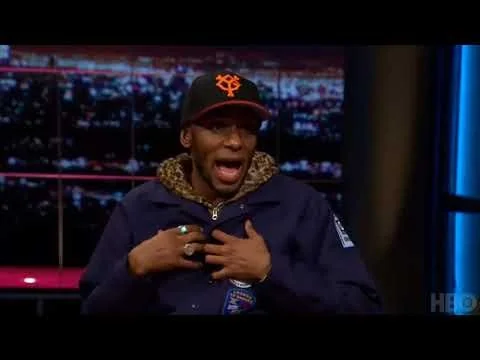
    Years ago, I wrote about a debate that took place on Real Time with Bill Maher between Yasiin Bey (formerly Mos Def) on one side and Bill Maher and Christopher Hitchens on the other. The topic, unsurprisingly, was the September 11 attacks and the broader question of Islam.

    At the time, I was widely known among my peers as an atheist thinker and leader. I would jokingly refer to myself as “the atheist.” Because of that, many people expected me to side with Maher and Hitchens. Both men were major figures in the New Atheist movement, and their criticism of religion (especially Islam) was widely embraced within those circles.

    But I found myself agreeing with Yasiin Bey.

    The reason was simple: I have never trusted the United States government’s justifications for many of the wars and military actions it has undertaken since World War II. History provides too many examples of misleading narratives, exaggerated threats, or outright falsehoods used to justify military intervention.

    I was also uncomfortable with the way Muslims were being singled out as uniquely dangerous.

    Most Muslims are not violent extremists. In my own life, I have known many Muslims, and they are as diverse in their beliefs, practices, and interpretations of their religion as Christians or Jews are.

    As a Black American, I also could not ignore another historical reality: my community has experienced far more terrorism from people identifying as Christians than from Muslims. Groups like the Ku Klux Klan cloaked themselves in Christian imagery and language while carrying out campaigns of terror against Black Americans.

    That history makes it difficult for me to accept arguments that treat Islam as uniquely violent while giving Christianity or Judaism a pass for the actions of their worst adherents.

    Maher and Hitchens often insisted that extremist Muslim groups represented something intrinsic to Islam itself. Yet when confronted with violent or extremist groups within Christianity, such as the KKK or Christian Identity movements, they were much quicker to argue that those groups were distortions of the religion rather than expressions of it.

    That double standard always bothered me.

    If organizations like ISIS or Al-Qaeda are considered perversions of Islam (and I believe they are), then the same intellectual honesty should be applied when discussing extremist groups that claim Christian identity.

    At the time, my position drew criticism from some of my fellow atheists. Many people in the New Atheist movement treated Maher and Hitchens almost as intellectual heroes, and disagreeing with them was not always well received.

    But I have always believed that intellectual honesty matters more than tribal loyalty.

    I still respect both Maher and Hitchens for their role in normalizing atheism and encouraging people to question religious authority. Their contributions to secular thought are significant.

    But admiration does not require agreement.

    Even then, I could see that their criticism of religion, particularly Islam, sometimes crossed the line from critique into something that felt more like cultural hostility at best and bigotry at worst.

    Looking back now, I feel even more confident in the position I took at the time.

    Sometimes the most honest place to stand is not with your allies or your critics, but simply where the evidence and your own conscience lead you.


  • Poverty Looks the Same Everywhere

    Poverty Looks the Same Everywhere

    One of the things that traveling around the United States has taught me is that poverty appears remarkably similar, regardless of where you encounter it.

    Despite the racial narratives that often dominate political conversations, the visible signs of poverty tend to repeat themselves in the same ways across the country.

    The same kinds of conditions that people associate with poor urban neighborhoods (many of which are predominantly Black or Latino) can also be found in economically depressed small towns that are overwhelmingly white.

    In both places, you see the same signs of economic struggle.

    You see old vehicles with long-expired temporary tags.
    You see houses in serious need of repair.
    You see groups of men standing around with little to do but pass the time drinking.
    You see drug use and the informal economies that grow around poverty, including prostitution.

    The physical environments may differ somewhat. Urban poverty often exists in densely populated neighborhoods surrounded by wealthier suburbs. Rural poverty tends to exist in isolated towns surrounded by farmland or land owned by more affluent property holders.

    But the underlying conditions are strikingly similar.

    Poverty produces the same kinds of social and economic realities regardless of the racial makeup of the people experiencing it.

    Traveling makes that clear in a way that political rhetoric often obscures.

    In political debates, poverty is frequently racialized. Certain communities are blamed for the conditions in which they live, while others are treated as victims of economic change or government neglect.

    But when you actually see these communities up close—when you drive through them, walk through them, and talk to the people who live there—the similarities become difficult to ignore.

    Poverty is not confined to one race or one region.

    It is a structural condition that appears wherever economic opportunity disappears, and communities are left behind.

    And the longer people ignore that reality, the easier it becomes for political narratives to divide communities that are, in many ways, experiencing the same struggles.

  • Being Nice Is Not the Same Thing as Being Good

    Being Nice Is Not the Same Thing as Being Good

    One of the strangest arguments that repeatedly appears in political discourse is the idea that harmful political movements should be judged more gently because the people involved in them can sometimes be “nice in person.”

    Yes, many people who hold destructive political views are perfectly capable of being polite, friendly, or even charming in everyday interactions.

    But that has very little to do with the consequences of the ideas they support.

    History provides countless examples of people who were socially pleasant while simultaneously supporting or participating in deeply immoral systems. The ability to be personable does not erase the harm caused by one’s beliefs or actions.

    Human beings are complex. Someone can be a friendly neighbor, a generous host, or an engaging conversationalist while still supporting policies, movements, or ideologies that cause real harm to other people.

    Personal charm has never been a reliable measure of moral character.

    Yet in modern political debates, some commentators, particularly within media circles, occasionally suggest that ideological hostility should soften if the person expressing those ideas happens to be courteous in private conversation or polite in a televised debate.

    That standard makes very little sense.

    Political ideas should be judged based on their substance and consequences, not the personal demeanor of the person expressing them.

    A polite presentation does not make a harmful idea less harmful. A friendly tone does not transform prejudice into principle.

    Being civil in conversation is a positive trait. But civility should not become a substitute for accountability.

    If a political movement promotes policies or rhetoric that harm vulnerable communities, that reality does not disappear simply because some of its supporters are personable in everyday interactions.

    The lesson here is simple.

    Do not confuse personal niceness with moral integrity.

    They are not the same thing.

  • The Constitution Is Not That Long… Read It!

    The Constitution Is Not That Long… Read It!

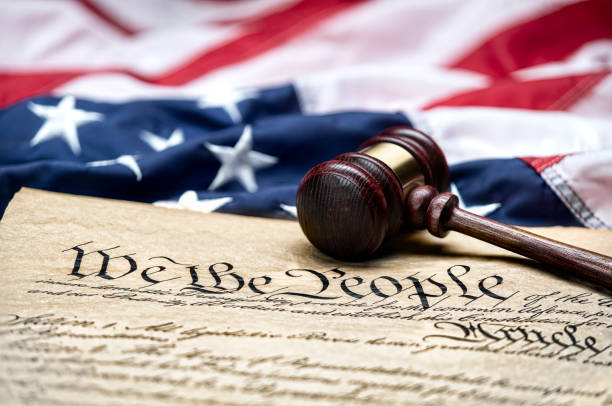
    One of the most amusing aspects of modern political debates is how often people loudly proclaim their love for the United States Constitution while simultaneously demonstrating that they have never actually read it.

    I bought my own copy of the Constitution for my personal library back in 1999. When smartphones became common, one of the first things I downloaded was a Constitution app so I could reference the document whenever I needed it.

    The reason is simple: the Constitution is not a long document.

    In fact, it is surprisingly short.

    The original Constitution consists of seven articles. The longest of these, Article I, establishes the legislative branch and contains ten sections. The shortest, Article VII, is only a single sentence.

    Add the 27 amendments that have been ratified over the course of American history, and the entire document is still roughly the length of a long magazine article or a short story.

    Yes, the language reflects the legal style of the late eighteenth century. But it is not particularly difficult to understand, especially if you read an annotated edition that includes explanatory notes or writings such as the Federalist Papers.

    The problem is that many of the loudest self-described “constitutional patriots” have never taken the time to read it themselves.

    Instead, they treat the Constitution the same way many people treat religious texts: they claim to revere it, but rely entirely on other people to tell them what it says and what it means.

    And those interpretations rarely come from constitutional scholars, legal historians, or practicing constitutional lawyers. More often, they come from political commentators or activists whose understanding of the document is shaped more by ideology than by careful study.

    Blind allegiance to a document that one has never actually read is not patriotism. It is intellectual laziness.

    If Americans truly care about the Constitution, the first step should be obvious.

    Read it.

  • American History Myths #5: Once More on the Myth That the Major Political Parties Never Realigned

    American History Myths #5: Once More on the Myth That the Major Political Parties Never Realigned

    I’m going to beat the proverbial dead horse here, but I feel I need to reiterate a point I made previously in this blog.

    One of the most persistent myths in modern American political discourse is the claim that the Democratic and Republican parties have remained ideologically consistent throughout history. According to this narrative, the Republican Party has always been the party of civil rights and racial progress, while the Democratic Party has always been the party of racism.

    This claim collapses under even the most basic historical scrutiny.

    To maintain the illusion, modern conservatives must ignore several inconvenient facts. They must ignore the political dealignment and realignment that occurred between the late nineteenth century and the late twentieth century. They must ignore the steady migration of white Southern conservatives—particularly segregationists—from the Democratic Party into the Republican Party during the second half of the twentieth century.

    They must also ignore the uncomfortable reality that many of the political figures celebrated in modern conservative circles were themselves defenders of slavery, segregation, and white supremacy.

    The historical record is clear: the ideology of Southern conservatism did not disappear after the Civil Rights Movement. It simply found a new political home.

    During the 1960s through the 1990s, many of the most hardline segregationist politicians—often referred to as Dixiecrats—gradually abandoned the Democratic Party and aligned themselves with the Republican Party. At the same time, the Republican Party increasingly adopted political strategies designed to attract white Southern voters who opposed civil rights reforms.

    This shift was not subtle. It was openly discussed by political strategists and historians alike.

    Yet modern conservatives often pretend that none of this happened.

    Instead, they promote a simplified narrative in which the Republican Party “freed the slaves” and therefore cannot possibly bear any responsibility for the racial politics that emerged in the twentieth century. The fact that the ideological descendants of segregationists now overwhelmingly identify as conservative Republicans is conveniently ignored.

    At the same time, many conservative politicians and commentators openly celebrate figures from the Confederate past while dismissing or ignoring the Republican leaders who actually fought to preserve the Union and end slavery.

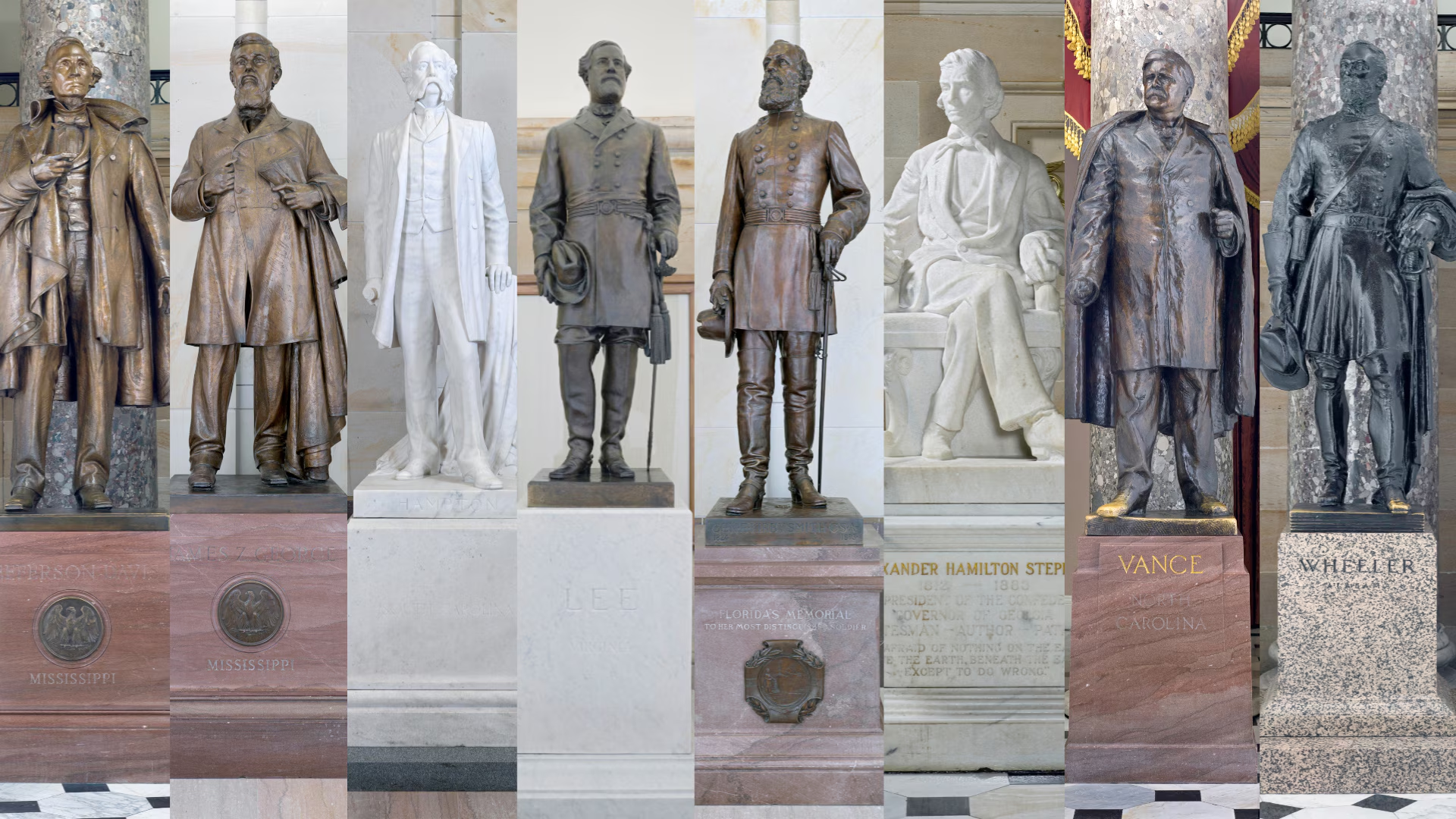
    Where are the monuments to Republican generals such as William Tecumseh Sherman or Ulysses S. Grant in the regions that once formed the Confederacy? Why are Confederate leaders, who were Democrats of their time, so often praised in modern conservative political culture?

    The answer is uncomfortable but obvious.

    For many conservatives, the issue has never truly been about party labels. It has always been about political ideology.

    This ideological continuity becomes particularly visible when modern politicians attempt to avoid even the most basic historical truths.

    For example, when asked about the causes of the American Civil War, some contemporary conservative politicians have offered vague explanations about “government,” “freedom,” or “states’ rights,” while carefully avoiding the central issue that historians overwhelmingly agree defined the conflict: chattel slavery.

    Yet the leaders of the Confederacy themselves left no such ambiguity.

    In their own declarations of secession, Southern states repeatedly and explicitly identified the preservation of slavery as the primary reason for leaving the Union.

    The historical record could not be clearer.

    Attempts to obscure that fact are not efforts to promote historical nuance. They are attempts to preserve comforting myths about the past.

    And those myths serve a political purpose.

    By denying the ideological continuity between past and present forms of white supremacist politics, modern conservatives attempt to distance themselves from the legacy of segregation and racial hierarchy while continuing to benefit from many of the political narratives that sustained those systems.

    None of this is to suggest that racism exists exclusively within one political party. Racism has existed across the American political spectrum throughout history.

    But it is impossible to have an honest conversation about American history—or modern American politics—without acknowledging the ideological realignment that reshaped the nation’s two major political parties during the twentieth century.

    History cannot be rewritten simply because it makes some people uncomfortable.

    In fact, the opposite is true.

    Understanding the darker chapters of our past is precisely how societies learn to avoid repeating them.

    Black Americans have long demonstrated that it is possible to love this country while also confronting its historical injustices. Despite centuries of discrimination, violence, and exclusion, Black Americans have served in the nation’s military, represented the country in international competition, and fought relentlessly to expand the promise of American democracy.

    Acknowledging historical injustice does not weaken the country.

    Pretending that those injustices never happened does.

    If Americans truly want to move forward, they must first be willing to tell the truth about where they have been.

  • Policing, Power, and the Battle Over Public Narrative Part 3: Why “Blue Lives Matter” Misses the Point

    Policing, Power, and the Battle Over Public Narrative Part 3: Why “Blue Lives Matter” Misses the Point

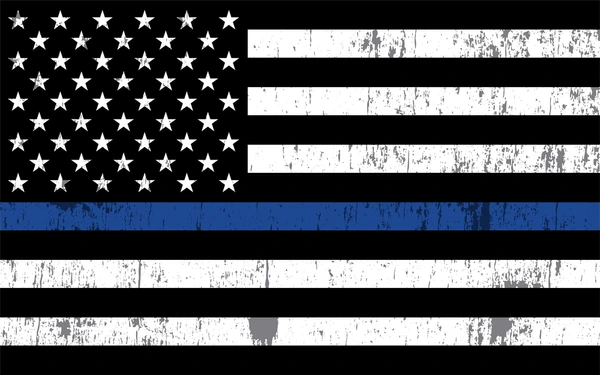
    In response to the Black Lives Matter movement, a new slogan began circulating in political discourse: “Blue Lives Matter.”

    Supporters of the phrase often describe it as a show of solidarity with law enforcement officers. At first glance, that explanation may appear reasonable.

    However, the slogan presents several problems.

    First, policing is a profession, not an identity. Individuals choose to become police officers, while race is an inherent characteristic that people do not choose.

    Second, police officers already receive substantial institutional support and public recognition.

    When an officer is killed in the line of duty, the incident typically receives widespread media attention. Memorial funds are established, funeral services are attended by officials from multiple agencies, and the officer’s name may be added to national memorials honoring fallen law enforcement personnel.

    Numerous organizations also exist specifically to support police officers and their families. These include groups such as:

    • Concerns of Police Survivors (C.O.P.S.)
    • The Fraternal Order of Police Foundation
    • The Officer Down Memorial Page
    • The National Law Enforcement Officers Memorial Fund

    In other words, support systems for police officers already exist and are widely recognized.

    The phrase “Blue Lives Matter,” therefore, does not address a lack of recognition or support for law enforcement. Instead, it emerged primarily as a reaction to the concerns raised by Black Lives Matter.

    Because of this context, many people, including me, view the slogan not as a genuine expression of support for police officers, but as a cynical rhetorical attempt to dismiss the grievances being expressed by those calling for police accountability.

    It is entirely possible to support the idea of law enforcement while also demanding transparency and accountability within policing institutions.

    In fact, those goals are not contradictory. They are mutually reinforcing.

    Public trust in law enforcement grows stronger when citizens believe that misconduct will be taken seriously and addressed fairly.

    Ultimately, the goal should not be to compete over slogans or hashtags. The goal should be to create a justice system that treats every person with equal dignity and respect under the law.

  • Policing, Power, and the Battle Over Public Narrative Part 2: The Myth of a “War on Police”

    Policing, Power, and the Battle Over Public Narrative Part 2: The Myth of a “War on Police”

    One of the most common claims made by critics of the Black Lives Matter movement is that it promotes hostility toward law enforcement or contributes to what some commentators describe as a “war on police.”

    This claim has been repeated frequently in political commentary and media coverage. However, when the available evidence is examined, the narrative becomes far less convincing.

    Statistics from organizations such as the National Law Enforcement Officers Memorial Fund show that the number of police officers killed in the line of duty has generally declined over the past several decades (except for during the peak of the COVID pandemic, when all crimes were spiking).

    Even during the years following the rise of the Black Lives Matter movement, the overall number of officer fatalities has remained historically low compared to earlier periods in American history.

    In other words, the idea that police officers are facing unprecedented levels of violence is not supported by the available data.

    It is also worth noting that the individuals responsible for attacks on police officers come from a wide variety of backgrounds and motivations. Some attacks have been politically motivated, while others were committed by individuals with no connection to any political movement.

    Despite this, critics often attempt to attribute every violent incident involving police officers to the Black Lives Matter movement as a whole.

    This is a logical fallacy.

    Large social movements consist of many individuals and groups with different motivations and beliefs. Holding an entire movement responsible for the actions of isolated individuals is both inaccurate and intellectually dishonest.

    At the same time, when politically motivated violence against police officers has been carried out by individuals associated with far-right ideologies, those incidents are rarely used to condemn conservative political movements as a whole.

    This double standard plays a significant role in shaping the public narrative surrounding policing and protest.

    Criticism of police misconduct is not the same thing as hostility toward police officers. In fact, many people who call for police accountability also believe that effective and professional law enforcement is essential to a functioning society.

    The real issue is not whether police officers deserve support.

    The real issue is whether the institutions responsible for enforcing the law are held accountable when mistakes or abuses occur.

  • Policing, Power, and the Battle Over Public Narrative Part 1: The Origins of “Black Lives Matter”

    Policing, Power, and the Battle Over Public Narrative Part 1: The Origins of “Black Lives Matter”

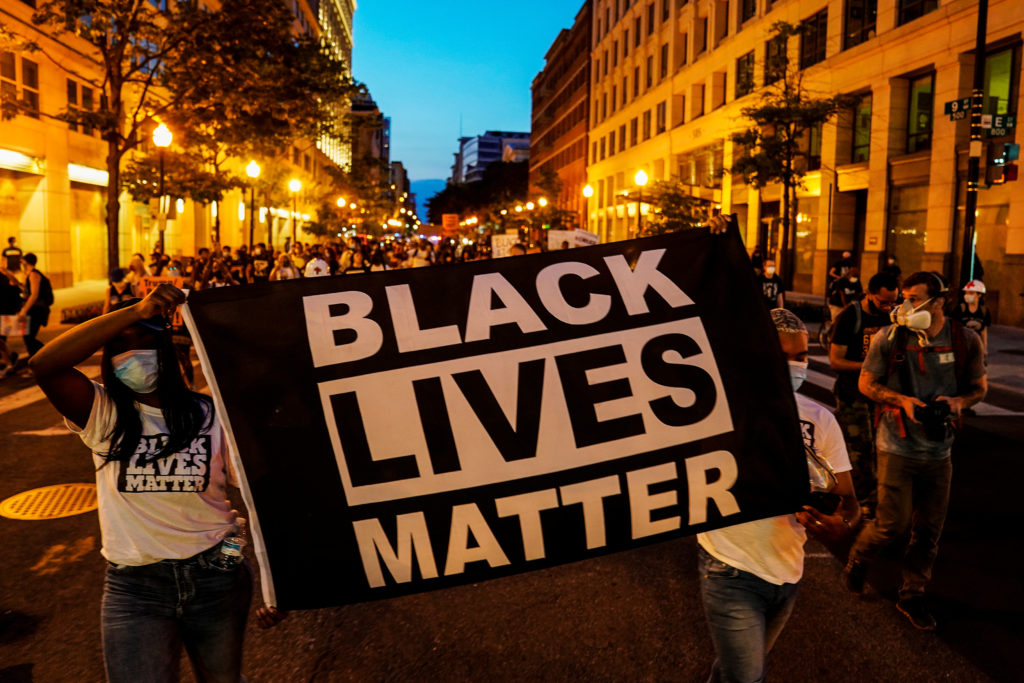
    In recent years, the phrase “Black Lives Matter” has become one of the most widely discussed and widely misunderstood slogans in American public life.

    To many supporters, the phrase represents a call for accountability and equal justice under the law. To many critics, however, it has been portrayed as anti-police, anti-white, or even anti-American.

    To understand the movement honestly, it is important to start with the basic facts about how it began.

    Black Lives Matter did not emerge from a political think tank, a political party, or a coordinated national organization. Instead, it began as a social media response to a widely publicized case that many people believed represented a failure of the justice system.

    On February 26, 2012, seventeen-year-old Trayvon Martin was shot and killed in Sanford, Florida, by neighborhood watch volunteer George Zimmerman. Martin was unarmed and had been walking back from a convenience store after purchasing a bag of Skittles and a drink.

    Initially, Zimmerman was not arrested. The police accepted his claim of self-defense and released him without charges.

    As news of the case spread across social media, many Americans (particularly Black Americans) viewed the situation as part of a long pattern in which violence against Black people was often minimized or excused.

    Following Zimmerman’s eventual acquittal in 2013, three community organizers, Alicia Garza, Patrisse Cullors, and Opal Tometi, helped popularize the phrase “Black Lives Matter.”

    Garza made a Facebook post which ended in the phrase, “Our lives Matter, Black Lives Matter”. The hashtag and online campaign were born due to that post, and it went viral.

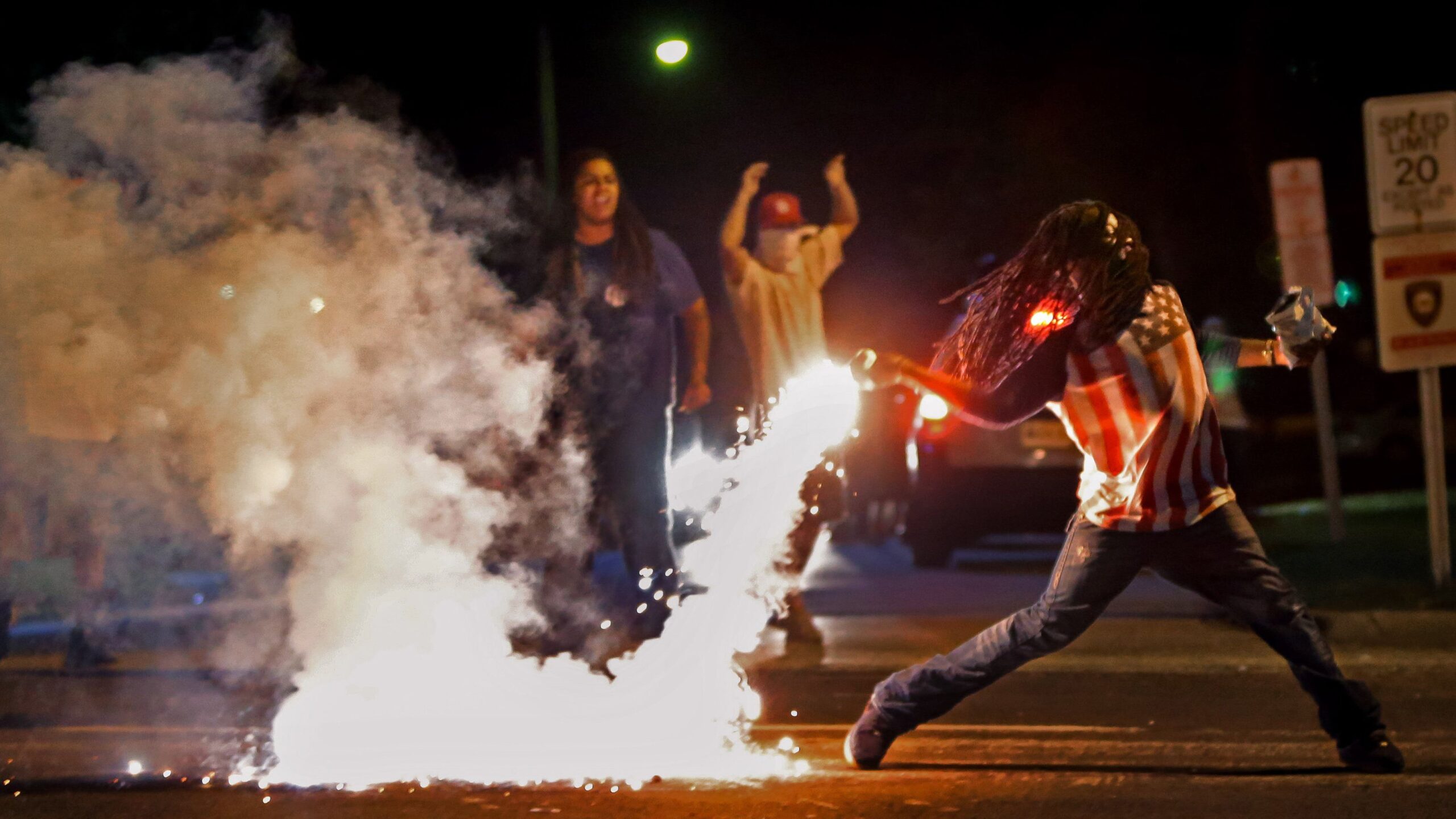
    Black Lives Matter didn’t make it into the national and mainstream public spotlight until the following summer (2014) after the killing of Michael Brown Jr. by Ferguson Officer Darren Wilson. More than one hundred Black Lives Matter protestors came from out of state to Ferguson, Missouri, a suburb of St. Louis, to join the local protests that had been going on immediately after the shooting.

    The phrase was not meant to suggest that other lives do not matter. Instead, it was intended to emphasize a specific concern: that Black lives have historically been treated as less valuable within American legal and social systems.

    In other words, the statement “Black Lives Matter” was not meant to exclude anyone. It was meant to highlight a problem that many people believed had long been ignored.

    The movement that followed was decentralized and loosely organized. It consisted of activists, community leaders, and ordinary citizens who were concerned about issues such as police accountability, racial profiling, and unequal treatment within the criminal justice system.

    Understanding this origin is important because much of the debate surrounding Black Lives Matter today is shaped by narratives that emerged after the movement began — narratives that often bear little resemblance to its original purpose.

  • On Cynicism, Conspiracy Thinking, and Intellectual Humility

    On Cynicism, Conspiracy Thinking, and Intellectual Humility

    One thing that often surprises people in political conversations is that I try very hard to look at issues from multiple angles before forming a conclusion.

    That doesn’t mean I believe every perspective is equally correct, and it certainly doesn’t mean I agree with every ideology. But it does mean that I try to examine ideas carefully before deciding what I believe about them.

    Over the years, I have studied politics, economics, and philosophy, both in the classroom and through personal observation. I do not claim to be an expert. At best, I am a curious and reasonably informed layperson who tries to understand how complex systems actually work.

    I also recognize that many of my friends possess expertise in fields where I do not. Some work in industries or professions that require specialized knowledge. When they speak about their areas of expertise, I listen carefully and often defer to their judgment.

    The same applies to institutions and organizations. I have friends in groups that I sometimes criticize, but criticism does not require blind hostility. I try to evaluate institutions the same way I evaluate individuals, by paying attention to both their stated intentions and their actions.

    Perfection is not the standard I apply to people or organizations. Perfection does not exist.

    What matters to me is whether people and institutions are genuinely attempting to serve their communities or whether their actions consistently undermine them. Disagreement is inevitable, but ideally, those disagreements should revolve around how to improve the well-being of the people we represent.

    Another accusation I sometimes hear is that my approach to politics is naïve. Some believe that if you are not constantly assuming the worst possible motives from everyone around you, you must be ignoring reality.

    But that is not how I see the world.

    Yes, I can be cynical at times. Like most people who pay close attention to politics and history, I am aware of how frequently power is abused. But I try not to fall into the trap of believing that every institution is controlled by hidden puppet masters or that every political failure is the result of some elaborate conspiracy.

    More often than not, what we are witnessing is something much simpler: human beings making decisions. These are sometimes wise, sometimes selfish, and sometimes incredibly foolish.

    Institutions are not omniscient masterminds. They are collections of ordinary people, and ordinary people make mistakes. Anyone who has closely observed politics or large organizations knows how often incompetence, miscommunication, and short-term thinking shape outcomes just as much as malice.

    Because of this, I try to resist the temptation to jump to dramatic conclusions based on speculation, conjecture, or conspiracy theories.

    This approach sometimes frustrates people who prefer clear villains and simple explanations. But the truth is that most social and political issues are far more complicated than we often admit. Real life rarely divides neatly into heroes and villains.

    Intellectual humility is also important here.

    I have been wrong before, and I will be wrong again. No one who engages seriously with complex issues escapes that reality. The important thing is being willing to reconsider one’s assumptions when evidence suggests a different conclusion.

    At the same time, being cautious about speculation does not mean defending the status quo or ignoring real problems. It simply means trying to reach conclusions through careful reasoning rather than through fear, anger, or wishful thinking.

    In public debate, it is also possible to appreciate good arguments, even when they come from people with whom we strongly disagree. A well-made point remains a well-made point regardless of who makes it.

    Too often, modern political discourse treats disagreement as a personal betrayal rather than a normal part of intellectual life.

    But serious thinking requires the opposite approach: listening carefully, weighing evidence, and accepting that complex questions rarely have simple answers.

    That is the perspective I try to bring to my writing and discussions.

    Not certainty.

    Not ideological loyalty.

    Just an ongoing attempt to think carefully about the world we live in.

  • Why I Still Celebrate Independence Day

    Why I Still Celebrate Independence Day

    Every year on July 4th, Americans celebrate Independence Day with family gatherings, barbecues, and fireworks. For many, it is a day of patriotic pride, a celebration of freedom and the sacrifices made to preserve it.

    But for others, the holiday carries a very different meaning.

    Frederick Douglass once famously asked, “What to the slave is the Fourth of July?” In 1852, his answer was clear: the holiday represented a painful contradiction between America’s ideals and its reality. More than a century later, that question still echoes—but the answer has evolved.

    Critics of Independence Day often point out a painful historical truth: when the United States declared its independence in 1776, the promise of liberty did not apply to everyone. Millions of people were enslaved, Native Americans were being displaced and killed, and women and poor men were excluded from political power.

    The contradiction is obvious.

    The same document that declared, “We hold these truths to be self-evident, that all men are created equal,” was written by Thomas Jefferson, who owned slaves and wrote extensively about his belief in Black inferiority.

    These criticisms are not wrong. They are historically accurate.

    The freedom celebrated on July 4th was originally intended primarily for land-owning white men. Black Americans, Native Americans, women, and many others were excluded from those rights.

    Even during the Revolutionary War, enslaved Black people who sought to fight for the American colonies were often rejected. Meanwhile, the British offered freedom to enslaved people who joined their forces. Later, during the Constitutional Convention, the young nation again refused to confront slavery to maintain unity between Northern and Southern states.

    For these reasons, I understand why some people view Independence Day with skepticism or even contempt.

    But while I sympathize with that perspective, I do not share it.

    Despite the hypocrisy of many of the Founding Fathers, we must also remember another truth: this country was built in large part by the labor, skill, and resilience of enslaved Black people.

    The American colonies became economically powerful through crops such as tobacco, sugar, and rice. These industries made their overwhelming prosperity possible by enslaved labor and agricultural knowledge brought from Africa. In many ways, the wealth that allowed the colonies to rebel against Britain was created by the very people who were denied freedom.

    Our ancestors helped build this country.

    And many of them knew it.

    Throughout the nineteenth century, some white abolitionists supported efforts to relocate free Black Americans to Africa through organizations such as the American Colonization Society. Liberia itself was founded by freed American slaves.

    But many Black Americans rejected that idea. They chose to remain in the United States and fight for their rightful place within the country their ancestors had helped build.

    That is a perspective I share.

    If someone kidnaps you, forces you to build a house, and then tells you that you are free to leave once the work is finished, that does not erase the fact that you helped build the house.

    You have a claim to it.

    I am an American. This is my country.

    The personal beliefs of many of the Founding Fathers matter less to me than the political framework they created. The words they wrote, however imperfectly applied at the time, provided the foundation for later struggles for freedom.

    The ideals expressed in the Declaration of Independence and the United States Constitution were eventually used by abolitionists, civil rights leaders, and countless activists to argue that the nation must live up to its own principles.

    Jefferson may not have meant all people when he wrote that all men are created equal. But that is what he wrote, and those words became powerful tools in the fight for equality.

    The American political system, flawed as it has been, allowed movements for abolition, civil rights, and expanded democratic rights to emerge and reshape the country.

    The fact that I can speak freely today (even critically) about the history and institutions of this country is evidence of that evolution.

    Because of the protections enshrined in the Constitution and the Bill of Rights, I can express my beliefs, criticize injustice, and advocate for change without fear of imprisonment or execution.

    That freedom matters.

    So, when I celebrate Independence Day, I am not celebrating the perfection of the Founding Fathers. I am not celebrating a past that excluded my ancestors.

    What I celebrate is freedom itself.

    The freedom that was denied to my ancestors.

    The freedom that generations of Americans struggled to expand.

    The freedom that remains imperfect, but real.

    This country has a painful history, and it still faces serious challenges. But it is also my home.

    And despite everything, I love it.

    When I celebrate Independence Day, I celebrate the ongoing struggle to make the promise of liberty real for everyone.

    Because the words written in 1776 still matter:

    “We hold these truths to be self-evident, that all men are created equal, that they are endowed by their Creator with certain unalienable Rights, that among these are Life, Liberty and the pursuit of Happiness.”

    May we continue working toward a country where those words apply to all of us.