Tag: society

  • A Personal Note on Atheism and Religious Freedom

    A Personal Note on Atheism and Religious Freedom

    My name is Mario Stanton. I am an atheist and the founder of the Black Atheists Facebook group. Over the years, the group received attention from several media outlets, including The Grio and The New York Times.

    I mention this not to boast, but to clarify something important: I am not affiliated with any religious organization.

    My atheism is the result of years of study, reflection, and personal experience. I do not believe in any gods, and I often find many religious doctrines philosophically and intellectually irrational.

    However, there is an important distinction between disagreement and hostility.

    While I do not share religious beliefs, I strongly support the right of people to believe and practice the religion of their choice. Freedom of conscience is one of the most important principles in a pluralistic society.

    Over the years, I have found myself defending religious communities, particularly Muslims, against unfair stereotypes and discrimination. That might surprise some people, considering that my atheism would make me unwelcome in certain religious contexts, particularly with many Muslims.

    But fairness requires consistency.

    Muslims, like every other group, are not a monolith. Some individuals are admirable, compassionate people. Others are not. The same is true of Christians, Jews, Hindus, pagans, atheists, and every other category of human being.

    No group has a monopoly on virtue or vice.

    Unfortunately, public discourse often treats entire religious communities as if they can be defined by the actions of their worst members. This is one of the key characteristics of bigotry.

    Muslims are sometimes generally reduced to extremists in the public imagination. However, Christians and Jews are immune from this, even though Christians are sometimes associated with white supremacy and other troubling beliefs, and Jews are associated with Kahanism and extreme Zionism.

    Religious extremism is religious extremism, no matter what religion it is tied to.

    The reality is much simpler: people are individuals. Some are kind, thoughtful, and ethical. Others are not.

    My position is straightforward. I will continue to disagree with religious beliefs that I find unconvincing, but I will also continue to defend the right of others to practice their faith freely. I will do this as long as those practices do not harm others or infringe on their rights.

    Disagreement is inevitable in a diverse society.

    But fairness should be non-negotiable.
  • A Note for New Readers

    A Note for New Readers

    Hello, everyone.

    For those who may not know me from my Facebook page or are unfamiliar with my writing, I want to briefly explain the kinds of topics I discuss and the perspective I bring to those conversations.

    In everyday life, I’m generally a relaxed and humorous person, but my writing tends to focus on serious issues, many of which people consider controversial. I often discuss topics that many people avoid in polite conversation: race, politics, religion, history, and social inequality. These conversations can generate strong reactions, and I understand that not everyone will agree with the positions I take.

    With that in mind, there are a few things readers should know about me.

    First, I consider myself pro-Black. My views are influenced by traditions of Black liberation thought, Pan-Africanism, and Afrocentric scholarship. That does not mean I am hostile toward other racial groups. However, I do believe that many of the modern racial hierarchies we see today have their roots in European colonial systems that imposed rigid racial classifications across much of the world. Because of that history, I have very little patience for openly anti-Black rhetoric, regardless of who expresses it.

    Second, I am an atheist. My atheism is not the result of ignorance or rebellion but the result of years of reading, research, and reflection. I respect the fact that religion is deeply personal for many people, and I generally avoid debating religion with many people out of courtesy. Religious beliefs are extrememly personal and I strongly believe that one’s spiritual walk is their own. I simply ask for the same respect in return. Expressions of faith are one thing; persistent attempts to proselytize to me, whether through private messages, unsoliticed phone calls, or “forced” debates, are another.

    Third, my politics are left-leaning, and I generally describe myself as a democratic socialist, and a leftist. While I try to understand perspectives across the political spectrum, I strongly disagree with many positions associated with contemporary conservative politics, particularly those that dismiss the struggles of low-wage workers or celebrate economic systems that leave large numbers of people behind.

    I believe conversations about these issues are necessary, even when they are uncomfortable. My goal is not to provoke hostility but to engage with difficult topics honestly and critically.

    If these subjects are not something you’re interested in seeing, I completely understand. I will post some lighter subject matter in the future. Everyone curates their online space differently.

    But if you are willing to engage thoughtfully, even when we disagree, then you are welcome here. Just try to be somewhat mature and respectful.

  • The Real Reason Birth Rates Are Falling in the West

    The Real Reason Birth Rates Are Falling in the West

    Many political commentators, particularly in certain corners of the internet, claim that declining birth rates in Western countries are caused by cultural forces such as feminism, LGBTQ visibility, secularism, or multiculturalism.

    But the data tells a much simpler story.

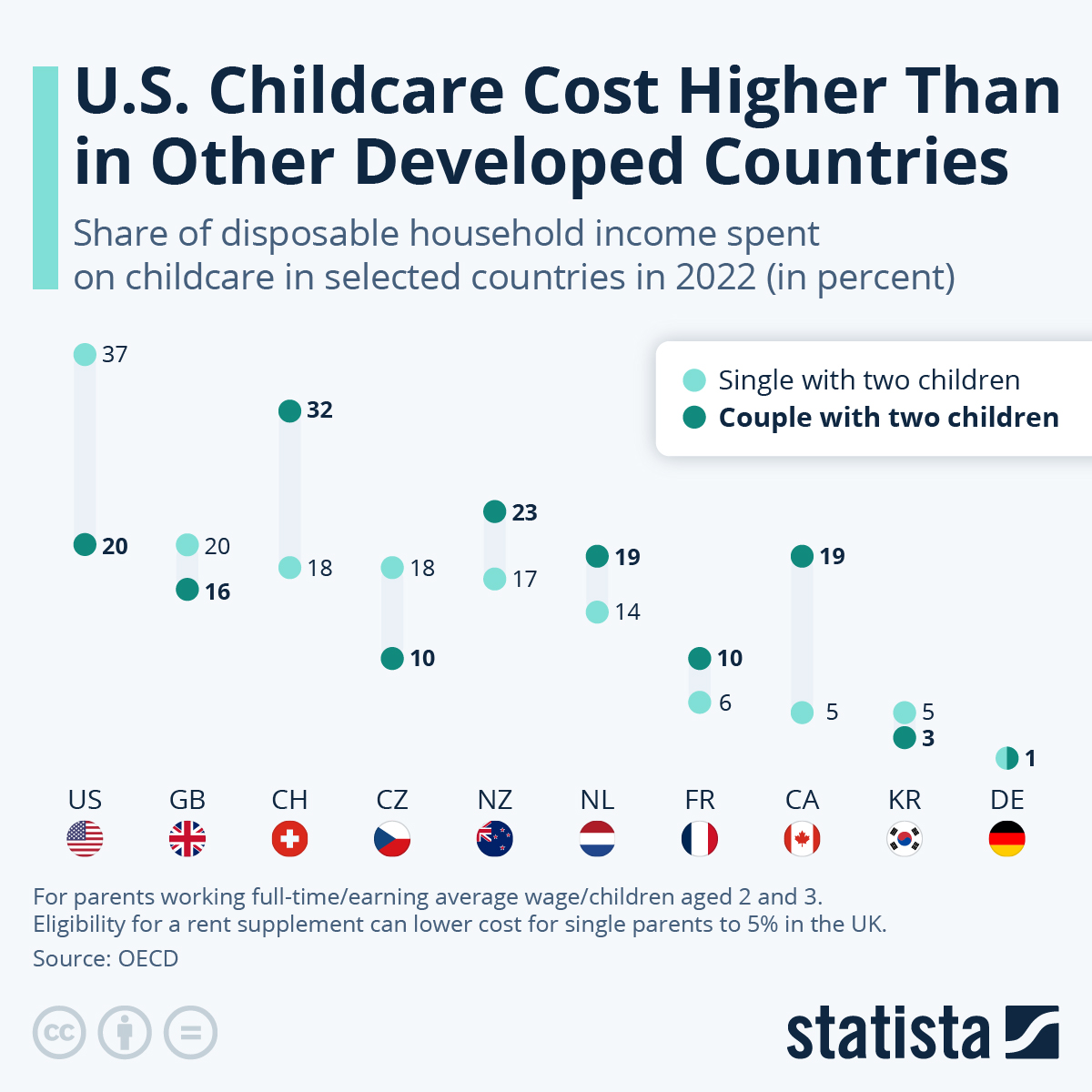
    Birth rates tend to decline in societies where the cost of living rises faster than wages and where raising children becomes financially burdensome. This pattern has been observed across numerous developed countries regardless of political ideology or cultural identity.

    The modern cost of raising children is enormous.

    Childcare alone can cost more than rent or a mortgage in many American cities. Necessities for early childhood, such as diapers, formula, baby supplies, healthcare, and education, add thousands of dollars in additional expenses each year. Even the cost of childbirth itself in the United States can reach tens of thousands of dollars, depending on insurance coverage.

    Beyond early childhood, families face additional financial pressures, including school activities, transportation, clothing, healthcare, housing, and eventually the cost of higher education.

    For many households, the financial calculation becomes unavoidable.

    Having children is no longer simply a social expectation—it is a long-term economic commitment that can reshape a family’s entire financial future.

    There is also the question of uncertainty.

    Parents today worry about issues that earlier generations rarely considered: school shootings, economic instability, climate change, political polarization, and the general unpredictability of the modern world. Whether those fears are fully justified or not, they still influence how people think about bringing children into that world.

    Historically, family structures looked very different.

    In the early twentieth century, large families were common not because people were more “family-oriented,” but because economic and social conditions were different. Housing was cheaper, extended families often lived together, and childcare responsibilities were shared across multiple generations.

    Children were also seen as economic contributors to the household rather than long-term financial obligations.

    Today, the expectations are very different. Families are expected to provide private bedrooms, extensive educational opportunities, extracurricular activities, and a high standard of living for each child. At the same time, extended family support systems have weakened, and childcare has become a market commodity rather than a shared community responsibility.

    The result is predictable.

    Many couples decide that having fewer children, or no children at all, is the most financially responsible decision they can make.

    If governments and societies genuinely want to increase birth rates, the solution is unlikely to come from cultural panic or political rhetoric.

    It will come from addressing the economic realities that make raising children increasingly difficult: housing costs, childcare affordability, healthcare expenses, and long-term financial security.

    When people feel economically stable and confident about the future, they are far more likely to start families.

    History suggests that prosperity and security—not cultural fear—are the conditions under which birth rates tend to rise.

  • Crime Statistics and the Problem of Misinterpretation

    Crime Statistics and the Problem of Misinterpretation

    Here is a simple analogy that helps illustrate how crime statistics are often misunderstood.

    Black Americans make up roughly 70% of professional American football players in the NFL.

    Does that mean every Black person is good at football? Of course not.

    Does it mean that most Black people are good enough to play professional football? Not even close.

    The reality is that less than one percent of high school and college football players ever make it to the professional level. Even within the population that is most heavily represented in the sport, only a tiny fraction actually reach the NFL.

    The same type of misunderstanding often appears in conversations about crime statistics.

    The United States currently has about 48 million Black residents. According to FBI data, roughly 2 million Black Americans are arrested for crimes in a given year. Even if we assume every arrest involved a guilty individual (which is clearly not the case) and that these arrests aren’t repeat arrests of many of the same people, that would still represent only about 4% of the Black population.

    The numbers become even smaller when we look at incarceration.

    According to the Bureau of Justice Statistics, less than half of one percent of Black Americans are currently in prison.

    That means more than 99% of Black Americans are not incarcerated.

    In other words, the overwhelming majority of Black people in the United States are law-abiding citizens.

    Yet public discussions about crime often create the impression that criminal behavior defines the community as a whole. That perception is driven less by statistical reality and more by media coverage, political rhetoric, and social stereotypes.

    Crime exists in every society and within every demographic group. But when statistics are removed from their full population context, they can easily be used to reinforce distorted narratives.

    Understanding numbers requires more than simply repeating percentages. It requires examining what those numbers actually represent relative to the size of the population being discussed.

    When viewed in that broader context, the stereotype of widespread criminality collapses under the weight of the data.

    Most people, regardless of race, are simply trying to live their lives, support their families, and stay out of trouble.

    The statistics, when properly understood, reflect that reality.

  • The Myth of “Woke” Entertainment

    The Myth of “Woke” Entertainment

    One of the more exhausting cultural debates today revolves around the idea that movies, television shows, and video games have suddenly become “woke.”

    The accusation is usually framed as if diversity in entertainment is something new. That it is an artificial political imposition that has recently invaded popular culture.

    But that claim ignores decades of history.

    Hollywood and the entertainment industry have been practicing what could easily be called “forced diversity” for a long time. The difference is that, historically, the diversity often involved inserting white characters into stories that were originally centered around other cultures.

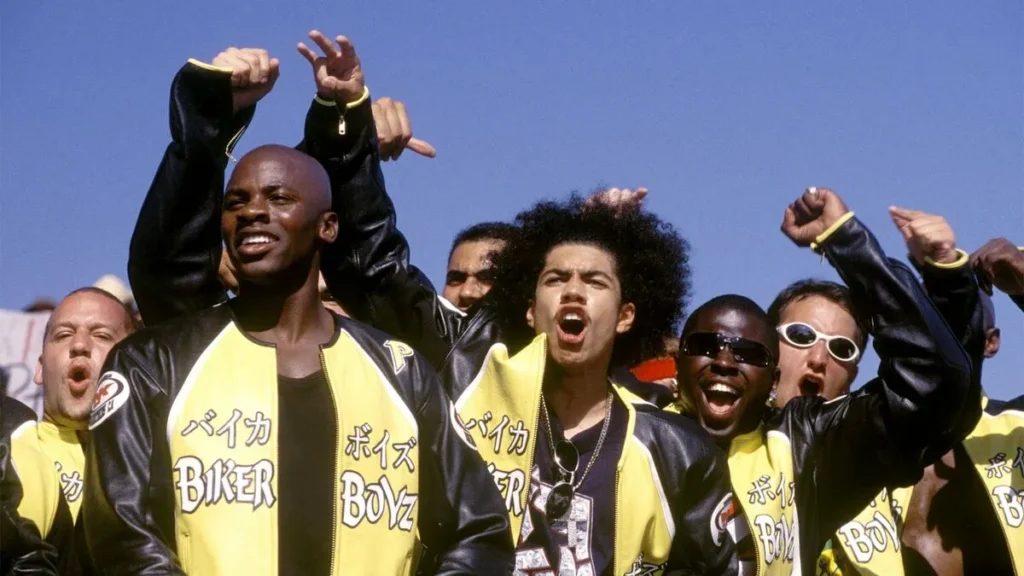
    Consider the 2003 film Biker Boyz. The movie was marketed as a story about predominantly Black motorcycle clubs. Yet by the time studio executives and producers finished reshaping the film, the central motorcycle crew looked far more like a corporate marketing brochure than a portrayal of the subculture it was supposed to represent.

    Kid and his motorcycle gang are cheering on their brother in the movie Biker Boyz

    This wasn’t unusual.

    Films like American Me (1992), Blood In, Blood Out (1993), Colors (1988), and even the breakdancing movies Breakin’ (1984) and Breakin’ 2: Electric Boogaloo (1984) frequently inserted characters designed to make the stories more accessible to mainstream audiences.

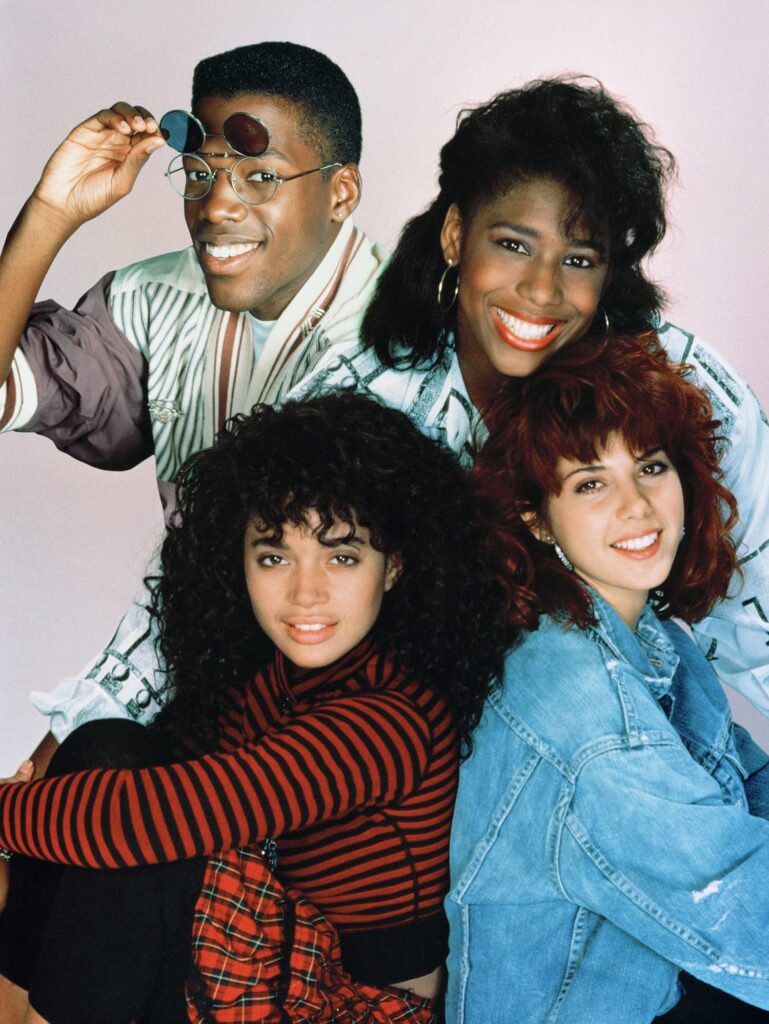
    Television followed the same pattern. The sitcom A Different World was originally conceived as a story about a white student attending a historically Black college. Only later, after becoming a spinoff of The Cosby Show, did it shift toward focusing on Black students and Black campus life.

    A Different World was originally supposed to be about Marisa Tomei’s character, Maggie Lauten (bottom right), going to an HBCU before it was decided that it was going to be a spinoff of The Cosby Show.

    In other words, the entertainment industry has long modified stories to appeal to broader audiences. Diversity in casting and storytelling is not a new phenomenon.

    This is not necessarily a bad thing. In fact, seeing more diversity, even in predominantly Black and Latino places and cultures, is good for society, in my humble opinion.

    So what actually changed?

    The major difference today is not the presence of diversity. The difference is who is being centered.

    For decades, popular entertainment overwhelmingly focused on white male protagonists. Stories that did not originally feature them were often altered to include them.

    Today, audiences are increasingly encountering films, television shows, and video games where women, racial minorities, LGBTQ characters, and other groups are present as main characters rather than background figures.

    For some viewers, this shift feels like displacement.

    But representation in storytelling reflects the societies that produce those stories. Modern societies are diverse, and entertainment inevitably reflects that reality.

    None of this means that every casting decision or creative choice is above criticism. There are legitimate artistic discussions about authenticity, historical context, and storytelling choices.

    For example, fantasy worlds inspired by specific historical cultures may raise reasonable questions about how representation is handled within those settings. Those discussions can be worthwhile when they focus on artistic and historical coherence rather than ideological outrage.

    There are legitimate artistic criticisms of Black Valyrians in HBO’s House of the Dragon. However, it must also be noted that these characters are from a fictional world in a fictional universe.

    But most of the current backlash has little to do with artistic and/or historical integrity.

    Instead, it reflects discomfort with the simple reality that entertainment no longer assumes that one particular demographic must always be the default center of every story.

    The sky is not falling because a video game allows players to customize their character’s identity and pronouns. A science fiction series featuring a Black protagonist does not signal the collapse of civilization. A female action hero does not erase decades of male-led action films.

    What has changed is not storytelling itself.

    What has changed is that more people are finally allowed to see themselves in the story.

  • What White Supremacy Actually Means

    What White Supremacy Actually Means

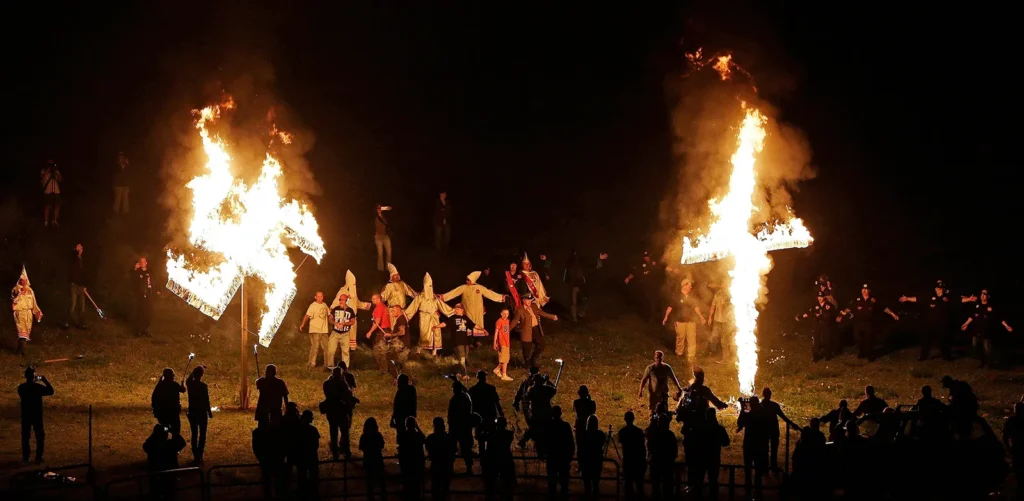
    In political debates today, the term “white supremacy” is often treated as if it only refers to extremist groups of people wearing robes, burning crosses, having shaved heads, sporting swastikas, or openly identifying with organizations like the Ku Klux Klan.

    A cross and a swastika burning at a modern Klan rally.

    But historically and academically, the concept is broader than that.

    White supremacy refers to the belief (explicit or implicit) that white people and white cultural norms represent the highest or most advanced model of civilization and humanity. It is the assumption that whiteness is the standard by which intelligence, morality, competence, and social order should be measured.

    This belief does not always appear in openly violent or in cartoonishly belligerent forms. It often appears in subtler assumptions about who is naturally suited for leadership, who is presumed competent, and who must constantly prove themselves.

    For example, racial explanations are frequently used to explain social outcomes. Certain groups are sometimes associated with crime, others with academic achievement, others with competent leadership, and others with athletic success.

    But when scientists examine many of these assumptions, the explanations often turn out to be social rather than biological.

    A useful example comes from long-distance running.

    For decades, athletes from Kenya and Ethiopia have dominated international distance running competitions, frequently winning Olympic and marathon events. Some Western researchers initially suspected that East Africans might possess unique genetic advantages that gave them superior endurance.

    After extensive study, scientists found no definitive genetic explanation.

    What they did find were social and environmental factors: training culture, altitude conditions, economic incentives, and the perception that success in distance running could provide a path to financial mobility.

    In other words, success was driven less by biology than by opportunity, culture, and motivation.

    The same dynamic appears in many other areas of life. When communities see certain fields as viable paths to advancement and upward socioeconomic mobility, they invest time, energy, and cultural value into those pursuits. This is true whether these pursuits are sports, academics, entertainment, or various professions (think of Irish immigrants of the 19th century and their attraction towards first responder professions).

    When people attribute success or failure primarily to race, they overlook these structural and social factors.

    That is where racial ideology begins to appear.

    If someone believes that race alone determines intelligence, morality, or ability, they are embracing a worldview that closely resembles classical racist thinking. The assumption that certain groups are naturally superior or inferior has historically been used to justify exclusion, discrimination, and unequal opportunity.

    Understanding these ideas requires moving beyond stereotypes and examining how beliefs about race shape expectations and institutions.

    White supremacy, in this broader sense, is not only about extremist organizations.

    It is about the belief that human potential can be ranked according to race, and that some groups are naturally meant to lead while others must struggle to be accepted.

    History and science consistently show that reality is far more complex than that.

  • Political Realignment and the Persistence of Racial Tension

    Political Realignment and the Persistence of Racial Tension

    One of the most uncomfortable facts in American political history is that the party alignments of the Jim Crow era no longer resemble the political landscape we see today.

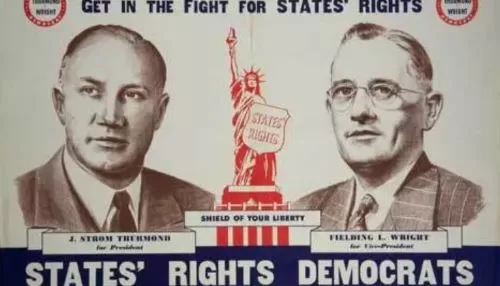
    During the late nineteenth and early twentieth centuries, most white voters in the South identified with the Democratic Party. The Democratic Party of that era included the segregationist political leadership that dominated Southern politics during the Jim Crow period.

    That began to change in the mid-twentieth century.

    After the passage of the Civil Rights Act of 1964, the Voting Rights Act of 1965, and the Fair Housing Act of 1968 (landmark laws supported and signed by Democratic leadership), the political map of the United States gradually shifted. Over the following decades, many white Southern voters moved toward the Republican Party, while Black voters overwhelmingly aligned with the Democratic Party.

    This shift did not happen overnight, but the trend is well documented in voting patterns from the late 1960s onward.

    Today, white voters, particularly white voters without college degrees and many white voters in the South, tend to support Republican candidates by significant margins. Meanwhile, Black voters remain one of the most consistently Democratic voting blocs in American politics.

    These voting patterns are measurable realities, even if they make people uncomfortable.

    At the same time, discussions about race in the United States often provoke strong reactions. Many Americans reject the idea that racial attitudes still influence political behavior. Others argue that the issue is not simply politics, but broader patterns of social separation.

    Sociologists have long observed that Americans often feel more comfortable within communities that resemble themselves culturally or demographically. Neighborhood patterns, school demographics, and social networks frequently reflect those tendencies.

    The result is a society that remains more segregated in practice than many people are willing to acknowledge.

    When people point out these patterns, the conversation often becomes heated. Accusations of racism are exchanged, defensiveness rises, and productive discussion becomes difficult.

    But acknowledging uncomfortable realities does not make those realities disappear.

    If Americans want to have honest conversations about race, politics, and social trust, then those conversations must be grounded in evidence rather than denial. Voting patterns, historical developments, and lived experiences all contribute to understanding the country we live in today.

    Ignoring those realities may feel easier in the moment, but it does little to address the underlying tensions that continue to shape American political life.

  • The Pandemic Conspiracy That Makes No Economic Sense

    The Pandemic Conspiracy That Makes No Economic Sense

    One argument that has circulated repeatedly since the beginning of the COVID-19 pandemic is the idea that governments and major industries somehow wanted lockdowns, mask mandates, and vaccine mandates.

    But when you stop and look at the economic reality, that claim becomes very difficult to understand.

    Entire sectors of the economy were devastated by the pandemic. Restaurants, tourism, hospitality, airlines, amusement parks, theaters, sports leagues, universities, entertainment industries, public transportation systems, and countless small businesses lost enormous amounts of revenue beginning in March 2020.

    Many of these industries lost billions of dollars. Some may never fully recover.

    If the goal of modern capitalism is economic growth (more consumption, more travel, more entertainment spending, more tourism, more investment), then deliberately shutting down large portions of the economy would make very little sense as a strategy.

    Yet conspiracy narratives often assume that powerful actors wanted exactly that outcome.

    This assumption ignores how economic systems actually function. Modern capitalism depends on expanding markets and constant activity. The pandemic disrupted supply chains, slowed production, closed venues, and drastically reduced consumer spending in many sectors.

    In other words, the pandemic did not strengthen the economic system. It destabilized it.

    At the same time, many of the people promoting conspiracy theories about public health measures express deep distrust of pharmaceutical companies while simultaneously promoting alternative drug treatments produced by the same pharmaceutical industry.

    That contradiction often goes unnoticed.

    Another common pattern during the pandemic has been the rejection of scientific expertise in favor of viral claims circulating through social media, talk shows, or online influencers. Medical studies are cited without being understood, preliminary data is interpreted incorrectly, and isolated findings are often exaggerated into sweeping conclusions.

    Skepticism toward institutions can be healthy. Governments, corporations, and medical authorities should absolutely be questioned and held accountable.

    But skepticism is not the same thing as assuming that every crisis is part of a hidden plot.

    Public health policies during the pandemic have been controversial, imperfect, and sometimes poorly communicated. But the idea that entire economies would intentionally sabotage themselves in order to impose temporary public health measures requires a level of coordination and self-destruction that makes little practical sense.

    The pandemic created real economic disruption, real political conflict, and real human tragedy.

    Understanding those realities requires serious discussion—not conspiracy theories about why a society built on economic growth would willingly shut itself down.

  • What Critics Get Wrong About DEI

    What Critics Get Wrong About DEI

    If critics of diversity, equity, and inclusion programs truly want to understand what they are criticizing, they should start by understanding what those programs actually do.

    Much of the political rhetoric surrounding DEI rests on a simple assumption: that these initiatives exist primarily to hire underqualified minorities over more qualified white applicants.

    But that assumption misunderstands the purpose of many DEI programs.

    In many workplaces, DEI initiatives are not hiring programs at all. They are training programs focused on workplace conduct, like how employees interact with one another, how discrimination complaints are handled, and how organizations avoid hostile work environments.

    In other words, they are about behavior inside the workplace, not simply about who gets hired.

    This distinction is often lost in political debates.

    Critics frequently frame DEI as a system that lowers standards or promotes unqualified candidates. Yet those claims are rarely supported with concrete evidence. Instead, the arguments often rely on anecdotes, rumors, or viral stories that later turn out to be false or exaggerated.

    The “litter box in schools” rumor is a good example of how quickly misinformation can spread when it reinforces existing political narratives. The story circulated widely online despite having no factual basis.

    The same pattern often appears in debates about DEI.

    Whenever a person from a marginalized group enters a field traditionally dominated by white men, whether as a pilot, executive, professor, or public official, critics sometimes assume that the person must have been hired to satisfy a quota rather than because of their qualifications.

    That assumption says less about hiring practices than it does about the expectations behind it.

    It reflects a long-standing cultural narrative suggesting that success among minorities must be explained by special treatment rather than merit.

    Yet there are many examples throughout American history that challenge that assumption. The Tuskegee Airmen, for example, demonstrated extraordinary skill and discipline during World War II despite facing discrimination and skepticism about their abilities.

    The same dynamic continues today.

    A recent viral video showed a Black woman completing her first liftoff during pilot training. Professional pilots reviewing the footage described the maneuver as textbook and appropriate for the conditions. Yet some online commentators quickly turned the moment into an argument about DEI and supposed lowered standards.

    This response illustrates how quickly discussions about diversity can become framed through suspicion rather than evidence.

    At the same time, conversations about merit often ignore another powerful force in hiring: nepotism.

    Family connections, social networks, and institutional favoritism have long shaped access to jobs and opportunities across many industries. These advantages disproportionately benefit those already connected to existing power structures.

    Yet these dynamics rarely receive the same level of scrutiny as diversity initiatives.

    The result is a debate that focuses intensely on hypothetical examples of unqualified minority hires while overlooking longstanding systems that have quietly shaped opportunity for generations.

    If we are going to have an honest discussion about merit and fairness, then the conversation needs to address all of the ways opportunity is distributed, not just the ones that fit a particular political narrative.

    The goal is not to flood various industries with underqualified people who check off certain boxes in a checklist of representation from marginalized communities. That is not how DEI works.

    Rather, the goal should be to build institutions where ability, preparation, and performance actually matter more than assumptions about who belongs in a particular role, and everyone has an equal opportunity to get and to promote in various careers without doing so in a hostile work environment.

  • The Real Purpose of College in Modern America

    The Real Purpose of College in Modern America

    One uncomfortable truth about higher education in the United States is that very few people actually attend universities for a liberal arts education.

    In fact, the idea of pursuing knowledge for its own sake is often mocked in our society. Students who study philosophy, history, literature, or other liberal arts fields are frequently told they are wasting their time.

    For most people, the real reasons for attending college are much simpler: career advancement and social networking(which are not necessarily bad pursuits).

    The goal is not to become more learned. The goal is to get paid.

    At the same time, the economic reality of college has changed dramatically. College degrees do not guarantee the salaries they once did, and millions of students graduate carrying large amounts of debt. This debt can take decades to repay and often weighs heavily on their financial futures.

    Because of this, trade schools are beginning to look like a much more practical option for many people.

    Many skilled trades, such as electricians, mechanics, welders, plumbers, construction specialists, and others, often pay solid wages relatively quickly while also providing hands-on experience. In many cases, people in these professions begin earning money sooner and accumulate far less debt than those who pursue traditional four-year degrees.

    Yet these professions are often looked down upon in a culture that tends to equate white-collar work with success and blue-collar work with failure.

    That assumption is deeply misguided.

    Our society depends on skilled labor just as much as it depends on professionals with university degrees. We need the people who build and maintain our infrastructure. We need the technicians who repair our aircraft and maintain our electrical systems. We need the workers who build roads, maintain water systems, repair engines, and keep cities functioning.

    These jobs may not always carry the same social prestige as corporate or professional careers, but they are no less essential.

    None of this is an argument against universities themselves. Higher education still plays a vital role in a healthy and thoughtful society, particularly when universities function as places for intellectual exploration, critical thinking, and the exchange of ideas.

    The problem is not education. I love education.

    The problem is the way education has increasingly been treated as a business model and reduced to a credentialing system designed primarily to produce workers rather than thinkers.

    A society that values knowledge should support universities.

    But a society that understands how the world actually works should also respect the skilled trades.

    Electricians, mechanics, construction workers, and technicians are not somehow lesser contributors to society.

    They are essential to it.