Author: Mario Stanton

  • Trust, History, and the Controversy Over Leave the World Behind

    Trust, History, and the Controversy Over Leave the World Behind

    A line from the film Leave the World Behind has recently sparked outrage among conservative commentators:

    “I’m sorry, but if the world falls apart, trust should not be given easily to anyone… especially white people.”

    The quote, spoken by the character Ruth Washington (played by Myha’la Herrold), has been interpreted by critics as an example of “anti-white racism” and “woke propaganda.”

    But the reaction misses the larger historical context behind the sentiment.

    The scene itself depicts a tense, pre-apocalyptic situation. A Black family returns to their own home, even though white vacationers are renting it through Airbnb. The white family, especially the matriarch, is immediately distrustful of them. Although the house belongs to the Black family, the white characters initially assume they must be staff or impostors.

    Even when the owner of the house offers to refund half of their money and has the key to a locked drawer, the white matriarch still views them as dangerously and criminally suspicious.

    Anyone familiar with American racial dynamics knows that situations like this are not purely fictional.

    But the deeper issue raised by the quote is not about a single awkward interaction. It raises a broader question:

    What historical reasons do Black Americans have to extend unconditional trust toward white institutions or white society as a whole?

    The history of the United States complicates that question.

    After the Civil War and the passage of the 13th, 14th, and 15th Amendments, the promise of freedom for Black Americans was quickly undermined by a series of legal and social systems designed to recreate racial hierarchy. Black Codes, vagrancy laws, convict leasing, peonage, and sharecropping placed many formerly enslaved people back into conditions that closely resembled slavery.

    When Black political power briefly emerged in parts of the South during Reconstruction, it was violently suppressed through campaigns of racial terrorism carried out by groups like the Ku Klux Klan and the Red Shirts.

    The pattern did not stop there.

    From housing discrimination to segregated schools, from redlining to unequal policing, institutions throughout American history have repeatedly produced outcomes that harmed Black communities. Even today, debates continue over disparities in healthcare, environmental exposure, policing, and incarceration.

    The writer James Baldwin addressed this exact problem during a debate on The Dick Cavett Show in 1969. Baldwin explained that distrust was not based on abstract hostility toward white people but on lived evidence produced by American institutions.

    He said:

    “I don’t know what most white people in this country feel. But I can only [conclude] what they feel from the state of their institutions.”
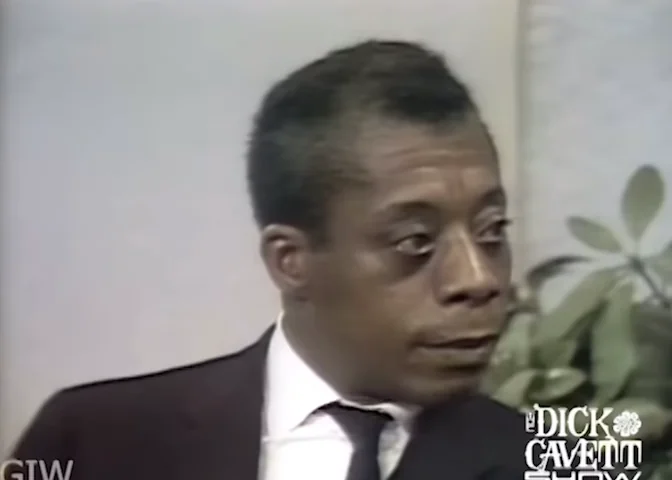
    Baldwin’s point was simple but powerful. His point was that people judge a society not by its ideals, but by its outcomes.

    If institutions repeatedly disadvantage a group of people, it is unrealistic to expect that group to respond with automatic trust.

    This helps explain many of the cultural dynamics that outsiders often misunderstand. Black Americans frequently “gatekeep” aspects of their culture, remain skeptical of institutions, and react strongly to racial issues that others see as trivial.

    Those reactions are not random or irrational. They emerge from decades and centuries of historical experience.

    None of this means that every individual white person is malicious or untrustworthy. But collective histories shape collective perceptions.

    If trust is going to grow between communities, it cannot be demanded through outrage over a line in a movie. It has to be earned through meaningful changes in the institutions and behaviors that produced the distrust in the first place.

    History matters.

    And until that history is confronted honestly, lines like the one in Leave the World Behind will continue to resonate with many viewers, even as others find them uncomfortable.

  • Faith, Identity, and Belonging in the Divine Nine

    Faith, Identity, and Belonging in the Divine Nine

    For many years, I have wanted to become a member of one of the Divine Nine organizations. That interest goes all the way back to my senior year of high school, although circumstances prevented me from pursuing that path at the time.

    Even now, the idea still appeals to me.

    At the same time, I recognize something important: these organizations have long histories, traditions, and cultural norms. If I eventually seek membership, I cannot expect those institutions to change their identity simply to accommodate my personal beliefs.

    Respect has to go both ways. If they respect me enough to accept me as a member, I have to respect the organization enough to conform to their standards when representing the organization.

    This question came to mind recently after a member of Alpha Phi Alpha made headlines for wearing a pink suit and high heels during his graduation ceremony while wearing his fraternity sash. The member, who identifies as part of the LGBTQIA community, chose to celebrate his achievement in a way that expressed his personal identity.

    The reaction to that moment highlighted a tension that exists within many historically Black institutions.

    On paper, the Divine Nine organizations do not discriminate based on race, religion, or sexual orientation. In practice, however, many members, especially from older generations, hold traditional views about religion, sexuality, and gender expression.

    That tension is not unique to fraternities and sororities. It reflects broader debates happening throughout the Black community.

    For example, I am an atheist. I understand that every Divine Nine organization was founded within a Christian cultural context, and that prayers and religious language are often part of meetings and ceremonies. If I were to become a member someday, I would not expect those traditions to disappear simply because I do not share the same religious beliefs.

    All I would ask is the same courtesy in return: the ability to live according to my own philosophical beliefs while respecting the traditions of the organization.

    The situation becomes even more complicated when questions of sexual orientation and gender expression enter the picture. Unlike religious belief, which can remain private unless someone chooses to disclose it, gender expression is often visible.

    That visibility can place LGBTQ members in environments where parts of the membership may still be uncomfortable with their identity or self-expression.

    In the case of the Alpha Phi Alpha member who wore heels to his graduation, I believe it is important to remember the context. He was not attending a fraternity meeting or ritual event. He was celebrating his personal academic achievement, and he chose to do so in a manner that reflected his personality and personal identity.

    However, he wore the graduation stole of the organization during his graduation, and therefore was a reflection of the organization’s values and reputation.

    It is a complicated debate.

    Ultimately, moments like this raise a broader question for institutions like the Divine Nine and for the Black community as a whole: how do we balance tradition with evolving understandings of identity and inclusion?

    These organizations have historically played vital roles in leadership, scholarship, and community uplift. As society continues to change, those institutions will inevitably face conversations about how welcoming they are to members whose identities or beliefs fall outside traditional expectations.

    I hope those conversations lead toward greater understanding rather than deeper division.

    And while I am not yet a member of any Divine Nine organization, I still hope that if I ever do join one, it will be in a spirit of mutual respect: respect for the organization’s traditions and respect for the individuality of the people who choose to become part of it.

  • A Note to Christians About Atheists

    A Note to Christians About Atheists

    Many people who know me are aware that I am an atheist. But I wasn’t always one.

    I was once very religious when I was younger, but over time, my beliefs changed. I won’t go into the entire story of my deconversion here. That would require far more time and space than this post allows.

    Instead, I want to talk about something simpler: how expressions of faith sometimes come across to those of us who do not share those beliefs.

    First, a little context.

    I do not go out of my way to announce my atheism simply to provoke people or start arguments. In fact, I would generally prefer to be left alone about it. But I do sometimes wear clothing that reflects my support for secular organizations such as American Atheists, Black Nonbelievers, the Freedom From Religion Foundation, and others.

    And if someone asks me directly where I stand, I will answer honestly.

    For me, this is not about offending anyone. It is simply about expressing my worldview in the same way religious people often express theirs.

    My goal has always been to challenge the myths people have about atheists. Many believers are taught that atheists are immoral, bitter, or hostile toward humanity. In reality, most of us simply do not believe in any gods (Christian, Islamic, Hindu, or otherwise).

    But we still believe in empathy.

    Any good I try to do in the world is not motivated by promises of eternal bliss (Heaven), fear of eternal punishment (Hell), or the expectation of cosmic rewards. It comes from the basic recognition that other human beings deserve compassion and dignity.

    Recently, I had a small interaction that reminded me how easily misunderstandings can happen between believers and nonbelievers.

    While trying to locate an event for my daughter’s school, I briefly spoke with a group of Christians in the area. The conversation was cordial and short. As I was leaving, one woman said, “I’ll pray that you find where you’re going… in Jesus’ name.”

    I smiled and continued on my way. I didn’t respond or make an issue of it.

    But it did make me pause and reflect.

    Was she simply trying to be kind in the way her faith taught her to be? Possibly. I try not to assume bad intentions when I cannot know someone’s motivations.

    At the same time, moments like that can sometimes feel uncomfortable for those of us who do not share those beliefs. Not because we are hostile to religion, but because it can feel as though a very specific religious worldview is being assumed as universal.

    In a religiously diverse society, small differences in language can matter.

    A phrase like “I hope you find where you’re going” is universally understood. Even “I’ll pray for you” can feel relatively broad, since many different traditions include some form of prayer or meditation.

    But explicitly invoking a specific deity can sometimes feel like an assumption that everyone present shares that belief.

    That assumption is not always intended. But it is often felt.

    I want to be clear about something: I do not object to people having faith or expressing it. Religion helps many people navigate a difficult world, and if someone’s beliefs encourage kindness and compassion, I have no desire to take that away from them.

    What I object to are a few common assumptions:

    • That everyone is or should be Christian.
    • That atheists reject religion because they are ignorant or immoral.
    • That explicitly religious language is always welcome in every context.

    The reality is that we all share this society.

    Christians, atheists, Muslims, Jews, Buddhists, pagans, and many others live side by side. Mutual respect requires recognizing that no single worldview represents everyone.

    That does not mean people must hide their beliefs.

    It simply means acknowledging that the world is bigger than any one tradition, and that the people we meet may not share our assumptions.

    Living peacefully in a pluralistic society requires that kind of awareness from all of us.

  • What Went Wrong With the Atheist Movement

    What Went Wrong With the Atheist Movement

    One of the ongoing debates about the atheist movement of the 2000s and early 2010s is whether it “collapsed” because it became too politically progressive or “too woke.”

    I don’t think that explanation holds up.

    In my view, the real problem with the movement was something else entirely: it contained a significant number of reactionary voices, particularly white male commentators, who eventually stopped hiding their hostility toward women, marginalized communities, and racial minorities.

    For a while, those tensions remained mostly beneath the surface. But when controversies like Elevatorgate, Gamergate, and similar disputes erupted, they exposed cultural problems that had been developing inside the movement for years.

    Regardless of where one stood on the details of those specific incidents, they represented opportunities for reflection and self-examination.

    Unfortunately, many of us (including myself) responded defensively rather than thoughtfully.

    Instead of listening to people who felt alienated or marginalized within atheist spaces, the dominant reaction in many circles was to dismiss their concerns, mock them, or accuse them of trying to impose political correctness on what was supposed to be a rationalist community.

    In hindsight, that response made things worse.

    Atheism itself is simply a position on one question: whether gods exist. But movements built around atheism inevitably become social communities, and communities bring their own cultural dynamics.

    When those dynamics include arrogance, hostility, or a lack of empathy, people eventually notice.

    The uncomfortable truth is that many of us behaved like self-important gatekeepers who were quick to criticize religion but much slower to examine our own toxic attitudes and behavior.

    The movement’s credibility suffered as a result.

    Looking back, it’s clear that moments of conflict within the atheist community could have been growth opportunities. They could have encouraged more thoughtful conversations about inclusion, respect, and how a community built around skepticism should treat the people within it.

    Instead, too often, those conversations devolved into hostility and factionalism.

    If there is a lesson to take from that period, it is a simple one: skepticism should not only apply to religious beliefs.

    It should also apply to our own behavior.

  • Political Demonization and the Collapse of Civil Discourse

    Political Demonization and the Collapse of Civil Discourse

    Over the past several decades, a pattern has emerged in American political rhetoric, particularly in certain corners of conservative media and political leadership.

    People on the political left are not merely described as political opponents. We are often portrayed as existential threats to the nation.

    For years, many prominent conservative commentators and politicians have repeatedly described Democrats and left-leaning Americans as:

    • Anti-American or people who “hate America”
    • Socialists or communists
    • Participants in child-trafficking conspiracies
    • Doctors who secretly perform gender surgeries on children without parental knowledge
    • Supporters of violent crime
    • Architects of mass immigration designed to manipulate elections
    • Violent extremists who are responsible for “burning down cities”
    • Lazy individuals who simply want government handouts
    • Rampant sexual deviants who want to groom children into non-heteronormative lifestyles

    Many of these accusations are not policy disagreements. They are moral accusations. They are claims that state that their political opponents are fundamentally dangerous, corrupt, or evil.

    When these claims are repeated constantly through media ecosystems, they can shape how entire audiences perceive political reality. Over time, exaggerated or false narratives can become accepted as unquestioned truths.

    This dynamic has serious consequences.

    When political opponents are portrayed not simply as people with different policy views but as criminals, traitors, or threats to society, it becomes easier for some individuals to justify hostility or even lethal violence against them.

    At the same time, many of the same political figures who use this kind of rhetoric often react strongly when criticism is directed toward them. Labels such as “bigot” (in any form), “authoritarian,” or “fascist” are often condemned as unfair or offensive, even when critics argue that those labels are based on observable political behavior.

    The result is a deeply polarized environment in which one side hurls childish insults, irrational accusations, and charges of civic disloyalty, which endangers those on the receiving end. Then they clutch their pearls when met with the same energy in response.

    In the end, our political conversation devolves into arguing against strawman caricatures of people, on either side, rather than having good-faith arguments based on facts and reality.

    Healthy democratic societies require disagreement. Political conflict is inevitable and often productive.

    But democracy becomes fragile when political actors stop treating their opponents as fellow citizens and begin treating them as soulless enemies who don’t love the land that we are in.

    Once that shift happens, civil discourse becomes nearly impossible, and political conflict begins to resemble cultural warfare rather than democratic debate.

  • Diaspora Divisions and the Cost of Infighting

    Diaspora Divisions and the Cost of Infighting

    One of the trends I have become increasingly frustrated with in recent years is the rise of diaspora conflicts among people of African descent, particularly the rhetoric coming from the Foundational Black American (FBA) movement and the American Descendants of Slavery (ADOS) movement.

    My criticism is not about recognizing the unique historical experience of Black Americans whose ancestors endured slavery and segregation in the United States. That history is real and deserves to be studied and acknowledged.

    Nor is my disagreement with these groups over the fight for reparations and the hypothetical distribution of any amount of personal funds that is a direct result of said fight.

    The problem arises when that recognition turns into hostility toward other Black communities, such as Africans, Caribbeans, Afro-Latinos, and others within the broader African diaspora (the sixth region of Africa).

    Movements that frame liberation as a zero-sum competition between groups of Black people misunderstand the history of Black struggle.

    Black liberation movements have always been global.

    Pan-African thinkers, such as Marcus Garvey, W.E.B. Du Bois, Kwame Nkrumah, Malcolm X, Kwame Ture, and many others, understood that the struggle against racism and colonialism was not confined to a single country. Activists, intellectuals, and artists from across the African diaspora have participated in and led movements for civil rights, cultural expression, and political freedom.

    This global exchange of ideas and customs had always shaped Black American culture.

    Music, political ideas, literature, and social movements have flowed back and forth between the United States, Europe, Canada, the Caribbean, Africa, and Latin America. That cross-pollination helped create many of the cultural forms and political traditions that people celebrate today.

    For that reason, turning these relationships into ideological battlegrounds does not strengthen Black communities. Instead, it weakens them.

    Diaspora conflicts often distract from the structural issues that affect people of African descent globally: economic inequality, systemic discrimination, political marginalization, and the long historical legacy of colonialism and racial hierarchy.

    Even debates about policies such as reparations often become framed in ways that pit Black communities against one another. Yet those discussions are largely hypothetical at the moment, given that meaningful reparations programs in the United States remain politically distant.

    Arguing among ourselves over potential future policies does little to advance the broader goals of empowerment, economic development, and collective liberation.

    If the goal is Black power, Black wealth, and meaningful progress, then building solidarity across the African diaspora is far more productive than deepening internal divisions.

    That does not mean ignoring real disagreements or historical differences.

    But it does mean recognizing that the struggles of people of African descent have always been interconnected, and that fragmentation ultimately benefits those who would prefer those struggles to remain divided.

  • The Epstein Scandal Is Bigger Than Politics

    The Epstein Scandal Is Bigger Than Politics

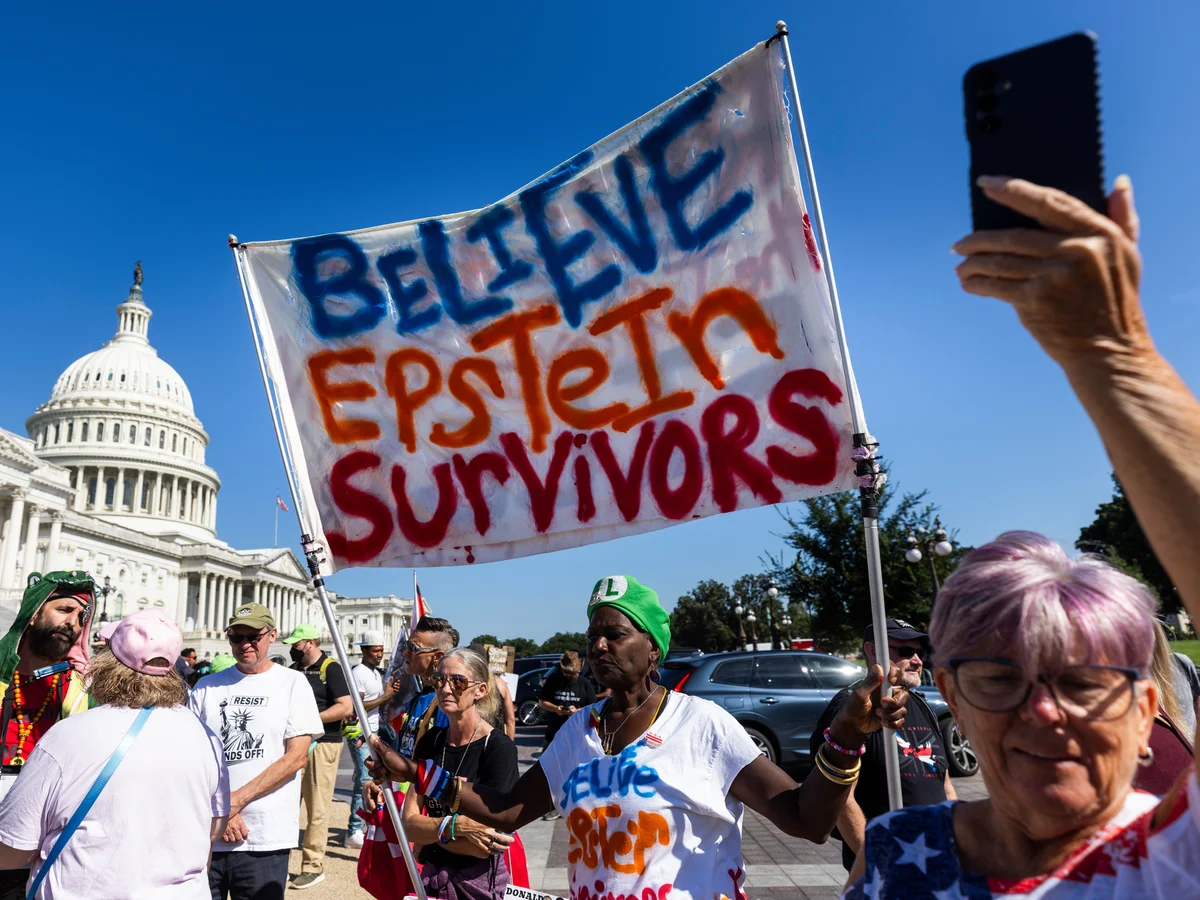
    I have been extremely critical of Donald Trump and the MAGA movement regarding the Epstein case. However, it is important to say something that often gets lost in the political shouting.

    This case is bigger than Trump.

    It is bigger than Jeffrey Epstein himself.
    It is bigger than Bill Clinton, Prince Andrew, or any other powerful individual who may have been connected to Epstein’s network.

    And it is bigger than partisan politics.

    At its core, the Epstein scandal exposes something much deeper: what happens when money, power, and privilege collide with the worst impulses of human behavior, particularly male behavior.

    For decades, we have seen the same pattern repeat itself across politics, entertainment, religion, business, and other powerful institutions. Men with wealth and influence abuse their power to exploit women and girls, while the systems around them protect their reputations.

    Victims are often dismissed, discredited, or accused of ulterior motives. Meanwhile, the perpetrators continue to operate with little consequence.

    The Epstein case revealed a horrifying scale of abuse. Hundreds of young girls were trafficked and exploited. Some estimates suggest the number of victims could exceed a thousand.

    And yet the reaction from many people has been to reduce the scandal to a political weapon.

    Supporters of one political figure point to the involvement of another. Loyalists circle the wagons around people they admire. Victims become secondary to political narratives.

    This reaction is part of the problem.

    Sexual exploitation thrives in environments where powerful people are protected by wealth, influence, and social loyalty. When society treats abuse allegations as partisan ammunition rather than moral failures, accountability becomes almost impossible.

    The disturbing reality is that this problem extends far beyond Epstein’s circle.

    Reports in recent years have exposed online communities where thousands of men openly discuss drugging, assaulting, and exploiting women. Studies consistently show that sexual violence is far more common than many people want to admit. According to organizations such as the Rape, Abuse & Incest National Network (RAINN), roughly one in six women will experience sexual assault during their lifetime.

    These crimes are rarely committed by strangers hiding in dark alleys.

    They are often committed by men known to the victim, such as friends, coworkers, acquaintances, partners, and authority figures.

    This forces an uncomfortable conversation about male behavior more broadly.

    If men are serious about ending sexual violence, the responsibility cannot be placed solely on law enforcement or individual criminals. Men must also examine the attitudes and behaviors that enable these crimes to continue.

    That includes learning to accept rejection, understanding the meaning of consent, and rejecting the idea that status, wealth, or influence entitle anyone to another person’s body.

    This is not about hating men or rejecting masculinity. This is not about pandering to women for dates or sex. It is about recognizing that power without accountability creates environments where abuse flourishes. This is about accountability and responsibility.

    Many of the women harmed by Epstein’s network are now adults living with lifelong trauma. Justice for them should never be reduced to a political talking point.

    If this scandal means anything, it should be a reminder that accountability must apply to everyone. Holding criminals accountable should be the goal, no matter how wealthy, powerful, or politically connected they may be.

    And for men in particular, it should also be a reminder that respect, consent, and responsibility must define how we treat women.

    Anything less allows the cycle to continue.

  • A Personal Note on Atheism and Religious Freedom

    A Personal Note on Atheism and Religious Freedom

    My name is Mario Stanton. I am an atheist and the founder of the Black Atheists Facebook group. Over the years, the group received attention from several media outlets, including The Grio and The New York Times.

    I mention this not to boast, but to clarify something important: I am not affiliated with any religious organization.

    My atheism is the result of years of study, reflection, and personal experience. I do not believe in any gods, and I often find many religious doctrines philosophically and intellectually irrational.

    However, there is an important distinction between disagreement and hostility.

    While I do not share religious beliefs, I strongly support the right of people to believe and practice the religion of their choice. Freedom of conscience is one of the most important principles in a pluralistic society.

    Over the years, I have found myself defending religious communities, particularly Muslims, against unfair stereotypes and discrimination. That might surprise some people, considering that my atheism would make me unwelcome in certain religious contexts, particularly with many Muslims.

    But fairness requires consistency.

    Muslims, like every other group, are not a monolith. Some individuals are admirable, compassionate people. Others are not. The same is true of Christians, Jews, Hindus, pagans, atheists, and every other category of human being.

    No group has a monopoly on virtue or vice.

    Unfortunately, public discourse often treats entire religious communities as if they can be defined by the actions of their worst members. This is one of the key characteristics of bigotry.

    Muslims are sometimes generally reduced to extremists in the public imagination. However, Christians and Jews are immune from this, even though Christians are sometimes associated with white supremacy and other troubling beliefs, and Jews are associated with Kahanism and extreme Zionism.

    Religious extremism is religious extremism, no matter what religion it is tied to.

    The reality is much simpler: people are individuals. Some are kind, thoughtful, and ethical. Others are not.

    My position is straightforward. I will continue to disagree with religious beliefs that I find unconvincing, but I will also continue to defend the right of others to practice their faith freely. I will do this as long as those practices do not harm others or infringe on their rights.

    Disagreement is inevitable in a diverse society.

    But fairness should be non-negotiable.

  • A Note for New Readers

    A Note for New Readers

    Hello, everyone.

    For those who may not know me from my Facebook page or are unfamiliar with my writing, I want to briefly explain the kinds of topics I discuss and the perspective I bring to those conversations.

    In everyday life, I’m generally a relaxed and humorous person, but my writing tends to focus on serious issues, many of which people consider controversial. I often discuss topics that many people avoid in polite conversation: race, politics, religion, history, and social inequality. These conversations can generate strong reactions, and I understand that not everyone will agree with the positions I take.

    With that in mind, there are a few things readers should know about me.

    First, I consider myself pro-Black. My views are influenced by traditions of Black liberation thought, Pan-Africanism, and Afrocentric scholarship. That does not mean I am hostile toward other racial groups. However, I do believe that many of the modern racial hierarchies we see today have their roots in European colonial systems that imposed rigid racial classifications across much of the world. Because of that history, I have very little patience for openly anti-Black rhetoric, regardless of who expresses it.

    Second, I am an atheist. My atheism is not the result of ignorance or rebellion but the result of years of reading, research, and reflection. I respect the fact that religion is deeply personal for many people, and I generally avoid debating religion with many people out of courtesy. Religious beliefs are extrememly personal and I strongly believe that one’s spiritual walk is their own. I simply ask for the same respect in return. Expressions of faith are one thing; persistent attempts to proselytize to me, whether through private messages, unsoliticed phone calls, or “forced” debates, are another.

    Third, my politics are left-leaning, and I generally describe myself as a democratic socialist, and a leftist. While I try to understand perspectives across the political spectrum, I strongly disagree with many positions associated with contemporary conservative politics, particularly those that dismiss the struggles of low-wage workers or celebrate economic systems that leave large numbers of people behind.

    I believe conversations about these issues are necessary, even when they are uncomfortable. My goal is not to provoke hostility but to engage with difficult topics honestly and critically.

    If these subjects are not something you’re interested in seeing, I completely understand. I will post some lighter subject matter in the future. Everyone curates their online space differently.

    But if you are willing to engage thoughtfully, even when we disagree, then you are welcome here. Just try to be somewhat mature and respectful.

  • Why Do I Have to Explain Being an Atheist?

    Why Do I Have to Explain Being an Atheist?

    One of the most common reactions I receive when I tell people that I’m an atheist is, ironically, disbelief.

    The conversation usually follows a familiar pattern.

    “I’m an atheist.”

    “You’re an atheist?”

    Then comes the inevitable follow-up question: “Why?”

    Sometimes the question is genuine curiosity. But often it comes loaded with assumptions, usually the expectation that I must justify my lack of belief in the same way someone might explain a controversial political opinion.

    What has always struck me as strange is the underlying assumption behind the question itself.

    Why does disbelief require an explanation?

    In many societies, religious belief is treated as the default setting of human existence. Because of that assumption, people who do not believe are often expected to explain themselves in ways that believers rarely are.

    But belief and disbelief are both positions people arrive at through their own experiences, reasoning, and reflections.

    In my case, conversations about atheism often turn into debates that have very little to do with philosophy or metaphysics. Instead, they become exchanges between dogma and scientific arguments, with each side talking past the other.

    That kind of discussion rarely leads anywhere productive.

    Despite that, I usually answer the question anyway. Not because I believe I owe anyone an explanation, but because it can be an opportunity to address some of the misconceptions people have about atheists.

    Many people assume that atheists are hostile toward religion, immoral, or angry at the concept of God itself. In reality, most atheists simply do not find the evidence for religious claims convincing.

    For many of us, disbelief is not a rebellion, an excuse to “sin,” or a dramatic declaration of extreme contrarianism. It is simply the conclusion we arrived at after thinking about the questions that religion attempts to answer.

    Still, what often becomes clear in these conversations is that some people are not really interested in understanding atheism at all. Their goal is to proselytize, persuade, attempt to correct, or defend their own beliefs.

    And that is where the conversation usually stops being a conversation and starts being a series of unnecessary attacks.

    Because belief, like disbelief, is ultimately a personal conclusion that each individual must reach on their own.

    I chose my position a long time ago. I didn’t choose it through ignorance or malicious intent. I chose it because it made the most sense to me based on years of philosophical thought and research.