Author: Mario Stanton

  • The Imaginary Conservative Dr. Martin Luther King Jr.

    The Imaginary Conservative Dr. Martin Luther King Jr.

    Every January, around the time of Martin Luther King Jr. Day, a familiar political ritual begins.

    Public figures across the political spectrum invoke King’s name in support of their own positions. Liberals quote him. Conservatives quote him. Moderates quote him. Everyone suddenly seems convinced that Dr. King would agree with them if he were alive today.

    In many cases, these attempts say more about the people invoking King than about King himself.

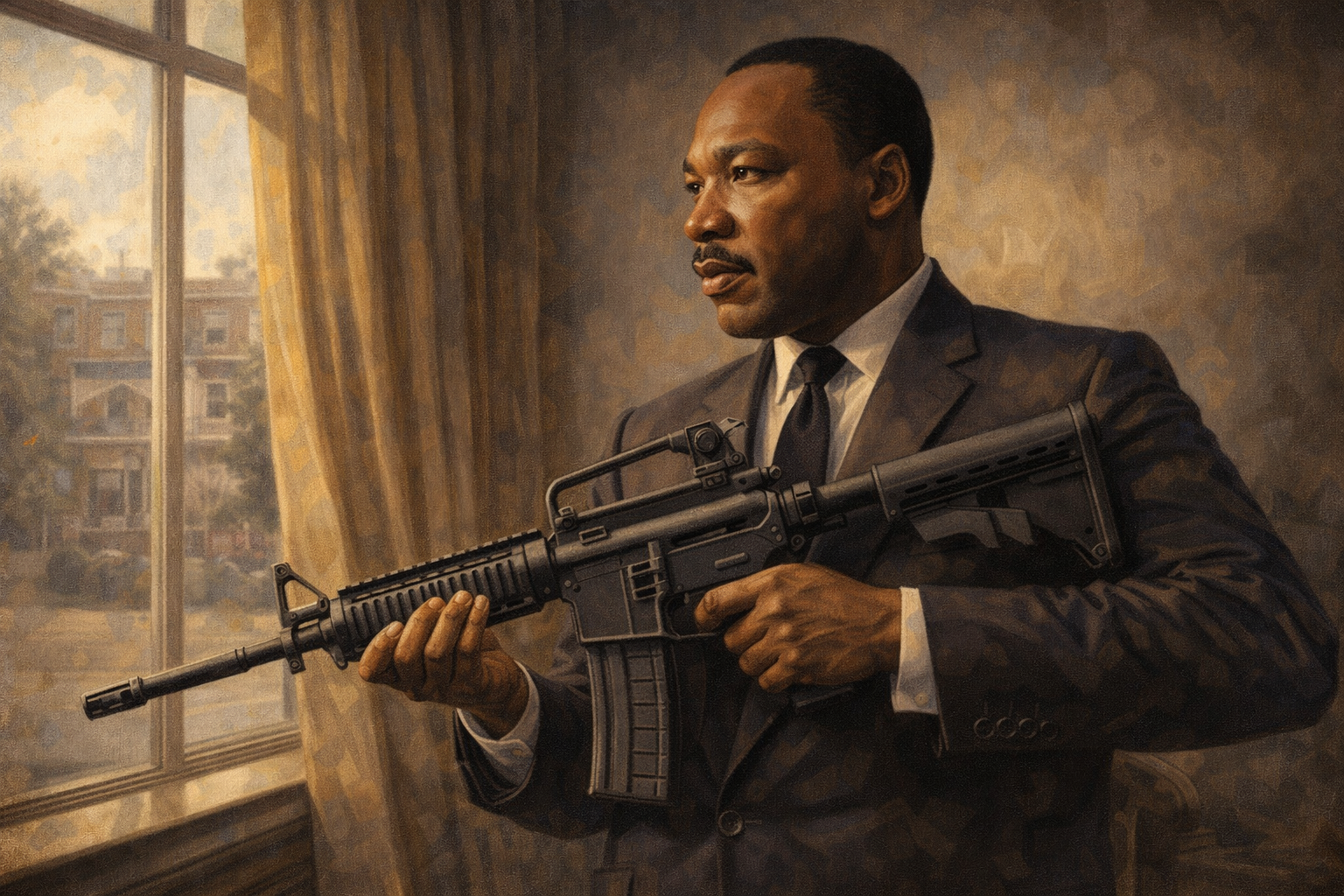
    One of the more curious examples in recent years has been the claim that Dr. King would have opposed modern gun control laws because he owned firearms.

    At first glance, this argument might sound plausible. It is true that King once applied for a permit to carry a handgun after his home was bombed during the Montgomery Bus Boycott. In the violent atmosphere of the Jim Crow South, many civil rights leaders faced credible threats to their lives.

    But isolating that fact while ignoring King’s broader philosophy creates a deeply misleading picture.

    Dr. King was one of the most committed advocates of nonviolence in modern history. His entire political and moral philosophy centered on the belief that violence ultimately corrupts both individuals and societies. Throughout his career, he repeatedly emphasized that the civil rights movement must reject violence—even in the face of brutal repression.

    More importantly, King’s political views extended far beyond the narrow civil rights narrative that is often presented today.

    In the final years of his life, King increasingly criticized economic inequality, militarism, and American foreign policy. He spoke openly about the need for a radical restructuring of American society and argued that poverty, racism, and war were interconnected problems.

    He supported strong labor rights, called for major government programs to address poverty, and spoke favorably about forms of democratic socialism.

    In other words, the historical Dr. King was far more politically complex and far more radical than the sanitized figure often presented in modern political debates.

    Projecting modern ideological battles onto King may be tempting, but it risks distorting the historical record.

    Rather than imagining the version of King we wish existed, it might be more productive to engage honestly with the one who actually did.

  • Limousine Liberalism and the Politics of Comfort

    Limousine Liberalism and the Politics of Comfort

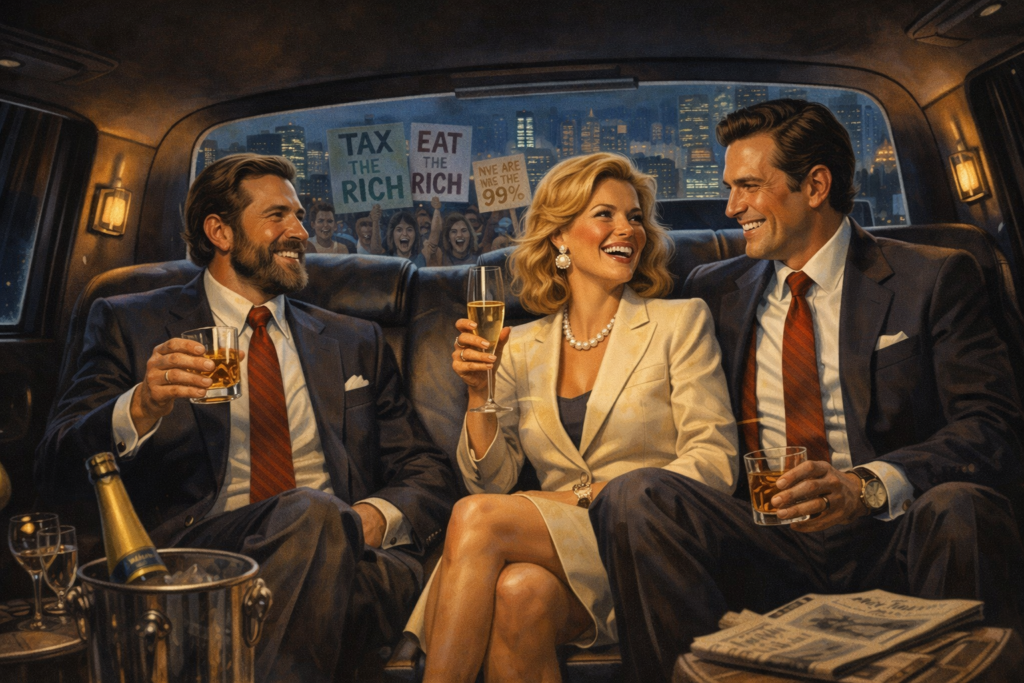
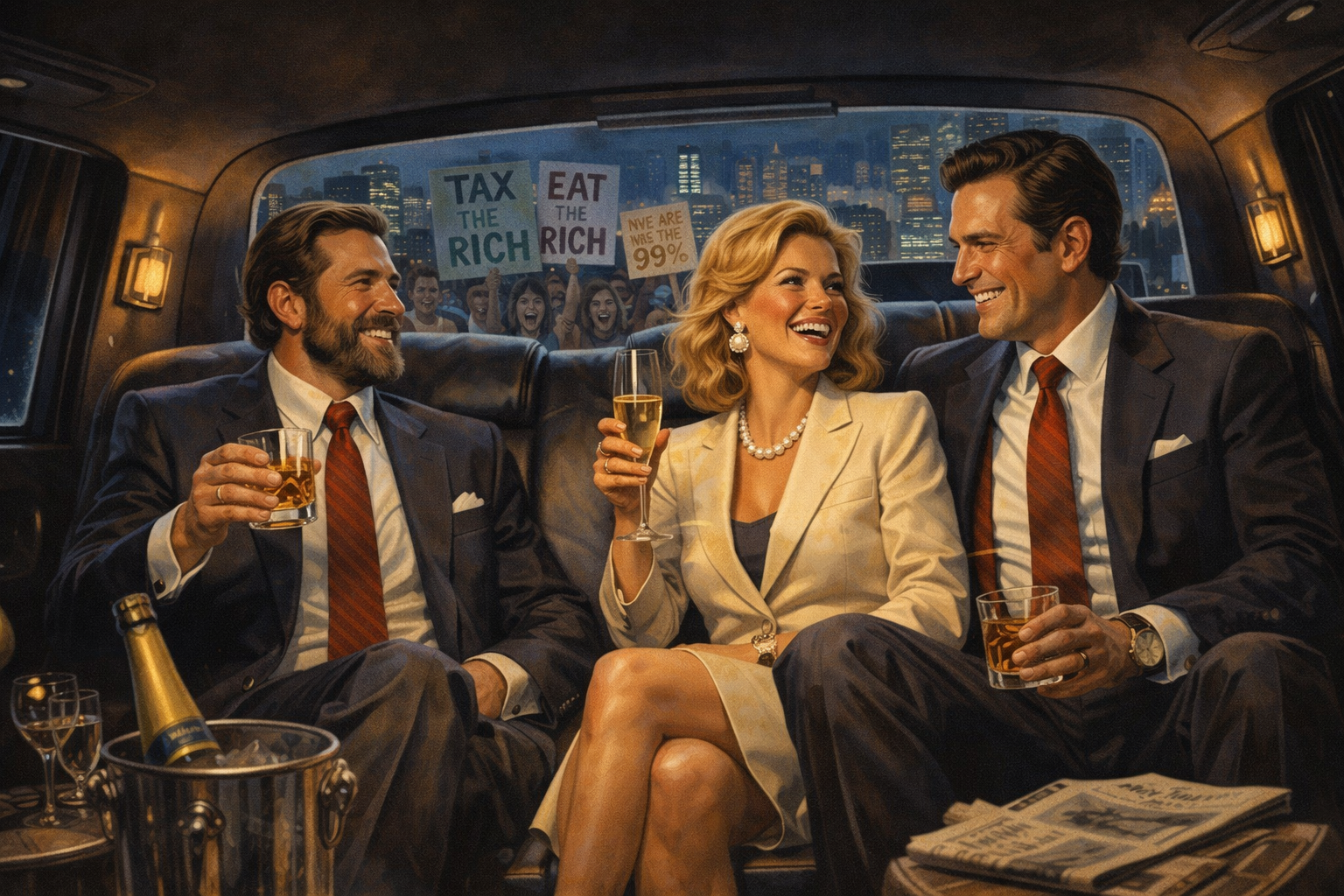
    If the phrase “limousine liberal” needed a modern example, many critics would point to Bill Maher.

    For decades, conservatives have used the term to describe a particular kind of liberal politics… one practiced by wealthy cultural elites who champion progressive social causes while remaining largely disconnected from the economic struggles of ordinary people.

    Whether that label is fair in every case is debatable. But the criticism highlights a real tension within American liberalism.

    The problem is not support for civil rights, LGBTQ equality, environmental protection, or other social issues, no matter how tepid and/or performative it may be. Those struggles are important and necessary. The problem arises when those causes are championed without addressing the economic structures that produce inequality in the first place.

    This tension was visible in a recent segment of Maher’s show in which he criticized younger Americans for being overly pessimistic and encouraged people to “cheer the fuck up.” In his view, dissatisfaction with the current political environment reflects an overly negative outlook among younger generations.

    But that interpretation overlooks the economic reality facing millions of Americans.

    Over the past several decades, the United States has undergone a dramatic economic transformation. Manufacturing jobs that once provided stable middle-class livelihoods have been replaced by lower-paying service work. Wages have stagnated while the cost of housing, healthcare, education, and childcare has steadily risen.

    Today, many Americans are financially fragile. Surveys regularly show that a large percentage of households would struggle to cover even a modest emergency expense. At the same time, economic growth and stock market gains are increasingly concentrated among a relatively small segment of the population.

    When commentators dismiss widespread economic frustration as simple negativity, it can come across as profoundly out of touch.

    For people living paycheck to paycheck, debates about stock market performance or macroeconomic indicators feel distant from their everyday reality. Economic insecurity is not simply a matter of attitude. It is a real material condition.

    This is where critiques of “limousine liberalism” gain traction.

    Symbolic gestures and self-righteous virtue signaling can coexist with an economic system that continues to produce inequality and insecurity. Without adequately examining the deeper structural issues of unsafe labor conditions, wage stagnation, sharply rising housing costs, decreased access to affordable healthcare, and the massive influence of corporate power, political rhetoric about social progress can begin to feel hollow.

    Many Americans are not asking for perfection. They are merely asking for a political system that seriously addresses the economic pressures shaping their lives.

    When those concerns are dismissed as whining or irrational pessimism, the gap between political elites and working people only widens.

    And that gap helps explain why so many voters remain deeply dissatisfied with the current political moment.

  • From Protest to Prosperity: The Generational Divide Between Boomers and Millennials

    From Protest to Prosperity: The Generational Divide Between Boomers and Millennials

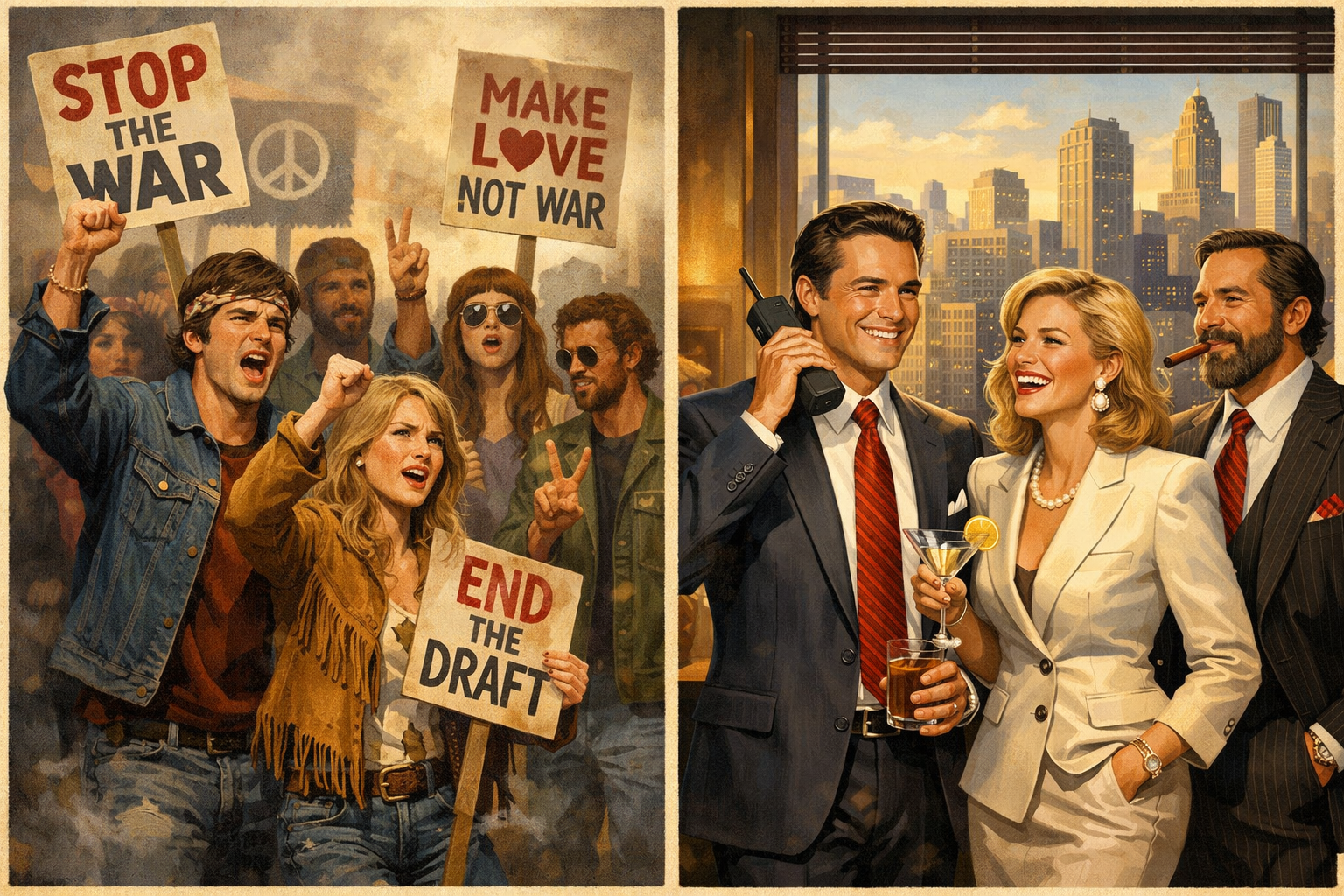
    One of the things that has always puzzled me about the Baby Boomer generation is the contrast between their revolutionary youth and their often conservative attitudes later in life.

    The Boomers, along with many members of the Silent Generation, were the people that Generation X grew up admiring. They were the students sitting at segregated lunch counters while mobs attacked them. They were the Freedom Riders. They were marching against the war in Vietnam. Some were even killed during protests, such as the students shot by National Guard troops at Kent State.

    They were the generation that gave rise to the Civil Rights Movement, the Black Power Movement, women’s liberation, the American Indian Movement, early gay rights activism, and a broader counterculture that questioned the entire structure of American society.

    They were also the generation that gave us revolutionary genres of music, such as classic rock, heavy metal, punk, and hip-hop. Melly Mel was a Boomer who gave us “The Message”, and Chuck D was a Boomer telling us to “Fight The Power”.

    Of course, not every Boomer was part of those movements. Many supported segregation, the Vietnam War, and conservative politics. But the public image of the generation was shaped by its loudest voices: young people challenging authority and demanding social change.

    Somewhere along the way, that spirit changed.

    By the 1980s, large portions of the Silent Generation and the Baby Boomers had embraced a very different political outlook. Ronald Reagan’s landslide victory in 1984, in which he won every state except Minnesota, was powered largely by voters from the Greatest Generation, the Silent Generation, and many Boomers who had entered middle age.

    To understand this shift, we must first look at the economic environment in which those generations came of age.

    The decades following World War II produced one of the most prosperous periods in American history. Beginning in the late 1940s and continuing through the early 1970s, the American middle class experienced a dramatic expansion. Unionized manufacturing jobs were plentiful and often paid wages that allowed a single worker to support an entire family.

    For many Americans, especially and particularly white Americans, economic security was relatively attainable.

    By the mid-1970s, however, the foundations of that economy were beginning to erode. Deindustrialization affected major cities such as Detroit, Cleveland, Baltimore, and St. Louis particularly hard. Manufacturing jobs disappeared, urban budgets were slashed, and many white families relocated to suburbs that remained economically stable.

    While inner cities struggled with job loss, poverty, and rising crime, many suburban communities continued to experience relative prosperity well into the 1980s and 1990s.

    This created a divide in perception.

    Many Baby Boomers came of age during a period when stable employment and home ownership were still achievable for large segments of the population. Younger generations, by contrast, entered adulthood during a period defined by stagnant wages, rising housing costs, student debt, and declining economic mobility.

    As a result, Millennials and younger generations often experience economic conditions acutely differently from how their parents did.

    From the perspective of many Boomers, the United States has already achieved enormous social progress. Segregation has been dismantled, women have gained expanded rights and opportunities, and same-sex marriage has been legalized.

    From that viewpoint, younger generations may appear overly pessimistic or overly focused on grievances.

    However, that perspective sometimes overlooks a crucial reality: the economic landscape has changed dramatically.

    Many Millennials and younger adults face rising costs of education, healthcare, and housing while earning wages that have not kept pace with inflation. Buying a home, starting a family, or building long-term financial security has become significantly more difficult than it was for many members of earlier generations.

    This creates a generational misunderstanding.

    Older generations may view younger people as overly sensitive or insufficiently resilient. Younger generations may view older voters as disconnected from the economic realities they now face.

    Both perceptions contain elements of truth and misunderstanding.

    The social struggles fought by earlier generations were enormously important and deserve recognition. But social progress alone cannot resolve the economic challenges confronting younger Americans today.

    As Martin Luther King Jr. increasingly emphasized in the final years of his life, the struggle for social justice is incomplete without a parallel struggle for economic justice.

    Understanding that connection may be one of the most important tasks facing the generations living in America today.
  • Political Courage and the Question of What Is “Realistic”

    Political Courage and the Question of What Is “Realistic”

    One of the more puzzling arguments I have seen on social media comes from people (ADOS and FBA) who dismiss policies like universal healthcare, tuition-free public college, or a living wage as unrealistic “pie-in-the-sky” ideas, while simultaneously insisting that reparations for slavery and Jim Crow should be a major policy priority.

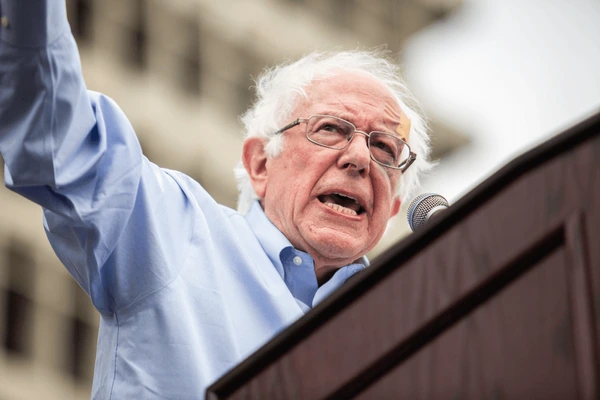
    This contradiction became especially visible during the 2020 Democratic primary when people attacked Bernie Sanders’ supporters online. I posted a Bernie “Infinity Gauntlet” meme referencing several progressive policy goals, and the response from some critics was predictable: comments about how those policies were impossible, along with sarcastic questions like “Where is the reparations stone?”

    But that criticism raises a serious question.

    If policies that benefit tens of millions of Americans—things like universal healthcare or free public college—are supposedly too politically difficult to achieve, what does that say about the political chances of reparations?

    A $15 minimum wage benefits workers across racial lines. Universal healthcare benefits everyone who needs medical care. Free public college benefits families nationwide.

    Reparations, by definition, address a specific historical injustice and would primarily benefit the descendants of enslaved people. That makes it politically even more challenging within the current American political system.

    This is not an argument against reparations. I support the idea of reparative policies for the legacy of slavery and Jim Crow.

    The point is about political honesty.

    If a politician tells voters that universal healthcare or a Green New Deal is unrealistic while simultaneously promising to pursue reparations, it is reasonable to question whether that promise is sincere or simply a form of political pandering.

    Real political change rarely begins with cautious, incremental thinking. It begins with bold proposals that shift the boundaries of what people believe is possible.

    Abolitionists were once told that ending slavery was unrealistic. Civil rights leaders were told that full legal equality was politically impossible. Major social reforms, from labor rights to voting rights, often began as ideas that the political establishment dismissed as radical.

    Not every bold proposal becomes law immediately. In fact, many fail in the short term.

    However, political movements often start by pushing ideas that expand the horizon of what people are willing to imagine.

    That is why the debate about “realistic” politics matters.

    If political leaders only pursue policies that the existing power structure already accepts, meaningful change rarely happens. Progress usually comes from those willing to challenge the limits of what the political establishment considers possible.

    If universal healthcare, free-college tuition, and other progressive campaign promises and goals are unrealistic, then so is the possibility of America paying the debt that it owes Black Americans.

    Whether one supports Bernie Sanders or not, that broader principle remains true.

    Political courage has always been the starting point for major social change.

  • The Death of Nuance in the Social Media Era

    The Death of Nuance in the Social Media Era

    One of the things that constantly amazes me about social media discourse is the tendency to treat historical figures, as well as contemporary public figures, as if they must be either entirely good or entirely evil.

    The moment someone mentions something positive about a controversial figure, it is almost guaranteed that someone will jump into the conversation to remind everyone of that person’s worst actions.

    Mention that Henry Ford introduced innovative ideas about wages and working hours, and someone will immediately point out that he was a racist and an antisemite.

    Discuss the artistic achievements of a filmmaker, and someone will remind you that the director was a convicted criminal. Mention a political leader’s accomplishments, and someone will respond with a list of that leader’s moral failures.

    Now, to be clear, none of that information is wrong. History should not sanitize or hide the harmful actions of powerful people.

    But the question is whether those reminders are always necessary in every conversation.

    There is a difference between acknowledging wrongdoing and insisting that a person’s flaws invalidate everything else they ever did. Human beings are rarely that simple.

    Franklin D. Roosevelt oversaw the internment of Japanese Americans during World War II. This was undoubtedly a grave injustice. Yet he was also responsible for the New Deal, which reshaped the American economy and expanded social protections during the Great Depression.

    General William Tecumseh Sherman played a decisive role in defeating the Confederacy during the Civil War, even though his campaigns later involved violent acts of genocide against Native Americans.

    History is filled with figures whose lives encompass both achievements and moral failures.

    The same is true in other fields. A performer like R. Kelly can be both a talented songwriter and someone who committed horrific crimes. Kevin Spacey can be a brilliant actor while also facing serious accusations of abuse.

    Recognizing these contradictions does not excuse wrongdoing. It simply acknowledges reality.

    The problem is that social media often rewards a much simpler way of thinking. Online discourse often reduces people to heroes or villains, leaving little room for complexity. If someone is morally flawed, the logic goes, then every accomplishment must be dismissed.

    But that approach does not lead to a deeper understanding of history or human behavior.

    It leads to something much simpler: moral sorting.

    The truth is that human beings are capable of doing both admirable and terrible things. Acknowledging that complexity does not weaken moral judgment, it actually strengthens it.

    Unfortunately, nuance is rarely rewarded in the age of social media.

    And that may be one of the greatest intellectual casualties of the digital era.

  • The Myth That Progressive Ideas Are “Too Radical”

    The Myth That Progressive Ideas Are “Too Radical”

    For years, progressives have been told that our ideas are “too radical” for American voters.

    Apparently, wanting things like:

    • police accountability when unarmed citizens are killed
    • wages that working people can actually live on
    • tuition-free public college
    • universal healthcare
    • serious action on climate change
    • investment in social services instead of endless militarization
    • stronger labor protections and workers’ rights

    …is supposed to be political extremism.

    But here’s the strange part: when these ideas are polled individually, they often receive majority support among the American public, including significant support from voters who identify as independents or even Republicans.

    So if the policies themselves are popular, why do political strategists keep insisting that progressive politics is the problem?

    Too often, Democratic leadership responds to electoral setbacks by blaming the left. We observed this after the 2016 election and again after the disappointing election cycles that failed to produce a victory for the Democrats in 2024.

    However, that explanation overlooks a more fundamental issue with their messaging to voters.

    For decades, Democratic campaigns have frequently tried to position themselves in the political center, appealing to moderate Republican voters and emphasizing bipartisanship. The problem is that this strategy often yields campaigns based on vague platitudes rather than specific, tangible promises.

    “Reaching across the aisle” may sound noble in theory, but it rarely inspires voters who are struggling with stagnant wages, rising healthcare costs, student debt, and unaffordable childcare.

    Concrete policies do inspire people.

    Free public college would dramatically expand opportunities for working-class families. Universal healthcare would provide security to millions of Americans dealing with rising medical costs. A workers’ bill of rights guaranteeing living wages, overtime protections, paid leave, and fair labor standards would materially improve the lives of millions.

    These are not fringe ideas. Versions of them already exist throughout much of the developed world.

    Yet in American political discourse, these proposals are frequently labeled “socialist” or “radical.”

    The reality is that progressive politicians who campaign clearly on economic issues often generate enthusiasm among voters who feel ignored by traditional party messaging.

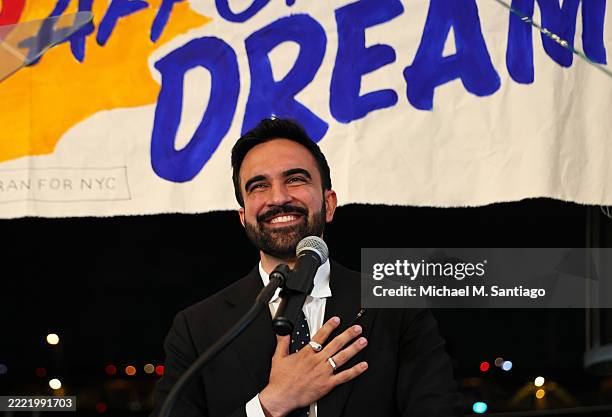
    Figures such as Zorhan Mamdani, Alexandria Ocasio-Cortez, Katie Porter, Ro Khanna, Rashida Tlaib, Ayanna Pressley, and Barbara Lee, among others, have built strong political followings by speaking directly about economic inequality, corporate power, and the needs of working people.

    Whether one agrees with every progressive policy or not, it is difficult to deny that these campaigns often generate energy and engagement among voters who might otherwise stay home.

    The lesson here is not that progressives are the enemy of the Democratic Party. In many cases, they are the ones providing the clearest economic (and even social) message.

    Political movements succeed when they offer people tangible improvements in their lives. Voters are far more likely to mobilize around real material change than around abstract promises of moderation and compromise.

    If the goal is to build a stronger and more equitable society, the debate should not be about whether progress is “too radical.”

    It should be about whether our political system is willing to deliver it.

  • Nathan Bedford Forrest and the Possibility of Change

    Nathan Bedford Forrest and the Possibility of Change

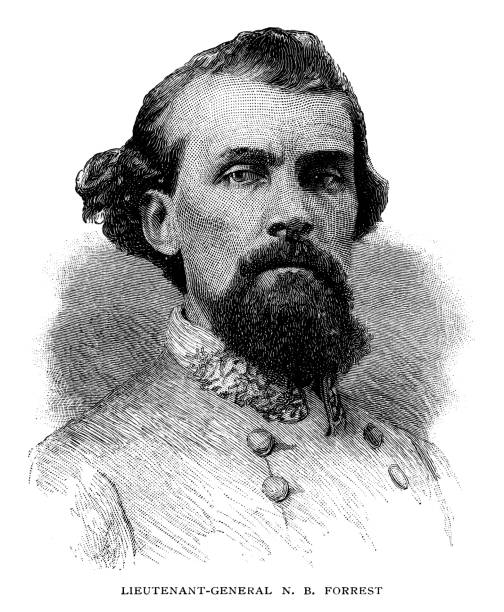
    Nathan Bedford Forrest remains one of the most controversial figures of the American Civil War.

    To many white Southerners, he is remembered as a brilliant cavalry commander and military tactician who rose from poverty to become one of the most effective battlefield leaders of the Confederacy.

    To many others—especially Black Americans—he is remembered as something very different: a former slave trader, a Confederate general associated with the Fort Pillow massacre, and the first Grand Wizard of the Ku Klux Klan.

    Both of these perspectives capture parts of the historical record.

    Before the Civil War, Forrest built a fortune as a slave trader, cotton planter, and livestock dealer. During the war, he became famous for his aggressive cavalry tactics and battlefield success. After the war, he was deeply involved in the early Ku Klux Klan, an organization that used violence and intimidation against newly freed Black Americans and their allies during Reconstruction.

    That part of his legacy is undeniable.

    What is less commonly discussed, however, are the statements Forrest made later in his life. By the 1870s, he publicly distanced himself from the Ku Klux Klan and reportedly called for its disbandment. In 1875, he delivered a speech to a Black civic organization in Memphis in which he encouraged reconciliation and cooperation between Black and white Southerners.

    Historians continue to debate what these actions meant.

    Some believe Forrest experienced a genuine change of heart late in life. Others argue that his statements were politically motivated during a turbulent Reconstruction period.

    What is clear is that Forrest’s life illustrates the uncomfortable complexity of history.

    He was undeniably involved in some of the most brutal systems of racial oppression in American history. At the same time, his later statements suggest at least some recognition—whether moral, political, or pragmatic—that the future of the South required a different path.

    That complexity is often lost in modern debates.

    Some defenders of Confederate memory celebrate Forrest primarily as a military hero while ignoring the racism and violence that defined much of his career. Others reduce him entirely to the worst aspects of his life without acknowledging the possibility—however limited or contested—that his views evolved later on.

    History rarely fits into simple moral categories.

    Studying figures like Nathan Bedford Forrest should not be about glorification or absolution. It should be about understanding how people, institutions, and societies change—and sometimes fail to change—over time.

  • American History Myths #6: The Myth of “Northern Innocence”

    American History Myths #6: The Myth of “Northern Innocence”

    One of the most persistent myths in American history is the idea that legalized segregation and anti-Black racism were primarily Southern problems.

    According to this narrative, the South was the land of slavery, Jim Crow, and overt racial hostility, while the North, especially the so-called “liberal North,” was supposedly a place where racial equality flourished, and people lived together in relative harmony.

    For decades, this is essentially how American history was taught.

    But the reality is far more complicated.

    Anti-Black racism was not confined to the South. It existed throughout the United States, including in Northern cities that often presented themselves as progressive and tolerant. While Southern states openly enforced segregation through Jim Crow laws, Northern states frequently relied on other mechanisms to achieve many of the same results.

    One of the most powerful tools used to maintain racial segregation in Northern and Western cities was the racial covenant.

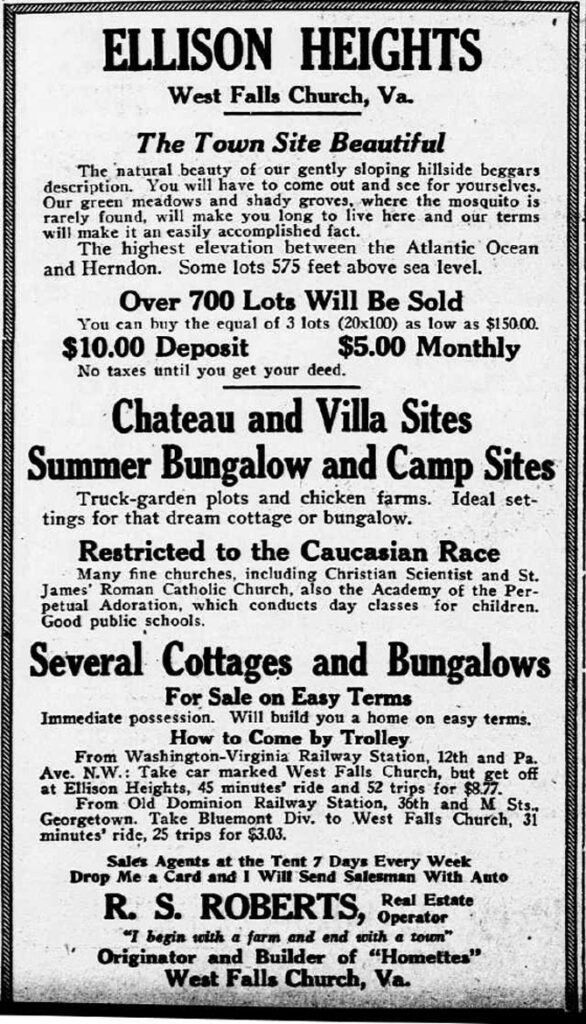
    Racial covenants were clauses written into property deeds by real estate developers, neighborhood associations, and homeowners. These clauses prohibited the sale or rental of property to certain groups, most commonly Black Americans, but also often including Asian Americans, Jews, and other minorities.

    Example of a racial covenant. Note the words “Restricted to the Caucasian Race”

    These restrictions were widespread across the country. Entire neighborhoods were built with the explicit condition that homes could not be sold to non-white residents.

    The consequences were enormous.

    By restricting where Black families could live, racial covenants effectively barred them from access to wealthier neighborhoods, better public schools, and the property values that allowed many white families to accumulate generational wealth through home ownership.

    Racial covenants were only one piece of a larger system of discrimination often referred to as racial steering or social steering. Through practices by real estate agents, banks, and government institutions, different racial groups were deliberately directed or confined to specific areas of cities and metropolitan regions.

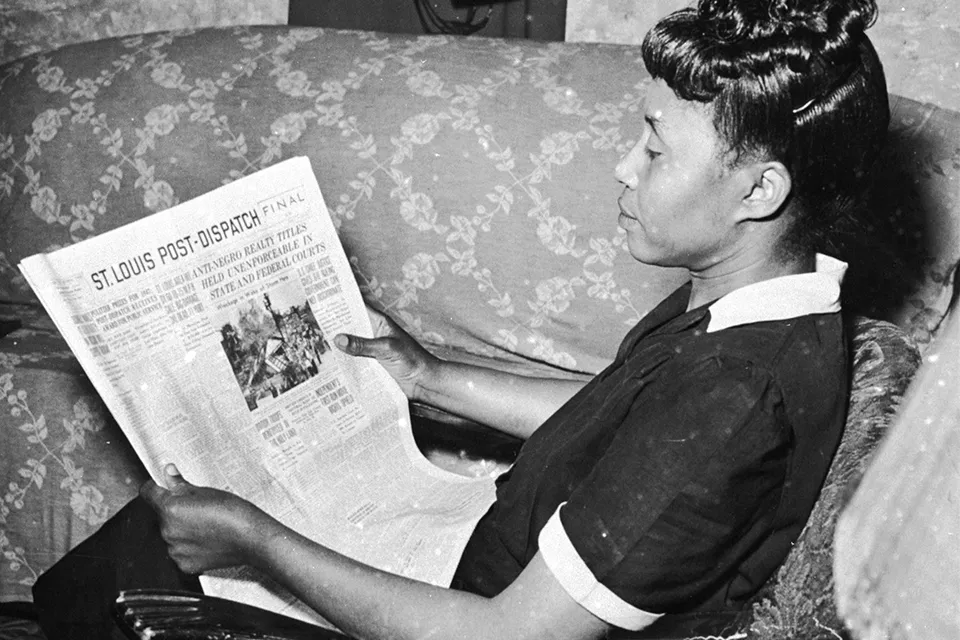
    Although the Supreme Court ruled racially restrictive covenants unenforceable in Shelley v. Kraemer (1948) and the Fair Housing Act of 1968 outlawed many forms of housing discrimination, the patterns created by decades of segregation did not disappear overnight.

    Ethel Shelley reads a May 4, 1948, St. Louis Post-Dispatch story about the Supreme Court decision outlawing racial covenants. (Courtesy St. Louis Post-Dispatch)

    In many cases, they persisted.

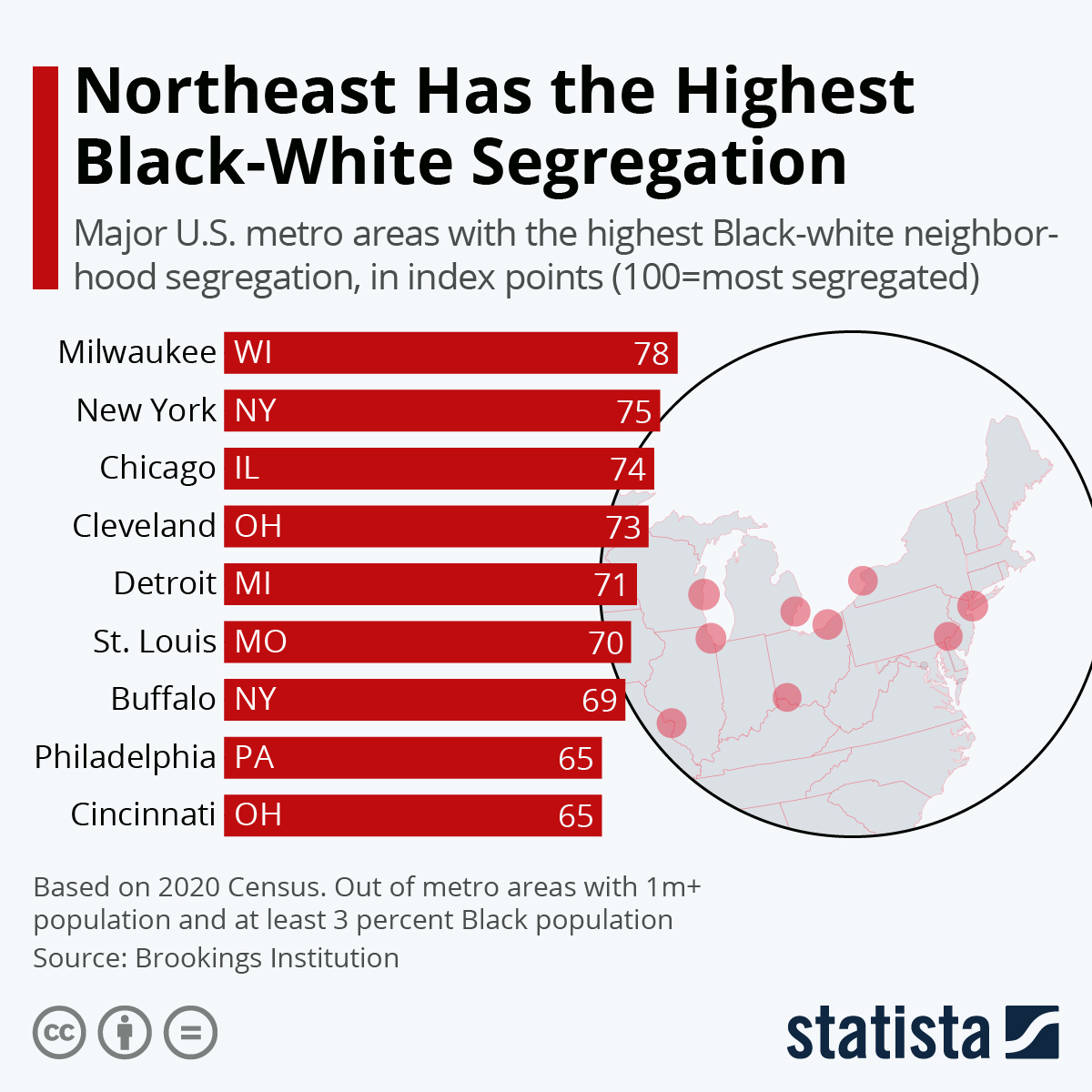
    Even today, many American cities remain deeply segregated along racial lines. Schools often reflect the same residential patterns, meaning that educational opportunities can still be shaped by where families are able… or allowed… to live.

    Click on the link attached to the word “schools” in the paragraph above for more information on this map.

    Understanding this history challenges the comfortable narrative that racism was solely a Southern problem. The structures that created racial inequality in the United States were national in scope, and their effects continue to shape American society today.

    The myth of Northern innocence obscures that reality.

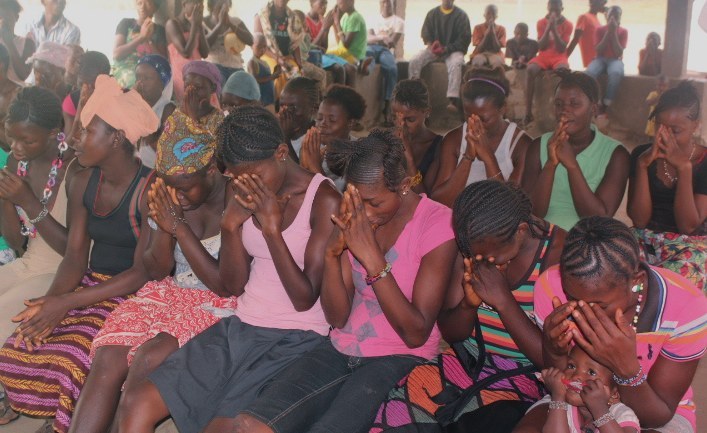
  • Faith, Poverty, and the Problem of Suffering

    Faith, Poverty, and the Problem of Suffering

    One thing that has always puzzled me is how deeply religious many of the most desperate people in the world tend to be.

    In many parts of the Global South, countries dealing with poverty, political instability, civil wars, or ethnic violence, religion often plays an enormous role in everyday life. The same pattern appears in many impoverished communities in the United States as well, including historically marginalized Black communities.

    At first glance, that seems counterintuitive.

    You might expect that people living under the harshest conditions would be the most likely to question the existence of a loving and powerful deity. After all, if a God exists who is both omnipotent (all-powerful) and omnibenevolent (all-loving), why would so many of the people who pray to that God be trapped in poverty, violence, and instability?

    Philosophers have asked versions of that question for centuries.

    It is sometimes called the Problem of Evil: if God is all-powerful, all-knowing, and all-loving, why does suffering exist at such a massive scale?

    This question becomes especially difficult when we look at the distribution of suffering in the world. Many of the most devout populations live in places where resources are scarce, healthcare is limited, life expectancy is lower, and political systems are unstable. Meanwhile, many of the wealthiest and most secure societies on earth are becoming increasingly secular.

    That contrast raises uncomfortable questions.

    Why would a loving deity allow the most faithful believers to live under the harshest conditions? Why are so many people who pray daily still forced to struggle for necessities like food, clean water, medical care, and safety?

    Believers have offered many answers. Some argue that suffering is part of a divine plan. Others say it results from human free will, corruption, or the brokenness of the world. Some suggest that faith provides psychological strength that helps people endure hardship.

    But for skeptics and atheists like me, these explanations often feel unsatisfying.

    From a secular perspective, religion can sometimes appear less like a response to evidence and more like a coping mechanism. It becomes something that provides emotional comfort in situations where people have little control over their circumstances.

    Despite this, I understand the need for people to seek the hope of religion… at lest on a purely psychological level.

    Human beings have always created systems of meaning to help them survive hardship. Faith can offer community, hope, and psychological resilience in environments where those things are desperately needed. I get that.

    But still, the philosophical tension remains.

    If suffering is widespread, persistent, and often falls hardest on those who are already vulnerable, it raises difficult questions about the nature, or even the existence, of an ominbelevolent, ominscient, omipresent, and omnipotent supreme supernatural being.

    For many atheists, that tension is one of the reasons belief becomes difficult to maintain.

    Not because we dislike religion or want to antagonize believers… well, at least not me… most of the time, but because the world itself often appears incompatible with the idea of a benevolent and actively intervening deity, especially in many of the most religious countries.

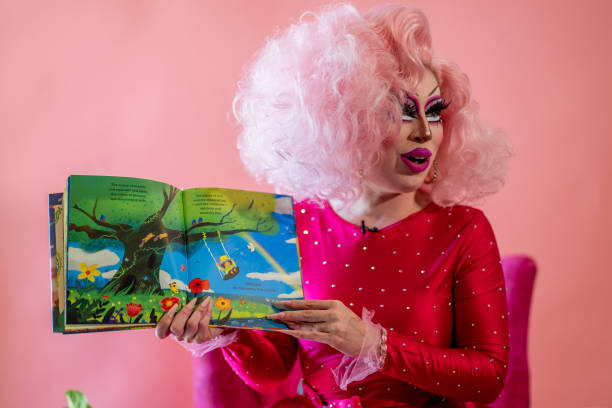
  • Moral Panics, “Groomer” Accusations, and a Familiar Pattern

    Moral Panics, “Groomer” Accusations, and a Familiar Pattern

    When conservatives are asked to provide empirical evidence of a connection between the LGBTQIA community and pedophilia, the response is rarely data.

    Instead, what usually appears are viral clips taken out of context, screenshots circulated by accounts like Libs of TikTok, isolated drag performances from other countries, sermons from openly hostile churches, anecdotes repeated on podcasts, or emotionally charged testimony from activists at school board meetings.

    What rarely appears are numbers, peer-reviewed studies, or credible statistical research demonstrating a meaningful relationship between LGBTQIA identity and child predation.

    This is not accidental.

    The current panic surrounding “groomers” follows a pattern that has appeared repeatedly throughout history. Moral panics often rely on emotionally powerful accusations that frame a targeted group as a threat to children or social order. Once that framing takes hold, evidence becomes secondary to fear.

    In many cases, the people promoting these accusations present themselves as defenders of vulnerable children. Yet it is often the same political actors who oppose policies that materially support children, such as expanded healthcare, education funding, or protections against abuse.

    That contradiction should raise questions.

    For Black Americans in particular, this rhetoric has an unsettling historical echo. Throughout the late nineteenth and early twentieth centuries, Black men were routinely portrayed as sexual predators who threatened white women. These accusations were rarely supported by evidence, but they were politically powerful. They were used to justify segregation, mass incarceration, racial terror, and the destruction of entire Black communities.

    The narrative did not have to be true. It only had to be believed.

    The same mechanism is visible today. By portraying LGBTQIA people as inherently predatory, political movements can frame discrimination as protection. Policies restricting LGBTQIA rights are then presented not as acts of exclusion, but as necessary defenses of children.

    This strategy is not new.

    In the early twentieth century, the Ku Klux Klan expanded its influence by presenting itself as a protector of “American values,” white womanhood, and Christian civilization. Films like The Birth of a Nation helped transform the Klan’s image from that of a small terrorist organization in the South into a supposed guardian of social order.

    History shows how dangerous that type of narrative can become.

    None of this means that abuse never occurs in any community. Sexual abuse exists across every demographic group and social category. But addressing it responsibly requires evidence, data, and careful investigation—not broad accusations aimed at entire populations.

    When accusations replace evidence, the goal is rarely child protection. More often, the goal is political mobilization.

    Moral panics have always worked that way.