Tag: politics

  • America’s Racial Problem Is Not in the Past, And I’m Tired of People Pretending It Is

    America’s Racial Problem Is Not in the Past, And I’m Tired of People Pretending It Is

    One of the most frustrating parts of talking about racism in America is how often people act as if it is either exaggerated, isolated, or long behind us. Every time I say that most white Americans have, at minimum, participated in or benefited from racist systems and behavior, there is always a predictable backlash. The conversation shifts from the reality of racism to defensive utterances, including people charging me with racism, exaggerated claims of Black culpability in slavery, sloppy attempts to “both-sides” racism, and arguing that racism was a past reality that black people need to get over.

    But history (and the present) tell a very different story, and I’m not pulling that conclusion out of thin air.

    I’m looking at history, voting patterns, where people choose to live, how they react when Black people move into their neighborhoods, what they tolerate politically, and what I have personally watched happen over and over again in this country.

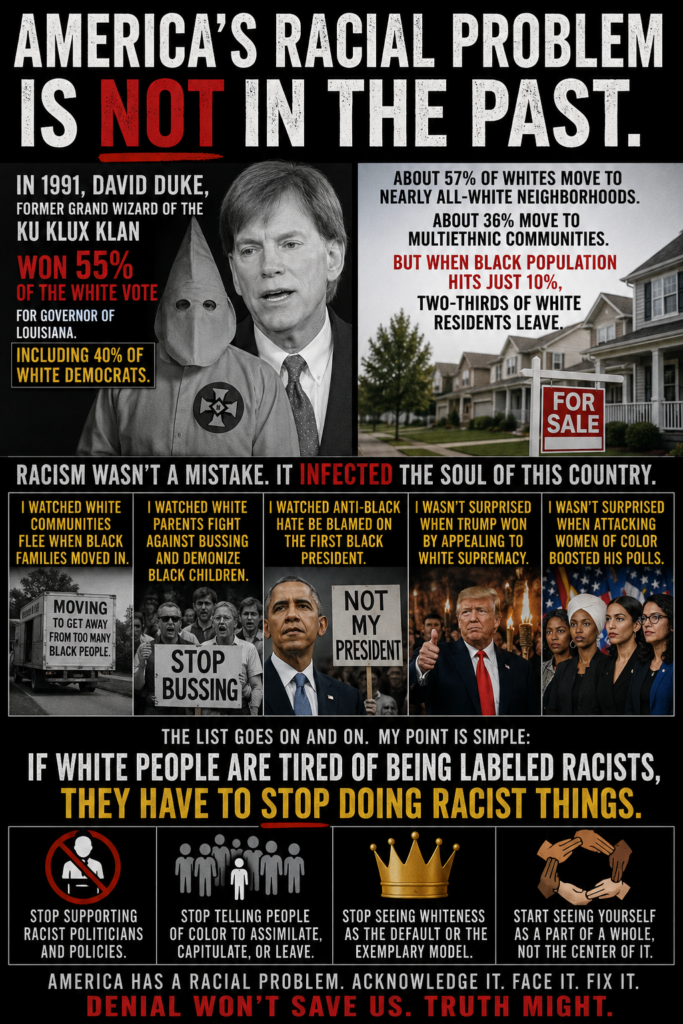
    In 1991, David Duke, a former Grand Wizard of the Ku Klux Klan, won 55% of the white vote when he ran for governor of Louisiana. Let that sink in. A man whose public identity was openly tied to white supremacy won a majority of white voters, including 40% of white Democrats. That was not the distant 1800s. That was the early 1990s.

    And this pattern is not an isolated one. Since the passage of the Civil Rights Act of 1964 and the Voting Rights Act of 1965, Democratic presidential candidates have consistently struggled to win the white vote. Even in 1976, when Jimmy Carter performed unusually well among white voters, Gerald Ford still won them overall. That should force us to ask uncomfortable questions about what racial backlash has looked like in American politics for the last half-century.

    These are not random or meaningless occurances. And it is not just “economic anxiety.” This is racism built into the bloodstream of American politics and manifest through voting decisions and patterns.

    The same dynamic has shaped where people live, where they send their children to school, and how they define “good” neighborhoods and “bad” neighborhoods. White flight did not happen by accident. It was not simply about “better schools” or “quality of life.”

    For decades, study after study (and plain old lived reality) has shown that white people love to talk about diversity until Black people actually start moving in next door. White families will say they want “good communities” and “nice neighborhoods,” but once a place becomes “too Black” (usually with a Black population at or above 10%), all of a sudden the moving trucks come out and the “For Sale” signs start multiplying like weeds.

    In community after community, once Black families moved in, white families moved out. I have seen it with my own eyes. Entire white communities expanded further and further outward, into what had once been farmland, not because they were escaping crime or collapse, but because too many Black people had moved nearby.

    And it did not matter if those Black families were educated, professional, stable, or middle class. Their Blackness alone was enough for those white families to flee further into the suburbs.

    We want to act like racism was just Bull Connor, George Wallace, fire hoses, and white robes. We want to tell ourselves that racism was a regrettable chapter that “we overcame,” and now the only real racists are a few cartoonishly evil people at the margins.

    That is a lie.

    Racism in America was never just about the loudest extremists. It has always depended on ordinary white people making racist choices in ordinary ways: where they live, who they vote for, what schools they support, what fears they indulge, what policies they excuse, and what kind of treatment of Black people they are willing to rationalize.

    I saw white parents rage against school bussing while talking about Black children as if they were grave threats. I saw anti-Black hostility dressed up as “concern” and “standards.” I saw white resentment toward Barack Obama, a man raised largely by white family members, treated as if he were some dangerous racial radical simply for existing in the White House while Black.

    So no, I was not surprised when Donald Trump rose to power by openly winking at white grievance and white nationalism. I was not surprised when racist attacks on women of color energized parts of his base. I have seen this movie before.

    A lot of white Americans want to be absolved without being examined.

    They want credit for not wearing a hood while still supporting racist politicians, racist policies, racist housing patterns, racist school systems, and racist cultural assumptions.

    That’s not how this works.

    America’s racial problem has never been confined to a handful of extremists in white robes. That is the lie people tell themselves so they do not have to examine the everyday racism embedded in housing, education, politics, media, and social life. Racism in America has never just been about “bad people.” It has been about a society that trained millions of ordinary people to see whiteness as the norm, the standard, and the default.

    And that is the real issue.

    If white Americans are tired of being associated with racism, then the answer is not to get offended when people point it out. The answer is to stop supporting racist policies, racist politicians, racist assumptions, and racist social arrangements. Stop demanding that people of color quietly assimilate into a system built to marginalize them. Stop treating whiteness as the universal model of what is “normal,” “civilized,” or “American.”

    Because America’s racial problem is not ancient history. It is not dead. And pretending otherwise is part of the problem.

  • Extreme Sychophancy in the White House (An Invitation to my TikTok)

    Extreme Sychophancy in the White House (An Invitation to my TikTok)

    My name is Mario, and I was hoping you could check out this brief video of me ranting about the level of sychophancy in the Trump White House.

    There’s a difference between loyalty and outright sycophancy, and lately, that line has been completely erased in American politics.

    In my TikTok video, I briefly break down the level of blind praise and performative loyalty emanating from the Trump White House and how annoyingly unsettling it is.

    When public officials seem more focused on flattering one person than serving the public or speaking honestly, it raises serious questions about leadership, accountability, and the health of our political system. The goal is not to provide the American public with accurate information. Instead, the goal is to carry favor with Donald Trump by constantly over-complimenting him.

    What stood out to me, and what I highlight in the video, is how normalized this behavior has become. The constant sycophantic praising, followed by unrealistic claims designed more to make Trump seem like a divine solution to every problem facing the United States, doesn’t feel like governance. It feels like something else entirely. And regardless of where you fall politically, that should at least make you and any of us very concerned.

    I’m not interested in empty outrage, even though my language is often colorful and could perhaps rub some the wrong way. I’m interested in conversations that prompt people to think a little deeper about what we’re seeing and accepting in our politics and our society. This is true of most of my TikToks.

    If that’s the kind of discussion you’re into, check out other videos on my TikTok. I’m going to resume posting more content like this, of me breaking things down, asking uncomfortable questions, and keeping it real.

    As with this blog and my social media, I invite you to join the conversation, even if you disagree with me. Just be aware that if you bite (figuratively speaking), I bite back.

    An AI generated image of people in suits surrounding President Donald Trump who is sitting on a throne. The people around him are praising him as he soaks in all of it.
    This is not much of an exaggeration of how it really is.

  • Limousine Liberalism and the Politics of Comfort

    Limousine Liberalism and the Politics of Comfort

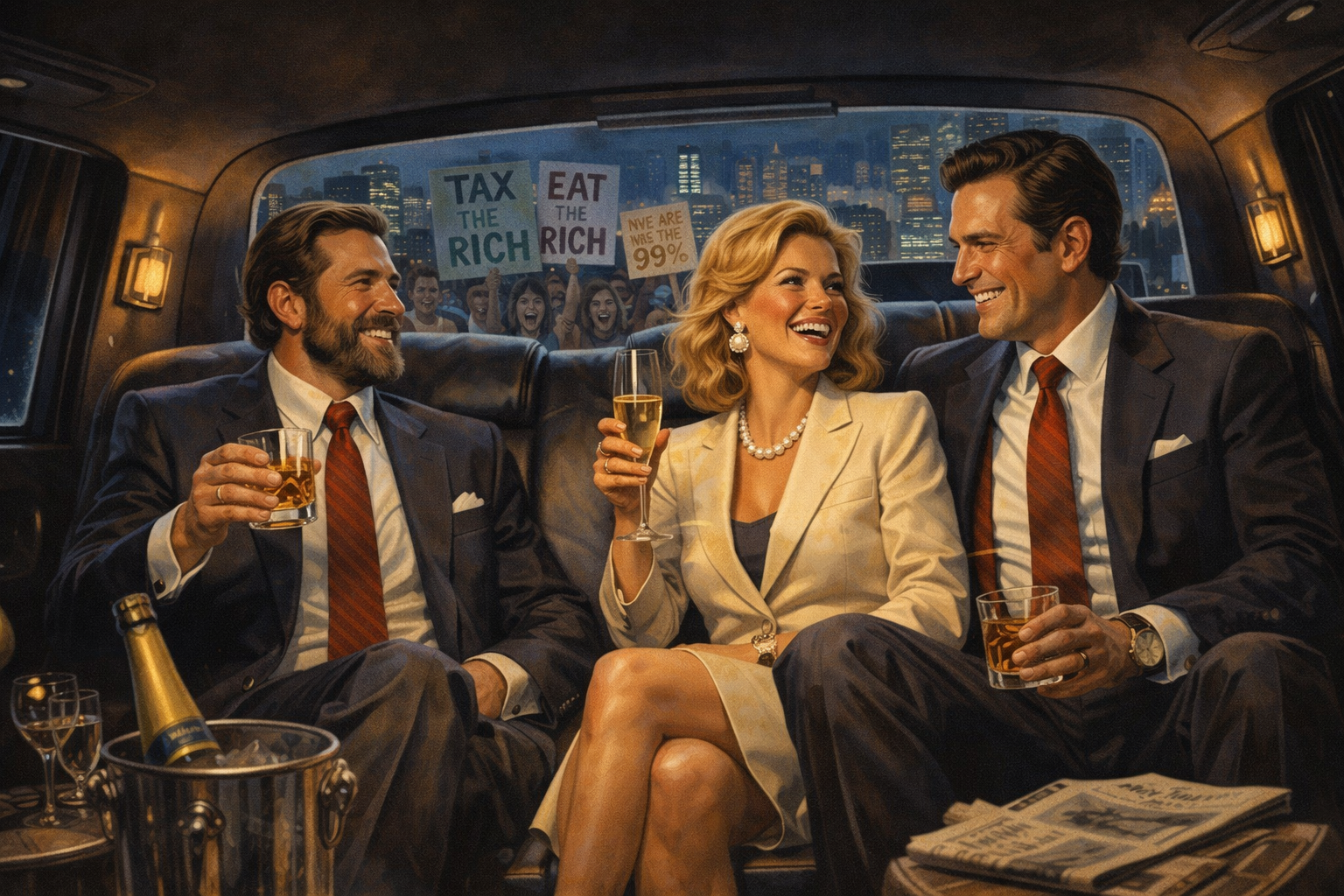
    If the phrase “limousine liberal” needed a modern example, many critics would point to Bill Maher.

    For decades, conservatives have used the term to describe a particular kind of liberal politics… one practiced by wealthy cultural elites who champion progressive social causes while remaining largely disconnected from the economic struggles of ordinary people.

    Whether that label is fair in every case is debatable. But the criticism highlights a real tension within American liberalism.

    The problem is not support for civil rights, LGBTQ equality, environmental protection, or other social issues, no matter how tepid and/or performative it may be. Those struggles are important and necessary. The problem arises when those causes are championed without addressing the economic structures that produce inequality in the first place.

    This tension was visible in a recent segment of Maher’s show in which he criticized younger Americans for being overly pessimistic and encouraged people to “cheer the fuck up.” In his view, dissatisfaction with the current political environment reflects an overly negative outlook among younger generations.

    But that interpretation overlooks the economic reality facing millions of Americans.

    Over the past several decades, the United States has undergone a dramatic economic transformation. Manufacturing jobs that once provided stable middle-class livelihoods have been replaced by lower-paying service work. Wages have stagnated while the cost of housing, healthcare, education, and childcare has steadily risen.

    Today, many Americans are financially fragile. Surveys regularly show that a large percentage of households would struggle to cover even a modest emergency expense. At the same time, economic growth and stock market gains are increasingly concentrated among a relatively small segment of the population.

    When commentators dismiss widespread economic frustration as simple negativity, it can come across as profoundly out of touch.

    For people living paycheck to paycheck, debates about stock market performance or macroeconomic indicators feel distant from their everyday reality. Economic insecurity is not simply a matter of attitude. It is a real material condition.

    This is where critiques of “limousine liberalism” gain traction.

    Symbolic gestures and self-righteous virtue signaling can coexist with an economic system that continues to produce inequality and insecurity. Without adequately examining the deeper structural issues of unsafe labor conditions, wage stagnation, sharply rising housing costs, decreased access to affordable healthcare, and the massive influence of corporate power, political rhetoric about social progress can begin to feel hollow.

    Many Americans are not asking for perfection. They are merely asking for a political system that seriously addresses the economic pressures shaping their lives.

    When those concerns are dismissed as whining or irrational pessimism, the gap between political elites and working people only widens.

    And that gap helps explain why so many voters remain deeply dissatisfied with the current political moment.

  • Nathan Bedford Forrest and the Possibility of Change

    Nathan Bedford Forrest and the Possibility of Change

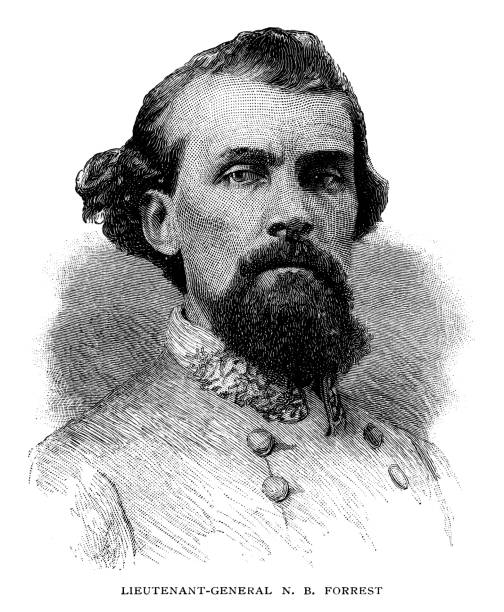
    Nathan Bedford Forrest remains one of the most controversial figures of the American Civil War.

    To many white Southerners, he is remembered as a brilliant cavalry commander and military tactician who rose from poverty to become one of the most effective battlefield leaders of the Confederacy.

    To many others—especially Black Americans—he is remembered as something very different: a former slave trader, a Confederate general associated with the Fort Pillow massacre, and the first Grand Wizard of the Ku Klux Klan.

    Both of these perspectives capture parts of the historical record.

    Before the Civil War, Forrest built a fortune as a slave trader, cotton planter, and livestock dealer. During the war, he became famous for his aggressive cavalry tactics and battlefield success. After the war, he was deeply involved in the early Ku Klux Klan, an organization that used violence and intimidation against newly freed Black Americans and their allies during Reconstruction.

    That part of his legacy is undeniable.

    What is less commonly discussed, however, are the statements Forrest made later in his life. By the 1870s, he publicly distanced himself from the Ku Klux Klan and reportedly called for its disbandment. In 1875, he delivered a speech to a Black civic organization in Memphis in which he encouraged reconciliation and cooperation between Black and white Southerners.

    Historians continue to debate what these actions meant.

    Some believe Forrest experienced a genuine change of heart late in life. Others argue that his statements were politically motivated during a turbulent Reconstruction period.

    What is clear is that Forrest’s life illustrates the uncomfortable complexity of history.

    He was undeniably involved in some of the most brutal systems of racial oppression in American history. At the same time, his later statements suggest at least some recognition—whether moral, political, or pragmatic—that the future of the South required a different path.

    That complexity is often lost in modern debates.

    Some defenders of Confederate memory celebrate Forrest primarily as a military hero while ignoring the racism and violence that defined much of his career. Others reduce him entirely to the worst aspects of his life without acknowledging the possibility—however limited or contested—that his views evolved later on.

    History rarely fits into simple moral categories.

    Studying figures like Nathan Bedford Forrest should not be about glorification or absolution. It should be about understanding how people, institutions, and societies change—and sometimes fail to change—over time.

  • A Note for New Readers

    A Note for New Readers

    Hello, everyone.

    For those who may not know me from my Facebook page or are unfamiliar with my writing, I want to briefly explain the kinds of topics I discuss and the perspective I bring to those conversations.

    In everyday life, I’m generally a relaxed and humorous person, but my writing tends to focus on serious issues, many of which people consider controversial. I often discuss topics that many people avoid in polite conversation: race, politics, religion, history, and social inequality. These conversations can generate strong reactions, and I understand that not everyone will agree with the positions I take.

    With that in mind, there are a few things readers should know about me.

    First, I consider myself pro-Black. My views are influenced by traditions of Black liberation thought, Pan-Africanism, and Afrocentric scholarship. That does not mean I am hostile toward other racial groups. However, I do believe that many of the modern racial hierarchies we see today have their roots in European colonial systems that imposed rigid racial classifications across much of the world. Because of that history, I have very little patience for openly anti-Black rhetoric, regardless of who expresses it.

    Second, I am an atheist. My atheism is not the result of ignorance or rebellion but the result of years of reading, research, and reflection. I respect the fact that religion is deeply personal for many people, and I generally avoid debating religion with many people out of courtesy. Religious beliefs are extrememly personal and I strongly believe that one’s spiritual walk is their own. I simply ask for the same respect in return. Expressions of faith are one thing; persistent attempts to proselytize to me, whether through private messages, unsoliticed phone calls, or “forced” debates, are another.

    Third, my politics are left-leaning, and I generally describe myself as a democratic socialist, and a leftist. While I try to understand perspectives across the political spectrum, I strongly disagree with many positions associated with contemporary conservative politics, particularly those that dismiss the struggles of low-wage workers or celebrate economic systems that leave large numbers of people behind.

    I believe conversations about these issues are necessary, even when they are uncomfortable. My goal is not to provoke hostility but to engage with difficult topics honestly and critically.

    If these subjects are not something you’re interested in seeing, I completely understand. I will post some lighter subject matter in the future. Everyone curates their online space differently.

    But if you are willing to engage thoughtfully, even when we disagree, then you are welcome here. Just try to be somewhat mature and respectful.

  • The Real Reason Birth Rates Are Falling in the West

    The Real Reason Birth Rates Are Falling in the West

    Many political commentators, particularly in certain corners of the internet, claim that declining birth rates in Western countries are caused by cultural forces such as feminism, LGBTQ visibility, secularism, or multiculturalism.

    But the data tells a much simpler story.

    Birth rates tend to decline in societies where the cost of living rises faster than wages and where raising children becomes financially burdensome. This pattern has been observed across numerous developed countries regardless of political ideology or cultural identity.

    The modern cost of raising children is enormous.

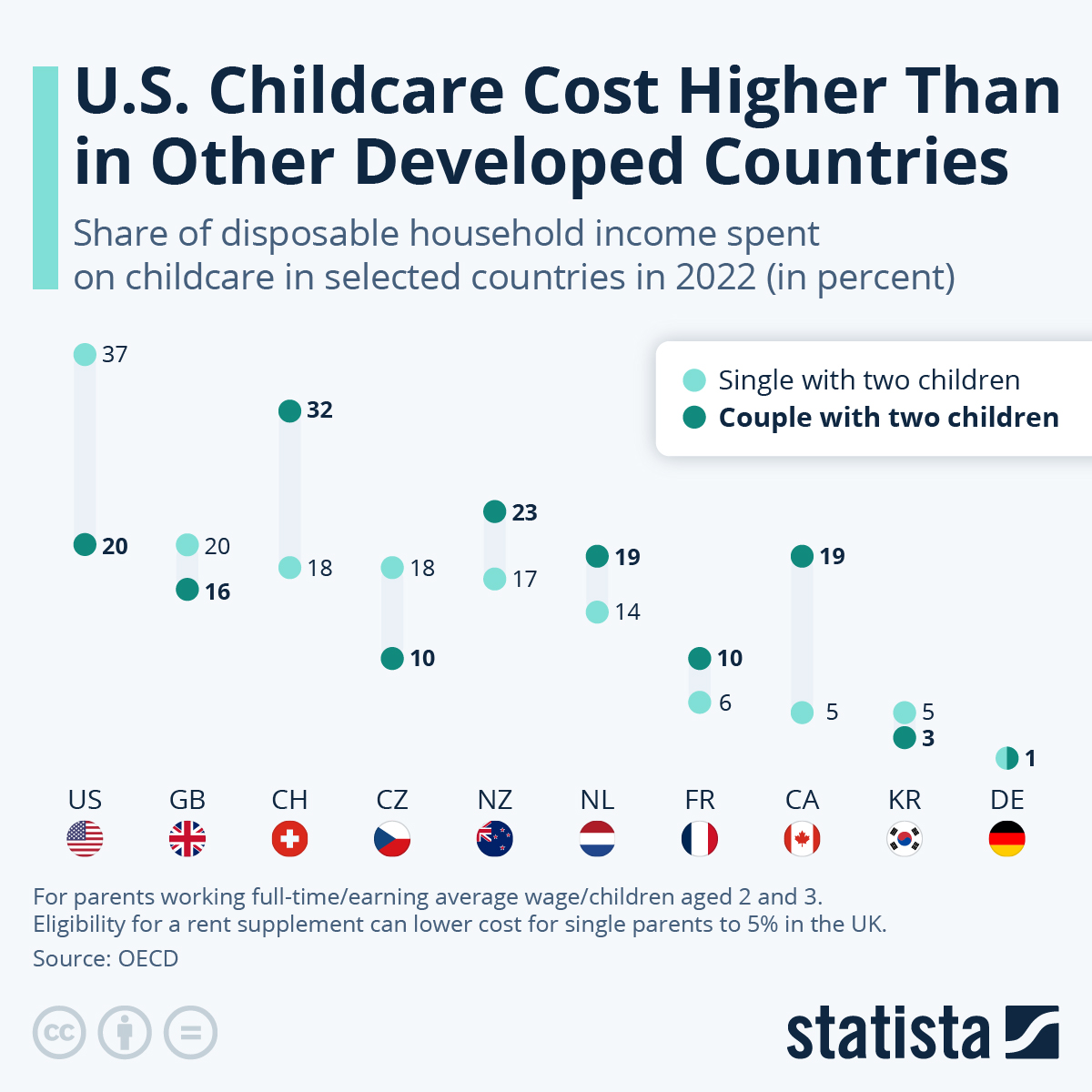
    Childcare alone can cost more than rent or a mortgage in many American cities. Necessities for early childhood, such as diapers, formula, baby supplies, healthcare, and education, add thousands of dollars in additional expenses each year. Even the cost of childbirth itself in the United States can reach tens of thousands of dollars, depending on insurance coverage.

    Beyond early childhood, families face additional financial pressures, including school activities, transportation, clothing, healthcare, housing, and eventually the cost of higher education.

    For many households, the financial calculation becomes unavoidable.

    Having children is no longer simply a social expectation—it is a long-term economic commitment that can reshape a family’s entire financial future.

    There is also the question of uncertainty.

    Parents today worry about issues that earlier generations rarely considered: school shootings, economic instability, climate change, political polarization, and the general unpredictability of the modern world. Whether those fears are fully justified or not, they still influence how people think about bringing children into that world.

    Historically, family structures looked very different.

    In the early twentieth century, large families were common not because people were more “family-oriented,” but because economic and social conditions were different. Housing was cheaper, extended families often lived together, and childcare responsibilities were shared across multiple generations.

    Children were also seen as economic contributors to the household rather than long-term financial obligations.

    Today, the expectations are very different. Families are expected to provide private bedrooms, extensive educational opportunities, extracurricular activities, and a high standard of living for each child. At the same time, extended family support systems have weakened, and childcare has become a market commodity rather than a shared community responsibility.

    The result is predictable.

    Many couples decide that having fewer children, or no children at all, is the most financially responsible decision they can make.

    If governments and societies genuinely want to increase birth rates, the solution is unlikely to come from cultural panic or political rhetoric.

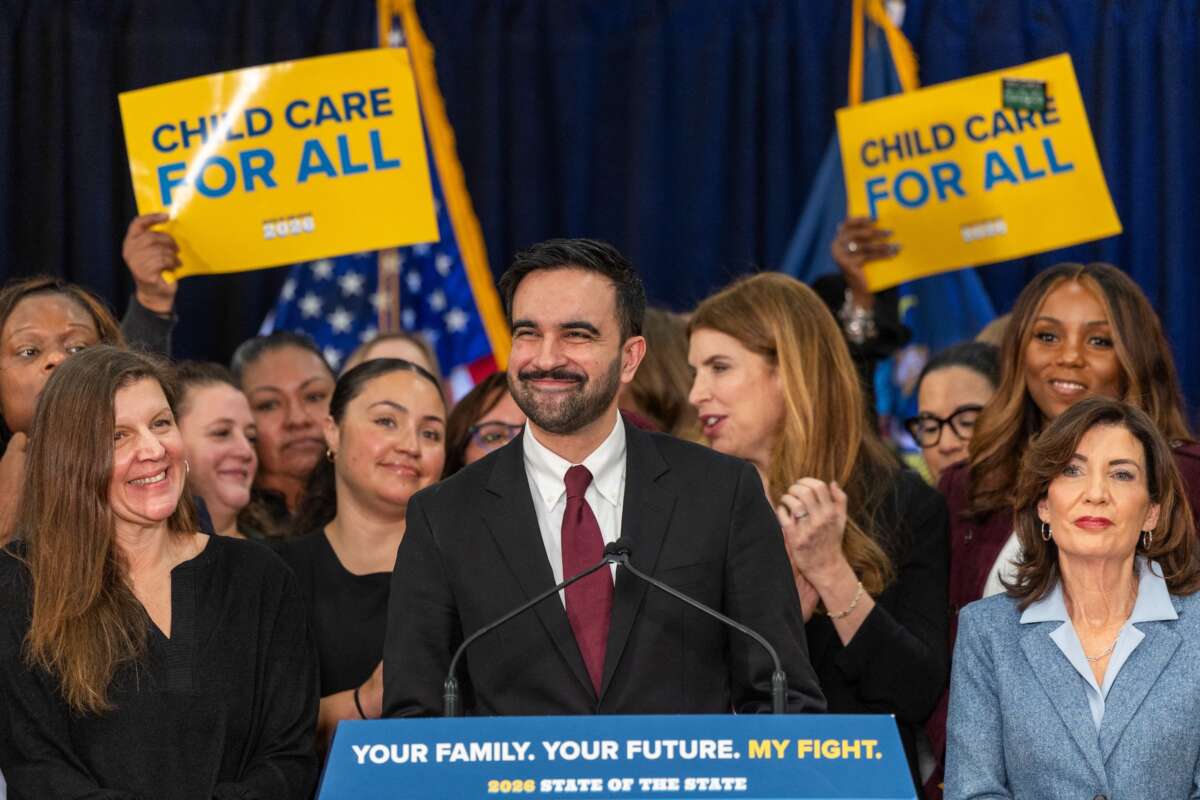
    It will come from addressing the economic realities that make raising children increasingly difficult: housing costs, childcare affordability, healthcare expenses, and long-term financial security.

    When people feel economically stable and confident about the future, they are far more likely to start families.

    History suggests that prosperity and security—not cultural fear—are the conditions under which birth rates tend to rise.

  • Why Tangible Benefits Matter in Politics

    Why Tangible Benefits Matter in Politics

    The often-overlooked reality of American politics is that policy messaging often matters less to voters than tangible benefits they can see and feel in their everyday lives. This is something that the professional pundit class, political consultants, and many political analysts often miss.

    During the COVID-19 pandemic, stimulus checks were sent to millions of Americans. Although the checks were authorized through legislation passed by Congress, many people associate them directly with Donald Trump because his administration ensured his name appeared on them.

    Symbolism matters in politics.

    For many struggling households, those payments were not abstract policy decisions. They were rent money, grocery money, or the difference between making it through the month and falling further behind.

    This illustrates a broader lesson that many political strategists understand but that some policymakers still underestimate: voters tend to reward leaders who appear to deliver direct, tangible benefits.

    In contrast, the Democratic Party has often struggled to communicate its policy achievements in ways that feel immediate and visible to ordinary voters.

    The Biden administration did authorize $1,400 stimulus payments and temporarily expanded the Child Tax Credit, which significantly reduced child poverty while it was in place. Yet those policies were not framed with the same kind of direct political branding that many voters remember from the previous administration.

    Even more importantly, the expanded Child Tax Credit was allowed to expire after only one year, despite its measurable impact.

    For many voters, particularly those in economically struggling communities, this reinforces the perception that political leaders make promises but rarely sustain meaningful material improvements.

    That perception fuels cynicism and political apathy.

    When people feel that no political party consistently delivers real change, they often become disengaged or focus only on immediate personal survival rather than broader political issues. Concerns about systemic racism, economic inequality, or long-term policy debates can feel distant compared to the daily struggle of paying bills or putting food on the table.

    This dynamic also shapes how people interpret political messaging. When leaders speak about justice, reform, or social change without delivering visible economic improvements, the message can ring hollow to those who are struggling the most.

    None of these excuses the dangers posed by demagogic politics or authoritarian rhetoric. But it does highlight an important political truth: tangible benefits often carry more weight with voters than symbolic gestures and ideological arguments.

    If political leaders want lasting support from working-class communities, they cannot rely solely on rhetoric about values or identity. They must deliver policies that materially improve people’s lives and make sure those improvements are visible and sustained.

    Otherwise, frustration and disillusionment will continue to shape the political landscape.

  • What Critics Get Wrong About DEI

    What Critics Get Wrong About DEI

    If critics of diversity, equity, and inclusion programs truly want to understand what they are criticizing, they should start by understanding what those programs actually do.

    Much of the political rhetoric surrounding DEI rests on a simple assumption: that these initiatives exist primarily to hire underqualified minorities over more qualified white applicants.

    But that assumption misunderstands the purpose of many DEI programs.

    In many workplaces, DEI initiatives are not hiring programs at all. They are training programs focused on workplace conduct, like how employees interact with one another, how discrimination complaints are handled, and how organizations avoid hostile work environments.

    In other words, they are about behavior inside the workplace, not simply about who gets hired.

    This distinction is often lost in political debates.

    Critics frequently frame DEI as a system that lowers standards or promotes unqualified candidates. Yet those claims are rarely supported with concrete evidence. Instead, the arguments often rely on anecdotes, rumors, or viral stories that later turn out to be false or exaggerated.

    The “litter box in schools” rumor is a good example of how quickly misinformation can spread when it reinforces existing political narratives. The story circulated widely online despite having no factual basis.

    The same pattern often appears in debates about DEI.

    Whenever a person from a marginalized group enters a field traditionally dominated by white men, whether as a pilot, executive, professor, or public official, critics sometimes assume that the person must have been hired to satisfy a quota rather than because of their qualifications.

    That assumption says less about hiring practices than it does about the expectations behind it.

    It reflects a long-standing cultural narrative suggesting that success among minorities must be explained by special treatment rather than merit.

    Yet there are many examples throughout American history that challenge that assumption. The Tuskegee Airmen, for example, demonstrated extraordinary skill and discipline during World War II despite facing discrimination and skepticism about their abilities.

    The same dynamic continues today.

    A recent viral video showed a Black woman completing her first liftoff during pilot training. Professional pilots reviewing the footage described the maneuver as textbook and appropriate for the conditions. Yet some online commentators quickly turned the moment into an argument about DEI and supposed lowered standards.

    This response illustrates how quickly discussions about diversity can become framed through suspicion rather than evidence.

    At the same time, conversations about merit often ignore another powerful force in hiring: nepotism.

    Family connections, social networks, and institutional favoritism have long shaped access to jobs and opportunities across many industries. These advantages disproportionately benefit those already connected to existing power structures.

    Yet these dynamics rarely receive the same level of scrutiny as diversity initiatives.

    The result is a debate that focuses intensely on hypothetical examples of unqualified minority hires while overlooking longstanding systems that have quietly shaped opportunity for generations.

    If we are going to have an honest discussion about merit and fairness, then the conversation needs to address all of the ways opportunity is distributed, not just the ones that fit a particular political narrative.

    The goal is not to flood various industries with underqualified people who check off certain boxes in a checklist of representation from marginalized communities. That is not how DEI works.

    Rather, the goal should be to build institutions where ability, preparation, and performance actually matter more than assumptions about who belongs in a particular role, and everyone has an equal opportunity to get and to promote in various careers without doing so in a hostile work environment.

  • When I Disagreed With the New Atheists

    When I Disagreed With the New Atheists

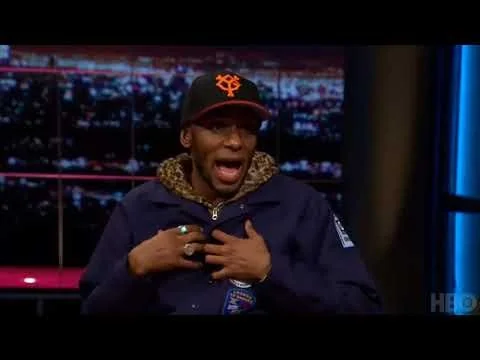
    Years ago, I wrote about a debate that took place on Real Time with Bill Maher between Yasiin Bey (formerly Mos Def) on one side and Bill Maher and Christopher Hitchens on the other. The topic, unsurprisingly, was the September 11 attacks and the broader question of Islam.

    At the time, I was widely known among my peers as an atheist thinker and leader. I would jokingly refer to myself as “the atheist.” Because of that, many people expected me to side with Maher and Hitchens. Both men were major figures in the New Atheist movement, and their criticism of religion (especially Islam) was widely embraced within those circles.

    But I found myself agreeing with Yasiin Bey.

    The reason was simple: I have never trusted the United States government’s justifications for many of the wars and military actions it has undertaken since World War II. History provides too many examples of misleading narratives, exaggerated threats, or outright falsehoods used to justify military intervention.

    I was also uncomfortable with the way Muslims were being singled out as uniquely dangerous.

    Most Muslims are not violent extremists. In my own life, I have known many Muslims, and they are as diverse in their beliefs, practices, and interpretations of their religion as Christians or Jews are.

    As a Black American, I also could not ignore another historical reality: my community has experienced far more terrorism from people identifying as Christians than from Muslims. Groups like the Ku Klux Klan cloaked themselves in Christian imagery and language while carrying out campaigns of terror against Black Americans.

    That history makes it difficult for me to accept arguments that treat Islam as uniquely violent while giving Christianity or Judaism a pass for the actions of their worst adherents.

    Maher and Hitchens often insisted that extremist Muslim groups represented something intrinsic to Islam itself. Yet when confronted with violent or extremist groups within Christianity, such as the KKK or Christian Identity movements, they were much quicker to argue that those groups were distortions of the religion rather than expressions of it.

    That double standard always bothered me.

    If organizations like ISIS or Al-Qaeda are considered perversions of Islam (and I believe they are), then the same intellectual honesty should be applied when discussing extremist groups that claim Christian identity.

    At the time, my position drew criticism from some of my fellow atheists. Many people in the New Atheist movement treated Maher and Hitchens almost as intellectual heroes, and disagreeing with them was not always well received.

    But I have always believed that intellectual honesty matters more than tribal loyalty.

    I still respect both Maher and Hitchens for their role in normalizing atheism and encouraging people to question religious authority. Their contributions to secular thought are significant.

    But admiration does not require agreement.

    Even then, I could see that their criticism of religion, particularly Islam, sometimes crossed the line from critique into something that felt more like cultural hostility at best and bigotry at worst.

    Looking back now, I feel even more confident in the position I took at the time.

    Sometimes the most honest place to stand is not with your allies or your critics, but simply where the evidence and your own conscience lead you.

  • Poverty Looks the Same Everywhere

    Poverty Looks the Same Everywhere

    One of the things that traveling around the United States has taught me is that poverty appears remarkably similar, regardless of where you encounter it.

    Despite the racial narratives that often dominate political conversations, the visible signs of poverty tend to repeat themselves in the same ways across the country.

    The same kinds of conditions that people associate with poor urban neighborhoods (many of which are predominantly Black or Latino) can also be found in economically depressed small towns that are overwhelmingly white.

    In both places, you see the same signs of economic struggle.

    You see old vehicles with long-expired temporary tags.
    You see houses in serious need of repair.
    You see groups of men standing around with little to do but pass the time drinking.
    You see drug use and the informal economies that grow around poverty, including prostitution.

    The physical environments may differ somewhat. Urban poverty often exists in densely populated neighborhoods surrounded by wealthier suburbs. Rural poverty tends to exist in isolated towns surrounded by farmland or land owned by more affluent property holders.

    But the underlying conditions are strikingly similar.

    Poverty produces the same kinds of social and economic realities regardless of the racial makeup of the people experiencing it.

    Traveling makes that clear in a way that political rhetoric often obscures.

    In political debates, poverty is frequently racialized. Certain communities are blamed for the conditions in which they live, while others are treated as victims of economic change or government neglect.

    But when you actually see these communities up close—when you drive through them, walk through them, and talk to the people who live there—the similarities become difficult to ignore.

    Poverty is not confined to one race or one region.

    It is a structural condition that appears wherever economic opportunity disappears, and communities are left behind.

    And the longer people ignore that reality, the easier it becomes for political narratives to divide communities that are, in many ways, experiencing the same struggles.